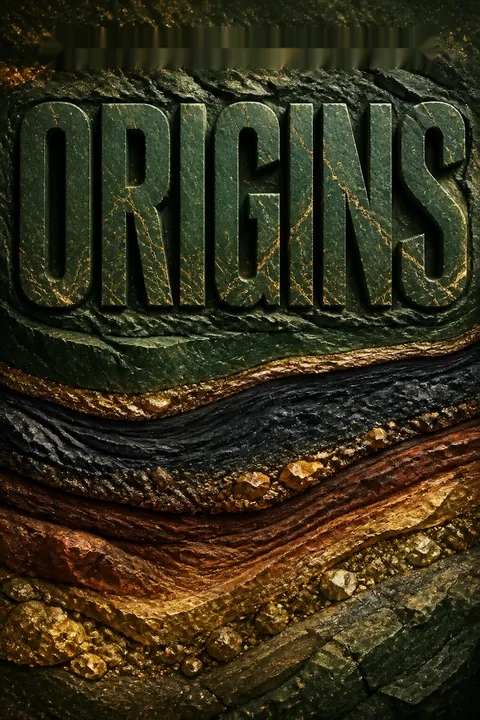


Key Takeaways
Earth's history is not backdrop; trace society's causes into geology
Follow the causal chain. Dartnell asks readers to look past the immediate explanation for a feature of modern life and keep asking why. A breakfast of wheat, for instance, depends on grasses that spread as Earth cooled and dried; their cultivation depended on a stable climate and the right soils. Mediterranean trade grew within a sea shaped by continental collision. Even a pattern of political support in the American South can be traced through cotton farming to nutrient-rich soil formed from sediments in an ancient sea.
Conditions, not destiny. These connections do not mean geology dictates every event. It shapes the opportunities and constraints within which people make decisions. The book’s central claim is that understanding human history requires reading the planet’s changing land, water, climate, and resources as part of the story.
What's striking is the method: a familiar outcome becomes more intelligible when its causal chain is extended beyond human lifetimes. This resembles systems thinking, which studies how outcomes emerge from interacting processes rather than isolated decisions. It also guards against treating geography as destiny. Soil can enable plantation agriculture, but laws, coercion, and political choices determine who benefits and who suffers. The strongest use of the book's lens is therefore not to replace human agency with geology, but to reveal the material conditions that agency must navigate.
East Africa's flickering lakes favored adaptable minds over fixed specializations
A landscape in motion. The East African Rift formed as Earth's crust stretched and broke, creating high ridges, valleys, and basins. The uplift helped dry the region and fragmented forests into a patchwork of habitats. Some rift basins held what Dartnell calls amplifier lakes: lakes whose levels changed sharply when rainfall shifted slightly, because water flowed from high ground into hot, evaporative valleys.
Change favored flexibility. Orbital cycles helped drive repeated wet and dry swings. The fossil record shows that 12 of 15 known hominin species first appeared during three periods of pronounced variability, including the emergence of Homo erectus, whose brain was substantially larger than earlier hominins'. The proposal is that fluctuating habitats favored adaptable behavior. Bipedal walking appeared before major brain expansion, and later tools, fire, cooperation, and language built on that capacity.
This account makes intelligence less like a ladder toward human superiority and more like a response to uncertainty. In evolutionary biology, a varied environment can favor general-purpose capacities when no single specialization works everywhere. The rift's shifting habitats offer a plausible setting for that pressure. Still, the fossil record is incomplete, and species appearances lining up with climate swings do not by themselves prove causation. The explanation is most persuasive as a synthesis of geology, climate, and biological flexibility, not as a single master cause of human cognition.
Ice-age seas opened migration routes, then redrew the map
Cold opened corridors. During the last ice age, vast quantities of water were locked in ice sheets, lowering global sea levels by as much as 120 metres. Around 60,000 years ago, modern humans began dispersing from Africa. Lower seas exposed land across parts of Southeast Asia and joined Siberia to Alaska at the Bering land bridge. These changing coastlines helped people reach Australia and, later, the Americas. The dispersals were gradual movements by groups seeking food and favorable conditions, not a planned march across the globe.
The same ice reshaped history. Glaciers carved valleys that later became Norway's fjords and Chile's channels, and helped redirect North American rivers that explorers used centuries later. Britain became an island after glacial meltwater breached the land connection to Europe. Ice ages created routes, barriers, and landscapes, then rising seas closed some paths and isolated populations.
The useful insight is that geography changes over time, even when a map makes it look permanent. A land bridge can be a migration corridor in one climate and open water in another. This is a form of path dependence: once routes, settlements, or political boundaries form, earlier physical conditions can continue shaping choices after those conditions change. The account also highlights an important limit. Archaeological and genetic evidence can establish broad patterns of movement more confidently than exact routes or dates, so the story is strongest when it preserves that uncertainty.
Stable Holocene seasons made farming scalable, but hard to reverse
A brief calm enabled cultivation. The Holocene, the warm interglacial that began about 11,700 years ago, provided unusually stable conditions for farming. Agriculture emerged independently in at least seven regions, with wheat and barley in the Fertile Crescent, rice and millet in China, maize in Mesoamerica, and other crops elsewhere. The Natufians of the Levant had already settled in villages and gathered wild cereals. A sharp cold spell called the Younger Dryas may have pushed some communities to plant seeds, although that interpretation remains disputed.
Food surpluses changed society. Cultivation could produce far more food from an area than foraging, supporting population growth, specialists, cities, and states. But it also made communities dependent on harvests. Livestock added milk, wool, and labor, not just meat, a shift known as the secondary products revolution. Once populations grew around farming, returning to a foraging life became difficult.
The transition is often celebrated as a straightforward improvement, but this account presents it as both an opportunity and a commitment. More food can support larger populations, yet dependence on a narrow set of crops can make societies vulnerable to drought, disease, or political disruption. That tension connects agriculture to modern infrastructure: systems that increase capacity can also create new forms of reliance. The climate explanation is compelling without being exclusive. Cultural choices, local ecology, and chance helped determine when and how communities farmed.
Eurasia's east-west axis and livestock amplified its agricultural head start
Useful species were unevenly spread. Eurasia contained 32 of the 56 wild grasses identified in the book as especially promising for domestication. It also had 72 of the world's 148 large mammal species, including 13 that humans domesticated. Horses, cattle, sheep, goats, pigs, and camels supplied food, transport, and traction. The east-west span of Eurasia connected many regions with similar day lengths and climates, helping crops move across the continent with less need to adapt than crops traveling north or south in the Americas.
Water remains strategic. China's farms and cities also depend on rivers rising on the Tibetan Plateau. Meltwater and snow feed ten major rivers that supply drinking water, irrigation, and power to more than two billion people. The plateau's location makes control of its waters a powerful geopolitical concern. Biological endowment and continental shape created advantages, but they did not guarantee any particular civilization's success.
This argument shows how environmental advantages compound: suitable crops support population growth, while animals make transport and cultivation more productive. Geography can also make useful innovations easier to share. Yet a continent's orientation is not a complete explanation of historical divergence. Institutions, exchange, conflict, and social organization determine whether potential advantages are developed or squandered. The Tibet example adds a modern dimension: resources that appear natural and shared can become politically contested when upstream control affects downstream communities.
Treat coastlines and straits as infrastructure, not empty blue space
Water can connect or isolate. The northern Mediterranean's many islands, bays, and natural harbors made short sea journeys and exchange easier. Its southern shore, backed by arid land and with fewer sheltered harbors, supported a different pattern of settlement. Elsewhere, the Dutch reclaimed land with windmills and dykes. Financing these expensive projects through shared investment helped develop credit markets and practices that later supported commercial ventures.
A narrow passage can decide outcomes. Ancient Athens relied on grain shipped through the Hellespont from the Black Sea. Sparta destroyed the Athenian fleet at this maritime bottleneck, cutting off the supply route and forcing Athens to surrender. The same principle applies to ports and straits across history: control of a narrow sea passage can matter as much as control of a broad territory. Oceans are routes, boundaries, and strategic infrastructure all at once.
The sea becomes easier to understand when treated as a network rather than a blank space between nations. Ports function as transfer points, while straits concentrate traffic and vulnerability. Network analysis uses a similar idea: a small number of highly connected nodes can matter more than their physical size suggests. But geography alone does not create financial institutions or determine military outcomes. The Dutch example depends on collective organization, and Athens's defeat on a particular political and military decision. Physical structure makes some strategies powerful, not inevitable.
Every city is built from geology, including its hidden constraints
The planet supplies the building blocks. The limestone in Egypt's Great Pyramid contains the fossil shells of single-celled marine organisms. Across history, communities built with the materials closest at hand, from Mesopotamian mud bricks to local stone. Geology also shapes cities in less visible ways: hard bedrock helped support Manhattan's skyscrapers, while London's thick clay favored tunnel building but made very tall structures harder to support.
Earth's chemistry became technology. Most iron ore comes from Banded Iron Formations, ancient deposits created as oxygen released by early microbes reacted with dissolved iron in the oceans. That rise in oxygen also made complex life and fire possible. Today, a smartphone can use around 60 metals, some difficult to obtain in useful concentrations. Human technology depends not just on invention, but on specific geological processes that concentrated materials in particular places.
A building is a record of both cultural choice and geological supply. This insight extends beyond architecture to questions of infrastructure and resource security: a city depends on what its ground can bear, what its region can supply, and what distant mines can deliver. The geological record also reveals reciprocal effects, as early life altered ocean chemistry and made later technologies possible. One caution is that calling resources gifts can obscure mining's costs. Material availability is never simply a technical fact; extraction distributes risks and benefits unevenly.
The steppe's grasslands made mounted nomads recurring powers, not footnotes
Ecology shaped distinct lives. Across Eurasia, the dry grassland steppe lay between northern forests and southern deserts. It was poorly suited to settled crop farming but excellent for grazing. Horses gave pastoralists mobility across this open terrain, while camels carried trade through nearby deserts. Caravan routes such as the Silk Road followed the region's oases, valleys, and mountain passes, carrying goods as well as ideas and technologies.
Mobility could become power. Steppe peoples traded, served as soldiers, and sometimes invaded settled societies. The Huns helped set migrations in motion that weakened the Western Roman Empire. Centuries later, Mongol rule joined much of Eurasia in a period of expanded trade called the Pax Mongolica. That same connectivity helped disease travel; the Black Death devastated populations across the region. From the sixteenth century, gunpowder armies and stronger centralized states reduced the steppe nomads' military advantage.
This perspective corrects histories that treat nomadic societies as marginal simply because they left fewer monumental cities. Mobility was itself a form of power, especially across terrain where settled armies struggled to operate. The contrast between pastoral and agricultural life also resembles a broader political tension between mobile networks and territorial states. Still, ecology cannot explain the timing or character of particular conquests on its own. Leadership, alliances, military organization, and disease all shaped how the steppe's geographic potential translated into history.
Master the wind bands and distant oceans become connected highways
Wind knowledge changed navigation. Portuguese sailors learned the volta do mar, a looping route that left the African coast to catch more favorable winds and currents on the return. The larger pattern comes from solar heating, Earth's rotation, and the movement of air in great circulation cells. Trade winds carried Columbus west from the Canary Islands; westerlies helped his ships return. Vasco da Gama reached India by sea, but his crew suffered on the return after missing the seasonal monsoon window.
Routes carried power and coercion. The Spanish Manila Galleon linked Mexico and the Philippines across the Pacific. Dutch sailors used the stronger Southern Hemisphere westerlies to shorten trips to Asia. Atlantic shipping also moved enslaved Africans to plantations and transported sugar, cotton, and other commodities to Europe. These routes helped build global empires, but their commercial success relied in part on forced labor.
Navigation here is a practical science of invisible systems: sailors learned to use patterns in air and water that could not be seen on a map. That knowledge made long-distance trade more reliable, but reliable routes amplified whatever institutions controlled them. The same ocean networks carried goods, people, and coercion. This distinction matters because technological explanation can accidentally make empire sound like a neutral consequence of wind. Wind created possibilities; states, merchants, and slave traders chose how to exploit them.
Fossil energy escaped land limits by importing deep-time climate debt
Buried sunlight broke the old ceiling. Before industrialization, societies relied on crops, forests, human and animal muscle, and limited water and wind power. Coal concentrated the energy of ancient forests, especially those buried during the Carboniferous as subsiding swamps were repeatedly flooded and covered. Coal, iron, and steam engines reinforced one another: coal powered iron production, and engines helped extract more coal and move goods. Oil, formed mainly from marine plankton buried in oxygen-poor ancient seas, later supplied portable fuels and industrial chemicals.
The energy gain has consequences. Oil is useful because extracting and refining it can yield far more energy than the process consumes, a measure called Energy Return on Investment. Fossil fuels helped support modern industry and intensive agriculture, but burning them rapidly returns ancient carbon to the atmosphere. Dartnell reports that atmospheric carbon dioxide is about 45 percent higher than before the Industrial Revolution. The book closes with the challenge of replacing fossil energy with lower-carbon sources.
Fossil fuels did more than provide another source of power. They loosened the link between prosperity and the amount of productive land available, changing transport, manufacturing, and population support. The same density and portability that made these fuels economically transformative also enabled emissions to scale rapidly. This is a classic systems tradeoff: solving one constraint can create a larger external cost elsewhere. The planetary timescale sharpens the point. Carbon stored over geological ages is being released on a timescale far shorter than the natural processes that buried it.
Analysis
Origins works by extending the timeline behind familiar historical events until geology, climate, biology, and human choice enter the same frame. Its strongest contribution is not the claim that landscape dictates history, but the demonstration that landscapes are dynamic and that their effects can persist long after the original conditions have changed. The English Channel, the exposed soils of the American South, and the ancient coalfields of Britain are physical inheritances that continue to shape mobility, economic activity, and political life.
The book also resists a simple technological story. Agriculture brought food surpluses and cities, but also dependence and hierarchy. Maritime trade joined distant societies, while its infrastructure enabled conquest and enslavement. Fossil fuels expanded available energy while destabilizing the climate. Across these examples, greater capacity repeatedly brings new dependencies and costs.
Its broad causal narratives are most useful when treated as enabling conditions rather than complete explanations. Climate variability may have favored flexible behavior, but the fossil record cannot isolate a single cause of intelligence. Eurasia's domesticable species and east-west orientation may have aided diffusion, but they do not explain every political or cultural outcome. Human institutions mediate environmental pressures, and historical contingencies can redirect them.
That qualification strengthens rather than weakens the book's central lens. Geology is not a script. It is a changing set of constraints, resources, and pathways within which societies act. The final image of Earth's night lights captures the relationship neatly: human civilization is now a planetary force, yet its cities, farms, trade routes, and energy systems remain anchored to the conditions that made them possible. Understanding that dependence is essential for judging both past success and present risk.
Review Summary
Origins explores how Earth's geology and geography shaped human history and evolution. Dartnell examines plate tectonics, climate, and natural resources to explain human migration, agriculture, and technological development. Readers found the book fascinating and informative, praising its broad scope and engaging writing style. Some criticized its deterministic approach and oversimplification of complex topics. While covering similar ground as other popular science books, Origins offers a unique geological perspective on human history. Many readers appreciated the interesting facts and footnotes throughout the book.
People Also Read
Glossary
Cenozoic cooling
Long-term planetary coolingThe sustained cooling trend that began around 55 million years ago during the Cenozoic Era. Mountain building and erosion, changes in ocean circulation, and continental movement helped reduce greenhouse warming and promote ice formation. The trend dried many regions, altered ecosystems, and contributed to the conditions in which grasslands and human ancestors later developed.
amplifier lakes
Climate-sensitive rift lakesLakes in East African Rift basins whose water levels respond sharply to relatively small changes in rainfall. Their position between wetter highlands and hot, evaporative valley floors makes them especially sensitive to shifts in precipitation. As they expanded or dried out, they changed the local availability of water, woodland, and food for hominins.
Milankovitch cycles
Recurring orbital climate rhythmsLong-term variations in Earth's orbit and orientation, including changes in orbital shape, axial tilt, and the wobble of the axis. These cycles alter how sunlight is distributed between seasons and hemispheres. They can help trigger ice-age and interglacial shifts when Earth's climate is already close to conditions that allow large ice sheets to grow or retreat.
Holocene
Current warm interglacial epochThe geological epoch that began about 11,700 years ago after the last major glaciation. Its relatively warm and stable climate supported the spread of agriculture, permanent settlements, and civilization. The Holocene is an interglacial interval within the longer Quaternary ice-age period, not an indication that Earth's climate has become permanently stable.
secondary products revolution
Repeated uses of livestockA change in animal husbandry in which people exploited domestic animals for ongoing products and services, not only for meat at slaughter. Milking animals supplied nutrition throughout life; sheep could provide wool, and large animals could carry loads, pull ploughs, or haul vehicles. These uses expanded the economic and practical value of livestock.
Palaeocene-Eocene Thermal Maximum (PETM)
Ancient rapid global warmingA sharp warming event about 55.5 million years ago, when a large release of carbon into the atmosphere raised global temperatures by roughly 5 to 8 degrees Celsius. The warming transformed ecosystems and coincided with the rapid emergence and spread of major mammal groups, including primates and hoofed mammals.
Banded Iron Formations (BIFs)
Ancient layered iron oresVery old rocks composed of alternating iron-rich and silica-rich bands. Most formed in ancient oceans around the time oxygen began accumulating, when oxygen reacted with dissolved iron and caused it to settle onto the seafloor. BIFs became the principal source of iron ore used in human history and modern industry.
ophiolite
Ocean crust on landA fragment of oceanic crust and upper mantle that has been thrust onto continental crust instead of sinking beneath it at a plate boundary. Ophiolites let geologists study the structure of ancient ocean floors on land. On Cyprus, the Troodos ophiolite also exposed metal deposits formed by deep-sea hydrothermal vents to ancient miners.
Hadley cells
Tropical air circulation loopsLarge atmospheric circulation patterns in which warm air rises near the equator, moves poleward at high altitude, and descends in dry subtropical regions around 30 degrees north and south. Surface winds then flow back toward the equator. These circulation loops help produce the trade winds, tropical rainfall, and many of the world's subtropical deserts.
volta do mar
Looping wind-assisted return routeA Portuguese sailing strategy meaning a turn or return of the sea. Instead of fighting unfavorable coastal winds and currents directly, sailors made a wider loop into the Atlantic to reach winds and currents that carried them home. This method helped navigators travel farther from shore and develop routes across open ocean.
Pax Mongolica
Mongol-era trade stabilityA period of relative security and commercial growth across much of Eurasia under Mongol rule, especially from around 1260. Mongol authorities made long-distance travel and trade more viable across the continent. The same connections that moved goods and ideas also enabled diseases, including plague, to spread across distant regions.
Energy Return on Investment (EROI)
Energy gained per energy spentA measure comparing the energy obtained from a resource with the energy used to extract and process it. A higher return means that less energy must be spent to make energy available for other uses. Dartnell uses the idea to help explain why oil became so important: it is energy-dense, portable, and relatively productive to extract.
Anthropocene
Proposed human-dominated epochA proposed geological epoch name intended to recognize humanity's influence on planetary systems. The book points to agriculture, mining, urbanization, river alteration, extinctions, and greenhouse gas emissions as evidence that human activity has become a major environmental force. The term is presented as a proposal, not as an uncontested formal division of geological time.
FAQ
What's Origins: How Earth's History Shaped Human History about?
- Exploration of Earth's Influence: The book examines how Earth's geological processes, climate, and physical landscape have shaped human evolution and civilization.
- Interdisciplinary Approach: Lewis Dartnell integrates insights from geology, biology, archaeology, and history to create a comprehensive narrative.
- Major Themes: It focuses on plate tectonics, climate change, and natural resources, emphasizing their roles in shaping human societies.
Why should I read Origins: How Earth's History Shaped Human History?
- Understanding Our Place: The book offers a unique perspective on the relationship between humanity and the planet, encouraging reflection on our development as a species.
- Engaging Narrative: Dartnell presents complex scientific concepts in an accessible manner, making it suitable for both casual readers and those with a scientific background.
- Relevance to Current Issues: Insights from the book are pertinent to discussions about climate change and environmental sustainability.
What are the key takeaways of Origins: How Earth's History Shaped Human History?
- Human Evolution and Environment: Geological and climatic changes have driven human evolution, particularly in East Africa.
- Impact of Resources: The availability of natural resources has significantly influenced the rise of civilizations.
- Lessons for the Future: Understanding our past is crucial for navigating future challenges, especially regarding climate change.
What are the best quotes from Origins: How Earth's History Shaped Human History and what do they mean?
- "We are all apes.": Highlights our biological connection to primate ancestors, emphasizing shared heritage.
- "The Earth has also provided us with the raw materials...": Underscores the significance of Earth's resources in human innovation.
- "To truly understand our own story...": Stresses the importance of studying Earth's history to comprehend human existence.
How does Origins explain the role of plate tectonics in human history?
- Foundation of Landscapes: Plate tectonics shape Earth's surface, influencing human settlement and migration.
- Climate Change Driver: Tectonic movements have led to significant climatic shifts, affecting ecosystems and human evolution.
- Resource Distribution: Plate tectonics affect the distribution of natural resources, crucial for civilization development.
What does Origins say about the impact of climate on human evolution?
- Climate as a Catalyst: Climate change has been a significant driver of human evolution, particularly in East Africa.
- Fluctuating Conditions: Periods of climatic variability favored adaptability and intelligence in early hominins.
- Migration Patterns: Changing environments pushed populations to seek new habitats, influencing migration.
How does Origins address the concept of the Anthropocene?
- Human Dominance: The term Anthropocene describes the current epoch characterized by human impact on Earth.
- Environmental Consequences: Human activities have profound effects on the planet, including climate change and biodiversity loss.
- Need for Awareness: A deeper understanding of our relationship with Earth is necessary to mitigate negative impacts.
What role do natural resources play in the development of civilizations according to Origins?
- Foundation of Societies: Access to natural resources has been crucial for the rise of civilizations.
- Technological Advancements: Resources have driven technological innovations, enabling societal growth.
- Economic Power: Control over resources often translates into economic and political power.
How does Origins connect human history with cosmic events?
- Cosmic Influences: Cosmic events like asteroid impacts have shaped Earth's environment and human history.
- Planetary Processes: The formation of the solar system influenced conditions for life on Earth.
- Interconnectedness of Events: Cosmic and terrestrial events are interconnected in shaping human existence.
What insights does Origins provide about the future of humanity?
- Learning from the Past: Understanding Earth's history is crucial for preparing for future challenges.
- Sustainable Practices: The book advocates for sustainable practices to mitigate human impact on the environment.
- Interconnected Future: Humanity's future is linked to the health of the planet.
How does Origins explain the relationship between geology and human history?
- Geological Processes as Catalysts: Geological events have acted as catalysts for significant changes in human history.
- Resource Distribution: Geological processes determine the distribution of resources, influencing civilization development.
- Environmental Challenges: Geological and climatic changes have posed challenges, leading to migrations and adaptations.
How does Origins address climate change?
- Historical Context: Provides a historical perspective on climate change, illustrating past climatic shifts' influence on societies.
- Impact on Civilizations: Climate change has historically affected agriculture, resource availability, and migration patterns.
- Call for Adaptation: Advocates for adaptive strategies in response to climate change, emphasizing resilience and innovation.
Download PDF
Download EPUB
.epub digital book format is ideal for reading ebooks on phones, tablets, and e-readers.








