

Key Takeaways
Treat feminine power as a spectrum, not a synonym for gentleness.
Power has many registers. The book’s central claim is that sacred feminine power can mean nurture, beauty, battle, age, sexuality, or death. Orishas are divine forces in traditions such as Ifa and La Regla Lucumi; loas are spirits in Haitian Vodou and New Orleans Voodoo. Their Ashe, the life force present in people and things, takes many forms. Oshún averts catastrophe through charm, Oya confronts danger with storm-like force, and Nana Buruku protects through ancient wisdom. These figures are not presented as models for women alone. Dorsey argues that people of every gender can draw on the sacred feminine within themselves.
Strength beyond stereotypes. The book challenges the familiar picture of a warrior as someone who wins through physical force. Its stories instead make room for persuasion, care, patience, and resourcefulness as forms of power. Each figure offers a different way to meet life, rather than one universal recipe for courage.
What’s distinctive is the breadth of the book’s definition of power. Seduction, protection, age, and grief are not decorative traits here; they shape what a deity can do. That wider vocabulary can help readers recognize strengths often dismissed as weakness. It also deserves a limit: persuasion and care cannot replace material protection when people face violence or injustice. The book’s strongest implication is not that gentleness solves everything, but that force is not the only meaningful measure of agency.
Read African diasporic religions as traditions of survival, not occult stereotypes.
Faith under pressure. The book traces how enslaved Africans carried religious knowledge across the Atlantic despite separation from families, restrictions on language, and punishment for practicing their traditions. The author cites estimates of more than twelve million people forcibly transported during the slave trade. These religions persisted by adapting, keeping practices private, and building community under extreme conditions.
Blending and continuity. Syncretism means the blending of religious or cultural traditions. Catholic saint images could conceal African devotion from persecutors, while some practitioners also embraced the saints’ stories and practices. Ashe, the sacred life force, helps explain why some devotees see divine power across traditions. Houses differ: some emphasize one supreme God, while understanding or honoring orishas and loas in distinct ways. The book rejects the idea that this complexity makes the traditions less authentic.
The historical account makes adaptation visible as both strategy and creative religious life. A saint image could serve as cover, yet concealment does not explain every case of religious blending. The book itself allows for that distinction, which prevents a simple story of traditions merely hiding unchanged behind Catholic symbols. Its emphasis on survival also needs to keep coercion in view: resilience is real, but it should not make the violence that forced adaptation seem productive or inevitable.
Choose a spiritual house as carefully as an apprenticeship and family.
Guidance is personal. A spiritual house is a community and lineage led by practitioners who teach, conduct ceremonies, and guide members. In the traditions Dorsey discusses, a person’s guiding orisha or loa is determined through divination and ceremony, not simply chosen by the person. She warns against remote claims to determine this connection and urges seekers to research practitioners before committing.
Ask before joining. Prospective members should learn a teacher’s lineage, expectations, costs, views on disputed practices, and communication habits. They should also meet other members and consider whether they have the time and energy for ongoing obligations. Initiation can create durable ties, and leaving a house may be difficult. The book’s practical point is clear: a guide can help, but trust should be earned through openness and accountability.
The comparison to family and apprenticeship captures the depth of commitment, while also naming a real risk: spiritual authority can become personal and hard to challenge. Questions about lineage, money, expectations, and consent are therefore not signs of disrespect. They are safeguards for both student and teacher. The book presents community as a source of belonging and knowledge, but its own cautions suggest that belonging is healthiest when members can ask difficult questions without fear.
Make devotion physical through clean spaces, ancestor care, and repeated offerings.
Ritual takes shape. Dorsey distinguishes an altar, a temporary space for a particular working, from a shrine, a more lasting place of honor. She recommends beginning with physical cleaning, then preparing the space with elements such as herbs, incense, water, candles, plants, or crystals. The point is not to assemble an expensive display. It is to approach spiritual practice with attention, gratitude, and care.
Remember the dead. In Haitian Vodou and New Orleans Voodoo, ancestors may receive prayers and offerings of water, food, money, or cherished objects. In La Regla Lucumi, an ancestor shrine may be called a boveda. Prayer can use traditional words or a sincere personal offering; the book even describes breath as a way to give one’s presence. Practices vary by house, so general instructions do not overrule a teacher’s guidance.
Ritual objects make abstract commitments visible: cleaning, arranging, and returning to a shrine create a repeatable practice rather than a passing intention. The attention to ancestors also frames spirituality as a relationship across generations, not merely a search for private benefit. Still, materials and actions do not carry identical meanings in every community. The book’s insistence on house-specific guidance matters because a ritual can be personally meaningful while remaining different from a tradition’s formal practice.
Use Oshún’s persuasion to recognize power beyond force and status.
The river’s force. Oshún is associated with the Ashe of the river and with love, beauty, fertility, dance, gold, and abundance. A pataki is a sacred story used to teach about an orisha. In one well-known pataki, other orishas fail to stop a group of powerful women from taking over the world. Oshún succeeds by captivating them with dance and persuasion, turning a crisis into a relationship rather than a battle.
Beauty as agency. The story makes sensuality and social intelligence forms of strength, not signs of weakness. Oshún is honored through river water, yellow and gold, flowers, honey, and offerings often arranged in groups of five. Dorsey advises tasting honey before offering it. The stories also portray Oshún as more than a symbol of romance: her generosity and compassion can feed and protect others.
The story’s memorable reversal is that the figure associated with beauty succeeds where the military power of Ogun does not. It broadens the idea of strategy: influence can work through attraction, timing, and understanding what others want. There is a useful caution, though. If Oshún’s power is reduced to physical beauty, the story risks repeating the very narrow standard it challenges. Its richer lesson is that charisma and pleasure can be forms of agency without becoming a measure of anyone’s worth.
Keep Yemaya’s protective ocean distinct from Mami Wata’s many waters.
Two water powers. Yemaya is the orisha associated with the ocean and with motherly protection. Her stories show care that is strong rather than endlessly gentle: she supports Oshún in hardship, protects women and children, and can unleash the sea’s force when her children are threatened. Some traditions associate her with seven paths and make offerings in multiples of seven.
Related, not identical. Mami Wata is not an orisha but a broad, many-sided water deity associated with healing, wealth, knowledge, and divination. The book warns against treating her as interchangeable with Yemaya or the loa La Sirene. Mami Wata may be generous or dangerous, and some traditions describe spiritual marriages to her. Together, these figures suggest water as life-giving, resourceful, and capable of overwhelming those who disregard its power.
The distinction between these figures is more than a naming detail. It protects the particular relationships, histories, and practices attached to each one. The shared image of water invites comparison, but similarity is not identity. That is a useful discipline for reading a book that crosses cultures: notice recurring themes without turning them into a single universal archetype. The ocean’s maternal symbolism also avoids sentimentalizing care, since Yemaya’s protection includes boundaries and the capacity for anger.
When threats persist, Oya’s decisive change may exceed what you asked for.
Change arrives as weather. Oya is associated with wind, storms, the marketplace, and the boundary between the living and the dead. Her power is change that can be sudden and difficult to control. In one pataki, the diviner Orunmila asks for help against enemies who keep returning. Oya is called, and a tornado destroys the town where those enemies live, stopping the threat but causing far more devastation than Orunmila intended.
Power has consequences. The story presents Oya as effective, independent, and potentially frightening. Her sacred number is nine, and she is associated with cemeteries, ancestors, and transformation. Dorsey’s account makes this more than an invitation to seek strength: it is also a warning to think carefully about the kind of intervention being requested. A problem may end, but the remedy can carry a cost.
This tale refuses the comforting idea that power always arrives in the form requested. Oya’s decisiveness solves the immediate problem, but the destruction raises an ethical question about proportionality and collateral harm. That makes the story useful beyond its religious setting: an intervention should be judged by its consequences, not only by whether it works. The narrative does not make Oya’s force wrong, but it asks the reader to recognize that effective action is not automatically benign.
Let Nana Buruku’s ancestral wisdom restrain force and protect the vulnerable.
The elder’s protection. Nana Buruku is an ancient maternal force associated with women, healing, herbal knowledge, and patient wisdom. In a pataki, she sees Ogun entering a forest and hunting its animals with a metal blade. She transforms into a snake to stop him from killing a deer. The story explains why metal is taboo in her rites and why her tools are made from wood.
Memory as strength. Nana Buruku’s power comes from attention and restraint, not from matching Ogun’s violence. Dorsey also describes traditions in which she protects families and pregnant women, and stories that place her alongside the sacred twins Mawu and Lisa. Her figure connects survival to the knowledge carried by elders and ancestors, including people who endured the Atlantic slave trade.
Nana Buruku’s story makes restraint active rather than passive: she intervenes, but in a way that preserves life and establishes a lasting boundary. The use of wood instead of metal gives that boundary material form. The figure also invites respect for knowledge passed through generations, especially where written records have been disrupted. At the same time, age alone does not guarantee wisdom; the story’s force lies in what Nana does, not simply in how long she has existed.
Treat each Erzulie as a distinct force, not one generic love goddess.
Love has many faces. Erzulie is a family of Haitian Vodou loas, not a single, uniform goddess. Erzulie Freda is associated with refinement, compassion, and grief at human failings. Erzulie Danto is a stern protector of women and children, including people facing abuse. Some devotees describe a rivalry between them, underscoring how different their roles can be. A Maryaj loa is a spiritual marriage, an agreement of devotion and obligation between a person and a loa.
Beyond romance. The book places these figures among other Haitian spirits with distinct domains. Aida Wedo is linked to the rainbow, creation, and hope; La Sirene to the sea, song, and mystery; Ayizan to priesthood, plants, and initiation. A veve is a ritual drawing made to honor a loa, often from flour or cornmeal. These practices and meanings vary between houses.
The distinctions resist a familiar shortcut: treating every feminine spirit as a version of the same loving mother or romantic muse. Freda’s compassion and Danto’s protective severity make love a more demanding idea, one that can include grief, discipline, and defense. This specificity is especially important when a book presents many traditions side by side. Compression helps newcomers navigate the material, but it can also blur differences unless each spirit’s particular role remains in view.
Read Voodoo queens as strategists of survival, not supernatural celebrities.
Power in public life. Marie Laveau is remembered as a Voodoo queen, priestess, mother, and businesswoman. Dorsey describes her as the first woman to hold open public spiritual services in New Orleans and notes that her work as a hairdresser gave her access to people across social ranks. Stories about her supernatural feats are often uncertain, but the book also emphasizes charitable work and support for the oppressed.
A wider lineage. Annie Christmas is a New Orleans folk heroine celebrated for physical strength and river rescues. Queen Nanny of Jamaica is remembered as a leader of the Maroons, who fought for freedom from slavery. Their lives are surrounded by legend and incomplete records. Together, these women show spiritual authority as practical intelligence, community service, resistance, and the ability to act when ordinary power is denied.
The book’s most valuable shift is from spectacle to strategy. Laveau’s influence is tied not only to spiritual reputation but to access, work, and relationships; Nanny’s story links spiritual knowledge to organized resistance. Legends can preserve what official histories neglect, but they are not substitutes for evidence about specific events. The book is strongest when it lets the stories inspire attention to women’s agency without asking the reader to treat every detail as verified biography.
At the crossroads, sexual autonomy and death can become forms of dignity.
Marginal powers matter. Pomba Gira, honored in Brazilian Umbanda and Candomble, is associated with sexuality, crossroads, transformation, and people surviving on society’s margins. Some devotees seek her help with love or work, and the book cautions that attempts to control a lover can backfire. Santa Muerte, a Mexican folk saint outside official Catholic recognition, is honored by varied communities, including prisoners and LGBTQ devotees, for protection, justice, and help in danger.
The dead remain present. Maman Brigitte is a Haitian Vodou and New Orleans Voodoo loa associated with cemeteries and the dead. Dorsey describes offerings and ancestor practices as ways to seek guidance and connection. These figures do not erase the danger or grief around their domains. Instead, they offer spiritual language for experiences that respectable institutions may stigmatize or leave unsupported.
The chapter’s focus on sexuality, incarceration, death, and social exclusion gives these figures a different kind of relevance from idealized goddess imagery. They make room for dignity where mainstream institutions may offer condemnation instead. That does not make every petition ethically neutral: trying to compel another person, for example, raises questions of consent. The book’s own caution about such workings supports a broader principle: seeking agency should not mean denying someone else’s.
Analysis
This book is part practitioner’s guide, part spiritual memoir, part introduction to a diverse set of African and diasporic traditions. Its organizing principle is the many-sided sacred feminine, but its deeper argument is about how power persists: through ritual, oral teaching, community, ancestral memory, and adaptation under oppression. The stories of Oshún, Oya, Nana Buruku, Marie Laveau, and Queen Nanny make that argument vivid by showing different kinds of agency, from persuasion and protection to political resistance.
The book’s practical sections are valuable because they connect spiritual ideas to ordinary actions: cleaning a space, preparing an offering, remembering ancestors, and seeking trustworthy guidance. That accessibility has a corresponding tension. A reader can learn the symbolism of a shrine or a spirit, but written instructions cannot reproduce the authority, relationships, and obligations of initiation. Dorsey explicitly recognizes this, and her advice to investigate a teacher and a house is central, not incidental.
The breadth is also a challenge. Yoruba-derived traditions, Haitian Vodou, New Orleans Voodoo, Brazilian practices, and Mexican devotion have distinct histories and structures. Grouping them under a shared exploration of feminine divinity creates illuminating comparisons, but it can also encourage readers to treat related figures as interchangeable. The book repeatedly warns against that mistake, especially with Oshún, Yemaya, Mami Wata, and La Sirene. Readers should hold both truths: motifs travel, and particular traditions remain particular.
Finally, the material moves between documented history, practitioner testimony, sacred narrative, and folklore. Those kinds of knowledge serve different purposes. A pataki can teach a religious principle without functioning as a modern historical report. One account of Queen Nanny contains an apparent chronology conflict, placing her in eighteenth-century resistance while also giving a nineteenth-century birth date. That inconsistency is a reminder to verify historical claims independently. The book is best read as an inviting, practitioner-grounded map, not a definitive encyclopedia or substitute for community-based learning.
Review Summary
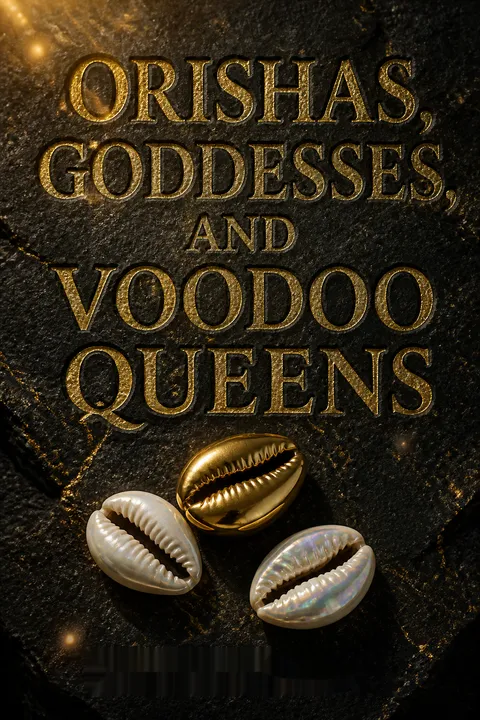
Orishas, Goddesses, and Voodoo Queens receives generally positive reviews, with readers praising its informative content on African religious traditions and divine feminine entities. Many appreciate the practical aspects, including recipes and rituals. Some criticize the book for being rushed or lacking depth in certain areas. Readers value the author's knowledge and personal experience, though a few question its anthropological rigor. Overall, it's considered a good introduction to the subject, particularly for those interested in exploring or practicing these spiritual traditions.
People Also Read


Glossary
Ashe
Sacred life forceAshe is the universal life force described in African and Afro-Caribbean religious traditions. It is present in people, animals, plants, stones, rivers, and sacred objects, though it may appear differently in each. The term can also be used as an affirmation meaning “so be it.”
Orisha
Divine force in Yoruba traditionsAn orisha is a divine force honored in Ifa, La Regla Lucumi, Candomble, and related traditions. Orishas are associated with particular powers, places, and aspects of life, such as Oshún with the river and Oya with the wind. Their identities and practices vary across communities and lineages.
Loa
Spirit in Haitian VodouA loa, also written lwa, is a spirit honored in Haitian Vodou and New Orleans Voodoo. Loas have distinct personalities, relationships, ritual preferences, and areas of influence. They are approached through community traditions, offerings, songs, ceremonies, and guidance from experienced practitioners.
Pataki
Sacred teaching storyA pataki is a sacred story in La Regla Lucumi that helps explain an orisha, a religious practice, or a lesson about life. Patakis may be told during divination or shared by elders. Versions can vary, and their meaning is interpreted within a religious community.
Syncretism
Blending of traditionsSyncretism is the blending of religious or cultural traditions. In African diasporic religions, Catholic images, saints, prayers, or practices could provide cover for African traditions during periods of persecution. In some communities, blending also involved the sincere incorporation of elements from more than one religious system.
Boveda
Lucumi ancestor shrineA boveda is an ancestor shrine or sacred space used in some La Regla Lucumi houses. Practitioners may leave offerings, pray, and perform divination there for honored dead. The form and use of a boveda vary by house, and not every community includes one as a standard practice.
Veve
Ritual drawing for a loaA veve is a sacred drawing used to honor a loa in Haitian Vodou. It is often made on the ground from flour or cornmeal, sometimes near the temple’s center pole. Veves may be drawn, danced upon, or incorporated into flags, bottles, jewelry, and other ritual objects.
Lavé Tet
Initiatory head washingLavé Tet is a Haitian Vodou ceremony whose name means “wash head.” It is described as a spiritual baptism that cleanses and welcomes someone into the tradition, helping them gain clarity and recognition by the loa. Its performance and significance depend on the spiritual house conducting it.
Maryaj loa
Spiritual marriage with a loaMaryaj loa is an agreement of devotion between a person and a loa in Haitian Vodou. It may involve a formal wedding-like ceremony, promises of regular devotion, and specific personal obligations. In return, the person seeks blessings, love, or guidance. Such commitments are serious and should be undertaken with knowledgeable guidance.
Mami Wata
Water deity with many formsMami Wata is a powerful water deity honored in parts of Africa and the diaspora. The name can refer to many related manifestations rather than one uniform figure. Mami Wata is associated with healing, wealth, knowledge, divination, and the generative power of water, and is distinct from Yemaya and La Sirene.
FAQ
1. What is "Orishas, Goddesses, and Voodoo Queens" by Lilith Dorsey about?
- Exploration of Divine Feminine: The book explores the divine feminine in African religious traditions, focusing on orishas, goddesses, loas, and Voodoo queens from Africa and the African diaspora.
- Practical and Historical Guide: It combines historical context, myth, and practical advice for connecting with these sacred feminine forces through rituals, offerings, and personal practice.
- Empowerment and Intersectionality: Dorsey emphasizes women's empowerment, intersectionality, and the importance of reclaiming ancestral spiritual practices, especially for women of color.
- Resource for Seekers: The book serves as both an introduction and a practical manual for those interested in African traditional religions, goddess spirituality, and feminist magick.
2. Why should I read "Orishas, Goddesses, and Voodoo Queens" by Lilith Dorsey?
- Unique Focus on African Feminine Divinities: The book fills a gap by centering African and diasporic goddesses, orishas, and Voodoo queens, often overlooked in mainstream goddess literature.
- Accessible Rituals and Practices: Dorsey provides clear, respectful instructions for rituals, offerings, and altars, making these traditions approachable for beginners and experienced practitioners alike.
- Cultural and Historical Insight: Readers gain a nuanced understanding of the history, syncretism, and evolution of African traditional religions, including their survival through slavery and colonization.
- Empowering Perspective: The book encourages readers to connect with their own divine feminine power, offering tools for personal and spiritual growth.
3. What are the key takeaways from "Orishas, Goddesses, and Voodoo Queens"?
- Diversity of the Divine Feminine: African traditional religions feature a rich tapestry of feminine deities, each with unique powers, stories, and lessons.
- Importance of Respect and Authenticity: Dorsey stresses the need for respectful engagement, proper initiation, and guidance from qualified teachers in these traditions.
- Practical Spiritual Tools: The book offers recipes, spells, rituals, and altar setups to help readers connect with orishas and goddesses in meaningful ways.
- Empowerment Through Ancestry: Understanding and honoring ancestral traditions can be a source of strength, healing, and empowerment, especially for women and marginalized communities.
4. Who is Lilith Dorsey, and what qualifies her to write "Orishas, Goddesses, and Voodoo Queens"?
- Experienced Priestess and Scholar: Lilith Dorsey is a Voodoo priestess with decades of experience in Santeria (Lucumi), Haitian Vodou, and New Orleans Voodoo, as well as academic training in anthropology and plant science.
- Initiated Practitioner: She has undergone multiple initiations and has worked closely with respected elders and spiritual houses in these traditions.
- Author and Educator: Dorsey has written several books on African traditional religions and magick, and is known for her accessible, respectful approach to sharing sacred knowledge.
- Community Leader: She runs her own spiritual group, House of Maman Brigitte, and is active in teaching, blogging, and filmmaking about African diasporic spirituality.
5. What are orishas, loas, and Voodoo queens as defined in "Orishas, Goddesses, and Voodoo Queens"?
- Orishas: In Yoruba and related traditions, orishas are divine forces or deities, each governing specific aspects of nature and human experience (e.g., Oshún for rivers and love, Yemaya for the ocean and motherhood).
- Loas (Lwas): In Haitian Vodou and New Orleans Voodoo, loas are spirits or divine intermediaries between humans and the supreme creator, each with distinct personalities and domains (e.g., Erzulie for love, Maman Brigitte for the dead).
- Voodoo Queens: These are powerful women, both historical and legendary, who have embodied and led Voodoo traditions, such as Marie Laveau in New Orleans.
- Divine Feminine Forces: All are seen as manifestations of the sacred feminine, offering guidance, protection, and empowerment to their devotees.
6. How does "Orishas, Goddesses, and Voodoo Queens" by Lilith Dorsey recommend connecting with the divine feminine?
- Setting Up Altars and Shrines: The book provides step-by-step instructions for creating personal altars and shrines to honor ancestors, orishas, and goddesses.
- Ritual Cleansing and Offerings: Dorsey emphasizes the importance of physical and spiritual cleansing, using elements like herbs, water, and candles, and making appropriate offerings.
- Divination and Meditation: Readers are encouraged to use tarot, oracle decks, pendulums, and meditation to receive guidance from the divine feminine.
- Community and Initiation: The author advises seeking out trustworthy spiritual houses and mentors for deeper connection and proper initiation into these traditions.
7. What are some of the main orishas, goddesses, and loas featured in "Orishas, Goddesses, and Voodoo Queens"?
- Oshún: Orisha of rivers, beauty, love, and abundance, known for her sensuality and power to save the world through persuasion.
- Yemaya: Orisha of the ocean and motherhood, embodying nurturing, protection, and the bounty of the sea.
- Oya: Orisha of wind, storms, and change, a fierce warrior and queen of the ancestors.
- Mami Wata: Ancient water spirit associated with wealth, healing, and divination, present across Africa and the diaspora.
- Erzulie (Freda and Dantor): Loas of love, passion, protection, and justice in Haitian Vodou.
- Marie Laveau: Legendary Voodoo queen of New Orleans, symbolizing power, justice, and resourcefulness.
- Others: The book also covers Nana Buruku, Aida Wedo, La Sirene, Ayizan, Annie Christmas, Maman Brigitte, Pomba Gira, and Santa Muerte.
8. How does "Orishas, Goddesses, and Voodoo Queens" by Lilith Dorsey address the history and syncretism of African traditional religions?
- Survival Through Slavery: The book details how African religions survived the horrors of slavery by adapting, blending, and going underground.
- Syncretism with Catholicism: Dorsey explains how orishas and loas were often associated with Catholic saints, allowing practitioners to continue their worship in secret.
- Blending of Traditions: The text highlights the merging of African, indigenous, and European elements, resulting in unique practices in places like Haiti, Cuba, Brazil, and New Orleans.
- Ongoing Evolution: African traditional religions are presented as living, evolving systems that continue to adapt to the needs of their communities.
9. What practical rituals, recipes, and offerings does Lilith Dorsey include in "Orishas, Goddesses, and Voodoo Queens"?
- Ritual Baths and Cleansings: Instructions for spiritual baths using ingredients like coconut, river water, herbs, and oils to invoke specific orishas or loas.
- Food Offerings and Recipes: The book features traditional recipes such as Oshún’s butternut squash soup, Yemaya’s watermelon salad, and Marie Laveau’s bread pudding, designed as offerings or for communal feasts.
- Candle and Oil Workings: Dorsey provides formulas for preparing candles and oils dedicated to different deities, including specific prayers and chants.
- Gris-gris Bags and Floor Washes: Step-by-step guides for creating charm bags and cleansing washes to attract blessings, protection, and prosperity.
10. What guidance does "Orishas, Goddesses, and Voodoo Queens" offer about initiation, teachers, and spiritual houses?
- Importance of Initiation: Dorsey stresses that true spiritual knowledge (Awo) in African traditional religions comes through proper initiation and cannot be fully gained from books alone.
- Finding a Teacher: The book offers advice on how to research and choose trustworthy godparents or spiritual mentors, including questions to ask and red flags to watch for.
- Commitment and Community: Initiation involves serious commitments—time, energy, and sometimes financial—and joining a spiritual house is likened to joining a family.
- Respect for Tradition: Each house may have unique rules and practices, and Dorsey encourages readers to respect these differences and seek guidance from elders.
11. How does "Orishas, Goddesses, and Voodoo Queens" by Lilith Dorsey address issues of cultural appropriation, respect, and authenticity?
- Respectful Engagement: The book repeatedly emphasizes the need for respect, humility, and proper guidance when approaching African traditional religions.
- Dangers of Appropriation: Dorsey warns against cherry-picking or misusing rituals and symbols without understanding their context or obtaining proper initiation.
- Correcting Misinformation: The author discusses the prevalence of misinformation online and the importance of learning from authentic sources and elders.
- Empowering, Not Exploiting: The text encourages readers to honor these traditions as living, sacred systems, not as exotic curiosities or tools for personal gain.
12. What are some of the most powerful quotes from "Orishas, Goddesses, and Voodoo Queens" by Lilith Dorsey, and what do they
Download PDF
Download EPUB
.epub digital book format is ideal for reading ebooks on phones, tablets, and e-readers.








