

Plot Summary
The Letter Calls Him Bird
At twelve, Bird lives with his father, Ethan, in a cramped university dorm, answering to Noah because his mother has been gone since he was nine. Her letter bears the childhood name Ethan forbids, but contains only a sheet covered in tiny cats. Bird hides it rather than burn it, certain Margaret would not risk writing without a reason.
Outside, Cambridge is governed by PACT, a law that promises safety by punishing dissent and encouraging neighbors to report one another. That night, police seal off a street disturbance near the dining hall. When the family returns home, Bird spots a huge red heart painted on the road with a plea to remember the missing. Ethan pulls him away without looking at it.
The letter makes identity tangible before it makes the past intelligible. Bird's mother remembers the name he chose, while Ethan's insistence on Noah reflects a protective strategy that has also narrowed his son's life. PACT's polished promise of security is placed beside the illicit red mark, so the state and the resistance first appear as rival ways of controlling public attention. Bird's choice to hide the letter is modest, but it is his first move away from the obedience that has kept him safe and lonely.
A Slogan Beneath the Paint
The words on the pavement remind Bird of Sadie, the sharp, defiant friend who once shared his lunch and refused to accept PACT's removal of children from dissident homes. She had shown him a news story linking anti-PACT demonstrations to Margaret Miu, Bird's mother and a poet whose book supplied the movement's name.
Sadie believed their mothers were somewhere resisting the law; Bird resented that his mother had left him to fight for other families. Sadie vanished after years in foster care, leaving Bird alone again.
Now another protest reaches Cambridge: red yarn and handmade child figures cover trees in the Common. Police tear the installation down, but photographs have already spread. Bird reads another missing-hearts appeal and begins to suspect his mother is near.
Sadie gives Bird the political vocabulary he lacks, but their friendship is built on unequal wounds: she has lost access to both parents, while he clings to memories of one. His rejection of her hope protects him from disappointment, yet also repeats the silence imposed by his father. The yarn figures turn an abstract policy into visible children, and their quick destruction shows how authority manages dissent by erasing its evidence. Bird's attention is changing: what once looked like senseless protest now resembles a message meant specifically for him.
The Story in the Stacks
Bird searches his mother's name at school, but the system returns no results, and his teacher warns him to avoid trouble. At the public library, a librarian named Carina notices his search for a story about a boy and many cats.
She consults an obsolete card catalog and finds the title, The Boy Who Drew Cats, only to discover that the book was removed as politically suspect. Carina says a larger library may still hold it. She also recognizes Bird's face, though she does not explain how.
Her kindness does not erase the danger: a classmate's earlier accusation and the school's watchful lessons have taught Bird that curiosity itself can be reported. He leaves with a lead, and with the first adult besides Sadie who treats his questions as worth pursuing.
Carina's help comes through obsolete tools: a paper catalog survives where the approved digital search has been emptied. The contrast makes censorship feel procedural rather than spectacular. Books disappear through risk calculations, donor pressure, and institutional caution, each person able to claim they merely followed a rule. Carina's recognition of Bird hints at a human network beneath those procedures. For Bird, asking about a folktale is not simply literary curiosity; it is an effort to recover the maternal memory that official systems have made unsearchable.
A Father Breaks His Rules
Ethan comes home late after FBI agents seize hundreds of books borrowed by a law professor investigating PACT. On the way to find food, Bird watches a pizza-shop worker humiliate an elderly Asian customer while Ethan tries not to draw notice.
The man speaks to Ethan in Cantonese, and Ethan understands enough to answer with silence. Later he warns Bird to avoid anything associated with Asian languages or history. Bird realizes his father's caution is rooted in fear that his son's face and family will mark him as suspicious.
Soon after, a stranger shoves Bird and uses an ethnic slur; Ethan rushes back and punches the man. At home, Ethan explains that the university job and their apartment could be lost if Bird's search attracts official scrutiny.
Ethan's restraint is not indifference but a learned survival practice, shaped by the possibility that any visible response can be used against them. The assault makes that calculation brutally legible to Bird, while Ethan's punch reveals the limit of his retreat: he will risk himself when his son is physically threatened. Protection, however, has become indistinguishable from concealment. Bird now understands both the love behind his father's rules and the cost of obeying them, a tension that will make his next act of disobedience more than simple rebellion.
The Key Beneath the Garden
Bird slips into the university library with Ethan's keycard and finds the surviving copy of the cat book in the restricted stacks. Ethan catches him, then lies to security guards to protect him.
At home, he admits that Margaret loved cats and explains the Chinese characters associated with her surname, Miu, and the old folktale she once told Bird. The story returns to him as a memory of playing monster and hiding in a cupboard with his mother. Bird visits their abandoned former home, finds the key Margaret once hid in the garden, and searches his old room.
Behind the secret cubby panel he discovers a scrap of paper bearing an address on Park Avenue. Carina confirms she knew Margaret and gives Bird bus information, along with a warning to keep the librarians' work secret.
The folktale functions as a key because its meaning lives less in its printed version than in the private game Bird shared with his mother. Ethan's explanation restores a fragment of their family language, but it also shows how much he and Bird have lost by refusing to speak of Margaret. The old house preserves physical traces that the new apartment lacks: a hidden key, growth marks, and the cupboard. Bird's recovery of the address is therefore both detective work and a return to the childhood self his father renamed.
A Child Crosses Manhattan
Bird leaves Cambridge with saved lunch money and reaches New York alone. Walking north from Chinatown, he notices Chinese signs painted over and flags displayed as proof of loyalty. On Park Avenue, he mistakes a stranger for his mother, then watches a man beat an Asian woman and kill her small dog while bystanders turn away.
Shaken, Bird reaches the address and asks for the Duchess, a powerful woman who knew Margaret. She tests his identity with details only Bird would know, then drives him across the city and gives precise instructions for entering a concealed Brooklyn brownstone. In its darkness Margaret appears and embraces him. He has found her, but her ragged clothes and the ruined house are far from the safe reunion he imagined.
The walk makes inequality spatial: Bird passes from a neighborhood marked for suspicion into one sheltered by wealth, while the violence he witnesses exposes the fragility beneath both. The silent bystanders echo the civic passivity PACT rewards. Bird's arrival at the Duchess's house shifts the fairy-tale quest from fantasy into danger, and the identity test makes recognition conditional on intimate knowledge. Margaret's embrace answers his longing, but the broken refuge immediately complicates it: finding her does not restore the years or the life he expected.
The Mother in the Brownstone
Margaret gives Bird a sleeping place in the derelict brownstone, covers the windows, and waits until he wakes before explaining why she called him there. She begins with her own childhood: her immigrant parents taught her to blend into white America, and New York first seemed to offer freedom from that vigilance.
During the Crisis, she and Domi, her restless friend, survived as bicycle messengers. Margaret later met Ethan, a linguist drawn to the histories hidden in words; their intimacy offered shelter from the city's collapse.
Her parents, still living elsewhere, were attacked amid growing anti-Asian hostility, and both died before she could return to them. The story reveals a woman shaped by repeated losses, but Bird still needs to learn why she chose to leave him.
Margaret's history reframes her disappearance without yet excusing it. Her parents' strategy of assimilation taught her that safety could be purchased by becoming unremarkable, while New York briefly offered the opposite possibility: freedom through anonymity. The Crisis destroys both illusions. Her relationship with Ethan represents a chosen refuge, but the deaths of her parents show that retreat cannot protect the people left outside it. Bird is listening to a mother he does not fully recognize, and the narrative makes reconciliation depend on hearing the political history behind a private wound.
A Poem Becomes Evidence
After the Crisis, Margaret and Ethan settle in Cambridge and raise Bird, believing PACT will not touch their family if they keep their heads down. Margaret publishes a small poetry collection called Our Missing Hearts.
Years later, a student named Marie Johnson is killed during an anti-PACT protest while carrying a sign drawn from Margaret's poem. The words spread nationwide, and officials recast the book as evidence of sedition. Threats target Margaret's family, her publisher is pressured to destroy the book, and neighbors leave abuse at the house.
When a teacher quietly warns that Family Services intends to investigate, Margaret leaves before authorities can remove Bird. Ethan denies sharing her politics and burns her books, hoping to keep their son safe. Bird is left believing his mother abandoned him.
The poem's transformation from private art into public evidence exposes how authoritarian power converts interpretation into accusation. Margaret's words are not charged because they provide operational instructions, but because people use them to name a grief that official language suppresses. Her decision to leave is an act of protection that also inflicts the abandonment Bird experiences. Ethan's lie and destruction of the books arise from the same protective logic, revealing how coercion recruits loved ones into performing the state's denial.
The Network of Missing Children
After leaving Cambridge, Margaret visits Marie's grieving parents and listens as they describe the daughter behind the protest image. A librarian connects her to families whose children were removed under PACT.
Margaret travels across the country, recording parents' memories and passing names through a covert network of librarians who hide notes in exchanged books. In New York she reunites with Domi, now wealthy but troubled by the fortune and influence inherited from her father. Domi helps fund the network and offers shelter.
Years later, the librarians bring Margaret a runaway from Cambridge: Sadie, who has lost track of her parents in Baltimore. Margaret recognizes her as Bird's friend and persuades Domi to keep her safe. Their search can preserve information, but PACT still prevents them from openly returning children home.
The network answers state surveillance with a deliberately fragile infrastructure of human trust. Librarians use the ordinary circulation of books to move information because its familiarity makes it difficult to distinguish from routine. Margaret's work also changes her relationship to grief: she cannot recover Bird's lost years, but she can refuse to let other parents lose even the names and details of their children. Domi's resources become a form of restitution, though not a cure for the inequalities her family helped build.
Caps Across the City
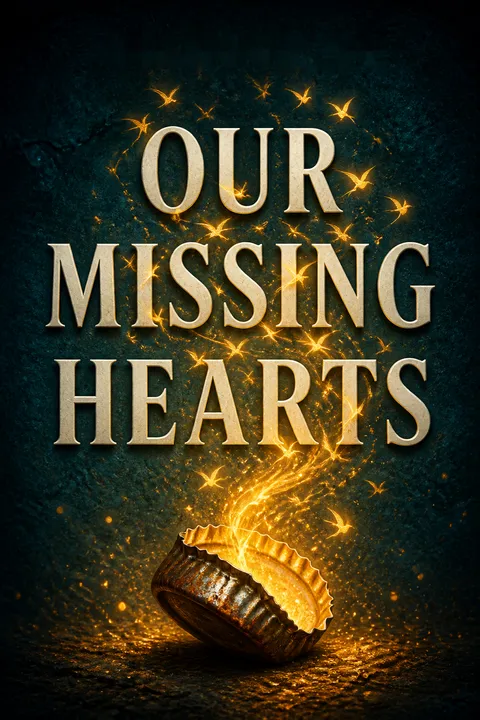
Margaret shows Bird the bottle caps she has wired with tiny receivers and speakers, explaining that she plans to use them to carry the collected family stories across New York. Bird helps her hide the last caps in gutters, bins, and other places people ignore.
But seeing him beside her makes Margaret fear the danger she has brought to her son, and she decides to abandon the plan. Bird accuses her of caring only when the risk reaches her own family.
His anger forces both to face the conflict Margaret's story has sharpened: her desire to protect Bird against her promise to the children taken by PACT. That night, Bird wakes frightened and calls for his mother. Margaret comforts him and promises she will return. In the morning, Domi takes him to meet Sadie.
The bottle caps make the politics of attention literal: discarded objects become a channel for stories that official media will not carry. Bird's participation briefly turns inherited grief into shared agency, then his mother's retreat exposes how fear can undo solidarity even in someone committed to resistance. His accusation is painful because it identifies a real asymmetry: Margaret left him to protect him, yet risks him for other children. Their night of comfort does not settle the ethical conflict, but it restores enough trust for Bird to accept her promise and leave with Domi.
A Day Outside the Watch
At Domi's secluded cabin, Bird and Sadie reunite and learn how Domi has been trying to trace Sadie's parents. Away from foster homes and surveillance, they spend a day exploring the shore and woods, briefly recovering the freedom of childhood.
Sadie teaches Bird about the crab-gathering celebrations her family once shared. They build a fire from old newspapers, whose headlines show how fear and anti-China suspicion hardened during the Crisis. Domi and Margaret do not arrive the next morning.
Rain traps the children inside, where they find evidence of Domi's father's old retreat: medication, abandoned belongings, and supplies. The cabin's comfort begins to feel like a warning. Bird and Sadie keep the fire alive through the night, unsure whether their friends are safe or whether anyone will come.
The cabin gives Bird and Sadie a rare interval in which they are not treated as cases to monitor or children to correct. Their play makes freedom concrete, while the old newspaper and traces of Domi's father's isolation show how privilege can turn crisis into something one waits out behind walls. When the storm cuts them off, the children repeat that posture without choosing it. Their shared fire becomes a small practice of mutual care, not a guarantee that the world will change.
Stories Over Every Street
At night, Margaret activates roughly two thousand bottle-cap speakers and reads from the notebooks she has carried across the country. Instead of slogans, the city hears parents remember children's habits, jokes, meals, and fears, details that restore individual lives to those reduced to case files.
People stop in the streets to listen. Police track the signal, find the brownstone, and begin destroying speakers as Margaret continues reading. She runs out of time, burns the notebooks, and smashes the computer before someone enters.
The broadcast ends, but Domi cannot reach the cordoned-off area and does not know what happened to Margaret. She finds Ethan in Cambridge instead. After learning Bird has gone to New York, he joins Domi on the drive to the cabin.
The broadcast refuses the state's preferred scale of abstraction. PACT speaks in categories such as threat, loyalty, and unfit parent; Margaret counters with particular memories that cannot be compressed into those labels without doing violence to their meaning. The speakers' dispersal makes the city a temporary listening community, not an instant political victory. Margaret's destruction of the notebooks is an agonizing compromise: she preserves the people who entrusted her with their stories by preventing the state from seizing their written records, while sacrificing the archive she spent years building.
What the Living Carry
After the storm clears, Domi's car reaches the cabin with Ethan beside her. Bird runs into his father's arms; Sadie, seeing the adults return without Margaret, begins to cry. Domi explains that authorities found the brownstone and that Margaret never reached the agreed meeting place, though no one knows whether she escaped.
Ethan had spent days searching the university stacks for the cat book, hoping its tale might tell him where Bird had gone. The group now faces a choice: retreat to their old guarded lives or continue searching for Sadie's parents and the other separated children.
Domi admits she burned her copy of Margaret's poetry from fear, then recalls a poem well enough to help Bird begin recovering it. He asks her to write down what she remembers.
The ending refuses the reassurance of a recovered mother, but it does not reduce the story to loss. Ethan's return repairs one immediate rupture, while Margaret's uncertain fate leaves the larger wound open. The characters' choice to continue is grounded in practical acts: searching, remembering, and reconstructing a poem from memory. Domi's confession about burning the book links her past fear to Bird's inheritance, and her willingness to recall it becomes a modest act of repair. The work survives through people, not institutions or intact objects.
Analysis
Our Missing Hearts asks what happens when a government makes care conditional on political conformity. PACT's power rests not only in arrests or child removals, but in the ordinary people who accept its definitions of danger: a teacher who counsels silence, a neighbor who reports a family, a shopkeeper who turns away an elderly customer. The law makes complicity feel like prudence, especially to parents who know that a child's safety may depend on appearing harmless.
The novel refuses to make resistance morally effortless. Margaret leaves Bird to protect him, then risks his safety through the work she undertakes for other families. Ethan protects Bird by denying Margaret and burning her books. Domi uses wealth to help, but must reckon with the systems that helped create her fortune. These choices are not equivalent in consequence, yet each demonstrates how fear narrows a person's available actions. Bird's judgment of his mother matters because it exposes the moment when private grief becomes an ethical question: whether people will act only when injustice threatens their own household.
Stories offer the novel's counter-method. PACT compresses people into categories, while Margaret's broadcast restores their particularity through details no slogan can hold: food preferences, jokes, remembered freckles, ordinary mistakes. The library network likewise treats information as a form of care. Knowing where a child has gone cannot immediately bring that child home, but it resists the state's attempt to make the separation complete by making the child unremembered.
The ending offers no simple victory. Margaret's fate remains uncertain, the law has not fallen, and the recovered poem is incomplete. Yet Bird's decision to reconstruct it from other people's memories turns inheritance into action. The novel's hope lies not in a single heroic gesture, but in the persistence of testimony: one person listens, remembers, and passes the story onward.
Review Summary
Our Missing Hearts receives mixed reviews. Many praise Ng's beautiful prose and exploration of timely themes like racism and authoritarianism. Some find the dystopian setting chillingly close to reality, while others feel it lacks depth. Readers appreciate the focus on family relationships and the power of art, but some criticize the pacing and character development. The book is seen as a departure from Ng's previous works, with some preferring her earlier novels. Overall, it's viewed as a thought-provoking but divisive read.
People Also Read







Characters
Bird Gardner
The searching sonBird is Margaret and Ethan's twelve-year-old son, a quiet, observant child who has been taught that safety depends on staying unnoticed. His childhood name feels more authentic to him than Noah, the name his father insists he use after Margaret leaves. Bird is drawn to stories, word puzzles, and small clues, but his caution is not simple timidity: he has learned that curiosity can endanger the people he loves. His search for his mother forces him to question the official explanations he has absorbed and to distinguish obedience from care. He is sensitive to abandonment and injustice, yet capable of acting when an adult's silence no longer feels defensible.
Margaret Miu
The poet in hidingMargaret is Bird's Chinese American mother, a poet whose attention to language and ordinary life makes her alert to what public narratives erase. Raised by parents who believed assimilation offered protection, she learned to keep her head down before discovering a more unruly self in New York. She is imaginative, curious, and capable of deep tenderness, but her desire to shield Bird can conflict with her commitment to families harmed by PACT. Margaret's poems and stories reflect her belief that particular memories matter: a child's habits, a parent's regret, the details that resist becoming propaganda. She is neither a flawless activist nor simply a self-sacrificing mother; her choices carry costs she must face.
Ethan Gardner
The cautious fatherEthan is Bird's father, a former linguistics professor who now works in the university library. He loves etymology, dictionaries, and the hidden histories words carry, but after Margaret disappears he becomes guarded and practical. His rules for Bird come from a real understanding of how Asian ancestry can draw suspicion under PACT, even when he rarely explains that fear directly. Ethan's instinct is to reduce risk by avoiding attention, protecting his son through silence and routine. Beneath that restraint is warmth and intellectual playfulness, qualities Bird remembers from before their family fractured. His challenge is to care without making caution the only inheritance he gives his child.
Sadie Greenstein
The defiant lost girlSadie is a year older than Bird and shares his experience of growing up without his mother, though her own parents are also beyond her reach. Bold, funny, and fiercely resistant to being renamed or reshaped, she refuses to mistake compliance for consent. Her anger and repeated attempts to run away are ways of preserving a self that the foster system would prefer to manage. Sadie believes that family history matters and that children should not be punished for their parents' views. Her friendship with Bird gives him a companion willing to ask questions he is afraid to ask, while his steady presence offers her a rare place to lower her guard.
Dominique Duchess
The wealthy allyDominique, known as Domi, is Margaret's former friend and a wealthy technology executive. During the Crisis, she and Margaret survived together as messengers, but their friendship fractured when their responses to danger diverged. Domi is sharp, self-possessed, and accustomed to moving through the world with resources most people lack. Her wealth gives her practical power, yet her family history also leaves her with questions about what that power has supported. She often masks affection with dry humor and prefers useful action to declarations. Her loyalty to Margaret and willingness to shelter Sadie reveal a person trying to convert inherited privilege into concrete help.
Carina
The librarian guideCarina is a public librarian who knows the remnants of the collection and the risks attached to certain books. She treats Bird's search seriously, helps him locate an old folktale through the card catalog, and provides information without demanding that he explain everything. Her work connects private curiosity to a wider effort to keep track of displaced children. Carina is cautious because people could be hurt if the network is exposed, but she does not confuse caution with passivity. Her library is both a refuge for readers and a quiet channel through which people can find one another.
Erika Chun
The investigative reporterErika is Sadie's mother, a Black journalist who investigates families affected by PACT and asks questions the authorities would rather suppress. She is composed under pressure and believes reporting is a form of public responsibility, not a neutral service performed only when it is safe. Her work places her family within reach of political scrutiny, but her courage is joined to a parent's tenderness: Sadie remembers her steady hands and the intimate care she gave during ordinary moments. Erika's example helps shape Sadie's refusal to accept official accounts as the whole truth.
Lev Chun
Sadie's protective fatherLev is Sadie's white father and Erika's partner. He shares the danger surrounding Erika's reporting and the family values that have taught Sadie to look closely at injustice. Sadie's memories of him include practical knowledge, family traditions, and a willingness to make room for her questions. He represents the ordinary intimacy that political systems often flatten when they divide families into loyal and suspect households.
Marie Johnson
The student protesterMarie is a young student whose concern for children separated under PACT leads her to attend a protest. She is interested in developmental psychology and hopes to build a life around helping others. Her parents remember her not as a public symbol but as a daughter with private jokes, favorite music, and an appetite for discovery. Marie's story connects Margaret's poetry to the lives of families beyond her own, while her individuality challenges any movement that would reduce a person to a slogan.
Marie Johnson's parents
Keepers of a lifeMarie Johnson's mother and father are grieving parents who know the difference between remembering a daughter and using her as a political emblem. Her mother preserves the small stories of Marie's childhood and extends compassion without denying her pain. Her father is more guarded, wary of people who claim to understand his daughter through the public image of her protest. Together they insist that memory must retain the real person, including her contradictions, rather than turn her into evidence for someone else's argument.
Mrs. Adelman
The first network linkMrs. Adelman is a librarian who helps Marie explore her family history and later points Margaret toward families searching for children taken under PACT. She is direct about the limits of what libraries can safely do, but she understands that preserving information can matter even when it cannot yet reunite anyone. Her work links a young reader's curiosity to a larger practice of keeping records alive.
Mrs. Pollard
The wary teacherMrs. Pollard is Bird's science teacher, a caring adult who notices when he searches for information about his mother. Her warning comes from concern for Bird's safety, but it also reflects the pressure to teach children that obedience is protection. She shows how ordinary people can repeat a system's logic even while believing they are acting kindly.
Plot Devices
PACT
Security as social controlPACT, the Preserving American Culture and Traditions Act, is presented as a response to the economic and social Crisis. It rewards citizen reporting, restricts dissent, encourages suspicion of people of Asian origin, and permits authorities to remove children from homes judged politically unsafe. Its most effective mechanism is not force alone but normalization: schools teach its principles, businesses display loyalty signs, and frightened parents censor themselves. PACT drives the separations that shape Bird, Sadie, and the families Margaret meets.
The cat folktale
A memory becomes a mapMargaret's childhood retelling of The Boy Who Drew Cats gives Bird a way to recover a memory of their private hiding game. The tale's boy, painted cats, and cupboard echo the drawings on her letter and direct Bird toward the secret cubby in his old bedroom. The printed story varies from his mother's version, emphasizing that tales change as people pass them along. Its plot function is to lead Bird from an unexplained letter to the address Margaret left behind.
Library relay
Information travels quietlyLibrarians move notes through ordinary book exchanges, using slips tucked into volumes and the overlooked routines of circulation to share information about displaced children. The method depends on trust, memory, and the assumption that books are being handled for normal purposes. It is imperfect and dangerous, but it allows families to learn that a child may still be alive and gives Margaret a way to find parents who want their stories preserved. Its quietness contrasts with PACT's official channels of surveillance.
Bottle-cap speakers
Hidden voices fill the cityMargaret builds small receivers and speakers inside discarded bottle caps, then conceals them throughout New York. Connected to a transmitter, they broadcast recorded signals from her live microphone. Their size and placement make them hard to find, while their range lets one voice emerge across many streets. Margaret uses them to read the detailed memories collected from families whose children were taken. The device turns ignored litter into a temporary public archive and forces passersby to listen together.
Our Missing Hearts
A poem becomes a summonsMargaret's poetry collection supplies the phrase that becomes a rallying cry against PACT. The words travel farther than the book itself, appearing on signs, in protests, and in anonymous public artworks. Authorities treat that spread as proof of subversion, while families use the phrase to name children removed from their homes. The poem therefore operates in opposite directions: the state turns it into evidence against Margaret, while the resistance uses it to make private loss visible.
FAQ
Synopsis & Basic Details
What is Our Missing Hearts about?
- Dystopian America Explored: The novel portrays a near-future America where a law called PACT enforces conformity, leading to the removal of children from families deemed unpatriotic.
- A Son's Search for Truth: It follows twelve-year-old Bird as he embarks on a journey to find his estranged mother, Margaret, a poet labeled a traitor for her anti-PACT views.
- Themes of Identity and Resistance: The story explores themes of identity, family, and the power of storytelling as a form of resistance against oppressive forces.
Why should I read Our Missing Hearts?
- Compelling Dystopian Narrative: The book offers a thought-provoking look at a society where freedom of thought is suppressed, making it relevant to contemporary issues.
- Emotional Depth and Character Development: It features complex characters with compelling motivations, exploring the emotional toll of separation and the search for truth.
- Exploration of Family Bonds: The novel delves into the powerful bonds between mothers and sons, and the lengths they will go to protect each other.
What is the background of Our Missing Hearts?
- Post-Crisis America: The story is set in a near-future America recovering from an economic and social crisis, which led to the implementation of PACT.
- Cultural and Political Tensions: The novel explores themes of anti-Asian sentiment, government overreach, and the suppression of dissent, reflecting real-world anxieties.
- Focus on Personal Impact: While set against a backdrop of political turmoil, the story focuses on the personal impact of these events on individuals and families.
What are the most memorable quotes in Our Missing Hearts?
- "All our missing hearts scattered, to sprout elsewhere.": This line, from Margaret's poem, becomes a rallying cry for those opposing PACT, symbolizing hope and resilience.
- "She is not a part of your life anymore. As far as we're concerned, she doesn't exist.": Ethan's repeated denial of Margaret's existence highlights the oppressive nature of PACT and its impact on families.
- "You know, I think I remember an old picture book, the librarian says. She lowers her voice. A Japanese folktale. But it won't be in there.": This quote reveals the subtle acts of resistance and the hidden knowledge that persists despite censorship.
What writing style, narrative choices, and literary techniques does Celeste Ng use?
- Dual Narrative Perspective: The story alternates between Bird's present-day journey and flashbacks to Margaret's past, creating a rich and layered narrative.
- Symbolism and Motifs: Ng uses recurring symbols like cats, hearts, and the color red to enhance the themes of identity, love, and resistance.
- Evocative and Emotional Prose: The writing style is characterized by its emotional depth, creating a powerful and immersive reading experience.
Hidden Details & Subtle Connections
What are some minor details that add significant meaning?
- The Cat Doodles: The seemingly simple cat drawings in Margaret's letter are not just doodles but a coded message, referencing a story she used to tell Bird, and a hidden space in their old home.
- The Red Heart Symbol: The recurring image of a red heart, found in graffiti and banners, symbolizes the missing love and connection caused by PACT, and becomes a symbol of resistance.
- The Library as a Sanctuary: The library, with its hidden spaces and coded messages, represents a place of refuge and resistance, where knowledge and stories are preserved.
What are some subtle foreshadowing and callbacks?
- The "Disruption" Definition: Ethan's explanation of the word "disruption" foreshadows the larger societal upheaval and Margaret's role in it, connecting language to the themes of the book.
- The Red Yarn Web: The red yarn web in the Common foreshadows Margaret's larger plan and the interconnectedness of the resistance movement, and the dolls represent the children taken.
- The Boy Who Drew Cats: The story of the boy who drew cats, which Margaret told Bird, mirrors Bird's own journey of self-discovery and his connection to his mother's artistic spirit.
What are some unexpected character connections?
- The Librarian and Margaret: The librarian's past connection to Margaret, revealed through her knowledge of the "cat story," highlights the hidden network of resistance and the power of shared stories.
- Domi and Margaret's Shared History: Domi and Margaret's past friendship, revealed through their shared experiences in New York, adds depth to their present-day alliance and their commitment to fighting PACT.
- Ethan's Knowledge of Cantonese: Ethan's ability to understand Cantonese, a language he learned with Margaret, reveals a hidden layer of their past relationship and his connection to her culture.
Who are the most significant supporting characters?
- The Librarian: She acts as a guide and helper to Bird, providing him with information and resources, and represents the power of knowledge and resistance.
- Sadie: She serves as a mirror to Bird, reflecting his own struggles with identity and loss, and inspires him to question the world around him.
- Domi: She provides resources and support to Margaret, and represents the power of privilege used for good, and the importance of allyship.
Psychological, Emotional, & Relational Analysis
What are some unspoken motivations of the characters?
- Ethan's Fear of Loss: Ethan's rigid adherence to PACT and his attempts to erase Margaret are driven by his fear of losing Bird, and his desire to protect him from the dangers he perceives.
- Margaret's Guilt and Responsibility: Margaret's actions are motivated by her guilt over leaving Bird and her sense of responsibility to fight against the injustices of PACT.
- Bird's Need for Connection: Bird's journey is fueled by his need to understand his mother and his desire to reconnect with the part of himself that was lost when she left.
What psychological complexities do the characters exhibit?
- Bird's Identity Crisis: Bird struggles with his dual identity as Noah and Bird, reflecting the internal conflict between conformity and individuality.
- Margaret's Internal Conflict: Margaret grapples with the tension between her love for her son and her commitment to fighting for social justice, leading to difficult choices.
- Ethan's Emotional Repression: Ethan's emotional repression and his inability to discuss Margaret highlight the psychological toll of living under an oppressive regime.
What are the major emotional turning points?
- Bird Receiving the Letter: The arrival of Margaret's letter is a major turning point, igniting Bird's curiosity and setting him on a path to uncover the truth.
- Bird's Discovery of the Address: The discovery of the address in the hidden space of their old home solidifies Bird's determination to find his mother.
- Bird's Confrontation with His Father: The confrontation between Bird and his father about Margaret reveals the deep emotional wounds caused by her absence and the oppressive nature of PACT.
How do relationship dynamics evolve?
- Bird and Ethan's Strained Relationship: The relationship between Bird and Ethan evolves from one of forced conformity to one of understanding and acceptance, as Bird begins to question his father's choices.
- Margaret and Bird's Reconnection: The relationship between Margaret and Bird is characterized by a mix of love, longing, and regret, as they navigate the complexities of their separation.
- Margaret and Domi's Alliance: The relationship between Margaret and Domi evolves from a shared past to a powerful alliance, highlighting the importance of female friendship and solidarity.
Interpretation & Debate
Which parts of the story remain ambiguous or open-ended?
- Margaret's Fate: The novel leaves Margaret's fate ambiguous, allowing readers to ponder the consequences of her actions and the possibility of her survival.
- The Effectiveness of the Resistance: The long-term impact of Margaret's actions and the resistance movement is left open-ended, prompting readers to consider the challenges of fighting against oppression.
- The Future of PACT: The novel does not provide a clear resolution to the political conflict, leaving readers to contemplate the future of PACT and its impact on American society.
What are some debatable, controversial scenes or moments in Our Missing Hearts?
- Ethan's Actions: Ethan's decision to erase Margaret from Bird's life and his compliance with PACT can be seen as both a form of protection and a betrayal of his wife's memory.
- Margaret's Choices: Margaret's decision to leave Bird and her involvement in the resistance movement can be viewed as both selfless and selfish, raising questions about the responsibilities of motherhood.
- The Use of Violence: The novel's depiction of violence, both by the authorities and by those resisting PACT, raises questions about the effectiveness and morality of different forms of resistance.
Our Missing Hearts Ending Explained: How It Ends & What It Means
- Margaret's Broadcast: Margaret's final act of broadcasting the stories of the missing children is a powerful act of resistance, highlighting the importance of memory and truth.
- Bird's Choice to Remember: Bird's decision to continue his mother's work and to remember her stories represents a triumph of hope and resilience over oppression.
- Open-Ended Conclusion: The ending is open-ended, leaving the reader to ponder the future of Bird, Sadie, and the other characters, and the possibility of a more just world.
About the Author
Other books by Celeste Ng

Download PDF
Download EPUB
.epub digital book format is ideal for reading ebooks on phones, tablets, and e-readers.








