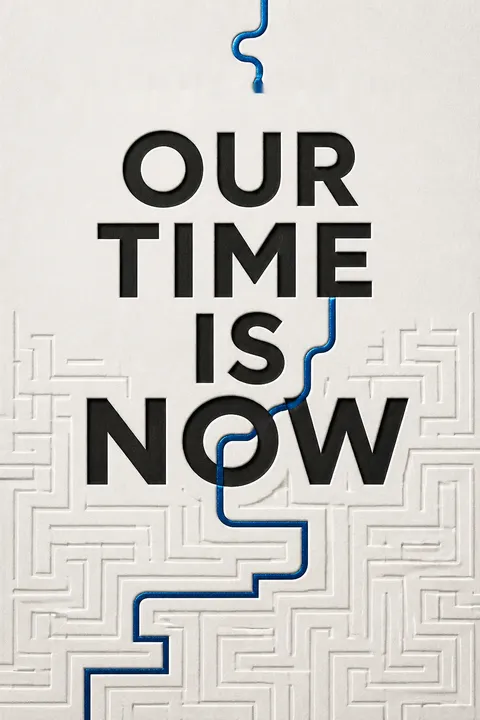


Key Takeaways
Treat the ballot as power over daily life, not a ritual.
The vote reaches home. Abrams opens with her grandmother, who had endured Jim Crow violence but froze with fear when she could finally vote in Mississippi in 1968. The law had changed; her expectation that it would protect her had not. Her story makes voting more than a civic gesture: elected officials shape access to health care, schools, wages, housing, and public safety. When Abrams ran for Georgia governor in 2018, 1.9 million people voted for her, more than for any Democratic gubernatorial candidate in state history, but she lost the contest. She accepted the legal result while refusing a conventional concession, arguing that the election had exposed failures affecting voters beyond one candidate.
What's powerful here is the connection between a small act and the institutions that distribute practical advantages. Political science often treats participation as both an expression of preference and a route to representation; Abrams emphasizes the second function. The grandmother's fear also illustrates how formal rights can coexist with learned expectations of danger. Still, an election result cannot by itself establish that a particular policy would have changed every voter's life. The book's strongest claim is more structural: when access is unequal, public choices are made with an incomplete account of whose interests are at stake.
Trace suppression from the registration form to the final count.
Barriers compound. Abrams describes voter suppression as a sequence: people may be kept off the registration rolls, obstructed from reaching or using a ballot, or denied a counted vote. In Georgia, a system called exact match suspended registrations when personal details failed to align perfectly across databases. In 2018, officials placed more than 53,000 applications on hold; 80 percent belonged to people of color. Other voters encountered closed precincts, long lines, absentee ballots rejected for signature differences, or provisional ballots that were never counted. A provisional ballot is a temporary ballot offered when officials cannot confirm a voter's eligibility at the polling place. Each hurdle can look like an isolated clerical problem, but the cumulative effect can deter people from trying again.
The sequence is a useful diagnostic because it shifts attention from a dramatic, visible denial to the whole administrative pathway. Public administration research uses the idea of administrative burden to describe the time, information, and effort required to claim a public service. Voting rules impose these costs unevenly when someone must travel, miss work, correct a database error, or understand an unfamiliar remedy. A careful analysis should still distinguish disparate impact from proven intent. The book's examples make a strong case for auditing patterns, documenting failures, and asking who bears the cost of fixing them.
A rights law matters only when people and institutions enforce it.
Paper promises need pressure. Abrams traces a recurring pattern: constitutional amendments and civil rights laws establish rights, but state and local practices can delay their practical use. Reconstruction expanded Black citizenship and voting, while Black Codes, literacy tests, poll taxes, and distant polling places worked against those gains. The Voting Rights Act of 1965 introduced preclearance, requiring certain jurisdictions to receive federal approval before changing election rules. In 2013, the Supreme Court's Shelby County decision removed the formula that identified jurisdictions subject to that requirement. Abrams argues that the aftermath made new restrictions easier to enact and harder to prevent. Her parents' experience after desegregation laws also shows that national legal change did not immediately alter local schools or election administration.
This account highlights a central institutional distinction: a right on the books is not the same as a right that can be exercised reliably. Implementation depends on monitoring, remedies, and officials who have both capacity and incentives to comply. That lesson extends beyond elections to civil rights enforcement generally. The history also cautions against treating legal victories as self-executing or permanent. At the same time, federal oversight raises real questions about design and accountability. The useful question is not whether local or national authority is always superior, but what safeguards can detect discrimination before it becomes routine.
Campaign for the millions overlooked by turnout-score spreadsheets.
Reach beyond regulars. Campaigns often prioritize reliable voters and a relatively small group of persuadable swing voters. Abrams argues that this leaves many potential voters, especially people of color and young people, unseen by campaigns and less likely to participate. In Georgia, her campaign estimated about 150,000 swing voters but identified 1.9 million Democratic-leaning voters with a lower likelihood of voting. The campaign invested in outreach across all 159 counties rather than concentrating only on easy targets. It tripled Latino and Asian American turnout, increased youth participation by 139 percent, and received 25 percent of white votes, the highest share for a Democratic gubernatorial candidate in a generation. The strategy was sustained contact, clear policy commitments, and multiple ways to reach people.
The book challenges a familiar optimization error: treating past participation as a fixed measure of future interest. A turnout score can describe prior behavior while missing why a person did not vote, such as lack of outreach, inconvenient access, or low confidence in government. In that sense, investment can change the population a campaign is measuring. This is a persuasive case for testing outreach rather than assuming it cannot work. The caution is that a striking campaign result does not prove every tactic caused every turnout gain; local context, candidate appeal, and election conditions also matter.
Use identity to expose unequal burdens, then build a shared coalition.
Experience shapes priorities. Abrams defines identity politics as making political choices with attention to how race, gender, class, sexuality, and other experiences shape a person's needs and encounters with public systems. Kimya, a survivor of domestic violence, evaluates candidates through issues including gun safety, health care, and protections for renters. Abrams also describes how her parents' income, race, and employment shaped their choices about housing, schools, and health care. Identity, in this account, is not a demand that everyone share one interest. It is a way to notice barriers that supposedly universal policies may overlook. The political task is to connect those specific experiences to wider goals such as security, education, health, and opportunity.
The strongest version of this argument treats identity as evidence about how institutions operate, not as a shortcut for judging a person's beliefs. That distinction helps answer the worry that identity-based politics must fragment a coalition: shared goals can coexist with unequal routes to achieving them. Intersectional analysis, which examines how social categories combine rather than operate separately, makes those routes more visible. Yet representation alone cannot guarantee responsiveness. Voters need both leaders who understand a community and organized pressure that holds those leaders to their promises.
An incomplete census quietly steals a decade of money and representation.
Counting distributes resources. The census does more than record population. Its numbers help allocate federal funding, shape political districts, and guide public and private investment. Abrams cites an estimate that Georgia could lose about $2,300 per person missed in the count, with effects continuing through the decade. She argues that communities already harder to count, including low-income households, renters, people of color, rural residents, and young children, risk losing both services and political influence. A proposed citizenship question raised concern that immigrant households would avoid responding. Moving the census online also risked excluding people without reliable internet access. For Abrams, census outreach is therefore not a once-a-decade paperwork drive, but a continuing way to make communities visible in decisions about resources and representation.
The census is a striking example of data becoming political infrastructure. A missing person in a dataset can become a missing clinic, school investment, or representative voice, even if no official intends that particular outcome. This resembles measurement problems in public health: what is not counted is difficult to plan for and easy to dismiss. The argument also suggests a useful civic practice, linking abstract counts to local budgets and services. One qualification is that census data is only one input into funding formulas and policy decisions. Accurate counting matters enormously, but it cannot alone ensure fair distribution.
Fair maps decide whether votes translate into governing power.
Boundaries shape outcomes. Redistricting is the process of redrawing political district lines after population counts. Gerrymandering manipulates those boundaries to advantage a party or group, often by concentrating opposing voters in a few districts or splitting them across many. Abrams recounts how Georgia candidate James Williams was declared outside his district after boundaries changed, despite no move by him. She also describes partisan maps that converted close statewide vote totals into disproportionate legislative control. Prison gerrymandering adds another distortion: most states count incarcerated people where prisons are located, rather than in their home communities, even though incarcerated residents generally cannot vote. Because census figures underpin district maps, undercounting and boundary manipulation can reinforce one another.
Maps turn geography into political opportunity, which makes redistricting a form of institutional design rather than a technical afterthought. The concept of wasted votes helps explain the mechanism: a party can win more seats by distributing voters strategically, even without winning more votes overall. Independent commissions and public criteria can reduce politicians' direct control, but independence alone is not a guarantee of fairness. Transparency, accessible map data, and meaningful review are also essential. The deeper point is that representation depends not only on who votes, but on how votes are grouped and translated into seats.
Set a national floor so voting rights do not depend on zip code.
Make access consistent. Abrams argues that federal standards should prevent basic voting access from changing sharply across state lines. Her proposals include automatic and same-day registration, limits on restrictive identification rules, restored federal oversight of jurisdictions with discrimination histories, accessible early and absentee voting, and consistent procedures for correcting ballot errors. She also calls for properly funded equipment and staffing, paper ballots that can be audited, and paid time for workers to vote. States could offer more access than the federal minimum, but not less. The aim is to replace a fragmented system in which identical voters may face very different hurdles depending on county or state with a dependable baseline for participation.
The proposal treats voting as a public service whose quality should not depend on administrative luck. Standardization can reduce confusion and make failures easier to identify, while local flexibility can still accommodate different populations and geography. This is a familiar tension in federal systems: uniform rights may require national rules, but implementation still needs local knowledge and resources. A mandate without adequate funding risks becoming another paper promise. The practical test for any reform is whether it removes friction for voters while preserving accurate rolls, transparent procedures, and a clear remedy when officials make mistakes.
Recognize authoritarian populism by its attack on trust and restraints.
Democracy can erode gradually. Abrams distinguishes inclusive economic populism from authoritarian populism, which claims to speak for ordinary people while weakening the institutions that limit a leader's power. She describes a pattern: a charismatic leader presents himself as the sole voice of the people, casts opponents as enemies, intensifies polarization, discredits independent media and courts, and fills institutions with loyalists. The danger is not simply hostile rhetoric. It is the gradual loss of credible information, independent oversight, and lawful checks on executive power. Abrams connects this pattern to developments in several countries and argues that American democracy is not immune simply because elections continue to occur.
The pattern is valuable because it directs attention from a leader's personality to changes in institutions and norms. Comparative politics often studies democratic backsliding as a sequence of legal and administrative moves, rather than a single dramatic coup. That frame helps citizens notice damage while elections and courts still function. The distinction between populist traditions also matters: appeals to economic fairness are not inherently authoritarian. The diagnostic should therefore focus on conduct, such as attacks on independent scrutiny and refusal to accept legitimate opposition, rather than treating every popular movement as the same threat.
Turn election-day energy into year-round civic infrastructure.
Keep organizing between votes. Abrams' practical program is to build durable relationships, not appear only when campaigns need ballots. She urges citizens to learn which officials control local services, contact representatives, report voting problems, support registration and census outreach, and volunteer to reach people campaigns usually overlook. Her model for advocacy is to educate leaders about a problem, organize others around it, then apply pressure until action becomes more compelling than inaction. Groups can combine litigation, legislation, and public advocacy. The goal is not simply electing one candidate. It is creating the knowledge, networks, and accountability that make participation meaningful across local, state, and national government.
This is a theory of civic capacity: people gain influence not only through individual votes but through repeated coordination and feedback. The approach resembles community organizing, where information, relationships, and collective pressure build power over time. It also gives people a role beyond choosing between candidates, particularly in local decisions that attract little coverage. The demanding part is continuity. Volunteers and small organizations can burn out, and access to time and resources is unequal. Durable coalitions need leadership development, shared work, and institutions that can keep attention alive after a campaign ends.
Analysis
The book's central argument is that democracy is not secured by the formal existence of elections. It depends on an entire chain of institutions that must register eligible people, let them reach and cast a ballot, count that ballot, and translate populations into fair representation. Abrams makes that argument vivid by moving between her family's experience of Jim Crow, the administrative barriers encountered by Georgia voters, and the political consequences of census undercounts and district maps. The personal stories are not decorative; they reveal how bureaucratic friction feels to someone who has limited time, money, transportation, or confidence in government.
The book's most useful conceptual move is to treat suppression as cumulative. A database mismatch, an inconvenient polling place, and a rejected ballot can each be defended as a technical matter. In combination, they determine which citizens bear the greatest costs of participation. This makes the book both a political history and an operational guide: it asks readers to inspect the systems that produce electoral outcomes, not only the candidates who appear on the ballot.
Its campaign analysis also challenges a narrow theory of electoral efficiency. Abrams argues that low turnout is not proof of low interest, and that outreach can change the electorate rather than merely persuade habitual voters. Her Georgia campaign offers a concrete case, though it remains one case, shaped by a distinctive candidate, state, and election. The book's partisan critique should also be read with attention to evidence: patterns of unequal burden warrant investigation, while proving intent requires more than anecdote or outcome alone.
The broader lesson is institutional and practical. Rights require enforcement, accurate public data, fair rules, and citizens organized beyond election season. Demographic change creates political possibility, but it does not automatically produce power. Participation must be made accessible, representation must be made accountable, and democratic norms must be defended before their erosion feels irreversible.
Review Summary
Our Time Is Now receives widespread praise for its comprehensive examination of voter suppression and call to action for fair elections. Readers appreciate Abrams' insights, personal experiences, and proposed solutions. Many find the book eye-opening and timely, highlighting the importance of civic engagement. Some criticize Abrams' self-congratulatory tone and support for identity politics. Overall, the book is viewed as a powerful and informative resource for understanding and combating voter disenfranchisement, with Abrams' passion and expertise shining through.
People Also Read





Glossary
New American Majority
Emerging diverse coalitionAbrams' term for a growing political coalition that includes people of color, younger generations, and moderate or progressive white voters. She presents this group as a potential force for broader political participation and policy change, while stressing that demographic growth does not automatically produce electoral power without organizing and access.
Exact match
Perfect-data registration checkA voter-registration screening process that compares information on an application with government databases and suspends an application when the details do not match exactly. Abrams describes errors involving punctuation, hyphenated names, and database formatting as reasons eligible voters could be held off Georgia's rolls, often without clear notice.
Preclearance
Advance federal voting reviewA Voting Rights Act requirement that certain jurisdictions obtain federal approval before changing election laws, practices, or procedures. The review was meant to prevent discriminatory changes before they took effect. The Supreme Court's 2013 Shelby County decision invalidated the formula used to determine which jurisdictions were covered.
Provisional ballot
Conditional ballot pending reviewA ballot offered to a person whose eligibility or registration cannot be confirmed at the polling place. Election officials review the voter's status after Election Day to decide whether the ballot counts. Abrams explains that it can protect voters from administrative mistakes, but varying rules and difficult follow-up requirements can also lead to rejection.
Curing
Correcting a ballot defectThe process that allows a voter to fix a problem with a submitted ballot, such as missing information or a questioned signature. A meaningful cure process requires timely notice, clear instructions, and enough time and access for the voter to respond. Abrams notes that inconsistent procedures can make this remedy unavailable in practice.
Turnout score
Estimated voting likelihoodA campaign's estimate of how likely an individual is to vote, based on past participation and other voter data. Campaigns may use scores to decide where to spend limited resources. Abrams warns that a low score can conceal a lack of outreach or barriers to participation, causing campaigns to overlook voters who might engage if contacted.
Gerrymandering
Strategic district-line drawingThe manipulation of electoral district boundaries to advantage a party or group. Common methods include concentrating opposing voters in a small number of districts or dividing them among many districts so their influence is reduced. Because district boundaries determine how votes translate into seats, gerrymandering can produce representation that diverges from statewide vote totals.
Authoritarian populism
People's mandate against restraintsA political approach that claims to represent the people while concentrating power and weakening independent institutions. In Abrams' account, leaders polarize society, portray opponents as illegitimate, undermine media and courts, and place loyalists in positions of authority. Elections may continue, even as the institutions and norms that make them meaningful are eroded.
FAQ
What's Our Time Is Now about?
- Focus on Voter Suppression: Stacey Abrams addresses the persistent issue of voter suppression in America, particularly its impact on marginalized communities. She uses personal stories and historical context to highlight systemic barriers to voting.
- Call to Action: The book emphasizes the importance of civic engagement and collective action to protect voting rights. Abrams argues that democracy requires constant vigilance and participation from all citizens.
- Personal Narrative: Abrams intertwines her personal experiences with broader political themes, offering insights into her journey as a political leader and activist. The book serves as both a memoir and a manifesto for change.
Why should I read Our Time Is Now?
- Informed Perspective: The book provides a deep understanding of the complexities of voting rights and voter suppression in the U.S. Abrams offers a unique perspective as a political figure who has faced these challenges.
- Empowerment and Inspiration: Abrams' story of resilience and determination aims to inspire readers to take action in their communities and advocate for their rights.
- Practical Solutions: The book outlines concrete steps individuals and communities can take to combat voter suppression, making it both informative and a practical guide for activism.
What are the key takeaways of Our Time Is Now?
- Systemic Voter Suppression: Abrams highlights that voter suppression is a systemic issue, not isolated incidents, with tactics evolving over time to disenfranchise marginalized communities.
- Civic Engagement Importance: Active participation in democracy is crucial for ensuring all voices are heard. Abrams encourages readers to register, vote, and advocate for inclusive policies.
- Collective Action Power: The book emphasizes the effectiveness of collective action in challenging oppressive systems and creating a more equitable society.
What are the best quotes from Our Time Is Now and what do they mean?
- “We will stay and stand up for what belongs to us as American citizens.” This quote reflects the determination to fight for civil rights and the importance of claiming one’s rightful place in democracy.
- “Voter suppression works its might by first tripping and causing to stumble the unwanted voter.” It highlights the insidious nature of voter suppression tactics that create barriers to participation.
- “Voting is an act of faith.” This underscores the belief that participating in elections is not just a civic duty but a hopeful act that can lead to meaningful change.
How does Stacey Abrams define voter suppression in Our Time Is Now?
- Systematic Barriers: Abrams defines voter suppression as the systematic creation of barriers preventing eligible voters from participating in elections, often targeting marginalized communities.
- Evolving Tactics: She explains that while methods have changed—from Jim Crow laws to modern voter ID laws—the goal remains to limit ballot access.
- Democracy Impact: Abrams argues that voter suppression undermines democracy by silencing voices and eroding public trust in the electoral process.
What personal experiences does Abrams share in Our Time Is Now?
- Family Legacy: Abrams shares stories about her grandparents and parents, illustrating how their experiences with racism and poverty shaped her commitment to civil rights.
- Gubernatorial Campaign: She recounts her campaign for governor of Georgia, detailing challenges faced, including allegations of voter suppression against her opponent.
- Fear and Courage: Abrams reflects on her grandmother’s fear of voting during the Jim Crow era, contrasting it with her own determination to engage politically.
What solutions does Abrams propose in Our Time Is Now?
- Legislative Changes: Abrams advocates for comprehensive voting rights legislation at the federal level, including restoring the Voting Rights Act.
- Community Engagement: She emphasizes grassroots organizing and community engagement to empower voters, encouraging individuals to register others and participate in local elections.
- Education and Awareness: The book calls for increased education about voting rights and the electoral process, believing informed citizens are better equipped to advocate for their rights.
How does Abrams connect identity politics to voting rights in Our Time Is Now?
- Identity as a Tool: Abrams argues that identity politics can empower marginalized communities to assert their rights and influence political outcomes.
- Intersectionality Importance: She highlights the importance of recognizing multiple identities that shape experiences and needs, leading to more inclusive policies.
- Representation Empowerment: Abrams asserts that electing leaders reflecting population diversity is crucial for addressing unique challenges faced by different communities.
What historical context does Abrams provide in Our Time Is Now?
- Civil Rights Movement: Abrams discusses the history of the civil rights movement and the ongoing struggle for voting rights, tracing voter suppression tactics from Jim Crow to today.
- Legislative Milestones: She outlines key legislative milestones, such as the Voting Rights Act of 1965, and how changes have impacted voter access.
- Cultural Shifts: Abrams reflects on cultural shifts in America regarding race and identity, noting their influence on political dynamics.
How does Our Time Is Now address the future of voting rights?
- Urgency for Action: Abrams stresses the urgent need to protect voting rights, particularly against recent legislative efforts to restrict access.
- Building Coalitions: The book emphasizes building coalitions across diverse communities to challenge voter suppression.
- Hope and Resilience: Despite challenges, Abrams maintains a hopeful outlook, believing education, advocacy, and engagement can reclaim power for a more equitable democracy.
How does Our Time Is Now propose to improve voter engagement?
- Grassroots Mobilization: Abrams advocates for grassroots efforts to engage voters, particularly those often overlooked, through community organizing and outreach.
- Education and Awareness: Emphasizing the importance of educating voters about their rights and the voting process, Abrams believes informed citizens are more likely to participate.
- Utilizing Technology: She discusses leveraging technology, such as online registration and digital outreach, to enhance voter engagement and reach a broader audience.
What role does the U.S. Census play in Our Time Is Now?
- Impact on Representation: Abrams explains how the U.S. Census affects political representation and resource allocation, emphasizing the need for an accurate count.
- Voter Mobilization: The book highlights mobilizing communities to participate in the Census, arguing it can lead to greater political power for underrepresented groups.
- Addressing Undercounting: Abrams discusses challenges of undercounting certain populations, advocating for targeted outreach to ensure everyone is counted.
About the Author
Other books by Stacey Abrams


Download PDF
Download EPUB
.epub digital book format is ideal for reading ebooks on phones, tablets, and e-readers.








