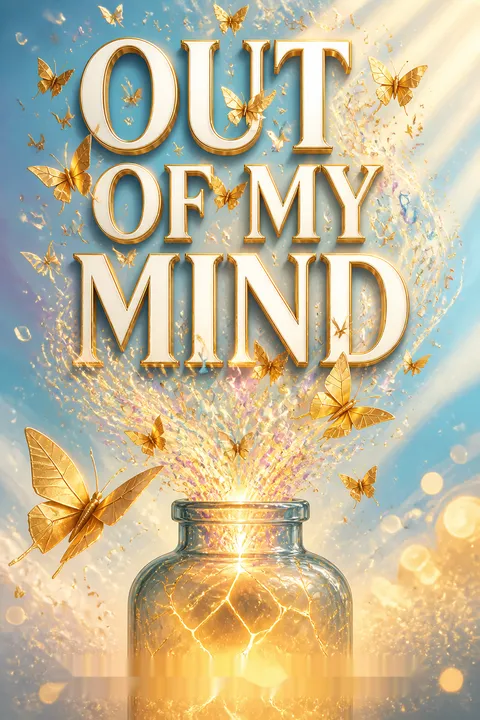


Plot Summary
The Test That Misread Melody
Melody Brooks is nearly eleven, with a mind crowded by language and memories but a body that cannot speak or move reliably because of cerebral palsy. When she is five, a specialist tests her by asking her to stack blocks she cannot grasp, then mistakes her physical limits for intellectual ones. He advises Melody's mother, Diane, to consider an institution and treats her as a lifelong burden.
Diane refuses, insisting her daughter understands far more than anyone has bothered to discover, and enrolls her at Spaulding Street Elementary. Melody hears every word of the consultation but cannot correct the doctor or comfort her mother. Her silence is mistaken for emptiness, while Diane's decision gives her a chance to learn among other children.
The opening conflict is not between intelligence and disability, but between intelligence and the methods used to recognize it. The specialist treats a motor task as a cognitive measure, then turns that mistake into a forecast for Melody's entire life. Diane's refusal matters because it is both emotional protection and a practical decision: she chooses education over institutional separation. Melody's awareness of the conversation makes the diagnostic error especially painful. She understands the words that define her future, yet has no means to challenge them.
Mrs. V Gives Words Reach
Before school can offer much, neighbor Violet Valencia, known as Mrs. V, refuses to treat Melody as incapable. She places the toddler on a quilt with a toy just beyond reach and coaches her until she rolls, then scoots and crawls. When Melody makes clear that speech matters more to her than walking, Mrs. V rebuilds her small communication board with a wider vocabulary.
She also teaches Melody to read with color-coded word cards, arranging them into sentences she can make with her fists. The lessons give Melody ways to express ideas, but the board remains too limited for her expansive thoughts. Mrs. V becomes the first adult outside her parents to treat those thoughts as a curriculum rather than a mystery.
Mrs. V's teaching begins with a concrete wager: Melody can do more if someone makes room for effort instead of anticipating failure. The toy on the quilt is not a test of worth, but an invitation to act. Her communication lessons then expose the difference between knowing language and having usable access to it. Melody's intelligence is not newly created by instruction; it becomes more visible as the tools improve. Mrs. V's refusal to confuse assistance with helplessness gives Melody practice in agency, while the undersized board shows how even supportive systems can constrain expression.
The Alphabet Finally Breaks
At Spaulding Street, Melody spends years in a self-contained classroom with disabled classmates, repeating basic work despite her appetite for books and difficult ideas.
A second-grade teacher, Mrs. Tracy, recognizes that Melody can follow audiobooks and answer questions, but the next teacher, Mrs. Billups, ignores those gains and drills the alphabet for months. Melody's frustration erupts into a full-body outburst that frightens the class. Diane arrives, learns what lesson provoked it, and challenges the teacher's assumptions about what her students can learn.
She also breaks the repetitive children's music playing in class. Mrs. Billups leaves after spring break. Melody's outburst has disrupted the room, but Diane makes the adults confront the boredom and neglect that preceded it.
Melody's outbursts are repeatedly interpreted as behavior problems because adults see the movement and not the thought behind it. This episode makes that interpretive failure visible: a lesson pitched far below her ability creates distress, then the distress is treated as evidence of incapacity. Diane translates the outburst into a complaint about educational deprivation. Her intervention does not magically reform the school, but it changes who is held responsible. The chapter also complicates advocacy: a parent can insist on a child's potential, yet the child still needs teachers willing to build instruction around it.
A Family Learns New Rhythms
Melody's small world changes through two very different companions. After her goldfish Ollie leaps from its bowl, Melody pulls the bowl over in an effort to get water to him, but her mother misunderstands and Ollie dies. For her eighth birthday, Melody receives a golden retriever she names Butterscotch; the dog alerts Diane when Melody falls from her chair.
Soon Diane gives birth to Penny, a healthy, active baby who learns to crawl, walk, and speak. Melody loves her sister, especially when Penny calls her Dee-Dee, but watching Penny master ordinary movements sharpens her own sense of loss. The new baby also strains the parents' routines, and Melody quietly fears that her needs make family life harder.
The two animal episodes establish a recurring pain: Melody can understand what another being needs before she can make anyone else understand her. Her attempt to save Ollie is mistaken for carelessness, while Butterscotch later succeeds at communicating urgency through action. Penny's arrival brings genuine affection alongside involuntary comparison. Melody is not simply jealous of a sibling; she is grieving abilities that Penny acquires without effort, while also worrying that her own dependence consumes family resources. The household's tenderness is real, but so is exhaustion, and the narrative allows both to coexist.
The Music Room Opens
In fifth grade, Melody receives an electric wheelchair that lets her propel herself through school, just as Spaulding begins inclusion classes. The first music session nearly collapses when classmates mock disabled students, but teacher Mrs. Lovelace stops the bullying and uses music to settle the room.
When no one volunteers to sit beside Melody, Rose, a quiet classmate who had objected to the mockery, approaches her. Rose listens as Melody uses her board, and the two become Wednesday music partners.
The program expands into other subjects, and Catherine, a university student assigned as Melody's aide, helps her take tests and participate. Melody earns real grades, yet still cannot join fast classroom conversations or answer every question she knows.
Inclusion here is measured in small, observable acts: a teacher prevents cruelty, a peer chooses a seat beside Melody, and an aide makes classroom responses accessible. These gestures interrupt the habit of treating disabled students as an audience to ordinary school life. But being physically present does not solve every barrier. Melody can know an answer and still lose the conversational moment while composing it on a limited board. The section therefore resists a simple triumph narrative. Access opens doors, while time, technology, and other people's willingness to wait determine whether she can actually cross the room.
Elvira Finds Her Voice
When Rose brings a laptop to class, Melody realizes she needs more than the words on her board. With Catherine, she researches communication technology and finds a Medi-Talker that can speak through large buttons.
Mrs. V helps Melody's parents navigate the application, prescription, and insurance process; after weeks of waiting, the device arrives before Christmas. Melody names it Elvira, fills it with vocabulary and prepared sentences, and chooses a youthful synthetic voice.
For the first time, she addresses her parents through the machine and tells them she loves them. At school after break, she introduces herself, shares jokes, and answers classmates directly. Some children still question what she has to say, but Rose moves close and affirms their friendship.
The device is not a cure, and the story is careful to show the work required before it becomes useful: research, paperwork, programming, and daily practice. Its importance lies in changing the social tempo. Melody can now contribute without relying on someone else to interpret gestures or read her board aloud, although she still has to select words with a thumb and cannot always keep pace. The first message to her parents turns a long-standing bond into reciprocal speech. At school, the machine changes how others encounter Melody, but does not immediately erase their assumptions.
The Perfect Practice Score
Melody joins a classroom practice quiz and answers every question correctly, but teacher Mr. Dimming hesitates to credit her achievement. Claire and Molly accuse Catherine of supplying answers, and Melody withdraws, convinced her classmates see her brain as damaged too.
Mrs. V rejects that retreat and builds an intensive study plan with Catherine and Melody's parents. Melody memorizes geography, science, history, and vocabulary, using pictures to make difficult math problems manageable. She takes the official tryout without Catherine in the room.
The next day, Mr. Dimming announces that Melody earned a perfect score and gives her a place on Spaulding's four-person competition team with Connor, Rose, and Claire. The recognition exhilarates her, but the class's surprise makes the achievement feel precarious.
This is the point at which private certainty becomes public evidence. Melody's preparation is demanding, but the deeper obstacle is credibility: the adults and children around her have been trained to interpret visible impairment as intellectual dependence. Mrs. V's coaching helps Melody prepare, while Catherine's absence during the official test answers the accusation of assistance. Mr. Dimming's eventual admission that he underestimated her is meaningful, but it does not undo the initial doubt. Achievement gains Melody access to the team; it also exposes her to scrutiny that her classmates do not face.
A Win Under the Lights
At the regional television competition, stage manager Paul adapts the answer board so Melody can reach the colored buttons from her chair. Spaulding beats its first opponent, then ties Perry Valley in the championship round.
The final question is a time calculation; Melody and her teammates choose the same answer, and Spaulding wins by one point. During the televised interview, Melody uses Elvira to introduce herself, while Claire suddenly presents herself as Melody's close friend.
At the celebration dinner, the restaurant's broken elevator leaves Melody and her mother to manage five steps alone. Upstairs, Melody must be spoon-fed while her teammates avert their eyes. The school's victory is real, but the evening shows how public inclusion can coexist with private discomfort and physical inaccessibility.
The competition gives Melody a setting where her knowledge can be scored without requiring quick speech, and Paul's adapted board makes participation concrete rather than symbolic. The narrow win also depends on shared performance, not a lone genius. Yet the interview and dinner expose competing forms of visibility. Claire claims intimacy before a camera, while Melody's ordinary need for help eating unsettles the group away from the spotlight. The inaccessible restaurant turns celebration into a test of who has planned for her presence. Achievement earns a place at the table, but it cannot guarantee that the table is ready for her.
The Photograph and the Team
The next morning, a newspaper runs Melody's photograph prominently, describing her as the team's standout. She predicts her teammates will resent the attention; at school, Rose is cool, and classmates praise the team more warmly than Melody.
Mr. Dimming begins daily practice for the national competition, where the six highest scorers will travel to Washington. Melody fears her drooling and movements will make the others look strange, but Catherine reminds her that the team needs her knowledge.
Molly edges out Claire for the six-person roster, leaving Claire as an alternate. Before the trip, Melody shops for clothes and prepares thank-you cards for Catherine and Mrs. V. Her family packs carefully, unaware that the team's travel plans are about to divide them.
The newspaper converts an achievement shared by a group into a single public image, and Melody understands the social cost before the adults do. Her fear is not vanity; she knows that attention can turn her into a symbol rather than a teammate. The changing roster also makes status tangible, especially for Claire, who has been accustomed to controlling how others see her. Melody's cards of gratitude show how much her progress depends on care networks. The section's closing confidence is deliberately fragile: meticulous preparation cannot protect her from decisions made without her.
The Flight Without Melody
At the airport, Melody's family learns that their noon flight to Washington has been canceled because of a winter storm. The agent explains that the team has already transferred to an earlier flight after arriving for breakfast ahead of schedule. Melody's parents and Mrs. V discover that nobody contacted them, and no other plane can get the family to Washington in time.
Her father punches a wall; her mother cries beside Melody, who sits in her new travel clothes with the trip gone. She had believed the team was simply moving quickly, not choosing to leave her out. The cancellation is weather-related, but the silence that allowed the team to depart becomes a wound deeper than a missed competition.
The airport scene separates accident from betrayal. The storm cancels the scheduled flight, but it does not explain why no one called Melody's family when the team changed plans. Her helplessness echoes her childhood inability to communicate, yet the source of powerlessness is now social: other people had the information and the chance to include her. Her father's anger and her mother's grief register the practical and emotional stakes, while Melody cannot convert either into a remedy. The lost trip exposes how easily access disappears when inclusion depends on informal consideration rather than a dependable plan.
The Warning in the Rain
The following day, Melody insists on going to school despite a severe storm, while Diane has a migraine and Penny is sick. As Diane loads Melody into the car, their father leaves the house without realizing Penny has followed outside. Melody sees her sister near the vehicle and erupts, screaming and striking at her mother to make her stop.
Diane mistakes the behavior for another outburst, and the car backs up before the family understands Penny is behind it. Penny is struck and rushed to hospital with internal injuries and a badly broken leg. Mrs. V stays with Melody, who blames herself for being angry at Penny and for insisting on school. A call brings relief: Penny survives surgery, with no brain damage.
The accident is devastating because Melody recognizes danger but cannot make her recognition legible quickly enough. Her body, usually treated as the obstacle to communication, becomes the urgent signal, yet Diane reads it through the history of outbursts. The collision therefore does not simply punish a family for carelessness; it shows how dangerous misinterpretation can become under pressure. Melody's guilt follows a child's logic, connecting her earlier irritation with Penny to the injury she could not prevent. Mrs. V offers reassurance, but the fear persists until the news of Penny's survival gives it a boundary.
The Silence Gets Named
When Melody returns to school, she asks Mr. Dimming and the team why they left without her. Rose explains that the group reached the airport early, learned they could catch the earlier flight, and rushed to board. Elena reminded them Melody was missing. Rose had her phone ready, but the others silently agreed not to call; they assumed Melody's care would slow them down.
Their choice cost the team its chance to win in Washington. Connor brings Melody the small ninth-place trophy, but she laughs, knocks it to the floor, and refuses it. Penny later comes home recovering with a cast. As Melody begins her autobiography on Elvira, she returns to the words that have always filled her mind, now able to put them into the world herself.
The revelation names what the airport scene could only suggest: Melody was not merely overlooked by logistics; her teammates collectively decided that convenience mattered more than informing her. Their confession cannot restore trust, and the broken trophy refuses the idea that a token apology can repair deliberate exclusion. Melody's laughter is not simple forgiveness. It is a refusal to let the team's poor result define her worth or obligate her gratitude. The final autobiography answers the opening image of words trapped inside her: access has not made the world fair, but it has given her authorship over how her life is understood.
Analysis
Out of My Mind asks what intelligence looks like when a person cannot perform the actions schools often use to measure it. Melody understands language, humor, music, and complex information, but adults repeatedly treat the difficulty of accessing her thoughts as proof that the thoughts are not there. The novel makes communication a material issue: a board with too few words, a delayed response, or an inaccessible classroom can determine who gets recognized as knowledgeable.
Melody's family and teachers demonstrate that care alone is not enough. Diane loves her fiercely but sometimes misreads her signals; Mrs. V's high expectations matter because they are paired with teaching and practical effort. Catherine and Mrs. Lovelace make inclusion tangible by changing routines and giving Melody room to participate. Their actions contrast with the classmates and educators who praise inclusion in principle while doubting Melody when competition or convenience is at stake.
The quiz team plot turns that conflict into a test of belonging. Melody's perfect score establishes her ability, but winning does not protect her from being treated as a burden when the team hurries to Washington. The decision to leave her behind exposes the difference between displaying a disabled student as an inspiring success and accepting the time, planning, and responsibility that genuine membership requires.
The ending does not claim that a speech device solves exclusion or that a tragedy produces easy wisdom. Melody remains dependent on others for many physical needs, and the teammates' confession cannot undo their choice. What changes is her access to authorship. The girl whose words once remained private begins writing her own account, refusing to let a diagnosis, a news photograph, or other people's assumptions become the definitive version of her life.
Review Summary
Out of My Mind receives mostly positive reviews for its powerful portrayal of Melody, a girl with cerebral palsy. Readers praise the book's emotional impact, character development, and ability to foster empathy. Many consider it an important read for understanding disabilities. Some criticize unrealistic plot elements and one-dimensional antagonists. The book's handling of educational inclusion and societal attitudes towards disabilities sparks discussion. While a few found it predictable or overly sentimental, most reviewers were deeply moved by Melody's story and its exploration of communication, intelligence, and perseverance.
People Also Read










Characters
Melody Brooks
A mind without a voiceMelody is a bright, observant fifth grader with cerebral palsy. She cannot speak or control most of her movements, but she absorbs words, facts, music, and emotional details with extraordinary precision. Her frustration comes not from lacking thoughts, but from having to depend on other people to recognize them. She is funny, competitive, affectionate, and capable of anger, including anger at the limits imposed by her body and by other people's assumptions. Her curiosity makes her a persistent learner; her sensitivity makes exclusion sting deeply. Melody wants ordinary choices and relationships, not admiration for overcoming disability. Communication technology gives her greater access, while her own intelligence and wit remain hers throughout.
Violet Valencia
The determined neighborMrs. V is Melody's neighbor, a former nurse, and one of her most important teachers. Bold, practical, and warmly irreverent, she refuses to confuse physical dependence with an inability to learn. She encourages Melody to practice movement, expands her vocabulary, and helps her family find communication technology. Mrs. V's support is not sentimental: she expects effort and tells Melody the truth, even when the truth is difficult. Her vivid personality and steady presence give Melody both a demanding teacher and a secure adult ally. She recognizes that access requires persistence, and she is willing to do the unglamorous work of securing it.
Diane Brooks
Melody's fierce motherDiane is Melody and Penny's mother, a nurse whose protective instincts coexist with exhaustion and self-doubt. She challenges professionals who reduce Melody to a diagnosis and insists that her daughter deserves education and respect. At home, Diane knows Melody's routines and many of her needs, but she cannot always interpret what Melody is trying to communicate. She carries guilt about Melody's disability and worries about the demands of raising two children. Diane's love is expressed through relentless caregiving, advocacy, and practical attention, even as fatigue sometimes narrows her patience.
Chuck Brooks
Melody's tender fatherChuck is Melody's father and Diane's partner. He speaks to Melody as an intelligent child, reads with her, sings to her, and records family life on his camcorder. His affection often appears through humor and small rituals, while his worry surfaces when he fears Melody may be hurt by taking risks. Chuck shares the work of caring for his daughters, though family pressures sometimes strain his marriage. His readiness to celebrate Melody helps make home a place where she is loved as a whole person.
Penny Brooks
Melody's lively sisterPenny is Melody's younger sister, an energetic child who learns to walk and talk with typical ease. She adores Melody and calls her Dee-Dee, often treating her as a playmate rather than as someone defined by disability. Penny's growing independence brings joy to the family and sharpens Melody's awareness of what her own body cannot do. She is affectionate, mischievous, and too young to understand the adult world around her.
Rose Spencer
Melody's thoughtful classmateRose is a capable, organized student who befriends Melody during music class and becomes her regular partner in inclusion lessons. She is perceptive enough to notice when classmates are cruel, and she makes an effort to communicate with Melody rather than speaking around her. Rose values school achievement and friendship, but she is also sensitive to peer pressure and social standing. Her relationship with Melody gives both girls a chance to share jokes, secrets, and ordinary classroom companionship.
Catherine
Melody's access aideCatherine is a university student assigned to help Melody navigate school. She supports Melody's participation without assuming that she knows the answers for her, reading from the communication board and helping arrange accessible materials. Catherine treats Melody as a student and a young person with opinions, humor, and interests. Her role is both practical and relational: she helps teachers and classmates hear Melody while respecting her independence. She also encourages Melody when other people mistake physical difficulty for limited intelligence.
Mr. Dimming
The quiz team teacherMr. Dimming teaches history and organizes Spaulding's Whiz Kids team. He loves facts, competitions, and the possibility of taking his students to Washington. His enthusiasm is genuine, but he initially doubts whether Melody can compete and underestimates her ability. He represents an educator whose good intentions do not prevent bias. His pride in the team is strong, though he must confront the consequences of treating inclusion as optional when time becomes tight.
Claire Wilson
The image-conscious teammateClaire is a competitive classmate who cares about appearances, popularity, and being recognized as capable. She and Molly mock disabled students and question Melody's achievements, particularly when Melody attracts attention. Claire is also ambitious enough to try out for the quiz team and sensitive to losing status. Her behavior exposes how insecurity can turn social difference into a target, even when she is capable of participating in the same academic work.
Connor Bates
The loud trivia competitorConnor is a tall, boisterous student with a gift for trivia and a taste for jokes, food, and attention. He enjoys competition and expects to be a central member of the quiz team. His confidence can make him inconsiderate, but he is also capable of recognizing another student's skill and welcoming Melody's contributions. Connor's mixture of showmanship and decency gives the team an energetic presence.
Molly North
Claire's mocking companionMolly is Claire's close companion and joins her in teasing disabled classmates. She is competitive and attentive to social approval, but she also works hard enough to become an alternate on the quiz team. Her presence shows how group cruelty can be reinforced by friendship, even when each child has individual ambitions and abilities.
Maria
The classroom huggerMaria is Melody's classmate, a cheerful girl with Down syndrome who loves holidays, affection, and decorating the classroom snowman. She often calls Melody Melly-Belly and notices when her friend is sad. Maria's emotional attentiveness contrasts with the adults who underestimate her or treat classroom activities as mere entertainment. She offers uncomplicated warmth and an instinctive sense of connection.
Freddy
The wheelchair racerFreddy is a classmate who uses an electric wheelchair and delights in driving it as fast as its limited settings allow. He loves racing, NASCAR, NASA, and baseball, and he makes the classroom snowman part of his playful world. His enthusiasm gives Melody a fellow wheelchair user whose interests are specific and vivid, rather than defined only by disability.
Gloria
The quiet music listenerGloria is an autistic classmate who often rocks quietly in a corner and speaks when something matters to her. Holiday music can help her relax, and the music room gives her a way to respond physically to sound. She is sensitive to the emotional atmosphere around her, even when she does not join group activities.
Willy Williams
The restless baseball expertWilly is a classmate whose body is almost always in motion and whose noises are difficult for him to control. Baseball trivia, however, draws out his remarkable memory and expertise. He loves the game, and his enthusiasm helps show that a student's most visible behaviors do not reveal the full range of his knowledge or interests.
Carl
The blunt snowman criticCarl is a young classmate with strong opinions and capable hands. He can write his name and uses pencils and rulers to make his dislike of the classroom snowman unmistakable. His directness and humor give him a distinct presence in Melody's classroom.
Ashley
The carefully dressed classmateAshley is the youngest child in Melody's classroom, a girl with severe physical stiffness who is often dressed in coordinated outfits. Her limited communication board gives her few ways to express preferences, so the people around her must pay close attention to her movements and responses.
Jill
The quiet walker userJill is a pale, quiet classmate who uses a walker because one foot drags. She sometimes withdraws from classroom activities, and Melody has heard that an accident changed her abilities when she was very young. Her presence makes visible the varied histories and needs within the self-contained class.
Mrs. Shannon
The encouraging teacherMrs. Shannon teaches Melody's fifth-grade self-contained class. Warm, energetic, and attentive to students' potential, she brings books and activities into a room where earlier teachers relied on repetitive lessons. She advocates for inclusion and helps Melody's family push for the support she needs.
Mrs. Lovelace
The inclusive music teacherMrs. Lovelace volunteers to bring Melody's class into music lessons. She intervenes when students mock their disabled peers, then uses music to give everyone a shared activity. Her classroom becomes Melody's first regular setting for friendship with nondisabled classmates.
Elena Rodriguez
The observant quiz teammateElena is a diligent quiz competitor who takes notes and scores well during practice. She is quieter than Connor and Claire, but attentive to what is happening around her. Her participation shows that team decisions are made by several children, not only the loudest ones.
Rodney Mosul
The quick-witted teammateRodney is a classmate who jokes readily and competes for a place on the quiz team. He is friendly with Connor and enjoys turning classroom moments into comedy. His humor can lighten tension, though he also follows the social current around him.
Amanda Firestone
The prepared alternateAmanda is an older student who studies for the quiz competition and earns an alternate position. She is attentive to team morale and offers Rose encouragement before the regional contest. Her calm practicality makes her a supportive presence among the competitors.
Plot Devices
The Medi-Talker
A voice built for accessThe Medi-Talker is an electronic communication device with large buttons, multiple vocabulary levels, prepared phrases, a synthetic voice, and printing functions. Melody and Mrs. V program it with names, facts, jokes, and everyday sentences, and Melody learns to operate it through practice. It lets her answer questions, speak to classmates, and communicate directly with her family. The device changes what others can hear from Melody, but it does not give her thoughts or intelligence; those were present before she had a reliable way to express them.
The Communication Board
Thoughts squeezed into choicesMelody's early Plexiglas board holds words, symbols, names, and an alphabet strip that she can point to with her thumb. Mrs. V expands it, allowing Melody to build more meaningful sentences, but the board still limits her vocabulary and slows her responses. It explains many of the misunderstandings in Melody's life: she can know exactly what she wants to say and still lack a quick way to say it. The board is both a practical tool and a visible measure of how much communication depends on design.
The Whiz Kids Competition
Knowledge made measurableThe school quiz competition gives Melody a structured way to demonstrate knowledge through multiple-choice answers. Mrs. V and Catherine help her prepare, while adapted buttons at the regional event make it possible for her to answer alongside her teammates. The contest provides clear evidence against assumptions that she cannot learn, but it also creates pressure to prove herself and exposes the team's attitudes toward her. Its results matter to the plot because they bring Melody recognition, travel plans, and the circumstances that reveal whether her teammates truly consider her one of them.
The Aquarium Invitation
Friendship tested in publicMrs. V's contest prize is a group trip to the aquarium, which gives Melody a chance to bring Rose into her family life. The visit begins as a joyful outing among fish and shared discoveries, then Molly and Claire encounter the group and mock Rose for choosing to come with Melody. Mrs. V challenges the girls by comparing dental braces with mobility aids. The episode develops Rose's friendship with Melody and establishes the social courage required to stand beside someone when peers disapprove.
FAQ
Synopsis & Basic Details
What is Out of My Mind about?
- Silent girl's inner world: The story centers on Melody Brooks, an 11-year-old girl with cerebral palsy, who cannot speak or control her body, but possesses a brilliant mind filled with thoughts and feelings.
- Quest for communication: Melody's journey is about her desperate need to communicate and be understood, as she navigates a world that often underestimates her due to her physical limitations.
- Finding a voice: The narrative follows Melody's discovery of a communication device that allows her to express herself, leading to new challenges and triumphs in her life.
Why should I read Out of My Mind?
- Unique perspective: The novel offers a rare and powerful perspective from a character with significant physical disabilities, allowing readers to experience the world through her eyes and thoughts.
- Emotional depth: The story explores complex emotions such as frustration, isolation, and the longing for connection, creating a deeply moving and empathetic reading experience.
- Themes of acceptance: It tackles important themes of inclusion, understanding, and the power of communication, making it a thought-provoking and relevant read for all ages.
What is the background of Out of My Mind?
- Disability awareness: The book is set against the backdrop of societal attitudes towards people with disabilities, highlighting the challenges they face in education, social interactions, and everyday life.
- Technological advancements: The story incorporates the use of assistive technology, specifically the Medi-Talker, showcasing how such devices can empower individuals with communication barriers.
- Inclusion movement: The narrative touches upon the concept of inclusion in education, exploring both the benefits and the difficulties of integrating students with special needs into mainstream classrooms.
What are the most memorable quotes in Out of My Mind?
- "Words have always swirled around me like snowflakes—each one delicate and different, each one melting untouched in my hands.": This quote encapsulates Melody's lifelong struggle with expressing her thoughts, highlighting the beauty and frustration of her silent world.
- "I have so much to say.": This simple yet powerful statement reveals Melody's deep yearning for communication and her determination to overcome her physical limitations.
- "Your life is not going to be easy, little Melody. If I could switch places with you, I'd do it in a heartbeat.": This quote from Melody's father shows his deep love and understanding of her challenges, emphasizing the emotional core of the story.
What writing style, narrative choices, and literary techniques does Sharon M. Draper use?
- First-person perspective: The story is told from Melody's point of view, allowing readers to directly access her thoughts, feelings, and perceptions, creating a deeply intimate and empathetic experience.
- Vivid sensory details: Draper uses rich sensory language to describe Melody's experiences, particularly her synesthesia, where she associates colors with music, enhancing the reader's understanding of her unique perspective.
- Emotional honesty: The author does not shy away from portraying Melody's frustrations, anger, and sadness, creating a realistic and emotionally resonant portrayal of her life.
Hidden Details & Subtle Connections
What are some minor details that add significant meaning?
- The color pink: Melody's pink wheelchair, which she dislikes, symbolizes the superficial way people often perceive her, highlighting the theme of being judged by appearances.
- The snowman "Sydney": The recurring image of the dilapidated snowman in Melody's special education classroom represents the stagnation and lack of progress she feels in her educational environment.
- Butterscotch's loyalty: The golden retriever's unwavering devotion to Melody, especially her ability to sense when Melody needs help, underscores the theme of unconditional love and acceptance.
What are some subtle foreshadowing and callbacks?
- Ollie the goldfish: Ollie's attempt to jump out of his bowl foreshadows Melody's own desire to break free from her limitations and the frustration of being trapped.
- The "tornado explosions": Melody's uncontrollable outbursts, initially presented as random, foreshadow the intense emotions she will experience when she is betrayed by her quiz team.
- The "Goodnight, Moon" book: The repeated mention of this book, especially its Spanish version, hints at Melody's hidden intellectual capabilities and her ability to understand more than others realize.
What are some unexpected character connections?
- Mrs. V and Stephen Hawking: Mrs. V's introduction of Stephen Hawking to Melody serves as a parallel, showing Melody that she is not alone in her struggles and that intellectual brilliance can exist despite physical limitations.
- Melody and Garfield: Melody's connection to the comic strip character, who also communicates through thought bubbles, highlights her desire to express herself and be understood.
- Melody and Freddy: Despite their different disabilities, Melody and Freddy share a mutual understanding of their limitations and a desire for freedom, as seen in their shared love for speed and movement.
Who are the most significant supporting characters?
- Mrs. Violet Valencia (Mrs. V): She is a pivotal figure who provides Melody with unwavering support, challenges her to reach her full potential, and helps her find her voice through the Medi-Talker.
- Catherine: As Melody's aide, Catherine is not only a practical helper but also a friend who understands and respects Melody's intelligence, advocating for her inclusion and growth.
- Rose Spencer: Rose's initial friendship with Melody, though tested by peer pressure, highlights the complexities of acceptance and the potential for genuine connection across differences.
Psychological, Emotional, & Relational Analysis
What are some unspoken motivations of the characters?
- Dr. Hugely's dismissal: His eagerness to label Melody as "profoundly retarded" stems from a lack of understanding and a desire to simplify her case, rather than a genuine attempt to assess her potential.
- Claire's jealousy: Her constant need to put Melody down is driven by her own insecurities and a fear of being overshadowed, rather than a genuine dislike for Melody.
- Mr. Dimming's ambition: His desire to win the quiz competition is not solely for the students' benefit but also for his own professional validation and recognition.
What psychological complexities do the characters exhibit?
- Melody's internal conflict: She struggles with the dichotomy between her brilliant mind and her uncontrollable body, leading to intense frustration and a desire for both connection and isolation.
- Rose's divided loyalties: She is torn between her genuine friendship with Melody and her desire to fit in with her peers, highlighting the challenges of navigating social pressures.
- Mom's guilt and fear: She grapples with the guilt of Melody's condition and the fear of having another child with disabilities, showcasing the emotional toll of raising a child with special needs.
What are the major emotional turning points?
- The discovery of the Medi-Talker: This moment marks a significant shift in Melody's life, as she finally gains the ability to express herself, leading to a surge of hope and empowerment.
- The quiz team betrayal: This event is a devastating blow to Melody, as she experiences the pain of exclusion and the realization that her teammates do not fully accept her.
- Penny's accident: This crisis forces Melody to confront her own mortality and the fragility of life, leading to a deeper understanding of her family's love and support.
How do relationship dynamics evolve?
- Melody and her parents: Their relationship evolves from one of caregiving to one of mutual understanding and respect, as Melody gains the ability to communicate her thoughts and feelings.
- Melody and Rose: Their friendship is tested by social pressures and misunderstandings, but ultimately, they learn to appreciate each other's unique qualities.
- Melody and her classmates: Their initial indifference and prejudice gradually shift to a grudging respect and acceptance, as they witness Melody's intelligence and determination.
Interpretation & Debate
Which parts of the story remain ambiguous or open-ended?
- Melody's future: The novel does not explicitly state what Melody's future holds, leaving the reader to imagine her continued growth and self-discovery.
- Claire's transformation: While Claire shows some remorse, the extent of her personal growth and whether she truly understands Melody's perspective remains open to interpretation.
- The long-term impact of the betrayal: The novel does not fully resolve the emotional fallout from the quiz team's actions, leaving the reader to ponder the lasting effects of such a betrayal.
What are some debatable, controversial scenes or moments in Out of My Mind?
- The quiz team's decision to leave Melody behind: This moment raises questions about the ethics of prioritizing personal gain over inclusion and the responsibility of teammates to support each other.
- Mom's initial reaction to Melody's "tornado explosions": Her frustration and occasional harshness towards Melody, while understandable, can be seen as a point of debate regarding the challenges of parenting a child with special needs.
- Mr. Dimming's handling of Melody's inclusion: His initial skepticism and later over-enthusiasm can be seen as both well-intentioned and problematic, raising questions about the role of educators in promoting true inclusion.
Out of My Mind Ending Explained: How It Ends & What It Means
- Melody's self-acceptance: The ending emphasizes Melody's journey towards self-acceptance, as she learns to embrace her unique qualities and find strength in her own voice.
- The power of words: The final scene, where Melody begins to write her autobiography, underscores the importance of communication and the power of words to shape one's identity and experiences.
- Open-ended hope: While the ending does not provide a neat resolution, it leaves the reader with a sense of hope and the belief that Melody will continue to grow and thrive, despite the challenges she faces.
Out of My Mind Series



Download PDF
Download EPUB
.epub digital book format is ideal for reading ebooks on phones, tablets, and e-readers.








