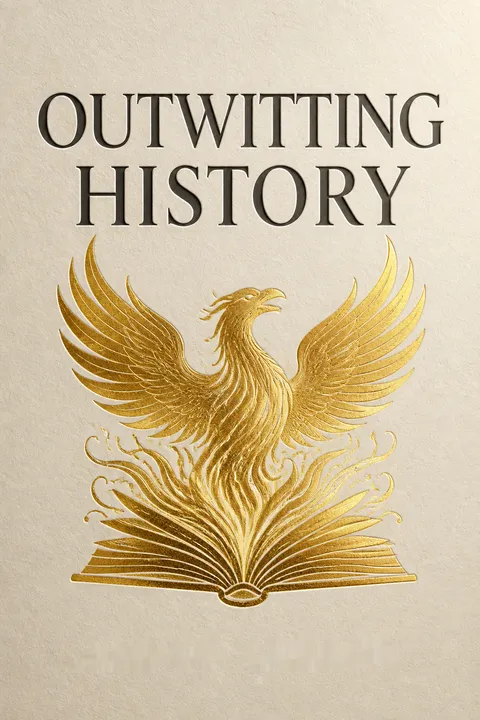


Key Takeaways
Rescue endangered books before institutions agree they matter
Act before consensus. In 1980, Aaron Lansky was a young student of Yiddish when thousands of books were discovered in a New York Dumpster. He and a small crew worked through rain to save nearly 5,000 volumes. About 3,000 more were ruined before they could reach them. The episode made the crisis concrete: books can disappear faster than committees can decide they deserve help.
The scale was hidden. Scholars estimated that 70,000 Yiddish volumes remained recoverable in North America. As calls and donations poured in, Lansky's organization eventually collected more than 1.5 million. The original estimate was not merely low; it reflected how scattered and invisible the books had become.
What's striking is how much this rescue depended on noticing what other people had learned to overlook. That resembles disaster response, where early action often matters more than perfect information. The Dumpster story also complicates the idea that cultural loss is always deliberate. Here, no single person set out to destroy a literature. Neglect, relocation, and changing readership did the work. Urgency is persuasive, but it needs triage: not every endangered object can be saved, so institutions must identify what is rare, representative, or useful to future readers.
Receive books as a person's world, not a pile of paper
A handoff takes time. On Lansky's first solo collection trip, eighty-seven-year-old Norman Temmelman invited him to tea and recounted the stories behind his books. A volume of poetry recalled a week when he and his wife had gone without lunch to afford it. Each book carried a piece of a life, not just a title to inventory.
The ritual spread. Temmelman then led Lansky door to door through his twelve-story building. Neighbors emerged with bags and boxes, but also with memories, food, questions, and emotion. Lansky came to understand the exchange as a transfer of inheritance, or yerushe: the books and the histories attached to them. The collection work became a form of oral history as well as preservation.
The kitchen-table encounters show why archival work can be relational rather than extractive. A collector who hears why an object mattered gains context that a catalog cannot supply. This connects to oral-history practice, where testimony is shaped by trust, setting, and attentive listening. Still, a personal account is not a complete record of a community. Memory is selective, and the most eloquent donors may not represent everyone. The books and stories are valuable precisely because they preserve different kinds of evidence, not because either one can stand in for an entire vanished world.
Scale rescue through local collectors, not one heroic truck
Make participation replicable. Lansky could not personally reach every attic and apartment, so he recruited zamlers, volunteer collectors who gathered books in their own communities. A prepared packet supplied posters, sample announcements, shipping labels, and instructions for running a local drive. More than 200 people signed up, from major cities to remote towns.
Local knowledge multiplied effort. Jacob Schaefer, a retired tailor in Los Angeles, collected more than 45,000 volumes. In New York's Co-op City, a neighborhood boy named Victor organized local children into a book-passing line that helped save nearly 14,000 volumes from a wrecked library. These efforts turned a fragile project into a network with reach the small staff could not have achieved alone.
The model joins central coordination with local initiative. That is a durable design for work spread across geography: shared tools lower the cost of starting, while local relationships make action possible. The volunteers also gained more than a task. Their participation made them stewards of a history they might otherwise have encountered only as a distant loss. The limitation is that a network still needs a reliable hub to receive, sort, and redistribute what it gathers. Volunteer enthusiasm can multiply capacity, but it cannot replace storage, expertise, or long-term funding.
Treat Yiddish books as a whole modern literature
More than inherited folklore. Modern Yiddish literature began in the nineteenth century and expanded rapidly. Between 1864 and the Nazi invasion of Poland in 1939, nearly 30,000 distinct titles appeared. The books covered fiction, poetry, history, science, politics, language, and everyday practical needs. Immigrants could read about American citizenship, child naming, cooking, or world literature in Yiddish.
A language records contact. Yiddish developed from Germanic speech and absorbed Hebrew, Aramaic, and Slavic elements, among others. Its vocabulary preserves traces of the communities and migrations that shaped it. Yiddish readers also encountered Shakespeare, Tolstoy, and other writers in translation. The collection therefore documents not an isolated culture, but a literary world in conversation with its neighbors and with global ideas.
The range of titles unsettles the familiar division between a sacred Jewish past and a secular modern present. These books show people using their own language to interpret science, politics, migration, and art. In sociolinguistics, borrowed words are not evidence of linguistic impurity; they are records of contact and adaptation. That makes Yiddish especially revealing as historical evidence. At the same time, a language's vocabulary cannot explain every social relationship on its own. Books become most informative when read alongside the lives, institutions, and historical pressures that produced them.
Read Yiddish literature for its arguments, not its nostalgia
Stories can unsettle inherited beliefs. Lansky presents Yiddish literature as more than a comforting portrait of the old country. In I. L. Peretz's story about a rabbi said to ascend to heaven, a skeptical visitor discovers the rabbi secretly helping a poor widow. The story redirects spiritual admiration toward practical care. Peretz's story of Bontsha, a man so long accustomed to suffering that he asks heaven only for a modest breakfast, is likewise read as criticism of passivity, not praise of meekness.
The tradition argues with itself. Yiddish writing could question religious authority, political power, and Jewish habits of accommodation. Its significance lies partly in this friction: it offers readers a culture that debates what justice, faith, and responsibility require, rather than handing down a single reassuring answer.
The distinction between nostalgia and argument matters because idealized memory can turn a living culture into décor. Peretz's stories invite ethical interpretation and make the reader responsible for noticing when endurance becomes acquiescence. This resembles critical pedagogy, in which texts are not simply admired but used to question assumptions. Yet a single reading should not be treated as the only legitimate one. The book itself notes that students interpret Bontsha differently. Disagreement is not necessarily a failure of preservation; it can be evidence that the literature still provokes thought.
Keep rival histories on the same shelf
Political memory divided its keepers. Yiddish organizations carried sharply different commitments, including socialist, communist, anarchist, and Zionist traditions. Their leaders sometimes refused to cooperate even as their institutions lost readers and resources. At the Co-op City library, however, local Black and Puerto Rican children helped Lansky's crew rescue nearly 14,000 books from demolition. The books crossed the neighborhood's ethnic lines even as the old library's political hopes were fading.
Rescue did not require agreement. The Center gathered books from opposing movements into one collection. When Yonia Fain feared that selling his organization's books meant its destruction, Lansky explained that they would be preserved and circulated. The exchange exposed a painful truth: keeping a movement's books safe is not the same as keeping its social world alive.
A shared archive can preserve evidence from groups that never achieved political unity. That is a modest but important form of pluralism: future readers can compare rival accounts instead of inheriting only the winners' version. The neighborhood children in the rescue also show that cooperation can arise through a practical shared task, without requiring people to share a full identity or ideology. Still, putting books together does not resolve the conflicts that produced them. Preservation can make disagreement legible; it cannot retroactively repair the fractures.
Move endangered books through whatever borders history leaves open
The books traveled with displaced people. Yiddish collections surfaced in places as distant as Zimbabwe, Argentina, Cuba, and the Soviet Union. A local collector in Bulawayo shipped books to Massachusetts shortly before the city's synagogue burned. In the late 1980s and early 1990s, Lansky and colleagues carried thousands of volumes to newly reopened Jewish schools in Estonia and Latvia, where teachers had been waiting for books after decades of suppression.
Access depended on timing and trust. In Cuba, the team found a small, mold-damaged collection of rare Yiddish books in Havana's synagogue library. Community leaders eventually agreed to let the Center take them for preservation and digitization. Across these episodes, books moved through personal networks, negotiated permissions, and improvised logistics, not through a tidy international system.
These journeys reveal that cultural preservation is also a problem of mobility, political authority, and local consent. A collection may survive physically yet remain inaccessible because of censorship, isolation, or deteriorating storage. The team's ability to act quickly mattered, but so did the decisions of local custodians who controlled the books. That balance is crucial: rescue should not become a euphemism for taking. Durable preservation requires both technical care and relationships that respect the communities whose histories are at stake.
Build preservation systems that return books to readers
A warehouse is not an ending. The National Yiddish Book Center began as a small effort to collect abandoned volumes, then developed catalogs, a membership base, educational programs, and a permanent home. When the Center sought $7 million for a new building, 4,481 members contributed more than $2.6 million within two months. The building gave the collection secure storage and a public destination, but its purpose remained circulation.
Technology addressed a material problem. Many Yiddish books were printed on cheap, acidic paper that had become brittle. The Center digitized millions of pages and used the files to make acid-free, print-on-demand copies for readers and libraries. The project connected conservation to access: preservation was not merely keeping fragile objects intact, but making texts usable again.
The Center's development illustrates an institutional principle: preservation succeeds when it links storage, discovery, education, and distribution. Digitization can reduce the conflict between protecting a fragile original and allowing people to read the work. It also changes the economics of scarcity by making individual copies producible on demand. But technology does not automatically create an audience, and an online catalog cannot supply the social context of a book. Infrastructure works best as a bridge between material objects, interpretive communities, and new readers.
Carry Yiddish forward through translation, not forced revival
Continuity is not a rewind. Lansky does not expect the social conditions that made Yiddish the everyday language of millions of Jews to return. The books can preserve voices and ideas, but they cannot recreate the communities that produced them. That makes translation essential: at the time described, only about one Yiddish title in 200 was available in English, leaving most of the literature beyond the reach of readers who could not read Yiddish.
The aim is inheritance, not imitation. Sholem Aleichem's Tevye wrestles with daughters who choose love, politics, wealth, or a life beyond Jewish boundaries. His struggle shows Jewish identity as an ongoing argument between inherited tradition and changing circumstances. English readers need not become fluent speakers to encounter that debate, though translations must be careful enough to preserve its complexity.
This is a useful distinction between reviving a language as a mass vernacular and renewing its influence through reading, translation, and adaptation. Cultural continuity often works by transformation, not exact repetition. Translation broadens access, but it also transfers power to editors and translators, whose choices shape what later readers understand. The book's concern about inaccurate or selective translations is therefore central, not incidental. A living inheritance needs both reach and fidelity: accessibility without flattening, and scholarly care without making the literature available only to specialists.
Analysis
Outwitting History works as a memoir of institution-building and as an argument about what counts as cultural survival. Its narrative engine is a recurring contrast: books treated as junk by landlords, heirs, and underfunded institutions become evidence of a sophisticated literary culture once someone knows how to read, store, and circulate them. The Dumpster rescue supplies urgency, but the book's deeper discovery is that the supply of books was not the only scarce resource. Readers, language teachers, translators, stable organizations, and public attention were scarce too.
The memoir's most persuasive method is human scale. The rescue of hundreds of thousands of volumes becomes imaginable through kitchen-table conversations, improvised trucks, and volunteers who turn local knowledge into a collection network. This storytelling also makes clear that books are not interchangeable artifacts. A volume can carry a donor's memory, document a political movement, or offer evidence of a vanished community. Yet the narrative carefully distinguishes preservation from restoration. The Center can keep texts available; it cannot recreate the circumstances that made Yiddish an everyday language or return the murdered and displaced communities to life.
That distinction gives the book a productive tension. Lansky celebrates Yiddish as a source of literary dissent and cultural complexity, while admitting that the people who saved the books often lacked the fluency and historical knowledge of the generation that produced them. The gap is not resolved by collecting more. It is addressed through education, digitization, and translation, each of which changes the form of transmission. Translation expands access but can also filter the literature through editorial taste. A physical archive preserves originals but cannot guarantee readers. The book's lasting claim is therefore practical rather than sentimental: a culture survives in some form when people build channels through which its work can be encountered, questioned, and reused.
Review Summary
Outwitting History receives overwhelmingly positive reviews for its engaging storytelling, humor, and historical significance. Readers appreciate Lansky's passion for preserving Yiddish literature and culture, finding the book both informative and entertaining. Many are moved by the stories of elderly Jews donating their cherished books. While some find certain sections repetitive, most agree it's a compelling read that appeals to both Jewish and non-Jewish audiences. The book is praised for its ability to educate about Yiddish culture while maintaining a captivating narrative.
People Also Read



Glossary
zamlers
Volunteer book collectorsZamlers are volunteer collectors who locate Yiddish books and related materials in their own communities, then arrange for them to be delivered to an archive or collection. Lansky organized a network of zamlers because a small staff could not reach every donor. Their local relationships and knowledge helped turn a scattered rescue effort into a continent-wide project.
mame loshn
Mother tongueMame loshn means a person's mother tongue. In the book, it refers especially to Yiddish as the familiar language of home and everyday life, in contrast with Hebrew, which held a sacred and scholarly role in Jewish tradition. The term captures Yiddish's intimacy and its connection to ordinary speech, family memory, and cultural expression.
loshn koydesh
Holy languageLoshn koydesh means the holy tongue, referring to Hebrew and, in related religious contexts, Aramaic. These languages were associated with prayer, sacred texts, and scholarship. Lansky contrasts this sphere with Yiddish, the everyday language spoken in homes and markets, while emphasizing that the two interacted and shaped Jewish expression together.
yerushe
Cultural inheritanceYerushe means inheritance. Lansky uses it for more than the physical books passed from older donors to younger collectors. The term also includes the stories, memories, and cultural responsibilities attached to those books. A donor handing over a library is therefore portrayed as entrusting a younger generation with a world of experience, not simply transferring property.
yizkor bikher
Community memorial booksYizkor bikher are memorial books assembled by survivors and emigrants to record Jewish communities destroyed in the Holocaust. They often combine personal recollections, photographs, maps, historical writing, and lists of victims. In Lansky's account, these volumes preserve detailed local histories that might otherwise have vanished along with the people and places they document.
FAQ
What's Outwitting History about?
- Rescue Mission: Outwitting History by Aaron Lansky details his mission to save Yiddish books from extinction, collecting over a million volumes.
- Cultural Importance: The book emphasizes the significance of Yiddish literature in preserving Jewish culture and identity, especially post-Holocaust.
- Personal Encounters: Lansky shares emotional stories of individuals who entrusted him with their family libraries, highlighting the personal connections to these books.
Why should I read Outwitting History?
- Inspiring Narrative: The book is an engaging adventure that combines humor, history, and personal anecdotes, making it both informative and entertaining.
- Cultural Awareness: It offers insights into Yiddish culture and literature, encouraging appreciation of this often-overlooked aspect of Jewish heritage.
- Activism and Legacy: Lansky's journey serves as a call to action for preserving cultural legacies, inspiring readers to consider their roles in cultural preservation.
What are the key takeaways of Outwitting History?
- Cultural Responsibility: The book stresses the importance of preserving cultural heritage, with Lansky stating, “If we don’t save these books now they’ll be lost forever!”
- Community Engagement: Lansky illustrates how community involvement and grassroots efforts can lead to significant cultural preservation.
- Personal Connection: Emotional stories of individuals who shared their books highlight the deep personal connections to cultural heritage.
What are the best quotes from Outwitting History and what do they mean?
- “Yiddish has magic, it will outwit history.”: This quote reflects the resilience of Yiddish culture, suggesting it will endure despite challenges.
- “People are dying today who never died before.”: This underscores the urgency of preserving Yiddish literature as the last generation of speakers passes away.
- “You don’t go to people after they die, you go before they die!”: Emphasizes the proactive approach needed in cultural preservation.
Who is Aaron Lansky, the author of Outwitting History?
- Founder of the Center: Lansky founded the National Yiddish Book Center, dedicated to rescuing and promoting Yiddish literature.
- Cultural Advocate: He is a passionate advocate for Yiddish culture, working tirelessly to raise awareness of its significance in Jewish history.
- Personal Journey: The book reflects his journey from a young man learning Yiddish to a leader in cultural preservation.
What challenges did Lansky face in his mission?
- Skepticism from Others: Many Jewish leaders dismissed his efforts, believing that “Yiddish is dead,” making it difficult to gain support.
- Logistical Issues: Collecting books involved significant challenges, including finding transportation and storage for the volumes.
- Emotional Burden: Lansky often felt the weight of responsibility for preserving the stories and legacies of those who entrusted him with their books.
How did Lansky collect the Yiddish books?
- Grassroots Efforts: Lansky and his team engaged in grassroots efforts, reaching out to individuals and communities to collect unwanted Yiddish books.
- Zamlers Network: He established a network of zamlers, volunteers who helped gather books in their communities, expanding the collection efforts.
- Creative Solutions: Lansky used unconventional methods to transport and store the books, such as renting trucks and utilizing community spaces.
What is the significance of Yiddish literature according to Outwitting History?
- Cultural Identity: Yiddish literature serves as a vital link to Jewish cultural identity, reflecting the experiences and struggles of Jewish life.
- Historical Record: It provides a historical record of Jewish communities, capturing voices and stories that might otherwise be lost.
- Literary Richness: Lansky highlights the literary richness of Yiddish, showcasing its contributions to world literature and the arts.
How did the Holocaust impact Yiddish literature?
- Devastating Loss: The Holocaust resulted in the loss of millions of Yiddish speakers and writers, leading to a decline in Yiddish literature.
- Cultural Resilience: Despite this, the surviving literature became a testament to the resilience of Jewish culture.
- Shift in Focus: Post-Holocaust, Yiddish literature often shifted to themes of loss, memory, and survival.
How does Outwitting History address the future of Yiddish?
- Hope for Revival: Lansky expresses optimism about the future of Yiddish, suggesting growing interest among younger generations.
- Digital Preservation: The book discusses digitizing Yiddish literature to make it accessible to a wider audience.
- Cultural Exchange: Lansky advocates for translating Yiddish literature into other languages to ensure its survival and relevance.
What impact has the National Yiddish Book Center had on Yiddish literature?
- Rescue and Preservation: The Center has rescued over a million Yiddish books, ensuring their preservation for future generations.
- Educational Programs: It offers programs that promote the study of Yiddish language and literature, engaging new audiences.
- Cultural Renaissance: The Center's work has sparked renewed interest in Yiddish literature and culture.
How does Outwitting History reflect Lansky's personal journey?
- Passion for Yiddish: Lansky's love for Yiddish literature is evident, driving his commitment to preserving it.
- Growth and Learning: The narrative chronicles his growth as a leader and advocate for Yiddish culture.
- Cultural Responsibility: Lansky feels a profound responsibility to ensure Yiddish literature is not forgotten, reflecting a broader commitment to cultural preservation.
Download PDF
Download EPUB
.epub digital book format is ideal for reading ebooks on phones, tablets, and e-readers.








