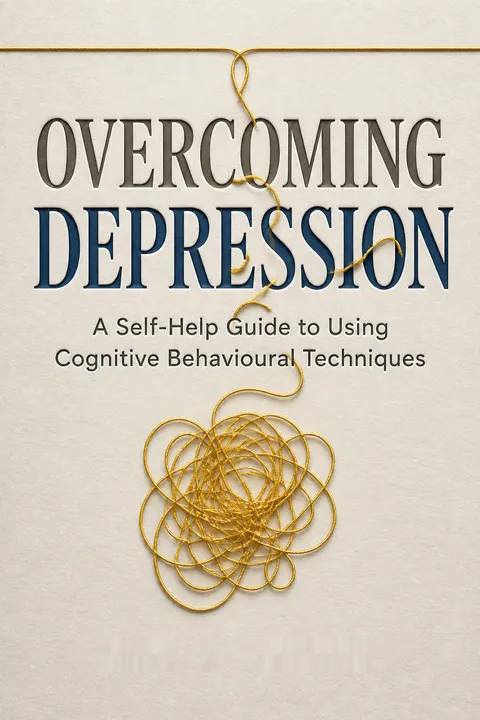


Key Takeaways
Treat depression as a painful brain state, not a verdict on your character
Depression changes the whole system. It can drain energy and pleasure, disrupt sleep and concentration, increase anxiety or anger, and make the future seem closed. Gilbert describes depression as a brain state, meaning a temporary pattern of bodily feelings, thoughts, and behavior, not evidence of weakness or a person’s true identity. He argues that genes, early relationships, current stress, and social conditions can all contribute. His evolutionary account suggests that withdrawal and lowered confidence may once have helped people respond to loss or danger, although that explanation is a theory, not a diagnosis.
Support is part of recovery. Self-help can offer useful skills, but the book is explicit that it cannot replace medical care. If depression is severe, persistent, or accompanied by suicidal thoughts, contact a doctor or qualified mental health professional. Medication and therapy may be appropriate; needing them is not a personal failure.
What's striking is the distinction between blame and responsibility. Seeing depression as an altered state can soften shame, while still leaving room to change behaviors and seek help. The model also discourages treating every depressive thought as a reliable assessment of reality. Its limit is equally important: calling depression a brain state does not explain each person’s experience or remove hardships such as poverty, abuse, or isolation. Biological, psychological, and social explanations work best as complementary lenses, not competing verdicts.
Rebalance threat, achievement, and soothing instead of demanding more willpower
Three systems shape mood. Gilbert describes three interacting emotion systems: one detects danger and mobilizes protection, one fuels pursuit and achievement, and one supports calm, safety, and connection. Depression can leave threat reactions loud, motivation depleted, and soothing or contentment difficult to access. A person who feels trapped at work, for example, may become anxious and irritable while losing interest in goals and relationships. The point is not that these reactions are chosen, but that different mental and bodily practices can influence the balance.
Kindness is a regulator. Supportive relationships can calm threat, while harsh self-criticism can intensify it. The book compares practice to physiotherapy for the mind: breathing, attention, social support, and small enjoyable activities are ways to exercise neglected capacities, rather than proof that a person should simply try harder.
This model is memorable because it explains why achievement alone may not restore well-being. A person can push harder at work while the systems responsible for rest and felt safety remain depleted. It also reframes kindness as a practical form of regulation rather than mere approval or indulgence. The three-part map is a simplification of complex emotion and physiology, so it should guide reflection, not substitute for assessment. Its value lies in asking what kind of need is missing, not in assigning a brain system as a definitive cause.
Write down the thought spiral before it becomes your whole reality
Thoughts arrive as interpretations. An automatic thought is a quick, seemingly convincing reaction to an event, often arriving with an image or bodily feeling. A friend misses a promised call; one interpretation is that something terrible happened, another that the friend forgot, and another that the relationship is over. Each interpretation carries different emotions and actions. In depression, a small uncertainty can cascade into conclusions about being unwanted, defective, and doomed to be alone.
Put the sequence on paper. Record the trigger, the thoughts, the feelings, and a more balanced response. Writing slows the mental rush and makes hidden assumptions easier to inspect. Ask what evidence supports the conclusion, what else could explain the event, and what response would help. The goal is not forced optimism. It is to see that a thought can be understandable without being a proven fact.
The method turns an invisible mental process into something inspectable. That small distance matters: a thought written on a page can be compared with evidence, while a thought left unexamined can feel like the evidence itself. The approach also respects how quickly emotion and interpretation reinforce one another. A useful caution is that not every distressing thought is distorted; sometimes it accurately signals mistreatment or danger. The task is not to dismiss the alarm, but to test its meaning and choose a response suited to the facts.
Observe painful feelings without obeying or fighting every one
Mindfulness trains attention. In this book, mindfulness means noticing present-moment thoughts, feelings, and sensations without immediately judging or reacting to them. During a short breathing exercise, the mind may wander repeatedly. The practice is simply to notice and return attention, gently, rather than scold the mind for wandering. The same skill can be used while eating, walking, or waiting, bringing attention back from imagined disasters and old regrets to what is happening now.
Make room for emotion. Avoiding a feeling can make it return with greater force, while treating it as unbearable can add fear to distress. Gilbert suggests naming the feeling, noticing where it appears in the body, and delaying action until its intensity shifts. This does not mean accepting harmful circumstances or giving up problem-solving. It means creating enough space to respond deliberately instead of being driven by the first emotional impulse.
The useful shift is from controlling the contents of the mind to changing one’s relationship with them. That distinction makes the exercise possible even when calm or positivity is out of reach. Returning attention is itself the training, not a test of whether distraction can be eliminated. Mindful attention can also bring grief or difficult memories into awareness, so the practice is not automatically soothing for everyone. The book’s permission to adapt the focus, or seek support, matters as much as the exercise itself.
Replace self-punishment with compassionate correction that still asks you to act
Criticism is not correction. Gilbert distinguishes compassionate self-correction, which identifies a mistake and supports learning, from self-attack, which uses anger, contempt, or global labels such as useless. A harsh inner voice may claim that punishment is the only way to stay productive. Yet a struggling child usually learns better from a teacher who explains the next step than from one who shames the mistake. The same principle applies to an adult facing a setback.
Practice a supportive voice. Imagine how a fair, warm person would respond to the same problem. Compassion is defined here as sensitivity to suffering joined with a commitment to relieve it. It is not an excuse to avoid responsibility: it can mean apologizing, changing a behavior, asking for help, or taking a difficult step. For some people, kindness initially feels undeserved or threatening, so the book recommends gradual practice rather than demanding an instant emotional shift.
The distinction prevents a common false choice: either attack the self or let the self off the hook. Compassionate correction preserves standards while removing humiliation as the supposed fuel for improvement. That is a more durable basis for learning because it directs attention toward what can change. The idea also clarifies why self-esteem and self-compassion differ in the book: success may bolster one, while the other is needed precisely when things go badly. Compassion should not become a softer way to ignore consequences; its test is whether it supports repair and growth.
Schedule small, meaningful actions before motivation returns
Action can precede motivation. Depression often reduces activity, and withdrawal can remove the very experiences that might provide pleasure, connection, or a sense of competence. Gilbert recommends planning manageable tasks rather than waiting to feel ready. A large chore can be divided into steps, with each completed step acknowledged as effort. The aim is to act against withdrawal without bullying oneself, and to test whether an activity helps rather than assuming it will fail.
Balance effort with recovery. More activity is not always the answer. Exhaustion, overwork, illness, and lack of personal space may require rest, medical advice, or changes in circumstances. The book suggests including both necessary tasks and potentially enjoyable activities, such as walking or seeing a friend. Treating a small pleasure as legitimate is part of rebuilding a life, not a prize that must be earned after every chore is finished.
The approach captures an important feedback loop: mood influences activity, and activity changes the experiences available to mood. Small planned actions make that loop easier to influence than a sweeping resolution to transform one’s life. The careful emphasis on experiments also helps prevent failure from becoming a verdict. Still, activation is not a universal prescription for pushing through exhaustion. Pain, disability, unsafe surroundings, or overwhelming demands may require accommodation and external help, not a more ambitious schedule.
Stop buying approval by erasing your own needs
Approval can become a trap. The wish to belong and be valued is human, but it can lead someone to hide anger, avoid conflict, and continually fit the role others expect. Sally, whose mother had implied that she was a burden, learned to appease people and fear abandonment. That strategy made sense for a dependent child, but as an adult it left her unable to express needs and vulnerable to depression when a relationship ended.
Practice equal relationships. Notice when fear of disapproval is deciding what to say or do. Assertiveness means expressing a need or disagreement clearly while respecting the other person, rather than submitting or attacking. It can involve asking for help, admitting a limitation, or saying no. If the problem is bullying or abuse, the priority is safety and support, not persuading oneself that the relationship is acceptable.
The childhood example shows how a once-protective strategy can outlive the conditions that made it useful. The person is not foolish for learning it, but may need to update it. This is a relational account of depression: mood can be tied to whether a person feels valued, included, and able to influence their life. Its challenge is to distinguish fear-driven mind-reading from genuine disapproval or exploitation. Assertiveness is not a guarantee that others will respond well; it is a way to stop treating their approval as the only measure of one’s needs.
Separate guilt about actions from shame about your whole self
Guilt concerns behavior. In Gilbert’s distinction, guilt can focus attention on harm done to another person and motivate apology or repair. Shame instead turns a difficulty or mistake into a judgment that the whole person is defective, unlovable, or inferior. The feelings can overlap, but separating them helps clarify what is needed: a repair, a boundary, or a change in self-judgment. Depression often intensifies self-blame and makes a person assume too much responsibility for events with many causes.
Share responsibility fairly. The book’s responsibility circle is a way to map the different factors that contributed to an event instead of assigning all blame to oneself. It can also prevent taking responsibility away from someone else. When a person has caused harm, honest acknowledgment and repair matter; self-punishment does not repair it. When the harm was not their fault, compassionate support is more appropriate than demanding that they feel guilty.
This distinction helps preserve moral concern without converting it into self-condemnation. Guilt can be informative when it points toward a specific action and a possible repair; shame often makes the person’s identity the problem, which can obstruct repair. The responsibility circle also resists simplistic stories in which one person controls every outcome. However, distributing causes must not dilute accountability for deliberate harm. The most useful application asks both who had agency and what can be repaired, rather than treating fairness as an arithmetic exercise.
Treat anger as information, then choose assertiveness over rumination or retaliation
Anger points to a threatened value. It may arise from frustration, being ignored, exploitation, injury, or fear of losing status or affection. Its presence does not make a person bad, but acting on it impulsively can cause harm. Gilbert recommends pausing, noticing the bodily surge, and asking what feels threatened or hurt beneath the anger. A worker who broods through the night over an unfair retirement decision may keep the stress response activated without gaining any power to change the decision.
State the issue directly. Assertiveness focuses on the specific behavior and its impact, not on labeling the other person. It aims to make needs clear and seek a workable response, not to win through intimidation. Forgiveness, in this account, means releasing the pursuit of revenge; it does not require excusing the harm, liking the person, or resuming contact.
The treatment of anger is notably neither suppression nor celebration. Anger can flag a real boundary violation, yet rumination may keep the body mobilized long after useful action is possible. Naming the underlying hurt can reveal whether the next step is negotiation, protection, or letting go. Forgiveness is strongest when separated from reconciliation: a person can stop rehearsing revenge and still maintain distance. This distinction is especially important where a relationship is unsafe, because emotional release should never be confused with an obligation to return.
Set standards you can miss without turning disappointment into self-condemnation
Ideals can become a moving target. Perfectionism becomes especially punishing when missing a high standard means being worthless or fearing rejection. Gilbert describes standards imposed on oneself, demanded of others, or believed to be demanded by others. Brian, expecting a promotion, lost the opportunity after a company takeover and replacement. His disappointment deepened into the belief that effort was pointless. Separating the lost opportunity from his worth helped him grieve the setback and consider other options.
Let reality revise the plan. Disappointment may call for mourning, a more realistic goal, or a different route. It does not require pretending the loss is small. Ask what remains possible, whether the standard is achievable, and whether self-attack is making the problem worse. The book’s practical challenge is not to stop caring about outcomes, but to keep a missed outcome from becoming a total judgment of the person.
This is a strong antidote to the cultural fantasy that effort guarantees every desired outcome. The example makes visible the role of luck and institutional change, not just personal performance. A realistic standard can protect ambition by making setbacks survivable, rather than turning each one into evidence of permanent failure. At the same time, lowering standards should not be prescribed reflexively: some goals express genuine values. The more precise question is whether the standard guides meaningful effort or demands impossible certainty about success.
Analysis
Gilbert’s central achievement is to connect cognitive-behavioral practice with an account of social emotion. Depression is not presented merely as inaccurate thinking: it also involves bodily stress, withdrawal, loss of pleasure, relationship fears, and diminished agency. That breadth makes the practical advice more humane. A thought record is not asked to solve poverty or abuse, and an activity plan is not supposed to erase exhaustion. Instead, the reader is invited to distinguish what can be influenced internally from what may require social change, medical care, or support from another person.
The book’s most distinctive contribution is its insistence that compassion can be active. It can mean tolerating a feeling, correcting a harmful action, leaving a damaging relationship, or making a small effort when motivation is absent. This avoids the caricature that kindness means passivity. The recurring examples also give the method a narrative logic: childhood strategies may protect a dependent child, then become costly in adult relationships; a missed goal may produce grief, then self-attack, then further withdrawal.
Some explanatory claims need to be read cautiously. The evolutionary account of depression offers a possible way to understand withdrawal after defeat or loss, but an adaptive story is not proof that a given episode serves a useful function. Likewise, the book’s descriptions of neurotransmitter depletion and brain chemistry reflect the scientific framing of its period and should not be mistaken for a complete account of depression. Its own broader biopsychosocial view is more robust than any single chemical or evolutionary explanation.
The self-help program is therefore best understood as a set of skills, not a universal cure. People differ in what helps, and severe symptoms or suicidal thinking call for professional assessment. The book is most valuable when it reduces shame, improves observation, and helps readers take the next appropriate step, whether that step is a thought exercise, a boundary, treatment, or practical assistance.
Review Summary
Overcoming Depression receives mostly positive reviews for its comprehensive approach to treating depression using cognitive behavioral therapy techniques. Readers appreciate the book's compassionate tone, practical exercises, and in-depth explanations of depression's causes and manifestations. Many find it helpful for understanding and managing their own depression or supporting others. Some criticize its length and repetitiveness, noting it may be challenging for severely depressed individuals to complete. Overall, readers value the book's emphasis on self-compassion and its potential to provide long-term benefits for mental health.
People Also Read










Glossary
Three emotion systems
Three interacting mood systemsGilbert’s simplified map of emotion regulation includes a system for detecting and responding to threat, a system that supports desire and goal pursuit, and a system associated with calm, safety, and contentment. Depression is described as a shift in their balance, with threat more active and positive motivation or soothing less available.
Threat-protection and safety-seeking system
Alarm and protection systemThe brain processes that detect possible danger and prepare protective responses such as anxiety, anger, avoidance, or escape. Gilbert argues that this system can become overly sensitive under stress, directing attention toward threat and loss even when the person’s reflective judgment sees more than one possible interpretation.
Automatic thoughts
Fast interpretations of eventsAutomatic thoughts are rapid interpretations that seem to arise without deliberate reasoning. They may appear as words, images, or imagined scenes, often accompanied by strong feelings. In depression, an initial interpretation can trigger further conclusions about rejection, personal inadequacy, or a hopeless future.
Mindfulness
Nonjudgmental present attentionIn this book, mindfulness is the practice of paying attention to present experience, including thoughts, feelings, sensations, and surroundings, without immediately judging or acting on them. A basic exercise is to notice that attention has wandered and gently return it to a chosen focus, such as breathing.
Compassionate self
Practiced wise, kind stanceThe compassionate self is an imagined and practiced way of relating to oneself with wisdom, strength, warmth, and a non-condemning attitude. It is used to face difficult thoughts and feelings without either surrendering to them or attacking oneself, and to support actions that reduce suffering.
Compassionate image
Imagined source of compassionA compassionate image is a personally created figure, animal, or other presence imagined as wise, strong, warm, and nonjudgmental. The exercise is intended to evoke the experience of receiving care and support. Its form is individual, and it may be a vague impression rather than a detailed visual picture.
Threat and loss bias
Attention tilted toward dangerA thinking tendency in which threat, failure, rejection, and loss become easier to notice, remember, and dwell on than positive or neutral information. Gilbert links this bias to the protective function of the threat system and argues that it can intensify depressive interpretations and rumination.
Responsibility circle
Map of shared causesA written or drawn exercise for examining the multiple factors that contributed to an event. Each factor receives a portion of the circle to represent its share, helping a person test whether they are taking too much or too little responsibility instead of assuming that one person caused everything.
Biopsychosocial approach
Combined body, mind, and contextAn approach that understands depression through the interaction of biological processes, psychological patterns, and social circumstances. In Gilbert’s account, genes and bodily stress responses interact with thoughts, coping habits, early relationships, current events, and the support or hardship present in a person’s environment.

Download PDF
Download EPUB
.epub digital book format is ideal for reading ebooks on phones, tablets, and e-readers.








