

Plot Summary
Two Blue Lines
At seventeen, Stanton Shaw learns that his longtime girlfriend, Jenny Monroe, is pregnant. He offers to give up his Columbia plans and stay in Mississippi, but Jenny insists he leave for the education and future he has earned. Their daughter, Presley, arrives seven months later.
Holding the newborn, Stanton discovers a love that rearranges every ambition, yet he follows Jenny’s wishes: she stays with her parents, and he heads to New York. They do not marry. The choice begins as an act of devotion, but it also sets the pattern for their family: Stanton will provide and return when he can, while Jenny raises Presley at home. Neither teenager can yet see how much that arrangement will ask of them.
Stanton’s first adult decision is framed as sacrifice, but it also establishes the novel’s central ambiguity: leaving can be an act of care and still feel like abandonment to the people left behind. Jenny refuses to let pregnancy erase Stanton’s ambition, while he interprets responsibility as financial provision and endurance. Their daughter gives their youthful bond permanent consequence, but not a shared life. The river, where they make the choice, becomes a private place for intimate decisions that cannot settle the larger question of what a family requires.
The First Distance
At Columbia, Stanton misses Presley’s first birthday during finals and hears the celebration through Jenny’s phone and the pictures she emails. His fraternity mentor, Drew Evans, argues that Stanton cannot know whether Jenny is his only choice without experiencing anything else.
When Jenny’s suggestion of an open relationship resurfaces, Stanton sleeps with a stranger, then tells Jenny about it during his next visit home. She is devastated, though they had agreed to see other people.
After her sister Ruby explains that agreement and hurt can coexist, Jenny lets Stanton back into her bed. They promise not to ask about other partners, and Jenny says she will also date when he is away. Their pact preserves the relationship, but leaves its limits untested.
The open arrangement is less a confident experiment than a bargain made under unequal conditions. Jenny encourages it because she wants both of them to grow beyond the narrow world they knew as teenagers; Stanton accepts while privately hoping their bond will remain exempt from change. His honesty fulfills the agreement’s letter and violates its emotional expectation. Ruby’s intervention matters because she separates permission from immunity: Jenny can have authorized the act and still suffer from imagining it. Their new rule, not asking, prevents immediate conflict but also makes silence part of the relationship’s structure.
The Jury Charmer
Ten years later, Stanton is a successful Washington defense attorney, skilled at making juries trust both his arguments and his presence. His colleague Sofia Santos is an equally ambitious trial lawyer, and for six months they have kept their attraction inside a casual arrangement.
In a case involving Pierce Montgomery, the son of a senator, Stanton turns threats sent by the alleged victim into evidence that his client reasonably feared an attack. Sofia supports their shared defense, and the jury finds Montgomery not guilty.
At lunch afterward, Sofia bets that the jury will return quickly, putting Stanton’s prized Porsche at stake. Their professional victory strengthens their standing at the firm, while their flirtation continues to look safely separate from the family lives each has built elsewhere.
Stanton’s courtroom skill depends on reading people, arranging facts, and controlling what an audience notices. In private, he applies the same confidence to relationships, treating categories such as colleague, lover, and family as if clear labels could prevent emotional overlap. Sofia is not merely an accessory to his success: her own record and professional instincts make her a genuine equal. Their affair thrives on mutual competence and explicit limits, yet Stanton’s talent for persuasion also helps him avoid asking what those limits protect him from.
Beyond the Office
After the verdict, Stanton, Sofia, Jake Becker, and Brent Mason celebrate at a bar. Sofia dances for Stanton, and they leave together, turning their familiar arrangement into a long, unhurried night at his apartment.
Between sex and late-night food, she tells him about the childhood plane crash that left a scar along her side. Stanton asks questions instead of treating the mark as a curiosity, and she stays in his bed for the first time.
In the morning, she hears him speaking gently with Presley on a video call, then catches a glimpse of the family life he shares with Jenny. Jenny tries to tell Stanton important news but postpones it. Sofia notices how much the intimacy has begun to matter to her, then insists to herself that it remains casual.
The shift is small in outward form and large in psychological meaning. Their first night together is organized around sensation; the overnight stay introduces unstructured time, personal history, and the quiet vulnerability of waking beside someone. Sofia’s response to Stanton’s tenderness with Presley exposes the limits of her self-protective story: she is drawn not only to his body but to the kind of father he is. Meanwhile, the unfinished call from Jenny plants a threat neither lover can interpret yet. The scene’s intimacy increases just as its emotional information remains incomplete.
The Wedding Invitation
A wedding invitation from Jenny’s family arrives at Stanton’s office, naming Jenny and James Dean as the couple. Stanton explodes at the news and calls Jenny, who confirms she is marrying JD, a former schoolmate now teaching in Sunshine.
She admits she has been seeing him for months and that Presley has met him. Stanton’s anger makes the call worse, so Sofia writes him a practical warning: stop shouting and make a plan. He decides to return to Mississippi and persuade Jenny to reconsider.
When he asks Sofia to come along as his adviser, she points out that she is his lover as well as his friend. Stanton sees no conflict. Despite recognizing the danger to herself, Sofia agrees to drive with him, hoping she can steady him and help him win Jenny back.
The invitation turns a long-standing assumption into an immediate crisis. Stanton has treated Jenny’s presence in his life as permanent, even while living far away and maintaining other relationships. His first response is not grief but control: he imagines the wedding as a problem he can argue out of existence. Sofia’s role becomes revealingly double. She helps him because she cares for him, while agreeing to accompany him into a situation that may make her own attachment impossible to conceal. Stanton’s confidence is not yet insight; it is his belief that effort can restore the future he presumed was waiting.
Homecoming at the River
On the drive south, Sofia challenges Stanton’s assumptions about Jenny and becomes more curious about the Mississippi he left behind. At his family’s ranch, she meets his mother, father, siblings, and Presley, then watches Stanton return to the old rituals that connect him to Jenny.
At their riverbank meeting, Jenny explains how friendship with JD grew while he cared for his dying father. She says she loves JD because he is there, wants a home with her, and offers a marriage Stanton never pursued.
Stanton promises he could leave Washington and return to town, but Jenny rejects being the sacrifice he makes to prevent her wedding. She still loves him, yet insists that her life has moved forward. Stanton leaves the river without the answer he came to force.
Jenny’s account makes absence concrete. Stanton believed that money, calls, and periodic visits proved his devotion; Jenny experienced those gestures alongside the daily work of parenting and the absence of a partner. JD’s appeal is not that he surpasses Stanton in some abstract contest, but that he shares the ordinary hours Stanton chose to spend elsewhere. Stanton’s offer to move back sounds generous, yet Jenny recognizes its hidden cost: she would become the reason he abandoned the life he wanted. Her refusal protects both of them from turning love into a debt.
The Sauce and the Stranger
At church and a family barbecue, Stanton meets JD properly and tries to find reasons to dislike him. Instead, JD speaks respectfully about Presley and makes clear that he wants to be her friend, not replace her father.
Stanton also drives off Ruby’s abusive boyfriend, briefly reconnecting with the family through the protective role he understands best. Later, Stanton serves his barbecue sauce to JD, forgetting that he is allergic to peppers. JD’s face swells dramatically after eating pepper flakes, and Jenny believes Stanton deliberately tried to sabotage the wedding.
She orders him to stay away. Stanton insists the reaction was accidental, but the damage is done: his effort to compete has made him look less like a caring father and more like a man willing to injure the person Jenny chose.
The episode exposes the difference between intention and consequence, a distinction Stanton routinely handles well in court but poorly in love. His protective intervention on Ruby’s behalf reflects a genuine moral instinct; his sauce mistake follows a careless effort to use private knowledge against JD. Jenny has reason to distrust the explanation because Stanton is already trying to disrupt her marriage. JD’s generosity complicates Stanton’s rivalry, while the allergic reaction briefly restores it. The comedy does not erase the stakes: Stanton’s desire to win is making the people he loves less willing to trust him.
A Tractor Makes Peace
Stanton takes Sofia horseback riding across the ranch, where she asks whether he has considered what happens if Jenny still marries JD. He refuses to imagine failure and promises Sofia she will not lose his friendship.
At Carter’s crowded party, strangers grope Sofia; Stanton pulls one away and stays beside her. Later, Carter proposes a drunken tractor race to settle the tension between Stanton and JD. The machines collide in a field, and Stanton’s father ends the contest with a shotgun blast.
The men must reseed the damaged land at dawn. During the night, Stanton also watches his father and Carter begin speaking again after years of estrangement. The comic contest brings JD closer to the family and gives Stanton a brief glimpse of how much he has been trying to control.
The ranch scenes widen Stanton’s problem beyond romance. He is trying to restore an old arrangement while the people around him are building new forms of connection: Sofia enters his family’s life, JD approaches him without hostility, and his father begins repairing a broken relationship with Carter. The tractor race externalizes Stanton’s impulse to turn uncertainty into competition. Its collision produces work rather than victory, making cooperation the only useful response. Sofia, meanwhile, demonstrates that needing protection does not cancel her agency; Stanton’s care becomes meaningful when he respects her competence instead of treating her as a possession.
The Kiss That Clears
With Jenny’s wedding approaching, Stanton climbs the tree outside her childhood bedroom and slips through the window. He finds her wedding dress, then a bridal-shower gift box filled with restraints and other intimate accessories she plans to share with JD.
Their conversation makes clear that Jenny and JD have explored parts of themselves she never shared with Stanton. Stanton asks for one last kiss, expecting their familiar chemistry to settle the question. It does not. He feels only affection and the weight of shared history, not the desire he now recognizes in himself for Sofia.
Jenny understands the same emptiness. Stanton leaves her room rattled but newly honest: the relationship he has been fighting to preserve belongs to their past, while his feelings for Sofia are present and frighteningly real.
The kiss works as a diagnostic test, not a romantic revival. Stanton has treated memory as proof that his relationship with Jenny remains active, but physical closeness reveals that affection and desire no longer point in the same direction. The toys sharpen the contrast without making either woman’s sexuality a contest: Jenny has developed beyond the assumptions Stanton carried from adolescence. His discovery arrives late because he has mistaken familiarity for certainty. Recognition is not yet repair, however. He knows whom he loves but has not told Sofia, leaving her vulnerable to the very history he has finally understood.
Storm Over Sunshine
At Jenny and JD’s engagement party, Jenny tells JD that she kissed Stanton. JD refuses to compete for her, but Stanton’s insults provoke him into a fight. Soon a tornado warning sends the family toward shelter. Stanton realizes Sofia has wandered away and leaves the others to search for her, despite Presley’s fear that he will not return.
He finds Sofia stumbling through the wind in high heels and pulls her into his arms. As he turns to shield her, flying debris strikes his head and knocks him unconscious. Sofia believes she may lose him and admits that she loves him. Stanton wakes, covers her with his body, and steadies her until the storm passes. The emergency makes their feelings undeniable, but leaves their future unresolved.
The crisis strips away Stanton’s performance as a confident persuader. He must choose whom to protect, and he accepts the cost of leaving Presley with Jenny and JD because Sofia is in danger. His trust in JD becomes practical rather than rhetorical: he entrusts the child to the man he once treated as an enemy. Sofia’s confession emerges from fear, but its truth does not depend on the danger. The storm turns emotional avoidance into physical vulnerability; neither can rely on charm or strategy while debris moves through the dark. Survival brings them together without yet supplying the conversation they need.
Nana Sees Clearly
After the storm, the family discovers that Jenny’s grandmother, Nana, has suffered a heart attack. She is stable in hospital and asks to see Stanton. Nana tells him she never liked him because she knew he was always eager to leave Sunshine, while Jenny belonged there. She warns him that a woman should not feel like a lesser choice.
Stanton understands that he and Jenny wanted different lives, and that his offer to return would have asked her to carry the burden of his sacrifice. Nana urges him to start over rather than rebuild an old relationship from memory. Stanton leaves the hospital with a clearer view of Jenny’s decision, but he still has to face what Sofia believes about their affair and his unresolved history.
Nana’s bluntness gives Stanton a perspective neither his own longing nor Jenny’s explanations could fully provide. She identifies the asymmetry that youth concealed: Stanton’s desire to leave was never a temporary phase, while Jenny’s attachment to home was not a failure of imagination. Her warning about being the lesser choice also anticipates the damage Stanton has done to Sofia by bringing her into his campaign for Jenny. The hospital scene reframes adulthood as the ability to recognize incompatible desires without converting one person into the villain. Insight arrives as a responsibility, not absolution.
The Dance and Departure
At the tavern, Stanton dances with Jenny to a song tied to their history. Sofia watches and leaves with Jenny, finally admitting that she loves him. Jenny encourages her to tell Stanton directly. Back at the ranch, Sofia does so, but Stanton falls asleep after they share one last night together. She leaves for the airport before he wakes, choosing distance over the risk of being his rebound.
Stanton learns she has flown despite her lifelong fear of planes. He attends Jenny and JD’s wedding, accepts that Jenny is his family without being his future, and promises Presley a summer in Washington. The wedding proceeds without Sofia, forcing Stanton to carry his new understanding back to the city without knowing whether she will hear him out.
The dance repeats an old image but changes its meaning. For Sofia, it confirms that Stanton’s attachment to Jenny may still outrank their intimacy; for Stanton, it is an act of farewell that he has not explained to Sofia. Her departure is an assertion of self-respect, not punishment. She refuses to let physical closeness substitute for an explicit commitment. Stanton’s attendance at the wedding marks a genuine release of his claim on Jenny, but the separation from Sofia shows that realizing whom he loves does not repair the harm caused by delay. He must now prove that his choice is not merely a reaction to loss.
A Case for Forever
Stanton drives back to Washington with Brent and goes straight to Sofia’s townhouse, where her brothers and father are helping her rearrange the rooms. Her brother Tomás lets him inside, while her mother makes clear that Stanton has hurt her daughter.
He finds Sofia painting and explains how jealousy first made him recognize his attachment, how Jenny’s wedding confused that feeling, and how he now understands the difference. Stanton names Sofia as the woman he wants for his future, not a consolation after Jenny.
Sofia refuses to accept his explanation as proof; she will not be a rebound and asks him to show that he means it. Stanton agrees to start their courtship properly. Their old arrangement ends, and a relationship chosen openly begins.
Stanton’s final argument differs from his courtroom performances because it cannot be won through charisma alone. Sofia requires evidence over time, not a polished declaration, and her refusal protects her from being absorbed into his emotional emergency. Her family’s presence makes the scene socially consequential: Stanton must approach her not as a private convenience but as someone whose life and loyalties are already rooted. His willingness to start again acknowledges that love is not self-validating. It becomes credible through repeated action, attention, and consent. The ending resolves the opening’s central tension by making commitment a shared choice rather than a sacrifice imposed by circumstance.
Epilogue
Over the following months, Stanton dedicates an Elton John performance to Sofia, moves into her townhouse, and turns his old desk into a shared home office. Their life settles into work, dinner, family calls, and affection that can be playful or tender. When they visit Mississippi, Jenny is heavily pregnant with JD’s child, and Sofia agrees to consider having a baby with Stanton someday.
He says marriage should come first, promising to ask when he is ready to make the question unmistakable. For now, they return to the ranch together, with Presley between their two homes and Stanton finally building a future in which ambition and love do not have to compete.
The epilogue tests the resolution through ordinary time rather than another crisis. Stanton’s dedication, move, and shared domestic routines convert his declaration into habits; the relationship is no longer sustained by secrecy or emergency. Jenny’s pregnancy with JD’s child also confirms that her future has continued without being treated as a loss Stanton must reverse. Sofia’s willingness to consider a family is deliberately conditional, preserving her professional ambitions and agency. The book ends before marriage or parenthood settles their lives, but Stanton’s promise has changed form: he no longer asks someone else to sacrifice for his future. He is learning to make a future that can hold them both.
Analysis
Overruled is organized around competing definitions of responsibility. Stanton initially understands love as provision: he goes to Columbia, builds a legal career, sends money, and returns when he can. Jenny’s experience exposes the limit of that model. A person can honor a promise in intention while leaving someone else to absorb its daily costs. Her eventual choice of JD is not a rejection of their shared history; it is a demand for a partner who participates in the life she has chosen.
The novel’s legal setting sharpens this conflict. Stanton is trained to make a case, and his courtroom success depends on controlling the frame through which others interpret events. At first, he applies that method to Jenny, treating her engagement as an argument to defeat. But facts do not persuade her because the dispute is not about whether he loves her. It is about whether the lives they want can fit together. Nana’s insight helps him see that his ambition was never incidental, and that asking Jenny to follow him would turn his own desire into her sacrifice.
Sofia’s conflict is different. She has built a life in which emotional restraint protects professional ambition, and a casual relationship with Stanton seems to fit that design. Yet she wants to be chosen openly, not merely desired in private. Her refusal to accept his declaration as immediate proof gives the ending its ethical force. Stanton cannot win her by performing certainty; he must become consistent enough to be believed.
The novel therefore treats commitment not as the triumph of passion over independence, but as a practice that makes room for both. Stanton does not need to stop wanting a career, Jenny does not need to abandon Sunshine, and Sofia does not have to shrink her ambitions. The story’s resolution begins when he stops trying to restore an old arrangement and accepts the harder work of building a new one.
Review Summary
Overruled received mixed reviews from readers. Many praised Emma Chase's writing style, humor, and steamy scenes. The main characters, Stanton and Sofia, were generally well-liked, though some readers found Stanton's behavior frustrating. The book's southern setting and secondary characters were highlights for many. Some readers struggled with the premise of Stanton trying to win back his ex while involved with Sofia. Overall, the book was seen as an enjoyable, albeit imperfect, contemporary romance with strong chemistry between the leads.
People Also Read









Characters
Stanton Shaw
The persuasive homecomerA Mississippi farm boy who becomes a successful Washington defense attorney, Stanton is ambitious, charming, and fiercely loyal to the people he calls family. He became a father while still in high school and has built much of his identity around providing for Presley, even when work keeps him far from her. In court, he understands how to shape a story and win trust; in private, that confidence can keep him from recognizing what others need. His humor and protectiveness make him magnetic, while his tendency to treat long-standing bonds as permanent can make him careless. Stanton is driven by a desire to succeed without abandoning his roots, though he is not always clear about what that balance requires.
Sofia Santos
The formidable co-counselA gifted criminal defense attorney, Sofia is Stanton’s colleague, courtroom equal, and friend. Raised in a family that prizes education and achievement, she approaches her career with discipline and refuses to let gendered expectations narrow her choices. Her confidence is genuine, though she uses clear boundaries to protect herself from emotional entanglements that might disrupt the life she has built. Sofia is witty, observant, and comfortable taking control, but intimacy asks her to risk being seen beyond her professional competence. She brings sharp judgment to Stanton’s plans and is often the person who can interrupt his impulsiveness. Her independence is not a rejection of love; it is a demand that love respect her whole life.
Jenny Monroe
Stanton’s first great loveJenny has known Stanton since childhood and shares with him the history of first love, teenage parenthood, and raising Presley across two states. Warm, funny, and strong-willed, she is deeply attached to her family and the small Mississippi community where she grew up. Her decision-making is shaped by a practical understanding of what daily life requires, not simply by nostalgia for the future she and Stanton once imagined. She wants to preserve their bond without confusing it with a promise to marry. Jenny’s capacity for affection coexists with a firm sense of what she will and will not sacrifice, making her more than the object of Stanton’s memories.
Presley Shaw
The bridge between homesPresley is Stanton and Jenny’s daughter, born when they are still teenagers. Bright, affectionate, and observant, she has inherited her father’s humor and her mother’s directness. She grows up in Jenny’s Mississippi home while maintaining a close bond with Stanton through visits, calls, and the songs he sings to her. Presley understands more about the adults around her than they sometimes realize, and she can name the emotional stakes they avoid discussing. Her needs help anchor the story in the responsibilities that continue beyond romance: both parents must make choices that protect her sense of security and belonging.
James Dean, JD
The steady local suitorA former schoolmate of Stanton and Jenny, JD returns to Sunshine to care for his dying father and becomes close to Jenny during that difficult period. He is a high-school teacher and assistant football coach, more comfortable with quiet routines than grand displays. JD takes Jenny’s history with Stanton seriously without trying to erase it, and he wants to build a home with her and be a friend to Presley. His sincerity complicates Stanton’s urge to cast him as an enemy. JD is not a symbol of settling for less; he represents the value of dependable presence and a life grounded in the community he calls home.
Drew Evans
The blunt college mentorStanton’s fraternity big brother at Columbia, Drew is a forceful friend whose confidence and blunt advice help Stanton navigate college. He pushes Stanton to examine the assumptions behind his loyalty and offers him a framework for experiencing life beyond Jenny. As an adult, Drew remains quick-witted and provocative, but his own marriage has changed how he regards commitment. He is often comic relief, yet his advice can redirect Stanton at crucial moments. Drew’s practical affection tends to arrive wrapped in teasing, which makes him effective at reaching a friend who resists solemn counsel.
Jake Becker
The watchful law partnerA formidable defense attorney and Stanton’s longtime friend, Jake is reserved, dryly funny, and deeply dependable. He shares office space and daily life with Stanton and their circle, often acting as the steady presence amid their impulsive schemes. Jake protects his friends without making a performance of it and is comfortable letting silence do the work. His blunt observations expose the absurdity of a situation without diminishing its stakes. He values competence and loyalty, and his practical nature gives the group a reliable counterweight to Stanton’s charisma and Brent’s restless energy.
Brent Mason
The irrepressible colleagueBrent is a cheerful, energetic attorney at Stanton and Sofia’s firm, known for jokes, outrageous stories, and an ability to turn office camaraderie into a close-knit team. He has a prosthetic leg after a childhood accident and meets the world with resilient good humor rather than self-pity. Brent is also more emotionally perceptive than his playboy persona suggests. He worries when Sofia’s arrangement with Stanton risks hurting her and offers support without judgment. His friendliness makes him a source of levity, but his loyalty gives him a meaningful role when the central couple’s miscommunication becomes painful.
Carter Shaw
The unruly older brotherCarter is Stanton’s older brother, a former football star who left college and built an unconventional life outside his father’s expectations. He is charismatic, generous, and drawn to communal living, music, and a spiritual outlook that his family does not always understand. Carter provides a refuge for local young people and can bring a crowd together, though his ideas sometimes create comic trouble. The distance between him and his father weighs on the family. Carter’s influence shows Stanton that loyalty can survive profound differences, even when reconciliation takes more patience than either man expects.
Nana
The shotgun-toting truth tellerJenny’s grandmother is a sharp-tongued, formidable presence who treats Stanton with suspicion and keeps a shotgun close at hand. Her rough manner conceals fierce devotion to her family and a keen ability to understand people’s motives. Nana has little patience for polite evasions, and she uses humor, threat, and unexpected kindness in equal measure. Her long view of the Monroe and Shaw families gives her insight into the difference between wanting someone and sharing their life. She is a comic force in Sunshine, but her judgments carry weight because she knows the people involved so well.
Ruby Monroe
Jenny’s combative sisterRuby is Jenny’s older sister, a lively, red-haired woman whose romantic life is less stable than her loyalty to her family. She has children and continues to live near her parents, where her choices are a frequent source of teasing and concern. Ruby is blunt with Stanton and often sees the trouble he has caused before he does. She and Jenny share a protective, sometimes contentious sisterhood. Ruby’s impulsiveness provides comic contrast, but when a partner treats her cruelly, the people around her rally to defend her.
Mrs. Shaw
The welcoming farm matriarchStanton’s mother is a warm, capable presence who keeps the Shaw household and ranch running. She welcomes Sofia quickly and treats family meals, work, and Sunday church as the rhythms that hold people together. Her affection for Stanton is physical and open, but she does not assume that every family decision belongs to her. She respects Jenny’s privacy, even when she knows Stanton is hurt. Through her, the ranch becomes more than a setting: it is a home built from routine, labor, and a community that notices when someone is missing.
Carter Shaw Sr.
The stoic ranch patriarchStanton’s father is a quiet, hardworking rancher whose authority is rooted in the land and the responsibilities of running it. He expects his children to work and to accept the consequences of their choices. His strained relationship with Carter reflects a clash between practical expectations and an unconventional way of life. Though he rarely expresses affection in grand gestures, his devotion to his wife and children is visible in his steadiness. The ranch depends on him, and his approval remains important to Stanton, even when Stanton has built a separate life in Washington.
Mary Shaw
The youngest Shaw siblingMary is Stanton’s younger sister and Marshall’s twin. She is sociable, playful, and enthusiastic about clothes, music, and boys, with the audacity to tease her older brother. Her flirtatious confidence sometimes catches the adults off guard, and she is accustomed to being indulged as the only daughter. Mary’s presence helps show Stanton in the role of protective older brother, a role he takes seriously even when it exposes his double standards.
Marshall Shaw
The easygoing younger brotherMarshall is Mary’s twin and one of Stanton’s younger brothers. He is a high-school student with an easygoing streak, a modified pickup, and an interest in girls and football. Stanton feels protective of him, though Marshall is old enough to make his own mistakes. His place in the family captures the gap between Stanton’s memory of home and the younger siblings’ present-day lives.
Plot Devices
The Riverbank
A place for hard truthsThe river is where Stanton and Jenny first decide how to respond to her pregnancy, and it remains their private meeting place across years of separation. Its repeated use gives them a setting where old promises can be revisited, but it cannot make those promises permanent. When Stanton returns to challenge Jenny’s wedding, the same bank reveals how their lives have diverged. The location holds memory without guaranteeing that the people who made it still want the same future.
The Open Arrangement
Permission without certaintyJenny and Stanton agree that each may see other people while they are apart, then make a rule not to ask for details. The arrangement is intended to keep their young relationship from becoming a prison, but it cannot prevent jealousy or changing needs. For Stanton, its terms become a way to separate physical encounters from his bond with Jenny. For Sofia, a similar casual agreement seems to make intimacy manageable. In both cases, explicit rules reveal what the characters are afraid to say plainly.
The Legal Case
Argument as self-deceptionStanton’s work as a defense lawyer trains him to select facts, anticipate objections, and shape a persuasive account. He uses those abilities to win a jury’s trust, and Sofia shares his professional command of evidence. But his private life does not yield to courtroom logic. He initially treats Jenny’s wedding as a case he can win and delays naming his feelings for Sofia, even as the facts accumulate. The contrast makes his eventual honesty meaningful: love requires him to stop arguing around what he knows.
The Small-Town Network
News outruns every planIn Sunshine, neighbors, relatives, teachers, and shopkeepers carry news from one household to another. The town’s closeness creates comic encounters and makes privacy difficult, but it also means Stanton is returning to a community that remembers his childhood and his history with Jenny. People notice his absence, Sofia’s arrival, and the wedding preparations. This web of attention presses private choices into public view, forcing Stanton to deal with the consequences of his actions among the people who helped shape him.
The Tornado
Danger strips away evasionThe tornado warning turns a family conflict into an immediate test of care. Stanton must leave Presley with Jenny and JD while he searches for Sofia in dangerous weather. His decision shows that he trusts JD with his daughter, even before he has fully admitted what Sofia means to him. Flying debris injures Stanton, and Sofia’s fear of losing him brings her feelings into the open. The storm does not solve their relationship, but it makes emotional postponement impossible.
FAQ
What's Overruled about?
- Romantic Comedy with Legal Twist: Overruled by Emma Chase follows Stanton Shaw, a young man dealing with unexpected fatherhood and love complexities. The story unfolds as he navigates his relationship with Jenny Monroe, his high school sweetheart, who is engaged to another man.
- Themes of Love and Growth: The book explores themes of love, responsibility, and personal growth, as Stanton grapples with his feelings for Jenny while trying to establish his own identity.
- Dynamic Characters: Stanton is portrayed as a charming, determined character willing to fight for his family, while Jenny is depicted as a strong woman caught between her past and future.
Why should I read Overruled?
- Engaging Storyline: The plot is a captivating mix of romance, humor, and drama, making it a page-turner. Readers will find themselves invested in Stanton and Jenny's journey.
- Relatable Characters: The characters are well-developed and relatable, reflecting the struggles of young love and adulthood challenges.
- Emma Chase's Writing Style: Her witty and engaging writing style brings the story to life, filled with sharp dialogue and emotional moments.
What are the key takeaways of Overruled?
- Importance of Communication: The book emphasizes the need for open and honest communication in relationships, highlighting Stanton and Jenny's misunderstandings.
- Navigating Change: Overruled illustrates how life can change unexpectedly and the importance of adapting to those changes.
- Value of Family: The story underscores the significance of family and the bonds that tie us together, with Stanton's commitment to his daughter driving much of the narrative.
What are the best quotes from Overruled and what do they mean?
- “You’re the kind of man who’s gonna go to Columbia University and graduate with honors.”: Reflects Jenny's belief in Stanton's potential and the expectations placed on him.
- “I love you. I do. What I feel for you, who you are, is so precious to me.”: Captures the depth of Stanton's feelings for Jenny, emphasizing the importance of love and connection.
- “You’re not a bad daddy, I’ll give ya that much.”: Illustrates the complexities of Stanton's role as a father, acknowledging his efforts and challenges.
How does Overruled explore the theme of love?
- Complex Relationships: The book delves into the complexities of love, showcasing how it can evolve over time, particularly through Stanton's feelings for Jenny.
- Friendship and Romance: Highlights the fine line between friendship and romance, especially in Stanton and Sofia's relationship.
- Sacrifice and Commitment: Love is portrayed as requiring sacrifice and commitment, with Stanton's willingness to fight for Jenny and their family.
What challenges do Stanton and Jenny face in Overruled?
- Unexpected Parenthood: Stanton's journey begins with the shock of impending fatherhood, complicating his relationship with Jenny.
- Communication Barriers: Misunderstandings and lack of communication create tension between Stanton and Jenny.
- External Pressures: Family and societal expectations weigh heavily on both characters, with Jenny's engagement adding pressure.
How does the setting influence the story in Overruled?
- Small-Town Dynamics: Sunshine, Mississippi, creates a sense of familiarity and community, adding pressure due to everyone knowing each other's business.
- Contrast with Urban Life: Stanton's experiences in New York City contrast sharply with his roots in Mississippi, highlighting his internal struggle.
- Symbolism of the River: The river serves as a significant backdrop, symbolizing Stanton and Jenny's shared history and the passage of time.
Who are the main characters in Overruled?
- Stanton Shaw: A successful defense attorney who returns to Mississippi to confront his past and feelings for Jenny, while being a devoted father to Presley.
- Jenny Monroe: Stanton's former love, about to marry JD, grappling with her feelings for Stanton and her life choices.
- Sofia Santos: A strong, independent woman involved with Stanton, representing a new beginning but complicated by his past with Jenny.
What themes are explored in Overruled?
- Love and Regret: The book delves into the complexities of love, including the regrets that come with past choices.
- Family and Loyalty: The importance of family is a recurring theme, as characters navigate their relationships with loved ones.
- Personal Growth: Characters experience significant growth, learning from mistakes and evolving in their relationships.
How does Overruled compare to other books by Emma Chase?
- Similar Style: Features witty dialogue, humor, and steamy romance, consistent with Chase's other works.
- Character-Driven: Focus on character development and relationships, a hallmark of Chase's writing.
- Romantic Tension: Filled with romantic tension and chemistry, similar to her previous novels.
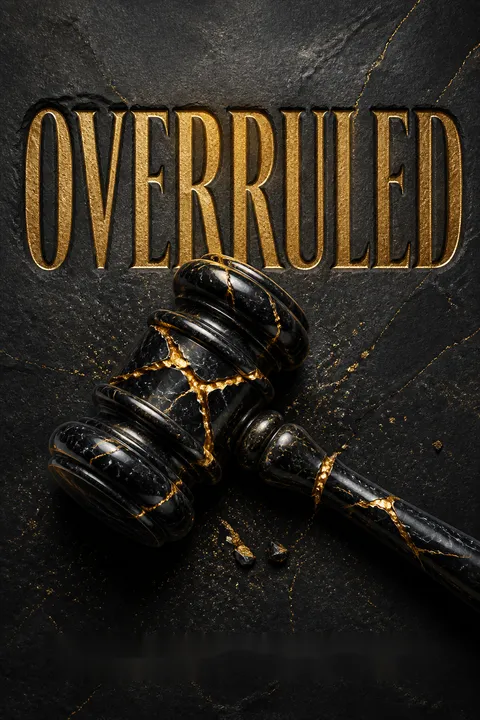
What is the significance of the title Overruled?
- Legal Connotation: Reflects Stanton's profession as a defense attorney, symbolizing the characters' struggles to overturn past decisions.
- Emotional Overruling: Represents the emotional battles characters face, highlighting overcoming obstacles.
- Power Dynamics: Speaks to power dynamics in relationships, emphasizing taking control of one's life.
What can readers expect from the ending of Overruled?
- Resolution of Conflict: Anticipate a resolution to romantic tensions and conflicts, with characters confronting their feelings.
- Hopeful Future: Offers a sense of hope and possibility, suggesting love can be rekindled and new beginnings are possible.
- Open-Ended Possibilities: Leaves room for readers to imagine the characters' futures, inviting contemplation about love and relationships.




Download PDF
Download EPUB
.epub digital book format is ideal for reading ebooks on phones, tablets, and e-readers.








