

Plot Summary
Dorothy's Hen-Coop Raft
Dorothy Gale, a Kansas girl traveling with her ailing Uncle Henry toward Australia, leaves the ship's cabin during a violent storm because she fears he has gone on deck. The wind tears a chicken coop loose with Dorothy clinging to it, and the waves carry her away until ship and uncle vanish. She survives the night on the coop's wooden base, then wakes to a yellow hen speaking beside her.
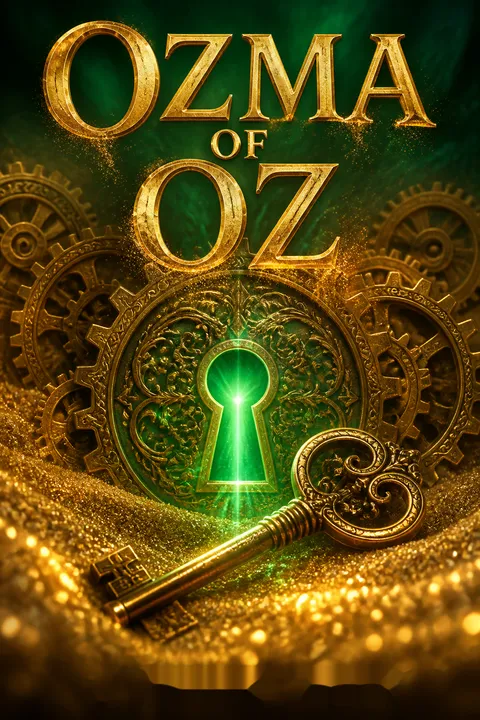
The hen names herself Billina, and the two drift ashore in the Land of Ev. While Dorothy dries her stockings, Billina scratches for food and strikes something hard in the sand. Dorothy digs out an old golden key, pockets it, and sets off inland with Billina to find breakfast and discover where the sea has brought them.
Dorothy's rescue attempt begins in care for Uncle Henry, not in a desire for adventure. That impulse strands her, but her experience with danger lets her meet isolation with practical curiosity rather than panic. Billina becomes the first companion who can answer back, though their different ways of eating and thinking already complicate easy ideas of civility. The key gives the chance discovery a direction: Dorothy is not merely washed into a strange place; she carries the means to open something hidden there.
Lunch Grows on Trees
Inland, Dorothy finds writing in the sand that warns travelers to beware the Wheelers. She and Billina cannot make sense of it, and hunger soon outweighs caution. Among the trees, Dorothy discovers lunch boxes and dinner pails growing on branches, takes food, and prepares to explore farther. A brightly dressed creature rolling on wheels rushes from the forest, followed by a crowd of its kind.
They accuse Dorothy of stealing from their trees and threaten to kill her. Billina spots a refuge in a mound of broken rock; the Wheelers cannot roll over its jagged surface, so the two escape capture but become trapped on the hill. Dorothy now has the golden key, but no clear way down or knowledge of what country she has entered.
The fairyland's abundance is not uncomplicated generosity. Dorothy finds food exactly when she needs it, but the Wheelers turn taking into a capital offense, making the landscape's rules as strange as its produce. Their rolling bodies seem to promise speed and menace, while the rocks reverse that advantage and leave Dorothy temporarily safe. The episode keeps her resourcefulness concrete: she eats, observes, and climbs. The warning in the sand proves useful only after she has already encountered the danger it names.
The Key in the Rock
From the hilltop, Billina notices a door-shaped crack in a boulder. Dorothy tests the golden key she found on the shore, and the rock opens to reveal Tiktok, a copper machine man whose clockwork controls his thinking, speech, and movement separately. Once wound, Tiktok explains that King Evoldo sold his wife and ten children to the Nome King, then drowned himself in remorse.
Dorothy rewinds Tiktok after he runs down, and he devises a way past the Wheelers. Using a dinner pail as a clanging club, he drives them back and discovers that their threats conceal their inability to hurt anyone. Their leader agrees to guide the travelers to the royal palace, where Dorothy hopes to find help and Tiktok can learn what became of Ev.
Tiktok makes agency visible as a set of mechanisms that can stop, fail, and be restarted. Dorothy's care for him is practical, but it also establishes a form of companionship that does not depend on human feeling or flesh. The Wheelers offer a parallel lesson: apparent power can be a performance maintained by fear. Dorothy and Tiktok overcome them not by superior force alone, but by testing what their bodies can and cannot do. The key turns a chance find into the first active alliance of the journey.
Langwidere Wants a Head
At the palace, Dorothy meets Princess Langwidere, who changes among a collection of beautiful heads and wears a ruby key that opens their cabinet. Envious of Dorothy's unfamiliar face, Langwidere demands it in exchange for one of her own. When Dorothy refuses, the princess orders her locked in a tower. Tiktok knocks down several soldiers defending Dorothy, but his action mechanism runs out before he can finish the fight.
Billina is sent to the chicken house, where she wins a brawl with a rooster. The next morning, Dorothy sees Ozma of Oz arrive across the deadly desert with the Scarecrow, Tin Woodman, Cowardly Lion, and their companions. Ozma confronts Langwidere, secures Dorothy's release, and reunites her with her old friends.
Langwidere treats a face as a collectible object and assumes that a young visitor can be compelled to surrender hers. Dorothy's refusal is therefore a defense of bodily autonomy, even in a setting that makes identity seem removable. Ozma's arrival answers the isolation of the opening, but rescue does not make Dorothy passive: she has already resisted the princess and relied on Tiktok. Billina's fight in the chicken house also gives the small companion her own pride and temper, rather than leaving her as a comic pet.
The Hammer Guards the Mountain
Ozma explains that she has come to free Evoldo's family, though Tiktok's account makes clear that Evoldo himself sold them to the Nome King. The party includes Dorothy, Billina, Tiktok, the Oz friends, and an army of twenty-seven soldiers.
Their route crosses a ravine on Glinda's magic carpet, then narrows beneath a giant iron guardian whose hammer pounds the only path. The company times its passage between blows. The Cowardly Lion and Hungry Tiger ferry the frightened officers across, while the Sawhorse and Scarecrow are struck and damaged during the crossing.
Once the soldiers and friends reach the far side, the Tin Woodman repairs the Sawhorse's broken ears. The group continues toward the Nome King's mountain, aware that the next danger will not be a mechanical obstacle alone.
The rescue mission begins with a moral complication: the Nome King holds the family, but Evoldo made the first bargain. Ozma proceeds because the family's present captivity matters more than assigning blame to a dead king. The hammer scene tests the travelers through different kinds of courage. The Lion acts while afraid, the Tiger helps despite his appetite, and the officers discover that their uniforms have not prepared them for danger. Their passage depends on coordinated vulnerability, not on the army's ceremonial hierarchy.
Eleven Dangerous Guesses
At the mountain, Ozma asks the Nome King to release the royal family. He refuses, claiming the family was purchased legally, then offers a bargain: each visitor may identify enchanted ornaments by touching them and naming Ev.
A correct guess restores a captive; failure transforms the guesser into an ornament. Ozma risks eleven guesses and becomes an emerald grasshopper. The Tin Woodman, the Oz army, and Tiktok follow and are transformed in turn. Dorothy accepts her own dangerous allotment of guesses.
After several failures, she touches a purple kitten and restores Prince Evring, who joins her as she continues searching. Dorothy escapes the palace with the boy after finding one member of the royal family, but the Nome King still holds her friends and Evring's relatives.
The Nome King's game disguises coercion as fair procedure. Each visitor freely enters, but the King controls the rules, the information, and the cost of failure. Ozma's willingness to risk herself reflects her responsibility as ruler, while Dorothy's successful guess depends more on persistence than expertise. Evring's return gives her a human reason to keep going, but also makes the scale of the task painfully clear: one restored child stands against a palace full of indistinguishable objects and a ruler who knows the answer.
Billina Reads the Palace
While hiding beneath the Nome King's throne, Billina overhears him reveal that Ev's royal family has been changed into purple ornaments, while the Oz visitors have been made green. When the King has the Scarecrow transformed, Billina insists on entering the palace and making her own guesses.
She identifies the purple objects one by one, restoring the Queen of Ev and her children, then finds the green figures containing Ozma, the Scarecrow, Tiktok, and the soldiers.
Her sharp observation succeeds where the others' guesses failed because she knows which feature to search for. The Tin Woodman is missing, however, and neither Billina nor the King can locate the ornament he became. The rescued group returns to the throne room, where the Nome King waits with his armed soldiers.
Billina's advantage is not a gift of magic but attention to evidence. The Nome King has made the palace a puzzle whose abundance overwhelms its visitors; overheard information converts that abundance into a pattern. The hen's ordinary habits of looking, pecking, and moving through low spaces become investigative strengths. Her success also unsettles the hierarchy of the expedition: the supposedly lesser companion accomplishes what the ruler, soldiers, and clever thinkers could not. Yet the missing Tin Woodman prevents victory from becoming complete.
Eggs Against the Nome Army
The Nome King summons his warriors and tries to keep the newly restored captives underground. The Oz officers hesitate, and their lone private attacks but loses his spear. Then the Scarecrow throws one of Billina's eggs at the King's face.
Eggs are poisonous to Nomes, and the warriors flee in terror as Billina's second egg blinds their ruler. While the Chief Steward cleans the King's face, Dorothy unbuckles his jeweled magic belt. Without it, the King cannot work his transformations.
Dorothy commands the passage out of the cavern to open, then uses the belt to turn pursuing warriors into eggs. The escape is secured, but the Tin Woodman remains missing, so Ozma and Dorothy leave the underground palace with their rescued companions and an unresolved loss.
The climax turns on knowledge that the Nome King dismisses as trivial. Billina's routine egg laying, first treated as an inconvenience, supplies the weapon that breaks his army's confidence. The Scarecrow's action matters because the King has made his authority depend on secrecy and magical control; once that authority is interrupted, the Nomes' disciplined ranks collapse into fear. Dorothy's seizure of the belt shifts power from monarch to child, but her first use of it cannot solve everything. The missing Tin Woodman keeps triumph emotionally incomplete.
The Tin Woodman in a Whistle
Dorothy and Ozma search the Nome King's palace with the belt but cannot make the Tin Woodman appear. They leave the underground kingdom, pass the iron guardian safely when Dorothy stops its hammer, and continue toward Ev. During the journey, Evring blows a small tin whistle shaped like a pig. Billina recognizes that the toy is the Tin Woodman under enchantment and restores him with the same word she used on the other ornaments.
The friends reach Ev with the Queen and her children, and the people welcome their family home. The eldest son, Evardo, is crowned King. Langwidere keeps her rooms and collection of heads, and the new ruler honors Billina with a jeweled necklace. The reunion repairs the loss that had shadowed their escape.
The Tin Woodman's disappearance is resolved through an ordinary child's keepsake, not through the power the adults have been trying to command. Evring does not know what he carries, and Billina's capacity to notice turns a private toy into the missing friend's identity. This recovery reframes the failed search: the Woodman was not hidden by a grand mystery but overlooked because everyone assumed the answer had to be among the palace ornaments. Ev's restoration then replaces empty rule with family and public recognition.
The Belt Sends Dorothy Home
After several days of rest, Dorothy accepts Ozma's invitation to cross the desert into Oz. The Munchkin King welcomes the travelers, and the Emerald City celebrates Ozma's mission with honors for the company. Omby Amby, the private soldier, is promoted to command Oz's armies, while Billina chooses to remain in Oz.
Dorothy enjoys several weeks among her friends, then uses Ozma's magic picture to see Aunt Em on the Kansas farm and Uncle Henry in Australia. He looks frail and lonely, and Dorothy decides he needs her. Glinda warns that the Nome King's belt will not survive a journey beyond fairyland, so Dorothy gives it to Ozma, who can send her without losing it. Dorothy returns to Australia and finds Uncle Henry ready to hold her.
Dorothy's return is not a rejection of Oz but a choice between kinds of belonging. The magic picture lets her see that home has continued without her, yet Uncle Henry's visible decline makes absence newly costly. She gives up possession of the belt so Ozma can preserve its use, turning a tool seized in danger into an act of trust. The ending brings the adventure back to the motive that started it: Dorothy first left the ship's cabin to protect her uncle, and finally crosses worlds for the same reason.
Analysis
Ozma of Oz makes its moral argument through problems that look at first like simple obstacles: a storm, a locked door, a hostile crowd, a maze of ornaments. Each obstacle tests whether the travelers will treat apparent power as truth. The Wheelers threaten more than they can physically do; the Nome King calls a coercive game fair; Langwidere assumes that beauty gives her a right to another person's face. Dorothy and her companions make progress by questioning those claims and noticing details their opponents dismiss.
The book also gives competence an unusually broad range of forms. Ozma brings political authority and accepts personal risk. Dorothy combines experience with plain judgment. Tiktok offers mechanical skill but depends on someone to wind him. Billina's daily egg and sharp eyes prove more consequential than the army's elaborate ranks. The Cowardly Lion acts while afraid, and the supposedly lowly private is the soldier who advances when officers hesitate. These contrasts prevent courage, intelligence, or leadership from belonging exclusively to one kind of person.
The story's comic inventions are not decorative breaks from its concerns. They expose how status can distort judgment. The army has more officers than soldiers, the Nome King's hospitality conceals enslavement, and a child's whistle hides a missing friend. Objects can imprison people, but they can also reveal them: the golden key releases Tiktok, the ornaments encode the captives, and the belt changes hands when its owner loses control. The plot repeatedly asks the characters to look past labels and appearances to discover what an object or person can actually do.
Dorothy's final choice gathers these ideas into an emotional resolution. Oz remains a place of friendship and wonder, yet the magic picture shows that Uncle Henry needs her. The belt can carry her home only if she entrusts it to Ozma, so departure requires both attachment and relinquishment. Her return does not cancel the adventure; it completes the motive that began it. She crossed the sea because she wanted to care for her uncle, and after a journey through several forms of captivity and rescue, she chooses that care again.
Review Summary
Ozma of Oz receives mostly positive reviews, with readers praising its whimsical characters, imaginative plot, and nostalgic appeal. Many appreciate the introduction of new characters like Billina the hen and Tik-Tok. Some find Dorothy's speech patterns in this book annoying, and a few feel it lacks the depth of the first two Oz books. Overall, fans enjoy revisiting the magical world of Oz and its colorful inhabitants, though some adult readers note the dated writing style.
People Also Read
Characters
Dorothy Gale
Kansas-born brave travelerDorothy is a practical Kansas girl whose concern for other people often sends her into danger before she has a plan. She approaches unfamiliar places by asking questions, testing what she sees, and accepting help without surrendering her judgment. Her earlier visit to Oz has made her less easily frightened, but she remains grounded in ordinary loyalties, especially her attachment to Uncle Henry. With Billina, she is affectionate but sometimes mildly censorious; with her Oz companions, she is an equal whose courage earns their trust. Dorothy's resilience comes less from fearlessness than from the ability to keep acting while frightened, hungry, or uncertain.
Billina
Sharp-eyed yellow henBillina is a talkative yellow hen with a strong sense of dignity, an appetite for bugs, and little patience for being treated as helpless. Dorothy gives her a more feminine form of her inherited name, but Billina is not especially concerned with what others call her so long as they recognize her as herself. She questions Dorothy's assumptions about food and manners, and her confidence sometimes tips into combative pride. Beneath the prickliness is loyalty: she chooses to travel with Dorothy and repeatedly uses her own observations to make sense of unfamiliar surroundings. Billina's intelligence is practical, alert, and rooted in a creature's knowledge of how to survive.
Ozma
Young ruler of OzOzma is the rightful ruler of Oz, a girl of Dorothy's age whose gentle manner does not blunt her sense of responsibility. She undertakes a dangerous expedition because she has learned that Ev's royal family is imprisoned, and she brings an army and a plan rather than treating compassion as a private feeling. Ozma can revise her understanding when new facts complicate the story she was told, as happens when she learns Evoldo sold his family. Her authority is strongest when she listens, chooses a risk herself, and protects those who cannot protect themselves. She values dignity, but does not confuse it with refusing help.
Tiktok
Clockwork traveling companionTiktok is a copper mechanical man built with separate clockwork for thought, speech, and movement. Each function must be wound, so his usefulness depends on another person's attention and on the limits of his machinery. He speaks in a measured, mechanical rhythm and regards himself as a servant to the person who rescued him. His lack of a heart or conscience does not prevent him from protecting Dorothy or offering careful advice; instead, the story makes his programmed duty a contrast to the emotional motives of his companions. Tiktok is durable but not self-sufficient, and his ticking body keeps the practical work of care visible.
The Scarecrow
Thoughtful straw-made friendThe Scarecrow is Dorothy's old friend, a ruler who values thought, discussion, and the company of those he trusts. Though made of straw, he has been given brains and takes his capacity to reason seriously, sometimes with a comic faith in his own ideas. He does not mistake thinking for immunity to fear: danger to his straw body genuinely worries him, yet he continues with the group. His warmth is clearest in his loyalty to the Tin Woodman and Dorothy. The Scarecrow's good intentions can be eccentric, but his willingness to reconsider and act makes him more than a clever ornament.
The Tin Woodman
Tender-hearted metal woodsmanThe Tin Woodman, also called Nick Chopper, is a former human whose body was gradually replaced with tin. He carries an axe but is careful with his strength, especially around Dorothy, and takes pride in his compassionate heart. As a leader among Oz's companions, he is formal and earnest, sometimes so committed to rank and ceremony that the Scarecrow or Dorothy sees the absurdity first. His mechanical body is vulnerable to damage even though he does not tire or need food. The Tin Woodman values friendship as a form of living connection, and his long history with the Scarecrow gives their partnership a quiet, affectionate depth.
The Nome King
Underground monarch and magicianThe Nome King rules a wealthy underground realm of mines, furnaces, and hidden treasure. He presents himself as cheerful and reasonable, using jokes and elaborate bargains to make his power seem harmless. Beneath that sociability, he is possessive and certain that his authority gives him the right to keep what he has acquired. He prefers control through enchantment and carefully arranged choices rather than open conflict. The King's confidence depends on other people not knowing how his magic works, revealing a ruler who mistakes secrecy for justice. His genial manner makes him more unsettling, not less, because cruelty arrives wrapped in hospitality.
Princess Langwidere
Collector of borrowed facesLangwidere is a vain princess who keeps thirty beautiful heads and chooses among them with the aid of a ruby key. She spends much of her time admiring her reflection and considers governing Ev a tiresome interruption. Her changing faces suggest an identity organized around appearance and selection, while her moods vary with the head she wears. Langwidere expects others to defer to her position and reacts badly when Dorothy refuses her demand. Self-absorption, rather than political ambition, drives her: she wants the privileges of royalty without its obligations.
The Cowardly Lion
Fearful but loyal kingThe Cowardly Lion is a huge beast who admits that danger frightens him even when he acts bravely. He is a friend of Dorothy and an ally of Ozma, and his loyalty repeatedly matters more than his confidence. The Lion does not define courage as feeling no fear; he moves when his friends need him while fully aware of the risk. His self-knowledge is unusually frank, though he sometimes understates his own actions. His bond with the Hungry Tiger gives him a companion who understands both his appetite and his unease.
The Hungry Tiger
Conscientious giant predatorThe Hungry Tiger has a vast appetite and an equally strong conscience. He confesses that he longs to eat small, living creatures, yet refuses to harm them because he believes the brief satisfaction would not justify the cruelty. He accompanies the Cowardly Lion and joins Ozma's expedition, despite constantly worrying about food. His comic hunger is paired with serious self-restraint, making him a predator who judges himself by what he chooses not to do. The Tiger's loyalty to his friends is steady, even when a meal or an opportunity to complain is close at hand.
The Queen of Ev
Mother of Ev's heirsThe Queen of Ev is the mother of ten children and the former king's wife. Her defining concern is the safety and whereabouts of her children, whom she has been separated from for a long time. When she encounters strangers offering help, she speaks with royal dignity, but maternal fear quickly rises to the surface. She represents the family and public life that Ev has been deprived of, without being reduced to a symbol: she is attentive, loving, and eager to be reunited with her children.
Prince Evring
Youngest prince of EvEvring is the youngest son of Ev's royal family, a fair-haired boy who has been separated from his mother and siblings. He is shy around unfamiliar figures at first, then quickly warms to Dorothy, whose direct kindness makes the strange events easier to bear. His curiosity and childlike attachment to his possessions bring a personal scale to the larger political crisis. Evring's presence reminds the adults that their mission concerns children who have been denied ordinary memory, choice, and family life.
Prince Evardo
Eldest heir of EvEvardo is the eldest son of the royal family and the heir to Ev's throne. The story describes him as grave and quiet, qualities that distinguish him from his younger brother Evring. His importance lies in the future of a kingdom that has lacked its family and ruler. He is presented as a young person expected to take on public responsibility, not as an established sovereign, and his restraint suggests a seriousness about the role ahead.
The nine royal siblings
Children of Ev's QueenThe Queen's nine other children, five daughters and four sons, form the royal family alongside Evring. Their individual personalities receive little attention while they are separated from their mother, but their shared presence gives the Queen's loss its scale. Their return matters not only as a family reunion but as the restoration of Ev's next generation. The named siblings are Evanna, Evrose, Evella, Evirene, Evedna, Evrob, Evington, Evardo, and Evroland.
The Wheeler leader
Brilliantly dressed pursuerThe Wheeler leader is part of a rolling people who use threats and warnings to frighten strangers. He accuses Dorothy of taking food from the trees and initially treats her as a criminal. Once confronted with the limits of his people's bodies, he reveals how much their menace depends on others' fear. His flamboyant clothing and shifting confidence make him a memorable guide to the peculiar social rules of Ev.
The Chief Steward
Nome King's blunt attendantThe Chief Steward serves the Nome King and is willing to criticize his master's judgment to his face. He understands the risks behind the King's amusement and warns him that his games could cost him control. His practical outlook makes him a counterpoint to the monarch's self-indulgence, though he remains part of the ruler's household and helps maintain its order.
Omby Amby
Oz's lone private soldierOmby Amby is the private in Ozma's oddly top-heavy army, where twenty-six officers outrank a single enlisted soldier. He is dutiful and follows the orders given to him, even when the officers around him hesitate. His plain position makes him easy for others to overlook, but he takes his responsibilities seriously. Omby Amby embodies the difference between holding a title and doing the work required of it.
The Sawhorse
Living wooden mountThe Sawhorse is a wooden creature brought to life by magic powder. He carries the Scarecrow and later Dorothy, needs no food or rest, and is proud of being useful despite his simple understanding of the world. His wooden body makes him unlike the flesh-and-blood animals around him, while his willingness to obey and protect his companions gives him a distinct personality. He often speaks with blunt, practical humor.
Glinda
Helpful sorceress of OzGlinda is a powerful and trusted sorceress who provides Ozma with the magic carpet needed to cross the deadly desert. Later, she advises Dorothy about the limits of the Nome King's belt. Her role is brief but important: she offers knowledge and tools without taking over the choices Dorothy and Ozma must make for themselves.
Jinjur
Former rebel turned farmerJinjur is a lively former military leader who once challenged the Scarecrow's rule in Oz. When Dorothy encounters her again, she has chosen marriage and farm life, presenting herself as content with a quieter existence. Her brisk manner and comic domestic authority suggest that she remains spirited even after leaving political conflict behind.
Uncle Henry
Dorothy's ailing guardianUncle Henry is Dorothy's guardian, a hardworking Kansas farmer whose health has weakened from years of labor. He travels to Australia hoping for rest, and Dorothy joins him because she believes her company can lift his spirits. His frailty is the personal concern that frames her journey. Though he is absent for much of the adventure, Dorothy's attachment to him shapes her choices and keeps her idea of home tied to care rather than place.
Plot Devices
The Golden Key and Tiktok
Opens a mechanical allyBillina discovers metal beneath the sand, and Dorothy retrieves a golden key that opens a hidden chamber in the rocks. Inside stands Tiktok, a copper man whose thinking, speech, and movement each need to be wound separately. The key brings him into the story as a companion and protector, while his clockwork limits repeatedly make care and maintenance part of the group's practical work. His maker's account also introduces the history of Ev's royal family and points Dorothy toward the palace.
Glinda's Magic Carpet
Crosses the deadly desertGlinda gives Ozma a green carpet that unrolls beneath the travelers and keeps their feet from touching the lethal desert separating Oz from Ev. It allows Ozma to bring a whole company, not just herself, across the boundary between the kingdoms. Later, it carries the group over a ravine on the route to the Nome King's mountain. The carpet turns an otherwise impassable landscape into a traversable road while making Ozma's mission possible.
The Nome King's Ornaments
Turns rescue into a guessing gameThe Nome King transforms living people into ornaments and allows visitors to restore them by choosing the right objects and naming Ev. He presents this as a fair test, but he knows the transformed people are hidden among a palace crowded with decorations. The game puts each rescuer at risk and makes the captives appear indistinguishable from possessions. Billina's discovery that the Ev family is purple and the Oz visitors are green provides the crucial information needed to search systematically.
Billina's Eggs
Turns breakfast into a weaponBillina lays an egg each morning, a habit that follows her from the shore to the Nome King's underground domain. The Nome King fears eggs because they are poisonous to Nomes, a weakness Billina learns by overhearing him and his Steward. Her ordinary habit becomes a decisive advantage when the Scarecrow uses the eggs against the King and his army. What begins as a comic interruption to the expedition ultimately gives the group a way to break the Nomes' hold.
The Nome King's Belt
Transfers control of magicThe jeweled belt gives the Nome King his power to transform beings and control parts of his underground domain. Dorothy takes it during the chaos caused by Billina's eggs. Its magic opens a route out of the cavern, helps the travelers escape the pursuing Nomes, and later allows Ozma to send Dorothy back to Uncle Henry without losing the belt beyond fairyland. It links the danger of the underground conflict to Dorothy's final decision about where she belongs.
FAQ
Synopsis & Basic Details
What is Ozma of Oz about?
- Dorothy's New Adventure: Dorothy Gale, separated from her Uncle Henry during a sea storm, finds herself shipwrecked in the magical Land of Ev, accompanied by a talking yellow hen named Billina. This unexpected journey sets her on a path to discover new allies and confront ancient evils.
- Quest for a Royal Family: She soon encounters Tiktok, a clockwork man, and learns of the Nome King's enchantment of the royal family of Ev, who have been transformed into ornaments. Dorothy and her new friends resolve to rescue them.
- Ozma's Intervention: The adventure escalates with the arrival of Ozma of Oz and Dorothy's old friends from the Land of Oz, including the Scarecrow, Tin Woodman, and Cowardly Lion, who join forces to challenge the cunning Nome King and his perilous guessing game.
Why should I read Ozma of Oz?
- Rich Character Development: Readers should delve into Ozma of Oz for its introduction of beloved new characters like Tiktok and Billina, whose unique personalities and contributions to the quest offer fresh perspectives on heroism and friendship. The story deepens the existing Oz characters, exploring their continued growth and loyalty.
- Intriguing Moral Dilemmas: The narrative presents fascinating moral questions, such as the Hungry Tiger's struggle with his conscience, the Nome King's twisted sense of justice, and Princess Langwidere's extreme vanity, prompting readers to consider the complexities of good and evil.
- Whimsical World-Building: L. Frank Baum expands the magical universe beyond Oz, introducing the Land of Ev with its peculiar inhabitants like the Wheelers and the mechanical marvels of Smith & Tinker, offering a vibrant and imaginative escape that continues to captivate.
What is the background of Ozma of Oz?
- Reader-Driven Narrative: L. Frank Baum explicitly states in his "Author's Note" that this book was written due to popular demand from children who wanted "more about Dorothy" and updates on the characters of Oz, directly influencing the plot to bring Dorothy back to a fairy country and reunite her with old friends.
- Expansion of the Oz Universe: The story serves as a crucial bridge, connecting Dorothy's Kansas reality with the broader magical world beyond Oz, specifically introducing the Land of Ev and its ruler, the Nome King, thereby expanding the geographical and political scope of Baum's fantastical realm.
- Uncle Henry's Health Crisis: The initial premise of Dorothy's journey to Australia with Uncle Henry is rooted in his failing health, as he "had been working so hard on his Kansas farm that his health had given way and left him weak and nervous," providing a poignant, realistic backdrop to Dorothy's fantastical escapade.
What are the most memorable quotes in Ozma of Oz?
- "I am only a machine. I can not be kind any more than I can be sorry or glad. I can only do what I am wound up to do.": This quote, spoken by Tiktok, profoundly encapsulates his mechanical nature and raises questions about free will and emotion, making it a key insight into Tiktok's motivations and the themes in Ozma of Oz regarding artificial intelligence.
- "No; hungry I was born, and hungry I shall die. But I'll not have any cruel deeds on my conscience to be sorry for.": The Hungry Tiger's declaration reveals his unique moral struggle, highlighting the psychological complexities of a beast who defies his own nature, and serving as a memorable statement on self-control and ethics.
- "Eggs belong only to the outside world... Here, in my underground kingdom, they are rank poison...": The Nome King's terrified explanation of why eggs are deadly to Nomes is a pivotal, humorous, and memorable line that reveals his critical weakness and sets the stage for Billina's triumph, offering a unique piece of Nome King lore explained.
What writing style, narrative choices, and literary techniques does L. Frank Baum use?
- Direct Address and Conversational Tone: Baum frequently addresses the reader directly, creating an intimate and engaging narrative voice, as seen in phrases like "You must know, was not very well" or "It may surprise you to learn that a princess ever does such a common thing as darn stockings," drawing the audience into the story.
- Whimsical and Descriptive Prose: The author employs vivid and imaginative descriptions to bring the fantastical elements to life, such as the "lunch-box blossoms" and "tin dinner-pails" growing on trees, or the "round wheels" of the Wheelers, grounding the extraordinary in relatable, if exaggerated, detail.
- Juxtaposition of Mundane and Magical: Baum masterfully blends the ordinary with the magical, exemplified by a talking hen who lays eggs at a specific time each morning, or a mechanical man who needs winding, creating a unique charm where everyday habits persist even in a fairy land, enhancing the themes in Ozma of Oz of the power of the ordinary.
Hidden Details & Subtle Connections
What are some minor details that add significant meaning?
- The Royal "E" on Dinner Pails: Tiktok reveals that the dinner pails bear the royal "E" stamp, signifying they belong to the royal family of Ev, not the Wheelers. This detail subtly reinforces the idea of rightful ownership and the Nome King's usurpation, adding depth to the themes in Ozma of Oz concerning justice and property.
- Langwidere's Ruby Key: Princess Langwidere's ruby key, which unlocks her cabinet of heads and is worn on her wrist, is a subtle symbol of her control over her identity and her vanity. It highlights that even her self-chosen appearance is a form of imprisonment, a detail often missed in Princess Langwidere analysis.
- The Sawhorse's Broken Ears: After the encounter with the Iron Giant, the Sawhorse's ears are broken, rendering him unable to hear until new ones are made. This minor injury to a magical, inanimate creature adds a touch of vulnerability and realism to the fantastical, showing that even enchanted beings can suffer damage, a subtle detail in Ozma of Oz symbolism.
What are some subtle foreshadowing and callbacks?
- Billina's Name Origin: Billina's explanation of her name, "Bill," being given when she was a chick because no one knew her gender, subtly foreshadows the theme of transformation and identity that permeates the story, especially with the royal family of Ev and Ozma herself. It's a clever callback to the fluidity of identity in fairyland.
- Nome King's Fear of Eggs: The Chief Steward's casual remark to the Nome King, "if you come to grief through your carelessness, remember that I told you so," and his later explicit statement that eggs are "rank poison" to Nomes, is a crucial piece of Ozma of Oz foreshadowing. It sets up Billina's eventual, unexpected triumph.
- Tiktok's Makers and the Iron Giant: Tiktok mentions he was made by "Smith & Tinker" in Evna, and later identifies the Iron Giant as also being made by the same firm. This connection subtly links the mechanical beings of Ev, suggesting a shared origin and a common, if limited, form of "life" or purpose, enriching Tiktok's background explained.
What are some unexpected character connections?
- Jinjur's Domestic Transformation: The former revolutionary General Jinjur, who once deposed the Scarecrow, is found happily married to a man who owns nine cows, leading a quiet life. This unexpected domesticity for a character previously known for her fierce independence provides a surprising twist and a commentary on finding contentment, a key point in Jinjur character analysis.
- The Nome King's Chief Steward's Impudence: The Chief Steward, a seemingly minor character, repeatedly scolds the Nome King, even telling him "You'll be as cross as a griffin tomorrow morning" for staying up late. This unexpected dynamic reveals a hidden power balance or a unique tolerance within the Nome King's court, offering a deeper look into Nome King's personality.
- The Private's Elevated Status: The single private in the Army of Oz, Omby Amby, is promoted to Captain General by Ozma at the end of the story. This unexpected rise from the lowest rank to the highest, due to his simple obedience and the officers' "heart disease," highlights a meritocratic ideal and subverts traditional military hierarchy, a subtle themes in Ozma of Oz about leadership.
Who are the most significant supporting characters?
- The Chief Steward: This Nome, despite his gruff demeanor and impudence towards the Nome King, inadvertently provides the crucial secret about the purple ornaments, directly enabling Billina's success. His role as a reluctant informant is vital to the plot's resolution, making him a key figure in Ozma of Oz analysis.
- Prince Evring: As the first member of the royal family rescued by Dorothy, Evring's immediate restoration provides the initial spark of hope and validation for Dorothy's efforts. His later, accidental possession of the Tin Woodman (as a whistle) is the final piece of the puzzle, making him a catalyst for both initial success and ultimate reunion, central to Evring character development.
- Nanda, Princess Langwidere's Maid: Nanda's interactions with Langwidere reveal the Princess's true character and the burden of her vanity. Her fear of Billina and her resigned obedience to Langwidere underscore the Princess's capriciousness and the impact of her self-absorption on those around her, offering insight into Princess Langwidere's motivations.
Psychological, Emotional, & Relational Analysis
What are some unspoken motivations of the characters?
- Langwidere's Deep Insecurity: While presented as vain, Princess Langwidere's obsession with her collection of heads and her desire for Dorothy's head suggest a deeper insecurity about her true self. Her constant need to change her appearance and her inability to rule effectively imply a lack of a stable, internal identity, a key aspect of Princess Langwidere's motivations explained.
- Nome King's Need for Amusement: The Nome King's decision to turn the rescue into a guessing game, rather than simply enchanting everyone at once, is driven by his desire for "fun" and to be "amused for a long time." This reveals a profound boredom and a need for intellectual stimulation, even if it involves cruelty, offering a deeper look into Nome King's psychology.
- Dorothy's Underlying Guilt: Dorothy's urgent desire to return to Uncle Henry, even after being offered a permanent home in Oz, is subtly motivated by guilt over his declining health and her absence. Her anxiety about his well-being, as seen in the magic picture, underscores her deep sense of responsibility and love for her family, a core element of Dorothy Gale's emotional journey.
What psychological complexities do the characters exhibit?
- The Hungry Tiger's Moral Paradox: The Hungry Tiger embodies a profound internal conflict, constantly battling his savage instincts with a strong, self-imposed moral code. His lament, "No; hungry I was born, and hungry I shall die. But I'll not have any cruel deeds on my conscience to be sorry for," showcases a complex struggle between nature and nurture, a central point in Hungry Tiger character analysis.
- Tiktok's Quest for "Usefulness": Despite being a machine, Tiktok expresses a desire to be "useful" and worries about being "out of order." This hints at a programmed purpose that borders on a psychological need for validation, even without emotions, raising questions about the nature of consciousness and purpose in Tiktok's psychological makeup.
- The Cowardly Lion's Self-Perception: The Cowardly Lion consistently claims to be afraid, even when performing brave acts, stating, "To others I may have seemed brave, at times, but I have never been in any danger that I was not afraid." This reveals a complex self-perception where his internal fear coexists with external courage, highlighting that true bravery is acting despite fear, a key Cowardly Lion motivation.
What are the major emotional turning points?
- Ozma's Transformation into an Ornament: The moment Ozma fails her guesses and is transformed into an emerald grasshopper marks a significant emotional low point for the entire group. This event plunges Dorothy and her friends into despair, emphasizing the high stakes and the Nome King's power, a critical emotional turning point in Ozma of Oz.
- Dorothy's First Successful Guess: Dorothy's accidental but successful guess, freeing Prince Evring, is a powerful emotional turning point. It reignites hope and demonstrates that the Nome King's game is not entirely unwinnable, shifting the mood from despondency to renewed determination, a key moment in Dorothy Gale's journey.
- Billina's Revelation of the Nome King's Secret: Billina overhearing the Nome King's secret about the purple ornaments and his fear of eggs is the ultimate emotional pivot. This moment of unexpected insight from an underestimated character transforms the entire dynamic, leading directly to the rescue and the Nome King's defeat, a crucial Billina's triumph explained.
How do relationship dynamics evolve?
- Dorothy and Billina's Deepening Bond: Initially, Dorothy is surprised by Billina's ability to talk, and their relationship is one of necessity. However, through shared dangers and Billina's eventual heroism, their bond evolves into one of deep trust and mutual respect, culminating in Billina's pivotal role in saving everyone, showcasing Dorothy and Billina's friendship analysis.
- Ozma's Leadership and Trust in Others: Ozma, as the wise ruler, demonstrates her leadership by taking the first risk in the Nome King's game. Her willingness to delegate and trust her diverse companions, even the "cowardly" ones, strengthens their collective resolve and highlights her compassionate and effective leadership style, a key aspect of Ozma of Oz character development.
- The Ozites' Unwavering Loyalty: The reunion of Dorothy with the Scarecrow, Tin Woodman, and Cowardly Lion reaffirms their enduring loyalty and friendship, which has only grown stronger since their previous adventures. Their willingness to face new dangers for Ozma and Dorothy underscores the deep bonds they share, a central themes in Ozma of Oz about camaraderie.
Interpretation & Debate
Which parts of the story remain ambiguous or open-ended?
- The Nome King's Ultimate Fate: While the Nome King is defeated and stripped of his magic belt, he is not destroyed, merely left "scowling at them from his throne." The story leaves his future ambiguous, allowing for the possibility of his return or continued existence as a powerless, bitter monarch, an interesting point for Nome King ending explained.
- The Nature of Magic and Its Limitations: Glinda explains that the magic belt only works in "fairy country," and would be lost if used to travel to Australia. This raises questions about the inherent rules and boundaries of magic within Baum's universe, and whether these limitations are arbitrary or tied to deeper magical principles, a topic for Ozma of Oz magic analysis.
- The Long-Term Impact of Langwidere's Vanity: Princess Langwidere is allowed to keep her heads and rooms, indulging her vanity in peace. The story doesn't explore whether this self-absorption ever leads to personal growth or if she remains perpetually superficial, leaving her character arc somewhat open-ended regarding true contentment, a point of Princess Langwidere interpretation.
What are some debatable, controversial scenes or moments in Ozma of Oz?
- King Evoldo's Sale of His Family: The act of King Evoldo selling his wife and ten children to the Nome King for a "long life" is a dark and morally questionable premise. The Nome King's legalistic justification for keeping them, despite Evoldo's subsequent suicide, presents a debatable ethical dilemma about contracts and consequences, a controversial aspect of Ozma of Oz themes.
- The Army of Oz's "Heart Disease": The officers of Oz's army repeatedly claim to suffer from "heart disease" to avoid direct combat, leaving the private to fight alone. While played for humor, this portrayal of military cowardice and the exploitation of a subordinate could be seen as a controversial or problematic element, sparking debate on Ozma of Oz character motivations.
- Princess Langwidere's Desire for Dorothy's Head: Langwidere's casual demand to "take your head and give you No. 26 for it" is a chilling moment that highlights her extreme objectification of others and her disregard for personal autonomy. This scene, though fantastical, can be interpreted as a disturbing commentary on vanity and power dynamics, a key point in Princess Langwidere analysis.
Ozma of Oz Ending Explained: How It Ends & What It Means
- Dorothy's Choice for Family: The story concludes with Dorothy choosing to return to Kansas to care for her ailing Uncle Henry, despite the allure of remaining a Princess in Oz. This decision underscores her deep loyalty to family and her practical, grounded nature, reinforcing the themes in Ozma of Oz about the importance of home and love over magical grandeur.
- The Magic Belt's Conditional Power: Glinda the Good reveals that the Nome King's magic belt, now in Dorothy's possession, will only retain its powers within a fairy country. Dorothy wisely gives the belt to Ozma, ensuring its continued usefulness in Oz while allowing her own return, a crucial detail for Ozma of Oz ending explained and the magic belt's meaning.
- A Cyclical Return to the Ordinary: Dorothy's return to Kansas, with the promise of future visits to Oz via a signal to Ozma's magic picture,
Download PDF
Download EPUB
.epub digital book format is ideal for reading ebooks on phones, tablets, and e-readers.








