

Key Takeaways
Treat your surroundings as a creative school, not background noise
A household as apprenticeship. Piyush Pandey credits his creative instincts to the people and experiences around him, not to a formal course in advertising. His father made playful poetry from everyday remarks, then taught him how to deliver it. His mother built a home where books, learning, and the arts mattered. His sisters and brother added music, history, theatre, design, and filmmaking to the mix. Creativity grew through exposure and exchange.
A wider classroom. Cricket, long train journeys, rural visits, and conversations with craftspeople gave Pandey knowledge he could not have acquired from a manual. He describes family and friends as a kind of personal search engine: ask the right person, and useful experience, perspective, or an unexpected detail may surface.
The insight resembles what learning science calls situated knowledge: people absorb skills and judgment through participation in real settings, not just through explicit instruction. Pandey’s varied circle also resembles a diverse team, where different experiences offer more ways to interpret a problem. The practical implication is to seek relationships beyond professional peers. One caution: an inspiring family is an advantage, not a replicable formula. The broader lesson is to build a chosen community of people whose skills and perspectives differ from one another.
Use language your audience already feels, not language that impresses you
The audience decides. As a child, Pandey recited a poem so difficult that the audience and judges could not follow it. His father later chose a playful political satire, and the audience responded with laughter. The contrast taught him that polished delivery cannot rescue material that misses its listeners. A communicator must understand what the audience knows, feels, and finds engaging.
Plain words travel. In the 2014 BJP campaign, the team used everyday speech and direct accounts from ordinary people, rather than formal political language. It made more than eighty testimonial films and later created animated cricket-themed ads for a different audience. The campaign’s scale was substantial: over three months, the team produced more than 200 commercials, 150 radio spots, and over 1,000 print and outdoor pieces.
This is a useful corrective to the assumption that complexity signals intelligence. In communication, comprehension is not a courtesy added after the idea is finished; it is part of whether the idea works at all. Cognitive research on processing fluency suggests that familiar, easily understood language can feel more credible and memorable, though simplicity alone cannot make a weak claim persuasive. Pandey’s examples add an important discipline: adapt not only vocabulary, but also format and emotional register to the people being addressed.
Research by joining ordinary life, not by mistaking surveys for truth
Look beneath the surface. Pandey objects to research sessions that ask people abstract questions and then treat their polite answers as reliable insight. He does not reject preparation or consumer research; he argues for observing and experiencing how people actually live. In a village in Goa, he watched a bread seller and a fisherman make regular rounds, then noticed an ice-cream seller among the daily visitors. That small detail complicated his assumptions about what villagers might want delivered.
Go where the story is. While researching literacy, he stopped with a colleague at a roadside stall and tried freshly fried water chestnuts. On a tourism shoot, he tasted a local bamboo pickle and bread cooked over a slow fire. Such encounters gave him sensory details and images that a distant questionnaire could not provide.
The distinction is between collecting opinions and observing behavior in context. Ethnographic research, the study of people in their everyday environments, can expose routines and needs that respondents may not think to mention. But immersion is not automatically representative: one village, meal, or conversation cannot stand in for a whole region. The strongest approach combines close observation with methods that test how widely a pattern holds. Pandey’s argument is best read as a demand for richer evidence, not as a case for abandoning research tools.
Find the artist inside overlooked trades and supposedly boring products
Respect the maker. Pandey watched carpenters build furniture in his family home and saw more than a practical service. Their ancestors had worked as woodcarvers, and he noticed the artistry in small decorative details. He learned a similar lesson from cobblers, who repaired shoes carefully, checked whether the result felt comfortable, and built loyalty through patient work. These trades taught him to value craft, thoroughness, and the customer’s experience.
Make the invisible matter. That respect helped him approach Fevicol, an adhesive used by carpenters, with curiosity rather than dismissing it as dull. He makes the same point about Amaron batteries, usually hidden beneath a vehicle’s bonnet: a product category becomes creatively interesting when the team finds a human way into it. Functional facts matter, but they need not be the whole story.
The chapter’s quiet strength is its refusal to treat skilled manual work as lesser than professional creativity. Craft knowledge is often tacit: visible in timing, touch, and judgment, even when it is difficult to put into formal language. That makes conversations with makers valuable both as research and as a check on an outsider’s assumptions. At the same time, humanizing a product should not obscure what it does. The best work connects emotional relevance to a truthful reason the product belongs in the story.
Share unfinished ideas with critics who want the work to improve
Choose honest listeners. Pandey recommends finding people who can disagree without an ulterior motive. His brother Prasoon once praised an M-Seal ad idea, then suggested changing where a falling drop landed on a will. Instead of erasing a signature, it could strike the numeral that gave a large sum its value. That small change made the story more dramatic. A sounding board, in Pandey’s usage, is someone whose feedback helps reveal what an idea could become.
Seek different judgments. His house help, Ghoshto, watched two commercials and predicted that one would win awards while the other would sell more chocolate. Pandey says the outcomes matched that distinction. The point is not that every listener is an expert. It is that different viewers may notice different effects, and an idea can improve when it leaves its creator’s head.
Early feedback can expose a blind spot before it becomes expensive to fix. The example also shows why useful critique is not simply a vote for or against an idea: the most valuable response may be a precise change that strengthens its logic. Diverse reviewers can help because they do not share the creator’s assumptions, but a large crowd can also pull work toward bland consensus. The important skill is choosing listeners for the question at hand, then judging their feedback rather than obeying it automatically.
Make clients co-authors of risk, not judges at the finish line
Find the person behind the role. When Pandey’s father died, colleagues from Hindustan Lever arranged his journey home and made sure he had food and cash for the trip. The experience changed how he saw clients: procedures and titles can conceal people capable of generosity and trust. That understanding mattered when he returned from a holiday to defend Ogilvy’s threatened Cadbury account, and the client embraced the campaign and kept the agency.
Trust makes room for ambition. Pandey credits Pidilite with backing unusual work, including a 70-second M-Seal story that sold the product by showing what might happen without it. A Fortune Cooking Oil film about a grandmother trying to feed her grandson in hospital ran four minutes and 38 seconds. The client accepted its unusual length, and broadcasters made room for the complete story.
The strongest client relationships resemble partnerships in which both sides share responsibility for a decision, rather than a service provider handing over finished work for approval. Trust can reduce defensive revisions and make room for ideas with a larger potential payoff. Still, boldness is not proof of quality, and a brave client can fund an expensive failure. The decision deserves a clear account of the audience, objective, risks, and evidence. Partnership works best when candor accompanies confidence.
Let local culture and music carry the message, not decorate it
Make the medium belong. Pandey learned from his mentor Suresh Mullick to treat music as part of a story’s emotional life, rather than a jingle with a brand name repeatedly attached. The original song written for Vodafone’s pug commercial helped give the film its distinctive feeling. A Mozart melody became a lasting musical signature for Titan, reused across decades. These cases show how sound can make an idea memorable without turning it into a shouted sales pitch.
Build from local knowledge. Pandey also argues that a company is not culturally fluent merely because it operates in many countries or Indian cities. Ogilvy checked an Urdu logo with experts in both India and Pakistan before using it. The same principle applies within India, where dialects, food, customs, and expectations vary sharply by region.
Sound can act as a memory cue, while cultural detail helps an audience recognize its own world in a message. Together, they make communication feel less imported and more lived-in. The Urdu logo example also illustrates a valuable safeguard: cultural confidence should include consultation with people who know the language and context, especially when a mistake could offend. Local adaptation is not a license to reduce a group to stereotypes. It requires listening closely enough to represent difference without pretending it can be captured by one symbol.
Keep experimenting with formats, while protecting the story’s human core
Solve the real constraint. To make 44 Vodafone films for an IPL tournament, the team first considered animation, then rejected it as too costly and slow. Director Prakash Varma proposed putting performers inside character costumes, a solution that made the Zoozoo campaign possible on the available schedule. The unfamiliar production method mattered because it served a clear communication need: keeping viewers entertained with fresh films throughout the tournament.
Stories outlast channels. Pandey points to the Rajasthani tradition of Pabuji ki phad, in which a storyteller used a painted cloth to narrate an epic and adjusted the pace when the audience lost interest. He sees the same basic challenge in digital media: make stories engaging enough to earn attention and sharing. Technology and longer formats create possibilities, but cannot compensate for a story with no human pull.
The Zoozoo case is a lesson in constraint-driven invention: the team did not merely ask which tool was most familiar, but what production method could satisfy the real limits. That mindset connects to design thinking, which treats constraints as inputs to creative problem-solving. The caution is that novelty can become a distraction of its own. A format earns its place when it clarifies or intensifies the idea, not merely because it has never been tried. The audience’s attention remains the final test.
Build a team strong enough to outshine its celebrated leader
Leadership is shared work. Pandey rejects the idea that every successful Ogilvy campaign carried his personal signature. He names teams who created work such as the Google Reunion film and Vodafone campaigns, and objects when others receive credit they did not earn. He compares advertising to cricket: a captain contributes, but cannot score every run. Ranjan Kapur protected the team during a dispute over public-service work, while finance leader S. N. Rane gave the agency a dependable operational base.
Systems enable boldness. Pandey describes budgets, plans, and procedures as a safety net rather than a substitute for judgment. They let a team take measured risks without putting the whole organization in danger. He also urges leaders to recognize that many people contribute to a campaign, including editors, production crews, and junior staff who may never appear on a credits list.
This view counters the celebrity-leader story that often dominates accounts of creative work. Psychological safety, the sense that people can contribute without fear of humiliation or retaliation, helps teams surface ideas and report problems. Clear operating systems can support that safety by making risk legible rather than forbidden. Yet collective credit must not blur individual accountability: people need recognition for genuine contributions, not just a blanket claim that everyone did everything. Strong leadership makes both collaboration and responsibility visible.
Treat every win as a new innings, not proof you have arrived
A selection is not a career. Pandey had been selected for Rajasthan’s Ranji cricket team and mistook the achievement for an endpoint. While other players worked to prove themselves at the next level, he focused on getting the right cricket clothes. He did not advance. The failure stayed with him because it taught a sharper lesson than easy success: opportunity does not replace preparation, and yesterday’s selection cannot guarantee tomorrow’s performance.
Start fresh at each level. In advertising, he tried to approach each new job as if the score were back at zero. He describes reviewing work that underperformed, and preparing seriously even for pitches he suspects are already decided. Awards and account wins count, but they do not complete the job. The next brief still asks for effort, judgment, and improvement.
The cricket story is a compact example of confusing status with skill. Achievement can create a dangerous sense of arrival, especially when a person receives recognition before building the habits needed for the next challenge. A growth mindset, in the broad sense of treating ability as improvable through effort and feedback, fits Pandey’s response. But constant striving can also become exhausting if every milestone is dismissed. Progress needs both renewed effort and honest recognition of what has already been earned.
Change workplace design so caregiving does not cost women their careers
A talent-retention problem. Pandey asks why more women do not lead Indian advertising agencies, despite the women who shaped his own career, including Swati Bansali and media strategist Roda Mehta. He argues that the industry has not done enough to help women return after having children or to make senior careers compatible with family responsibilities. He points to extended maternity leave and paternity leave as steps that can support both women’s careers and fathers’ involvement.
Responsibility belongs to employers. Pandey frames women’s exit from the industry as a loss of knowledge and leadership, not as an individual failure. The proposed response is to build support systems that allow skilled people to remain and advance. He also notes that women leaders can bring perspectives that a male-dominated workplace may otherwise miss.
The structural focus is the section’s most important contribution: retention depends on how jobs are designed, not simply on whether individuals are ambitious enough to endure them. Caregiving support, predictable flexibility, and fair promotion standards can help more employees, not only mothers. One part of Pandey’s framing needs care: describing women as natural nurturers risks reinforcing the very division of labor that limits their careers. A stronger case rests on equal access and shared caregiving, without assuming that family care belongs chiefly to women.
Spend creative talent on public problems, not only commercial briefs
Communication can serve more than sales. Pandey’s work includes the national integration song Mile sur mera tumhara, a literacy campaign, and anti-smoking messages for the Cancer Patients Aid Association. For these projects, agencies, filmmakers, performers, and broadcasters sometimes contributed without payment. He argues that pro bono work still deserves professional effort, careful execution, and a real plan for reaching people.
Pair persuasion with delivery. In the polio campaign, Amitabh Bachchan played an angry but caring elder who challenged parents to immunize children. Pandey credits the fieldworkers, UNICEF, the health ministry, and the campaign team; India was declared polio-free on February 12, 2014. The broader point is that communication can help mobilize public action, but its promise must be matched by services and people able to deliver what the message asks.
This section treats creative work as civic infrastructure: a way to make a public issue visible, memorable, and actionable. That is a meaningful extension of advertising’s persuasive tools, especially when a campaign reaches people who may not encounter formal information. The polio example also makes an essential distinction between communication and implementation. A compelling message can support a public-health effort, but cannot substitute for vaccines, logistics, trusted workers, or access. Ethical cause-based work therefore measures not only attention, but whether the requested action is possible.
Analysis
Pandey’s book is less a manual of advertising rules than a memoir about how professional judgment is formed. Its examples range from family poetry and cricket to carpenters, client meetings, political campaigns, and public-health work. The recurring argument is that creative skill grows from attention: to people, cultural detail, commercial realities, and the craft of others. That makes the book’s most portable lesson broader than advertising. Good decisions often depend on seeing what a brief, spreadsheet, or job title leaves out.
The narrative’s strength is its insistence that memorable work is collective. The celebrated creative leader is only one participant among clients, writers, directors, musicians, producers, office staff, and audiences. In Pandey’s account, a leader’s job includes choosing talent, inviting criticism, sharing credit, and protecting teams when their work faces institutional pressure. That view complicates the familiar myth of the solitary genius without denying the value of individual taste or courage.
The book also carries productive tensions. Pandey distrusts some forms of consumer research, yet his best arguments depend on careful observation and repeated contact with consumers. His position is strongest when read as a critique of shallow methods, not evidence that research itself is useless. Likewise, his emphasis on local culture can produce specificity, but cultural fluency requires humility and verification, not simply confidence in one’s instincts. His defense of bold creative work also depends on clients who can absorb risk, a privilege not equally available to every organization.
The memoir is particularly persuasive when practical choices reveal its principles: a child’s poem fails because its listeners cannot follow it; a film finds an unexpected production method; a team’s field experience yields details unavailable in an office. The through-line is disciplined openness. Stay curious, test assumptions against lived reality, and treat expertise as something distributed across a team and its audience. That combination, more than a signature style, explains how Pandey connects creativity to both commercial effectiveness and public purpose.
Review Summary
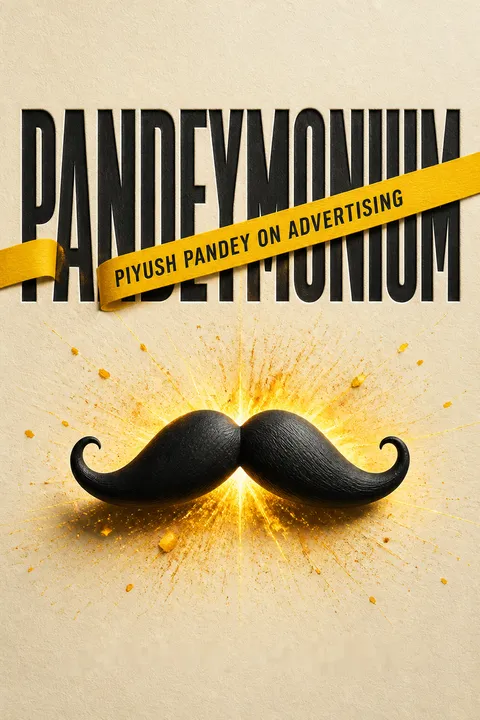
Pandeymonium receives mixed reviews, with an average rating of 3.82/5. Readers appreciate Piyush Pandey's insights into famous ad campaigns and his creative process. Many enjoy the nostalgic journey through iconic Indian advertisements. However, some criticize the book for being too focused on Ogilvy, lacking depth in personal storytelling, and appearing self-indulgent. The writing style is described as conversational and easy to read, but some find it repetitive and poorly structured. Overall, it's recommended for those interested in Indian advertising history but may disappoint seasoned readers.
People Also Read







Glossary
Personal Google
A trusted human knowledge networkPandey’s metaphor for the knowledge held by family, friends, neighbors, and colleagues. Unlike a search engine, this network can provide personal experience, opinions, local knowledge, and unexpected details. Its usefulness depends on knowing whom to ask: a relative who understands music, for example, may be a better source than a general online search.
Pabuji ki phad
Rajasthani painted-cloth storytellingA traditional Rajasthani storytelling form described by Pandey. A long painted cloth depicts scenes from the story of Pabuji, a Rajput chief. A storyteller points to the relevant images while narrating, and an accompanying performer lights them. The storyteller can adjust the pace or skip scenes to keep the audience engaged.
Domestic multiculturalism
Cultural fluency within one countryPandey’s term for recognizing cultural differences among regions within a single country. In India, language, food, customs, and expectations can change substantially across states and local communities. An agency or company therefore needs local understanding, not merely offices distributed across the country, to create communication that feels relevant and respectful.
Roti Reminder
A Lifebuoy handwashing activationA Lifebuoy campaign described by Pandey as an example of reaching people without relying on conventional advertising media. The work used communication on rotis at the Kumbh Mela to remind people to wash their hands. Pandey presents it as evidence that creative ideas can take forms beyond television, print, and other standard channels.
multicultural multinational
Global reach with local understandingPandey’s expanded idea of what a multinational company should be. Having offices in many countries establishes geographic reach, but does not guarantee an understanding of local cultures. A multicultural multinational also develops local insight and adapts its communication to the people receiving it, rather than assuming that one message will work everywhere.
Download PDF
Download EPUB
.epub digital book format is ideal for reading ebooks on phones, tablets, and e-readers.








