

Key Takeaways
Make a few high-quality choices before habit and circumstance make them for you.
Small choices shape a life. Laurence Endersen’s starting point is that a handful of good decisions can matter more than a long stretch of unexamined routine. Inspired by investor Charlie Munger, he argues that better decisions come from understanding useful principles across fields such as psychology, economics, science, and statistics, rather than viewing problems through one narrow lens.
Three foundations guide the book. Curiosity helps people learn what is happening. Character helps them act with integrity. Choice turns insight into a life shaped by intention. Endersen’s recurring question is what advice someone would leave young adult children if it were their only inheritance. The answer is not a perfect formula, but a better way to notice, judge, and choose.
The book’s central strength is its practical scale. It does not require a total reinvention, only greater care at decisions where habits, incentives, or social expectations quietly steer the outcome. Its three-part structure also resists the common split between thinking well and behaving well: insight without character can become manipulation, while good intentions without sound judgment can still produce poor choices. The multidisciplinary ideal is demanding, though. No individual can master every field, so the useful aim is not encyclopedic knowledge but enough conceptual range to recognize when a problem needs a different lens.
Replace the fastest answer with the question that changes the problem.
Questions redirect effort. Endersen argues that people often defend their first answer when they would do better to improve the question. In a knockout soccer tournament with 32 teams, one route to the number of matches is to calculate each round. A simpler route asks how many teams must lose before one winner remains: 31. The reframing makes the answer easier, and the same logic works for larger tournaments.
Look beyond the obvious. First-level thinking accepts the visible explanation. Second-level thinking asks what else could be happening, including the role of luck or overlooked causes. In groups, questions such as what the discussion may be missing can expose a better direction before everyone works harder on the wrong one. Curiosity is not indecision; it is disciplined exploration before commitment.
This is a compact lesson in problem representation. In mathematics, diagnosis, and design, the way a question is framed determines which solutions become visible. Reframing can also interrupt confirmation bias, because it delays the moment when a person becomes attached to an answer. There is a useful limit: endless questioning can become avoidance. The practical test is whether a new question changes what evidence is relevant or what action follows. If not, it may be intellectual ornament rather than genuine curiosity.
Turn experience and reading into knowledge by explaining them simply.
Learning needs processing. Endersen distinguishes people who stop learning once they can function in a field from lifelong learners who keep building understanding. Experience is especially useful when followed by reflection: what happened, what was felt, and what should change next time. Learning from other people’s experience, through books or observation, can also spare us some costly mistakes.
Test understanding by teaching. The physicist Richard Feynman’s method asks learners to explain a subject in plain language, return to sources when they get stuck, then simplify again. Mortimer Adler’s reading levels offer a related progression: recall what a book says, grasp its overall subject, explain its meaning, and compare it with other works. Reading more is not the same as understanding more. Notes, questions, and clear explanations make knowledge retrievable and usable.
The section treats learning as an active reconstruction, not the passive collection of facts. Explaining an idea forces the learner to expose gaps that fluent reading can hide. Reflection similarly turns an event into evidence about one’s assumptions and habits. These methods also discourage performative expertise, where specialized vocabulary creates an illusion of mastery. Still, simple explanation is a test, not a complete measure: some subjects remain difficult even when understood. The goal is clarity without pretending that complexity has disappeared.
Follow incentives before trusting explanations of behavior.
Rewards bend attention. An incentive is a payoff that makes certain behavior more attractive. Endersen warns that people may not notice how strongly a reward shapes their judgment. In the mortgage crisis example he discusses, loan officers who earned larger commissions on riskier loans could come to see those loans as better choices. The incentive did not merely encourage self-interest; it distorted perception.
Design for the behavior wanted. Rewards can produce unintended results. Payments offered to eliminate rats or snakes encouraged some people to breed the animals instead. Cash offered for blood donations reduced participation in one study described in the book, apparently weakening the sense of voluntary generosity. Before introducing a reward, ask what people will actually do to obtain it, and whether the reward crowds out a more meaningful motivation such as pride, craft, or service.
The insight reaches beyond individual ethics into institutional design. A system can attract decent people and still invite harmful behavior if it rewards a narrow metric while ignoring costs to others. This is why examining incentives can be more informative than accepting an organization’s stated values at face value. The blood donation example also points to a subtle distinction: extrinsic rewards do not always add motivation, particularly when people already see an action as meaningful. Incentives are powerful tools, but their effects depend on context and on what they signal.
Judge claims inside their context, and inspect what the frame leaves out.
No answer floats alone. Context includes the circumstances, time, interests, and point of view surrounding a claim. An electric bus may reduce pollution where electricity comes from cleaner sources, but the judgment changes if the power comes from coal or the spending displaces a more urgent need. The right question is not simply whether electric buses are good, but for whom, where, and under what conditions.
Notice missing options. Endersen calls the tendency to focus on choices already presented while overlooking an absent alternative absence blindness. He recommends checking what is missing, seeking relevant experience, using checklists, and being careful with words that imply certainty. A person can proceed without absolute certainty, but should remain open to revising a view when the context changes or new evidence appears.
Contextual judgment is a form of intellectual humility with practical consequences. It helps prevent a local benefit from being mistaken for a universal good, and it makes room for effects on groups who are not present in the decision room. The focus on omitted possibilities is especially valuable because choice sets are often constructed by someone with an interest in the outcome. Yet context can also be used to excuse inconsistency. A sound judgment should explain which features of the situation matter and why, rather than treating every case as uniquely incomparable.
Work backward from the life you would regret creating.
Use the opposite as a guide. Inversion means approaching a problem by asking how to produce the unwanted result, then avoiding those conditions. To think about a fulfilling life, Endersen suggests imagining an empty tribute at a major birthday or funeral: what would be painful to hear, or absent? That uncomfortable picture can reveal which relationships, contributions, and qualities matter personally.
Translate the warning into action. For a project, first define what success would mean. Then list the behaviors most likely to cause failure and plan around them. In a job interview, for example, being late, unprepared, or disengaged are foreseeable ways to undermine the goal. Inversion is not pessimism. It is a way to make vague aspirations concrete by identifying the preventable routes away from them.
Inversion is useful because people are often better at spotting failure mechanisms than at defining a perfect outcome. It converts aspiration into a prevention plan and makes neglected risks visible. The imagined eulogy is powerful because it shifts attention from public achievement to the quality of a life as experienced by other people. There is a possible trap: an imagined audience can become another source of conformity. The exercise works best when the person defines what a meaningful life means before borrowing the judgments of family, colleagues, or culture.
Separate immediate danger from fear your mind projects onto time.
Fear has different sources. Immediate danger, such as a person threatening someone with a weapon, calls for protection and action. Endersen distinguishes this from fear built from memories of the past or imagined futures. Such fears can make a present moment feel unsafe even when the threat is not occurring now. His practical suggestion is to notice the thought, return attention to what is happening, and let the imagined scenario be examined rather than obeyed automatically.
Know the self behind the reaction. Self-awareness means studying feelings for what they reveal about one’s own needs and assumptions. Acceptance means acknowledging what cannot be changed, while still choosing a response. The book connects emotional maturity with honesty, patience, compassion, resilience, and respect for interdependence. These traits help keep a painful emotion from becoming an unconsidered action or a fixed story about who someone is.
The distinction between threat and anticipation can create a useful pause: not every alarming thought is a reliable forecast. Present-focused attention can help people respond to what is actually happening rather than to a mental replay. The claim needs careful handling, however. Anxiety is not always something that dissolves through observation, and some fears point to real structural or interpersonal danger. A thoughtful application therefore asks two questions: what is happening now, and what practical evidence or support is needed? Emotional regulation should sharpen judgment, not silence it.
Let adversity revise your story without pretending every wound is a gift.
Hardship is uneven and unavoidable. Endersen uses the story of Kyle Maynard, born with arms and legs ending in stumps, who chose to pursue wrestling and, in 2012, became the first quadruple amputee to climb Mount Kilimanjaro. The example illustrates possibility, not a rule that suffering automatically improves people. The book explicitly cautions against romanticizing severe trauma or treating unequal hardship as fair.
Choose the road through it. The author proposes three responses: understand adversity as part of life, recognize it rather than deny it, and revise the personal story to include what happened. A victim story can make the event the whole identity; a survivor or growth story can restore agency and future direction. Support from friends or professionals can help with the harder work of acceptance, perspective, and persistence.
The distinction between finding meaning after suffering and claiming that suffering is beneficial is ethically important. Maynard’s achievements demonstrate human capability, but they should not become a standard used to shame people whose responses differ. The narrative approach is valuable because identity influences what actions seem possible after a rupture. Still, resilience is not solely an individual accomplishment: care, resources, and social conditions shape recovery. A growth story can support agency without implying that a person is responsible for making every tragedy inspirational.
Listen to understand, then show loyalty in ordinary, unglamorous ways.
Attention is a form of respect. Endersen contrasts a lecturing lens, in which a person waits to speak, with a learning lens, in which the aim is to understand the other person. Language, culture, tone, and personal history can distort what is heard, so good listening includes checking what someone means rather than assuming the words tell the whole story. Courtesy matters because a careless insult can change a relationship even after an apology.
Friendship requires reciprocity. A true friend is trustworthy, warm, honest, and present when help is inconvenient. The same care should reach family: Endersen urges readers to express gratitude to parents while there is time. In choosing a spouse, he emphasizes friendship, mutual respect, and enjoyable conversation. Parenthood, too, is presented as a responsibility to offer unconditional love and help children build confidence, not as ownership or a social obligation.
This account links communication to a broader ethic of attention. Listening validates another person’s perspective without requiring agreement, while dependable help turns affection into something observable. The focus on ordinary acts is a useful counterweight to the idea that close relationships are sustained by dramatic gestures. It also invites a difficult question: reciprocity is important, but care is not always evenly balanced, especially during illness or hardship. The goal is not bookkeeping. It is a relationship in which each person can expect respect and meaningful effort over time.
Persuade by serving real interests, never by abandoning integrity.
Everyone influences someone. Sales, negotiation, and persuasion appear in everyday choices, from proposing a project to planning a holiday. Endersen’s model of good selling begins with trust, finding people who genuinely need what is offered, accepting rejection as information, and being honest about whether the product helps. A principled seller should be willing to recommend the offer to someone they care about.
Seek a fair exchange. Negotiators should prepare, understand both parties’ underlying interests, and look for options that create more value instead of fighting over one fixed share. Alternatives matter because they provide the ability to walk away. The book also summarizes Robert Cialdini’s influence principles: reciprocity, scarcity, social proof, authority, consistency, and liking. These explain common persuasive forces, but integrity determines whether using them respects the other person’s interests.
The section is strongest where it joins effectiveness to responsibility. Understanding influence can protect people from manipulation as well as help them communicate, and looking for shared interests can turn a contest into problem-solving. Cialdini’s principles are descriptive tools, not moral permissions: scarcity can be truthful or manufactured, authority can be earned or merely staged. The useful test is whether persuasion improves another person’s ability to make a good choice, rather than exploiting a predictable bias to secure agreement.
Choose work and surroundings that make your energy worthwhile.
Fit matters more than appearances. Endersen argues that enjoyable work deserves serious priority, even when practical constraints require a gradual transition. He contrasts pay tied mainly to hours with compensation linked to value created, such as ownership, commission, or profit participation. Using the 80/20 principle, he notes that in some firms a minority of employees may produce most profits, creating a stronger case for sharing in value.
Apply energy deliberately. Focus means giving demanding work sustained attention instead of scattering effort across distractions. The author describes a progression from merely reacting, to acting proactively, to working with enthusiasm and purpose. The setting matters too: where to live affects access to work, services, and community. Rather than assume that a larger house or sunnier climate guarantees happiness, weigh practical needs, personal fit, and the people nearby.
This is a broad view of work as an allocation of attention, capability, and place, not merely a salary decision. The distinction between hours and value highlights why effort alone does not determine reward, while the emphasis on purpose protects career advice from collapsing into income maximization. The 80/20 illustration is a heuristic, not a promise that every workplace distributes value in that pattern. Location also involves constraints such as family care and finances, so deliberate choice means weighing trade-offs honestly, not assuming everyone can simply move or change careers.
Automate patient saving so future choices grow beyond today's impulse.
The future feels unreal. Endersen explains why saving is difficult: people often value a smaller reward now more than a larger one much later, and may struggle to picture their future selves. He calls this tendency hyperbolic discounting. Compounding makes time financially powerful: in the book’s example, $10,000 invested for 20 years at 4 percent a year grows to more than $20,000; at 12 percent, it approaches $100,000.
Build a system, avoid ruin. The author recommends spending less than one earns, saving a regular amount automatically, investing rationally, and minimizing fees, taxes, and inflation’s effects. He warns especially about borrowing and investments that are not understood. Saving also creates a sense of self-trust and expands future options. The aim is not to worship money, but to accept a manageable limit today in exchange for greater freedom later.
Automatic saving addresses a predictable conflict between immediate reward and distant benefit by changing the default, rather than asking willpower to win every month. The psychological payoff matters too: a repeated action can make a future-oriented identity feel credible. The return examples are illustrations, not reliable forecasts; actual outcomes depend on risk, costs, and time. A sound saving plan must also leave room for present needs and emergencies. Financial discipline is most useful when it increases meaningful options rather than becoming an end in itself.
Analysis
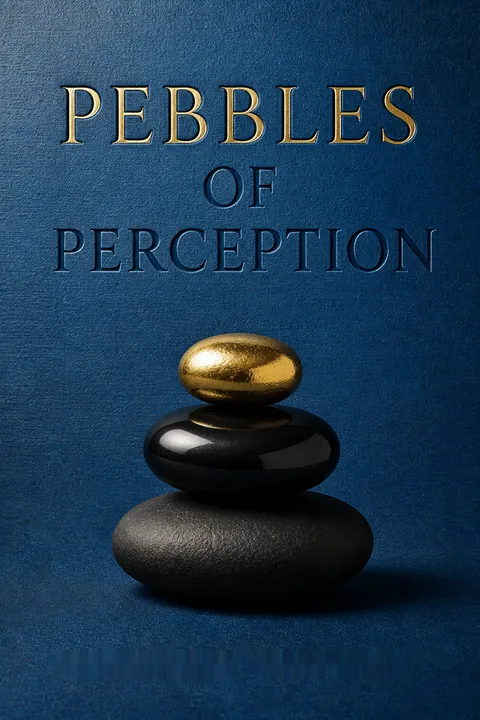
Pebbles of Perception is a compact guide to judgment, character, and life design, organized around the premise that practical wisdom can arrive earlier than experience usually grants it. Its method is cumulative rather than singular. Better questions improve observation; broader learning supplies mental models; attention to incentives and context sharpens interpretation; character constrains how influence is used; and deliberate choices convert reflection into a life.
The book’s most valuable quality is its movement between abstraction and ordinary decisions. A tournament puzzle makes reframing tangible. The electric bus example demonstrates why an apparently simple policy depends on energy sources, costs, and displaced alternatives. Saving, marriage, work, friendship, and parenting show that wisdom is not reserved for spectacular crises. It is often exercised in choices that seem mundane until their effects accumulate.
The book also resists a purely individualistic account of success. It recognizes interdependence, social incentives, family support, and the uneven distribution of adversity. That recognition matters because advice about courage or resilience can otherwise imply that people control outcomes they do not control. The most careful reading preserves the book’s emphasis on agency while refusing to convert it into blame.
Its breadth is both its reach and its limitation. The subjects are numerous, and some claims, such as the value of sharing in workplace profits or the tendency of experiences to outlast material pleasure, depend heavily on circumstances. The book is best treated as a collection of prompts and decision tools, not a universal operating manual. Its central invitation is to stay curious, recognize the forces shaping a decision, and choose in light of the person one hopes to become. Wisdom here is not certainty. It is the practiced ability to revise a view and still act responsibly.
Review Summary
Pebbles of Perception receives mostly positive reviews, with readers praising its concise wisdom and valuable life lessons. Many see it as an excellent gift for young adults or college graduates. The book is described as a collection of insights from various sources, covering topics like decision-making, relationships, and personal growth. While some critics note a lack of originality, most appreciate its accessible format and practical advice. Readers often mention rereading the book and gifting it to others, highlighting its lasting impact and relevance.
People Also Read







Glossary
first-level thinking
The obvious first answerFirst-level thinking accepts the most visible explanation or conclusion. It is often quick and widely shared, but may overlook luck, hidden causes, or the reactions of others. Endersen contrasts it with second-level thinking, which deliberately asks what else may be happening before treating an apparent explanation as complete.
second-level thinking
Looking beyond the obviousSecond-level thinking considers less visible causes and consequences alongside the immediate answer. It asks why an outcome occurred, what assumptions support a conclusion, and what other effects may follow. In the book, it helps counter overconfidence, recognize luck, and examine consequences beyond the first group or moment affected.
flat-line learners
Learners who stop progressingFlat-line learners reach enough competence to manage their work or daily life and then largely stop developing their understanding. Endersen contrasts this plateau with lifelong learning, where experience, reflection, reading, and practice continue to build capability over time.
lecturing lens
Listening to prepare a replyThe lecturing lens is a communication tendency in which a person focuses mainly on their own story and treats pauses as chances to resume speaking. It contrasts with the learning lens, which prioritizes understanding the other person’s perspective before responding.
learning lens
Listening to understandThe learning lens is an approach to conversation that treats the exchange as an opportunity to understand another person. It involves attention, openness to being mistaken, and awareness that words can be distorted by tone, culture, history, or emotional state.
inversion
Reasoning from the unwanted outcomeInversion is a problem-solving method that begins by identifying the result one wants to avoid, then works backward to find the actions or conditions that would produce it. A person can use those risks to make a more concrete plan for reaching a desired outcome.
contextually confident
Confident, but open to revisionContextual confidence means acting on a considered judgment without pretending it is universally or absolutely certain. It recognizes that evidence, circumstances, and points of view change, while still allowing decisions to be made when certainty is unavailable.
thought-based fear
Fear projected from memory or futureThought-based fear arises from memories, predictions, or imagined loss rather than an immediate physical threat. Endersen recommends noticing such thoughts and returning attention to present conditions, while distinguishing this practice from ignoring real danger.
compound gratification
Saving with layered future rewardsCompound gratification is Endersen’s framing of regular saving as more than postponed consumption. Investment growth can accumulate over time, while maintaining a saving habit can also build self-trust and expand future choices. The term emphasizes both financial compounding and the psychological benefits of a repeated decision.
mental muggings
Biases that distort judgmentMental muggings is Endersen’s metaphor for cognitive biases that interfere with sound judgment. Examples discussed include loss aversion, the illusion of control, availability bias, and the tendency to explain one’s own behavior through circumstances while judging others by character.
A-tivity
Aesthetic creativityA-tivity is Endersen’s label for aesthetic creativity, including forms such as art, design, music, and film. He distinguishes it from B-tivity, his term for practical creativity that improves something in everyday work or personal life.
B-tivity
Practical improvement creativityB-tivity is Endersen’s label for benefit-oriented creativity: finding ways to improve a process, situation, or experience. Unlike creativity understood only as artistic talent, B-tivity is presented as a capacity available in ordinary personal and professional problem-solving.
Download PDF
Download EPUB
.epub digital book format is ideal for reading ebooks on phones, tablets, and e-readers.








