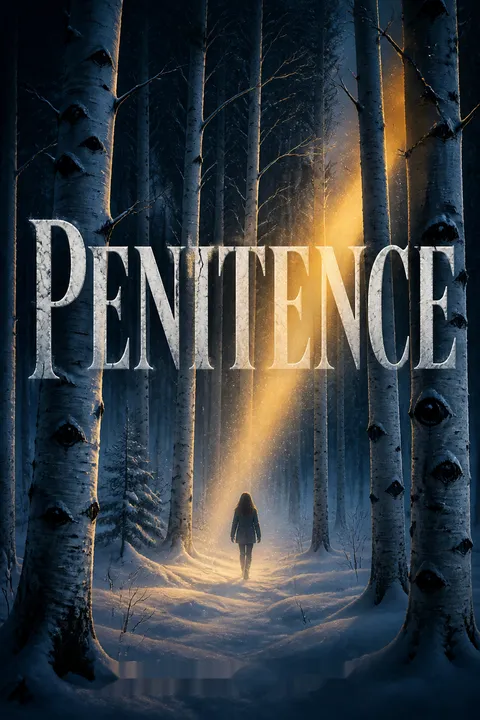


Plot Summary
Prologue
Nora Sheehan, thirteen, sits in a small-town jail after shooting her brother, Nico. Their mother, Angie, is alone in the family home, unable to look away from the sealed bedroom doors. Their father, David, searches for a lawyer and wakes Martine Dumont, a seventy-two-year-old attorney nearing retirement.
Martine’s estranged son, Julian, is still in New York and does not yet know that the tragedy in his Colorado hometown will draw him back. Nico is already dead; the questions of what happened and why will bind the living to a case none of them can solve cleanly.
The opening gives away the killing but withholds its meaning, shifting suspense from the identity of the perpetrator to the damage a family must interpret. Its quick passage among Nora, Angie, David, Martine, and Julian establishes that the crime is not a private event: it pulls several generations and old relationships into its wake. The cold house and the cold cell make grief feel physical, while the absent brother and son becomes the still point around which every survivor begins to move. By placing Julian far away, the prologue also plants the novel’s central return before explaining its history.
Martine Takes Nora's Case
David asks Martine to represent Nora because the family cannot afford an experienced homicide lawyer and their daughter is being held in a local jail. Although Martine is tired of practicing and knows little about juvenile murder cases, she agrees because no other nearby attorney handles this work.
She forces the police to let her see Nora and finds the thirteen-year-old almost entirely unresponsive. At the Sheehan home, Martine sees the bloodied bedroom, Nico’s bird-covered walls, and Nora’s unfinished art; these fragments offer history but no explanation.
Nico had juvenile Huntington’s disease, and Nora had been treated for depression. The combination deepens Martine’s worry: the prosecution may call the shooting deliberate, but Nora’s silence leaves her unable to understand her client’s state of mind.
Martine’s decision is both professional and intimate. She has spent a career defending people without adopting their acts as her own, yet this case presses on relationships she has deliberately left dormant. Her limited expertise makes the choice ethically risky, not heroic by default. Nora’s silence blocks the usual legal exchange of facts and strategy, turning representation into a test of whether care can precede understanding. The evidence in the home is emotionally legible but legally ambiguous: a brother’s beloved birds and a sister’s paintings establish attachment, not innocence. The novel begins by refusing to treat affection as proof that violence could not happen.
A Funeral Without Nora
Angie cannot bring herself to visit Nora after the arrest, and the state will not release the girl to attend Nico’s closed-casket funeral. The news coverage turns their private loss into a public argument about guns, mental illness, and bad parenting.
Angie reads hostile comments, then sits through the service unable to cry, wondering whether grief should make her feel more like a mother. Afterward, she chooses to visit her own mother, Livia, who has Alzheimer’s, rather than drive three hours to the detention center.
Hoping to understand how Livia survived the death of Angie’s younger sister, Diana, she asks when the pain stopped. Livia instead recalls a false story that blames Angie for ruining a tray of cannoli, and Angie leaves without an answer.
Angie’s refusal to see Nora is not simple rejection. She experiences love for her daughter as a possible betrayal of Nico, whose last years she believes Nora has taken. The funeral makes that moral trap public: strangers demand a legible villain, while Angie cannot even produce tears on cue. Turning to Livia is an attempt to borrow a mother’s knowledge of loss, but Alzheimer’s distorts the inheritance Angie seeks. The false cannoli memory matters because it shows how family stories can preserve blame after their factual basis has vanished. Angie wants a rule for grief, but receives another reminder that the past can injure without explaining.
The Tree at Big Bend
In 1991, eighteen-year-old Julian tells his mother that seven-year-old Diana died after hitting a tree while skiing with him and her older sister, Angie. Martine suspects the teenagers were intoxicated and warns Julian not to elaborate before the DeLucas arrive.
The truth, shown later that night, is worse: Angie brought marijuana, Julian supplied vodka, and both left Diana unsupervised. High and racing downhill, Julian lands on Diana beneath a blind slope and sends her into a tree.
He and Angie then tell authorities she struck the tree on her own. Livia suspects Julian’s role and drives the Dumont family away from her grieving household. Martine sends Julian to New York, ending his life with Angie in Lodgepole and burying the collision beneath a story of accident.
The buried ski collision establishes the novel’s pattern of guilt being managed through selective truth. Julian does not simply conceal a factual detail; he and Angie build a shared account that lets them continue living while leaving each to carry a different version of blame. Martine’s protective instinct turns into an intervention that saves her son’s immediate future but fractures the family she meant to preserve. Livia’s certainty is not reliable evidence, yet it lands close enough to the truth to make her anger consequential. The episode complicates moral categories early: care, self-protection, and deception arrive braided together rather than in separate forms.
Paint Beneath Fluorescents
Transferred to Pinyon County Juvenile Detention Center, Nora enters a world of strip searches, issued clothes, rigid schedules, and schooling designed for the lowest common denominator. She shares a room with Jacqueline, Paradise, and Maria Elena, girls whose own cases range from drug dealing to robbery.
Nora does not tell them why she is there. She barely speaks to anyone, but she draws Nico as a superhero during free time, an image that exposes the bond she cannot explain.
When a bunkmate bluntly identifies him as the brother she shot, Nora stops drawing. Martine brings paints to their next meeting and explains the coming court dates. Nora will answer a few questions with gestures, but she cannot say what happened or why, and the lawyer’s attempt to reach her stalls.
The detention center strips away biography by making every girl wear the same clothes, follow the same routine, and occupy the same institutional space. Nora’s silence can be read as resistance, shock, illness, or shame, but the facility has little interest in distinguishing among them. Painting becomes an alternate channel, though not a transparent one: the superhero image records attachment without resolving violence. The other girls’ reactions also unsettle the assumption that Nora’s relative privilege protects her from the consequences of confinement. It changes her conditions, but it cannot make her past intelligible or guarantee humane treatment.
Adult Charges Loom
The district attorney, Gil Stuckey, files first-degree murder charges and announces that he will seek to move Nora’s case into adult court. Martine tells Angie and David that expert witnesses and court costs could consume money they no longer have after Nico’s medical care.
The meeting collapses into accusations: Angie blames David’s accessible work gun, while David says she gave Nico more attention than Nora. Martine visits Nora again, bringing paint and learning that the girl can follow a calendar but still cannot discuss the shooting.
Recognizing how badly she needs juvenile homicide experience, Martine finally calls Julian, her distant son and a New York defense attorney. He agrees to help without charging the family, though his return will also bring him face to face with Angie, his former girlfriend.
The case turns from a question of what Nora did into a contest over who gets to define what she is. Stuckey’s adult-court strategy raises the stakes beyond a local juvenile proceeding, while the family’s financial limits expose the unequal price of a defense. At home, Angie and David convert helplessness into blame because blame offers a target where explanation is absent. Martine’s call to Julian is a practical response and an emotional breach in the same act. His expertise may help Nora, but bringing him back also reopens a history built on a previous family tragedy and on secrets that have never been repaired.
A Love Kept Hidden
After Julian leaves Lodgepole, he and Angie resume their relationship in secret, first through visits and calls, then in New York, where she pursues painting and he studies law. Julian discovers that criminal defense gives his legal work a purpose, especially after taking a pro bono case for Randall Martin, a young man serving life under a three-strikes law.
His devotion to these clients grows alongside his drinking and long hours, while Angie grows tired of being asked to wait. She wins a place in an artists’ exhibition, but Julian’s preoccupation with work and guilt keeps intruding on their life together. Their love remains genuine, yet the secrecy imposed by Diana’s death prevents them from building a shared future in the open.
Their relationship is sustained by intimacy but organized around avoidance. They can share a bed, an apartment, and ambitions, yet neither can bring the past fully into the family world that surrounds them. Julian turns legal advocacy into a form of atonement, but his work also gives him a respectable way to avoid examining his own guilt directly. Angie’s art represents a self she is trying to enlarge, while Julian’s compulsive work narrows his attention to other people’s cases. Their divergence is not a failure of love so much as a failure to make a truthful life together.
The Choice After September
While Angie travels between New York and Colorado to help her parents through Roberto’s pancreatic cancer, she begins an affair with David, an old school friend who offers steadiness as Julian’s drinking and work consume their relationship.
After the September 11 attacks, Angie decides to leave Julian and return to Lodgepole. She discovers she is pregnant and goes to a clinic, but leaves without ending the pregnancy. She tells David the baby is due later than it is, then marries him and arranges the birth away from Lodgepole.
Nico is Julian’s son, though David raises him as his own and Angie keeps the truth hidden. The decision gives Angie a new family, but it makes her marriage and motherhood rest on a deception that will shape the present case.
Angie’s decision is neither a clean escape nor a simple choice between two men. She is reacting to her father’s illness, Julian’s increasing absence, and a relationship that has become difficult to inhabit. Yet choosing to keep the pregnancy while withholding its paternity turns protection into control: she decides what both men can bear without allowing either to choose with full knowledge. Her concealment helps create a functioning household, but it also binds love to an unstable account of the past. The novel treats the family’s later suffering not as proof of cosmic punishment, but as the accumulated cost of choices made to postpone pain.
The Case Moves Upstairs
Julian returns to Lodgepole and meets Nora at the detention center with candy and questions about her medication. She says she sees flies and remembers little, while a psychiatric assessment raises the possibility of psychosis alongside depression and disorganized behavior.
Julian and Martine consider accident, insanity, and a plea based on her age and mental health, but each route carries serious risks. Gil refuses to negotiate.
At the preliminary and transfer hearings, Judge Castro finds probable cause and permits the case to move into district court, where Nora could face decades in prison. The ruling defeats the defense’s first major goal. Julian sees that his experience cannot quickly undo a system already prepared to treat a thirteen-year-old as an adult.
The transfer ruling translates an abstract legal distinction into a forecast of Nora’s life: juvenile rehabilitation gives way to adult punishment. The psychiatric report offers a possible account of her behavior but not certainty, and uncertainty is dangerous when the defense must persuade institutions built to demand clear categories. Julian’s return does not make him a savior; he knows the law, yet he cannot control the judge or prosecutor. His frustration exposes a central tension in legal work: advocacy can widen the space for mercy, but it cannot guarantee that the system will use that space.
Thanksgiving Behind Wire
Inside detention, Nora watches other girls leave for visits or move on to sentencing, while Thanksgiving serves up a meal that resembles her family’s holiday but cannot restore it.
She remembers Nico’s small kindnesses, including the extra cinnamon sugar he put on pie for her, and wakes from a dream of their childhood home at the same time Angie wakes from a vanished dream of her own. Outside, Angie finds a half-smoked joint in the yard and worries it could be used to portray Nora or David as drug users.
She later visits Nora, who speaks for the first time to tell her that an imagined guard is knocking. Angie takes her hands, and her anger briefly recedes. A classmate’s mother then reveals Nora had withdrawn from friends months before the shooting.
The holiday links mother and daughter without bringing them together. Each remembers a domestic past, but the institution and the road between them turn memory into a private burden. Nora’s hallucination gives Angie evidence of distress, not an explanation for the shooting; the distinction matters because compassion cannot solve the case. The discovery that Nora had isolated herself earlier challenges Angie’s comforting belief that nothing unusual was happening. At the same time, Angie’s fear that a stray joint could become prosecutorial evidence shows how public judgment can transform an ordinary object into a moral verdict.
Livia's Last Season
As Livia’s Alzheimer’s worsens, Angie must decide whether to authorize a feeding tube, then watches the treatment briefly restore her mother’s strength before her decline resumes. Livia dies, and Nora cannot attend the funeral.
Angie visits the church to confess her fear that Nora may spend her life in prison, then begins painting again after years of putting her own work aside for caregiving. Painting with Nora during visits helps her recover that part of herself.
She also starts imagining a future for the old DeLuca restaurant building, which she expects to inherit: an art gallery and cafe that could eventually offer Nora a place to work. The new plans do not remove her grief, but they give her something to make rather than merely endure.
Angie’s care for Livia and Nora makes the novel’s question of responsibility concrete: when does sustaining life become an obligation, and when does it become an imposed burden? Livia’s decline offers no neat answer, only choices Angie must make without certainty about what her mother would want. Painting returns not as a cure but as a practice that restores agency to someone whose days have been defined by other people’s needs. The gallery idea also changes the meaning of inheritance. The restaurant is no longer only a family relic; it can become a material promise that Nora may have a life beyond punishment.
The DA's Leverage
After reviewing the evidence, Julian finds no diary, messages, or history of violence that supports the prosecution’s claim of premeditation. The file does show that police questioned Nora in a patrol car without her parents or a lawyer, despite her age.
Julian and Martine consider publicizing the misstep, but Angie and David want less attention, not more. Instead, Julian confronts Gil with both the interrogation and the prosecutor’s duty to consult victims’ families about plea agreements. Gil agrees to discuss a deal.
He will not accept manslaughter, but he will consider second-degree murder. The shift does not mean he believes Nora is ill or remorseful; it means the defense has made the political and evidentiary cost of an uncompromising trial harder for him to ignore.
Julian’s leverage is procedural rather than revelatory. He cannot prove what happened in Nora’s mind, so he uses the state’s own rules and public posture to make its conduct answerable. That strategy reflects his professional strength: he sees how legal pressure can create a narrow opening where moral persuasion has failed. Yet the compromise remains compromised. Gil’s willingness to negotiate arises from risk management, not a conversion to rehabilitation. The scene distinguishes mercy from sympathy: a better outcome may be secured even when the institutions involved do not share the defense’s understanding of the child.
Nora Accepts Fifteen Years
Gil rejects manslaughter but agrees to a second-degree murder plea with a fifteen-year sentence, served in juvenile correctional custody until Nora turns twenty-one and with parole possible after seven years. At sentencing, Nora answers the judge’s questions and accepts the agreement.
She says she is sorry, then allows her parents to hug her before the bailiff takes her away. The deal avoids a trial that could have brought a life sentence, though David is angry that it does not send Nora to a psychiatric hospital.
After the hearing, he explains that Nico’s Huntington’s was a rare spontaneous mutation and that neither he nor Angie carries the gene. Julian recognizes that this information, alongside his own symptoms, raises a question he cannot leave unanswered.
The plea gives Nora a finite sentence without making it a small one. Its practical mercy lies in limiting the maximum damage and keeping her in juvenile custody through early adulthood, not in erasing responsibility. Her apology is brief and difficult to interpret, but it marks a change from silence to acknowledgment. David’s disappointment reveals the family’s continued hope that illness might explain the crime and spare Nora punishment. The genetic detail shifts the story’s center again: a fact intended to reassure the parents becomes a clue that connects Julian to Nico and forces him to face a different kind of consequence.
The Father in the File
Julian pieces together Nico’s conception date, Angie’s marriage to David, and the couple’s negative Huntington’s tests. He realizes Angie may have kept from him not only a child, but a son whose disease could be connected to Julian’s own biological inheritance.
After returning to New York, Julian undergoes testing and learns that he has Huntington’s disease, though his symptoms are mild and the doctors expect a slower progression. He does not immediately confront Angie.
Instead, he carries his anger and fear into the final months of the case, while his wife, Mayumi, is pregnant using donor sperm. The result eases one fear about their baby’s genetic risk, but it intensifies the wound of knowing he lost years with Nico without ever knowing he was a father.
The medical revelation turns inheritance from metaphor into biology. Julian’s professional life has been built around the belief that context can complicate culpability; now he must apply that belief to himself, a man facing a disease he may have passed to a child he never knew. His anger at Angie is justified by the lost relationship, but it coexists with grief for Nico and fear about his own future. The donor conception of Mayumi’s pregnancy makes the stakes intimate without offering a simple consolation. A genetic risk has been interrupted, but the past remains irreversible.
Red Sauce on the Canvas
After Julian and Angie’s marriage strains beyond repair, David moves out of the purple house and Angie prepares the former DeLuca’s building as an art gallery and cafe. Julian visits before it opens, and his trembling hand prompts Angie to ask about his health.
He explains that he has Huntington’s, then confronts her about concealing Nico’s paternity. Angie admits she hid the pregnancy and kept Julian from knowing his son. Julian says she also let him defend Nora without telling him that he was the victim’s father.
When Angie offers to pay him, he understands that she has mistaken grief for a bill. He drops a jar of her family’s red sauce; it breaks across the floor and stains one of her paintings. He leaves before either can repair the conversation.
The confrontation strips away the legal role that had kept Julian and Angie in a manageable relationship. For months, he could help Nora as an attorney and treat his past with Angie as background; now the concealed paternity makes that distance impossible. Angie’s offer of money is a defensive misreading, a way to turn an unpayable moral debt into a transaction. The shattered jar brings family inheritance into the scene as literal damage: the sauce from her parents’ restaurant soils the art she is trying to reclaim. The stain cannot settle who is more at fault, but it makes their shared injury visible.
Two Homes, No Easy Repair
David moves into a house down valley, closer to Nora’s correctional facility and to a possible job with a land conservation nonprofit. Angie learns he knew Nico was Julian’s son because he intercepted Julian’s old letter, then burned it rather than confront her.
She had kept the paternity secret to protect both men and herself; David had stayed in the marriage but says he loved Nora more than Nico. Neither can yet decide whether they want to repair their marriage.
Angie keeps the DeLuca building instead of selling it, borrows against it, and plans her gallery and cafe, including art programs for incarcerated young people. At Nico’s grave, she plants columbine seeds. She has stopped trying to solve every detail of the shooting, because speculation only deepens the injury.
The revelation does not produce a clean division between victim and betrayer. David’s silence preserved his role as Nico’s father while concealing the fact that he knew the truth; Angie’s lie protected a household at the cost of Julian’s relationship with his son. Their motives do not cancel the harm. Angie’s decision to retain the building is a move toward a future she can shape, though she cannot yet say whether David belongs in it. Planting at Nico’s grave shifts her attention from reconstructing an unknowable night to tending something that may grow.
Forgiveness in the Visiting Room
On Nora’s fourteenth birthday, Angie visits without David and brings paints, a card from him, and a store-bought cupcake instead of the cake Nora misses. Once the plea is final, Angie tells Nora they can speak about Nico without risking the case.
Nora paints a mountain river and a blond boy walking away from the viewer. Angie tells her she knows Nora loved her brother, admits that she misses them both, and forgives her. Nora’s tears blur the painted figure before she collapses into her mother’s arms and sobs.
Angie realizes that forgiveness has not erased the killing or restored the family. It has allowed her to hold Nora without treating love as a betrayal of Nico, and to begin living with the loss rather than waiting for an explanation that may never come.
The final scene makes forgiveness an encounter rather than a verdict. Angie does not declare Nora innocent, and Nora does not offer a complete account of the killing. The image of the boy walking toward the mountains holds Nico as remembered and unreachable, while the paint smudges under Nora’s tears show that mourning alters what it tries to preserve. Angie’s forgiveness is meaningful precisely because it does not reverse the sentence or remove guilt. It changes the relation between mother and daughter: they can share grief without forcing one child’s love to cancel the other’s. The ending offers connection, not restoration.
Epilogue
By May, Martine has retired and welcomes Julian and his pregnant wife, Mayumi, to Lodgepole. She enjoys their visit and lets herself imagine the new family gathering around her. Julian tells his mother that he is recovering from the strain of Nora’s case, while concealing how much the revelation about Nico and his own Huntington’s still weighs on him.
Angie is preparing her art cafe, David is beginning a separate life, and Nora remains incarcerated. Martine no longer expects to learn exactly why Nora acted. She chooses instead to attend to the people still beside her and to the future they can make.
The closing perspective does not resolve the case’s central mystery, and that refusal is part of its resolution. Martine’s choice to focus on what is present rather than invent a final explanation offers a practical ethic for living with incomplete knowledge. Her attention moves from the criminal file to Julian and Mayumi, whose expected child carries the possibility of family without undoing earlier losses. The ending also keeps consequence in view: Nora remains imprisoned, Angie’s family remains divided, and Julian’s illness persists. Hope is therefore modest and relational, located in visits, care, and the willingness to remain connected.
Analysis
Penitence treats a violent act not as a mystery that must yield one satisfying motive, but as an event whose meaning is fought over by people with partial knowledge and conflicting needs. Nora’s case demonstrates the danger of turning uncertainty into certainty too quickly. The prosecution calls her cold and deliberate; her parents first insist on accident, then look to mental illness; the defense must translate a child’s symptoms into legal categories that may either help her or expose her to harsher punishment. None of those explanations fully contains the person Nora is.
The novel’s parallel histories deepen this problem. Julian’s responsibility for Diana’s death was obscured by a story that let him and Angie continue their lives, while Angie’s concealment of Nico’s paternity protected a household by denying Julian a relationship with his son. These acts are not equivalent to Nora’s killing, but they make the adults’ certainty about blame less secure. Nearly every character has tried to manage pain by controlling what others know. The resulting silence does not erase harm; it delays its consequences.
The legal system offers process but little room for the whole person. A thirteen-year-old can become an adult defendant through statutory choice, while a plea bargain can limit the sentence without addressing the grief that produced the family’s competing stories. Julian’s advocacy matters because it resists the idea that punishment alone describes justice. Still, the book refuses the fantasy that a good lawyer or a sympathetic diagnosis can make everything right.
Forgiveness arrives not as acquittal, forgetting, or a claim that the crime was understandable. Angie forgives Nora while continuing to miss Nico, and that distinction allows love to survive without denying loss. The ending’s hope is therefore bounded: Nora remains incarcerated, Julian faces illness, and the family cannot return to its former shape. What changes is the survivors’ willingness to remain in relation without demanding a complete explanation first.
Review Summary
Penitence is a gripping debut novel about a family grappling with tragedy after a 13-year-old girl shoots her brother. The story explores themes of forgiveness, guilt, and the complexities of the juvenile justice system. With dual timelines and multiple perspectives, it delves into the characters' pasts and present struggles. While some readers found it slow-paced, many praised its emotional depth and thought-provoking narrative. The audiobook narration by Therese Plummer was highly commended. Despite mixed opinions on the ending, most reviewers found it a compelling and impactful read.
People Also Read









Characters
Nora Sheehan
The silent defendantNora is the thirteen-year-old daughter of Angie and David, Nico’s younger sister, and the center of the criminal case. She is a painter who once shared much of her life with Nico, but her increasing withdrawal and depression leave her parents unsure how well they know her inner world. In detention, her silence can look like defiance, fear, or collapse, and the adults around her repeatedly struggle to read it. Nora is also a child forced to navigate adult institutions and adult judgments. Her guardedness makes her difficult to understand, while her art offers glimpses of attachment and memory without providing easy answers.
Angie Sheehan
A mother remaking herselfAngie is Nora and Nico’s mother, a former New York artist who returned to Lodgepole and built a life with David. She is deeply shaped by caregiving, first for her parents and later for Nico, whose illness reorganized the family’s daily life. Her instinct is to keep functioning, even when grief and guilt leave her unable to eat or rest. Art remains central to her identity, though she has repeatedly put it aside for others. Angie’s attachment to her children is intense and conflicted: she wants to protect each of them, but their needs and losses make those loyalties difficult to reconcile.
Julian Dumont
The returning defense lawyerJulian is Martine’s son, a New York criminal defense attorney, and Angie’s former partner. He is skilled at seeing how poverty, age, and circumstance complicate criminal blame, and he brings that perspective to Nora’s case. His work is driven by a deep commitment to fair representation, but it is also entangled with unresolved guilt from his youth and a tendency to bury distress in work. Julian’s history with Lodgepole makes his return emotionally charged even when he tries to behave only as a lawyer. He is generous and disciplined, but not immune to anger, shame, or the limits of his own judgment.
Martine Dumont
The stubborn advocateMartine is a seventy-two-year-old small-town lawyer nearing retirement and Julian’s mother. A practical generalist, she has spent decades representing people whose cases others would rather avoid. She is disciplined in public and privately carries regrets about how she protected her family in the past. Taking Nora’s case forces her to work beyond her expertise and to rely on the son from whom she has grown distant. Martine’s legal instincts are matched by a strong sense of duty, but she must learn that good intentions can still produce painful consequences. She is also a widow, a dog owner, and a woman uncertain what life will mean after work.
David Sheehan
The guarded fatherDavid is a National Park Service ranger, Angie’s husband, and Nora and Nico’s father in the family’s everyday life. He is methodical, attached to the outdoors, and more comfortable with practical tasks than emotional conversation. After the shooting, he tries to stay useful by visiting Nora, tracking court dates, and managing the demands of the case. His guardedness can look like steadiness, but it leaves Angie unsure whether he is grieving with her or retreating from her. David’s approach to family responsibility is shaped by duty, pride, and a strong desire to keep the household intact.
Nico Sheehan
The absent brotherNico is Angie and David’s fourteen-year-old son, Nora’s older brother, and a keen observer of birds. He loves falcons, owls, skiing, and the imaginative games he invents with Nora. Juvenile Huntington’s disease has begun to affect his movement, schoolwork, and mood, while its future progression frightens him. His parents try to protect him without pretending the diagnosis is harmless. Nico’s relationship with Nora is close but not idealized: they tease and quarrel as well as care for one another. His dreams of growing up make his illness and absence especially painful to the people who loved him.
Livia DeLuca
The formidable matriarchLivia is Angie’s mother, a former restaurant owner, and a woman whose fierce standards shaped her family. She is a devout Catholic, capable of formidable warmth and equally formidable anger. The death of her younger daughter, Diana, altered her relationships and left lasting tensions with the Dumont family. Later, Alzheimer’s changes her memory and behavior, making old stories surface in unstable forms. Livia’s character is defined by how she tries to protect her family, sometimes through care and sometimes through judgment. Her history gives Angie an inheritance of both practical toughness and unresolved emotional pain.
Mayumi Dumont
Julian's steady partnerMayumi is Julian’s wife, a therapist, and a warm presence in his life. Her professional attention to trauma makes her sensitive to the difference between a person’s worst act and their whole identity. She supports Julian’s work on Nora’s case while also maintaining her own practice and family ties. Mayumi is empathetic without being passive, and her relationship with Julian offers him a place to speak honestly about the past. Her pregnancy with him gives both partners reason to think carefully about family, inheritance, and the future.
Cyrus Dumont
The absent stepfatherCyrus was Martine’s husband and the father figure who raised Julian and Gregory. An Iranian-born doctor, he built a respected medical practice in Lodgepole and valued steadiness, family loyalty, and quiet competence. His death leaves Martine navigating widowhood and gives Julian another source of unresolved grief. Cyrus’s place in Julian’s life illustrates that family bonds do not depend only on biology, a question that resonates through the novel’s other parent-child relationships.
Gregory Dumont
The far-traveling brotherGregory is Julian’s younger brother, a journalist whose work takes him to conflicts and disasters around the world. He remains a link between Julian and Martine during years when mother and son communicate poorly. Gregory is loving but often physically absent, and his distance reflects the family’s habit of managing pain through separate lives. His marriage and hopes of building a family matter to Martine’s sense of a future beyond loss.
Gil Stuckey
The ambitious prosecutorGil is the district attorney prosecuting Nora. He presents himself as a defender of public safety and the law, while his political ambitions and opposition to juvenile justice reform influence how he handles the case. His insistence on adult prosecution makes him a formidable obstacle for Julian and Martine. Gil is not portrayed as a simple monster: he can acknowledge uncertainty, but he repeatedly returns to punishment and deterrence when deciding what to do with a child defendant.
Roberto DeLuca
Angie's gentle fatherRoberto is Angie and Diana’s father, Livia’s husband, and the heart of the family restaurant. He is gentle where Livia is forceful and offers Angie a model of care based on patience and steadiness. His illness draws Angie back to Lodgepole and helps define the competing obligations she faces as an adult daughter and partner. Roberto’s advice about choosing someone who will help lift her after a fall remains important to Angie’s understanding of love.
Diana DeLuca
The lost younger sisterDiana is Angie’s younger sister, Julian’s childhood companion, and Livia’s favored child. Her death in a skiing accident changes both families and becomes the origin of a secret that shapes Julian and Angie’s adult lives. Though she appears mainly in memory, Diana remains present through the blame, affection, and silence that others attach to her. Her story shows how a death can continue to govern people who were young when it happened.
Jacqueline
Nora's closest cellmateJacqueline is a girl held in the same detention pod as Nora. Quiet and observant, she has her own difficult family history and understands the practical rules of confinement better than Nora does. She eventually shares the reason she was arrested, giving Nora a rare chance to hear another young person speak about violence without pretending it is simple. Jacqueline’s presence challenges Nora to consider how guilt and self-protection differ from one child to another.
Paradise
The seasoned cellmateParadise is a tall sixteen-year-old who has been detained before for selling meth made by her aunt. She treats the facility as a prison rather than a temporary camp and knows how its routines work. Her blunt realism makes her both intimidating and useful to the younger girls around her. Paradise’s plans for surviving the system are shaped by the limited choices available to her, not by a belief that confinement will automatically change her life.
Maria Elena
The wary cellmateMaria Elena is a seventeen-year-old detained after serving as a getaway driver in an armed robbery. She is wary of Nora and initially treats her new roommate’s silence as something to mock or ignore. Her close relationship with Paradise reflects the shifting alliances girls form inside detention. Maria Elena represents a young person whose role in a crime and whose access to legal help may not align neatly with how much responsibility she actually bears.
Ignacio
The conflicted officerIgnacio is a local police officer who encounters Nora during the investigation and later transports her to court. He is accustomed to small-town policing, not a homicide involving a child. His doubts about how the system treats young offenders complicate his official role, though he remains part of the machinery that confines her.
Colin
The uncertain young officerColin is a younger officer in the Lodgepole police department. He recognizes that a thirteen-year-old should not be left in a local jail cell but has little experience handling a case like Nora’s. His uncertainty reflects the town’s lack of preparation for a crime of this scale.
Judge Castro
The transfer judgeJudge Castro presides over the key hearings in Nora’s case. He is presented as measured and attentive, but his decisions operate within laws that permit a young teenager to be tried as an adult. His role makes clear that individual fairness does not always overcome the structure of the system.
Father Lopez
The patient confessorFather Lopez is the priest at St. John’s Catholic Church, where the DeLuca family worships and holds funerals. He offers Angie a space to speak about forgiveness without pretending to have an easy answer. His response is pastoral rather than legal, helping her think about the kind of mother she wants to be.
Plot Devices
David's work gun
A household weapon becomes evidenceDavid’s service pistol is kept in a home safe whose combination Nora knows. After the shooting, police collect the gun, her bloody clothes, and other evidence; the 911 call and her fingerprints establish that she fired it. The weapon also fuels the parents’ conflict, as Angie blames David for keeping it accessible and David insists it was properly stored. Because the central fact of who fired the shots is not in dispute, the gun’s presence directs the legal question toward intent, mental health, and responsibility. It turns ordinary household security into a source of permanent consequence.
Juvenile court transfer
A child's age becomes a legal battlegroundThe prosecution seeks to move Nora’s case from juvenile court to adult district court, exposing her to a far longer sentence and possible confinement in an adult prison after age twenty-one. Julian and Martine argue that her age, lack of prior violence, and possible mental illness should keep her in a rehabilitative system. The transfer hearing makes the legal system an active pressure on the plot rather than a backdrop. It also forces the family to confront how one act can change a child’s legal identity before her emotional understanding has caught up.
Huntington's disease
A future illness shadows the familyNico’s juvenile Huntington’s disease alters his movement, mood, and prospects while he is still a young teenager. The diagnosis shapes his fear of losing his mind and independence, changes how Angie and David divide their attention, and complicates Nora’s emotional world. Because the disease is usually inherited, later genetic testing also raises questions about family history and parentage. The illness is not offered as a complete explanation for violence; instead, it presses the characters to distinguish a possible motive, a mental health crisis, and the legal question of culpability.
Painting and birds
Images carry what speech cannotNico’s bedroom is painted with birds, reflecting his fascination with falcons and other hunters. Angie’s paintings and Nora’s drawings establish a shared creative language that predates the crime. When Nora cannot speak, Martine and Julian bring her paints, giving the meetings a way to continue without forcing a verbal confession. The birds recur in scenes of memory, grief, and the changing seasons. Art never proves what happened, but it preserves relationships and feelings that the legal record cannot capture.
Hidden family histories
Old silences reshape present guiltThe concealed circumstances of Diana’s death and the concealed paternity of Nico bind the present case to the past. Each secret was kept partly to protect someone else, but both decisions also spared the person concealing it from an immediate confrontation. When those histories surface, they change how Julian understands his role as Nora’s lawyer and as Nico’s father, and how Angie understands her marriage and motherhood. The revelations do not provide a single explanation for the shooting; they show instead how unspoken choices can structure a family long after their makers believe they are buried.
FAQ
Synopsis & Basic Details
What is Penitence about?
- Tragedy Strikes Family: Penitence centers on the Sheehan family in Lodgepole, Colorado, after 13-year-old Nora Sheehan shoots and kills her older brother, Nico. The small, close-knit community is shattered, and Nora's parents, Angie and David, are left grappling with unimaginable grief and confusion.
- Legal Battle Unfolds: Reluctantly, retired lawyer Martine Dumont, who has a complex history with Angie's family, takes on Nora's defense. She soon enlists her estranged son, Julian Dumont, a successful criminal defense attorney from New York, to navigate the challenging juvenile justice system and the district attorney's push to try Nora as an adult.
- Journey of Reckoning: The narrative follows the Sheehans' struggle with loss, blame, and financial strain, while Martine and Julian confront their own pasts and the secrets that bind them to Angie. It's a story of a family's fight for justice and understanding amidst a devastating crime, exploring the profound impact of hidden truths and the elusive nature of forgiveness.
Why should I read Penitence?
- Deep Emotional Resonance: Penitence offers a raw and unflinching look at grief, guilt, and the complexities of family relationships, drawing readers into the characters' profound emotional journeys. The novel delves into the psychological toll of tragedy, making it a compelling read for those interested in character-driven narratives.
- Thought-Provoking Themes: The book masterfully explores themes of justice, forgiveness, and the flaws within the criminal justice system, particularly concerning juvenile offenders. It challenges readers to consider what it means to atone for mistakes and whether true redemption is possible, offering rich material for discussion and reflection.
- Intricate Plot & Character Development: With its dual timelines and shifting perspectives, Penitence weaves a complex tapestry of interconnected lives and past events. The characters are deeply nuanced, revealing layers of unspoken motivations and hidden histories that keep the reader engaged and constantly re-evaluating their perceptions.
What is the background of Penitence?
- Small-Town Colorado Setting: The story is set in Lodgepole, a fictional, isolated mountain town in southwest Colorado, characterized by its tight-knit community and stunning, yet sometimes harsh, natural landscape. This setting emphasizes the intense scrutiny the Sheehan family faces and the feeling of being trapped by their circumstances.
- Focus on Juvenile Justice: The novel delves into the intricacies and shortcomings of the American juvenile justice system, highlighting the stark differences between juvenile and adult courts, and the ethical dilemmas faced by prosecutors and defense attorneys. The author, a former lawyer, meticulously researches and portrays the legal processes, including the debate around trying minors as adults.
- Intergenerational Trauma & Secrets: The narrative is deeply rooted in the characters' personal histories, revealing how past traumas, particularly Diana's death and the secrets surrounding it, continue to influence present-day relationships and decisions. This background underscores the cyclical nature of pain and the long-lasting impact of unresolved issues across generations.
What are the most memorable quotes in Penitence?
- "Each of us is more than the worst thing we've ever done.": This epigraph, a direct quote from Bryan Stevenson's Just Mercy, serves as the foundational theme of Penitence, emphasizing the novel's exploration of redemption and the inherent worth of individuals beyond their mistakes. It sets a compassionate tone for the complex moral questions the story raises.
- "It's easier to be angry than it is to be sad. Some people eventually forget the difference.": Roberto's poignant observation to Angie (Chapter 12) offers a profound psychological insight into Livia's enduring anger after Diana's death, and subtly foreshadows Angie's own struggle with anger versus grief. This quote highlights the destructive nature of unresolved emotions and the human tendency to displace pain.
- "You don't shoot someone because you're unhappy. Martine is saying it was something more. We missed it. You missed it.": David's desperate words to Angie (Chapter 6) encapsulate the parents' struggle to comprehend Nora's actions and their own potential culpability. This quote underscores the novel's central exploration of mental health, parental responsibility, and the search for a "why" that transcends simple explanations.
What writing style, narrative choices, and literary techniques does Kristin Koval use?
- Dual Timelines & Shifting Perspectives: Koval employs a non-linear narrative, seamlessly weaving between the present-day legal battle and past events, often jumping decades. This allows for a gradual unveiling of secrets and motivations, enriching the reader's understanding of character complexities and the long-term consequences of past choices.
- Sensory and Emotional Immersion: The prose is rich with sensory details, from the "acrid smell from the discharge of his Sig Sauer" to the "cloying incense burning by the altar," immersing the reader in the characters' immediate experiences. Koval also masterfully portrays internal emotional states, using vivid metaphors like Angie's "lungs and heart...suffocated by walls contracting around her" to convey profound psychological distress.
- Subtle Foreshadowing & Symbolism: The author frequently uses subtle hints and recurring motifs to foreshadow future revelations and deepen thematic meaning. Examples include the repeated imagery of birds (owls, ravens, jays) reflecting character traits or impending events, and the symbolic significance of locations like the cemetery or the changing seasons, which mirror emotional shifts and the passage of time.
Hidden Details & Subtle Connections
What are some minor details that add significant meaning?
- Nora's Painted Owl: The misshapen owl Nora painted over Nico's falcon on his bedroom wall (Chapter 1) is a subtle but powerful detail. It foreshadows Nora's later obsession with painting owls in detention and symbolizes her attempt to "fix" or alter Nico's fate, even if clumsily, and her perception of owls as "hunters, good hunters" (Chapter 15), hinting at a darker, perhaps protective, motive.
- David's Gun Safe Combination: Angie's observation that David used their birthdays for the gun safe combination (Chapter 5) is a seemingly throwaway line that gains immense significance. It implies the combination was easily guessable by Nora, subtly shifting blame from David's "proper storage" to his carelessness, and highlighting a critical oversight that enabled the tragedy.
- The Minivan's Stuck Odometer: Angie's minivan odometer being stuck on 143,984 (Chapter 18) symbolizes her emotional stasis and inability to move forward from the tragedy. Despite her constant driving and efforts to "unearth good memories," this detail visually represents her feeling of being trapped in time and unable to escape the past.
What are some subtle foreshadowing and callbacks?
- Julian's Physical Symptoms: Early mentions of Julian's "stiff ankles" (Chapter 8), "trembling" hands (Chapter 20), and later "joint pain, irritability, fatigue, tremors" (Chapter 21) subtly foreshadow his eventual Huntington's diagnosis. This connects his fate to Nico's "spontaneous mutation," revealing a deeper, tragic genetic link that Julian was unknowingly carrying.
- Angie's "Numbness" and "Firestorm": Angie's recurring sensation of "numbness" and being in a "firestorm" (Chapter 2, Chapter 19) is a callback to her past trauma and a foreshadowing of her coping mechanisms. This emotional state, initially a reaction to Nico's death, is later revealed to be a long-standing defense mechanism, linking her current grief to her unresolved feelings about Diana's death and Julian's abandonment.
- The "Eye-for-an-Eye" Mentality: Livia's "vindictive streak" and "eye-for-an-eye" nature (Chapter 7, Chapter 12) subtly foreshadows David's later calculated act of bringing Julian into Nora's defense. David's desire for Julian to experience pain ("Two birds with one stone," Chapter 21) mirrors Livia's vengeful tendencies, suggesting a cyclical pattern of retribution within the family's history.
What are some unexpected character connections?
- Livia as Angie's Unwitting Therapist: Despite Livia's Alzheimer's, Angie uses her visits to confess her deepest guilt and secrets, including her affair with Julian and her feelings about Diana's death (Chapter 12). Livia's inability to remember or judge creates a safe, non-judgmental space for Angie's emotional release, forming an unexpected therapeutic connection.
- Julian's Parallel to Randy Martin: Julian's intense dedication to his pro bono "three strikes" cases, particularly Randy Martin's (Chapter 10, Chapter 14), unexpectedly mirrors his own unresolved guilt over Diana's death. He seeks to "atone for his own" perceived wrongs by fighting for others unfairly treated by the justice system, revealing a deep-seated need for personal redemption.
- David's Shared Trauma with Ignacio: The brief, silent exchange between David and Ignacio (Chapter 13) after Ignacio humanely shoots the injured coyote reveals a shared understanding of difficult choices and the burden of ending a life. This unexpected connection highlights the hidden emotional toll on those in law enforcement and the quiet empathy that can exist between individuals in a harsh world.
Who are the most significant supporting characters?
- Livia DeLuca: Angie's mother, whose Alzheimer's-induced memory loss paradoxically allows Angie to confess her deepest secrets without judgment, serving as an unwitting "therapist." Livia's past anger and "vindictive streak" (Chapter 7) also provide crucial context for Angie's own emotional struggles and the family's history of unresolved conflict.
- Gil Stuckey: The ambitious District Attorney, whose "tough-on-crime" stance and political motivations drive the legal tension of Nora's case. His personal history (brother stabbed, Chapter 15) subtly explains his hardened perspective, making him more than a one-dimensional antagonist and highlighting the complexities of the justice system.
- Jack (Martine's dog): More than a pet, Jack acts as a silent emotional barometer and a source of comfort for Martine and Julian. His presence in key scenes (peeing on graves, guarding Martine during her heart attack, his wagging tail reflecting Julian's happiness) symbolizes unconditional love and the simple joys that persist amidst profound sorrow.
Psychological, Emotional, & Relational Analysis
What are some unspoken motivations of the characters?
- Angie's Need for Control: Angie's meticulous cleaning of Nico's room and Nora's room (Chapter 2), her pacing, and her attempts to control the narrative around Nora's case (Chapter 1) are unspoken manifestations of her desperate need for control in a life that has spiraled out of it. This stems from her inability to control Nico's illness or Nora's actions.
- Julian's Atonement for Diana's Death: Julian's relentless pursuit of pro bono criminal defense cases, particularly "three strikes" cases (Chapter 10), is an unspoken penance for his perceived role in Diana's death. He seeks to "right other wrongs" as a way to atone for his own guilt, even if he never fully articulates this motivation.
- David's Desire for Paternity: David's intense focus on Nora's well-being and his later revelation that he "loved Nora more" (Chapter 21) subtly hints at his unspoken desire for a biological connection. His vindictive act of bringing Julian into the case, knowing Julian is Nico's biological father, reveals a deep-seated resentment and a need to assert his own paternal claim.
What psychological complexities do the characters exhibit?
- Angie's Dissociation and Selective Memory: Angie exhibits a complex psychological response to trauma, oscillating between intense grief and a "numbness" that serves as a protective barrier (Chapter 6). Her selective memory, particularly her initial inability to recall details of the shooting or Nora's pre-shooting behavior, is a form of dissociation, allowing her to survive the unbearable reality.
- Julian's Self-Sabotage and Guilt: Julian's past alcoholism and abandonment of skiing (Chapter 7) are manifestations of deep-seated guilt and self-punishment related to Diana's death. His tendency to "bury himself in drinking and work" (Chapter 14) reveals a complex internal struggle to escape his past, even as he is drawn to cases that mirror his own unresolved culpability.
- Nora's Catatonia and Selective Muteness: Nora's initial catatonia and later selective muteness (Chapter 1) are complex psychological responses to trauma and guilt. While partly attributed to psychosis, her refusal to speak about the shooting is also a deliberate act of self-preservation, a way to "hide what she's feeling from everyone around her" (Chapter 4) and avoid confronting the "horrible truth" (Chapter 17).
What are the major emotional turning points?
- Angie's Cemetery Realization: At Nico's funeral, Angie's sudden, visceral understanding that her own pain mirrors Livia's grief over Diana's death (Chapter 2) is a major emotional turning point. This moment of empathy shatters her self-absorption and forces her to confront her own past and the cyclical nature of family trauma.
- Julian's Forgiveness from Mayumi: Mayumi's simple statement, "Each of us is more than the worst thing we've done" (Chapter 8), is a profound emotional turning point for Julian. It bestows a forgiveness he had been "trying—and failing—to find for twenty-five years," allowing him to begin healing from his long-held guilt and self-punishment.
- Angie's Forgiveness of Nora: The climactic moment when Angie finally says "I forgive you" to Nora (Chapter 23), and Nora collapses into her arms sobbing, is the ultimate emotional turning point. This act of forgiveness is portrayed not as a choice but as a "gift that was given" to Angie, releasing both mother and daughter from their respective burdens of guilt and anger.
How do relationship dynamics evolve?
- Angie and David's Fractured Partnership: Initially united in shock, Angie and David's marriage rapidly deteriorates under the strain of Nico's death and Nora's case. Their communication breaks down, marked by "silent dinners" and accusations of blame (Chapter 6), revealing deep-seated resentments and a fundamental inability to grieve or support each other.
- Martine and Julian's Reconciliation: The crisis of Nora's case forces Martine and Julian to reconnect, slowly mending their estranged mother-son relationship. Their professional collaboration on the case allows them to rebuild trust and understanding, culminating in Julian's heartfelt apology and a renewed bond that transcends past resentments (Chapter 11).
- Angie and Julian's Complicated Reconnection: Julian's return reignites a complex dynamic with Angie, marked by lingering affection, unspoken history, and mutual deception. Their relationship evolves from a professional necessity to a painful confrontation of past betrayals (Angie's affair, Nico's paternity) and shared trauma, ultimately leading to a bittersweet, unresolved connection.
Interpretation & Debate
Which parts of the story remain ambiguous or open-ended?
- The "Why" of Nora's Actions: The novel deliberately leaves the definitive motive for Nora shooting Nico ambiguous. While psychosis is diagnosed and a mercy killing is considered (Chapter 15), Nora herself states, "I don't remember" (Chapter 17), and later admits, "I don't want to" remember the "horrible truth." This ambiguity forces readers to grapple with the unknowable nature of human actions and the limitations of understanding.
- The Future of Angie and David's Marriage: Despite David moving out, the novel leaves the future of their marriage open-ended. Angie notes he "didn't say no when she asked him to see a marriage counselor, but he didn't say yes, either" (Chapter 21), leaving their potential reconciliation or permanent separation unresolved. This reflects the lasting impact of trauma on relationships and the uncertainty of healing.
- Julian's Huntington's Prognosis: While Julian is diagnosed with Huntington's, the severity and progression of his symptoms remain somewhat ambiguous. He states, "My symptoms aren't that bad, and the doctors think it will progress slowly" (Chapter 21), but his earlier tremors and irritability suggest a more immediate impact. This open-endedness leaves his personal future uncertain, mirroring the unpredictable nature of the disease.
What are some debatable, controversial scenes or moments in Penitence?
- The Mercy Killing Implication: The subtle suggestion that Nora's act might have been a "mercy killing" to spare Nico from the progression of Huntington's (Chapter 15) is highly debatable. This controversial interpretation challenges the reader's perception of Nora as a "cold-blooded murderer" and introduces a complex moral dilemma, questioning whether such an act, however misguided, could be born of love.
- Angie's Deception Regarding Nico's Paternity: Angie's long-held secret about Nico's true paternity and her deliberate deception of David (Chapter 21) is a controversial element. Her rationalization ("women have deceived their husbands since the time of Christ") and the subsequent revelation of David's prior knowledge and calculated revenge ("Two birds with one stone") spark debate about the nature of betrayal and its long-term consequences.
- The Justice System's Treatment of Juveniles: The District Attorney Gil Stuckey's unwavering determination to try Nora as an adult, despite her age and mental health issues, is a controversial portrayal of the justice system. His political motivations and dismissal of rehabilitation for juveniles ("Leniency for serious criminals...only emboldens them," Chapter 20) highlight a contentious debate about punishment versus reform.
Penitence Ending Explained: How It Ends & What It Means
- Forgiveness as a Gift: The Penitence ending culminates in Angie's profound act of forgiving Nora, which is portrayed not as a conscious choice or a process, but as a "gift that was given" to Angie (Chapter 23). This moment of release, symbolized by Nora collapsing into Angie's arms, signifies a breakthrough in their relationship and a path towards healing from the overwhelming guilt and anger.
- Reinvention and New Beginnings: Angie reclaims her identity as an artist by opening "Angela's Art Cafe" in the former DeLuca's building (Chapter 22
Download PDF
Download EPUB
.epub digital book format is ideal for reading ebooks on phones, tablets, and e-readers.








