

Key Takeaways
Build a quiet inner glow, not a life that never darkens.
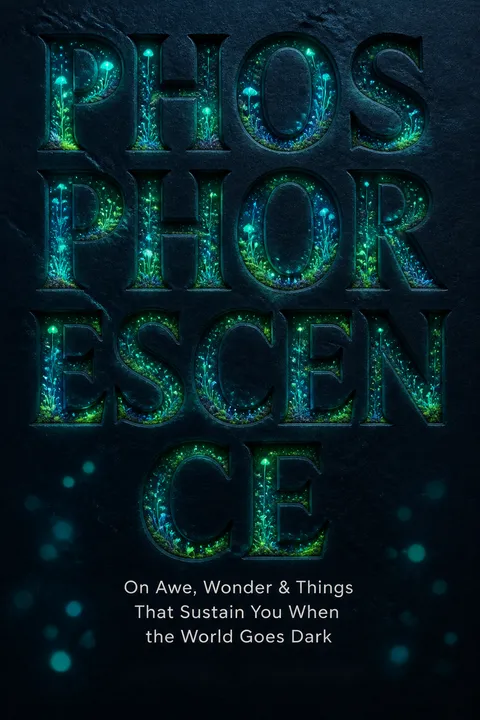
The book begins in darkness. After heartbreak and repeated cancer surgeries, Julia Baird asks a tougher question than how to stay happy: how to remain alive to life when pain, fear, or loss takes over. Her answer is phosphorescence, a metaphor for a subdued inner light that can persist without requiring constant cheerfulness. The image comes from living organisms that glow in darkness, often unpredictably, rather than burning like a flame.
Draw on what you have gathered. During one period of despair, Baird’s counsellor recalled a mentor’s advice: difficult times are when a person must use what life has already supplied, including love, learning, work, and friendship. The book follows her search for such reserves, from ocean swims to attentive relationships and ordinary pleasures. Its central claim is not that suffering can be wished away, but that a life can still contain light within it.
The distinction between brightness and glow is more than an attractive metaphor. It separates resilience from compulsory positivity. People under strain are often told to display confidence, gratitude, or optimism, even when those emotions are unavailable. A quieter model allows endurance to look like getting through the day, accepting help, or noticing one beautiful thing. That is psychologically more credible. Still, small practices are not substitutes for medical care, material support, or protection from injustice. The book is most persuasive when inner resources are presented as companions to care, not as proof that individuals should be able to overcome every hardship alone.
Go looking for awe where nature makes the self feel smaller.
Awe changes the frame. Baird’s daily swims in a marine bay bring her alongside cuttlefish, rays, sharks, and sometimes dolphins. The encounter with a cuttlefish, strange and vividly unlike a human, can charge an otherwise routine morning with wonder. Social psychologists define awe through perceived vastness and the need to revise one’s existing understanding. It can come from an ocean, a forest, a storm, or a small discovery that interrupts habit.
Smallness can connect. Research described in the book links awe with greater generosity and patience. In one experiment, people who had looked up at tall trees were more likely to help someone who dropped pens. Baird’s swim group also turns nature into community: people share sightings, conversation, and practical help. The point is not to chase spectacular adventures. A park, a bird, or a changing sky can also widen attention.
Awe offers a useful counterweight to the attention economy, which continually invites people to treat themselves as the central subject. Feeling small can loosen self-importance and make other people more visible. That connection helps explain why awe may encourage prosocial behavior: attention shifts from personal status toward a larger setting shared with others. Yet awe is not automatically ethical. Sublime experiences can inspire humility, but they can also be used to glorify power or spectacle. The valuable practice is not merely seeking intensity. It is letting wonder enlarge care for the living world and the people within it.
Protect silence as a way of hearing the world, not escaping it.
Quiet is more than quietness. Baird distinguishes silence from the mere absence of sound. It can mean being free of mechanical noise long enough to hear birds, wind, water, and the details usually drowned out by human activity. Naturalist Gordon Hempton describes this kind of quiet as the presence of life, not an empty space. Even a swim beneath the surface, a ferry ride, or a few minutes on a bench can offer a small pocket of it.
Listen before explaining. At a gathering on Yolngu land, Baird’s television crew was asked to learn through observation and listening, rather than firing off questions. She connects this lesson to dadirri, a Ngangikurungkurr word for deep listening and still awareness. The practice does not demand retreat from ordinary life. It asks people to pause, notice, and let the world speak before rushing to fill the silence.
Silence has both an environmental and an interpersonal dimension. Noise pollution can make concentration and recovery harder, while habitual speech can crowd out information that only becomes available through patient observation. The Yolngu example also challenges the assumption that knowledge must arrive as a quick answer to a direct question. Listening can be a method of learning, and a sign of respect. At the same time, silence is not universally restorative: imposed silence can isolate, intimidate, or suppress. Its value depends on choice, context, and whose voice is being heard or withheld.
Honor the unglamorous work that keeps a cause alive.
Movements have long middles. Baird’s boxes of university activism records preserve the ordinary labor that public histories often skip: minutes, arguments, failed votes, and repeated attempts to change the Anglican Church’s rules on women’s ordination. She and her allies came close to majority support among lay members, but clergy opposition defeated their proposal. The institution moved backward, not forward. The effort still mattered because it documented what people challenged and what they refused to accept.
Progress accumulates out of sight. The campaign to abolish the British slave trade took decades of petitions, pamphlets, meetings, and parliamentary defeats. Baird argues that visible breakthroughs often rest on countless efforts that seemed futile at the time. Keeping records is itself a claim that these lives and attempts deserve to be remembered. Activism is not meaningful only when its participants see the final result.
This account resists the tidy storytelling that gives social change a single hero and a satisfying finish. Collective action research offers a compatible insight: networks, shared skills, and repeated participation can build the capacity for future campaigns, even when an immediate vote is lost. Archives make that process legible, especially for people whose work was excluded from official memory. There is a necessary caution, however. Persistence is not always wise if a strategy causes harm or ignores changing conditions. Honoring effort should preserve room for learning, coalition-building, and revising tactics, rather than treating endurance alone as evidence of success.
Treat appearance as one feature, never the verdict on a whole person.
Difference deserves honest language. Baird recalls worrying about her nose after an artist exaggerated it in a caricature. She rejects both the idea that appearance never matters and the idea that it determines a person’s worth. Robert Hoge, born with a facial tumor and deformed legs, makes the distinction plainly: looks can shape how people are treated, but nobody is only one characteristic. His frank account, rather than blanket reassurance that everyone is beautiful, helps children understand difference without making it a catastrophe.
Look beyond the fragment. Baird describes how mirrors, edited photographs, and criticism can train people, especially women, to inspect isolated flaws and miss the whole person. She points to influential figures remembered for their work, intelligence, or character despite features that did not fit conventional ideals. The aim is not to deny bias. It is to refuse to let a biased standard define the limits of a life.
The book’s strongest move is to avoid a comforting falsehood. Saying that looks do not matter can leave children unprepared for real discrimination; saying that beauty matters most turns a social prejudice into a personal verdict. A more useful approach names the bias, then broadens the measures by which a person is seen. This connects to disability advocates’ emphasis on access and belonging, rather than asking individuals to feel better about exclusion. The challenge is that celebrating distinctive features cannot by itself undo lookism. Cultural standards, hiring practices, and media representation also shape whose differences are treated as acceptable.
Use the authority you earned, especially when others call it arrogance.
Credentials can mark real labor. After Baird mentioned her history PhD during an online argument, some users called her elitist for using the title Doctor. Women academics described similar resistance, while male colleagues said they had rarely faced it. In one analysis of introductions at medical meetings, men used a woman’s title about half the time, while men’s titles were used more than 70 percent of the time. Such habits can quietly signal whose expertise is assumed to count.
Speak without apology. Baird argues that people should state relevant expertise rather than retreat when it is challenged, particularly in public debate where evidence is often dismissed as mere opinion. A title does not make someone infallible, and it is not a requirement for speaking. But refusing to acknowledge earned authority can reinforce the very conventions that keep some voices at the margins.
Authority works socially as well as intellectually. Credentials tell an audience that a person has undertaken sustained training, but status markers are distributed unevenly and can be mistaken for vanity when used by people outside the expected image of expertise. Naming that asymmetry makes the advice more than a confidence exercise. It is also a call to evaluate claims by evidence rather than by the speaker’s gender or presumed rank. The needed balance is transparency: credentials should clarify the basis of knowledge, not shield a claim from scrutiny. Expertise earns attention, not automatic agreement.
Celebrate friends' victories as deliberately as you sit beside their pain.
Friendship is active care. During Baird’s surgeries, friends cooked, stayed beside her, and helped with practical tasks. One friend’s simple presence in the hospital gave care a form: she could not remove the suffering, but she could remain with the person enduring it. Friendship also includes ordinary joy, long conversations, shared jokes, and the repeated choice to keep showing up.
Practice borrowed happiness. Freudenfreude is genuine pleasure in another person’s good fortune, the counterpoint to taking pleasure in their misfortune. Baird feels it when her friend Catherine Keenan receives an award for creating a writing program for young people. She describes the pride of seeing someone’s years of difficult work recognized. Studies discussed in the book associate deliberate celebration of others with greater generosity and less jealousy. Care also comes from animals: Baird’s unruly dog Charlie gets her walking and brings daily companionship, though pet ownership is no cure-all.
Relationships are often measured by support during crises, but celebrating another person’s success is a subtler test of security. Shared joy resists the zero-sum assumption that another person’s recognition diminishes one’s own. It can also make achievement more relational by acknowledging the effort and help behind it. The book’s examples suggest that care is both emotional and logistical, from witnessing a friend’s triumph to walking a dog. These benefits should not romanticize friendship as limitless labor. Durable bonds need reciprocity, boundaries, and room for friends to have different capacities at different times.
Savour what cannot be kept while it is still here.
Impermanence sharpens attention. The adult mayfly may live only a day, while a cuttlefish lives for a year or two. Street artist Rone understands a different kind of short life: he paints striking portraits in neglected buildings, knowing that demolition or weather may soon erase them. One large mural in Melbourne’s Star Lyric theatre was destroyed shortly after Baird saw it. Its brief existence made seeing it feel urgent, not disposable.
Enjoyment can be practiced. Savouring means paying attention to a positive experience as it approaches, while it is happening, and when remembering it. Baird’s son finds lasting delight in a simple meal or time around the dinner table. The book also warns that perfectionism, entitlement, and constant access to pleasures can dull enjoyment. Slowing down for tea, a meal, or a walk can make ordinary life more available to notice.
Impermanence is not only a reason to grieve. It can alter the value of attention, much as a live performance feels different from a recording that can be replayed indefinitely. The practice of savouring gives memory a role in pleasure, connecting present experience with anticipation and recollection. This is a useful corrective to novelty-seeking, where each good moment is quickly replaced by the next. Still, there is a tension between preserving memories and releasing attachment. The book does not resolve it with a rule about what to keep. It suggests that remembrance should help people inhabit the present, not postpone it.
Find your ert: the absorbing purpose that gets you moving.
Purpose can restore motion. Marine biologist Lisa-Ann Gershwin coined ert for the opposite of inertia. After depression left her struggling to get out of bed, her fascination with jellyfish became a direction for study and work. She went from high-school dropout to a specialist who discovered more than 200 species. Her story does not imply that a hobby cures depression. It shows how an absorbing pursuit can provide a thread toward activity and meaning.
The right purpose is personal. For Gershwin, it includes jellyfish, research, writing, and care for herself. For other people, Baird suggests, it might be physical movement, creative work, service, family, or simply getting through a difficult day. A purpose need not be grand or impressive. It matters because it draws attention beyond paralysis and gives the next action somewhere to lead.
Ert captures a useful difference between having a purpose and possessing a polished life mission. Motivation often returns through concrete engagement: a task, a fascination, or a responsibility that makes the next step imaginable. This resembles behavioral activation, a therapeutic approach that encourages meaningful activity even when motivation is low. The idea is humane because it allows purpose to be modest and changeable. It also needs a boundary: meaningful work cannot replace treatment for depression, and not everyone has equal time or access to work they love. Purpose can orient a person without explaining away structural hardship.
Hold hope and hard facts together when the future refuses reassurance.
Hope must face reality. Admiral Jim Stockdale spent nearly eight years imprisoned and tortured in North Vietnam. He said the prisoners who clung to repeated predictions of release by a particular holiday often collapsed when the date passed. His own approach combined faith that he would survive with a clear-eyed appraisal of the danger before him. This combination became known as the Stockdale Paradox: retain confidence in eventual endurance while confronting the harsh facts of the present.
Do not demand a cheerful forecast. Baird connects this idea to illness, where reassurance can ring hollow and suffering cannot be controlled by positive thinking. Hope need not mean certainty that events will turn out well. It can mean continuing to act, accept support, and leave room for more than one possible outcome. This kind of realism avoids both despair and promises that reality may not keep.
This model distinguishes hope from prediction. A person can remain committed to survival or justice without pretending to know the outcome, a distinction that matters in medicine, caregiving, and political struggle. It also guards against the emotional whiplash of deadlines that turn into false promises. Yet Stockdale’s extreme circumstances should not be converted into a universal test of character. People respond differently to trauma, and survival is not proof of superior attitude. The principle is best used as a way to hold uncertainty honestly, not as a standard for judging those who cannot sustain hope.
Use attention as a form of care, not another self-improvement project.
Look outward with intention. Baird returns to attention as the thread joining nature, art, friendship, and spiritual life. Poet Mary Oliver’s close observation of a grasshopper is an example: sustained attention reveals a small, intricate life that a distracted passerby might never notice. Baird argues that attention can also turn toward the struggles and needs of other people, making it a practice of care rather than endless self-monitoring.
Make room for mystery. Baird’s faith is personal and questioning, not a demand for certainty or institutional approval. She admires people whose beliefs become kindness and service, while insisting that doubt can refine belief and expose overconfidence. In the closing image, after searching widely for glowing sea life, she sees bioluminescence in the bay near home. The discovery suggests that wonder may be close at hand, if attention is ready to meet it.
Attention is presented as both a cognitive capacity and an ethical choice. What receives sustained notice becomes more vivid, whether a fragile natural phenomenon or another person’s experience. This joins contemplative traditions with a modern problem: digital systems compete for attention because it can be converted into engagement and revenue. The book’s outward turn is a welcome check on wellness culture that can make self-observation feel like an endless assignment. Still, attention alone cannot repair what it reveals. Seeing suffering creates a question of response, and care becomes meaningful when perception leads, where possible, to action.
Analysis
Phosphorescence is a memoir-driven argument about how to remain receptive to life when conditions cannot be made safe or fair. Its structure moves from the more-than-human world toward the human one: awe and nature train attention; imperfection and public voice resist narrow judgments; friendship makes care concrete; and purpose, hope, and doubt help sustain a person through illness and uncertainty. The movement is not a strict program. It is a widening circle of practices that can be combined rather than mastered.
Baird’s central insight is that resilience is not merely an internal trait. It is relational and ecological. A swimmer’s awe depends on a living bay, a grieving person may depend on friends who bring food, and a dissenter’s sense of significance can depend on records that preserve failed efforts. This resists the familiar self-help fiction that individuals can manufacture well-being alone. It also gives ordinary acts, such as noticing a tree or celebrating a friend, moral weight without pretending they solve structural problems. The book’s strength is its refusal to separate beauty from pain. Its author writes from cancer and recovery, but does not turn illness into a tidy redemption story. Nature can soothe, but access to safe green space is unequal. Friendship can protect, but people cannot always summon reliable companions. Purpose can draw someone into motion, but cannot replace mental health care or economic security. These limits do not invalidate the practices. They clarify that practices are supports, not cures.
The broadest lesson is to cultivate attention in two directions at once: toward what is beautiful, and toward who is burdened. The first keeps the world from becoming only a catalogue of threats. The second prevents wonder from becoming private consumption. A life that glows quietly is not one that escapes darkness, but one that remains connected to other lives and to a world still capable of surprise.
Review Summary
Phosphorescence received mixed reviews, with ratings ranging from 1 to 5 stars. Many readers found the book beautifully written and inspiring, praising Baird's exploration of finding light in dark times. Some appreciated her personal stories and reflections on nature, faith, and resilience. However, others criticized the book as self-indulgent, privileged, and lacking cohesion. Critics felt it was more a collection of musings than a focused work. Despite the divided opinions, many readers found value in Baird's insights on awe, wonder, and perseverance.
People Also Read

Glossary
Phosphorescence
Quiet light that persistsIn physics, phosphorescence is light emitted after a substance absorbs energy and releases it gradually. Baird uses the word as a metaphor for an inner capacity to remain quietly alive through difficult conditions. Unlike a blaze of constant happiness, this light is modest, may be hard to see, and can be sustained by attention, relationships, nature, and purpose.
shinrin-yoku
Sensory immersion in forestsA Japanese practice commonly translated as forest bathing. It involves spending unhurried time in a forest while attending to sights, sounds, smells, textures, and other sensory details. The practice is presented as a way to reconnect with nature and support well-being, rather than as exercise or a specific medical treatment.
dadirri
Deep listening and still awarenessA Ngangikurungkurr word described by Aboriginal elder Miriam-Rose Ungunmerr-Baumann as inner, deep listening and quiet, still awareness. It involves observing patiently, listening to people and country, and allowing understanding to develop without rushing toward speech or action. Baird presents it as a living Indigenous practice, not simply a relaxation technique.
Overview Effect
Perspective shift from seeing EarthA profound psychological response some astronauts experience when viewing Earth from outside its atmosphere. The planet’s apparent smallness, beauty, and lack of visible borders can produce awe, a sense of human connection, and concern for Earth’s vulnerability. The term was coined by Frank White in his 1987 book of the same name.
narrative identity
The life story shaping identityA person’s evolving account of who they are, assembled from remembered experiences and the meanings assigned to them. Baird draws on psychologist Dan McAdams’s work to contrast stories that turn painful events into movement or learning with stories in which good experiences are repeatedly recast as ruined. These narratives can shape a person’s sense of agency and continuity.
Freudenfreude
Joy in another’s successGenuine pleasure in another person’s good fortune or achievement. The term is used as the counterpart to Schadenfreude, which means pleasure in another’s misfortune. Baird describes Freudenfreude as a habit that can strengthen friendship and reduce envy by encouraging people to share, rather than resent, the happiness of those they care about.
ert
Purpose that counters inertiaA term marine biologist Lisa-Ann Gershwin coined for the opposite of inertia. Ert is the meaningful activity, interest, relationship, or purpose that helps a person move toward engagement when life feels flat or immobilizing. It is different for each person and need not be grand. Baird emphasizes that it may support movement without replacing professional care for depression.
Stockdale Paradox
Hope paired with harsh realismA name for the approach Admiral Jim Stockdale described after enduring years as a prisoner of war: maintain faith that one can endure or prevail, while confronting the immediate facts of a painful situation without denial. In Baird’s account, it distinguishes resilient hope from unrealistic predictions that a specific hardship will end by a convenient date.
savouring
Attending to positive experienceThe deliberate appreciation of a positive experience by anticipating it, attending to it while it happens, and remembering it afterward. Research discussed by Baird suggests that savouring can be cultivated through habits such as eating without distraction, noticing beauty, and revisiting good memories. Perfectionism, entitlement, and constant access to pleasures may make this attention harder.
wabi sabi
Beauty in imperfection and changeA Japanese aesthetic sensibility that values modest, imperfect, weathered, or decaying things, and recognizes the impermanence of all things. Baird uses it to challenge the preference for polished novelty and uniform appearance. It is more than a visual style: it can also describe an outlook that finds character and beauty in age, irregularity, and change.
Bardo
A transitional state between livesIn Tibetan Buddhist thought, a bardo is an intermediate state, especially the interval between death and rebirth. Baird uses the term metaphorically for a suspended, liminal experience beneath the ocean’s surface, where ordinary concerns recede and a person feels both alone and connected to a much larger living world.
The Lassie Effect
Health benefits associated with dogsBaird’s label for evidence linking dog ownership with potential benefits to human health. Proposed contributors include companionship, affection, lower stress, and the increased activity involved in walking a dog. Studies described in the book find associations with health outcomes, but the term does not mean dogs prevent or cure illness, or that every owner benefits equally.
FAQ
What's Phosphorescence about?
- Exploration of Inner Light: Phosphorescence by Julia Baird explores the concept of finding and nurturing the "light within" during dark times, using the metaphor of phosphorescent creatures to illustrate resilience.
- Connection to Nature: The book emphasizes the importance of awe, wonder, and silence, particularly through experiences in nature, as a means to sustain and enhance well-being.
- Personal Journey: Baird shares her own experiences with illness, heartbreak, and recovery, weaving in lessons about resilience and the human spirit, encouraging readers to reflect on their own lives.
Why should I read Phosphorescence?
- Inspiration and Hope: The book offers a message of hope and resilience, particularly for those facing difficult times, inspiring readers to seek joy and light in their own lives.
- Scientific and Philosophical Insights: Baird combines personal anecdotes with scientific research on happiness, nature, and human connection, making the book both informative and relatable.
- Empowerment Through Stories: The author encourages readers to embrace their imperfections and share their stories, fostering a sense of community and understanding.
What are the key takeaways of Phosphorescence?
- Nurturing Inner Light: Emphasizes the importance of nurturing your inner light, especially during challenging times, highlighting our phosphorescent quality that can shine through adversity.
- Value of Awe and Nature: Highlights the significance of experiencing awe and connecting with nature to enhance well-being, discussing practices like forest bathing.
- Embracing Imperfection: Advocates for accepting our imperfections and sharing our stories, which can foster deeper connections and personal growth.
What are the best quotes from Phosphorescence and what do they mean?
- “You do not, you cannot, waste a breath.”: Emphasizes the preciousness of life and the importance of living fully in the present, especially during difficult times.
- “We are all just walking each other home.”: Suggests that we are interconnected and have a responsibility to help one another through life's journey, encapsulating friendship and support.
- “Sometimes it’s enough to have honestly tried.”: Speaks to the value of effort over outcome, encouraging readers to recognize the importance of striving for change.
How does Phosphorescence address the theme of friendship?
- Importance of Connection: Emphasizes that friendship is a vital source of support and joy, illustrating how friends can uplift us during tough times.
- Freudenfreude Concept: Introduces the idea of Freudenfreude, the joy we feel in others' successes, contrasting it with Schadenfreude.
- Building Resilience: Argues that strong friendships contribute to resilience and well-being, encouraging the cultivation of meaningful relationships.
What practices does Julia Baird suggest for nurturing inner light?
- Pay Attention: Advises readers to be mindful and present in their daily lives, helping them recognize and appreciate small moments of joy.
- Seek Awe in Nature: Suggests engaging with nature through practices like forest bathing to reconnect with the natural world and enhance well-being.
- Embrace Imperfection: Encourages accepting flaws and sharing stories, fostering kindness to oneself and recognizing beauty in unique journeys.
How does Phosphorescence relate to mental health and well-being?
- Connection to Nature: Discusses the mental health benefits of spending time in nature, supported by scientific research, which can reduce stress and improve mood.
- Resilience Through Community: Highlights the importance of social connections and friendships in maintaining mental health, emphasizing supportive relationships.
- Mindfulness and Presence: Advocates for mindfulness practices to cultivate inner peace and resilience, helping manage anxiety and find joy in everyday moments.
What role does silence play in Phosphorescence?
- Value of Silence: Discusses the importance of silence for reconnecting with oneself and the world, allowing for reflection and deeper understanding.
- Listening to Nature: Emphasizes that true silence includes the presence of natural sounds, encouraging readers to seek quiet places to connect with nature.
- Cultural Significance: Explores how different cultures value silence and contemplation, sharing insights from Indigenous practices.
How does Julia Baird define phosphorescence in the context of the book?
- Metaphor for Inner Light: Uses phosphorescence as a metaphor for the inner light that can shine through even the darkest times, representing resilience.
- Quiet Glow: Unlike bright flames, phosphorescence is a quiet, steady glow symbolizing enduring strength, encouraging cultivation of this inner light.
- Connection to Nature: Ties the concept to the natural world, drawing parallels between natural phenomena and the human experience of finding light within.
What specific methods does Julia Baird suggest for finding joy?
- Nature Immersion: Advocates for spending time in nature to rejuvenate the spirit and enhance well-being, citing research on stress reduction.
- Practicing Gratitude: Encourages cultivating gratitude by reflecting on positive experiences, shifting focus from negativity to appreciation.
- Mindfulness and Presence: Emphasizes being present in the moment and savoring experiences, helping connect more deeply with oneself and others.
How does Phosphorescence redefine the concept of success?
- Redefining Achievement: Challenges traditional notions of success, suggesting fulfillment comes from meaningful connections and experiences.
- Celebrating Others: Promotes celebrating others' successes as a form of success, introducing the concept of "Freudenfreude."
- Inner Fulfillment: Argues that success should be measured by joy, connection, and purpose, encouraging a holistic view of fulfillment.
How does Julia Baird incorporate her personal experiences into Phosphorescence?
- Illness and Recovery: Shares her journey through illness, detailing challenges faced, providing a backdrop for reflections on resilience.
- Reflections on Motherhood: Discusses her role as a mother, shaping her understanding of love and vulnerability, adding depth to her exploration.
- Philosophical Insights: Intertwines personal narrative with philosophical musings, illustrating broader truths about life, making insights relatable.
Download PDF
Download EPUB
.epub digital book format is ideal for reading ebooks on phones, tablets, and e-readers.








