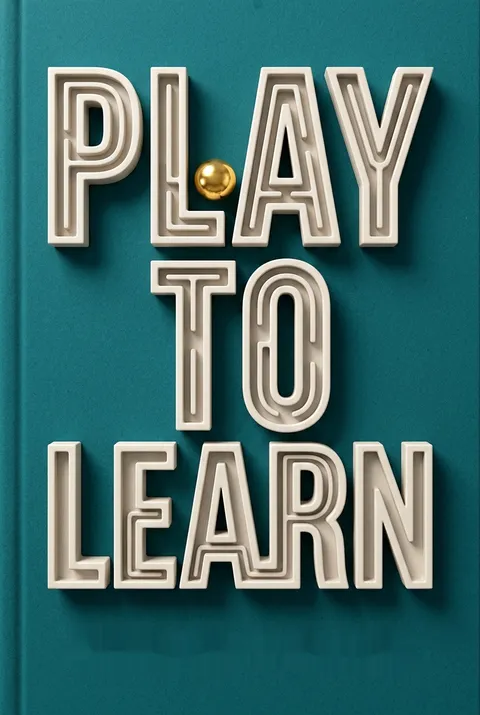


Key Takeaways
Use games when decisions make learners practice, not merely click
Practice is the point. A game combines a goal, challenge, rules, interaction, feedback, and a clear outcome. For learning, those features matter when they make people use knowledge or skills, rather than passively receive information. The authors cite meta-analyses suggesting games can outperform conventional instruction: one review of 38 studies found stronger learning and retention, while another analysis of more than 6,000 trainees reported higher knowledge, procedural skill, and retention among game players than comparison groups.
Design still decides. Games are not automatically effective. A badly designed one can distract learners with confusing rules or entertaining activity unrelated to the job. The test is whether the play requires the target thinking and provides useful feedback about it.
What's valuable here is the distinction between activity and practice. A screen full of clicks can feel interactive while demanding little thought; a plain tabletop decision can require meaningful judgment. This echoes the principle of constructive alignment in education: assessment, instruction, and intended outcomes should ask learners to do the same kind of thinking. The cited meta-analyses support games as a promising format, not a universal remedy. Their average results cannot guarantee gains in every workplace, topic, or audience. The practical implication is to evaluate the learning task itself, not the novelty of the medium.
Play widely, then dissect why a game holds attention
Build design literacy. Before creating a game, play many kinds: mobile, console, board, card, cooperative, and strategy games. Watching a demonstration is not a substitute, because playing reveals the emotions, confusion, and motivation that a designer must understand. Familiarity with only childhood board games or TV quiz formats can shrink the range of ideas available.
Look beneath the surface. Ask what players are trying to achieve, what they do repeatedly to get there, how rules shape those actions, and how feedback signals progress. In the book's vocabulary, a core dynamic is the central activity that drives play, such as building or solving. Game mechanics are the rules governing actions and outcomes. A familiar format is not automatically a good design: copying a game-show quiz may test recall when the real need is decision-making.
This is a form of deliberate observation, not simply recreational exposure. In craft fields, novices often learn to notice structure by comparing examples and naming what works. Game evaluation applies that habit to motivation, feedback, pacing, and choice. It also guards against a common design shortcut: mistaking a recognizable format for a compelling experience. The caution is that a designer's own enjoyment is not a proxy for the target audience's. Playing broadly supplies hypotheses; research with intended players is still needed to determine which features fit their tastes, experience, and working conditions.
Start with a measurable work problem and a vivid picture of its players
Find the performance gap. Before choosing a game format, identify the business problem and what observable change would count as improvement. The book describes cases such as reducing new-hire ramp-up time and cutting customer-support calls after training on a laboratory testing unit. Stakeholders may begin with impressions rather than evidence, so ask who is affected, how often the problem occurs, and what it costs.
Design for actual players. A player persona is a research-based portrait of a representative learner, including role experience, motivations, routine, devices, and constraints. For a field sales rep, limited time and heavy phone use may make short mobile sessions more appropriate than a long computer game. Personas should guide decisions, not become decorative demographic profiles.
This foundation connects game design to performance consulting: training is a proposed intervention, not the diagnosis itself. Quantifying a problem can expose whether learning is relevant or whether the cause lies elsewhere, such as workflow, incentives, or access to tools. Personas add useful context by turning an abstract audience into a person with limited time and specific pressures. Their risk is false precision: a fictional profile can look vivid while resting on weak assumptions. Direct conversations and observed work patterns make the persona a design aid rather than a stereotype.
Keep the learning target separate from the game's win condition
Two goals, two jobs. The instructional goal describes what learners should know or be able to do; the game goal describes what players must accomplish to win. In a sales game, a player might build a town as the game goal while practicing which products suit different customer applications as the learning goal. Winning should depend on demonstrating the knowledge or skill, not luck alone.
Limit the scope. A learning game is designed to build or reinforce knowledge and skill. A simulation instead emphasizes practice in a controlled environment that resembles reality; gamification adds game features to an activity without making the whole activity a game. The authors advise choosing a specific learning need rather than cramming an entire sales process or compliance program into one experience. Simple rules and a focused objective help learners spend attention on the subject, not on decoding play.
Separating these goals is a compact way to prevent a polished game from disguising weak instruction. The win condition gives play direction, while the learning goal supplies a criterion for judging educational value. This resembles the distinction between a task's surface goal and the capability it is meant to develop. The scope advice also reflects cognitive-load concerns: learners have finite working memory, and elaborate rules compete with subject matter for it. Still, simplicity is not a virtue by itself. A realistic, demanding task may require complexity, provided the rules are learnable and the added demands serve the intended skill.
Make rules rehearse the decisions learners face at work
Choose mechanics with intent. Game mechanics are the rules through which players pursue the goal. They should make learners practice the decisions, sequence, or tradeoffs that matter outside the game. In Feed the World, new mine employees cooperatively respond to safety scenarios and identify needed resources. Its seven turns reflect stages in the mining process, while increasing production targets connect play to the company's mission.
Borrow the shape, not the facts. TE Town gives distributor sales reps short mobile games that help them connect customer types to product applications and product families. Players build a fictional town as they demonstrate knowledge. The town is not a literal model of selling; it is an approachable frame for repeated practice. Both examples show that theme, resources, chance, and cooperation work best when they reinforce the learning need rather than compete with it.
The strongest design move is functional resemblance: the game asks for the same kind of judgment as the workplace without needing to reproduce every workplace detail. This can support transfer by giving practice a recognizable structure, while fantasy can lower the social risk of experimentation. Feed the World also makes collaboration part of the activity because teamwork is relevant to the job. Yet realism should be selective. A game that copies every constraint can become tedious, while one that abstracts too far can teach misleading habits. Designers need to decide which features are essential to performance and which are merely scenery.
Let scoring show mastery, not speed, luck, or rule-wrangling
Make the score readable. Scoring should be simple, transparent, and connected to learning outcomes. Players need to understand what earns points, what counts as progress, and how their actions affect the result. Levels can divide a large subject into manageable stages, while achievements can recognize demonstrated performance rather than mere participation.
Reward the right behavior. A timed quiz may favor fast readers even when speed is irrelevant to the job. The authors removed timed rounds from Knowledge Guru after testing showed they discouraged many players without serving its learning objectives. In a knowledge game, correct answers and productive retries may matter more than speed. Designers should map possible scores in a spreadsheet and test whether learners can advance fairly, including when they make mistakes. If chance can decide who wins, the score stops being credible evidence of learning.
Scoring is not just decoration. It is an incentive system that directs attention, so a poorly chosen metric can train the wrong behavior with impressive efficiency. This resembles Goodhart's law: once a measure becomes a target, people may optimize the measure rather than the underlying capability. Transparent scoring helps players interpret feedback and regulate their effort. Competition can add energy, but it can also turn a learning setting into a status contest. Scores are best treated as one signal of progress, alongside direct evidence of whether learners can perform the target task.
Test the idea on paper with real learning content before coding
Make the prototype playable. A prototype is an early, simplified version that lets a team test whether a game is engaging and whether its learning activities work. Paper is usually the fastest and cheapest starting point, even for a digital game. Moveable paper screens can represent taps, choices, and system responses well enough to uncover awkward interactions before programming begins.
Bring real material. The prototype needs representative content, not placeholder questions. A sales game might need several realistic customer objections and plausible wrong responses; a customer-service game needs sample interactions and common mistakes. Without actual content, designers can fall in love with a clever format that becomes dull or confusing when the subject matter is added. The authors recommend a small design team and a quick session, then revisions rather than a costly attempt at perfection.
Paper prototyping is a practical expression of cheap experimentation: test the riskiest assumptions before investing in production. Its value is not that paper resembles the final product, but that it makes interactions concrete and easy to change. Including real content is especially important because instructional material is part of the user experience, not a payload that can be added without affecting the design. A limitation is that paper cannot reveal all technical, visual, or accessibility problems. It is an early filter, not a substitute for testing the finished digital experience.
Watch learners play, measure learning, and revise without defensiveness
Test playability, not just opinions. Play-testing asks whether people understand the game, stay involved, find its challenge appropriate, and learn what it intends to teach. Observe behavior, ask testers to think aloud, interview them afterward, and compare knowledge before and after play. Repeated feedback from several people is more useful than treating one preference as a universal rule.
Iteration changes the game. In A Paycheck Away, an early prototype dragged because people waited through long individual turns and struggled to track money. The team changed the turn structure and added budget sheets. Later testers could not easily remember character details, so the designers created visible role summaries. Each test exposed a different friction point. Testing is not a final approval ritual; it is how designers discover the experience their rules actually produce.
This process combines usability observation with formative assessment. What players say they learned matters, but performance evidence can reveal whether that belief is accurate. Think-aloud comments help explain behavior, while observation catches problems people may not articulate. The example also shows why iteration should be evidence-led rather than ego-led: designers cannot reliably imagine every confusion in advance. Small test groups can uncover prominent usability issues, but they do not establish that a game works for every audience or improves long-term job performance. Those broader claims require larger and more contextual evaluation.
Launch the game as a supported learning experience, not a file
Teach before and after play. A learning game works best inside a larger learning plan. Introduce its purpose, let learners play, and then debrief what happened and how it connects to the job. Losing should not mean leaving without learning; reflection, smaller achievements, and cooperative play can keep setbacks useful rather than humiliating.
Plan the delivery. Development choices depend on team skills, budget, devices, security, and maintenance. The book recommends short Agile development cycles, with each cycle producing a testable version and a prioritized task list. Deployment also requires facilitation, distribution, technical support, and communication. Zombie Sales Apocalypse faced browser and plug-in barriers, so the team adapted its delivery and built executive support for its unconventional zombie theme. The lesson: adoption and infrastructure are part of the design, not afterthoughts.
This final step treats learning as an organized experience rather than a software artifact. An introduction gives learners a frame for attention; a debrief helps connect game events to real decisions. That structure resembles reflection in experiential learning, where activity alone is insufficient for extracting a principle. Agile cycles can reduce the cost of discovering technical and design failures, while implementation planning addresses the institutional conditions that determine whether anyone plays. A required game can increase participation, but compulsion cannot create value by itself. The experience must respect learners' time and deliver credible practice.
Analysis
Play to Learn is a practical design manual for people who understand instruction but may not yet understand games. Its central contribution is not a recipe for adding points or stories. It is a discipline of alignment: begin with an organizational performance problem, specify what learners must do, and make the game's goal, rules, feedback, scoring, and delivery support that performance. The book's examples make this tangible. Feed the World turns safety decisions into collaborative scenarios; TE Town converts product knowledge into brief, repeated mobile activities; A Paycheck Away shows how iteration can expose failures that designers miss.
The method is strongest where it treats design as empirical work. Playing existing games builds a vocabulary, paper prototypes make assumptions visible, and play-tests test how rules behave with actual people. The repeated distinction between engagement and entertainment is also useful. A learner need not find compliance training hilarious; the activity must command attention and invite meaningful thought.
The evidence should be read with appropriate restraint. Meta-analyses showing average advantages for game-based learning do not certify any particular game, and immediate gains do not automatically establish durable transfer to work. The book recognizes design quality as decisive, but organizations still need to assess what learners can do after play, not just whether they enjoyed it or scored well. Likewise, a business problem may have causes that training cannot solve. Measurement before design helps prevent a game from becoming an attractive answer to the wrong question.
The book's broader lesson is that learning-game design is both instructional design and product development. It demands content expertise, game judgment, audience knowledge, testing, technical planning, and facilitation. For a small learning need, a simple card game may be wiser than a custom app. The designer's achievement is not maximal complexity. It is choosing the least complicated play experience that gives learners consequential practice, useful feedback, and a reason to reflect.
Review Summary
Readers highly praise "Play to Learn" as an excellent guide for creating effective learning games. They appreciate its focus on key aspects for beginners, practical design process, and wealth of information. The book is seen as a valuable resource for instructional designers, offering insights on incorporating gaming elements into training. Reviewers highlight its step-by-step approach, from idea conception to deployment and evaluation. Many find it helpful in bringing fun and engagement to corporate training, making it relevant for today's learners who prefer game-based learning.
People Also Read






Glossary
Learning game
Game designed for learningAn interactive game designed to help players develop or reinforce knowledge and skills. It has a learning outcome in addition to an in-game goal, and its play should engage learners with the material. It may use abstraction or fantasy rather than reproducing a real situation exactly.
Core dynamic
Main activity that drives playThe central activity players perform to reach a game's win condition. Examples include building, collecting, exploring, or solving. A learning game's core dynamic should suit both its challenge and its target players. Combining several dynamics can add complexity, so designers commonly begin with one or two.
Game mechanics
Rules governing player actionsThe rules that determine how players pursue the game goal, interact with each other, and, in digital games, how the system responds. Mechanics shape the flow, difficulty, and consequences of play. In a learning game, they should support the intended practice instead of consuming attention with unnecessary complexity.
Player persona
Research-based learner portraitA concise, fictionalized portrait grounded in information about the intended players. It captures relevant experience, motivations, challenges, work routines, devices, and game preferences. Designers use it to make choices that fit learners' real circumstances, rather than relying only on broad demographic labels or assumptions.
Instructional goal
Desired learner performanceA statement of what learners should know or be able to do after a learning experience. It connects the instructional design to a business or performance need. It differs from the game goal, which states what players must accomplish to win during play.
Playability testing
Testing how play actually feelsA structured process for observing whether a game makes sense to players, whether its rules and challenges work, whether it engages them, and whether it supports the intended learning. It can include observation, think-aloud feedback, interviews, and pre-play and post-play learning checks.
Agile method
Short-cycle iterative developmentA development approach organized into short work periods, often called sprints. Each sprint produces a testable version of the game, followed by feedback and prioritized revisions. The approach supports frequent iteration while limiting unplanned additions during an active sprint.
Bloom’s Taxonomy
Framework for levels of thinkingA framework that categorizes cognitive work from remembering and understanding through applying, analyzing, creating, and evaluating. The book uses it to help designers match learning objectives to suitable game types. The levels are a planning aid, not isolated boxes, since real tasks may involve several kinds of thinking.
Magic circle
Bounded space of game rulesThe game environment in which the game's particular rules, challenges, and social expectations apply. A game's constraints create a distinct space for play. For example, drawing rather than writing clues is part of Pictionary's game environment, even though writing would be allowed outside the game.
FAQ
What's "Play to Learn: Everything You Need to Know About Designing Effective Learning Games" about?
- Overview: The book by Sharon Boller is a comprehensive guide on designing effective learning games that engage and educate.
- Structure: It is divided into four parts, covering the basics of game design, making design choices, applying knowledge, and development and implementation.
- Purpose: It aims to bridge the gap between instructional design and game design, providing a systematic approach to creating learning games.
- Audience: The book is intended for instructional designers, educators, and anyone interested in using games as a learning tool.
Why should I read "Play to Learn" by Sharon Boller?
- Practical Guidance: The book offers practical advice and methodologies for designing learning games, making it a valuable resource for educators and designers.
- Research-Based: It includes insights from research on the effectiveness of games in learning, supporting the use of games as a teaching tool.
- Comprehensive Approach: The book covers everything from the basics of game design to advanced implementation strategies, making it suitable for both beginners and experienced designers.
- Real-World Examples: It provides case studies and examples of successful learning games, offering inspiration and concrete ideas for your projects.
What are the key takeaways of "Play to Learn"?
- Game Design Process: The book outlines a nine-step process for designing learning games, from setting learning foundations to deploying the game.
- Instructional Goals: Emphasizes the importance of aligning game design with instructional goals to ensure learning outcomes are met.
- Engagement and Learning: Highlights the need to balance engagement and learning, ensuring games are both fun and educational.
- Iterative Development: Stresses the importance of play-testing and iteration in refining game design and improving learning effectiveness.
How does "Play to Learn" define a learning game?
- Purpose: A learning game is designed to help players develop new knowledge or skills or reinforce existing ones.
- Structure: It includes a game goal and an instructional goal, with the latter taking precedence to ensure learning.
- Elements: Learning games often incorporate elements of fantasy and abstraction to teach concepts in an engaging way.
- Distinction: The book differentiates learning games from simulations and gamification, focusing on their unique educational purpose.
What is the nine-step process for designing learning games in "Play to Learn"?
- Step-by-Step Guide: The process includes playing games, setting learning foundations, linking learning with game design, and more.
- Iterative Approach: Emphasizes the importance of iteration, with multiple rounds of play-testing to refine the game.
- Integration: Encourages integrating games into a larger instructional design to maximize learning outcomes.
- Practical Application: Each step is accompanied by practical activities and examples to help readers apply the concepts.
How does "Play to Learn" suggest linking instructional goals with game design?
- Alignment: The book stresses the importance of aligning game goals with instructional goals to ensure the game supports learning objectives.
- Core Dynamics: It suggests choosing core dynamics that resonate with real-world applications and learning needs.
- Game Mechanics: Recommends designing game mechanics that reinforce learning objectives and do not detract from them.
- Feedback and Scoring: Advises using feedback and scoring systems that reflect learning progress and reinforce desired behaviors.
What are some examples of core dynamics in learning games according to "Play to Learn"?
- Race to the Finish: Suitable for learning objectives with time constraints, encouraging quick decision-making.
- Territory Acquisition: Useful for scenarios involving dominance or resource management, mirroring real-world challenges.
- Exploration: Encourages discovery and analysis, often paired with other dynamics like collection or problem-solving.
- Construct or Build: Reinforces the idea of creating something, aligning with objectives that involve synthesis or application.
How does "Play to Learn" recommend handling scoring in learning games?
- Simplicity: Keep scoring simple and transparent to avoid confusion and maintain focus on learning.
- Learning Outcomes: Tie scoring directly to learning outcomes, ensuring that success in the game reflects mastery of content.
- Variability: Introduce variability in scoring to maintain engagement and provide meaningful feedback.
- De-emphasize Winning: Focus on learning rather than winning, ensuring that all players benefit from the game experience.
What role do player personas play in game design according to "Play to Learn"?
- Understanding Audience: Player personas help designers understand the target audience's goals, motivations, and challenges.
- Customization: They allow for the customization of game elements to better suit the needs and preferences of the players.
- Realism: Personas are based on real data but fictionalized to create a relatable and realistic player profile.
- Design Decisions: They inform design decisions, ensuring that the game resonates with and engages the intended audience.
How does "Play to Learn" suggest using themes and stories in learning games?
- Engagement: Themes and stories can enhance engagement by providing context and making the game more relatable.
- Narrative Structure: A strong story includes characters, plot, tension, and resolution, which can drive game play and learning.
- Integration: Stories can be woven throughout the game or used as a backdrop to support the learning objectives.
- Fantasy Elements: Incorporating fantasy can make learning more enjoyable and help players take risks in a safe environment.
What are some common mistakes to avoid in learning game design according to "Play to Learn"?
- Over-Complexity: Avoid making rules and scoring systems too complex, which can detract from learning.
- Misalignment: Ensure that game elements align with instructional goals and do not overshadow the learning objectives.
- Neglecting Play-Testing: Failing to conduct thorough play-testing can result in a game that is not engaging or effective.
- Ignoring Feedback: Be open to feedback and willing to iterate on the design to improve the game and learning outcomes.
What are the best quotes from "Play to Learn" and what do they mean?
- "Mind-blowing learning games": This quote highlights the potential of learning games to create immersive and impactful learning experiences.
- "Less is better": Emphasizes the importance of simplicity in game design, focusing on key learning objectives rather than overwhelming players with content.
- "Winning must be contingent on learning": Stresses that success in a learning game should reflect mastery of the content, not just chance or game mechanics.
- "Play-testing is critical": Underlines the importance of testing and iteration in refining game design and ensuring it meets learning goals.
About the Author
Other books by Sharon Boller
Download PDF
Download EPUB
.epub digital book format is ideal for reading ebooks on phones, tablets, and e-readers.








