

Key Takeaways
Recognize post-truth when feelings outweigh facts and lies stop costing votes
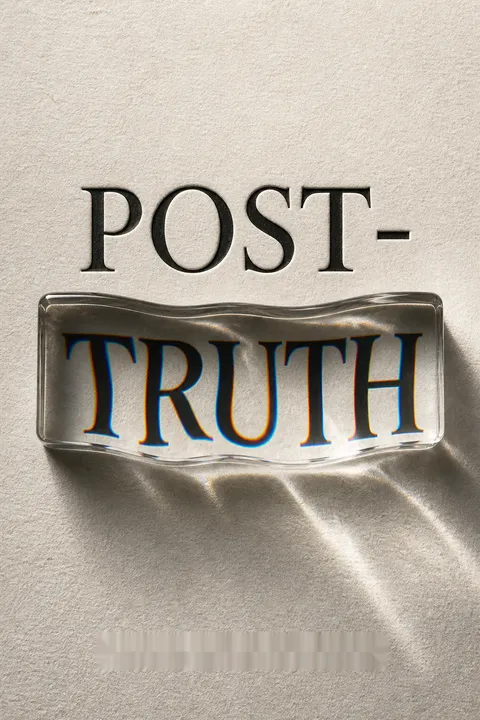
The shift is public, too. Post-truth does not simply mean that politicians lie. Political lying is old; the newer danger is that audiences become indifferent to whether a claim is true, rewarding emotional connection and victory over accuracy. Oxford Dictionaries named the term its 2016 word of the year, defining a climate in which objective facts have less influence on public opinion than emotion and personal belief.
A revealing performance. After Donald Trump’s inauguration, his press secretary claimed it had drawn the largest audience ever, despite photographs suggesting otherwise. A senior adviser defended the claim as an alternative account. The episode captured a change in political rules: evidence was treated not as a shared standard for settling disputes, but as ammunition in a contest over whose story would prevail. Trump is presented as a symptom of this change, not its sole cause.
The distinction between lying and post-truth is crucial. A lie can still depend on a shared expectation that truth matters, because exposure carries a cost. Indifference is more corrosive: it weakens the common standard needed to challenge any claim, including claims made by one’s own side. This is a problem of public norms as much as individual honesty. The book’s framing also cautions against treating a leader’s departure as a cure. A political culture that rewards narrative loyalty can readily find another performer.
Make complex facts matter by connecting them to a story people recognize
Emotion gives facts traction. The Leave campaign in Britain understood that a technical argument about EU membership needed a simple, vivid frame. It emphasized national control, immigration, and a promise that leaving would free £350 million each week for the National Health Service. The figure did not account for the British rebate, and the promised NHS payment quickly weakened after the vote. Yet the campaign’s emotional message proved more memorable than the opposing side’s dense forecasts and statistics.
Stories organize grievance. Sociologist Arlie Russell Hochschild described a political “deep story,” a felt account of how life seems, stripped of judgment about whether each element is factually accurate. Her account of voters who felt they had waited patiently for opportunity while others moved ahead helps explain why a narrative of unfairness can outweigh a spreadsheet. Trump’s campaign similarly offered belonging, blame, and a promise of national renewal.
Narrative is not inherently manipulative. It is a cognitive tool that gives scattered events sequence, cause, and human stakes. Public communication fails when it assumes that accurate information will persuade without addressing what people fear or hope for. But emotional resonance is not a license to distort: a compelling story can clarify a complex issue, or conceal who benefits from a false promise. The useful test is whether the narrative invites people to examine evidence and trade-offs, rather than asking them to substitute loyalty for scrutiny.
Repair institutional credibility before asking the public to trust its facts
Distrust has a history. The financial crisis of 2008 damaged confidence in institutions after governments rescued banks implicated in the collapse while ordinary people faced recession and cuts. In Britain, the parliamentary expenses scandal exposed lawmakers claiming public money for dubious costs. The book cites a fall from 38 percent to about 18 percent in the share of respondents who trusted governments to put national interests ahead of party interests.
Failures spread outward. The BBC’s handling of Jimmy Savile’s abuse and the press phone-hacking scandal further weakened confidence in institutions that were supposed to inform, investigate, or protect the public. Journalism still matters as a check on power, but misconduct within journalism makes it easier to dismiss scrutiny as just another partisan voice. When institutions that certify information lose legitimacy, false claims gain room to compete as if every source were equally trustworthy.
Trust is not simply a feeling that institutions can demand. It is an accumulated judgment based on competence, fairness, and willingness to correct mistakes. This makes institutional transparency a practical condition for reliable public knowledge, not a public-relations extra. There is also a danger in treating distrust itself as irrational: citizens may be responding sensibly to real failures. The challenge is to distinguish warranted skepticism, which can improve institutions, from generalized cynicism, which leaves no credible source capable of correcting a falsehood.
Expose campaigns that manufacture doubt instead of trying to prove certainty
Confusion can be the objective. The book traces a modern misinformation strategy to the tobacco industry’s response to evidence linking smoking and lung disease. Rather than decisively disprove the science, industry-backed groups tried to make a scientific consensus appear unsettled. Climate-change denialists adopted a similar tactic: prolong the argument, and delay policy, even without winning a conclusive scientific case.
A controversy outlives its evidence. In 2009, hacked emails from climate researchers were presented as signs of a scientific cover-up. Independent reviews found that the emails did not overturn the evidence for climate change, but public support for the science fell from 71 percent to 57 percent between 2008 and 2010. The political value of the episode was not a new explanation of the climate. It was the impression that experts could not be trusted and that the issue remained unresolved.
This account shifts attention from whether every false claim can be refuted to who benefits when uncertainty is prolonged. That is a useful question in science communication, where provisional findings and disagreement are normal features of inquiry, not proof that nothing is known. The nuance matters: not every skeptic is part of a coordinated campaign, and consensus alone cannot settle a question. Still, critics who repeatedly demand impossible certainty while ignoring converging evidence are not applying a neutral standard. They are using doubt as a political instrument.
Treat your feed as an attention market, not a truth filter
Platforms optimize for engagement. Social media and search tools can connect people to useful information, but their systems also steer attention toward material users are likely to click, like, or share. The result can be a “filter bubble,” an information environment that repeatedly reflects a person’s existing interests and beliefs. The technology does not need to prefer falsehood to spread it; it only needs to be indifferent to accuracy while rewarding attention.
The costs can leave the screen. In a poll cited by the book, 75 percent of people who saw sampled fake-news headlines judged them accurate. One false online story alleged that a Washington pizza restaurant was linked to a child-abuse conspiracy. A man who believed the claim entered the restaurant with a gun and fired shots. The episode shows why sharing an alarming story is not harmless entertainment, even when the original post looks like a prank or rumor.
The attention-market model explains why correcting individual users is not enough. The architecture shapes what is seen, repeated, and rewarded before a reader evaluates it. This connects media literacy to product design: users need habits of verification, while platforms need incentives that do not treat outrage as a reliable proxy for value. The metaphor has limits, since users still make choices and online communities can correct errors. But personal responsibility is much harder to exercise when the system obscures how content was selected and why it is circulating.
Address the need for order behind conspiracies, not just their factual errors
Conspiracies make chaos legible. Research discussed in the book found that about half of Americans believed at least one conspiracy theory in a given year. Such stories offer a hidden agent and a simple cause for events that otherwise feel arbitrary or overwhelming. People may search for confirming evidence and interpret ambiguity in light of existing beliefs. Corrective facts can sometimes strengthen a belief rather than dislodge it, a response known as the “backfire effect.”
Medical denial shows the stakes. A 1998 study falsely suggested a link between the MMR vaccine and autism. As the claim spread, British uptake fell from 92 percent to 73 percent, and measles returned as an endemic disease. The paper was retracted, its author lost his medical licence, and a later review found no link. Yet evidence struggled against parental fear and the appeal of a simple explanation for a painful condition.
A factual correction often answers the wrong question. Someone drawn to a conspiracy may be seeking control, moral clarity, or an explanation for personal suffering, not simply missing a data point. A response that acknowledges the concern while carefully showing how evidence was tested can preserve dignity and make reconsideration less threatening. That approach should not become false balance: the vaccine claim was unsupported, and the public-health stakes were real. Empathy helps keep a conversation open; it does not require pretending that every explanation is equally credible.
Defend pluralism without surrendering the idea of a shared reality
Critique power, retain evidence. Post-modern thinkers urged readers to examine how language, institutions, and accepted knowledge can encode power. That critique helped make marginalized voices harder to ignore. But when the argument that knowledge is socially shaped becomes the claim that no account can be judged more accurate than another, it offers cover to anyone who wants to dismiss inconvenient evidence as merely someone else’s interpretation.
Reality pushes back. The book contrasts relativism with a modest realism: people may interpret events differently, but the world resists some interpretations. A failed prediction, a documented historical record, or a medical treatment that does not work can expose limits to belief. The goal is not uniformity of opinion. It is a common ground of evidence and public standards on which people with different values can argue without treating every claim as equally true.
This is the book’s most delicate intellectual argument. Criticism of supposedly neutral institutions remains essential, especially when those institutions have excluded people or concealed their own interests. Yet the answer cannot be to abandon standards of verification, because that abandonment benefits the powerful as readily as the marginalized. A workable realism is procedural rather than omniscient: evidence is fallible, revisable, and still better than assertion alone. The tension is productive. It asks how societies can keep knowledge open to challenge without making accountability impossible.
Make truth verifiable, emotionally compelling, and a shared civic duty
Build checks at several levels. The book’s “scrutiny spectrum” ranges from teaching children how to assess digital sources, to citizen investigations that assemble online evidence, to legal action when false claims cause harm. It also calls on platforms to take responsibility for how their systems distribute content, while warning that corporate fact-checking promises need sustained public pressure.
Communicate for people, not just records. Facts matter, but a pile of statistics may not persuade people whose concerns are about identity, security, or fairness. The author argues for clear, resonant stories that acknowledge grievances without endorsing scapegoats, and for satire that can make a false claim look ridiculous. The larger task belongs to citizens as well as leaders: ask for evidence, correct errors, and refuse to reward dishonesty with attention or votes.
The proposed response is strongest when it treats truth as an ecosystem rather than a single fact-checking tool. Education helps readers judge claims, journalism and open investigation provide checks, and platform design affects what reaches the public. Storytelling supplies motivation, while institutions make correction durable. No one component can do the whole job. A caution follows: persuasive communication must not become an excuse to package evidence as propaganda. Its credibility depends on showing uncertainty honestly, correcting mistakes, and inviting scrutiny rather than demanding trust on command.
Analysis
The book’s central contribution is to locate the post-truth crisis in a social bargain that has weakened. Public life can withstand politicians who lie if exposure still matters, institutions can correct them, and citizens share enough standards to judge evidence. The deeper danger arrives when distrust, commercial attention systems, and political spectacle make truth seem irrelevant to success. This account is powerful because it connects political behavior to media incentives, institutional failures, and ordinary cognitive needs instead of treating the problem as a single leader’s pathology.
Its strongest practical insight is that verification alone cannot repair a broken relationship with facts. A correction may be accurate yet ineffective if it ignores identity, grievance, or the rewards that made the false story appealing. But the book’s emphasis on emotional narrative carries a risk: the defenders of truth could imitate the manipulative tactics they oppose. The line between making evidence meaningful and using a story to overpower judgment must remain visible. Accuracy, disclosure of uncertainty, and willingness to correct errors are not obstacles to compelling communication. They are what distinguish it from propaganda.
The book also argues for a shared reality without asking for a single uniform worldview. That distinction is essential in pluralistic societies. People can disagree about values and policy while still disputing evidence by common procedures. Such procedures are neither perfectly neutral nor self-enforcing, which is why institutional accountability and public scrutiny matter. The enduring lesson is civic rather than merely journalistic: truth is not a commodity that experts distribute to passive consumers. It is a standard citizens must demand, institutions must earn, and communication systems must stop undermining.
Review Summary
Post Truth by Matthew d'Ancona examines the current era where emotions and personal beliefs outweigh objective facts in shaping public opinion. The book analyzes recent events like Brexit and Trump's election as symptoms of this phenomenon. Readers found it insightful, well-researched, and thought-provoking, praising d'Ancona's clear explanations and suggestions for combating post-truth. Some criticized the lack of practical advice for individuals and the author's treatment of journalism. Overall, reviewers considered it an important, timely read that effectively diagnoses the post-truth problem, even if solutions are less fully developed.
People Also Read



Glossary
Post-Truth
Facts lose public influenceA political and cultural condition in which verifiable facts have less influence on public opinion than emotional appeals and personal beliefs. In the book, the defining feature is not simply that public figures lie. It is that audiences and institutions increasingly tolerate, reward, or participate in falsehood without treating accuracy as a necessary standard.
deep story
A felt account of lifeA story that describes how a social or political situation feels to the people living through it, using symbols and emotional logic rather than a forensic account of events. Sociologist Arlie Russell Hochschild uses the term to explain how people make sense of unfairness, stalled opportunity, and social change. Such a story can shape political judgment even when its implied account is incomplete or inaccurate.
misinformation industry
Organized doubt for advantageThe organized use of misleading claims, front groups, and pseudo-science to confuse the public or obstruct action that threatens vested interests. The book distinguishes this from ordinary advocacy and lobbying. Its examples include tobacco-backed efforts to cast doubt on links between smoking and disease, and campaigns that made climate science appear more uncertain than the evidence warranted.
filter bubble
A personalized information enclosureAn online information environment shaped by social connections, search results, and recommendation systems that tend to show users material aligned with their interests and prior beliefs. The term describes how digital personalization can reinforce existing opinions and reduce exposure to challenge. The book stresses that these systems can amplify falsehood because they are designed to predict engagement, not independently establish truth.
scrutiny spectrum
Checks across information channelsThe book’s name for a range of responses to unreliable online information, from teaching people to assess sources, to collaborative citizen investigations, to legal remedies when false claims cause harm. It implies that no single intervention can oversee the digital information environment. Effective scrutiny requires informed users, accountable platforms, independent investigators, and laws capable of addressing new forms of harm.
truthiness
What feels trueA term popularized by comedian Stephen Colbert for treating a claim as true because it feels right or fits a preferred belief, rather than because evidence supports it. In the book, truthiness captures the shift from evaluating claims against shared facts to accepting the version that best matches a person’s convictions. Its satirical force comes from making that shift sound as absurd as it is consequential.
FAQ
What's "Post-Truth: The New War on Truth and How to Fight Back" about?
- Overview: The book explores the concept of the "Post-Truth" era, where emotions and personal beliefs overshadow objective facts in shaping public opinion.
- Key Events: It examines significant political events like Brexit and Donald Trump's election, which exemplify the shift towards emotional and fact-free political discourse.
- Cultural Impact: The book delves into how this era affects democracy, media trust, and the spread of misinformation.
- Author's Perspective: Matthew d'Ancona provides insights into how society arrived at this point and offers strategies to combat the decline in truth's value.
Why should I read "Post-Truth: The New War on Truth and How to Fight Back"?
- Understanding Current Events: The book provides a framework to understand the rise of misinformation and its impact on global politics.
- Combatting Misinformation: It offers strategies and insights into how individuals and societies can fight back against the spread of falsehoods.
- Cultural Relevance: As misinformation becomes more prevalent, understanding its roots and effects is crucial for informed citizenship.
- Expert Analysis: Written by an award-winning journalist, the book combines thorough research with practical advice.
What are the key takeaways of "Post-Truth: The New War on Truth and How to Fight Back"?
- Emotional Over Facts: The book highlights how emotions have overtaken facts in political discourse, leading to a decline in truth's value.
- Collapse of Trust: It discusses the erosion of trust in traditional institutions and media, contributing to the rise of misinformation.
- Role of Technology: The digital revolution has amplified misinformation, creating echo chambers and filter bubbles.
- Strategies for Resistance: The author suggests ways to combat misinformation, including education, technology solutions, and fostering critical thinking.
How does Matthew d'Ancona define "Post-Truth"?
- Epistemological Crisis: Post-Truth is described as a decline in the value of truth as society's reserve currency, where relativism masquerades as skepticism.
- Emotional Appeal: It emphasizes circumstances where objective facts are less influential than appeals to emotion and personal belief.
- Cultural Shift: The term reflects a broader cultural shift where truth is no longer a priority in public discourse.
- Historical Context: The book traces the roots of Post-Truth to various social, political, and technological changes over recent decades.
What are the best quotes from "Post-Truth: The New War on Truth and How to Fight Back" and what do they mean?
- "The art of the lie is shaking the very foundations of democracy." This quote underscores the book's central theme that misinformation threatens democratic processes.
- "Truth is out, emotion is in." It highlights the shift from fact-based to emotion-driven political discourse.
- "The truth is out there – if only we demand it." This emphasizes the need for active engagement and demand for truth from citizens.
- "We are living in a new age in which clandestine technologies exploit big data and social media." It points to the role of technology in spreading misinformation.
How does "Post-Truth: The New War on Truth and How to Fight Back" address the role of technology in misinformation?
- Digital Revolution: The book discusses how the internet and social media have transformed information dissemination, often prioritizing sensationalism over accuracy.
- Echo Chambers: It explains how algorithms create filter bubbles, reinforcing existing beliefs and isolating users from opposing viewpoints.
- Big Data Exploitation: The author highlights how big data is used to manipulate opinions and entrench misinformation.
- Potential Solutions: The book suggests that technology can also be part of the solution, with improved algorithms and fact-checking mechanisms.
What strategies does Matthew d'Ancona propose to combat Post-Truth?
- Education and Critical Thinking: Emphasizes the importance of teaching critical thinking skills to navigate misinformation.
- Technological Solutions: Advocates for the development of algorithms and tools to identify and flag false information.
- Media Literacy: Encourages media literacy programs to help individuals discern credible sources from unreliable ones.
- Active Citizenship: Calls for citizens to demand truth and accountability from media and political leaders.
How does "Post-Truth: The New War on Truth and How to Fight Back" explore the collapse of trust in institutions?
- Financial Crisis Impact: The book links the 2008 financial crisis to a broader collapse of trust in economic and political institutions.
- Media Distrust: It discusses how scandals and misinformation have eroded trust in traditional media outlets.
- Political Disillusionment: The author examines how political lies and broken promises have led to widespread cynicism.
- Consequences: This collapse of trust has paved the way for the rise of misinformation and Post-Truth politics.
What role do conspiracy theories play in the Post-Truth era according to Matthew d'Ancona?
- Widespread Belief: The book notes that conspiracy theories have become more prevalent and accepted in mainstream discourse.
- Emotional Appeal: Conspiracy theories often provide simple explanations for complex issues, appealing to emotions rather than facts.
- Digital Amplification: The internet has allowed conspiracy theories to spread rapidly and gain traction among large audiences.
- Challenge to Truth: These theories undermine trust in factual information and contribute to the erosion of truth in public discourse.
How does "Post-Truth: The New War on Truth and How to Fight Back" relate to historical philosophical ideas?
- Post-Modernism Influence: The book connects Post-Truth to post-modernist ideas that question objective reality and truth.
- Relativism's Role: It discusses how philosophical relativism has contributed to the current devaluation of truth.
- Historical Context: The author traces the intellectual roots of Post-Truth to earlier philosophical debates about truth and reality.
- Cultural Impact: These philosophical ideas have permeated culture, influencing how truth is perceived and valued today.
What is the significance of the term "alternative facts" in "Post-Truth: The New War on Truth and How to Fight Back"?
- Defining Moment: The term "alternative facts" became emblematic of the Post-Truth era, highlighting the acceptance of falsehoods as legitimate.
- Cultural Shift: It reflects a broader cultural shift where truth is subjective and facts are malleable.
- Political Implications: The use of "alternative facts" in political discourse undermines accountability and transparency.
- Public Reaction: The term sparked widespread debate and criticism, underscoring the need for vigilance in defending truth.
How does Matthew d'Ancona suggest individuals can contribute to fighting Post-Truth?
- Demand Accountability: Encourages individuals to hold media and political figures accountable for misinformation.
- Engage Critically: Advocates for active engagement with information, questioning sources and seeking evidence.
- Promote Truth: Suggests promoting truth through personal networks and social media, countering false narratives.
- Support Reliable Sources: Recommends supporting credible media outlets and fact-checking organizations to strengthen the information ecosystem.
Download PDF
Download EPUB
.epub digital book format is ideal for reading ebooks on phones, tablets, and e-readers.








