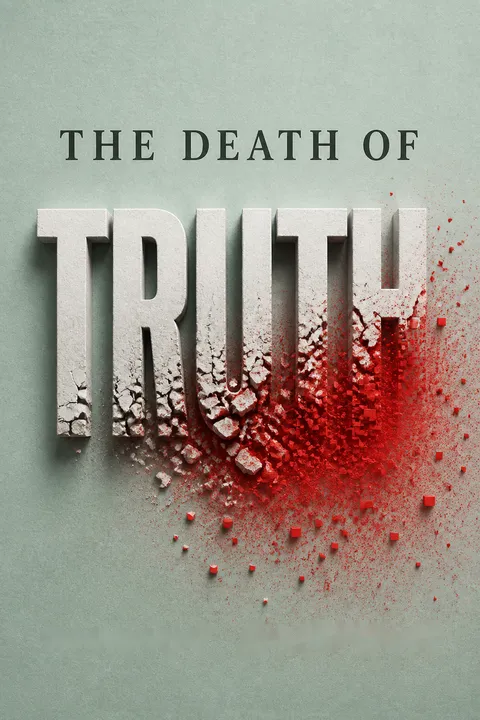


Key Takeaways
Treat shared facts as democracy’s operating system, not a partisan luxury
Democracy needs common ground. Michiko Kakutani’s central warning is that public debate cannot function when citizens no longer agree on how to establish what happened. The book calls this condition “truth decay,” a diminishing role for facts and analysis in public life. In 2017, The Washington Post counted 2,140 false or misleading claims by President Trump during his first year in office, nearly six per day. The point is not simply that a politician lies. It is that constant falsehood, when excused by supporters and repeated across media, weakens the shared basis for holding power accountable.
Facts require witnesses. Kakutani draws on Hannah Arendt’s argument that facts are fragile: they depend on testimony, records, and institutions that preserve them. Without those supports, political disagreement can become a contest between realities rather than a debate over policy.
What's striking is the book’s shift from truth as a private virtue to truth as civic infrastructure. Elections, courts, and legislatures depend on people being able to dispute interpretations while recognizing a common evidentiary record. This resembles the role of measurement standards in engineering: disagreement is productive when participants use procedures others can inspect. The limit is that “shared facts” cannot mean unquestioned deference to official sources. Institutions can be wrong or self-protective. A durable common ground therefore requires both trustworthy records and open methods for challenging them.
Test policy against evidence before deciding what you want the evidence to say
Reason is a safeguard. Kakutani traces the American ideal of rational government to founders who feared a popular leader might exploit public anger and weaken constitutional restraints. That ideal has repeatedly collided with anti-intellectual politics, which Richard Hofstadter described as a recurring style of suspicion and grievance. The book’s clearest policy example is the 2003 Iraq invasion: officials sought intelligence to support a decision already favored, while warnings about postwar security were dismissed. Army chief of staff Eric Shinseki said several hundred thousand troops might be needed; the administration rejected that estimate, and the occupation descended into disorder.
Expertise is not infallible. But treating expertise as disposable invites avoidable errors. Kakutani also points to attacks on the Congressional Budget Office after it projected that a health bill would leave millions more uninsured.
The Iraq example illustrates a basic failure of scientific reasoning: evidence becomes decoration when leaders settle the conclusion first. In decision science, this resembles motivated reasoning, where people scrutinize inconvenient information more harshly than confirming information. Institutions such as independent budget offices and professional agencies can slow that impulse by making assumptions visible. Still, expertise should not become a ruling class insulated from public accountability. The strongest arrangement pairs specialized knowledge with transparent methods, competing analysis, and elected officials who must explain why they accept or reject the advice.
Respect different perspectives without pretending every factual claim is equally supported
Perspective is not proof. Kakutani examines postmodernism, a broad set of ideas emphasizing how knowledge and language are shaped by social position. This helped expose exclusions in conventional accounts of history and made room for voices previously ignored. The danger comes when the insight that every account is partial becomes the claim that no account can be more accurate than another. The book shows how climate deniers and creationists borrow this logic to demand equal standing for views rejected by strong scientific evidence.
Balance can mislead. Naomi Oreskes and Erik Conway call one tactic the “Tobacco Strategy”: manufacture uncertainty, repeat a small number of dissenting claims, and attack the credibility of experts. News coverage that gives a fringe claim equal time with a well-supported consensus can make the evidence seem evenly divided when it is not.
This distinction is essential to pluralistic scholarship. A historian can acknowledge that archives reflect power and still compare sources, test claims, and revise conclusions. The same applies to science: researchers’ identities may influence which questions get asked, but measurements remain open to replication and criticism. Kakutani is persuasive when she condemns false equivalence, though her treatment risks making a diverse intellectual movement sound more uniform than it is. Skepticism toward authority is often warranted; the practical test is whether a claim can survive scrutiny, not whether it challenges consensus.
Treat fear as political evidence, not as a substitute for factual evidence
Feelings shape choices. The book links the rise of subjectivity to a culture increasingly centered on personal experience, self-display, and opinion. In a 2016 exchange, journalist Alisyn Camerota challenged Newt Gingrich’s claim that crime statistics supported a grim picture of America. Gingrich answered that people felt frightened, even though the FBI figures did not support the claim. Kakutani’s point is not that fear is imaginary. It is that fear can be sincere and politically important without proving the factual story used to explain it.
Personal truth has limits. Kakutani also discusses “moi criticism,” academic writing that foregrounds the author’s personal position and experience. Such context can reveal blind spots, but it cannot by itself establish claims about history, science, or public policy. Testimony and evidence answer related, but different, questions.
A useful distinction from psychology is between emotional validity and factual validity. A person’s fear is real as an experience; the explanation for that fear remains a claim that can be checked. Good public reasoning does not mock emotion, because fear may reveal unmet needs or distrust. It also does not let emotion settle questions about crime rates or policy effects. This approach avoids two mistakes at once: treating statistics as a complete account of lived experience, and treating lived experience as a replacement for evidence.
Challenge vivid political stories with evidence before they become your reality
Narratives steer perception. Kakutani argues that political actors can use repetition, spectacle, and familiar fears to make a false picture feel true. Before entering politics, Donald Trump promoted himself through branding and publicity, including pretending to be a publicist who praised him by phone. Historian Daniel Boorstin called staged events created mainly to attract coverage “pseudo-events.” The technique is old; television and social media make it faster and more pervasive.
Check the story underneath. Trump portrayed the United States as overwhelmed by violent crime and dangerous immigrants. The book notes that crime was less than half its 1991 peak and that studies found immigrants less likely to commit violent crimes than U.S.-born citizens. These comparisons do not settle every policy question. They do show why a dramatic slogan should prompt verification rather than instant belief.
Stories are powerful because they compress complexity into characters, causes, and a moral. Cognitive research on availability shows why vivid examples can feel more representative than statistical patterns: memorable events are easier to retrieve, so people may mistake ease of recall for frequency. Journalism can counter this by placing anecdotes beside base rates and explaining uncertainty. But raw numbers can also obscure variation between places and groups. The best correction preserves the human stakes while testing whether the story is typical, selective, or misleading.
Defend precise language and public records from leaders who redefine both
Words shape what can be known. Kakutani uses Victor Klemperer’s account of Nazi Germany to show how repeated language can alter political judgment. Klemperer documented words once used as criticism that became praise under Nazi rule, as well as inflated numbers repeated until they lost meaning. The book also draws on Orwell’s Newspeak, a fictional political vocabulary designed to narrow thought by limiting meaningful distinctions.
Records resist revision. Kakutani describes government websites changing after Trump took office: climate information disappeared, references to renewable energy were altered, and federal employees were told to remove references to previous policy priorities. Renaming the issue does not resolve it; deleting the evidence makes scrutiny harder. Clear language, archives, and independent journalism help expose the gap between a public claim and the underlying record.
Language is not merely a wrapper around political action. Labels guide attention, assign blame, and determine which comparisons seem reasonable. In law and science, stable definitions make disagreement tractable because participants can identify exactly what is being claimed. Yet political language also changes legitimately as societies reconsider inherited categories. The warning, then, is not to freeze vocabulary, but to demand clarity about changes: who is redefining a term, what evidence supports the new meaning, and whether public records remain available for inspection.
Cross your information silos before party loyalty becomes your identity
Division is designed socially. In The Big Sort, Bill Bishop describes Americans increasingly clustering in communities that share their values and tastes. Digital media intensifies that pattern by recommending material based on prior clicks. Eli Pariser calls the resulting personalization a “filter bubble”: a customized information environment that can hide unfamiliar or challenging views. Kakutani also cites surveys showing intense partisan hostility, including large shares of Democrats and Republicans who described the opposing party in moral or character terms.
Groups can harden beliefs. Cass Sunstein explains that like-minded groups may move toward more extreme positions when members hear limited dissent and seek approval from one another. Once a political group treats outsiders as untrustworthy by definition, contrary evidence is easier to dismiss. Deliberately seeking credible reporting beyond one’s usual sources can interrupt that cycle, though exposure alone does not guarantee open-mindedness.
The important insight is that polarization is not only about policy distance; it is also about belonging. Social identity research shows that people often defend group membership as fiercely as a factual belief, especially when disagreement feels like rejection. Cross-cutting information can help, but simply placing opponents in the same room may intensify conflict if the setting rewards performance over listening. Useful encounters need shared rules, specific questions, and a reason to cooperate. The goal is not to erase political differences, but to make disagreement less dependent on caricature.
Stop rewarding online systems for outrage that spreads faster than verification
Attention is the business model. The early web promised broad access to information, but commercial platforms increasingly optimize for engagement. The more strongly a post provokes awe, anger, or anxiety, the more likely users may be to share it. By 2017, about two-thirds of Americans said they received at least some news through social media. During the final months of the 2016 campaign, top fake election stories on Facebook drew more engagement than leading stories from major news organizations.
Popularity is not accuracy. Platforms tailor feeds using personal data and rank material partly by what attracts attention. That can reward sensational claims and make a false story appear widely accepted. The book’s account of Cambridge Analytica describes political ads tailored to narrow audiences, sometimes invisible to the broader public. Such targeting makes it harder for citizens to see the same claims and challenge them together.
The platform problem is structural, not simply a matter of individual gullibility. When revenue depends on attention, content that provokes a reaction can outcompete careful explanation even without a coordinated propaganda campaign. This parallels other markets where private incentives produce public costs. Users can slow the spread by checking provenance before sharing, but platform design matters too: ranking systems can favor reliability, disclose political targeting, and reduce artificial amplification. Engagement is measurable; informed judgment is harder to quantify, which is precisely why it needs deliberate protection.
Recognize propaganda overload as an attack on attention, trust, and civic stamina
Confusion can be the objective. The RAND report Kakutani discusses calls a Russian tactic the “firehose of falsehood”: a rapid, repeated flow of claims that may mix lies, partial truths, and invented evidence. It does not need to persuade everyone of one story. It can make people exhausted, cynical, and unsure whether any account deserves belief. Russian operatives used fake American profiles and groups online to amplify existing conflicts, including opposing protests arranged around the same issue.
Cynicism serves the propagandist. Trolls and political actors can frame cruelty as a joke, spread competing stories, and then deny responsibility. Kakutani’s answer is not a magic fact-check. It is civic resistance: preserve independent journalism, protect checks and balances, support education, and refuse to treat lying as harmless merely because it comes from one’s own side.
This is a more subtle model of propaganda than persuasion alone. Communication research distinguishes changing minds from setting agendas, flooding attention, or undermining confidence in any shared source. When every claim appears equally dubious, people may withdraw rather than investigate, which benefits actors who face scrutiny. Fact-checking remains necessary, but it cannot answer every falsehood at the speed it is produced. Durable defenses also require trusted local institutions, transparent reporting practices, and citizens who can tolerate uncertainty without collapsing into “nothing can be known.”
Analysis
Kakutani’s book is an urgent, essay-driven account of how political falsehood becomes socially plausible. Its strongest move is to treat truth not as a philosophical abstraction but as a chain of practical dependencies: people need reliable records, institutions that can test claims, language that retains meaning, and media systems that do not confuse visibility with credibility. The historical examples, from Nazi linguistic manipulation to the Iraq intelligence failure, give the argument depth beyond the Trump presidency. They show that democratic erosion can proceed through repeated habits of excuse, not only through a single dramatic seizure of power.
The account also links forces that are often examined separately: anti-intellectualism, self-focused culture, partisan sorting, commercial incentives for attention, and foreign disinformation. Its most useful distinction is between legitimate skepticism and nihilism. Distrust can correct institutional failure; the claim that all accounts are equally constructed can instead disable judgment. Similarly, plural perspectives can repair historical exclusion without requiring false equivalence between evidence-backed conclusions and manufactured doubt.
The book’s breadth is also its limitation. Because it assembles cultural history, political commentary, technology, and philosophy, some causal links are more suggestive than demonstrated. The treatment of postmodern thought risks compressing distinct academic arguments into a single pathway toward political relativism, even though the book acknowledges that postmodernism is not itself responsible for contemporary propaganda. Its evidence is a 2018 snapshot, and its emphasis on Trump can make longer-running institutional and economic causes feel secondary.
Still, the governing lesson holds: democracy needs disagreement, but disagreement becomes ungovernable when citizens lose any shared method for deciding what happened. Protecting truth therefore means more than correcting individual lies. It means maintaining the conditions under which claims can be tested, records preserved, and officials held to account.
Review Summary
Reviews of The Death of Truth are largely positive, averaging 3.79/5. Many praise Kakutani's literary breadth and her ability to contextualize modern political dysfunction within broader cultural trends. Admirers call it essential, timely, and brilliantly researched. Critics, however, note it preaches to the choir, offering little new insight for those already informed. Some find it too short and lacking analytical depth, while others take issue with her treatment of postmodernism as a root cause. Most agree it is a dense, thought-provoking read, despite its perceived one-sidedness.
People Also Read


Glossary
Truth decay
Declining role of evidenceA term used by the RAND Corporation for the diminishing role of facts and analysis in American public life. In Kakutani’s account, it describes a wider condition in which emotion and opinion displace evidence, citizens lose agreement about basic events, and public debate becomes harder to ground in a common record.
Paranoid style
Politics driven by conspiracyHistorian Richard Hofstadter’s term for a political outlook marked by heated exaggeration, suspicion, and conspiratorial explanations. Kakutani uses it to describe recurring episodes in American politics in which groups who feel dispossessed imagine threats to their culture or way of life and distrust ordinary political bargaining.
Postmodernism
Knowledge shaped by perspectiveA broad family of ideas that questions universal explanations and emphasizes how knowledge is shaped by language, culture, and social position. Kakutani notes its role in exposing exclusionary accounts, while warning that an extreme version can be used to claim that factual conclusions have no greater standing than competing stories.
Moi criticism
Criticism centered on selfA form of academic criticism that foregrounds the writer’s personal identity, experiences, and position as part of the analysis. Kakutani traces its growth alongside feminist and multicultural scholarship, where personal testimony could reveal neglected perspectives, but cautions that personal experience alone cannot establish every broader claim.
Pseudo-events
Events staged for coverageDaniel Boorstin’s term for events planned or encouraged mainly so they will be reported or reproduced. Kakutani connects the idea to celebrity publicity and political spectacle: the event’s media value can matter more than its underlying importance, allowing an image of significance to substitute for substantive action.
Filter bubble
Personalized information environmentEli Pariser’s term for the narrowed view of information that can result when search engines and social platforms personalize content using a person’s past activity. Kakutani argues that such systems may repeatedly confirm existing interests and beliefs while making unfamiliar or challenging perspectives less visible.
Tobacco Strategy
Manufacturing doubt about evidenceA tactic described by Naomi Oreskes and Erik Conway in which interested groups use a small number of dissenting voices to cast doubt on a strong scientific consensus. The strategy repeats claims of uncertainty, attacks credible researchers, and can make a marginal position appear to deserve equal weight.
The firehose of falsehood
High-volume propaganda modelA RAND Corporation description of propaganda that spreads rapidly, repeatedly, and through multiple channels without regard for consistency or truth. The approach can combine accurate details with distortions and inventions, aiming not only to promote a preferred story but also to confuse audiences and exhaust their ability to evaluate claims.
Wooden language
Rigid political vocabularyA politically engineered style of language associated with authoritarian systems. Kakutani describes its use of abstraction, repetition, formulaic claims, and moral divisions between good and evil. Such language can make official statements sound inevitable while discouraging concrete questions about evidence, responsibility, or contradictory facts.
Hyperreal
Simulation preferred over realityA concept associated with Jean Baudrillard for a condition in which simulations or fabricated representations become more compelling than ordinary reality. Kakutani uses it to frame the way media spectacle and invented narratives can blur the distinction between an event and its image, until the image shapes how people interpret the event.
Download PDF
Download EPUB
.epub digital book format is ideal for reading ebooks on phones, tablets, and e-readers.








