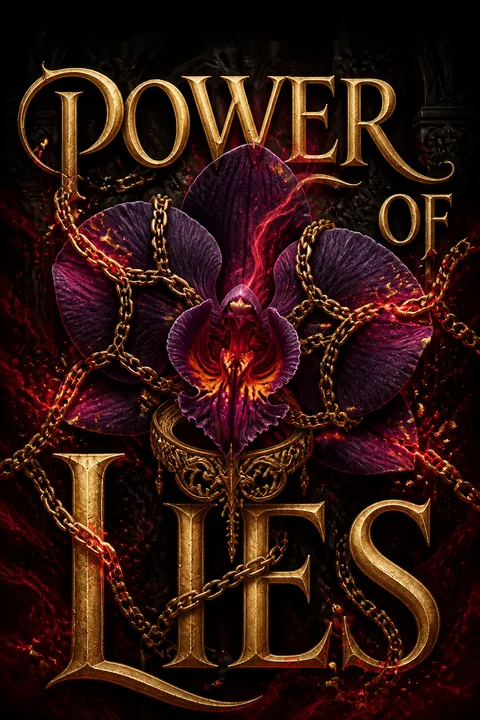


Plot Summary
Kurkevy Falls at Dawn
An Adevian mage called the Jackal smashes Kurkevy's walls and sends his soldiers to seize its people. Jaeda, a dark-skinned sex worker who has survived two earlier conquests, is dragged from hiding with the other women and children.
In the temple cells, the town's wives blame her for their danger, treating her as a convenient outsider even while soldiers separate mothers from their sons. Jaeda knows that a mage will need emotion to replenish the power spent destroying the city, and that fear and pain may be the fuel.
When the women turn on her, she offers to be the sacrifice instead, hoping to spare a frightened young woman from the Jackal's attention. She has no reason to trust her captors, but she refuses to meet terror by surrendering her sense of choice.
The opening makes Jaeda's social exclusion concrete before it makes her exceptional. Respectable women have treated her as disposable, yet their crisis reveals that marriage has not protected them from being treated as property. Jaeda's offer is neither a sudden display of saintliness nor a denial of her own survival instinct. It is a calculation made by someone who understands how power consumes the vulnerable, and who chooses the risk she can control. Her self-possession begins as a practical defense, then becomes the moral quality that will distinguish her from the mages who rule through appetite.
The Jackal Chooses Orchid
The prisoners are washed and presented naked before the Jackal, whose beauty and magical presence make the women helplessly desire him. Jaeda recognizes the danger to the gentle young woman beside her and steps between them, drawing the mage's attention onto herself.
The Jackal names himself a Lord of Lust, not a mage who feeds on pain, and explains that he must replenish the power spent taking the city. He places a gold collar around Jaeda's neck and claims her as his Chosen, promising wealth for service and punishment for betrayal.
He then turns the townsmen who once paid for Jaeda's body into an audience for her pleasure, making the spectacle both a source of power and a public reversal of who controls her. The girl is spared, but Jaeda is now the Jackal's possession in the eyes of the city.
The scene gives Jaeda agency within a coercive arrangement without pretending that the arrangement is free of coercion. She chooses to redirect the Jackal's attention, but she cannot choose the larger circumstances that made the choice necessary. The collar makes ownership visible, while the Jackal's insistence on desire rather than pain complicates the moral categories Jaeda has learned to expect from mages. Her survival skill becomes labor with political consequences: she can influence the people watching her, even as the ruler claims her as an object.
A Whore Finds Allies
Treb, the Jackal's imposing assistant, helps stage Jaeda's first public performance and later frees her from the makeshift restraints. He introduces himself as a former sex worker and explains that the Jackal's Chosen are meant to provide willing desire, not fear.
Jaeda tells him her chosen name, Jade, and accepts a gold-sheeted bed, meals, and a bath while remaining wary of the chain on her ankle. She learns that Treb's work, like hers, depends on reading another person's needs, and their frank conversation makes the temple feel less like a brothel run by a conqueror and more like a workplace with rules.
The Jackal removes the brand on her hip, restoring her skin but not rewriting her past. Jade decides she wants to keep earning her place rather than live on his charity.
Treb's recognition matters because it comes from shared experience rather than pity. He does not ask Jade to become respectable before he treats her as a person, and she does not mistake comfort for freedom. The brand's removal offers a symbolic correction, but Jade's choice to define herself remains hers; the magic cannot undo the history that gave the mark its meaning. Her insistence on work over charity is both economic and psychological. She wants a role she can perform, negotiate, and leave, not another form of dependence disguised as generosity.
Desire Becomes Government
The Jackal uses Jade's public performances to win the merchant guilds' cooperation, then brings the nobles into the temple. When one lord dismisses her as a whore, the Jackal binds him to the stone and demands an apology, making respect for Jade part of his rule.
Jade reads the nobles' rivalries and identifies Lord Trom as a likely rebel and Lord Rabin as a more useful civic voice. She also helps the Jackal bargain with Madam Shira, head of the Whores Guild: registered workers will serve at the temple, part of their earnings will support the city, and the guild gains legal standing and protection.
The Jackal offers nobles discreet access and promises to prevent conception in the temple. His rule takes shape through a blend of threat, pleasure, and practical concessions.
Jade's knowledge of sex work becomes political expertise, not merely a talent for pleasing clients. She understands what the nobles conceal, what the guild needs, and how status can be bought with access to desire. The Jackal's authority is effective because he offers more than violence: he creates bargains that make cooperation useful. Yet the arrangement remains morally unstable. He uses women's bodies as instruments of governance, even as he grants workers protections and legitimacy. Jade's participation gives her leverage, but it also places her inside the machinery she is helping to build.
The Cuff's Hidden Cost
As Jade grows closer to the Jackal and Treb, she notices the gold cuff on the mage's wrist and the pain he hides whenever he approaches sexual intimacy. When the Jackal's body begins bleeding during a private encounter, Jade learns that his former teacher, the Spider, is a mage who feeds on pain and steals part of Xel's power through the cuff.
Xel cannot safely pursue penetration because the spell punishes him, while emotional attachment gives the Spider another way to hurt him. The revelation reframes the Jackal's public appetite as both survival and captivity.
Jade offers to help him find a way around the curse, and Treb admits that Xel's distance is not indifference. The three begin treating their arrangement as a partnership rather than a ruler using two convenient bodies.
The cuff is an instrument of bodily control and a lesson in how domination can extend beyond visible injury. The Spider has made ordinary intimacy dangerous, so Xel's apparent detachment is partly a survival strategy. Jade recognizes that the punishment targets his capacity for attachment as much as his body, an insight grounded in her own experience of being reduced to a sexual label. Their developing intimacy is therefore not a simple escape from power. It is a risky attempt to create care inside a system designed to make care exploitable.
A Soldier in the Garden
Treb takes Jade through Kurkevy to choose a dress and pay off her contract with the Whores Guild. In the street, he invites a handsome soldier to kiss her; the man's gentleness surprises her, and she later learns his name is Civan.
When Xel begins rebuilding the city's walls, Jade feels the force of magic from several blocks away and nearly collapses. Holding Treb's gold chain steadies her until Xel places stronger protections in her jeweled collar. Civan is assigned as Jade's guard, and their conversations in the temple garden deepen into an intimate connection.
Xel and Treb notice that she reacts to magic in ways ordinary people do not, but Jade has no explanation yet. Her new life offers pleasure and safety, while also exposing a power she cannot understand.
The garden and the rebuilt wall connect restoration with perception. Jade is not simply being protected from a dangerous world; her body is registering forces that others cannot sense. Civan's kindness offers a different kind of attention from Xel's seductive authority and Treb's practiced intimacy. It leaves room for affection without requiring Jade to surrender her independence. The moment also shifts the story's central question. Jade's survival has depended on reading people, but now the environment itself is speaking to her through magic.
The Spider Takes Jade
The Spider arrives at the temple with his catalyst, Dorin, and tests Xel's attachment to Jade by having Dorin strike her. Xel performs indifference, but the Spider takes Jade through a magical gate to his own temple, where Dorin tortures her and the Spider demands that she kill Treb.
Jade tries to turn pain into pleasure, remembering the tenderness her friends have shown her, but the injuries become too severe to deny. Rather than betray Treb, she slams her head against the stone until she loses consciousness.
The Spider attempts to erase her memory, then returns her to Xel believing the spell worked. It has not. Jade remembers enough to recognize her home and her friends, and Xel heals her wounds while apologizing for failing to stop the attack.
The torture sequence tests the limit of Jaeda's practiced adaptability. Her professional skill has always involved reshaping an encounter to survive it, but pain this extreme cannot be made harmless by reframing it. Her choice to risk death rather than harm Treb marks a change from solitary self-preservation toward reciprocal loyalty. The scene also makes Xel's powerlessness tangible: he can heal her body after the fact, yet cannot protect her while the Spider controls the conditions. Memory becomes a contested form of agency, not just a record of what happened.
An Orchid Made of Magic
After Xel tends Jade's injuries, she returns to the bed with him and Treb, and the emotional force of their intimacy fills the room with visible magic. Xel realizes Jade is a mage, an unprecedented discovery in a world where all known mages are men.
He explains that another mage could bind her and control her power, so he offers a protective bond with one crucial safeguard: Jade alone will be able to release it. She questions his motives, remembering how the Spider deceived him, then accepts because the bond gives her a way to protect herself and may eventually help free Xel.
The ritual leaves an orchid-shaped mark on her skin. Jade then learns to cast a spell that prevents pregnancy, giving her practical control over her body through magic of her own.
Jade's new power does not erase the asymmetry between her and Xel; it makes the question of consent more explicit. She asks what the bond will cost, tests whether she can leave, and accepts only after Xel gives her the means to revoke it. The invisible mark later becoming a visible sign of magic also links identity with choice: she is not merely labeled by others, but begins to authorize the terms under which she is connected. Her first spell protects the bodily autonomy that her work and past have repeatedly placed at risk.
Civan Crosses the Line
When a hired performer, the Fawn, insults Jade in the throne room, Civan throws her out and refuses to let her demean his charge. His protective anger releases a surge of power so strong that Xel recognizes him as a catalyst, a person whose emotion can strengthen a mage. Civan is linked to Jade, not to Xel, and the discovery explains why his presence has felt unusually important to her.
Xel gives Civan a protective gold band and promotes him from guard to Jade's closest protector. Civan also begins confronting his attraction to men, especially Xel and Treb, while Jade and Treb make clear that desire need not cancel his connection with her. The group becomes more intimate, but Xel's curse still makes closeness with him dangerous.
Civan's catalyst bond is revealed through an act of protection, not a planned magical test. The distinction matters: his power emerges from caring about an insult to Jade, suggesting that emotional capacity is not a secondary trait in this world but a source of agency. His conflict over attraction is shaped by social shame, while the temple offers a space where desire can be explored without being turned into a test of masculinity. The group expands by negotiation rather than possession, though Xel's curse continues to impose real limits.
Compassion Takes Shape
As Jade practices magic and helps prepare Kurkevy for the Jackal's departure, she and Civan discover that his protective concern produces the strongest response in her. She identifies her power as compassion, an emotion unlike the simpler forces that fuel the other known mages.
Xel gives her his journal of magical experiments, and she studies how to defend herself, conserve power, and use it without becoming dependent on it. Meanwhile, the four grow more comfortable sharing sex, trust, and affection, though none can resolve every fear about the future.
Jade begins to suspect that Xel's bond may be safe but still keeps a plan of her own. Her compassion gives her strength, yet she understands that kindness can also make her vulnerable to people who want to use it.
The discovery of compassion changes the metaphysics of the story without turning kindness into effortless virtue. Jade's power arises from attention to another person's welfare, but that same openness risks exhaustion and exploitation. Her study of Xel's journal gives her a counterweight: care must be paired with knowledge, boundaries, and the ability to refuse. The romance similarly rejects the idea that intimacy requires exclusive ownership. Their bond is built through repeated acts of protection, negotiation, and repair, though Jade's caution shows that trust remains a practice rather than a permanent state.
Kurkevy's Golden Ball
On the final night of Kurkevy's month-long ritual, the Jackal transforms the temple for a ball attended by nobles, merchants, guild leaders, artists, and their spouses. Jade leads the opening dance, presenting the city's sensual traditions as a source of power rather than shame.
Xel names Lord Rabin as governor and parliamentary representative, choosing a noble who has challenged him openly instead of rewarding the most obedient conspirators. Madam Shira gives Jade a guild token that would let her work independently, a practical recognition of her standing.
As the guests begin to mingle, the city's factions become part of Xel's magical web. Jade has helped turn a conquered town into a functioning political arrangement, though she still does not know whether she can trust the Jackal once his need for her changes.
The ball converts private appetite into civic structure. The public dance, the governor's appointment, and the guild's token all show different kinds of recognition, none reducible to romance. Xel's political method remains manipulative, but he rewards frankness in Rabin and gives Shira's workers a legal foothold. Jade's performance is both labor and self-authorship: she chooses how to use the skills society has stigmatized. The unresolved distrust is important. Public success does not settle the private question of whether power can be shared without eventually becoming ownership.
The Spider Crashes the Feast
The Spider arrives at the ball demanding a sacrifice and pulls Jade away from Madam Shira. To protect her secret, Xel claims Jade is merely a second catalyst, while she pretends to remember nothing of the earlier torture. Dorin threatens to cut her, and Civan wounds him with a thrown knife before Treb joins the fight.
Xel and the Spider trade spells as Treb and Civan battle Dorin, whose arm and torso are badly cut. The Spider withdraws through a gate with his injured catalyst, but not before inflicting a magical punishment on Xel and draining him. Jade reaches the Jackal as he collapses, with the city's newly completed web unable to protect him from the master who still controls his cuff.
The battle depends on a lie that protects Jade while making Xel's apparent indifference credible to the Spider. Performance, previously used to manage desire and politics, becomes a tactical disguise. Yet the fight also exposes the limits of the group's new solidarity: they can wound Dorin and force the Spider to retreat, but they cannot prevent Xel's punishment. The victory is therefore partial and costly. Jade's secrecy is not deception for personal advantage; it is an intervention made necessary by a system in which revealing attachment gives the stronger mage a weapon.
The Name Breaks the Cuff
Jade uses compassion magic to restore the power the Spider drained from Xel. On the ritual's final night, she agrees to be with him, and in the intensity of their intimacy she speaks his true name. The Spider's cuff splits apart. Xel asks Jade to bind him to her before the Spider returns, and she marks him with a jackal-shaped spell while he chooses not to resist.
The bond makes them partners rather than master and captive, but the coming threat forces a separation. Xel and Treb stay behind to face the Spider, while Civan leads Jade out of Kurkevy with Xel's journal, a purse that continually supplies gold, and a tracking bracelet. She rides into the desert, carrying both new freedom and the fear that the men she trusts may not catch up.
The cuff breaks through an intimacy that the Spider designed to make impossible, and through a name that carries both vulnerability and power. Jade's magic does not simply overpower Xel; he permits the bond, transforming a structure of coercion into a negotiated mutual dependence. The escape prevents the scene from becoming a neat resolution. Jade gains knowledge, resources, and a companion, but loses the daily presence of Treb and Xel just as trust has become real. Her freedom is therefore unfinished, measured not by possession of power alone but by the relationships she hopes to recover.
Epilogue
Civan brings Jade to Shahwa, an isolated desert refuge populated by sex workers, former soldiers, pirates, and people escaping the laws of respectable towns. When she sees a man raising his hand against a woman in a brothel, Civan steps between them, and Jade uses her magic to make the room understand that the old rules are over.
She claims the town as the Dark Orchid and warns its residents that abuse will carry a cost. The people who once survived by hiding now have a mage willing to defend them, though Jade has only begun to build the power and community her new role will demand.
Shahwa is a deliberately imperfect refuge. Its residents have not escaped exploitation simply by leaving respectable society; they have gathered where law is weakest and abuse can flourish unchecked. Jade's arrival changes the local balance because she can enforce a boundary rather than merely endure its violation. Her threat echoes the Jackal's public authority, but her stated terms center protection of the vulnerable instead of extracting emotion for conquest. The ending is not a finished liberation. It is the beginning of a political experiment in which Jade must prove that compassion can govern without hardening into another form of domination.
Analysis
Power of Lies turns sex, magic, and political rule into different versions of the same question: who gets to decide what another person is for? Jade begins in a society that treats her body as proof of her inferiority. The Jackal's court seems to reverse that judgment by rewarding her skill, yet he initially makes her a prized instrument in his conquest. The novel keeps that contradiction active. Jade gains money, protection, and influence, but her freedom becomes meaningful only when she can negotiate the terms of her work and refuse the identities others impose on her.
The magical system gives emotion material consequences. Lust can rebuild a wall or bind a city, while pain lets the Spider sustain a hierarchy of masters and servants. Jade's compassion is not presented as softness detached from power. It becomes a source of defense, healing, and eventual political authority. But the story also recognizes its danger: compassion can be harvested, just as lust can, if the person feeling it lacks boundaries or knowledge. Jade's study of magic and insistence on a bond she can break are therefore as important as her willingness to care.
The relationships among Jade, Xel, Treb, and Civan challenge the assumption that sex, love, loyalty, and exclusivity must arrive as a single package. They negotiate intimacy around Xel's curse, Civan's shame, and Treb's history of exploitation. Their chosen family is not free of jealousy or fear; it becomes possible because they speak honestly and repeatedly protect one another. The title's lies are both weapons and shelter. Jade performs the identity others expect to conceal her power, while the people closest to her learn that survival sometimes requires concealment without surrendering truth. The book's central hope is that intimacy can become a counterforce to domination, but only when care includes consent, knowledge, and the right to leave.
People Also Read


Characters
Jade
The self-made survivorBorn Jaeda on the Taren Islands, Jade is a dark-skinned sex worker whose survival has depended on reading people and adapting to places that treat her as an outsider. She is practical rather than sentimental, but her pragmatism does not erase her capacity to protect others. Years of being judged by her sexual history have made her fiercely unwilling to accept respectability as the price of dignity. She values work, choice, and honest pleasure, and distrusts generosity when it resembles ownership. Her sharp observation lets her read both clients and political rooms. Beneath her defensive humor is a growing desire for companionship that does not require her to deny who she is.
Xel
The seductive conquerorKnown publicly as the Jackal and Lord of Lust, Xel is a powerful Adevian mage who conquers cities and then uses desire to bind their people to his rule. His beauty and supernatural allure make him difficult for others to resist, so he relies on Treb's candidness and his own political intelligence to see beyond the reactions he provokes. He is capable of cruelty as performance and tenderness in private, often using the first to conceal the second. Xel wants to survive his master's control without becoming the same kind of predator. His central conflict is that the intimacy he longs for can also become a weapon against him.
Treb
The candid catalystTreb, formally Trebar, is Xel's longtime assistant, political right hand, and a former sex worker. Broad, funny, and physically affectionate, he understands the difference between performing pleasure and feeling safe enough to enjoy it. His past includes sexual violence and addiction, experiences that make him alert to shame in others without reducing them to their wounds. Treb is loyal to Xel but not submissive to him; he challenges the Jackal when authority becomes callous. With Jade, he offers companionship grounded in directness and shared work. His humor is not a mask for indifference but a way of keeping difficult truths speakable.
Civan
The protective soldierCivan is a disciplined soldier in the Jackal's army, trained to protect people and wary of becoming a tool of a mage. His calm manners conceal strong emotions and a deep discomfort with social expectations around masculinity and desire. He approaches Jade first with unusual gentleness, then becomes her guard and confidant. Civan's instinct is to act when someone is threatened, even when action risks his position. He is attracted to women and men, but has learned to distrust that part of himself. His relationship with Jade gives him room to be honest without requiring him to abandon his self-respect or his duty.
Hian
The controlling mentorHian, called the Spider, is Xel's former teacher and a mage who draws power from pain. He treats magical apprentices as resources to be controlled, and his authority rests on the threat of punishment as much as on the knowledge he possesses. Hian is strategic enough to use affection and dependency against those he commands, but his appetite for power makes him mistake compassion for weakness. His conflict with Xel is personal and political: he expects obedience from the young mage whose abilities help sustain his own influence.
Dorin
The Spider's enforcerDorin is Hian's catalyst and enforcer, a physically imposing man who carries out the Spider's punishments. He uses force with confidence, treating other people as instruments in a contest between mages. His role makes the Spider's power immediate and bodily, rather than merely political. Dorin is not a subtle manipulator; he is the threat sent to make disobedience hurt.
Madam Shira
The guild's shrewd matriarchMadam Shira leads Kurkevy's Whores Guild and approaches the Jackal as a business partner rather than a supplicant. Mature, experienced, and alert to the difference between a flattering offer and a useful one, she negotiates for her workers' wages, legal standing, and freedom to operate. She understands that social respectability is often a weapon used against sex workers, but she is skilled at turning the guild's practical value into leverage.
The Fawn
The hired performerThe Fawn is a courtesan hired to entertain the Jackal and is also a capable singer and dancer. She understands how to use performance to attract attention, but she is ambitious about status and recognition. Her place in the temple shows how quickly a professional role can become entangled with rivalry and the unequal attention of powerful men.
Lord Rabin
The outspoken nobleRabin is a Kurkevy noble who speaks more frankly than the other lords and is willing to challenge the Jackal's assumptions. He is neither a simple loyalist nor an eager rebel; he weighs power against the practical needs of the city. His cautious honesty makes him a useful counterpoint to nobles who hide their ambitions behind polished manners.
Ustas
The artists' spokesmanUstas represents Kurkevy's performers and speaks for artists who are admired for their work but dismissed as socially inferior. He understands that art and survival are closely linked, and that people on society's margins often see its hypocrisy more clearly. His negotiation with the Jackal centers on whether the entertainers can gain recognition without surrendering control of their work.
Narsi
The careful body artistNarsi runs a body-care salon after leaving sex work. She is skilled, self-protective, and wary of men who mistake a professional service for an invitation. Her past has left her with clear boundaries, and her interaction with Jade and Treb shows how trust is built by listening to those boundaries rather than testing them.
Cal
The reliable guard captainCal is a trusted officer in the Jackal's army who checks Civan's record and helps arrange Jade's protection. He is a practical link between the mage's political authority and the soldiers who enforce it. His reliability matters because the people around Jade need more than magical promises to keep her safe.
Plot Devices
Emotion-fed magic
Feeling becomes forceMages in this world draw power from specific emotions, including lust, pain, joy, and sorrow. Their abilities can alter bodies, buildings, weather, and political circumstances, but using magic consumes emotional energy and can create dependence. The Jackal's power radiates desire, while the Spider's power converts suffering into strength. This system makes private feelings consequential and gives the story a way to show how a ruler's emotional appetite can become public policy.
The Chosen's web
A city becomes a reservoirAfter conquering a city, the Jackal uses a Chosen to connect its people and social groups to a magical web. Each day's ritual binds another portion of the town, eventually channeling the emotion that fuels him toward the temple and storing power for later use. The process also creates a political timetable: merchants, nobles, soldiers, workers, and entertainers must all be brought into the arrangement. The ritual turns a month of sexual performance and negotiation into the infrastructure of the Jackal's rule.
Catalyst bonds
Emotion gains an amplifierA catalyst intensifies and channels a mage's chosen emotion, making it easier to gather and use magical power. Catalysts are not simply servants; their connection to a mage brings practical benefits and a deep dependence that can resemble friendship, partnership, or love. The bond can protect its participants, but it also makes them vulnerable to anyone who understands how to exploit their attachment. Jade's relationships with Treb and Civan reveal different forms of this connection.
The Spider's cuff
A name becomes a keyA gold cuff lets the Spider punish Xel and take part of the power he generates. The bond is designed to resist ordinary attempts at removal, making Xel's body a site of ongoing control. True names matter to magical protections, so knowing or speaking one can alter the balance between mage and master. The cuff establishes the central threat: Xel must find a way to break a system built to make his dependence permanent.
The jeweled collar
Protection worn as adornmentThe Jackal's gold collar is both a visible claim over Jade and a magical protection that shields her from the overwhelming presence of magic. Gems can hold spells, allowing the collar to carry additional protections as Jade learns to cast for herself. Its changing meaning tracks her circumstances: it begins as an imposed mark of ownership, then becomes equipment she can use to protect her body and exercise her own power.
The Dark Orchid Series











Download PDF
Download EPUB
.epub digital book format is ideal for reading ebooks on phones, tablets, and e-readers.








