

Plot Summary
Moore Dies Behind School Doors
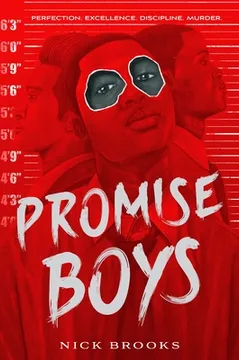
Kenneth Moore, founder and principal of Washington’s Urban Promise Prep, is found shot dead inside his school. Police announce that three students, J.B. Williamson, Trey Jackson, and Ramón Zambrano, are suspects.
Promise presents itself as a place that turns overlooked boys into college-bound young men, but its silent corridors, rigid rules, and demerit system leave many students feeling watched rather than supported.
In the first accounts, witnesses describe each suspect through their own fears and loyalties: J.B. is a quiet, imposing student; Trey is a joking basketball star with a reputation for trouble; Ramón is an ambitious cook whose family has gang ties. The boys’ different lives are already being compressed into one question: which of them killed Moore?
The opening makes the murder public before its causes are known, so the reader enters a community already producing judgments. The three boys are not introduced as a unified suspect group in their own eyes. They become one in the eyes of police, school staff, and rumor. That compression is central to the mystery: individual histories are treated as interchangeable evidence of danger. Promise’s polished image sharpens the contradiction. A school built to promise opportunity has taught its students that obedience is safer than being understood.
J.B. Risks Being Tender
J.B. Williamson spends his school days trying to keep his head down at Promise, where strict routines offer little room for mistakes or emotion. Outside school, he wants a future beyond Benning Terrace and has quietly fallen for Keyana Glenn, a neighborhood girl wary of trusting boys. When J.B. sees an older teenager harassing her, he steps in and knocks the boy down with one punch.
Keyana is pleased rather than frightened, and at her home J.B. shares the rhymes he has written for her. Their first kiss becomes a promise of a real relationship. They arrange to meet at Promise’s playoff game the next afternoon, giving J.B. something joyful to anticipate just as the school’s rules and his temper are closing around him.
J.B.’s attraction to Keyana is not simply a romantic subplot; it gives his self-control a personal purpose. He wants to be a protector, but the first way he knows how to protect her is through violence. His poem offers a different kind of courage: he exposes an unpolished, private part of himself and risks rejection. The contrast matters. J.B. can imagine a future built on tenderness, yet his surroundings reward physical force and punish small deviations. His hope is genuine, but it is still learning how to live beside anger.
A Pistol Enters Promise
The night before the murder, Trey Jackson misses his bus after a teacher forces him to repeat a hallway routine. His uncle, Terrance, hits him for coming home late, so Trey is afraid to explain what happened. The next morning, Trey accidentally takes Terrance’s nearly identical bag and discovers a pistol inside as he reaches school.
Rather than risk missing the playoff game by going home, he slips in through a basement entrance and hides the weapon in a bathroom toilet tank. J.B. later finds it there and, afraid another student might use it, moves it into a ceiling space without telling anyone. After school, Moore confiscates J.B.’s phone and threatens expulsion; J.B. spits at him, is shoved into a locker, and punches the metal in rage.
The weapon enters the school through a mistake made under pressure, then becomes more dangerous because both boys decide that disclosure is riskier than concealment. Trey fears punishment at home and the loss of basketball; J.B. fears being branded a snitch. Each acts with a protective intention, but neither has a safe adult relationship in which to ask for help. Moore’s confrontation turns discipline into humiliation, and J.B.’s blow against the locker gives the institution a visible mark of anger while hiding the quieter chain of fear that produced it.
Ramón’s Dream Gets Trampled
Ramón Zambrano dreams of opening a restaurant with his grandmother, Doña Gloria. On the morning of the murder, his cousin César encourages him to join the Dioses del Humo, but Ramón refuses and speaks instead of building a legitimate business.
The storefront he imagined owning has just been sold to another chef. César is then arrested outside Promise after Moore alerts police, leaving Ramón frightened for his cousin and resentful of the principal. To raise bail money, Ramón brings extra pupusas to school.
Moore catches him selling them, throws the food away, takes his earnings, and shuts down the student cooking initiative Ramón helped create. Humiliated and desperate, Ramón contacts Ever, a gang member, about retaliation against Moore, setting a dangerous possibility in motion.
Ramón’s anger grows from a collision between two forms of care. He wants to help his family through food and work; César offers protection through the gang. Ramón believes education and a restaurant can create choices, but Moore’s actions repeatedly turn his labor into contraband and his language difficulties into a reason to shame him. The school’s claim to reward initiative rings hollow when it destroys the very initiative Ramón built. His contact with Ever is alarming precisely because it conflicts with his identity. He is not naturally drawn to violence, but he is running out of ways to protect the people he loves.
The Detention Room Empties
On the afternoon of the playoff game, Trey is barred from playing and assigned detention after an explosive confrontation with Moore at lunch. He had threatened Moore while being publicly mocked, giving witnesses an apparent motive to remember.
Trey repeatedly asks to use the bathroom and eventually leaves; J.B. and Ramón remain behind, while the school resource officer goes looking for him. Ramón also gets out to make a call. A gunshot sends staff and students rushing toward Moore’s office. When they arrive, Moore is dead and all three boys are gone from detention.
Under his desk lies Ramón’s hairbrush, an object that seems to link him directly to the crime. The scattered movements leave no clean alibi, and each boy’s attempt to solve a different immediate problem now looks like evidence against him.
The murder’s timing turns ordinary acts into incriminating gaps. Trey’s bathroom requests, Ramón’s phone call, and J.B.’s presence in detention are all legible to investigators as opportunity, but the boys do not know one another well enough to explain each other’s movements. The brush is especially potent because it is concrete, intimate, and apparently simple to interpret. The school’s surveillance culture promises that every action can be recorded and judged, yet at the decisive moment it offers no reliable account of what happened. Absence becomes evidence, and evidence becomes a story before anyone knows the truth.
Rumor Convicts Them First
Police question the boys separately, pressing J.B. about his fight with Moore, Trey about his threat, and Ramón about César and the Dioses del Humo. Their silence and frustration only strengthen the detectives’ suspicions.
J.B.’s mother believes him but grounds him; he realizes that clearing his name may require finding the real killer. Trey is suspended and kept under his uncle’s watch, while his mother returns from New York to support him.
Ramón’s grandmother performs a cleansing ritual and insists she knows his character, though Ramón hides that he had contacted Ever. Witnesses add their own assumptions: some blame J.B.’s size, others Trey’s jokes, and others Ramón’s cousin. The boys are released to their families, but public suspicion follows them home.
The interrogations expose how quickly institutional suspicion borrows the language of personal history. A Black boy’s anger, a Latino boy’s family connection, and a teenager’s visible humor become ready-made explanations for murder. The adults around the suspects do not all behave alike: J.B.’s mother offers trust, Trey’s uncle has trained him to expect punishment, and Ramón’s grandmother protects his gentleness even as he withholds the most dangerous truth. Their differing forms of care shape what each boy can admit. Being released does not restore freedom; it leaves the boys to carry the accusation without access to the authority that could settle it.
Keyana Builds a Case
Keyana has seen J.B. flee the school covered in blood after the shooting, but she still doubts the rumors that he killed Moore. When he visits her, he explains that he missed their game because Moore detained him and admits he found the hidden pistol, then moved it to the ceiling.
Keyana, who hopes to become a defense lawyer, starts gathering information from girls connected to Promise students. Meanwhile, Trey hacks into a school discipline system and discovers that Solomon Bekele was assigned detention but served it in Dean Hicks’s office instead.
Trey confronts Solomon, who explains that Hicks remained with him until security summoned the dean away. Ramón, grieving César’s arrest and guilty about contacting Ever, tries to stop any retaliation he may have helped set in motion.
The investigation begins when the boys stop treating their reputations as the only available evidence. Keyana’s listening and memory become practical tools, while Trey’s access to school records lets him challenge the official timeline. Their methods differ, but both are responses to a system that has already interpreted them. J.B.’s disclosure about the gun is incomplete, yet it is the first step toward a form of trust that does not depend on pretending he made no mistakes. Ramón’s attempt to halt retaliation shows another kind of investigation: he must confront not only who killed Moore, but what his own anger may have invited.
Three Suspects Share Notes
J.B., Keyana, Trey, Ramón, and their friends meet at a park, where suspicion initially makes cooperation feel like a trap. They compare what they know: Ramón’s brush was found in Moore’s office, J.B. had a public fight with the principal, and Trey had threatened him.
Then they read threatening emails sent to Moore, which promise consequences for a wrong he supposedly refused to fix. The wording could belong to a student, staff member, or donor.
The group considers Stanley Ennis, a wealthy Promise benefactor who argued with Moore, along with Mrs. Hall, the school’s absent teacher, and Omar Rosario, a quiet student worker last seen near Moore’s office. Ramón agrees to investigate cafeteria worker Nico Martinez, whose gang history may connect him to César.
The park meeting is a fragile shift from self-defense to shared inquiry. Each boy has a reason to distrust the others, and each has information that could make him look worse. The anonymous emails widen the field beyond student anger and introduce the possibility that an adult’s grievance has been mistaken for youthful violence. The group does not achieve instant solidarity; they negotiate it through concrete disclosures and cautious assignments. Their work also unsettles the school’s hierarchy of credibility. Students who are routinely treated as unreliable become the people capable of noticing what adults have overlooked.
Omar’s Locker Holds a Shadow
J.B. and Keyana sneak into Promise after dark, open the basement door, and check the ceiling where J.B. hid the pistol. It is gone. They then break into Omar’s locker and find dozens of photographs tracking Moore around school and at home, along with a denied request for Promise Fund money to buy photography equipment.
A security guard nearly catches them, forcing them to flee with only some of Omar’s papers. The images make Omar look like a stalker and the rejected application suggests a grievance, but neither proves murder.
At the same time, Trey follows Nico Martinez and sees him accept an envelope from Ever. The clues deepen the conspiracy of suspicion: a hidden weapon, a student’s private archive, and a gang-linked exchange all seem capable of pointing toward a different culprit.
The break-in gives the boys evidence, but not yet knowledge. Omar’s photographs can be read as obsession or as documentation; the denied request can suggest motive without establishing one. The missing pistol is equally double-edged: it confirms that someone found what J.B. hid, but cannot identify who took it. Their unauthorized search mirrors the school’s own methods of control, yet the students use it to challenge an official account rather than enforce one. Every clue increases danger while resisting a single interpretation, forcing the investigators to tolerate uncertainty instead of turning suspicion into a verdict.
The Gun Changes Hands
A news report says the bullet came from a pistol matching one registered to Trey’s guardian. Ramón, fearing Nico is involved, follows him to an alley and confronts him. Nico explains that Ever’s envelope was a down payment on El Rincón, a neighborhood restaurant César hoped to buy, not payment for a killing. He urges Ramón to follow the money moving through Promise.
At a second meeting, Trey admits he accidentally carried his uncle’s pistol to school and hid it in the bathroom. J.B. confirms that he found the gun and moved it into the ceiling, but neither boy knows who removed it. The confessions expose how their separate efforts to conceal the weapon created a trail that points toward Trey while leaving the crucial question unanswered.
The gun becomes a test of whether the boys can distinguish responsibility from guilt. Trey is responsible for bringing it into school, and J.B. is responsible for hiding it, but neither fact makes either boy the shooter. Ramón’s investigation also revises his picture of the neighborhood: Nico’s money is tied to a legitimate purchase, and César may have been imagining a way out of gang life. Their willingness to admit damaging facts does not erase their mistakes; it makes collaboration possible. Nico’s advice shifts the mystery from street retaliation toward the institutional money that Promise has kept opaque.
Omar’s Film Exposes Hicks
The boys question Omar, who explains that his photographs and recording were part of a school project about Moore. He had discovered that Promise Fund grants were routinely denied to students, while one supposed student, Stan Lee, repeatedly received money.
The name points toward Ennis, and Trey overhears Ennis and interim principal Wilson Hicks discussing the fund and the need for police to find the gun. At Moore’s memorial, Omar screens a chronological film of Promise.
Its final images fade to black, but the camera’s audio preserves an argument between Moore and Hicks: Hicks demands a share of money Moore has been stealing, then a gunshot sounds. The recording identifies Hicks as the shooter. As he tries to stop the screening, the accused boys stand, followed by the Promise students.
The film transforms Omar’s invisibility into a form of witness. Because adults treated him as equipment rather than a person, he was able to record a history they did not intend to make public. The visual montage charts Promise’s changing atmosphere, while the audio punctures its memorial language with the actual conflict beneath it. Hicks’s demand for a share reveals that the school’s moral vocabulary concealed a private financial arrangement. The students’ collective act of standing is not a substitute for proof; the recording supplies proof. Their gesture changes who is visible in the room, from suspected boys to a community refusing the imposed story.
Epilogue
A year later, Promise has been reorganized under Principal Carla Hall. The blue hallway line is gone; students have formed a government and research committee, and the school has added mental health support, expanded English-language services, and a sensory room.
Ramón receives a full scholarship to culinary school, Trey plays college basketball while studying computer science, and J.B. travels with Keyana before they begin college. The school newspaper marks their innocence and their futures, while the revised student promise makes room for joy, mutual care, and dignity. Promise has not become perfect, but its students now have a voice in deciding what it should become.
The epilogue measures change not by a sentimental claim that the institution has healed, but by concrete revisions to its daily machinery. The removed blue line, student government, mental health staff, and expanded language support counter the practices that once made obedience the school’s chief lesson. The boys’ futures also resist the narrow roles assigned to them: Ramón cooks, Trey studies computing, and J.B. composes music. Their success is not presented as proof that the old system worked. It follows from a community finally making room for different kinds of intelligence, ambition, and care.
Analysis
Promise Boys treats the murder mystery as a contest over who is allowed to define a young person. The school’s discipline system translates conduct into permanent-looking records: a joke becomes defiance, anger becomes evidence of violence, and a family connection becomes proof of criminality. The boys do make mistakes, including hiding a gun and contacting a gang member, but the book refuses the false choice between acknowledging those mistakes and recognizing their innocence. Their culpability is not interchangeable with the guilt of the person who killed Moore.
The school’s public image depends on a clean story of rescue: disciplined students, high scores, generous donors, and a visionary principal. The investigation reveals that this image is maintained by controlling students while leaving adult power less visible. The boys’ inquiry reverses that gaze. They examine school records, follow money, compare memories, and treat one another’s testimony as evidence. Keyana’s legal curiosity and Omar’s camera work become forms of civic agency, not exceptional talents detached from their communities. Both emerge from careful attention to people whom authority overlooks.
The novel also distinguishes protection from control. Terrance’s severity, César’s gang loyalty, Moore’s paternal discipline, and the boys’ own impulses to defend one another all begin in claims of care. Yet care becomes harmful when it denies the person being protected a voice or a choice. The alternative is not perfect behavior but reciprocal trust: the boys admit damaging facts, listen across suspicion, and stand together when the evidence is public. The revised school promise matters because it changes both language and practice. Joy, mental health, student participation, and different futures become part of what success can mean. The ending does not suggest that achievement alone repairs injustice. It shows that a community can begin to repair itself when young people are treated as witnesses to their own lives, rather than problems to be managed.
People Also Read


Characters
J.B. Williamson
The guarded lyricistJ.B. is a tall, quiet student from Benning Terrace who writes rap lyrics and hopes education can help him build a life beyond his neighborhood. At Promise, his silence is often mistaken for menace, while his size makes adults and peers expect violence from him. He is not naturally eager to fight, but he has learned that his body can end a threat faster than words can. His feelings for Keyana draw out a gentler, more self-conscious side, and his desire to protect people can sometimes outrun his judgment. J.B.’s central tension is between being seen as dangerous and wanting to become someone who can choose how to respond.
Trey Jackson
The joking basketball starTrey is a gifted basketball player who uses jokes to keep attention moving away from his fears. After moving from the Bronx to live with his strict uncle, he struggles with Promise’s rules and with adults who read his humor as defiance. He wants to be valued for more than his talent on the court, but basketball is the clearest place where teammates tell him he matters. His mother’s addiction and his uncle’s harsh discipline complicate his sense of safety and trust. Trey’s quick wit is both social armor and a genuine source of warmth; beneath it is a teenager trying to keep a future open.
Ramón Zambrano
The aspiring neighborhood chefRamón is an ambitious student who cooks pupusas with his grandmother and imagines opening a restaurant. He is close to his family, especially Doña Gloria, and cares for his cousin César even while rejecting the gang life surrounding him. Learning English and navigating Promise’s expectations can make him feel exposed; when anxious, he sometimes loses access to the words he needs. Cooking gives his hands a purpose and turns family knowledge into a possible livelihood. Ramón wants to believe that education creates choices, but his anger at injustice can pull him toward the very risks he hopes to avoid.
Keyana Glenn
The watchful future lawyerKeyana is a thoughtful, observant student at Anacostia High who has learned to be cautious around boys after being betrayed by someone she trusted. Her interest in law comes from a desire to defend people who are too easily judged or ignored. She is drawn to J.B., but she does not confuse attraction with certainty; she needs to see whether his promises match his actions. Keyana’s attention to details, social networks, and shifts in behavior makes her an effective investigator. She brings both affection and skepticism to the search, helping the boys work together without asking them to pretend that trust comes easily.
Kenneth Moore
Promise’s exacting founderMoore founded Urban Promise Prep to give boys whom other schools had failed a chance at academic success. He is polished, charismatic, and committed to visible results, but his version of care depends increasingly on control, correction, and public discipline. His insistence on perfect uniforms, silent halls, and measurable achievement shapes the students’ days as thoroughly as the curriculum. Moore’s stated ambition is to build young men capable of success; his methods leave teachers and students debating whether discipline can still be care when it makes no room for vulnerability, difference, or failure.
Wilson Hicks
The principal’s enforcerHicks is Promise’s dean of students and Moore’s close colleague. He enforces the school’s routines, confronts students who break them, and presents himself as a practical defender of the institution. His authority rests on order and on his proximity to Moore, which gives him considerable influence over students and staff. Hicks is attentive to rules, status, and the school’s public image. His position places him at the intersection of the school’s stated mission and its private decisions, making him an important figure in how Promise operates.
Omar Rosario
The unseen school videographerOmar is a quiet student worker who handles photography and video projects for Promise. His habit of staying in the background means adults often speak freely around him, while classmates may mistake his reserve for oddness. He is interested in making images and pursuing creative work, and he pays close attention to the school’s public presentation. Omar’s position gives him access to events that more visible students might miss. His silence is not the same as passivity; he is observant, patient, and alert to the gap between the story an institution tells and the evidence it leaves behind.
Stanley Ennis
The influential school donorEnnis is a wealthy donor whose contributions support Promise’s programs and basketball team. He enjoys visible influence and expects his money to give him a voice in school decisions. His interest in the school mixes philanthropy, ambition, and a desire to see his investments produce public results. Students notice that he can be generous while also making them feel like part of a project. His relationship with Moore reveals how private donors can shape a school’s priorities even when they do not hold formal authority.
Terrance Jackson
Trey’s former Marine uncleKnown as Uncle T, Terrance takes Trey in after his sister struggles to care for him. A former Marine, he relies on strict schedules, discipline, and physical authority because those are the tools he learned to trust. He believes he is preparing Trey for a world that offers Black men little margin for error. His care is real, but his methods often make Trey afraid to admit mistakes. Their relationship shows how protection can become another source of pressure when fear is mistaken for guidance.
Doña Gloria
Ramón’s protective grandmotherRamón’s grandmother is a Salvadoran cook who shares recipes, work, and daily rituals with him. She sees food as both a livelihood and a way of keeping family and culture alive. Her belief in Ramón is steady, particularly when school records and neighborhood rumor make him look suspect. She wants education to open doors for him, but she also understands the emotional cost of being treated as an outsider. Her protection sometimes becomes silence about dangers she fears he cannot safely face.
César
Ramón’s gang-affiliated cousinCésar is Ramón’s older cousin and a leader among the Dioses del Humo. He cares deeply about Ramón and sees the gang as a source of protection in a neighborhood where vulnerability can invite danger. Their bond includes affection and conflict: César wants Ramón close, while Ramón hopes to build a life through cooking and education. César’s worldview is shaped by survival and loyalty, making it difficult for him to imagine the alternatives Ramón pursues.
Magdalena Peña
Ramón’s perceptive cousinMagdalena, often called Magda, is César’s younger sister and Ramón’s close cousin. She understands the strain César’s choices place on the family and tries to remain available without pretending she can control him. Her bond with Ramón is affectionate and direct; she can challenge him while still making space for his fears. Magda notices the ways family members are forced into parental roles and wants the people she loves to have options beyond constant vigilance.
Luis
Ramón’s loyal best friendLuis is Ramón’s longtime friend and a student involved in Promise’s kitchen initiative. He is sociable, loyal, and willing to accept personal risk to help Ramón raise money for César’s bail. His basketball connections make him useful in gathering information, but his value to the story is also emotional: he knows Ramón beyond rumor and reputation. Luis’s easy humor helps restore a sense of ordinary friendship when the murder investigation threatens to consume every conversation.
Brandon Jenkins
Trey’s basketball teammateBrandon is the team’s point guard and Trey’s closest friend at Promise. Their shared rhythms on the court give Trey a rare feeling of being needed. Brandon is talented and well regarded, but the pressure of family expectations and the public attention around the team shape how freely he can support Trey once the murder investigation begins. His divided loyalties reveal how fear can interrupt even a strong friendship.
Carla Hall
The outspoken teacherMrs. Hall is one of Promise’s original teachers and among the few adults willing to challenge Moore openly. She believes students need support that accounts for how they learn, not simply stricter enforcement when they struggle. Her care for the boys is practical and outspoken, though her absences and private life leave students guessing about her circumstances. She represents the possibility of adult solidarity without pretending that one compassionate teacher can undo a whole institution.
Solomon Bekele
The careful student workerSolomon is an Ethiopian student who works in the school office and follows its rules closely. Trey’s jokes have made him feel unsafe around Trey, a fact that complicates the boys’ search for answers. Solomon is careful about what he says and where he says it, but he is also capable of quietly helping when he recognizes someone is being treated unfairly. His caution is not cowardice; it is a response to being a student with little power in a tightly controlled school.
Nico Martinez
The guarded cafeteria workerNico works in Promise’s cafeteria and has a past connection to the Dioses del Humo. His serious manner and criminal record make him easy for others to fear, especially when he is seen exchanging money with a gang member. He has tried to build a life beyond his earlier affiliations and understands how quickly a record can define a person in other people’s eyes. Nico’s advice to Ramón comes from experience with both neighborhood pressure and the importance of tracing who benefits.
Coach Robinson
The players’ advocateCoach Robinson gives Trey a place to use his talent and builds a team that can imagine competing beyond Promise. He believes in the players’ potential partly because he recognizes the obstacles that can derail it. His own past with basketball makes him protective of second chances. He sees Trey’s humor and skill as strengths, not proof that the boy is irresponsible, and tries to guide him without reducing him to his mistakes.
Mr. Reggie
The watchful school officerMr. Reggie is Promise’s school resource officer, responsible for enforcing rules and keeping students under watch. He takes his duties seriously, but his decisions can have unintended consequences when a student needs privacy or help. His guilt about leaving the detention area shows that authority figures are also vulnerable to regret, even when the institution’s rules give them more power than the students they supervise.
Ever
César’s gang lieutenantEver is a senior member of the Dioses del Humo and a close associate of César. He sees Ramón’s anger as an opening to draw him toward the gang, offering him a route to retaliation and belonging. His confidence makes him intimidating, particularly to a younger cousin who wants to protect family without becoming part of the crew.
Bando
The neighborhood gun sellerBando is a local hustler who casually shows J.B. a handgun and offers it for sale. He embodies the everyday proximity of weapons in the neighborhood, even for a teenager who wants no part of them. His brief encounter helps establish how easily a gun can enter the orbit of the boys’ lives.
Unk
The neighborhood observerUnk is an older man who rides the neighborhood bus and drifts through local spaces. People treat him as unpredictable, but he sometimes notices what others miss. His brief warning to the boys captures the value of looking beyond the obvious suspects when everyone else is eager to settle on a story.
Detective Bo and Detective Ash
The skeptical investigatorsThe detectives question J.B., Trey, and Ramón after Moore’s death. Their interviews are shaped by pressure to find a suspect, and they use each boy’s anger, family ties, and school record to test possible motives. Their methods show how an investigation can become coercive when suspicion is mistaken for certainty. They represent the legal system’s authority over the boys, but not necessarily the full truth of what happened.
Becca Buckingham
The Mercy student tutorBecca is a student at Mercy Academy who tutors at Promise and carries strong assumptions about the boys she encounters. She is quick to classify Trey and Ramón through rumor and reputation. Her confident judgments show how people can mistake a thin glimpse of someone’s life for a complete understanding.
Rachel Barnes and Tony Barnes
Promise’s worried siblingsRachel is an older sister who worries about her brother Anthony, known as Tony, and about Ramón’s neighborhood connections. Tony is a Promise student who admires Ramón’s cooking and questions how the school handles money and student opportunity. Their perspectives show how siblings can interpret the same school and neighborhood differently, with one emphasizing protection and the other noticing possibility.
Plot Devices
The Moore Method
A schoolwide control systemPromise’s routines include uniforms, silent hallways, prescribed walking lines, synchronized dismissal, and a demerit count that can only decrease. These rules give the school a polished public image and help Moore claim measurable discipline, but they also make minor mistakes highly visible and emotional reactions costly. The system is not merely background: it creates the conditions for J.B.’s confrontation, Trey’s missed bus, Ramón’s repeated punishments, and the students’ sense that an adult’s judgment can define their future. As the investigation unfolds, the method becomes a way to measure the difference between a school promising success and a school granting students agency.
Detention and the Missing Gun
A broken chain of custodyTrey accidentally brings his uncle’s pistol into Promise and hides it in a bathroom. J.B. finds it and moves it to a ceiling space, hoping to keep another student from using it. Both concealment decisions make the weapon disappear from the boys’ accounts and leave their movements around detention looking incriminating. The pistol’s registered owner and ballistic match direct suspicion toward Trey, while J.B.’s fingerprints give investigators another reason to question him. Its absence becomes a crucial mystery: who found the gun, and how did it reach the killer?
The Planted Hairbrush
False physical evidenceRamón’s grooming brush appears beneath Moore’s desk after the murder, giving police a tangible link between the student and the crime scene. Ramón had no clear explanation for its presence, and Moore had earlier taken his bag during the confiscation of his pupusas. The brush turns an everyday possession into a powerful accusation, especially because its apparent meaning fits the neighborhood rumors about Ramón’s cousin. Its placement demonstrates how evidence can be made to confirm a prejudice already in circulation.
The Promise Fund
A paper trail behind appearancesThe Promise Fund is advertised as financial help for students’ futures, while donors and school leaders celebrate the institution’s success. Omar’s denied equipment request and the records showing repeated payments to a nonexistent student expose a gap between the fund’s stated purpose and its use. This financial thread broadens the mystery beyond student motives and connects the school’s public mission to private power. Following the money gives the boys a way to investigate adults whose status initially places them outside suspicion.
Omar’s Memorial Film
A hidden recording becomes testimonyOmar assembles footage of Promise across the years into a memorial film for Moore. The sequence reveals the school’s changing atmosphere, but its decisive evidence comes from audio recorded during a confrontation outside the camera’s final images. At the memorial, the film turns a ceremonial tribute into public testimony. Omar’s position as a student worker, routinely treated as part of the office machinery, makes his unnoticed camera presence essential to uncovering what the school’s official story concealed.
Download PDF
Download EPUB
.epub digital book format is ideal for reading ebooks on phones, tablets, and e-readers.








