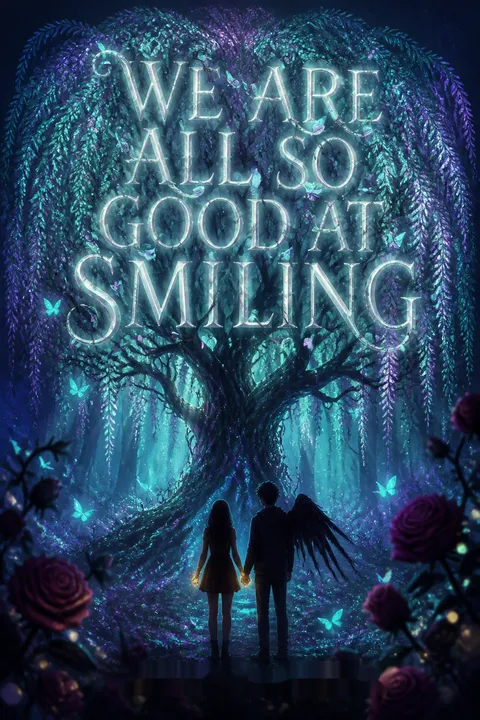


Plot Summary
Prologue
After making a detailed plan to end her life, eighteen-year-old Whimsy is hospitalized again. A Conjurer who practices Hoodoo, she feels stripped of her grounding objects and distrustful of her own memories. At sunrise, she spots Faerry, a mint-haired Fae boy, arriving alone.
They meet in group therapy, where Whimsy uses a leaf to explain that pain does not erase a person’s worth. Faerry recognizes more in her metaphor than she wants him to, and his attention unsettles her even as it offers the first hint that she may not be alone.
The hospital frames Whimsy’s depression as a crisis that needs care, not a moral failure. Her leaf analogy gives her a language for continuity: a person remains a person through illness, just as a damaged leaf remains part of its life cycle. Faerry’s arrival matters because he recognizes the gap between Whimsy’s performed composure and her distress. Their connection begins not with rescue, but with the uncomfortable experience of being seen.
A Moonstone Stirs Memory
Back on Marsh Creek Lane, Whimsy finds her bedroom unchanged and the haunted Forest still waiting beyond the cemetery. Her parents describe her older brother Cole as missing, though she carries fragments that make the family’s account feel false. Faerry, now her neighbor, visits and shares the moonstone locket that belonged to his sister, Tale.
Whimsy’s parents react as if the object should mean something to them too, then cannot explain why. Their unease sharpens Whimsy’s suspicion that her mother’s memory magic has hidden more than it healed. She adds Faerry to her Fairy Tale notebook, but neither the locket nor the boy feels like a simple new beginning.
The locket turns an ordinary introduction into a disturbance in the family’s shared reality. Whimsy’s parents are not simply withholding information; their memories have been actively reshaped, leaving her with the burden of knowing that a gap exists without having a complete account of it. The notebook offers a counter-record, a place where she can preserve what official explanations blur. Faerry’s gift becomes a small material link between two households and two histories.
Faerry Leaves Class
At Stone Ridge High, Whimsy returns to gossip, isolation, and Valda’s cruelty. When her ex, Kevin, turns her history of depression into a joke, Faerry refuses to let the class treat the moment as harmless. He walks out with Whimsy, and they skip school together.
Their uneasy drive brings flashes of her panic near the Forest and his own guarded sadness; afterward, Whimsy sees his photograph beside Cole’s and wonders what her parents have forgotten. The school suspends them. Soon Faerry disappears, leaving his phone and wallet behind. When police question Whimsy, her mother’s spell sends the officer away, but Faerry’s parents arrive with a more frightening claim: the Forest is full of Whimsy’s pain.
Faerry’s decision to leave class is both solidarity and risk. He rejects a school culture that turns mental illness into spectacle, but Whimsy’s dependence on his presence begins before either can name their shared history. His disappearance converts their private affinity into an urgent problem. The adults’ reliance on forgetting, whether through denial or magic, contrasts with Whimsy’s growing insistence that distress and memory must be faced rather than managed out of sight.
The Candy House Returns
Faerry’s parents reveal that Tale has also been missing for ten years, and they blame Whimsy’s Hoodoo for poisoning the Forest. Their accusation unlocks a childhood memory: after Cole and Tale disappeared, Whimsy’s grief transformed a water beech into a candy house at the Garden’s center. She remembers entering it and meeting the bodiless voice of Sorrow, but not yet the full truth of what happened.
When Faerry is lost inside the same place, Whimsy packs herbs, blessed dirt, and her notebook, then crosses the boundary she has avoided for a decade. The Forest traps her in its shifting paths. She finds Faerry imprisoned in Sorrow’s house, and they escape through its hearth fire together.
Whimsy’s return to the Forest makes avoidance physically impossible. The candy house draws on familiar fairy-tale danger, but its sweetness is a lure built from her own sorrow, not an external spell she can simply outwit. Her tools matter because they connect inherited Hoodoo practice to active choice: she enters with memory aids and protection, rather than relying on fear or denial. Rescuing Faerry also reopens a bond neither of them can yet fully remember.
A Road Made by Tears
In the Garden, Whimsy and Faerry face fog that traps people in distorted memories. Whimsy’s blessed dirt sends Faerry out of the Garden, but she remains inside and reaches a warped version of her grandmother’s house. There she meets Baba Yaga, who gives her protective roots and tells her to move forward barefoot, trusting the earth beneath her.
Whimsy finds Faerry again, and he chooses to return for her. They meet Anansi, a giant spider weakened by sorrow, who offers a riddle instead of a rescue. Whimsy answers that a path must be made when none exists. Anansi’s tears become a yellow brick road, giving them a route deeper into the Garden.
These encounters shift the quest from escape as a lucky discovery to escape as something made through action. Baba Yaga’s instructions ask Whimsy to use bodily grounding, while Anansi’s road turns grief into a costly but useful contribution. Faerry’s return complicates Whimsy’s fear of being responsible for others: their bond is reciprocal, not a duty she alone must carry. Folklore becomes a practical toolkit, not decoration.
Whimsy Becomes the Flood
As Whimsy and Faerry follow the road, a gang of bullies attacks them with memories from Whimsy’s notebook. She relives the racism and humiliation inflicted on a Black girl, then calls on her ancestors. Mama Wata answers, helping Whimsy transform into a mermaid and reclaim power in the water-filled Garden.
Whimsy releases the tears she had held back, sweeping the attackers away and freeing Faerry from his glass enclosure. Their next trial is an orchard where poisonous apples fall without stopping. Whimsy eats one of the black apples, changing the storm to a rain of cores and juice. With Snow White’s warning, she and Faerry choose the middle of three doors and continue.
The trial makes Whimsy’s anger legible as a response to real harm, rather than a symptom to suppress. Mama Wata does not ask her to forgive the bullies; Whimsy uses the power of her grief to stop their attack. The apple test then demands judgment under pressure, not passive endurance. Each story reshaped by Sorrow contains a danger, but Whimsy’s knowledge of stories helps her read the danger without mistaking it for an unchangeable fate.
Facing Their Saddest Selves
In a Garden of corpse flowers, fireflies attack Faerry and Whimsy, carrying them into a vision of their hospital room. Each sees a damaged double: Whimsy confronts the despair that made her want to die, while Faerry faces the scars he has hidden. Whimsy describes depression as an illness she can seek help for, not proof that she is bad.
Faerry admits that he has also been hurting, and the doubles crumble when he speaks honestly. Their next ordeal strips away their voices. Ursula’s flowers close around them, and Faerry guides Whimsy through panic by helping her steady her breathing. She manages a whisper, while he carries them onward through the Garden.
These ordeals make recovery neither instant nor solitary. The doubles force both teenagers to see suffering they had concealed, while the story refuses to treat self-harm as a spectacle or a solution. Whimsy’s recognition that depression is treatable preserves the importance of care outside the fantasy. When Ursula removes speech, Faerry’s steady presence shows that communication can continue through attention, breath, and touch, even when words fail.
The Tree's True Story
The Griot presents three accounts of the siblings’ disappearance. Whimsy and Faerry first saw Cole and Tale struggling with despair and ran to find their parents. The adults later found the older siblings’ broken bodies beneath a tree, but concealed the truth and used magic to make the deaths seem like disappearances.
The final account makes clear that Cole and Tale fell while trying to reach the younger children; they did not jump, and no one caused the fall. Whimsy and Faerry scream together, breaking the Garden’s hold. A beech tree collapses, and the owls they have followed become Cole and Tale, who assure their siblings that the deaths were not their fault.
The three versions expose how trauma can be distorted by different needs: children preserve fragments, parents attempt to protect through concealment, and memory magic hardens avoidance into a false shared story. The revelation does not erase grief, but it removes the invented culpability that has governed Whimsy and Faerry. Their scream functions as an embodied refusal to keep the truth private. The siblings’ forgiveness is not a cure; it is permission to stop treating survival as betrayal.
Sorrow's House Burns
With Cole and Tale beside them, Whimsy and Faerry return to Sorrow’s candy house. Baba Yaga gathers the figures Whimsy’s stories brought into the Garden, including Anansi, Mama Wata, Snow White, Ursula, and the Griot. They bind Sorrow with Whimsy’s bag of gathered flowers and roots, then use Anansi’s lost leg to kindle a fire fueled by High John the Conquer Root.
As the house burns, Whimsy erases Sorrow’s name from her notebook. The Garden shrinks, and its trapped inhabitants are free to leave. At home, Cole and Tale explain that they remain ghosts and will continue to watch over their siblings. Whimsy and Faerry return to their families, no longer carrying the deaths as their fault.
The final victory is collective because no single act of will can undo the Garden’s accumulated pain. Characters from Whimsy’s stories become participants in her recovery, while the notebook that once held Sorrow’s world also gives her a way to reject its authority. Burning the house does not make bereavement vanish: Cole and Tale remain dead, and the survivors still need care. What changes is the story attached to their loss, and the guilt that had made it unbearable.
Epilogue
Whimsy and Faerry rest together after returning home, his wings sheltering them as they sleep. When they wake, their friendship feels newly grounded: they agree to write down their story so it cannot be taken from them again.
Whimsy’s palms glow, and Faerry’s wings catch the light. Their greeting turns into a small ritual of recognition, a promise to keep meeting one another with honesty rather than the practiced smiles that once concealed their pain.
The ending offers renewal without claiming that trauma has been erased. Whimsy and Faerry have escaped the Garden, but they still need sleep, friendship, and help. Their decision to record what happened answers the opening’s unstable memories with chosen testimony. The repeated greeting is deliberately modest: healing appears not as permanent happiness, but as the capacity to return, recognize one another, and keep living alongside grief.
Analysis
The novel builds its fantasy from the specific mechanics of depression: repetition, distorted memory, self-blame, withdrawal, and the exhausting work of making it through a day. The Garden does not stand outside Whimsy’s illness as a separate adventure. Its creatures and tests draw on her notebook, family history, and lived experiences, giving inner pain a landscape without reducing it to a puzzle solved by courage alone.
Whimsy’s Hoodoo practice links healing to ancestors, plants, and community knowledge. The story treats those traditions as meaningful sources of grounding while also showing that magic cannot replace medical care, therapy, or honest conversation. Faerry’s presence deepens this point. He does not cure Whimsy; he offers companionship, and she in turn helps him speak about pain he has hidden. Their mutual care matters because neither has to become the other’s sole remedy.
The family’s altered memories reveal the cost of protection through denial. The adults believe that concealing unbearable truths may help children continue, but the silence leaves Whimsy and Faerry carrying guilt without explanation. The Griot’s multiple accounts restore context and correct the false belief that the younger children caused the older siblings’ deaths. Truth does not reverse loss, but it changes what survivors must carry.
The ending therefore offers neither a cure nor a promise of permanent happiness. Whimsy and Faerry leave the Garden with support, language, and a more accurate understanding of their past. Their decision to write their story answers the forces that once distorted it. The book’s hope is practical: pain is real, help is possible, and surviving a bad season is not evidence of failure.
Review Summary
We Are All So Good at Smiling is a novel in verse about clinical depression and trauma, blending magical realism with mental health themes. Readers praised its beautiful writing, unique storytelling, and powerful representation of depression in the Black community. Many found the book emotionally resonant and appreciated its hopeful tone. Some readers struggled with the abstract nature and felt the magical elements were underdeveloped. Overall, reviewers commended the author's portrayal of mental illness and the importance of the book's message, despite mixed opinions on its execution.
People Also Read

Characters
Whimsy
Conjurer of the GardenAn eighteen-year-old Black Conjurer who practices Hoodoo, Whimsy relies on nature, family traditions, and Fairy Tales to make sense of feelings that often overwhelm her. She is observant, imaginative, and fiercely protective, but depression and guilt make her distrust her own memories and judgment. Her hospitalizations show the seriousness of her illness, while her notebook reveals how storytelling helps her preserve a self she fears losing. Whimsy’s central struggle is not simply to feel better, but to accept support and separate responsibility from blame.
Faerry
Fae boy and confidantA mint-haired Fae with silver wings, flower tattoos, and a practiced charm, Faerry uses wit and confidence to cover his own depression. His parents’ insistence that he should simply recover leaves him isolated, even as he tries to notice and support Whimsy. He is cautious around forests and vulnerable to the idea that his pain makes him a burden. His growing trust in Whimsy gives their friendship a rare reciprocity: each can offer care without pretending to be untouched.
Cole
Whimsy's older brotherWhimsy’s older brother and childhood companion, Cole encouraged her to make stories when sadness made ordinary life hard to explain. He shares a close bond with Tale and is central to the family history Whimsy struggles to understand.
Tale
Faerry's older sisterFaerry’s older sister, Tale is closely connected to Cole and to the families’ shared past. Her moonstone locket becomes an important link between Faerry and Whimsy.
Whimsy's Mother
Hoodoo practitionerWhimsy’s mother, Jill, is a skilled Hoodoo practitioner who works for the government. She loves her daughter and wants to shield her from painful memories, but her power to alter memory complicates the family’s ability to face grief together.
Whimsy's Father
Worried family anchorWhimsy’s father, Jack, tries to care for her through visits, meals, and close attention. His concern is sincere, though he shares the family’s difficulty in understanding how much Whimsy remembers and how much she needs help.
Grandmother
Keeper of Hoodoo wisdomWhimsy’s grandmother teaches her about Hoodoo, plants, ancestors, and the power of stories. Her remembered guidance gives Whimsy practical tools and a sense of connection that persists when Whimsy feels unmoored.
Sorrow
Voice inside the GardenA force that grows from Whimsy’s pain and inhabits the Garden at its center, Sorrow knows how to turn memory into accusation. It offers comfort that conceals danger and presses Whimsy toward the belief that she deserves to suffer. Its power depends on isolating people inside guilt and despair.
Baba Yaga
Witch and wary guideThe powerful figure from Whimsy’s Fairy Tales appears in a version of the Garden shaped by Whimsy’s memories. Wary and unsentimental, Baba Yaga offers protection and direction while insisting that Whimsy must take the decisive steps herself.
Anansi
Spider and story keeperThe giant spider from West African folklore knows stories and tests Whimsy and Faerry with a riddle. Anansi is lonely and diminished in the Garden, yet can still offer a way forward at a personal cost.
Mama Wata
Water spirit and protectorA powerful water spirit who meets Whimsy during an assaultive memory, Mama Wata helps her recognize the strength in her own response. She is protective without demanding that Whimsy excuse those who hurt her.
The Griot
Keeper of the true accountA storyteller who preserves history, the Griot asks Whimsy and Faerry to listen to several versions of a painful event. Her role emphasizes that truth requires attention to more than one perspective.
Ursula
Siren who steals voicesA siren from Whimsy’s stories who takes away speech, Ursula turns the Garden’s threat toward panic and isolation. Her trial forces Whimsy and Faerry to communicate beyond words.
Snow White
Guide through apple dangerA Fairy Tale figure caught in Sorrow’s dangerous orchard, Snow White offers Whimsy and Faerry a warning and asks them to choose carefully among three doors.
Adze
Firefly vampire and mirrorA shape-shifting figure from Ewe folklore, Adze appears among the fireflies and reflects the suffering Whimsy and Faerry fear facing in themselves.
Tristan and Isolde
Faerry's frightened parentsFaerry’s parents are frightened by his depression and unsure how to respond to it. Their attempts to insist that he recover leave him feeling unseen, despite their underlying concern.
Valda
Whimsy's former friendA former friend who becomes a bully at school, Valda helps turn Whimsy’s illness into gossip and social exclusion.
Kevin
Whimsy's cruel exWhimsy’s ex-boyfriend, Kevin makes a cutting remark about her mental health in class, prompting Faerry to challenge the room’s indifference.
Plot Devices
Sorrow's Garden
Turns pain into terrainA magical Garden forms from Whimsy’s grief and the stories in her notebook. Its shifting trials embody the way depression can trap a person in distorted memories, self-blame, and fear. Each encounter draws on a Fairy Tale or folklore figure Whimsy knows, making the Garden both a fantasy landscape and a record of her inner life.
Hoodoo memory magic
Bends shared recollectionWhimsy’s mother can alter memories through Hoodoo, hoping to spare her family unbearable pain. The magic changes what several family members remember, but it cannot fully erase Whimsy’s fragments. This device makes memory both a supernatural force and a family conflict: protection from the past can also prevent people from understanding it.
Whimsy's Fairy Tale notebook
Gives sorrow a storyWhimsy’s notebook collects stories learned from her grandmother, her brother, and her own imagination. Its figures and settings become part of the Garden, shaping the dangers and possible guides she encounters. The notebook allows Whimsy to organize experience, but it also gives sorrow material to twist, making storytelling a tool that can both expose pain and help her resist it.
Download PDF
Download EPUB
.epub digital book format is ideal for reading ebooks on phones, tablets, and e-readers.








