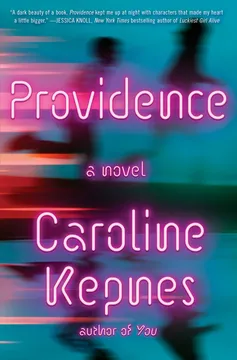


Plot Summary
The Long Way Home
Jon Bronson is an awkward newspaper-loving boy in Nashua who takes a hidden route through the woods to avoid Carrig Birkus and the other boys who torment him. His one refuge is a shed shared with Chloe Sayers, the bright friend who understands his fixations and dreams of New York. As Thanksgiving ends, Jon carries his class hamster, Pedro, through the snow on his way to school.
A former substitute teacher, Roger Blair, emerges from the brush and strikes him. Jon falls, Pedro escapes, and the boy disappears. At school, no one knows where he went. Chloe is the first to insist that the searchers look in the woods, where Jon’s daily detour has become the path into his absence.
The story begins with two forms of exclusion that look unrelated: Carrig’s public bullying and Jon’s parents’ small domestic refusals to make room for the things he loves. The shed becomes the one place where his eccentricity is welcomed rather than managed. That makes Blair’s attack more than a kidnapping; it violently removes Jon from the only relationship in which he feels fully legible. The newspaper-loving boy notices distant lives because he has little power over his own. His habit of looking outward will later shape both his search for meaning and his inability to escape the past.
Chloe Keeps Watch
Chloe searches the woods and the shed, but neither holds a trace of Jon. The town’s thin search party and a television crew’s staged crowd expose how little public attention he received while alive.
Chloe saves newspapers, draws his face, marks herself with his initials, and rejects invitations to return to ordinary school life. Her friends Noelle and Marlene try to pull her back, while Rosie Ganesh offers a real tattoo and Chloe backs away from committing a permanent mark.
Grief gradually loosens its hold: Chloe throws away the papers, kisses a boy, joins Noelle’s pool gatherings, and begins dating Carrig. She can build a life again, but Jon remains the measure against which she notices every new friendship, attraction, and version of herself.
Chloe’s grief is not a single, steady emotion. She first treats remembrance as an obligation, collecting papers and altering her appearance so Jon’s disappearance cannot be dismissed. When those rituals become unbearable, she chooses social life and desire, but neither choice erases attachment. Her movement toward Carrig is psychologically credible precisely because it does not cancel her love for Jon. Instead, it reveals how a person can seek safety in what is available while remaining bound to an absent relationship. The town’s rapid return to routine intensifies her private mourning, making memory feel like a duty she alone has been assigned.
Four Years Below
Jon’s consciousness has been trapped in a monotonous woodland nightmare, where Blair taunts him and the ground seems to wound him without leaving blood. He suddenly wakes in a windowless basement, his throat scarred by a breathing tube and his body transformed from a boy’s into a powerful young man’s.
Blair has left fresh clothes, a copy of The Dunwich Horror, and a letter claiming that Jon is free and has gained a power that will emerge gradually. Jon escapes upstairs and discovers that the room sits beneath a mall in his own town. A newspaper confirms the missing years: four have passed. He calls his mother from a nearby shop, intending to tell his family the truth, but keeps Blair’s book and letter secret.
Jon’s return reverses the usual rescue fantasy. He is physically stronger, but the missing years have left him without a usable account of what happened or a stable sense of what his changed body means. Blair’s letter contaminates freedom with authorship: Jon has escaped, yet the kidnapper insists that he has made him into something. Keeping the book secret gives Jon one small act of control, but also leaves him alone with the explanation Blair supplied. The mall sharpens the horror. Ordinary life continued directly above him, close enough to hear and smell, while he remained unreachable.
Homecoming Has Teeth
Jon’s parents welcome him into a home that has changed around his absence, including a new dog, Kody Kardashian. When Chloe sees Jon at the house, his transformed appearance overwhelms her and she faints before they can embrace. Jon’s mother also bleeds after he hugs her too tightly, and Kody later dies after sleeping beside him.
Jon conceals these incidents while reading Blair’s letter and the horror story for clues. He learns that Chloe has been dating Carrig, the boy who bullied him, and avoids meeting her in person even as they resume constant online conversations. Chloe eventually ends her relationship with Carrig, but Jon’s fear of harming those he loves keeps their renewed closeness trapped behind screens.
The homecoming offers Jon the familiar objects of childhood, but familiarity cannot restore the old safety. His body is now both evidence of survival and a source of danger he cannot interpret. The fainting, nosebleed, and dog’s death form a pattern before Jon can name it, while the adults around him classify each event as shock or coincidence. His discovery of Chloe and Carrig compounds this uncertainty with romantic injury. Instead of risking a direct encounter, Jon chooses distance and digital contact, protecting Chloe as he understands it while reproducing the abandonment she has already suffered.
Noelle at the Pool
After missing Chloe at prom, Jon goes to Noelle’s crowded pool party hoping at last to see her. Noelle blocks him at the patio door and mocks his timid attempt to approach Chloe. As Jon’s distress rises, Noelle’s nose begins bleeding; she collapses and dies before Chloe can reach her.
Jon flees, convinced that his feelings have caused the death. He leaves Nashua and settles in Providence under the names Theo Ward and Peter Feder, working as a newspaper carrier while researching Blair and the science behind his condition.
When Yvonne Belziki smiles at him on a street, she dies soon afterward. Jon becomes more guarded, but a violent attack by Brown student Krishna Pawan triggers another fatal episode and leaves Jon’s injuries healing with impossible speed.
Noelle’s death changes Jon’s fear from a private suspicion into a moral crisis. His power appears linked to emotional intensity, so tenderness and anger become equally dangerous. The resulting isolation is not simple self-pity: Jon believes distance is the only protection he can offer other people. Providence lets him disappear into aliases and night walks, but not into anonymity. Yvonne’s death and the confrontation with Krishna make the danger recur in different emotional circumstances, undermining any comforting rule about what Jon must avoid. His body’s rapid healing deepens the mystery while making survival itself feel like evidence against him.
Eggs Opens the Files
In Providence, Detective Charles DeBenedictus, known as Eggs, investigates a sudden death among young people whose hearts have failed without clear explanation. At home, he and his wife, Lo, live with the pain of their son Chuckie’s severe disability and his placement in a residential facility; Eggs avoids visiting him and buries himself in case files.
When Krishna dies after fighting an unidentified bearded man, Eggs notices that the stranger appears to leave without serious injury. He suspects a connection to earlier unexplained deaths, despite colleagues’ confidence that Krishna suffered a natural cardiac failure.
Jon, meanwhile, constructs an online identity to seek information about Blair and keeps away from people whose attention might stir his dangerous emotions.
Eggs and Jon are introduced as men who turn uncertainty into private systems. Jon uses false identities, research, and physical distance; Eggs uses files, theories, and the authority of police work. Each system offers the promise that enough observation can prevent another loss. Yet their methods also keep them from the relationships that might challenge their assumptions. Eggs’s fixation on unexplained deaths sits beside his avoidance of Chuckie, a painful contradiction: he devotes himself to solving what may be unknowable while refusing the intimate uncertainty of his own family. The parallel makes investigation a form of both care and evasion.
The Wrong Beard
Eggs follows his suspicion to a Lovecraft convention and detains a bearded attendee whose bruises resemble those of the man in security footage. Student witness Romy O’Nan cannot identify him, and the detainee proves to be a domestic-abuse victim who was elsewhere when Krishna died. Jon attends the same convention wearing a cap that identifies him with Providence.
He asks Lovecraft scholar Lynn Woo whether the monstrous Wilbur Whateley could have been saved, then sees Chloe in the hotel lobby. Chloe has followed a clue from Jon’s accidental phone call, but when she spots him outside, he recognizes her and runs. She returns to New York without reaching him; Jon reads her fear of Wilbur’s fate as another reason to stay away.
The convention briefly gathers the novel’s separate forms of longing into one public room. Eggs wants a face to fit his theory, Chloe wants the absent friend to become physically reachable, and Jon wants an answer that might make him safe to love. Each arrives with a different interpretation of the same symbols, especially Lovecraft’s monster. The wrong arrest exposes the danger of forcing a narrative onto incomplete evidence. Jon’s flight from Chloe is more painful because it follows genuine recognition: proximity confirms the bond but cannot overcome his fear. The gathering offers community to strangers while leaving its central pair more isolated.
The Kiss That Kills
After another year of avoiding Chloe, Jon meets his paper route customer, Crane Florie, when she stops him on a misty street. Her talkative warmth draws him into her home, where he kisses her and believes the absence of immediate symptoms means Blair’s influence has ended. Florie’s affection makes him imagine an ordinary future, but he leaves without explaining his fear or his past.
When he returns and kisses her again, she dies in front of him. Her cat, Muse Frontman, and fish are also dead. Jon understands that his test was reckless and that Florie trusted him without knowing the risk. He abandons Providence and moves to Lynn, carrying the guilt with him and trying to turn his condition toward a purpose.
Florie’s death is the cost of Jon’s wish to treat intimacy as an experiment with a clean result. He reads one apparently harmless kiss as proof that desire can be separated from danger, then acts on that conclusion without Florie’s informed consent. Her warmth is not a cure; it is a person placed at risk by Jon’s need to be normal. The episode exposes how trauma can distort ethical judgment even when the injured person means well. Jon’s departure is both an attempt to protect others and a refusal to face the consequences with them.
A Killer in Lynn
In Lynn, Jon studies local predators and begins killing drug dealers he believes are responsible for violence and addiction. He watches his targets carefully, telling himself that he must distinguish genuine danger from the people society has already written off. When he enters the home of Casey Waterman, he discovers five kidnapped girls in the basement.
Casey dies, and a fire and flooding bring rescuers to the house, freeing the girls. Jon sees the rescue as proof that his power can serve justice, though it does not erase the deaths he has caused. Eggs tracks a growing cluster of young cardiac deaths in Lynn and suspects a single hidden perpetrator, while his colleagues regard the pattern as coincidence and ordinary criminal mortality.
Jon’s turn toward vigilantism gives his isolation a mission and a moral vocabulary. He no longer sees himself only as a hazard; he imagines that careful research can direct his violence toward people who deserve it. The rescue of the girls appears to vindicate that choice, but it also complicates the distinction between intention and consequence. Jon did not know whom he would save when he entered Casey’s home, just as he cannot fully control whom his power harms. Eggs’s parallel investigation recognizes a pattern but risks converting vulnerable, complicated lives into a theory. Both men seek justice through certainty they do not possess.
Eggs Loses the Thread
Eggs’s secret pursuit of the bearded man costs him trust at work and time at home. He neglects his physical examinations until advanced bladder cancer forces surgery, chemotherapy, and an ostomy bag. Lo cares for him while urging him to stop investigating and visit Chuckie, but Eggs continues tracking the Lynn deaths from his files.
Their marriage buckles under his insistence that the pattern must mean something. A trip to Salem brings them close again, and Lo agrees to accompany him to Lynn, where they find no clear trace of Jon. Eggs finally admits that his search has displaced his wife and son, yet he remains unable to abandon the case. His illness makes the lost time impossible to ignore.
Eggs’s cancer gives his obsession a bodily consequence: the investigator who distrusts ordinary explanations has ignored the most direct warning his own body could provide. His treatment depends on other people’s care, a condition that mirrors the family obligations he has evaded. Lo’s frustration is not merely resistance to his theories; she is asking him to choose presence over an impossible guarantee of explanation. Their brief recovery in Salem shows that intimacy remains available, but it requires Eggs to stop treating his wife as a witness to his private case. His stubbornness threatens the very life he claims to protect.
The Party and the Message
Chloe and Carrig return to Nashua as an engaged couple, but the old town reawakens the history she has tried to bury. At their engagement party, Eggs approaches Chloe and learns she has not heard from Jon for years. He follows her after she receives a message from Jon asking her to meet him at the abandoned Rolling Jack’s store inside the mall.
At Carrig’s family home, Chloe tells Carrig she is leaving; his resentment and his family’s scrutiny have made their future feel like a life she accepted to escape loneliness. Carrig does not stop her. Chloe drives to the mall, while Eggs follows in his car, convinced that the message may finally lead him to the bearded man he has been hunting.
Chloe’s decision to leave Carrig is not a simple return to a childhood romance. Her engagement has offered affection and security, but the relationship also asks her to suppress the unresolved part of herself that still searches for Jon. The message turns that private conflict into action. Eggs, meanwhile, follows her for investigative reasons, unaware that his pursuit is about to put him between an old bully and two people whose feelings he cannot yet understand. The mall links the book’s beginning and present: the place where Jon emerged from captivity becomes the place where Chloe must decide whether to face him as an adult.
Love Behind the Glass
Inside the locked sporting-goods store, Chloe finds Jon on the far side of an interior glass partition. He explains that his intense feelings can make the people near him collapse or die, and names Kody, Noelle, Florie, and others he believes he has harmed.
He stayed away because he thought distance was the only way to keep Chloe alive, not because he had stopped loving her. Chloe recognizes that his past refusals were protection rather than rejection, and tells him she loves him.
Jon returns the confession, but neither can cross the glass. Their reunion gives them honesty at last, while the barrier makes clear that love alone cannot undo the danger Blair created. Before they can decide what comes next, Carrig breaks into the store carrying a gun.
The glass gives physical form to the couple’s central contradiction: they can finally tell the truth, but truth does not make contact safe. Jon’s confession revises years of apparent rejection without erasing the pain it caused Chloe. Her answer is not a cure or a rescue; it is recognition of the distinction between his choice to avoid her and his inability to approach her safely. Their declaration matters because it ends the emotional uncertainty, not because it resolves the supernatural one. Carrig’s arrival tests whether that intimacy can survive the violence and possessiveness of the world outside the partition.
The Shot at Rolling Jack’s
Carrig forces Chloe toward Jon and fires through the glass when Jon refuses to open the door. The bullet wounds Jon, while the force of his response leaves Chloe collapsing. Eggs reaches the store and carries her to his car, choosing immediate rescue over arresting Jon. Behind him, Jon begins to recover and finds Roger Blair inside the store.
He demands a cure, but Blair insists that Jon has already been changed and offers no way back. Jon kills him, then disappears before Eggs returns with the police. At the scene, Eggs finds Blair’s body rather than Jon’s and protects what he has learned from the authorities. Chloe survives, but the reunion has ended with Jon gone again and Carrig’s violence exposed.
The climax refuses the fantasy that love can make Jon’s power harmless. Carrig’s gun turns an emotional triangle into immediate physical danger, and Jon’s attempt to protect Chloe repeats the very force he fears. Eggs’s decisive act is not solving the case but carrying Chloe out, accepting uncertainty in order to meet a concrete need. Jon’s confrontation with Blair also ends the hope that the kidnapper can simply reverse his work. His disappearance leaves the lovers separated, but this time the separation follows a shared truth rather than silence. Eggs’s concealment of Jon’s escape begins a more compassionate form of judgment.
Epilogue
Eggs later learns from Lynn Woo that the man he pursued was Jon Bronson. Jon sends him a list of the people and animals whose deaths he carries as his responsibility, and Eggs burns the letter rather than expose him. With Lo beside him, he finally visits Chuckie and sits with his son while the boy draws.
Chloe leaves Carrig, returns to painting, and builds a life in Queens. Jon settles in a rural place and remains apart from her, but they resume their daily messages and share research into his condition. They cannot yet be together in person, so their connection grows through the careful exchange of links, words, and attention.
The ending replaces cure and reunion with two smaller acts of contact. Eggs does not solve Chuckie’s condition or erase his years of avoidance; he crosses the threshold and speaks to his son anyway. Chloe’s return to painting separates her identity from the public story built around Jon’s disappearance, while Jon’s messages let them sustain intimacy without pretending the danger has vanished. The novel’s final hope is therefore neither a conventional romantic union nor a victory over trauma. It is the possibility of chosen connection under imperfect conditions, where care means acknowledging limits and continuing to reach across them.
Analysis
Providence asks what happens when a person’s strongest capacity for connection becomes inseparable from danger. Jon and Chloe possess a rare mutual understanding, but his altered body turns intimacy into a risk calculation. His silence looks like rejection to Chloe, while her efforts to build a life without him look like betrayal to Jon. Their misunderstandings are not solved by a grand revelation alone; they persist because trauma changes what each person believes closeness will cost. The novel sets Jon’s private catastrophe beside Eggs’s investigation and family life. Both men want suffering to yield a cause that can be found and corrected. Jon studies science and horror fiction; Eggs studies files, footage, and bodies. Their pursuit of explanation is partly an act of care, but it also delays harder forms of care. Jon protects people by leaving. Eggs investigates distant deaths while avoiding visits to Chuckie. The parallel suggests that control can imitate responsibility when uncertainty feels unbearable.
The recurring language of plants, hearts, newspapers, and images links the book’s supernatural premise to ordinary dependence. A parasite survives through another organism; a parent, spouse, friend, or community also shapes a life through exchange, though not always safely or fairly. Documentation preserves what absence threatens to erase, but it cannot replace contact. Chloe’s art and Jon’s saved papers therefore matter as acts of attention, not as substitutes for a shared life.
The resolution declines a clean cure. Jon and Chloe acknowledge their love, Eggs finally approaches his son, and the characters begin choosing connection without knowing whether it will repair everything. The novel’s hard-won hope rests in that distinction: love does not make danger disappear, but honesty and presence can still change what people do with the danger they face.
Review Summary
Providence receives mixed reviews, with some praising Kepnes' unique writing style and character development, while others find it confusing and disappointing compared to her previous work. The book blends elements of romance, mystery, and supernatural themes, following Jon and Chloe's relationship after Jon's kidnapping and subsequent transformation. Many readers appreciate the New England setting and Lovecraftian references but struggle with the slow pacing and ambiguous ending. Overall, opinions vary widely, with some calling it brilliant and others finding it difficult to engage with.
People Also Read
Characters
Jon Bronson
The isolated survivorJon is a shy, observant boy who finds companionship in Chloe, newspapers, popular culture, and small creatures that other people dismiss. Carrig’s bullying reinforces his sense that he is out of step with the world, while his friendship with Chloe gives him a place to be curious without shame. After a traumatic disappearance, he struggles to reconcile the person he remembers with the body and life he returns to. His instinct is to retreat when he fears he may hurt someone, even when that retreat wounds the people he loves. Jon’s attention to details can be tender and intelligent, but it can also become a private maze of theories that keeps him from asking for help.
Chloe Sayers
The searching artistChloe is perceptive, socially alert, and drawn to making images that hold what ordinary conversation cannot. She and Jon share an unusually direct friendship, one in which his attention makes her feel seen and her presence gives him a refuge from ridicule. Chloe also wants the ordinary experiences her peers value, including romance, popularity, and the freedom to leave Nashua. That divided appetite can make her seem inconsistent, but it reflects a young person trying to grow without betraying the friend who knows her best. Art becomes both a way of preserving connection and a way of discovering a self that exists beyond other people’s expectations.
Charles DeBenedictus, Eggs
The stubborn detectiveEggs is a veteran Providence detective whose instinct for patterns is both his professional strength and his private weakness. He is imaginative enough to question official explanations, but his conviction can outrun the evidence and isolate him from colleagues and family. The unresolved pain surrounding his son Chuckie gives his investigations an intimate urgency: he wants suffering to have causes that can be found and corrected. His wife, Lo, knows how easily concern becomes obsession in him. Eggs’s humor and fondness for ritual soften his roughness, but beneath them is a man afraid that accepting uncertainty means abandoning the people he loves.
Carrig Birkus
The hometown golden boyCarrig is an athletic, socially confident boy whose ease with peers contrasts sharply with Jon’s isolation. As a child, he uses that advantage to bully Jon, and he understands status as something visible and measurable. As he grows older, his attraction to Chloe is mixed with a desire to be chosen decisively, to make their relationship proof that he has won. He can be patient and generous, particularly when he believes their future is secure, but jealousy exposes how much he treats love as a contest. Carrig’s confidence is real, yet it often prevents him from recognizing the fear and vulnerability beneath his own demands.
Lo DeBenedictus
Eggs’s grounded partnerLo is a literature teacher, Eggs’s wife, and a person who can make room for other people’s pain without pretending it has an easy answer. Chuckie’s needs shape her life profoundly, and she continues visiting him even when Eggs cannot face the same step. She welcomes students into their home, finding connection and creative energy where her husband sees reminders of what their family has lost. Lo is patient, but not endlessly accommodating: she challenges Eggs when his private theories consume their marriage and health. Her love is practical as well as tender, expressed through meals, care, argument, and the insistence that a life together requires showing up.
Roger Blair
The vanished teacherBlair is a former substitute teacher and academic researcher whose eccentric manner masks a deeply troubling interest in human limits. At school, he notices Jon when other adults and students often overlook him, but his attention is intrusive rather than protective. His work draws on theories about plants, energy, and survival, and his belief in his own ideas overrides ordinary ethical boundaries. Blair represents the danger of treating another person as a project rather than a person. His disappearance leaves Jon with a body he does not understand, a cryptic book, and the burden of interpreting what Blair has done.
Noelle Moore-Schulz
Chloe’s forceful friendNoelle is Chloe’s longtime friend, a sharp, organized student who tends to speak with confidence even when her certainty hides insecurity. She tries to pull Chloe back into school life after Jon disappears, sometimes with care and sometimes with a bluntness that cuts. Her ambition and social authority make her a natural organizer among her friends, but she is not immune to fear about whether she will measure up in the world beyond high school. Noelle gives Chloe the resistance and grounding that Jon’s more affirming friendship does not provide.
Marlene
Chloe’s steady friendMarlene is part of Chloe and Noelle’s close school friendship. She is practical, often focused on the immediate problem in front of her, and less comfortable than Chloe with intense emotional conversations. Her ordinary concerns can frustrate Chloe during grief, but they also represent the everyday life Chloe is trying to rejoin. Marlene’s warmth is not dramatic; she shows loyalty through shared plans, invitations, and the willingness to let friendship resume after distance.
Chuckie DeBenedictus
Eggs and Lo’s sonChuckie is the young son of Eggs and Lo, living with severe developmental and behavioral needs that his family and doctors struggle to understand. He communicates and engages with the world differently from the children around him, which leaves his parents grieving the future they expected while trying to care for the child they have. Lo continues to visit him; Eggs’s avoidance reflects his fear of confronting pain he cannot repair. Chuckie’s presence tests the novel’s repeated desire to explain, cure, or control what may resist those efforts.
Jed Bronson
Jon’s Scottish fatherJed is Jon’s burly, Scottish-born father, a practical tradesman who drinks and retreats into music when family life becomes difficult. He understands leaving as a way to survive a painful home, having fled his own abusive father as a teenager. That history shapes the advice he gives Jon about independence, sometimes without recognizing how his words may sound to a lonely child. Jed loves his son, but he and Penny do not always know how to meet Jon’s inner life.
Penny Bronson
Jon’s watchful motherPenny is Jon’s New Hampshire mother, a direct and often exasperated woman who struggles to understand her son’s unusual interests. She worries about his safety and wants him to live in a way she can recognize, yet she also allows him his room, his newspapers, and his eccentric attachments. Jon’s disappearance leaves her with a grief that changes how she sees the family home. Penny’s care is genuine, though it does not always arrive in the language Jon needs.
Dr. Terence Meeney
Blair’s former colleagueMeeney is a biochemist who once worked with Blair on research into plant behavior and energy transfer. He is more cautious than Blair and recognizes the ethical risks in their work, though he does not prevent the harm that later occurs. Jon sees him as a possible source of answers but mistrusts his association with Blair. Meeney’s scientific explanations provide a grounded framework for ideas that remain far beyond conventional understanding.
Lynn Woo
The Lovecraft scholarLynn Woo is a lively scholar of H. P. Lovecraft who speaks publicly about the stories’ monsters and their consequences. Jon seeks her out because The Dunwich Horror has become a private map for understanding himself. She approaches the book as a work of fiction with its own moral logic, not as a manual for repairing a real person. Her interpretation gives Jon a difficult perspective on the difference between being partly human and being safe.
Crane Florie
The welcoming paper customerFlorie is a Providence newspaper customer who forms a connection with Jon before they meet face to face. Curious, talkative, and imaginative, she shares her thoughts freely and treats small acts of consideration as signs of character. Her interests include writing, the mind, popular culture, and the oddities of ordinary life. Florie’s openness draws Jon toward the intimacy he wants, while her life also makes clear that a person cannot be reduced to a test of someone else’s recovery.
Krishna Pawan
The Brown crew starKrishna, called Krish by his friends, is a Brown University rower with a strong reputation as an athlete and a generous presence in his social circle. His death becomes an early case that Eggs cannot reconcile with the official explanation. Romy’s grief over losing the possibility of a closer relationship with him reveals how much more a person’s future contains than the role others assign him.
Romy O’Nan
The observant witnessRomy is a Brown crew coxswain who watches the events around Krishna closely and becomes a witness in Eggs’s inquiry. Her small stature and position outside the rowers’ physical hierarchy make her especially attentive to group behavior. She wants her account to matter, while recognizing that grief may distort what she remembers. Her uncertainty exposes the limits of eyewitness certainty.
Yvonne Belziki
The Providence strangerYvonne is a young woman Jon notices on a Providence street. Her apparent warmth and vitality stand out to him after he has withdrawn from ordinary contact. Eggs later studies the circumstances around her unexplained death, which deepens his suspicion that several local cases may be connected.
Kody Kardashian
The family dogKody is the dog Jon’s parents adopt during his disappearance, a source of comfort to Penny and Jed. His presence becomes part of Jon’s uneasy return to the family home, where affection and fear begin to overlap. Penny’s attachment to Kody shows how the family tries to build a life around an absence that has no clear end.
Rosie Ganesh
Chloe’s art classmateRosie is an unconventional student who befriends Chloe during her period of grief and offers to help her get a real tattoo. She is frank about her own interests and expects honesty in return. Their brief friendship shows Chloe reaching for connection while still measuring every new relationship against Jon.
Stacey
Eggs’s police captainStacey is Eggs’s captain, a capable police leader and mother who insists that professional instinct must be balanced with evidence and judgment. She recognizes Eggs’s intelligence but also sees when his fixation threatens his job. Her blunt interventions provide an institutional counterweight to his private theories.
Plot Devices
The Dunwich Horror
A monster’s crooked mirrorBlair leaves Jon a copy of H. P. Lovecraft’s story with selected passages marked and a letter inside. The book gives Jon a vocabulary for fears he cannot explain, especially the question of whether a person can be partly human and still be dangerous. It also becomes a point of contact between Jon, Chloe, Lynn Woo, and Eggs, each of whom reads the story differently. Its function is not to provide a literal cure or a simple allegory. Instead, it pressures the characters to distinguish fiction’s inevitable endings from the choices and uncertainty of real life.
Jon’s emotional power
Feeling becomes physical forceAfter Blair’s intervention, Jon’s emotional intensity is linked to fatal bodily effects in people close to him, while he can recover from injuries with extraordinary speed. Because the power is unpredictable and Jon does not understand its limits, affection, fear, anger, and desire all become potential threats. The uncertainty drives his withdrawal from Chloe and others, then tempts him to use the ability against people he judges dangerous. The device makes emotion consequential without making it morally simple: Jon’s intentions do not reliably determine the harm he causes, and his attempts to help can still put others at risk.
Newspapers and drawings
Memory made tangibleJon reads and collects newspapers because they prove that countless lives exist beyond his own small town. Chloe saves issues, draws Jon from memory, and later builds an artistic career through the images she makes while trying to hold on to him. Eggs also relies on files, footage, clippings, and lists to identify patterns. These physical records measure time and preserve people who might otherwise be forgotten, but they cannot restore the person they represent. The newspapers and pictures repeatedly ask whether documenting someone is an act of care, a form of control, or both.
I Am Providence
Identity hidden in a mottoThe phrase appears on a hat worn by Jon under an assumed identity and draws Eggs toward the Lovecraft community in Providence. At first, Eggs treats the words as evidence of a suspect’s arrogance or criminal purpose. The phrase also carries Lovecraft’s association with Providence and the question of whether people make their own fate or are made by forces beyond their control. It links the detective’s investigation to Jon’s search for meaning, while showing how easily a symbol can become misleading when an observer decides what it must mean before learning who wears it.
The dodder vine
A model of borrowed lifeBlair and Meeney study the dodder vine, a parasite that draws resources from another plant, and speculate about energy transfer and human biology. Meeney considers the more extreme implications implausible, but Blair’s ideas frame the altered condition Jon experiences. The plant becomes a useful image for Jon’s fear that he survives by taking something from others, and for Eggs’s broader question about how one life can damage or sustain another. The scientific material never offers a tidy explanation. It gives the characters a way to think about dependence, power, and the ethical cost of treating another being as a source of energy.
About the Author

Download PDF
Download EPUB
.epub digital book format is ideal for reading ebooks on phones, tablets, and e-readers.








