



Plot Summary
The Harvard Outsiders
Joe Goldberg1 leaves Florida for a Harvard fiction fellowship, hoping its stipend and famous leader, Glenn Shoddy,3 will turn his finished novel into a writing career. On the first day, Joe1 feels shut out by the polished fellows and their established connections. Wonder Parish,2 a local writer with no college degree, arrives late and admits she has missed much of the literary education her classmates take for granted.
Joe1 immediately casts them as fellow outsiders and imagines they are destined to support one another. He follows Wonder2 after class, stops himself from approaching her, and instead uses the fellowship email list to find her home address. What he calls attention to her needs is already surveillance.
Joe’s longing for fellowship quickly becomes a claim of ownership. He recognizes Wonder’s isolation, but rather than ask what she wants, he invents a shared identity that makes her seem to need him. The selective warmth of the fellowship sharpens his insecurity: he reads professional status as a closed social world, then appoints himself Wonder’s rescuer. The book’s central danger begins here, not with a weapon, but with Joe treating observation as intimacy.
A Goodreads Lifeline
Joe1 watches Wonder’s2 life on her Boston street: she works at Dunkin’, buys scratch tickets for her ill father,8 and helps care for her niece, Caridad,9 while her sister Cherish7 leans on her. Wonder’s2 Goodreads reviews reveal both her generous reading habits and her stalled writing life. Joe1 remembers Ethel Rose-Baker,13 an unpublished Florida writer he once confined in his basement.
Ethel13 died there during the pandemic, and Joe1 disposed of her body in a swamp. He now signs into her account and sends Wonder2 a personal note praising her own short story. Wonder2 reads it, calls in sick, and begins writing. Joe1 believes he has rescued her, but a BMW arriving at her house, driven by Bobby Skelly,6 makes him jealous again.
The Goodreads message is a genuine encouragement delivered through a grotesque deception. Joe’s knowledge of Wonder’s obligations lets him identify what she needs, but his intervention also makes her growth part of his private design. Her response matters because she acts for herself: she chooses a day of writing over work and family demands. Joe recognizes that agency only as proof that his manipulation succeeded. The episode establishes the book’s persistent tension between care that expands another person’s choices and care that quietly claims credit for them.
Coffee Becomes Courtship
Joe1 visits Wonder’s2 Dunkin’ and tries to win her with a generous tip and a show of solidarity against a demanding customer. She warms to him, tells him about meeting the mother of fellow O.K. DeLuca,11 and discusses Ethel’s13 novel, which Joe1 pretends he knew only casually. Their messages soon become flirtatious, and Wonder2 invites him to a date at a bagel shop beside the hospital where her mother died.
She explains that her unfinished novel, Faithful, draws on her family, her mother’s illness, and her struggle to distinguish loyalty from self-erasure. Joe1 shares the premise of his own novel, Me, and their mutual candor deepens their attraction. Yet Wonder2 still has to return home to help her family.
The courtship works because Wonder and Joe briefly meet as readers and writers rather than as the roles their lives impose on them. Her account of Faithful links creative ambition to a real question: whether devotion to family can coexist with a self-directed life. Joe hears that question, but immediately interprets himself as the answer. His charm and attention are real in the moment, yet they sit beside his concealed surveillance. The relationship is therefore intimate in feeling but unequal in knowledge from its beginning.
The Empty Potluck Chair
Joe1 and Wonder2 plan to attend a potluck at Glenn’s3 house, where Joe1 hopes to impress his mentor3 and arrive with Wonder’s2 homemade casserole. She never comes. Left alone among couples and established writers, Joe1 grows convinced that Bobby6 has taken her instead.
Glenn3 praises Joe’s1 work and privately describes the fellowship as a hierarchy where less advanced writers can help stronger ones improve. He also says Wonder’s2 absence reflects badly on her prospects. Joe1 later finds Cherish’s7 social media photos of Bobby6 eating Wonder’s2 casserole with the family.
He reads the images as betrayal, overlooking the family obligations Wonder2 has repeatedly described. Glenn’s3 advice about competition and control gives Joe1 a new way to think about getting Bobby6 out of the picture.
The empty chair becomes a screen onto which Joe projects abandonment. Rather than wait for Wonder’s explanation, he treats uncertainty as evidence and converts hurt into a plan. Glenn’s candid account of the fellowship supplies an institutional vocabulary for Joe’s possessiveness: people can be ranked, used, and moved aside for someone else’s advancement. The potluck also exposes Joe’s fragile sense of belonging. He wants both Glenn’s approval and Wonder’s devotion, and when he fears he cannot have both, he begins to see violence as a practical solution.
Marbles on the Stairs
Joe1 learns that Bobby6 is expected at his late aunt Ro’s house to discuss selling it. Ro’s cluttered home, which Wonder2 described in an old story, gives Joe1 a method: he scatters marbles on the basement stairs and starts the faulty dryer to draw Bobby6 downstairs. Bobby6 falls hard, striking his head, and Joe1 leaves him unconscious, believing the injury may kill him.
That night Wonder2 appears at Joe’s1 apartment, apologizes for missing the party, and admits Bobby6 is her best friend, not a romantic partner. She explains that Bobby6 is gay and hides it from his homophobic siblings to stay close to their children. Horrified by what he has done, Joe1 calls emergency services while Wonder2 showers, then drives her to the hospital.
Joe’s scheme turns a misreading into a physical threat, but the revelation about Bobby arrives only after the harm is done. Wonder’s account recasts the supposed rival as a friend trapped by family prejudice, while Joe must confront the gap between his certainty and reality. His call for help does not erase his responsibility, and his secrecy preserves the danger. The sequence also shows how easily Joe labels intervention as love: he believes he is clearing space for Wonder even when he is endangering someone she cares about.
The Workshop Knife
After Bobby6 survives, Wonder2 and Joe1 begin a sexual relationship, and she brings pages of Faithful to the fellowship. At first, the other writers admire her vivid sex scenes and family material. Glenn3 then arrives late, cuts the session short, and attacks the draft as shapeless, self-indulgent, and unworthy of a novel.
The room follows his lead, leaving Wonder2 humiliated and ready to quit. Joe1 later visits Glenn’s3 wife, Sly Caron,4 hoping she will intervene. Sly4 reveals that she, not Glenn,3 wrote his Pulitzer-winning novel, Scabies for Breakfast, and that she gave it to him as an act of love when he could not finish his own book. Joe1 agrees to keep the secret, even as Sly4 offers to help Wonder.2
Glenn’s critique is not merely aesthetic judgment; his authority makes the room’s approval feel conditional and contagious. Wonder experiences criticism as confirmation that she does not belong, while Joe is forced to choose between protecting her and preserving access to his mentor. Sly’s confession destabilizes the fellowship’s public mythology: its celebrated literary authority depends on hidden labor and a shared lie. Joe’s decision to keep the secret reflects the same pattern he brings to romance, treating concealment as loyalty whenever truth might cost him something.
Glenn's Last Ride
Joe1 continues riding with Glenn,3 who talks about writing as a contest for control and admits that cycling has become an escape from his stalled second novel. Joe1 interprets Glenn’s3 competitive Strava habits as a weakness he can exploit. He studies the trail, stretches fishing wire across a narrow section, and texts Glenn3 to draw him into a race for a climbing record.
Glenn3 approaches at speed, lifts his hands in celebration, and removes his helmet before crossing the wire. He falls over the cliff and dies on the rocks below. Joe1 presents the death as a cycling accident, and the fellowship mourns its famous teacher. Sly4 takes over the program, while Joe1 tells himself that Glenn’s3 removal gives Wonder2 a chance to flourish.
Joe’s violence is planned as a correction to a literary injustice, but the choice also serves his need to control the people around Wonder. The cycling contest gives him a method that can masquerade as bad luck, and Glenn’s vanity supplies the final opening. Joe’s self-justification makes the death sound like a public service, even as he benefits from the disappearance of a mentor who could advance his own career. The novel links artistic competition to bodily risk, then exposes Joe’s willingness to turn metaphor into an actual trap.
The Body on Bainbridge
During Sly’s4 first meeting as teacher, the fellows discuss a new podcast about Melanda Schmid, a woman whose remains were found on Bainbridge Island, where Joe1 once lived. Joe1 knows the podcast threatens his history, but he keeps quiet. Sarah Beth Swallows,5 a thriller novelist and fellow, investigates him after noticing his connection to Bainbridge.
She lures Joe1 to her locked writing shed, incapacitates him with a gas trap, ties him up, and questions him about Melanda. Under pressure, Joe1 admits to a long catalogue of past crimes, including his role in Melanda’s disappearance and other deaths. Sarah Beth5 records the confession, then lets him go rather than report him. She keeps the tapes as leverage and as material for a book.
The podcast turns Joe’s past into a public story before anyone has proved what happened, making his fear both justified and self-serving. Sarah Beth’s investigative curiosity mirrors Joe’s own habit of studying people, but she uses research openly as a weapon. Her decision to keep him free does not make her merciful; it makes their relationship transactional. Joe is no longer the only person converting private lives into narrative material, and the threat of being written becomes as frightening to him as arrest.
The Fellowship's Second Life
Sly4 replaces Glenn’s3 severity with finger paints, exercises in play, and a second workshop for Wonder.2 The fellows praise Wonder’s2 revised pages, and she returns to writing with new confidence. Joe1 and Wonder2 grow closer, but Sarah Beth’s5 recorded confession hangs over him.
At later meetings, Sarah Beth5 hints that she wants Joe1 to kill her former boyfriend, Stephen, and offers her crime-writing expertise; Joe1 refuses. Meanwhile, Joe’s1 own manuscript waits for Sly’s4 attention, while fellow Mats10 receives a major publishing deal.
Wonder2 becomes absorbed in Faithful and resists reading Joe’s1 book, which makes Joe1 feel overlooked. The fellowship offers them encouragement, money, and a future, yet its unequal attention repeatedly turns their creative ambitions into a test of their relationship.
The reset gives Wonder a chance to work without Glenn’s public condemnation, but it does not free either writer from the fellowship’s economy of praise. Wonder can accept encouragement and still distrust the institution; Joe experiences other people’s success as evidence that his own recognition is overdue. Sarah Beth’s proposal further blurs fiction and crime, inviting Joe to become a character in her work. The section shows how artistic validation can foster growth while also feeding status anxiety, especially when intimate partners measure their worth through one another’s progress.
The Motel Six Trail
After Thanksgiving, Wonder2 stops answering Joe1 and disappears from the fellowship. Joe1 learns that Bobby6 has come out to his family and plans to leave Boston, while Wonder2 has gone with an unnamed author. Fearing Sarah Beth5 has taken her, Joe1 searches her property, then extracts from her husband Kevin14 the location of her secluded writing room: Room 224 at a Motel Six in Seekonk.
Joe1 finds Sarah Beth5 there, listening to his confession tapes, but Wonder2 is not with her. Sarah Beth5 presses him again to kill Stephen and admits her fixation on the ex who rejected her. Joe1 refuses. The encounter reveals that she has been using his history to shape a story, while his search for Wonder2 sends him toward Sly’s4 own hidden retreat.
Joe’s panic makes every gap in Wonder’s communications look like a kidnapping, but his suspicion is also rooted in a genuine imbalance of power: Sarah Beth possesses recordings that could expose him. The motel room, a humble place from Sarah Beth’s early writing life, becomes both refuge and interrogation chamber. Her fixation on Stephen parallels Joe’s possessive attachments without making their motives identical. Joe’s refusal to kill for her marks a limit, though he remains entangled in a system where secrets function as currency.
The Borrowed White Room
Joe1 traces Sly’s4 writing retreat to a wealthy family’s Cape Cod compound and finds Wonder2 living there alone to finish Faithful. They reunite, and Wonder2 reveals that agent Bernie Lapatin wants to represent her. Joe1 receives his own offer, but Bernie’s version of Me has been stripped of its reflective conversations and reshaped as erotica under the label Joe Erotic.
Wonder2 admits she read part of Joe’s1 manuscript and borrowed its image of a mouse in a house for her own pages. Joe1 accepts that she meant it as a private echo, not plagiarism. Their reconciliation restores their intimacy, while the altered manuscripts expose Sly’s4 influence over both their careers. Joe1 keeps quiet about how much he already knows of her interference.
The Cape retreat gives Wonder the solitude and resources she has never had, while Joe’s arrival collapses that space back into their relationship. Their mutual disclosures about the mouse and the agent’s offer seem to restore trust, but Joe withholds a crucial fact: he has seen Sly’s edits and knows Wonder’s work has also been changed. The professional distortion is not merely cosmetic. By relabeling Joe and rewriting Wonder, the gatekeepers translate two distinct artistic identities into marketable types, and the couple’s affection cannot by itself undo that damage.
Sly's Red Pen
Sly4 visits the Cape compound and praises Wonder’s2 career, then reveals that she and Bernie have cut Wonder’s sexual scenes and changed her family material to make Faithful more marketable. Wonder2 confronts her for rewriting the book without permission.
Sly4 also names Joe’s1 new erotic label and accuses him of breaking into her house, where he had searched her computer and found both manuscripts. Joe1 denies knowing about the changes to Wonder’s work, but Wonder2 senses that he is hiding something.
She leaves the argument furious with Sly4 and distrustful of Joe.1 Later, at a fellowship gathering, the writers criticize Sly’s4 teaching and her claim to Glenn’s3 position. Wonder2 still defends Sly,4 while Joe1 reads her loyalty as another rejection of him.
Sly’s intervention makes the costs of professional recognition visible: the books are being reshaped before their authors can decide what they mean. Wonder’s anger is justified, but her instinct to understand Sly’s grief keeps her from drawing a clean boundary. Joe, meanwhile, wants to be trusted without surrendering the information that could change Wonder’s choices. The conflict is therefore not simply between artistic integrity and commerce. It is also about whether love permits one person to decide what another can bear to know.
A Forged Last Word
When Wonder2 withdraws from Joe,1 he becomes convinced that Sly4 is the force separating them. He forges a letter in Sly’s4 handwriting, confessing that she wrote Scabies for Breakfast for Glenn3 and regretting the deception. He then enters the Cape house, finds Sly4 unconscious, and carries her into the hot tub, where she dies.
Joe1 intends the forged letter to appear as a suicide note and imagines it will expose the truth while clearing a path for his relationship with Wonder.2 He does not tell Wonder2 what he has done. Instead, he waits as she arrives at the property, still believing that the letter and the discovery of Sly’s4 body might bring them back together.
Joe’s final intervention turns his professed devotion into an act of authorship over another person’s life. He decides what Sly’s confession should say, how her death should be interpreted, and what Wonder ought to feel when she reads it. The forged letter makes his central delusion concrete: he believes he can revise events until they deliver the ending he wants. Unlike the earlier accidents he engineered, this killing offers no plausible distance between intention and consequence.
The Letter in Water
Wonder2 finds Sly’s4 body and reads the letter alone. She refuses to share its contents with Joe,1 tears it apart, and dissolves it in the hot tub, explaining that she wants to protect Sly’s4 family from a confused, painful confession. Joe1 then admits that he caused Glenn’s3 fatal cycling fall, claiming he did it for Wonder.2
She does not believe him at first, then challenges his account of love, his writing, and his assumption that she needs rescuing. Wonder2 says she loved him but cannot keep living inside his demands. She plans to contact authorities and asks him to leave. Joe1 does not kill her. He leaves, still convinced that she has misunderstood him, while she remains alive and free to act for herself.
Wonder’s refusal to hand over the letter is the decisive break in Joe’s control. She treats Sly’s final words as a responsibility, not as material he is entitled to interpret, and destroys the document before he can claim it as proof of his own story. Her confrontation with Joe does not make her morally spotless; it makes her accountable for choosing what she can live with. Their love ends not because feeling disappears, but because Joe cannot accept that devotion without obedience is still love.
Epilogue
Months later, Joe1 is free and working at Trident while Wonder’s2 novel, Faithful, has been published. She has secured a major deal but has dropped the sexual scenes she fought to preserve, and Joe1 reads the finished book as evidence that she remains constrained by family and by the industry.
Sarah Beth,5 now separated from Kevin,14 tells Joe1 that she killed her former boyfriend Stephen after Joe1 refused to do it. She offers Joe1 a cottage in Maine and a chance to keep writing, but he is still consumed by Wonder2 and their unfinished relationship. He leaves with Sarah Beth,5 carrying his secrets and the expectation that violence may again become part of his story.
The epilogue denies Joe the clean ending he has been trying to write. Wonder survives and publishes, but Joe interprets her choices as evidence that she has failed rather than as decisions he must respect. Sarah Beth’s confession confirms that his refusal did not end the cycle of violence; it merely left another person to act. Their journey north offers Joe a new setting, not a moral reset. His work as a reader and writer remains tangled with the desire to control the people whose stories he claims to understand.
Analysis
The novel makes literary ambition inseparable from the desire to be seen, then asks what happens when recognition becomes a substitute for intimacy. Joe1 and Wonder2 enter the fellowship as outsiders, but they respond to exclusion in opposite ways. Joe1 tries to master the social world through surveillance, interpretation, and intervention. Wonder2 seeks connection through reading, caregiving, and writing about the people she knows. Her generosity can blur boundaries, yet it also gives her a moral capacity Joe1 repeatedly mistakes for weakness.
The fellowship’s workshops dramatize how authority shapes artistic identity. Glenn’s3 verdict can turn an entire room against Wonder;2 Sly’s4 encouragement can restore her confidence, then her editorial control can distort the work she claims to support. Joe’s1 novel is similarly transformed for the market. These interventions make publishing more than a contest for success. They expose a system in which writers are praised, packaged, and revised according to other people’s needs. The most damaging edits occur when characters accept another person’s version of who they are.
Joe’s1 violence grows from the same error as his romance. He assumes he knows what Wonder2 needs, then treats people who obstruct his idea of her future as problems to remove. His murders are not separated from his literary aspirations: he composes motives, stages events, and expects others to read the meaning he has written into them. Wonder’s2 refusal to surrender Sly’s4 letter disrupts that authorship. By keeping its contents private, she rejects Joe’s1 demand to share control of another person’s story.
The ending offers no neat moral escape. Wonder2 publishes but remains shaped by compromises she once resisted. Joe1 survives and continues to narrate their separation as a failure of her understanding. The novel’s sharpest warning is therefore not simply that obsession is dangerous. It is that love becomes coercive when one person treats attention as proof of insight and insight as permission to decide for someone else.
Review Summary
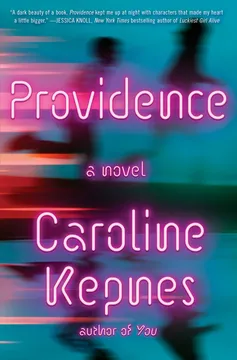
For You and Only You receives mixed reviews, with fans appreciating Joe Goldberg's return but finding the plot repetitive and slow-paced. Many readers enjoy the literary setting and cultural references but feel the book lacks the excitement of previous installments. Some praise Kepnes' writing and humor, while others criticize the length and character development. Wonder, Joe's new love interest, receives lukewarm reactions. Despite disappointment, many readers remain invested in the series and anticipate future books.
People Also Read







Characters
Joe Goldberg
The obsessive autodidactJoe is a bookseller turned aspiring novelist who sees himself as an outsider among Harvard’s credentialed writers. He reads closely, remembers details, and can be attentive in ways that feel like devotion. Those strengths are compromised by his conviction that he understands people better than they understand themselves. When he feels excluded or rejected, he converts observation into surveillance and help into control. His hunger for literary recognition runs alongside a deeper hunger to be chosen, making professional rivalry and romantic longing difficult for him to separate. Joe’s narration is witty and self-justifying, but the gap between his explanations and his actions invites readers to question his account of nearly every relationship.
Wonder Parish
The devoted local writerWonder is a Boston writer who works as a Dunkin’ manager while caring for her father8, helping her sister Cherish7, and supporting her niece9. She has never attended college, but her reading life is expansive and her prose draws on the people and obligations close to home. Her generosity is not weakness, though it can make boundaries difficult: she feels responsible for family, friends, and even people who have hurt her. Wonder wants to write Faithful on her own terms, yet she is susceptible to praise from authority figures because recognition has been scarce. Her attraction to Joe1 grows from their shared outsider status, while her strong instincts and practical loyalties repeatedly resist the identity he tries to assign her.
Glenn Shoddy
The celebrated mentorGlenn is the Pulitzer-winning novelist who leads Harvard’s writing fellowship. He is personable, competitive, and deeply invested in the mythology surrounding his success. In workshops, he can turn literary criticism into a demonstration of authority, shaping how the other fellows respond to a writer’s work. Outside class, he uses cycling and Strava rankings to manage anxieties about his stalled career. Glenn believes that writers need pressure and rivalry, but his methods can confuse provocation with instruction. To Joe1, he is both gatekeeper and potential champion, a combination that makes Joe1 especially vulnerable to Glenn’s approval and especially dangerous when Glenn turns against Wonder2.
Sly Caron
The fellowship's new teacherSly is Glenn’s3 wife, a novelist, and an experienced writing teacher who takes over the fellowship after a personal loss. She is socially perceptive and often more candid than the literary establishment around her. Her belief that praise can damage a writer shapes both her teaching and her relationships, sometimes in ways that help and sometimes in ways that overstep. Sly is caught between her own ambitions, her loyalty to Glenn3, and the consequences of choices made inside their marriage. She can be generous toward emerging writers while also being controlling about how their work should reach readers. Her mixture of care and interference makes her difficult for Joe1 and Wonder2 to read consistently.
Sarah Beth Swallows
The true-crime novelistSarah Beth is a commercially successful thriller writer and one of Joe1 and Wonder’s2 fellows. She combines professional discipline with an appetite for real-life mysteries, using research, interviews, and private spaces to feed her fiction. Her friendly manner can conceal an intense curiosity about other people’s crimes and motives. Sarah Beth is also dissatisfied with the way readers and critics classify her work, and she longs to be taken seriously beyond its commercial appeal. She recognizes Joe’s1 talent for concealment and his appetite for narrative, making their interactions a contest between two people who know how stories can manipulate an audience.
Bobby Skelly
Wonder's lifelong best friendBobby grew up across the street from Wonder2 and remains embedded in the same family and neighborhood network. His family owns the Dunkin’ where Wonder2 works, giving him both professional authority and a long personal history with her. Bobby is generous with Wonder’s2 relatives and especially close to the children in his family, but he also keeps important parts of himself private. His dependence on the familiar can look like romantic attachment from the outside, which allows Joe1 to mistake him for a rival. Bobby’s presence reflects the difference between intimacy built over time and the possessive certainty Joe1 calls love.
Cherish Parish
Wonder's outspoken sisterCherish is Wonder’s2 sister, Caridad’s9 mother, and a nail technician who lives close to the rest of the family. She is blunt, impulsive, and often in conflict with Wonder2, yet the two share the daily work of caring for their father8 and child9. Cherish’s reliance on social media makes her private judgments visible to Joe1, who uses her posts to construct a picture of Wonder’s2 life. Her loudness can obscure her practical skills and family devotion. She represents both the burdens Wonder2 carries and the genuine attachments she is reluctant to abandon.
Jerry Parish
Wonder's ailing fatherJerry is Wonder2 and Cherish’s7 father, a widower with serious health problems who spends much of his time at home. He relies on Wonder2 for practical care and clings to familiar routines, including scratch tickets and baseball talk. His expectations about marriage and family reveal the sexism embedded in the household, even when he believes he is looking out for his daughter2. Jerry’s presence makes Wonder’s2 wish for independence emotionally complicated: leaving would mean more than changing jobs or moving house.
Caridad
Wonder's young nieceCaridad is Cherish’s7 daughter and one of the people Wonder2 most consistently cares for. She appears in the ordinary routines that define Wonder’s2 home life, from school drop-offs to meals and play. Her dependence on the adults around her gives Wonder’s2 family loyalty a concrete shape, rather than leaving it as an abstract duty. Caridad also helps expose Joe’s1 tendency to interpret Wonder’s2 care as proof that she cannot choose a different life.
Mats
The imaginative fellowMats is a fellow writer who designs video games and approaches fiction through invention and genre. He is more comfortable in the fellowship than Joe1 and Wonder2, but he is not defined solely by academic credentials. His pages eventually attract serious publishing interest, intensifying Joe’s1 awareness that success is distributed unevenly. Mats’s good humor and creative confidence make him a useful contrast to Joe1, whose ambition is often inseparable from resentment.
O.K. DeLuca
The privileged fellowO.K. is a Harvard fellow whose family includes celebrated literary figures, a connection that colors how her classmates assess her work. She writes about family and botany and is accustomed to drawing on her mother’s expertise. O.K. can be defensive when her pages are criticized, but she is also capable of recognizing another writer’s strengths. Her presence makes privilege visible inside a fellowship that claims to welcome writers from varied backgrounds.
Ani Platt
The established playwrightAni is an Obie-winning playwright and one of the fellowship’s more experienced members. She is socially confident, observant, and often able to keep a workshop moving when others become guarded. Her success gives her a steadier relationship to the program than Joe1 or Wonder2 has. Ani can offer genuine support, though she also participates in the group’s shifting judgments and social hierarchies.
Ethel Rose-Baker
The unpublished novelistEthel is a Florida writer whose single novel receives little recognition during her lifetime. Joe1 remembers her as a regular at his bar and as someone whose hopes rose when she discovered Glenn’s3 work. Their relationship reveals Joe’s1 capacity to confine and exploit people while telling himself that he is helping them. Ethel’s account later becomes a means through which Joe1 tries to encourage Wonder2, though he uses it without consent.
Kevin Swallows
Sarah Beth's husbandKevin is Sarah Beth’s5 husband and the father of their adopted children. He is friendly, socially eager, and often more focused on keeping the household comfortable than on understanding Sarah Beth’s5 work. His casual disclosures help Joe1 trace Sarah Beth’s5 writing routines. Kevin’s good-natured manner contrasts with the secrecy and ambition that shape his wife’s5 professional life.
Nomi
Joe's estranged stepdaughterNomi is Joe’s1 estranged stepdaughter from his earlier life on Bainbridge Island. She is now a young adult trying to live beyond the losses and turmoil of her family history. The podcast about Melanda’s disappearance reopens painful questions around her past, while Joe’s1 distance from her underscores the damage left by his attempts to control other people’s lives.
Plot Devices
The Harvard Fellowship
A ladder with gatekeepersThe fellowship brings Joe1, Wonder2, and their fellow writers into a weekly workshop led first by Glenn3 and later by Sly4. Its stipend gives Wonder2 practical breathing room, while its prestige offers Joe1 a route toward publication and literary belonging. The program’s hierarchy also creates opportunities for favoritism, humiliation, and competition. Because the fellows depend on their teachers for feedback and introductions, professional judgment becomes entangled with personal loyalty. The fellowship is less a neutral classroom than a small ecosystem where praise, access, and money shape the characters’ choices.
Goodreads and Social Media
A window into private livesJoe1 uses Goodreads reviews, Facebook posts, and group messages to learn about Wonder’s2 family, history, habits, and relationships. These platforms provide clues that genuinely help him understand her circumstances, but they also encourage him to mistake fragments for complete knowledge. He uses Ethel’s13 account to send Wonder2 encouragement, then interprets family photographs as evidence of betrayal. Later, social media and online interviews help him trace Sarah Beth5 and Sly4. The device shows how digital access can blur the line between knowing a person and assembling a story about them without their participation.
Manuscripts and Revisions
Identity under editorial pressureJoe’s1 novel, Me, and Wonder’s2 Faithful become measures of how each character understands the other and themselves. Workshops expose their different artistic instincts, while Sly4 and agent Bernie reshape the manuscripts to fit market expectations. The books also connect private experience to public recognition: Wonder2 draws on family life, and Joe1 turns intimacy into a carefully designed work of fiction. Borrowed images, altered pages, and disputed notes make authorship a question of trust as well as craft. This device drives both the career plot and the lovers’ repeated inability to be fully honest with each other.
Strava and the Bicycle
Competition disguised as sportGlenn3 uses cycling and Strava rankings to avoid his stalled writing and to pursue measurable victories. He introduces Joe1 to the language of records, mountain climbs, and competition, giving Joe1 a model for thinking about control. Joe1 studies Glenn’s3 riding habits and turns that knowledge into a lethal trap. The bicycle therefore moves from hobby to plot mechanism without losing its thematic purpose: both men want public proof of achievement, but Joe1 is willing to manipulate the contest itself. Their rivalry reveals how easily a symbolic struggle for recognition becomes physical danger.
The Body on Bainbridge
A mystery that hunts backThe podcast about Melanda Schmid’s remains gives Sarah Beth5 a reason to investigate Joe’s1 past and brings his earlier crimes into the present narrative. Joe1 first treats the discussion as a threat he can outlast, but Sarah Beth5 follows digital clues, questions people connected to Bainbridge, and traps him in her writing shed. Her recordings then become leverage, changing the balance of power between them. The podcast also demonstrates how true crime turns real people into material for an audience, echoing the novel’s broader concern with who gets to narrate another person’s life.
FAQ
Synopsis & Basic Details
What is For You and Only You about?
- Dark obsession returns: Joe Goldberg, now at Harvard for a writing fellowship, battles his obsessive tendencies while navigating the pretentious literary scene and developing a new infatuation with a fellow writer, Wonder Parish.
- Past and present collide: Joe attempts to reinvent himself, but his past actions and dark impulses constantly threaten to resurface, complicating his relationships and challenging his moral compass.
- Literary world satire: The novel satirizes the elitism and superficiality of the academic and publishing worlds, exposing the hidden agendas and power dynamics within writing fellowships and literary circles.
Why should I read For You and Only You?
- Compelling character study: Joe Goldberg's complex and often disturbing psyche provides a fascinating exploration of obsession, delusion, and the lengths people will go to justify their actions.
- Sharp social commentary: The novel offers a biting critique of contemporary culture, including social media, influencer culture, and the pressures of success in the literary world.
- Suspenseful and engaging plot: Kepnes masterfully weaves together elements of suspense, romance, and dark humor to create a gripping narrative that keeps readers guessing until the very end.
What is the background of For You and Only You?
- Set in Cambridge, MA: The story unfolds against the backdrop of Harvard University and the surrounding area, exploring the cultural and intellectual atmosphere of this prestigious academic environment.
- Contemporary social issues: The novel touches on contemporary issues such as socioeconomic diversity, gentrification, and the impact of social media on personal relationships and self-perception.
- Literary and cultural references: The narrative is rich with references to classic and contemporary literature, music, and pop culture, adding layers of meaning and commentary to the story.
What are the most memorable quotes in For You and Only You?
- "The eyes of others our prisons; their thoughts our cages.": This quote from Virginia Woolf, used as an epigraph, encapsulates the novel's theme of being trapped by external perceptions and societal expectations.
- "They hate us 'cause they ain't us.": This phrase, emblazoned on Wonder's T-shirt, highlights the sense of alienation and outsider status experienced by Joe and Wonder within the Harvard fellowship.
- "All time is borrowed, and we need to use it wisely.": This quote underscores the urgency and pressure Joe feels to make the most of his opportunity at Harvard and to pursue his desires, even through questionable means.
What writing style, narrative choices, and literary techniques does Caroline Kepnes use?
- First-person perspective: The story is told from Joe Goldberg's point of view, providing intimate access to his thoughts, motivations, and rationalizations, while also creating a sense of unease and unreliable narration.
- Stream of consciousness: Kepnes employs a stream-of-consciousness style, capturing the chaotic and often contradictory nature of Joe's inner monologue, filled with pop culture references, literary allusions, and dark humor.
- Satire and social commentary: The novel uses satire to critique the elitism and superficiality of the literary world, as well as broader societal trends such as social media obsession and the pursuit of fame.
Hidden Details & Subtle Connections
What are some minor details that add significant meaning?
- The Swatches' symbolism: Wonder's collection of Swatch watches subtly represents her connection to her past and her working-class roots, contrasting with the more affluent backgrounds of her fellow Shoddies.
- The Empathy Bordello's name: The name of Joe's former bar, "The Empathy Bordello Bar & Books," is an oxymoron that highlights the performative nature of empathy and the commodification of emotions in contemporary society.
- The construction across the street: The ongoing construction across the street from Wonder's home symbolizes the gentrification and displacement occurring in her neighborhood, reflecting her own internal struggle with identity and belonging.
What are some subtle foreshadowing and callbacks?
- Early mention of Mr. Macy's: The initial description of the man with the key to Wonder's house foreshadows his later significance as a symbol of her past and the limitations she faces.
- Ethel Rose-Baker's fate: The discussion of Ethel Rose-Baker's struggles with Goodreads and her lack of success foreshadows the potential pitfalls of seeking validation in the literary world and the dangers of obsession.
- The recurring phrase "They hate us 'cause they ain't us": This phrase, initially a source of empowerment for Joe and Wonder, later becomes a symbol of their isolation and the destructive nature of their shared sense of superiority.
What are some unexpected character connections?
- Sly's connection to Scabies: The revelation that Sly Caron, not Glenn Shoddy, was the true author of "Scabies for Breakfast" subverts the reader's expectations and adds a layer of complexity to her character and her relationship with Joe.
- O.K.'s mother's identity: The reveal that O.K.'s mother is Diane Janz, a well-known NPR personality, highlights the theme of privilege and the influence of family connections in the literary world.
- Bobby Skelly's past acting role: Bobby Skelly's brief stint as an actor, discovered through Cherish's Facebook, adds a layer of irony to his character and underscores the theme of performativity and the pursuit of fame.
Who are the most significant supporting characters?
- Cherish Parish: Wonder's sister, Cherish, represents the pull of family and tradition, constantly reminding Wonder of her roots and the expectations placed upon her.
- Tara: Wonder's best friend, Tara, provides a contrasting perspective on life and relationships, representing a more carefree and less ambitious approach to life.
- Sly Caron: As the leader of the fellowship and the widow of Glenn Shoddy, Sly exerts a significant influence on Joe and Wonder, shaping their perceptions of success and authenticity.
Psychological, Emotional, & Relational Analysis
What are some unspoken motivations of the characters?
- Joe's need for validation: Beneath his outward confidence, Joe is driven by a deep-seated need for validation and acceptance, stemming from his troubled past and his desire to be seen as a talented writer.
- Wonder's fear of failure: Wonder's reluctance to fully embrace her writing career stems from a fear of failure and a sense of obligation to her family, who may not understand or support her artistic ambitions.
- Sly's desire for recognition: Sly's manipulations and actions are motivated by a desire for recognition and validation, stemming from her resentment over Glenn's success and her own lack of acclaim.
What psychological complexities do the characters exhibit?
- Joe's obsessive tendencies: Joe exhibits a pattern of obsessive behavior, fixating on women he perceives as needing his help and going to extreme lengths to control their lives.
- Wonder's imposter syndrome: Wonder struggles with imposter syndrome, doubting her own talent and feeling like she doesn't belong in the prestigious world of Harvard and the writing fellowship.
- Sly's narcissistic traits: Sly displays narcissistic traits, including a sense of entitlement, a need for admiration, and a lack of empathy for others, which contribute to her manipulative behavior.
What are the major emotional turning points?
- Joe's discovery of Sly's manipulation: Joe's realization that Sly has been manipulating him and Wonder is a major emotional turning point, leading him to question his trust in others and his own judgment.
- Wonder's confrontation with Sly: Wonder's confrontation with Sly over the changes to her manuscript is a pivotal moment, as she asserts her independence and reclaims her voice as a writer.
- Joe and Wonder's final breakup: The final breakup between Joe and Wonder marks a significant emotional turning point, as they both realize that their relationship is based on flawed foundations and that they need to pursue their own paths.
How do relationship dynamics evolve?
- Joe and Wonder's initial infatuation: Joe and Wonder's initial infatuation is based on a shared sense of outsider status and a mutual attraction, but it quickly becomes complicated by their individual insecurities and hidden agendas.
- The impact of Sly's influence: Sly's influence creates tension and distrust between Joe and Wonder, as they struggle to navigate her manipulations and protect their own interests.
- The dissolution of the relationship: The relationship ultimately dissolves as Joe and Wonder realize that they have fundamentally different values and goals, and that they are not able to support each other's growth as individuals.
Interpretation & Debate
Which parts of the story remain ambiguous or open-ended?
- The extent of Joe's self-awareness: It is debatable whether Joe ever truly understands the extent of his own flaws and the harm he has caused to others, or whether he remains trapped in his own self-deceptive narrative.
- The nature of Wonder's talent: The novel leaves open to interpretation the true extent of Wonder's talent as a writer, suggesting that her potential may be limited by her own insecurities and lack of self-belief.
- The possibility of Joe's redemption: The ending leaves open the question of whether Joe is capable of genuine redemption, or whether he is destined to repeat his patterns of obsession and manipulation in the future.
What are some debatable, controversial scenes or moments in For You and Only You?
- Joe's actions towards women: Joe's stalking and manipulative behavior towards women is a recurring source of controversy, raising questions about the portrayal of toxic masculinity and the normalization of harmful behaviors.
- The portrayal of Sly Caron: Sly's character is complex and morally ambiguous, leading to debate about whether she is a victim of circumstance or a manipulative villain.
- The ending's message: The ending's message about ambition, success, and authenticity is open to interpretation, with some readers finding it empowering and others finding it cynical.
For You and Only You Ending Explained: How It Ends & What It Means
- Joe's isolation: The ending sees Joe alone, having alienated Wonder and lost his place in the fellowship, suggesting that his actions have ultimately led to his isolation and downfall.
- Cycle of obsession: The final scene, where Joe is drawn to a new woman, implies that he is trapped in a cycle of obsession and that he is unlikely to change his behavior, despite his supposed self-awareness.
- Ambiguous future: The ending leaves Joe's future uncertain, suggesting that he may continue to pursue his writing ambitions, but that he will likely do so at the expense of his relationships and his own well-being.



Download PDF
Download EPUB
.epub digital book format is ideal for reading ebooks on phones, tablets, and e-readers.








