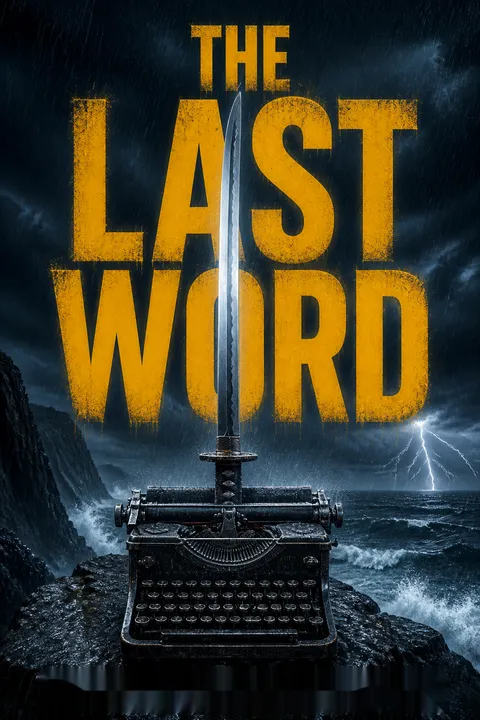


Plot Summary
Prologue
Emma Carpenter finishes Murder Mountain, a cheap horror novel whose victims seem less human than the killer describing their deaths. She gives it one star, then hesitates before submitting a review that mocks its violence and implausible plotting. The author, H. G. Kane, replies online, insisting she remove it.
Their exchange grows personal and threatening, ending with Emma refusing to take the review down. A bird strikes the beach house window as she submits it, leaving her unsettled by a coincidence she cannot explain. Two hours later, Kane has found her review and answered again.
The review is both an ordinary act of criticism and the first move in a dangerous intimacy. Emma thinks she is judging a book from a safe distance; Kane treats her judgment as a personal injury requiring retaliation. The dead bird gives the exchange an ominous physical echo, while the online comments make clear that neither party can retreat into anonymity. The opening also plants the story’s central uncertainty: whether fiction merely describes violence or can become a script for it.
A Figure in the Bedroom
Three months into house-sitting on a remote Washington beach, Emma wakes to a man-shaped figure in her bedroom. He vanishes when she turns on the light, and a careful search finds no intruder. Her elderly neighbor, Deek, becomes her only human contact through telescope messages and Hangman games, though she keeps him at a distance.
Emma’s days pass in bargain novels, cold meals, and long walks toward the dangerous surf. Memories of her husband, Shawn, surface in fragments, while a green backpack packed with rocks waits by the back door. Emma tells herself the figure was a dream, but its return makes the house feel less like refuge than a place she cannot leave.
Emma’s isolation is not simple solitude. She uses books and routines to blunt grief, while the packed backpack shows that part of her is preparing to disappear. Deek’s telescope offers connection at a distance, which suits her habit of managing intimacy rather than entering it. The bedroom figure gives her fear a concrete shape, but it also gives her a task. Investigating a possible intruder is easier than confronting why she has come to the edge of the sea.
The Mask at the Door
Laika, Emma’s cream-colored retriever, finds a suspicious piece of flesh on the beach and cuts her mouth chewing it. Soon afterward, a message from Deek warns that a man is standing inside Emma’s living room, though she sees no one.
Then Jules Phelps, the absent owner of the house, sends a doorbell-camera image of a broad figure in a horned, mouthless mask outside the front door. Jules admits earlier house-sitters reported nighttime prowling. Emma searches H. G.
Kane’s online profile and finds a history of violent novels, inflated praise, and no clear identity. The author’s angry messages about her review now seem more than eccentric. Emma emails him that she will keep the review posted, making herself a target in words as well as in fact.
The camera turns Emma’s private suspicion into evidence, but it does not yet explain who the masked visitor is or what he wants. That gap keeps fear active: proof confirms danger without making it legible. The scene also shows Emma’s analytical habits under pressure. She searches profiles, compares details, and tests hypotheses, using reason as a counterweight to panic. Yet her decision to challenge Kane directly repeats the opening conflict, shifting an online disagreement toward physical risk.
Murder Beach Begins
The next evening, a man at Emma’s front door pretends to be Deek, claiming an intruder is inside his house. Emma refuses to unlock the door and calls for help. The stranger drops the imitation and asks whether she stands by her review, then reads its insults back to her. When Emma calls his book amateurish, his anger sharpens.
He announces that his next novel will be about her and begins prying off Jules’s doorbell camera. Emma recognizes the voice as Kane’s, but the doors remain locked and she cannot tell where he will enter. Her criticism has become the stated premise of a murder, and she understands that the night’s danger is deliberate, personal, and already underway.
Kane tries to convert criticism into a trial in which Emma must defend herself in person. His demand is not for useful feedback; it is for submission, with the review serving as proof that she has denied him the recognition he feels owed. Emma’s refusal to open the door preserves a boundary, but it cannot restore safety. By announcing a story about her, Kane makes authorship sound like ownership, a delusion the coming events will test against Emma’s ability to act.
Poison for Laika
Kane has already sabotaged Emma’s Corolla, cut internet access, and severed the landline. He lures Laika beyond the fence with raw chicken containing rodent poison. Emma finds the dog alive and forces a poisoned piece from her mouth, recognizing the pellets from her teenage grocery-store job. With no working phone or car, she runs back into the house with Laika as rain blinds the yard.
Her first attempt to call emergency services fails. The scene resembles the helpless situations Emma mocked in Murder Mountain, except she now knows someone has prepared them for her. The dog’s exposure forces her to stop thinking about escape in the abstract and act quickly to keep Laika alive.
Kane builds his trap from the conveniences Emma once dismissed as contrived: a disabled car, cut communications, and a vulnerable animal. The difference is that Emma recognizes the pattern and can use her knowledge of his fiction against him. Her first priority is not her own safety but Laika’s, a choice that gives her immediate purpose. The attack exploits her isolation, yet it also creates the first clear reason for her to fight for a future beyond it.
Steel Through the Glass
Emma uses Jules’s vintage Polaroid to flash the dark yard and finally photographs Kane crouched in the grass, wearing his fedora and carrying a curved sword. When Laika vomits more poisoned chicken, Emma abandons the search for missing hydrogen peroxide and forces salt into the dog’s throat to induce vomiting. Kane then impales a sea-facing window with his katana and enters the house.
Emma hides in the kitchen, escapes his search, and barricades herself upstairs with Laika. A supposed police arrival brings relief until Kane uses an authoritative voice to make a passing FedEx driver kneel outside. The driver is not police, and Emma has no way to warn him before Kane turns the encounter violent.
The Polaroid gives Emma a rare advantage: a fixed image of a man whose power depends on appearing almost unreal. But the photograph cannot protect her from the person it identifies. Her improvised use of salt shows practical intelligence replacing the helplessness Kane expects from his fictional victims. The false police arrival then exposes another danger of appearances: a convincing role can command trust for a few fatal seconds, especially when people are frightened and isolated.
The Neighbor Misread
Kane kills the FedEx driver with the katana after Emma opens the door to intervene. Deek watches from his house and tries to guide her by telescope as Kane circles the property. During the confusion, Emma mistakes Deek, who has entered her house to help, for the attacker and stabs him near the throat with a screwdriver.
Fireworks from Deek’s home distract Kane long enough for Emma to strike him with a hammer in the basement and flee upstairs. She then learns Deek is badly wounded but alive. Their friendship, built on distant messages, has abruptly become a matter of blood and mistaken identity. Emma’s efforts to protect others have helped her resist Kane, but they have also made her fear her own decisions.
The mistaken stabbing is the cost of a relationship kept at telescope distance: Emma knows Deek’s habits and handwriting, but not his face or voice well enough to identify him in a crisis. Her guilt echoes the larger pattern of her life, in which she assumes responsibility for harm before she understands what happened. Yet Deek’s fireworks and later survival complicate the idea that trust is either safe or foolish. Connection here is imperfect, dangerous, and still worth attempting.
A Son in the House
Two officers arrive for a wellness check, and Emma answers their questions while Kane holds Deek at gunpoint inside. She finally tells Jules, who has arrived at the house, that she is grieving someone she lost in a car accident. Emma signals Kane’s name to Jules as she leaves with the officers. Back inside, Jules recognizes the attacker as her son, Howard Grosvenor Kline, the real person behind H.
G. Kane. She reveals that he grew up in the house and has struggled with serious mental illness. Deek connects Howard to Laura Birch, a local girl who disappeared years earlier after receiving one of his violent manuscripts. Howard’s history is no longer an online persona; it is rooted in the very house where Emma has been staying.
The reveal collapses the distance between the killer’s invented worlds and the ordinary family life surrounding him. The house’s strange rooms and odors become legible as traces of Howard’s past, not supernatural signs. Emma’s brief disclosure to Jules marks a change in her usual self-protection: she risks being known while danger is still present. But the family revelation does not make Howard harmless. It makes the threat more intimate, showing how a mother’s care and a son’s grievance can coexist without resolving either.
The Author Loses Control
Howard breaks the standoff, attacks Emma, and leaves Jules bound while Deek is struck down. Emma climbs the laundry chute and escapes onto the storm-lashed roof with Laika, then jumps into hedges and reaches Jules’s car. A gunshot frightens the dog into the grass.
Emma drives away in the stolen FedEx van, ramming Howard and escaping, but she turns back after realizing Jules’s parcel contains a stun gun. She finds Laika, shocks Howard with the device, and is shot in the leg. Crawling into Howard’s bedroom, she finds Laura Birch’s hidden keepsakes and the rusted blade used against her. Laika distracts Howard, giving Emma the opening to stab him and end his attack.
Emma’s survival depends on repeated tactical reversals rather than a single transformation into a fearless fighter. She uses the chute, roof, van, and stun gun as the house and its objects permit, then returns because Laika remains in danger. That return is not a retreat into self-sacrifice alone: it is a chosen attachment, the opposite of the isolation that first brought her to the coast. Howard’s defeat comes when Emma acts outside the ending he has designed for her.
Deek Writes the Ending
After surgery and recovery, Emma returns to the coast, still withdrawn and certain that her daughter’s death was her fault. Deek confronts her with Shawn’s call and a concealed dose of propofol. He reveals that he recommended Murder Mountain to provoke Howard, hoping to shape a sensational true-crime story and restore his own career.
He also admits that Emma’s infant daughter, Shelby, died in the July collision; Shawn survived, and Emma fled rather than grieve with him. Deek drugs Emma’s tea and stages her death as suicide, then carries her with a rock-filled backpack to the seawall. His narration has presented her as dead, but he has not accounted for what she can still do.
Deek’s betrayal turns the book’s apparent narrator into another author who treats a person’s pain as material for a story. His stated concern for Emma cannot erase his effort to arrange her death and claim control over its meaning. The revelation about Shelby changes Emma’s withdrawal from mysterious widowhood into the specific aftermath of a child’s death and a marriage abandoned under unbearable guilt. The parallel is sharp: Howard wanted to write Emma’s murder, while Deek wants to write her ending.
The Strap Comes Free
Drugged and weighted by the backpack, Emma sinks beneath the seawall. In a near-death vision, she relives the collision with Shelby differently, imagining her daughter alive and held against her chest. The vision does not erase the real loss, but it gives Emma a final image of love rather than blame.
Underwater, she manages to release one backpack buckle, then works the second strap free and rises to the surface. She reaches shore and walks eleven miles to the police station barefoot, refusing the death Deek has prepared for her. Her survival is confirmed when she asks officers for help. The story’s account of her suicide collapses, exposing how thoroughly Deek had tried to make his version seem final.
The underwater escape answers the novel’s recurring drowning nightmare with an action, not an explanation. Emma’s vision of Shelby is emotionally real without changing the fact of the child’s death; its force lies in allowing tenderness to coexist with guilt. Releasing the straps is both physical escape and a refusal of the role others have written for her. By reaching the police station, Emma restores a public record to a story Deek meant to control in private.
Epilogue
Emma leaves Strand Beach with Laika and drives toward Utah. At a mountain visitor center, she calls Shawn, apologizes for abandoning him after Shelby’s death, and admits that they should have faced their grief together.
Shawn does not demand that she prove she is healed. He sets out from home to meet her halfway, and Emma accepts. The ending does not promise that their marriage will instantly mend; it gives them a place and a time to begin speaking again.
The reunion resolves the story’s central relational failure without pretending that survival cures grief. Emma does not return to Shawn as the person she was before the accident; she returns as someone able to name the harm she caused and accept that forgiveness is not owed. Shawn’s decision to drive toward her answers her long-standing fear of being too difficult to reach. Their meeting becomes a practical act of mutual commitment, not a miraculous restoration.
Analysis
The Last Word makes authorship a problem of power. Kane believes that inventing a character gives him authority over the person he has chosen as a model, while Deek later treats Emma’s life as material for a career revival. Both men confuse narrative control with moral understanding. Emma’s resistance is not simply a rejection of their stories; it is her growing ability to act without waiting for certainty, permission, or a perfect explanation.
The thriller’s use of unreliable narration reinforces that struggle. The account repeatedly presents confident explanations, then exposes how much the narrator has invented, withheld, or misunderstood. A supposedly omniscient author can describe a victim’s habits yet fail to grasp her motives. Even Emma’s memories are unstable under trauma, but instability does not make her experience meaningless. Her small acts of observation and decision matter precisely because no single account contains the whole truth.
Grief is treated as an ongoing condition rather than a puzzle solved by survival. Emma’s guilt over Shelby’s death drives her withdrawal, while Shawn’s absence makes that withdrawal relational as well as private. The near-death vision does not undo the loss; it allows Emma to imagine love without reducing the child to the accident. Her return toward Shawn therefore carries no guarantee of repair. It is a willingness to speak, to accept the other person’s response, and to stop treating isolation as the only honest form of grief.
Review Summary
The Last Word receives mixed reviews, with many praising its unique premise and thrilling plot twists. Readers appreciate the fast-paced story of a woman being stalked by an author after leaving a negative review. Some found the book suspenseful and entertaining, while others felt it was over-the-top and unrealistic. The main character, Emma, and her dog Laika are well-liked. Critics note the book's gruesome scenes and numerous plot twists, which some found excessive. Overall, it's described as a wild ride that keeps readers guessing.
People Also Read








Characters
Emma Carpenter
The isolated readerA physics-trained former teacher and house-sitter, Emma is observant, private, and more comfortable organizing thoughts on a page than speaking them aloud. She approaches danger as a problem to solve, noticing details others might dismiss, but grief has made even ordinary tasks feel heavy. Her habit of keeping people at a distance protects her from embarrassment and emotional exposure while also deepening her loneliness. Books offer controlled worlds where consequences can be examined from safety. Her connection to Laika and her memories of Shawn reveal a capacity for fierce attachment beneath her guarded manner.
H. G. Kane
The aggrieved horror writerA pseudonymous self-published author, Kane builds his public identity around extreme horror and claims of authenticity. He is intensely invested in being taken seriously, yet reacts to criticism as if it were a personal attack rather than a reader’s judgment. His online manner mixes self-pity, entitlement, and a hunger for recognition. The books he writes reveal a fixation on control, helpless victims, and the mechanics of fear. He mistakes the ability to describe a person for the ability to understand one, a confusion that shapes his relationships as much as his fiction.
Deek
The telescope neighborAn elderly man living alone in a cluttered beach house, Deek first reaches Emma through whiteboard games and jokes sent across the distance between their homes. His intelligence and perceptiveness make him difficult to read, while his drinking and solitary habits suggest a life narrowed by old losses. He can be generous, watchful, and intrusive in the same exchange. The telescope gives him a way to observe without entering another person’s space, a fitting tool for someone who wants connection but struggles with direct intimacy.
Laika
Emma's loyal retrieverEmma’s cream-colored golden retriever is affectionate, trusting, and prone to eating whatever the beach offers. Laika’s open-hearted dependence contrasts with Emma’s caution around people. Caring for the dog gives Emma a daily structure and a bond that asks for no polished explanations. Her presence also makes Emma’s isolation less absolute, even when the dog cannot understand the thoughts her owner keeps hidden.
Shawn Carpenter
The absent husbandEmma’s husband is remembered as patient, quietly funny, and attentive to the worlds she finds difficult to explain. He shared a home with her, built model trains, and listened when she spoke about astronomy and the future. Shawn’s gentleness gave Emma room to speak without forcing her to perform sociability. Their relationship remains emotionally central even when distance and silence separate them.
Jules Phelps
The house's absent ownerJules owns the Strand Beach house and communicates with Emma remotely before they meet in person. Practical and talkative, she responds to the threat by arranging a camera, contacting police, and trying to equip her house-sitter. Her brisk style can overwhelm Emma, but it also reflects a direct, action-oriented way of caring. Jules’s connection to the house reaches further back than Emma initially understands.
Laura Birch
The missing local girlA bright local teenager whose disappearance remains part of Strand Beach’s collective memory. Laura’s absence links a private history to the town’s long-standing uncertainty and gives Deek’s concern about Howard a past tense and urgency. Her story reminds the reader that people reduced to mysteries or plot points had lives and ambitions beyond the role others assign them.
Jake Stanford
The late delivery driverA FedEx driver making a late delivery near Emma’s house, Jake becomes an unexpected witness to the night’s danger. His ordinary work brings him into a crisis he did not seek, emphasizing how quickly violence can reach people outside the central conflict.
Eric Grayson
The veteran officerA longtime Strand Beach police officer who conducts a wellness check at Emma’s house. Grayson is alert to her unease and offers a calm, humane presence. His advice about continuing through grief gives Emma a rare moment of understanding from someone she has only just met.
Plot Devices
The review and the novel
Criticism becomes a scriptEmma’s one-star review begins as a reader’s response to implausible horror conventions. Kane turns that criticism into a personal grievance and tries to make Emma the subject of a new story. The book-within-the-book structure lets the thriller test the gap between describing violence and committing it. As characters behave in ways that contradict the narrator’s account, the reader must question who is shaping events and whose version of the story can be trusted.
The Strand Beach house
Isolation narrows every choiceThe remote house sits among vacant seasonal homes, weak communications, and dangerous coastal weather. Its glass walls make Emma feel exposed, while its locked doors and damp basement turn ordinary architecture into a tactical puzzle. The setting cuts off easy help and allows an attacker to control routes in and out. Its rooms also hold traces of earlier lives, making the house both shelter and an archive of concealed history.
The telescope and Hangman
Distance becomes a lifelineEmma and Deek use telescopes and whiteboards to exchange Hangman clues and observations from a quarter mile apart. Their unusual method lets them remain in contact when phones and internet fail, and it gives Deek a view of the danger around Emma’s house. The games also turn observation into a recurring motif: Deek guesses words with unnerving accuracy, while Emma gradually learns that watching someone is not the same as knowing them.
The rock-filled backpack
A private plan for disappearanceEmma keeps a hiking pack stuffed with rocks beside the door, a physical sign of how close she has come to surrendering to grief. Later, another person uses the same idea to make her helpless in the sea. The pack therefore changes meaning across the story: first an instrument of planned self-erasure, then an imposed restraint, and finally something Emma can escape by freeing its buckles. Its weight makes an invisible crisis materially visible.
FAQ
Synopsis & Basic Details
What is The Last Word about?
- A reader's nightmare: Emma Carpenter posts a negative review of a horror novel, which leads to a terrifying real-life encounter with the author, blurring the lines between fiction and reality.
- Isolation and vulnerability: Emma, isolated in a beach house, must fight for survival as the author, H.G. Kane, stalks her, using her fears and vulnerabilities against her.
- A battle for survival: The story follows Emma's desperate attempts to outwit her tormentor, protect her dog, and ultimately confront the darkness that has invaded her life.
Why should I read The Last Word?
- Meta-horror experience: The novel cleverly plays with the concept of a reader becoming the victim in a horror story, creating a unique and unsettling reading experience.
- Psychological suspense: The story delves into the psychological impact of grief, isolation, and fear, keeping readers on edge with its suspenseful atmosphere and unpredictable twists.
- Resilient protagonist: Emma's journey from a grieving widow to a resourceful survivor is inspiring, showcasing her strength and determination in the face of unimaginable terror.
What is the background of The Last Word?
- Modern digital culture: The story is set against the backdrop of online book reviews and social media, highlighting the potential for real-world consequences from digital interactions.
- Psychological thriller elements: The novel incorporates elements of psychological thrillers, exploring the characters' inner turmoil and the blurring of reality and perception.
- Isolated coastal setting: The remote beach house setting amplifies the sense of isolation and vulnerability, creating a claustrophobic atmosphere that heightens the tension.
What are the most memorable quotes in The Last Word?
- "In a story, the author is God.": This quote, repeated by H.G. Kane, encapsulates his twisted view of his own power and control over his fictional worlds and, ultimately, Emma's reality.
- "You're just a cold, negative woman with no friends.": This line from H.G. Kane's email reveals his deep-seated insecurity and misogyny, highlighting his inability to accept criticism.
- "I'll meet you there.": This phrase, a recurring motif from Emma's past with her husband, becomes a symbol of hope and resilience, representing her determination to survive and find her way back to herself.
What writing style, narrative choices, and literary techniques does Taylor Adams use?
- First-person limited perspective: The story is primarily told from Emma's point of view, creating a sense of intimacy and immediacy while also limiting the reader's knowledge, enhancing suspense.
- Foreshadowing and callbacks: Adams uses subtle details and recurring motifs to foreshadow future events and create a sense of unease, while also providing satisfying callbacks to earlier moments.
- Metafictional elements: The novel blurs the lines between fiction and reality, with the author character, H.G. Kane, commenting on the nature of storytelling and the power of the author, adding a layer of complexity to the narrative.
Hidden Details & Subtle Connections
What are some minor details that add significant meaning?
- The dead bird: The red-breasted sapsucker that hits Emma's window after she posts her review foreshadows the author's twisted connection to her and the violence to come, as well as his bizarre use of "sapsucker" as an insult.
- Laika's bandanna: The "Don't Stop Retrievin'" bandanna, a gift from Emma's late husband, becomes a symbol of her love and loyalty, and its frayed edges foreshadow its eventual loss.
- The Osprey backpack: The green backpack, filled with rocks, represents Emma's suicidal thoughts and her preparation for a final act, highlighting her internal struggle and the weight of her grief.
What are some subtle foreshadowing and callbacks?
- The "Plan 9 from Outer Space" reference: Deek's recommendation of this notoriously bad film foreshadows the increasingly absurd and unrealistic nature of the events that unfold, blurring the lines between reality and fiction.
- The "sumo citruses" description: Emma's critique of this line in H.G. Kane's book becomes a recurring point of contention, highlighting the author's misogyny and his inability to accept criticism.
- The recurring "scritch-scratch" sound: This subtle noise, initially attributed to a dream, becomes a chilling reminder of the author's presence, foreshadowing his eventual intrusion into Emma's life.
What are some unexpected character connections?
- Deek and H.G. Kane: The revelation that Deek is a former mentor to H.G. Kane adds a layer of complexity to their relationship, highlighting the consequences of Deek's past actions and his role in shaping the author's twisted worldview.
- Jules and H.G. Kane: The reveal that Jules is H.G. Kane's mother adds a tragic dimension to her character, as she grapples with the reality of her son's monstrous deeds and her role in enabling them.
- Emma and H.G. Kane: The connection between Emma and H.G. Kane is more than just author and critic; it's a twisted mirroring of their shared isolation and grief, highlighting the dark side of human connection.
Who are the most significant supporting characters?
- Deacon Cowl (Deek): As Emma's neighbor, Deek provides a crucial link to the outside world, offering both support and a sense of connection, while also revealing a complex past that intertwines with the main plot.
- Jules Phelps: As the owner of the beach house, Jules's presence adds a layer of complexity to the story, highlighting the consequences of her son's actions and her own role in enabling them.
- Laika: As Emma's loyal companion, Laika serves as a symbol of love and innocence, highlighting the stakes of the deadly game and providing a source of comfort and strength for Emma.
Psychological, Emotional, & Relational Analysis
What are some unspoken motivations of the characters?
- H.G. Kane's need for validation: Beyond his desire for revenge, H.G. Kane's actions are driven by a deep-seated need for validation and recognition, stemming from his insecurities as a writer.
- Deek's guilt and redemption: Deek's actions are motivated by a desire to atone for his past mistakes and his role in shaping H.G. Kane's twisted worldview, seeking redemption through his attempts to help Emma.
- Emma's self-destructive tendencies: Emma's isolation and self-destructive tendencies are driven by her grief and guilt over her daughter's death, leading her to seek out dangerous situations as a form of self-punishment.
What psychological complexities do the characters exhibit?
- H.G. Kane's delusions of grandeur: H.G. Kane's inflated sense of self-importance and his belief that he is a "sigma male" reveal a deep-seated narcissism and a distorted perception of reality.
- Emma's trauma and grief: Emma's trauma and grief manifest in her isolation, her self-destructive tendencies, and her difficulty forming meaningful connections, highlighting the long-lasting effects of loss.
- Deek's guilt and self-loathing: Deek's guilt over his past actions and his role in shaping H.G. Kane's life lead to self-loathing and a desire for redemption, driving his attempts to help Emma.
What are the major emotional turning points?
- Emma's decision to fight back: Emma's decision to stop hiding and actively confront H.G. Kane marks a turning point in her emotional journey, as she transforms from a victim to a survivor.
- Deek's confession of his past: Deek's revelation of his history with H.G. Kane and his guilt over Laura Birch's disappearance marks a turning point in his character arc, as he confronts his past mistakes.
- Jules's realization of her son's true nature: Jules's confrontation with her son and her realization of his monstrous deeds marks a turning point in her emotional journey, as she grapples with the consequences of her choices.
How do relationship dynamics evolve?
- Emma and Deek's evolving bond: Emma and Deek's relationship evolves from a distant, whiteboard-based connection to a genuine friendship, as they learn to trust and rely on each other in the face of danger.
- Emma and H.G. Kane's twisted connection: Emma and H.G. Kane's relationship is a complex mix of fear, hatred, and a strange sense of recognition, as they are both driven by their own inner demons and a need for validation.
- Jules and Howard's tragic dynamic: Jules and Howard's relationship is a tragic example of enabling and codependency, as her love for her son blinds her to his true nature and ultimately leads to her own demise.
Interpretation & Debate
Which parts of the story remain ambiguous or open-ended?
- The true nature of Demon Face: The identity of the masked figure seen on the doorbell camera remains ambiguous, leaving open the possibility that there was another entity involved or that it was a figment of Emma's imagination.
- The extent of Deek's manipulation: The extent of Deek's manipulation of Howard and his true motivations remain open to interpretation, leaving readers to question his role in the events that unfold.
- Emma's ultimate fate: While Emma survives the night, the ending leaves her future uncertain, as she grapples with the trauma she has experienced and the long road to recovery ahead.
What are some debatable, controversial scenes or moments in The Last Word?
- The graphic violence: The novel's graphic depictions of violence, particularly the descriptions of the murders in H.G. Kane's books, may be disturbing to some readers, raising questions about the author's intent and the limits of artistic expression.
- The portrayal of mental illness: The portrayal of Howard's mental illness may be seen as problematic, as it could perpetuate harmful stereotypes and stigmatize those who struggle with similar conditions.
- The ending's ambiguity: The ending, which leaves Emma's future uncertain and her trauma unresolved, may be seen as unsatisfying by some readers, raising questions about the nature of closure and the possibility of true healing.
The Last Word Ending Explained: How It Ends & What It Means
- Emma's survival and escape: Emma's survival is a testament to her resilience and determination, as she outwits her tormentor and escapes the deadly game he has created.
- The cycle of violence: The ending highlights the cyclical nature of violence, as Emma's actions, while necessary for her survival, perpetuate a cycle of violence and trauma.
- The power of words: Despite the darkness she has faced, Emma's final act of defiance, choosing to live and reclaim her life, underscores the power of choice and the possibility of finding hope even in the face of despair.
About the Author

Download PDF
Download EPUB
.epub digital book format is ideal for reading ebooks on phones, tablets, and e-readers.








