
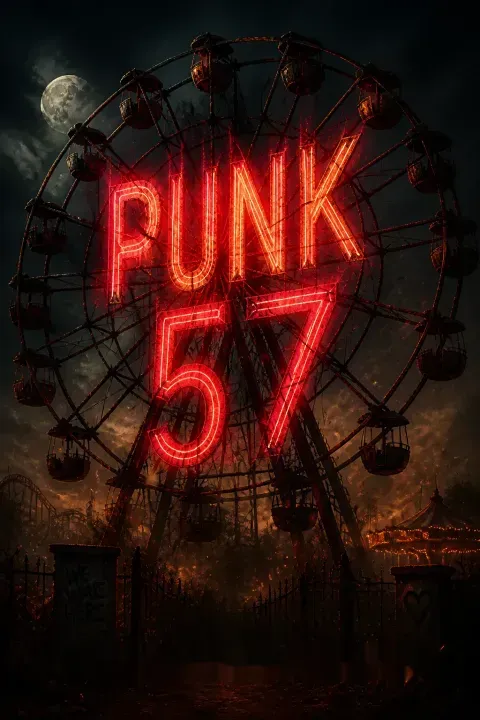


Plot Summary
Prologue
In fifth grade, a pen pal assignment pairs Misha Lare1 and Ryen Trevarrow2 through a bureaucratic mix-up: their teachers mistake each for the opposite sex. What begins as a mandatory exchange becomes a seven-year correspondence.
They share music, secrets, fears, and the evolving handwriting of childhood to young adulthood, all without ever meeting or speaking by phone. Their letters, written on black paper in silver ink, become a lifeline. Misha,1 the grandson of a senator living in affluent Thunder Bay, pours his lyrics and frustrations into his replies.
Ryen,2 in nearby Falcon's Well, confesses her envy of a popular cheerleader and her fear of being alone. Their pact to never meet or search for each other online preserves the purity of their bond, a world apart from their real lives.
The prologue establishes the central paradox of the novel: intimacy without embodiment. Misha and Ryen have built a relationship purely through curated words, creating idealized versions of themselves. The epistolary origin story foregrounds themes of identity performance and the gap between inner and outer selves. Ryen's confession about envying the cheerleader is laced with dramatic irony, since she will later be revealed as that very archetype, a twist that interrogates how we compartmentalize our personas. The black paper and silver ink ritualize their communication as sacred and separate from daily life, a sanctuary that the plot must inevitably violate. Their promise to never meet functions as a narrative bomb with a lit fuse.
The Scavenger Hunt Encounter
Three months before the main story, Misha1 rereads one of Ryen's2 letters in his truck, using her words as lyrical inspiration for his band, Cipher Core. He drives to an abandoned warehouse where his band is hosting a scavenger hunt fundraiser.
Scrolling through the event's social media feed on an iPad, he watches a video of a girl spraying a bar gun like a fountain while another voice behind the camera laughs and calls her friend Ryen.2 The poster's name confirms it: Ryen Trevarrow.2 His heart pounds. Moments later, Ryen2 and her friend Lyla4 approach him.
Lyla4 demands a kiss for her scavenger hunt card. Ryen2 stands silent, eyes narrowed, not recognizing him as Misha.1 He stays guarded, exchanging barbs, helping her complete her photo tasks, and internally reeling that his pen pal of seven years is standing inches away, beautiful and unknowing.
This scene crystallizes the novel's central dramatic irony: Misha knows, Ryen does not. His silence is both self-protective and a betrayal of their intimacy. The scavenger hunt, a game of tasks and performances, mirrors the masquerade both characters live daily. Ryen's failure to recognize Misha despite their deep epistolary bond underscores how much identity relies on context and physical cues. Misha's immediate physical attraction complicates his emotional connection, introducing the tension between the idealized pen pal and the real, flawed person.
Annie's Last Run
That same night, on his drive, Misha1 finds his sixteen-year-old sister Annie8 jogging alone on the dark, isolated road between Thunder Bay and Falcon's Well. He scolds her for the danger but she waves him off, pointing to her MINI Cooper parked ahead.
She teases him, extracting a promise to bring her root beer and dill potato chips. He follows her to her car, waits until she climbs in and starts the engine, then drives to the warehouse. Hours later, when he tries calling her back after ignoring a call at the party, there is no answer.
Annie8 collapsed from a heart attack caused by amphetamine abuse, drugs she took to fuel her punishing schedule of academics, volleyball, and clubs. Misha's1 guilt, the unanswered call, the promise he didn't keep, shatters him. He stops writing Ryen2 that night.
Annie's death is the novel's hidden inciting incident, the trauma that fractures Misha and propels his journey to Falcon's Well. Her perfectionism, driven by a desperate hope that their absent mother would return if she were good enough, mirrors Ryen's own performance of popularity. The juxtaposition of Misha's flirtatious encounter with Ryen while his sister dies alone establishes guilt as a core motivator. His subsequent silence to Ryen is not abandonment but paralysis, a grief so consuming it chokes his voice.
Masen Laurent Arrives
Three months after Annie's8 death, Ryen2 is still writing letters Misha1 never answers. At school, a new student named Masen Laurent1 appears in her Art class. He carries no books, wears scuffed jeans and a slate gray T-shirt, and has tattoos climbing his arm.
When Trey Burrowes,3 the alpha jock Ryen2 is stringing along as a prom date, begins bullying a quiet goth kid named Manny Cortez,6 Masen1 silently pulls Manny's6 chair to his own table, physically interposing himself. The room goes still. Later, at lunch, Ryen2 sits on Masen's1 table to probe him. He dumps her on the floor and declares she tastes like shit. Humiliated and furious, she has no idea she just bantered with Misha.1
Masen's arrival functions as a disruption machine. He immediately identifies the toxic social hierarchy Ryen upholds and silently judges her complicity. His defense of Manny is the first clue that his aggression is moral, not random. Ryen's conflicting responses, anger at being challenged, curiosity about his piercings and tattoos, attraction to his defiance, reveal her internal fracture. She performs cruelty but is drawn to kindness. Masen becomes a mirror reflecting both who she is and who she could be.
The Cove Intrusion
Ryen2 and her friends sneak into the abandoned amusement park at the Cove. Hiding from Trey3 in an underground service tunnel, Ryen2 discovers a makeshift bedroom. On the bed she finds a notebook with handwritten lyrics, including the line I wanna lick while you still taste like you. She tears out the page and keeps it, while her friend Ten5 pockets an antique silver locket.
They flee when they realize the iPod on the bed is still playing, meaning the occupant is nearby. The next day, Ryen's2 locker is broken into and the word Empty is scrawled on it. That night, she arrives home to find Masen1 in her bedroom. He has her diary. He wants his poem and his locket back, or he will plaster her private thoughts all over school.
The Cove scene literalizes the collision of Ryen's and Misha's secret worlds. His underground room, marked by the word ALONE, is a physical manifestation of his grief and hiding. By stealing his words, Ryen unknowingly steals a piece of his soul. Her own violated locker and bedroom demonstrate that boundaries go both ways. The power dynamic shifts: Masen now holds her most intimate confessions as leverage, a reversal that forces Ryen to reckon with the vulnerability she has avoided since childhood.
The Car Wash Confrontation
Trey3 sprays FAG across Masen's1 truck hood. When the principal9 intervenes, Ryen2 impulsively claims responsibility to protect Trey.3 She accompanies Masen1 to a car wash to clean the paint. In the bay, as rain falls, she scrubs the hood in her tank top while he watches from the cab.
When she deliberately sprays water through his cracked window, he chases her into the back seat. Breathless and pinned beneath him, she reaches up and runs her tongue over his lip ring, tasting the metal. He groans but does not kiss back, letting her explore. Trey's3 arrival interrupts them. Masen1 tells Ryen2 to stay down, hidden, while he confronts Trey3 outside.
This sequence crystallizes the magnetic, destructive tension between them. Ryen's lie for Trey is instinctual self-preservation within her social script. The car wash strips away that pretense: water, physical exertion, and confined space create raw intimacy. Her fascination with his lip ring, a symbol of his otherness, is the first honest desire she has shown. His restraint, letting her lead, distinguishes him from Trey's predatory entitlement. The scene establishes sex as a language they speak fluently while words remain fraught.
Punk 57's Graffiti Campaign
Messages signed Punk have been appearing on school walls for weeks, cryptic and provocative. When Lyla's4 betrayal with Trey3 in the men's locker room is spray-painted on the front lawn, the entire school sees it. Ryen2 watches the fallout with a mix of satisfaction and dread.
She is Punk. After Misha1 stopped writing, she began leaving anonymous messages as a substitute for the outlet he provided. That night, sneaking into the school to paint more, she is caught by a security guard.
Masen,1 who broke in to shower because he is living at the Cove, hides with her in a supply closet. He sees the blue paint on her hands and realizes her secret. She has an asthma attack from the sprint. He holds her, finds her inhaler, and for the first time, sees her fragile.
The Punk revelation is the novel's structural midpoint, recontextualizing Ryen's behavior. Her graffiti is not rebellion but a desperate plea to be heard without being seen, a continuation of her letter-writing self. Masen's discovery that she is Punk shifts his perception from contempt to recognition: she is still the girl who wrote him, just expressing herself through a different medium. His tenderness during her asthma attack, holding her and finding her medicine, is the first unguarded care he shows. The masks are slipping.
Library Surrender
Still hiding from security in the school library, they argue about her fakeness and his secrets. She admits she doesn't want to be alone and never had the courage to stand apart. He tells her she is his tribe. When she taunts him by threatening to call the guards, he pulls her down on top of him.
With flashlights sweeping past, he slides his hand into her shorts, whispering dirty challenges about her prom date.3 She grinds against his fingers, begging for silence. He makes her come, then she immediately retreats, her armor snapping back into place. I have no interest in tormenting you, he'd said earlier. Not like that. But this is torment of a different kind.
This scene is the axis where physical intimacy and emotional vulnerability collide. Ryen orgasms while guards search for intruders, danger and pleasure braided together. Her confession about needing to fit in exposes the childhood wound that shaped her. Misha's use of 'tribe,' a word from her letters, is the first slip of his mask. Her post-coital coldness demonstrates her terror of being truly seen. Sex becomes both a weapon and a surrender, a power struggle where each orgasm is a confession neither will voice.
Drive-In Seduction
At the drive-in, Katelyn brags to Ryen2 about a supposed night with Masen,1 describing him as an animal. Ryen,2 seething, climbs into his truck with a knife, intent on vandalism. He catches her. Through tinted windows, surrounded by classmates watching the movie, he goads her about Katelyn until she is near tears.
Then he confesses he lied and didn't touch Katelyn. He only thinks about you, he whispers. She straddles him. He unhooks her bra, kisses her breasts, and goes down on her while Trey3 stands feet away outside.
Then, with a condom from the seat pocket, he pushes inside her. They have sex in the back seat, the truck rocking. Afterward, he drives her home and asks her pen pal's name. She tells him: Misha.1 He kisses her and leaves without explanation.
The drive-in sex scene is a crucible of voyeurism, risk, and emotional manipulation. Misha's lie about Katelyn is cruel but effective: it forces Ryen to confront her possessiveness. The sex itself is performative, Trey stands outside unaware, making Misha's conquest a symbolic victory over the social order Ryen clings to. His post-coital question about her pen pal is a perverse intimacy check, he wants to hear his own name from her lips without her knowing. The scene's power lies in its layers of knowing and not-knowing, a hall of mirrors where only Misha sees the full picture.
The Pearls Revelation
Late that night, Ryen2 studies the words Misha1 has been leaving her: Alone, Empty, Fraud, Shame, Fear, Close your eyes, there's nothing to see out here. She recognizes the rhythm, Googles the lyrics, and finds a YouTube video of Cipher Core performing Pearls. The lead singer is Masen.1 The band bio lists Misha Lare1 as lead vocals and guitars.
Everything clicks: he knew her favorite books, her asthma, her address, her lies. He watched her, judged her, seduced her, all while she mourned his silence. She sobs on the floor, then drives to the Cove. His room is ransacked. On the wall, her own handwriting from an old letter: You trick me? Watch your back, wait, and see. She has taken back her letters from the folder where he kept them.
The revelation recontextualizes every prior interaction. Misha's cruelty, his tenderness, his probing questions, all were acts of a man who already possessed the map of her soul. Ryen's response is rage rather than relief because the asymmetry of knowledge constitutes a profound betrayal. He judged her from the omniscient position of someone who had read her private thoughts for seven years. Her theft of the letters is a reclamation of self, a symbolic taking back of the words she entrusted to him. The sprayed lyric is both accusation and elegy for what their friendship had been.
Confrontation and Confession
Misha1 returns to the Cove to find his room trashed and Ryen's2 letters gone. He climbs through her bedroom window. She screams at him to leave. He tears off his shirt. In the phone light, she sees his tattoos: a cassette tape from a poem she quoted, lyrics from her letters, Hamlet's And flights of angels sing thee to thy rest, and over his heart, You're My Tribe.
Every inked image traces back to her words. She whispers his real name for the first time. He explains he came to Falcon's Well for another reason, not to deceive her, but his agenda kept him close and one thing led to another. She cannot process it. He begs, I love you. She orders him out. He leaves through the window, telling himself he is not going anywhere until she is his.
The tattoo reveal is Misha's ultimate vulnerability gambit. His body is literally a canvas of her influence, a permanent record of how deeply her words shaped him. This physical evidence challenges her narrative of betrayal: he didn't just read her letters, he absorbed them into his skin. His confession that he loves her shifts the frame from deception to desperation. But Ryen's trust has been fundamentally broken. The scene dramatizes the paradox that the person who knows you best can also hurt you most deeply.
Body Shot Betrayal
Devastated by the dual revelations, Misha1 being Misha1 and her own complicity in hurting people, Ryen2 tries to reclaim normalcy at Trey's3 party. She dances with Ten,5 drinks, and lets him do a body shot off her thigh, a moment someone films and tags on Facebook.
Misha,1 practicing with his band, sees the video. He drives thirty miles with his bandmates, enraged. At the party, he finds Trey3 wearing his grandfather's stolen antique watch. He slices the strap with a knife, reclaiming the heirloom. His bandmates and Trey's3 crew brawl.
Police arrive. Misha1 tells Ryen2 nothing as he is handcuffed. Later, at the station, his cousin Will,10 a senator's grandson with a silver tongue, secures his release. Ryen2 is there, asking questions he finally answers: Annie8 is dead. That's why he stopped writing.
The party sequence functions as the narrative's climax of violence. Misha's rage is overdetermined: Ryen's body shots echo his fear that she is becoming Lyla, Trey wearing the watch desecrates a family legacy, and the Facebook video makes public what he wants private. His retrieval of the watch is an act of reclaiming identity. Will's intervention introduces the Grayson family power and Misha's estrangement from it. The revelation about Annie's death re-frames his entire behavior. From manipulative to grieving.
Manny's Breaking Point
The day after the party, Trey3 corners Ryen2 in an empty hallway, threatening to rape her after swim practice. She reports him, but no immediate action is taken. Later, she sees Trey3 emerge from a bathroom wearing Manny's6 necklace, which he has ripped from the boy's ear, tearing the gauge. She finds Manny6 inside, bleeding and holding a rag soaked in inhalant.
He sobs that the bullying follows him home through social media, that he gets high to bear the pain. She holds him, crying with him. Then she takes his hand and leads him into the cafeteria. Every eye follows them. She sits him at a table with her. J.D.7 joins them, then Ten.5 They eat lunch together, a new formation in the social geography.
Ryen's defense of Manny is her first fully public, self-sacrificing act of courage. She risks her remaining social capital to extend protection to someone more vulnerable. This scene is the moral turning point: the coward who abandoned Delilah in fourth grade finally stands up. Manny's monologue about social media's role in modern bullying, where harassment follows victims home, is a sharp critique of the digital panopticon teens inhabit. The lunchroom scene literalizes her commitment to being different, choosing one real friend over a hundred fake ones.
Annie's Room and Origins
Misha1 takes Ryen2 to his family home in Thunder Bay. In Annie's8 room, he explains the truth: Annie8 was a perfectionist who abused amphetamines to maintain her impossible schedule, hoping their absent mother9 would return if she were accomplished enough.
The night she died, she called Misha,1 but he was flirting with Ryen2 at the scavenger hunt and ignored it. His guilt drove him to stop writing, to leave his father, to hide at the Cove.
He enrolled at Falcon's Well under a fake name because his mother,9 who abandoned the family when he was two, is now the high school's principal, Gillian Burrowes,9 remarried with a new family. He wanted to confront her, to reclaim his grandfather's watch that she stole, and to take back the photo album Annie8 mailed her that she never acknowledged.
This exposition weaves together all the novel's threads: the watch, the Cove squatting, the fake identity, the enrollment. Misha's mother is the original wound, the explanation for Annie's desperate perfectionism and Misha's attachment to Ryen's uncritical acceptance. His mother's presence as principal, overseeing Trey's immunity from consequences, makes the school a family psychodrama. Annie's story reframes the novel's themes: the cost of performance, the danger of seeking validation from those incapable of giving it, and how the past repeats until confronted.
Prom Night Vandalism
Misha,1 J.D.,7 Ten,5 Manny,6 and Ryen2 break into the school on prom night. Armed with washable spray paint, they cover the halls with Trey's3 actual words: threats of rape, homophobic slurs, boasts of sexual predation. Every quote is attributed to him. On Monday, students read them in shock. Girls write rebuttals underneath. Several victims come forward to the office.
Police arrive. Principal Burrowes9 summons Misha,1 who finally confronts her. He demands she say she was happier without him and never thought about her children. She sobs the words. He thanks her and walks out, free. Trey3 is suspended pending investigation. The graffiti, finally signed by the group, is an act of public truth-telling, not anonymous cowardice.
The prom night graffiti inverts the Punk campaign. Instead of anonymous riddles, they publish documented words with attribution. The act is illegal but morally clear: sunlight is the best disinfectant. Misha's confrontation with his mother is the psychological climax of his arc. He doesn't demand an apology or an explanation, he demands the finality of rejection so he can stop waiting for her. Her tears suggest the words are not wholly true, but the performance of speaking them liberates him. The scene argues that closure is an act of will, not a gift from the offender.
The Prom Performance
Before the graffiti raid, Misha1 surprises Ryen2 at prom. He arrives in a suit, his lip ring the only trace of Masen.1 His band, Cipher Core, takes the stage and performs Bookmark It, a song built from their shared history: the fifty-seven letters he didn't send, the fifty-seven days he tried to forget her, the lyric she inspired.
Ryen2 cries in the crowd. After the song, he lifts her and kisses her. Later, after the graffiti, they attend prom properly: Ryen2 in a red gown, Misha1 in black. They take cheesy photos for her mother, pile into a limo with J.D.,7 Ten,5 and Manny,6 and dance. At the end of the night, Misha1 asks her to write a letter to Delilah. She agrees.
The prom sequence is the novel's earned happy ending. Misha's public performance reclaims music from grief and secrecy, offering it as tribute. The song is the culmination of their collaboration: her words and his music, now united in public. The prom photos for her mother signify integration of their private world into family acceptance. His request for the Delilah letter shows his understanding of her arc: she must confront the original sin of her social mask before she can fully become the person she was in her letters.
Five Years Later
Five years after prom, Ryen,2 visibly pregnant, pushes through reporters camped outside their Manhattan apartment building. Misha's1 Oscar nomination for Best Original Song has intensified the media siege. He rarely leaves the penthouse, walking around half-naked, writing lyrics on napkins and refrigerator doors.
Their life is happy and noisy, split between the city and their converted barn home in Thunder Bay, where his father is now dating his bandmate's mother-in-law. Ryen2 has made peace with her sister. Misha1 has a career on his own terms, touring with his original band only when he wants, writing music that will outlast him. Their son is due in March. She still writes letters.
The epilogue models a functional happily-ever-after grounded in the novel's themes. Misha's reclusiveness is not isolation but chosen privacy, a boundary protecting their life. His music achieves permanence while he prioritizes presence. Ryen's pregnancy literalizes their creative partnership. The letter-writing continues, now with Delilah and presumably still between them. The novel closes on an image of negotiated identity: Misha remains the punk who hates publicity, Ryen the public face who runs interference. They have not merged into one person but built a partnership that honors their distinct selves.
Epilogue
Ryens2 final letter to Delilah, appended to the book, finally voices what she has carried since fourth grade. She describes her Sunday night ritual as a child: hour-long baths, meticulous grooming, ironed clothes, all in the desperate belief that polishing her exterior would make her interior worthy of friendship.
She recounts abandoning Delilah on the playground, hiding around a corner while her only real friend stood alone against a wall, waiting. She names her fault: I started to believe that a hundred people's fickle adoration was worth more than one person's love. She asks no forgiveness, only offers acknowledgment and apology. The letter ends with love.
The Delilah letter is the novel's final ethical gesture. It converts private guilt into public accountability, the anonymous graffiti impulse transformed into signed confession. The childhood bathing ritual is a heartbreaking metaphor for the book's core theme: the futile scrubbing away of self in pursuit of acceptance. By writing 'Love, Ryen,' she reconnects to the girl who wrote letters to Misha, the authentic self she buried under pom-poms and cruelty. The letter is never shown reaching Delilah, its power lies in the writing itself, an act of internal reclamation that completes Ryen's arc from coward to someone who can face her worst self and speak.
Analysis
Punk 57 is a dark romance structured around a double unmasking: Ryen's2 public persona is revealed as a survival strategy, and Masen's1 identity is revealed as the boy who already knows her deepest self. The novel argues that authenticity is not a static state but a performed vulnerability, a choice to show the parts of yourself you fear are unlovable. Both protagonists are grieving children who built elaborate defenses: Ryen2 her queen bee cruelty, Misha1 his angry isolation. Their letters were the only space where those defenses dropped. The tragedy is that Misha's1 proximity to the real Ryen2 initially disgusts him. She failed to embody the person she wrote. The romance lies in his recognition that the writer and the bully are the same person, and that his own cruelty during the Masen charade was no different than hers. He also performed a self he wasn't proud of. The novel's secondary argument concerns the social ecosystem of high school as a prison where bullying is structural, not individual. Trey3 operates with impunity because the system protects him; his stepmother9 is the principal, his father is wealthy, his victims are isolated. The graffiti campaign, first anonymous then attributed, posits that public accountability is the only corrective to institutional complicity. Manny's6 speech about social media extending bullying beyond school hours is a precise diagnosis of contemporary adolescence. The book's most radical proposition is that the pen pal structure, intimacy sustained through curated words alone, can birth a love more durable than physical proximity. When Misha1 and Ryen2 finally touch, the sex is electric, but the foundation was laid in black envelopes. The epilogue confirms this: five years later, they are married, he is an Oscar-nominated recluse, she runs interference with reporters, and their partnership still rests on words. The Delilah letter suggests that the work of becoming oneself is never finished; it requires constantly reaching backward to the child you were and forward to the person you hope to be. The novel's title, Punk 57, refers both to the fifty-seven letters Misha never sent and to the persona Ryen2 adopted as the graffiti vandal, a punk who finally found her voice by signing her name.
Review Summary
Punk 57 has received mixed reviews, with some readers praising its intense romance and complex characters, while others criticize it for problematic content and unhealthy relationship dynamics. Many appreciate the author's writing style and ability to create tension, but some find the plot overly dramatic and the characters unlikable. The book's exploration of bullying and self-acceptance resonates with some readers, while others are put off by the graphic content and perceived misogyny. Overall, it appears to be a polarizing read that evokes strong reactions.
People Also Read




Characters
Misha Lare (Masen Laurent)
Grieving musician and secret pen palThe grandson of a senator from Thunder Bay, Misha has legally changed his surname from Grayson to Lare to escape family pressure. He is the lead singer and guitarist of Cipher Core, a rock band he formed with friends. For seven years, he has written to Ryen2, using her as his muse, bouncing board, and emotional anchor. When his sister Annie8 dies from heart failure caused by amphetamine abuse, he stops writing, consumed by guilt for ignoring her final phone call. He hides at an abandoned amusement park, enrolls in Ryen's2 school under a fake name to confront his estranged mother9, who is the principal, and to reclaim a stolen family heirloom. Tattooed, pierced, and volatile, he channels grief into anger and cruelty, but his body is literally inked with Ryen's words. He is possessive, morally rigid, and desperate for the one person who ever accepted him without conditions.
Ryen Trevarrow
Popular cheerleader leading a double lifeA high school senior in Falcon's Well, Ryen projects the image of a confident, cruel queen bee. In private, she writes letters on black paper to Misha1, the only person who knows her true self. Her social persona is armor forged in fourth grade, when she abandoned her only friend, Delilah, to chase popularity. She suffers from asthma, keeps an inhaler hidden under her uniform, and secretly vandalizes the school as 'Punk,' leaving anonymous messages because she lost her outlet when Misha1 stopped writing. She is sharp-tongued, sexually inexperienced before Misha1, and terrified of being alone. Her arc moves from cowardice to courage as she learns that being herself, even if it means eating lunch with the bullied goth kid6, is worth more than a hundred fake admirers.
Trey Burrowes
Predatory jock and sexual predatorThe stepson of Principal Gillian Burrowes9, Trey is a wealthy, entitled athlete who believes he is owed sex. He keeps a hidden drawer of nude photos of girls he has manipulated, including Ryen's2 friend Lyla4. He bullies Manny Cortez6 relentlessly, uses homophobic slurs, and threatens to rape Ryen2. His immunity from consequences, protected by his stepmother9 and his social status, represents the toxic entitlement the novel's climax dismantles. He wears Misha's1 stolen family watch, the symbol of his stepmother's theft from her abandoned sons.
Lyla
Scheming frenemyRyen's2 cheerleading co-captain and closest female friend, Lyla is competitive, insecure, and sexually manipulative. She sleeps with Trey3 behind her boyfriend J.D.'s7 back, seeking validation through male attention. She undermines Ryen2 at every opportunity, relishes her humiliations, and represents the toxic femininity Ryen2 is trapped within. When Ryen2 finally breaks from the group, Lyla becomes openly hostile, pouring juice in her lap and mocking her. Her arc is a cautionary tale of what Ryen2 could become: a woman who confuses being wanted with being valued.
Ten (Theodore Edward Neilson)
Loyal but conflicted friendPart of Ryen's2 social circle, Ten is the most genuinely kind member of the group. He accompanies Ryen2 to the Cove, where he steals the silver locket that triggers Misha's1 retaliation. He is the first to suspect Masen1 is the school vandal. At the party, he does a body shot off Ryen's2 thigh in a moment of drunken fun, inadvertently sparking Misha's1 jealousy. He ultimately chooses Ryen's2 side, joining her lunch table of outcasts and participating in the final graffiti act. His loyalty proves that some friendships in the popular crowd were salvageable.
Manny Cortez
Bullied goth kid on the edgeA slight, eyeliner-wearing student who has been tormented since elementary school. In second grade, he gave Ryen2 a heart-shaped eraser on Valentine's Day. Now he is Trey's3 favorite target, suffering physical assaults and relentless mockery. He uses inhalants to escape the pain, admitting to Ryen2 that social media means the bullying never stops when he goes home. Ryen's2 intervention, holding him while he cries and then walking him into the cafeteria hand in hand, is her redemptive act. He represents the collateral damage of the social hierarchy she helped enforce.
J.D.
Lyla's boyfriend who switches sidesLyla's4 football-player boyfriend and Trey's3 best friend. When he discovers Lyla's4 infidelity with Trey3, he quietly severs both relationships. He writes the graffiti on the lawn exposing Lyla's4 locker room sex with Trey3, becoming the first to follow Punk's example. At the pivotal lunch, he sits at Ryen's2 table, offering protection. He becomes part of the new friend group, attending prom in the limo and participating in the final graffiti act. His defection proves that loyalty can be based on principles rather than social convenience.
Annie Grayson
Misha's deceased sisterMisha's1 sixteen-year-old sister, a 4.14 GPA student, volleyball star, and coach of a little girls' softball team. She was secretly abusing amphetamines to maintain her punishing schedule, driven by the hope that her perfection would lure back the mother who abandoned them9 when she was a baby. She died of a heart attack while jogging alone at night, calling Misha1 moments before she collapsed. He didn't answer. Her death is the wound at the novel's center, the reason Misha1 stopped writing and the motivation for his journey to Falcon's Well.
Gillian Burrowes
Principal and absent motherThe principal of Falcon's Well High School and Trey's3 stepmother. She is also Misha1 and Annie's8 biological mother, who abandoned them when Misha1 was two and Annie8 was one. She started a new family, never contacted her children, and didn't attend Annie's8 funeral. She stole a family heirloom watch when she left. Misha's1 ultimate confrontation with her, demanding she say she never thought about him, provides his closure. Her tears suggest the lie is not entirely comfortable, but she speaks the words he needs to hear.
Will Grayson
Misha's smooth-talking cousinThe grandson of Senator Grayson and Misha's1 cousin. A former convict with his own tattoos hidden under tailored suits, he secures Misha's1 release from police custody with charm and family connections. He lent Misha1 his black Ford Raptor while incarcerated. His philosophy, 'never let anyone see all your cards,' mirrors Misha's1 own strategic concealment.
Dane Lewis
Cipher Core guitarist and loyal friendThe guitarist for Cipher Core and Misha's1 closest friend. He keeps the band together after Misha1 quits, checks on him at the Cove, and encourages him to return to music. He is easygoing, twenty-one and directionless but loyal. He witnesses Misha's1 meltdowns and provides the push that brings him back to performing.
Plot Devices
The Letters
Seven-year epistolary bondThe black-paper, silver-ink letters are the backbone of Misha1 and Ryen's2 relationship, written since fifth grade. They contain their truest selves: his lyrics, her musings, shared arguments about music and movies, and mutual support. Misha1 keeps every letter in boxes; Ryen's2 favorites are stored under her bed. When she steals them back after discovering his identity, the act is symbolic reclamation. The letters function as an alternate reality where both characters are their best selves, a sanctuary that the physical meeting threatens and ultimately transforms.
The Grayson Watch
Stolen family heirloomAn antique Jaeger-LeCoultre timepiece set in a black suede cuff, passed from Misha's1 grandfather to his father at his parents' wedding, intended for the firstborn son. His mother9 stole it when she left the family. Misha1 discovers Trey3 wearing it at the party, revealing she gave it to her stepson. He slices it off Trey's3 wrist with a knife during the brawl. The watch symbolizes paternal lineage, maternal theft, and Misha's1 quest to reclaim what was taken from him. Retrieving it is part of his larger project of confronting his mother9 and closing that wound.
Punk's Graffiti
Anonymous truth-telling campaignAfter Misha1 stops writing, Ryen2 begins leaving messages on school walls signed '-Punk.' The messages range from Woody Allen quotes to cryptic observations about authenticity. The campaign escalates until J.D.7, following her lead, exposes Lyla's4 infidelity on the front lawn. The school installs security cameras and hires guards. When Ryen2 reveals her identity to her new friends, the final act transforms from anonymous venting to attributed accusation: they paint Trey's3 own words on the walls, forcing the community to confront his predation.
The Asthma Inhaler
Vulnerability and hidden weaknessRyen2 hides her asthma from everyone, keeping a red inhaler under her cheerleading spandex. Attacks are triggered by exercise, allergies, and panic. Misha1 knows about her condition from her letters, which is how he knows to retrieve her inhaler during the library panic attack without being told. The inhaler symbolizes her hidden fragility, the weakness she believes makes her unworthy of popularity. Each time he helps her with it, the secret bond between them surfaces despite the Masen1 pretense.
Misha's Tattoos
Permanent record of Ryen's influenceMisha's1 body is covered in tattoos inspired by Ryen's2 letters: a cassette tape from a poem she quoted, Hamlet's funeral blessing from her favorite play, the words 'You're My Tribe' stitched across a decaying heart, 'Pearls of Wisdom' down his arm. Each image references a specific letter or shared moment. When he reveals them to Ryen2 in her bedroom, they become irrefutable evidence that she was never just a pen pal to him. She was the text he inscribed on his skin, the muse he carried permanently.
FAQ
Synopsis & Basic Details
What is Punk 57 about?
- Secret pen pals connect: Two individuals, Ryen and Misha, maintain a deep connection through letters for years, never meeting in person, while navigating their separate lives.
- Identities collide: When Misha, using the alias Masen, enters Ryen's world, their carefully constructed personas and hidden identities begin to unravel, leading to unexpected challenges.
- Self-discovery and truth: The story explores themes of identity, authenticity, and the courage to embrace one's true self, as Ryen and Misha confront their fears and desires.
Why should I read Punk 57?
- Unique character dynamics: The complex relationship between Ryen and Misha, built on both shared history and hidden identities, offers a compelling and emotional journey.
- Exploration of dualities: The story delves into the contrast between public personas and private struggles, revealing the vulnerability beneath the surface of seemingly confident characters.
- Intense emotional journey: Readers will experience a rollercoaster of emotions, from the thrill of forbidden attraction to the pain of betrayal and the hope of redemption.
What is the background of Punk 57?
- Small-town setting: The story is set in the fictional towns of Thunder Bay and Falcon's Well, creating a sense of both familiarity and isolation for the characters.
- Contemporary high school life: The narrative explores the pressures of popularity, social expectations, and the search for identity within the context of modern high school culture.
- Music and art influence: Music and art play a significant role in the story, reflecting the characters' inner lives and providing a means of self-expression and connection.
What are the most memorable quotes in Punk 57?
- "I wanna lick, while you still taste like you.": This quote, from a poem found at the Cove, reveals a raw and intense desire, foreshadowing the complex relationship between Ryen and Misha.
- "You're my favorite place.": This line, from one of Misha's letters, highlights the deep emotional connection and safe haven that Ryen represents for him.
- "I love the way you lie.": This quote, used by Misha, encapsulates the complex dynamic between him and Ryen, where deception and truth intertwine with intense feelings.
What writing style, narrative choices, and literary techniques does Penelope Douglas use?
- Dual perspective narrative: The story is told from both Ryen and Misha's points of view, providing insight into their inner thoughts and motivations, and creating a sense of intimacy.
- Intense emotional language: Douglas uses vivid and evocative language to convey the characters' intense emotions, creating a powerful and immersive reading experience.
- Foreshadowing and symbolism: The author employs subtle foreshadowing and recurring symbols to hint at future events and deepen the story's themes, adding layers of meaning.
Hidden Details & Subtle Connections
What are some minor details that add significant meaning?
- The black envelopes: Ryen's use of black envelopes with silver ink for her letters to Misha symbolizes the unique and special nature of their bond, setting it apart from ordinary communication.
- The watch: The antique Jaeger-LeCoultre watch, a family heirloom, represents Misha's connection to his past and his search for identity, becoming a key element in his mission.
- The lyrics: Misha's lyrics, often inspired by Ryen's letters, reveal his inner thoughts and feelings, providing a deeper understanding of his character and his connection to her.
What are some subtle foreshadowing and callbacks?
- The "You're my favorite place" line: This phrase, initially used in a letter, becomes a recurring motif, highlighting the importance of their connection and foreshadowing their eventual reunion.
- The "I wanna lick" poem: The poem found at the Cove foreshadows the intense physical attraction between Ryen and Misha, and the power dynamics that will play out between them.
- The "You taste like shit" line: This line, spoken by Masen to Ryen, is a callback to the "I wanna lick" poem, revealing his true identity and the complex nature of their relationship.
What are some unexpected character connections?
- Misha and Annie's shared love for music: Annie's love for music, revealed through Misha's memories, connects her to his passion and highlights the depth of his grief over her loss.
- Ryen and Delilah's shared experience of isolation: Ryen's childhood friendship with Delilah, and her subsequent betrayal, mirrors her own feelings of isolation and her desire for acceptance.
- Misha and Trey's connection through the watch: The watch, a family heirloom, connects Misha to Trey, revealing a hidden link between their lives and setting the stage for their conflict.
Who are the most significant supporting characters?
- Dane: Misha's loyal friend and bandmate, Dane provides a sense of stability and humor, often acting as a voice of reason and a source of support for Misha.
- Ten: Ryen's friend, Ten is a constant presence in her life, offering a sense of loyalty and understanding, and often acting as a foil to Lyla's superficiality.
- Principal Burrowes: As both Trey's stepmother and the school principal, she represents the authority figures that Ryen and Misha challenge, and her actions highlight the hypocrisy of the adult world.
Psychological, Emotional, & Relational Analysis
What are some unspoken motivations of the characters?
- Misha's need for connection: Despite his outward anger and grief, Misha is driven by a deep need for connection and understanding, which he finds in his letters with Ryen.
- Ryen's desire for authenticity: Beneath her popular facade, Ryen yearns for authenticity and a place where she can be her true self, which she finds in her secret life as Punk.
- Trey's insecurity and need for control: Trey's manipulative behavior stems from his deep-seated insecurities and his need to control those around him, particularly women.
What psychological complexities do the characters exhibit?
- Misha's grief and guilt: Misha's grief over Annie's death manifests as anger, guilt, and a desire for revenge, leading him to make impulsive decisions and struggle with his identity.
- Ryen's fear of vulnerability: Ryen's fear of vulnerability and her need for control stem from her past experiences with loneliness and rejection, leading her to create a false persona.
- Lyla's need for validation: Lyla's need for male attention and her competitive nature reveal her deep-seated insecurities and her desire for validation from others.
What are the major emotional turning points?
- Misha's discovery of Ryen's identity: The moment Misha discovers Ryen's identity as his pen pal is a major turning point, forcing him to confront his feelings and the consequences of his deception.
- Ryen's realization of Misha's true self: Ryen's realization that Masen is Misha shatters her perception of him and forces her to reevaluate their relationship and her own identity.
- The confrontation in the truck: The heated confrontation in Misha's truck forces both Ryen and Misha to confront their true feelings and desires, leading to a shift in their dynamic.
How do relationship dynamics evolve?
- From pen pals to lovers: Ryen and Misha's relationship evolves from a unique friendship through letters to a complex and passionate love affair, marked by both intense connection and conflict.
- From friends to rivals: Ryen's relationship with Lyla deteriorates as she begins to question her values and the superficiality of their friendship, leading to a growing sense of isolation.
- From enemies to allies: Misha's relationship with Trey evolves from a mission of revenge to a complex dynamic of rivalry and confrontation, highlighting the power of truth and justice.
Interpretation & Debate
Which parts of the story remain ambiguous or open-ended?
- Misha's future: While the story ends with Misha and Ryen together, his future remains somewhat open-ended, leaving readers to wonder about his career and his ability to balance his personal life with his music.
- The long-term impact of the school's reckoning: The story leaves the long-term impact of Ryen and Misha's actions on the school's social dynamics open to interpretation, raising questions about the possibility of lasting change.
- The nature of Ryen's friendships: The story leaves the future of Ryen's friendships with Lyla and others ambiguous, raising questions about the possibility of genuine connection and forgiveness.
What are some debatable, controversial scenes or moments in Punk 57?
- The power dynamics between Ryen and Misha: The power dynamics between Ryen and Misha, particularly in their early encounters, can be interpreted as both consensual and coercive, sparking debate about the nature of their relationship.
- Ryen's treatment of Manny: Ryen's treatment of Manny, particularly her use of him to deflect attention from herself, raises questions about her morality and her capacity for empathy.
- The use of deception and manipulation: The characters' use of deception and manipulation, particularly Misha's use of the Masen alias, can be seen as both necessary and harmful, sparking debate about the ethics of their actions.
Punk 57 Ending Explained: How It Ends & What It Means
- Ryen and Misha's reunion: The ending sees Ryen and Misha finally together, having confronted their pasts and embraced their true selves, suggesting that love and acceptance are possible even after betrayal and deception.
- The power of authenticity: The ending emphasizes the importance of authenticity and the courage to be true to oneself, as Ryen and Misha choose to embrace their genuine selves and their connection to each other.
- A hopeful future: The ending offers a sense of hope for the future, suggesting that Ryen and Misha are ready to face whatever challenges come their way, together, and that they have found a love that is both passionate and real.
About the Author
Other books by Penelope Douglas


Download PDF
Download EPUB
.epub digital book format is ideal for reading ebooks on phones, tablets, and e-readers.








