

Plot Summary
The Vaccine Farm
Tatum Rivers is imprisoned in a glass isolation room, where Troy Memphis’s researchers repeatedly expose her to the Hades Virus and draw her blood to make a vaccine. Though an earlier vaccine has made her immune, the exposure leaves her coughing blood and growing dangerously weak.
Sedatives make the harvest easier, so Tatum hides pills beneath her mattress and takes only enough to keep the staff from injecting her. When fear threatens to overwhelm her, she recalls her father teaching her to meet danger with action rather than retreat. She clings to that lesson and to the thought of her four Night Keepers searching for her, determined to survive long enough to escape.
The laboratory reduces Tatum to a biological resource, but her resistance begins with small acts of control: hiding medication, fighting the nurses, and choosing how much of herself to surrender. Her father’s lesson is not simply a call to toughness. It gives her a way to make decisions when every external choice has been taken away. The scene also complicates the language of rescue: the vaccine may save millions, yet its production depends on one captive woman’s suffering. Tatum’s resolve refuses the premise that public need automatically makes her body public property.
No Body, No Death
After four weeks of searching, Saint Memphis leads Nash, Blake, and Monroe into a Serenity Pharmaceuticals facility his father may be using. Nash breaks in through an air vent while the others enter from the rear, and together they reach the medical floor. A nurse is subdued, but the patient list does not name Tatum.
Saint finds an isolation room with a board reporting that its patient died, and the empty bed nearly breaks the group’s hope. He refuses to accept the notice without seeing a body. The search confirms that Tatum was once held there, but she has been moved. The Night Keepers leave with no rescue, only the certainty that Troy is concealing her elsewhere.
Saint’s refusal to accept a written death as fact reveals both his tactical discipline and his emotional dependence on certainty. He treats grief as a conclusion that must be proven, not a possibility he can safely entertain. Nash, by contrast, is close to uncontrolled violence, and the difference between them becomes a working tension: Saint plans, while Nash supplies force. The empty bed is effective because it offers neither proof of life nor proof of death. The group must keep moving without the comfort of an answer, turning uncertainty itself into the next obstacle.
A Dying Phone Connects
When Jonas Barrow comes to sedate her and draw more blood, Tatum uses his own syringe against him, then takes his phone and calls Saint. The battery dies almost immediately, but Saint answers before the connection breaks. Tatum steals Jonas’s key card, lab coat, mask, and visor, then descends the stairwell toward the building’s main entrance.
She reaches the revolving doors, where guards stop her, and she is recaptured before she can reach the street. The brief call is enough for Saint to identify the phone’s owner through an FBI contact. He plans to watch Jonas leave for work and follow him, rather than interrogate him and risk alerting Troy.
Tatum’s escape is not a clean victory, but it changes the balance of information. Before the call, her captors control the building and the Night Keepers have only guesses. After it, Saint has a name and a traceable person to follow. The nearly dead phone makes the connection feel precarious, yet the call succeeds because Tatum acts while her body is failing. Saint’s choice to surveil Jonas instead of attack him also shows how love alters his usual appetite for control: he restrains his men’s anger because an impulsive victory could cost Tatum her life.
The Lab Goes Dark
Saint’s team follows Jonas to an unlisted Serenity building and identifies it as the likely secret laboratory. Kyan rigs cars in the underground garage while Saint disables safeguards, intending to trigger the fire system and unlock the doors. Kyan’s improvised ignition causes a chain of explosions, leaving him injured but opening the way inside.
The Night Keepers fight through armed guards, use smoke to cover their advance, and force a surviving guard to reveal that Tatum is in the top-floor isolation unit. A helicopter is already being prepared to evacuate her. Saint and Monroe climb the elevator shaft while Blake and Kyan hold the ground floor, splitting the group as time runs out.
The raid turns each man’s defining weakness into a tool: Saint’s planning, Kyan’s appetite for danger, Blake’s loyalty, and Nash’s capacity for violence. Their methods are imperfect, but their coordination improves under pressure. The fire and power failures do more than create action; they dismantle the technological systems that have kept Tatum contained. Yet the split also exposes the cost of relying on a four-man rescue force. To reach her, they must accept that some of them may be unable to follow the others.
The Helicopter Hunt
Troy’s staff strap Tatum to a hospital gurney and wheel her toward a helicopter carrying the vaccine. Nash and Saint reach the roof as it begins to lift, leap for its landing skid, and pull themselves inside through a cloud of pink smoke. They fight the guards while Tatum remains restrained, and Nash kills Jonas after Tatum kicks him off balance.
Saint takes the controls when the pilot is killed, then lands the aircraft at a remote meeting point. Blake and Kyan escape the laboratory separately and join them. Tatum is dangerously depleted from blood loss and viral exposure, but the nurses say rest and food should let her recover. The group keeps the stolen vaccine.
The rescue reverses the laboratory’s hierarchy: the men who once controlled Tatum’s body become trapped with her, while she helps create the opening that frees her. Nash’s violence is directed by attachment rather than abstract revenge, but Tatum’s own agency remains essential. The helicopter scene also forces the Night Keepers to confront the vaccine’s moral weight. They have taken the only known doses from a facility that claims to be saving the world, yet the means of producing them depended on torturing Tatum. Their first duty is no longer negotiable: get her safe, then decide what to do with the cure.
Back Within the Tribe
At the Temple, Tatum recovers under Kyan’s care and begins to regain her strength. The others visit from beyond her isolation room’s window, unable to touch her until the risk of infection passes. Two weeks later, Saint meets her in the night and admits how losing her unsettled his rigid routines and belief in perfection.
Tatum asks each man directly whether he wants a shared life rather than a claim on her alone. Kyan, Blake, Saint, and Monroe each affirm that their bond is mutual, not a temporary arrangement. Their reunion restores physical closeness, but it also gives the group a clearer agreement: none of them is secondary, and all five belong to the same family.
The recovery period makes intimacy a question of consent and structure rather than mere desire. Tatum refuses to be treated as the prize the men rescue and divide among themselves; she asks whether they can commit to one another’s presence as well as to her. Saint’s confession marks a quieter change: he begins to see flexibility not as failure but as a condition of love. Their relationship remains possessive and intense, yet the conversation gives it an explicit foundation. The family is not made whole by Tatum’s return alone. It becomes whole through a deliberate choice to share responsibility and vulnerability.
The Justice Ninja’s Trap
A message painted on the Temple window sends the Night Keepers after the Justice Ninja, the masked attacker who has been targeting them. Tatum stays behind while Saint, Nash, Blake, and Kyan enter the sports hall. The Ninja has anticipated their response and seals the exits, filling the room with a drug that knocks all four men unconscious.
Tatum watches the security feeds and sees masked figures put Kyan in a golf cart and drive him beyond the school gates. With the others unreachable, she grabs a gun and Blake’s car keys and sets off alone. Her decision turns the rescue dynamic around: the men who came for her are now the ones who need her to find them.
The trap exploits the Night Keepers’ confidence in their own ability to absorb danger. They have learned to act as a unit, but the Ninja uses that habit against them by drawing all four into one confined space. Tatum’s response matters because it breaks the group’s familiar division of labor. She does not wait for Saint to devise an escape or for Kyan to fight his way free. The security system that once protected the Temple becomes her only map, and she uses it to choose action over permission.
Over the Ravine
Kyan wakes bound in a Land Rover beside Ashlynn, a former school acquaintance he recognizes as the Justice Ninja, and Bait, who helped her escape captivity. Ashlynn admits that her letters and attacks were meant to drive Tatum away from Kyan; she had previously drugged him and now plans to possess him.
Tatum follows them in Blake’s low-slung sports car, but the chase ends when the Land Rover plunges over a ravine and catches on a tree. She cuts the car’s seatbelts into a climbing line, descends to Kyan, and frees him as the vehicle slips. Ashlynn grabs at them, but Tatum punches her loose. The car falls, killing Ashlynn and Bait, while Tatum and Kyan climb to safety.
Ashlynn’s fixation turns the stalker plot into a struggle over consent and ownership. She mistakes Kyan’s vulnerability for permission and Tatum’s love for an obstacle to be removed. Tatum’s rescue answers that coercion with practical skill rather than romantic spectacle: she improvises a rope, controls her fear, and does the dangerous work herself. Kyan’s trauma is not erased by Ashlynn’s death, but he is no longer trapped in her immediate control. The cliff edge makes their bond physical: survival depends on each trusting the other’s grip.
A Father Forgives
After the cliff rescue, Blake secretly takes Tatum to his father Cooper’s apartment and gives him one of the stolen vaccine doses. Cooper initially turns hostile when he learns Tatum is Donovan Rivers’s daughter, believing Donovan caused his wife’s death and that Blake had once been asked to ruin Tatum’s life.
Blake insists that he witnessed Donovan’s innocence and refuses to let his father punish Tatum for grief. Tatum explains the vaccine and injects Cooper, who finally trusts them. He gives Blake and Tatum the paired bracelets he and his late wife exchanged as teenagers. Their visit is cut short when Troy’s men close in, but Cooper accepts Tatum as family before they leave.
Cooper’s anger is built from bereavement and misinformation, not simple cruelty. Blake recognizes the pattern because he has also used Tatum as a target for pain he could not direct at the true source. His refusal to let his father repeat that mistake marks a change from vengeance toward moral judgment. The vaccine gives Tatum a concrete way to protect someone who once saw her as an enemy, while the bracelets make reconciliation material and inherited. They do not erase Cooper’s loss. They allow grief to stop dictating whom he blames.
The Temple Must Fall
Saint spots armed men approaching the Temple and immediately packs the vaccines, documents, and the others’ most precious possessions. The group escapes through the catacombs beneath Everlake, while Tatum leaves the city with Kyan’s uncle Niall O’Brien. Niall helps her evade soldiers and hide in a boathouse; he is reckless, armed, and unpredictable, but he keeps her moving.
The other four are stopped by the military’s new Hades camps, where recovered survivors are tested and assigned to guarded settlements. Once their unusually strong immunity draws official attention, they break out during a search and follow Niall’s fireworks to the northern fence. Tatum, Niall, and the Night Keepers reunite beyond it.
The group’s home is not a building but a network of trust, so Saint’s decision to leave the Temple hurts without undoing their cohesion. His careful packing of letters, ashes, and keepsakes shows that he understands how identity is carried through objects as well as through memory. Niall offers a contrasting survival style: where Saint prepares contingencies, Niall improvises with explosives, disguises, and audacity. The Hades camps reveal how public safety can become coercive when authorities classify people by biology. The escape is therefore both personal and political: the group refuses to let a state turn immunity into another form of captivity.
Liam’s Price
At the O’Brien estate, Kyan’s grandfather Liam expects him to accept a role in the family’s criminal empire and attend the Royaume D’élite banquet. Kyan refuses to let inherited obligation decide his future. Saint backs him with files documenting Liam’s crimes and evidence from the secret society, forcing Liam to choose between coercion and a negotiated separation.
Liam releases Kyan from the role he planned for him, though he gives the group a deadline to deal with Troy. Kyan also admits that Niall is holding two prisoners, including a woman bought at Royaume, and asks for vaccine doses for them. Before the assault, Jada reveals that she had served as Saint’s maid under the assumed identity of Rebecca, watching Kyan for Liam.
Kyan’s struggle is not a rejection of family so much as a demand to define what family requires. Liam treats loyalty as an obligation backed by power; Kyan wants connection without surrendering his agency. Saint’s evidence gives that choice leverage, but Kyan still has to make it himself. Jada’s hidden role complicates the household’s apparent privacy: even Saint’s tightly controlled world has been watched from within. The episode also shows the group’s uneven ethics. They seek to protect Tatum and one another, while deciding how much of the O’Brien machine they can tolerate using.
Royaume’s Hidden Ledger
Disguised in the club’s capes and masks, Tatum, Kyan, Blake, Nash, and Saint infiltrate Royaume D’élite during its annual banquet. Kyan guides them past the public rooms to the basement, where members keep prisoners in cages and subject them to abuse. The group kills guards, opens the cells, and leads the captives outside.
Meanwhile, Saint accesses the club’s files and finds the numbered membership records connecting its powerful members to crimes and illegal deals. The Night Keepers spread gasoline through the building, block the banquet hall, and set the place alight before escaping. Their evidence gives them leverage over Liam and a route toward exposing Troy, though the club’s destruction does not yet put Troy in their hands.
Royaume turns privilege into a closed system: members hide behind numbers, while captives are reduced to bodies without public identities. The rescue matters because the Night Keepers do not merely destroy a symbol; they release people who can testify to what happened inside. Saint’s records attack the club’s other defense, anonymity. The fire is both an act of retribution and a practical effort to prevent the institution from continuing in the same form. Yet the escape leaves a central problem unresolved. A building can burn, but the network of people who profited from it can scatter.
A Vaccine With Conditions
The group chooses Dr. Valerie De La Cost, a respected virologist whose career and donations suggest she will not sell the vaccine to the highest bidder. Saint and Tatum deliver the stolen doses to her home by helicopter, then make her sign strict contracts and accept security before beginning production.
He uses coercive threats to protect the project, while Tatum emphasizes that the cure must reach ordinary people, not only the wealthy. De La Cost agrees to lead Rivers Laboratories and distribute the vaccine in stages, beginning with health workers and children. As the evidence against Royaume reaches authorities, the Hades vaccine spreads beyond the group’s control. Tatum’s blood is no longer the sole source of hope.
The vaccine plot asks whether a good end can justify coercive means. Saint protects the cure through surveillance, legal control, and blackmail, reproducing some of the very power structures the group opposes. Tatum keeps the ethical question visible by insisting that access matter as much as scientific success. Dr. De La Cost serves as a counterweight: her credibility is built from a record of public-minded work rather than from promises alone. The shift from extracting antibodies from one captive person to creating a distributable medicine is a genuine structural change, not simply a transfer of possession.
Three Days Through Snow
After Liam gives Kyan a deadline to confront Troy, Saint locates the governor’s secluded winter estate and plans an approach over the mountains. Tatum leads the trek, using the outdoor skills her father taught her while the others learn to camp and navigate.
During the journey, she and Nash exchange memories of their dead family members, choosing stories of imperfect Christmas dinners and childhood games rather than dwelling only on the final moments. At the ridge, the supposed cabin proves to be a fortified stone mansion with turrets and guarded rooms. The group reaches it at night, expecting the rear entrance to be less protected. They believe they can first rescue Cooper, then face Troy.
The mountain passage gives the characters a brief setting in which their wealth and status offer little advantage. Tatum’s competence becomes the group’s guide, while Nash’s willingness to share memories turns grief from a private burden into a form of companionship. Their stories do not resolve loss; they make room for a fuller memory than the deaths themselves. The castle then restores the old hierarchy in exaggerated form. Troy’s fortress is not simply a home but an architecture of control, and the group’s confidence in its blind side shows how easily even careful plans can underestimate an enemy.
A Mother Made the Virus
The Night Keepers find Cooper in the wine cellar, but guards are waiting and take them to Troy’s great hall. Kyan is shot when he charges after Tatum, who is dragged away from the others. Karen Munt identifies herself as Tatum’s mother and claims Donovan Rivers stole her daughters years ago.
She says she worked for Royaume D’élite creating biological weapons, including the Hades Virus, and that she arranged Donovan’s job and framed him after he discovered her work. Karen argues that he was weak for resisting her power and that Tatum belongs with her. Tatum rejects her, insisting that the father who raised her is her family. Meanwhile, Troy restrains Saint for waterboarding and sends Blake and Nash to be tortured for sport.
Karen’s revelation attacks Tatum at the level of identity, not merely history. She tries to make biological origin outrank lived care, while recasting violence as strength and moral restraint as weakness. Tatum’s refusal is decisive because she does not need to prove whether every detail of Karen’s story is true before choosing whom she belongs to. The parallel tortures expose Troy’s method of rule: isolate people, control their bodies, and force them to betray their attachments. Saint’s endurance and Tatum’s resistance become different forms of refusal, both aimed at denying Troy ownership.
Darkness Turns the Hunt
Troy’s men leave Kyan for dead, but he wakes before a guard can dissolve his body in acid. He kills the guard, cauterizes his own gunshot wound, and cuts power to the estate. In the dark, Tatum seizes a machine gun and kills the Grand Masters gathered to watch Blake and Nash being tortured.
She frees both men, and together they hunt Karen through the house. On the snowy drive, Tatum shoots Karen through the throat; the Night Keepers corner Troy, but he escapes in his car. Kyan collapses from his injuries as the group reaches him. They perform CPR and get him to surgery, while Tatum refuses to accept that he can be taken from her.
The blackout changes the castle’s logic: Troy’s security depends on visibility, weapons, and a controlled audience, but darkness gives Tatum and Kyan room to act outside his script. Each escapes through a different kind of agency. Kyan turns bodily endurance into an attack; Tatum uses a gun and decisive violence to free the others. The moment does not make them invulnerable. Kyan’s collapse immediately reveals the cost of survival and prevents revenge from feeling clean. Troy escapes, so the group wins the immediate confrontation but not the larger hunt.
Kyan Comes Back
Kyan survives surgery after doctors remove the bullet and repair the damage, though his recovery keeps the Night Keepers beside his bed for a week. The federal investigation confirms that Donovan Rivers was framed, giving Tatum public vindication without restoring the father she lost.
Dr. De La Cost’s laboratory produces vaccine doses that spread across the world, while evidence from Royaume brings surviving members before the authorities. Troy remains a fugitive, but his companies, reputation, and network are badly damaged.
Tatum and the men stop living as fugitives and begin building a future beyond Everlake. Their grief remains, especially over Kyan’s near death, but they can now turn their attention toward work, education, and a home they choose.
The recovery resolves several promises without pretending that justice can undo loss. Kyan’s survival restores the group’s emotional center, while the vaccine and Donovan’s exoneration address the public consequences of Troy and Karen’s scheme. These outcomes are distinct: the world can be safer even when the dead cannot return, and the truth can be recognized even when it arrives too late to save Tatum’s father. Troy’s escape leaves an open wound, but the group begins to distinguish continued vigilance from a life organized entirely around revenge.
The Bear Meets the Pack
Years after Troy escapes, Saint and Tatum arrive at his secluded foreign compound with Kyan, Blake, and Nash. The former governor is isolated, living under a false sense of security after losing his public power and most of his fortune. His guards have been bought off, and Nash waits above with a noose while Kyan restrains Troy and Blake covers him with a gun.
Saint tells his father that his obsession with individual supremacy left him alone, while the five have survived by acting as a pack. Nash pulls the stool from beneath Troy and hangs him, avenging the family Troy destroyed. The killing ends the long pursuit, though it cannot return the people he took from them.
The final confrontation reverses the social arrangement Troy spent his life enforcing. He once treated other people as disposable instruments; now his former protections fail because loyalty cannot be purchased indefinitely. The wolf-pack image becomes literal in the scene’s staging, but its significance is relational: these characters possess power because they rely on one another. Nash’s revenge is personal and earned, yet the scene avoids presenting execution as a cure for grief. Troy’s death closes the pursuit, not the history of what he caused.
A Temple by the Sea
Two days after Troy’s death, Saint proposes that Tatum marry all four men under local law, and she accepts. The group holds a beach wedding, with Kyan escorting Tatum in place of her father and their friends and family gathered nearby.
Over the following years, they settle in a coastal church Saint turns into a shared home, marry, raise four boys, and build lives around Tatum’s self-defense classes, Blake’s football, Kyan’s art, Nash’s studies, and Saint’s work. At Saint’s birthday party, their children turn a squid cake into a mess and the adults laugh through the wreckage. Tatum’s life remains loud and untidy, but the family she chose is no longer hunted or hidden.
The ending gives the group a domestic future without requiring them to become conventional. Their marriage formalizes a relationship already built through shared danger, while the children make that chosen family visible across generations. The details of work, art, study, and unruly birthday parties matter because they replace crisis as the organizing principle of life. The family’s humor, especially around Saint’s obsession with the unexplained squid symbol, preserves the irreverence that helped them endure. Home is no longer a refuge between battles. It is the life they have made together.
Epilogue
The vaccine reaches the world, and Donovan Rivers is publicly cleared, though Troy remains beyond reach for years. After Troy’s eventual death, Saint asks Tatum to marry all four men, and she does. They settle in a seaside church, raise Caesar, Rowan, Beau, and MJ, and build lives that make room for work, friendship, travel, and trouble.
At a later birthday gathering, the children topple Saint’s squid cake while the adults laugh and try to keep order. Their family is still chaotic, but no longer defined by captivity or pursuit. Tatum’s final act of scattering her father’s ashes, and the family that grows around her afterward, mark a future shaped by remembrance rather than vengeance.
The epilogue refuses a tidy equation between revenge and healing. Troy’s death satisfies the demand for accountability, but the more durable resolution is the ordinary life that follows: raising children, pursuing interests, welcoming friends, and making a home. The family’s unconventional structure remains a source of pleasure rather than a problem that needs to be explained away. Tatum’s choice to scatter her father’s ashes is especially important because it transforms grief from an object she must guard into a memory she can carry. The final comic chaos around the cake makes survival feel lived, not merely announced.
Analysis
Queen of Quarantine turns the pandemic thriller into a conflict over who has the right to decide what another person’s body is for. Troy’s laboratory and the state’s Hades camps differ in scale, but both convert people into categories: immune source, infected threat, useful survivor, disposable captive. Tatum’s resistance is therefore more than an escape plot. She rejects the premise that a life-saving purpose can cancel consent.
The romance develops through a parallel question: can intensity coexist with equality? The Night Keepers begin from histories of violence, possessiveness, and control. Their love for Tatum does not automatically make them safe or healed. The relationship becomes more durable when she insists that each man choose the shared arrangement openly, and when the men accept her competence rather than treating her as a prize to be guarded. Their family is chosen, negotiated, and repeatedly enacted through protection and care.
The book also distinguishes revenge from repair. The Night Keepers destroy Royaume, expose its members, and eventually kill Troy, but none of those acts restores the dead. Tatum’s father is cleared, the vaccine reaches the public, and Kyan survives, yet grief remains part of the household. The later domestic scenes do not erase the violence that preceded them; they show what the characters build once violence is no longer the only organizing force in their lives. The novel’s final measure of victory is not purity or normality. It is the ability to turn hard-won loyalty into a home, a family, and a future that belongs to them.
Review Summary
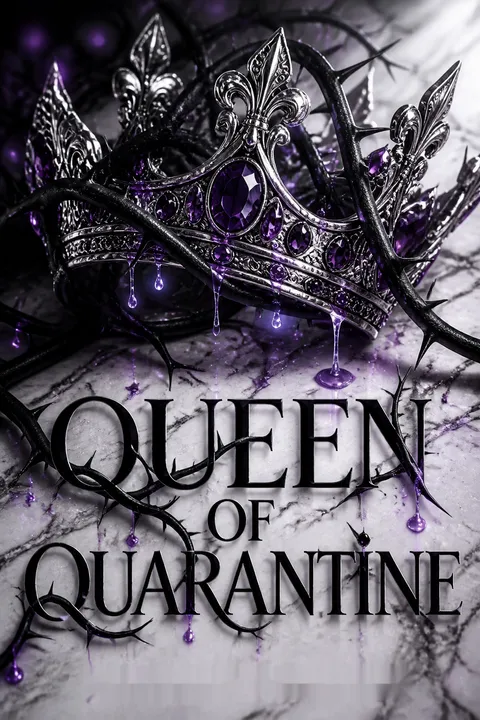
Queen of Quarantine concludes the Brutal Boys of Everlake Prep series with intense action, steamy romance, and character development. Readers praise the satisfying ending, engaging plot twists, and emotional depth. The book balances humor and darkness while exploring themes of love, family, and revenge. Many consider it the best in the series, appreciating the extended epilogues and character growth. Some critics found it overly long with excessive sex scenes. Overall, fans of dark reverse harem romance highly recommend the series for its unique take on the genre.
People Also Read



Characters
Tatum Rivers
The defiant queenTatum is the emotional and practical center of the story, a young woman shaped by a childhood of constant moves and her father’s survival training. She meets danger with resourcefulness rather than waiting for rescue: she fights captors, uses whatever tools are available, and keeps making choices even when she is ill or outnumbered. Her attraction to the Night Keepers grows alongside her insistence that love must not erase her independence. She wants the four men, but she also insists that each relationship be chosen openly and equally. Her tenderness toward damaged people coexists with a sharp appetite for justice, and her strength is not a refusal to feel fear but the ability to act while feeling it.
Saint Memphis
The calculating devilSaint is Troy Memphis’s son, a brilliant strategist whose need for control was shaped by a childhood of emotional and physical abuse. He trusts routines, plans, evidence, and leverage because unpredictability once meant danger. Tatum unsettles that system without simply replacing it; she teaches him that intimacy can involve imperfection and that love is not another problem to optimize. Saint remains arrogant, exacting, and capable of cruelty, but his loyalty gradually becomes less about possession and more about protecting a family he did not believe he could have. His music offers a private language for feelings he struggles to say plainly.
Kyan Roscoe
The inked stormKyan is a volatile, tattooed survivor raised in a criminal family and drawn toward violence, humor, and physical risk. He often masks fear with provocation, and he uses control in intimacy as a way to keep vulnerability at a distance. Tatum sees both the danger and the wounded person beneath it, without pretending the danger is harmless. His bond with her begins in possessiveness but grows into a shared commitment that includes the other Night Keepers. Kyan is fiercely loyal to the few people he considers family, especially his uncle Niall, and his struggle is to choose his own future rather than inherit the one his relatives have planned for him.
Blake Bowman
The golden fighterBlake is a gifted athlete whose warmth and humor conceal grief, anger, and a capacity for frightening violence. The death of his mother leaves him searching for someone to blame, and Tatum becomes entangled in that pain before he learns to distinguish her from the people who harmed his family. His loyalty is expressed through action: he follows Saint’s plans, fights for Tatum, and risks himself for his friends. Cooper’s approval matters deeply to him, even when Blake pretends otherwise. He grows from a young man ruled by retaliation into a partner who can acknowledge grief without letting it dictate whom he loves.
Nash Monroe
The fierce protectorNash is a teacher and former foster child who carries the trauma of losing his mother and brother to Troy’s violence. He is physically formidable, impulsive, and often willing to use force before anyone else has finished planning. His rage is not empty swagger; it is grief that has had nowhere safe to go. Tatum’s care gives him a reason to imagine life beyond revenge, while his growing bond with the other men offers a family he never expected to find. Nash remains dangerous, but he becomes more capable of choosing where his violence belongs and what he wants to protect.
Troy Memphis
The hidden tyrantTroy is Saint’s father, a wealthy and politically powerful man who believes that control, money, and status justify nearly any act. He treats people as assets or obstacles, including his own son, and uses secrecy to insulate himself from consequences. His confidence comes from building networks of influence rather than from genuine attachment. Saint understands his habits because he was raised under them, but he refuses to accept Troy’s idea that power must be solitary. Troy’s presence makes the private conflict between father and son inseparable from the public crisis surrounding the Hades Virus.
Niall O’Brien
The reckless uncleNiall is Kyan’s uncle, an Irish hitman whose humor, volatility, and improvisational violence make him both alarming and useful. He ignores conventional plans, carries an unpredictable assortment of weapons, and treats danger as something to meet head-on. Beneath that unruly surface is a man shaped by the loss of his wife and bound by a fierce loyalty to Kyan. He protects Tatum when the group is divided and helps the Night Keepers escape military custody. Niall’s grief has made him reckless, but his capacity for loyalty suggests he is not simply the monster he performs.
Liam O’Brien
The family patriarchLiam is Kyan’s grandfather and the head of a powerful Irish crime family. He values loyalty, legacy, and the practical use of power, expecting Kyan to inherit a place in his empire. His affection is expressed through provision and expectation rather than softness, and he treats family membership as a binding contract. Liam can be negotiated with when another person proves strong enough to change the terms, but he is never harmless. His relationship with Kyan tests whether kinship must mean obedience or can survive a refusal.
Cooper Bowman
Blake’s grieving fatherCooper is Blake’s father, a successful businessman who has been left isolated by grief and by the false story surrounding his wife’s death. He initially directs that pain toward Tatum and her father, believing blame is the only available explanation. Blake’s insistence on the truth gives Cooper a chance to reconsider what he has been told. He is still mourning, but his willingness to trust his son and welcome Tatum reveals a capacity to revise his beliefs rather than cling to resentment.
Karen Munt
The polished conspiratorKaren is a composed, ambitious woman embedded in the political and scientific circles surrounding Troy. She speaks of power as if it were the only reliable measure of worth, and her calm manner makes her convictions more unsettling rather than less. She presents herself as a visionary who is willing to sacrifice others for a new order. Her conflict with Tatum is rooted in competing ideas of strength, family, and responsibility. Karen sees moral limits as weakness; Tatum sees the ability to honor them as a form of courage.
Dr. Valerie De La Cost
The principled virologistDr. De La Cost is an accomplished virologist with a reputation for directing medical work toward broad public benefit rather than maximum profit. Saint chooses her after investigating her professional record, and she becomes a crucial partner in turning the stolen vaccine into a viable public resource. She is cautious when armed strangers arrive at her home, but her scientific seriousness and moral commitments allow her to assess the stakes. Her role links private acts of rescue to the larger task of preventing further deaths.
Jada
The disguised watcherJada is an O’Brien relative who has spent time near Everlake under the assumed identity of Rebecca, a maid employed by Saint. She is observant, confident, and skilled at maintaining a false persona without being detected by Saint’s careful vetting. Her work centers on watching over Kyan for the family, though she does not behave like a conventional spy or servant. Jada’s reveal reminds the group that their carefully controlled world has blind spots, and she takes pleasure in proving she can outmaneuver Saint.
Ashlynn
The possessive stalkerAshlynn is a former acquaintance whose fixation on Kyan distorts affection into entitlement. She sees Tatum as competition and interprets Kyan’s lack of consent as a temporary obstacle rather than a boundary. Her actions expose how coercion can hide beneath the language of devotion. She is dangerous not because she has the power of Troy or the O’Briens, but because she is willing to turn personal obsession into a campaign against the people Kyan loves.
Bait
The reluctant accompliceBait is an Everlake student who has clashed with the Night Keepers and becomes Ashlynn’s accomplice in escaping school custody. He is nervous, resentful, and less committed to her plan than she is, but he still helps carry it out. His presence complicates the Justice Ninja threat by showing that Ashlynn’s scheme relies on someone willing to assist her even while fearing the consequences.
Donovan Rivers
Tatum’s survivalist fatherDonovan is the father who raised Tatum and her sister while moving frequently and teaching them outdoor skills, self-defense, and independence. His advice gives Tatum a practical foundation for surviving captivity and rescuing others. He is remembered through concrete rituals and lessons rather than through idealization: camping, family meals, and preparation for an uncertain future. His bond with his daughters shapes Tatum’s belief that strength should protect people rather than rule them.
Jess Rivers
Tatum’s absent sisterJess is Tatum’s older sister and an important part of the family memories that sustain her. Tatum recalls their childhood games and the closeness they shared with their father. Jess remains present in Tatum’s inner life through letters and a necklace, giving the heroine a way to honor the family she has lost while still building a future with the Night Keepers.
Mila
Tatum’s steadfast friendMila is Tatum’s closest female friend, a warm and loyal presence outside the Night Keepers’ intense circle. She and Danny help the group by accepting vaccine doses and creating a false trail for their pursuers. Their friendship gives Tatum a connection to ordinary companionship, girlhood, and a life beyond the men she loves.
Danny
Mila’s loyal partnerDanny is Mila’s partner and a friend to Tatum. He helps the Night Keepers evade surveillance by driving decoy phones away from their route. His practical support is quiet but important, and his relationship with Mila offers Tatum a glimpse of a steadier form of romance.
Caesar Rivers
The firstborn troublemakerCaesar is Tatum and the Night Keepers’ first child, a spirited boy who inherits the family’s appetite for mischief and bold questions. He is curious, physically fearless, and quick to turn imaginary play into real trouble for his younger siblings. His parents respond with a mixture of discipline and laughter, showing how the household’s protectiveness has become a lively, everyday practice.
Rowan, Beau, and MJ
The youngest wild thingsRowan, Beau, and Michael Junior are the younger children in Tatum’s family. Their beachside games, sibling scuffles, and birthday-party chaos make the household feel lived-in rather than idyllic. They are cared for by all five parents, and their presence shows the Night Keepers turning a history of danger into a home where children can be noisy, loved, and safe.
Plot Devices
Tatum’s immunity
The body as a cureTatum’s father vaccinated her and her sister when they were young, leaving Tatum with immunity to the Hades Virus. Troy’s researchers exploit that resistance by repeatedly exposing her to the virus and harvesting antibodies. The same biological fact that makes her a target also gives the group access to the only known vaccine supply. The plot device raises the conflict between collective survival and individual consent, then changes when Dr. De La Cost can use the stolen doses to produce vaccine without continuing to treat Tatum as a resource.
The dying phone
A fragile trailTatum’s brief call from Jonas’s phone gives Saint a searchable name before the battery dies. Saint traces Jonas through an FBI contact, watches his movements, and follows him to the hidden laboratory. Later, the group’s phones and trackers help them locate one another during the Justice Ninja attack and military pursuit. Communication is consistently partial: signals fail, devices are seized, and battery life becomes a practical limit. The characters survive by combining technology with observation, improvisation, and knowledge of one another.
The Hades camps
Public health as controlThe state sorts residents into camps for infected people, uninfected people, and survivors whose antibodies might support vaccine development. Authorities present the system as protection, but the Night Keepers encounter armed enforcement, forced relocation, surveillance, and pressure to donate blood. The camps mirror Troy’s private laboratory on a public scale: both systems classify bodies according to their usefulness and restrict movement in the name of the greater good. The group’s escape and leaked footage expose the gap between official reassurance and coercive practice.
Royaume’s numbered files
Anonymity for the powerfulRoyaume D’élite conceals its members and transactions behind assigned numbers, allowing wealthy figures to coordinate crimes while denying visible responsibility. Kyan’s past experience helps the Night Keepers navigate the manor, and Saint’s access to the computer reveals the key linking numbers to names. The files provide leverage over Liam and evidence for authorities, while the club’s burning prevents the institution from continuing unchanged. The device makes secrecy concrete: a number hides a person until someone finds the record that connects them.
The wolf-pack bond
Protection through chosen familyThe Night Keepers’ bond is expressed through recurring acts of rescue, shared danger, tracking, and physical presence. It is not a supernatural force that removes their limitations; they make mistakes, are separated, and can be injured. Its practical effect is that no one has to face danger alone for long. Tatum repeatedly reverses the expected rescue pattern, while the men learn to treat her as a partner rather than a protected possession. The family’s later life extends the same structure into marriage, parenthood, and daily care.
FAQ
Synopsis & Basic Details
What is Queen of Quarantine about?
- A World in Chaos: Queen of Quarantine plunges readers into a dystopian America ravaged by the Hades Virus, where society has fractured, and a powerful elite exploits the vulnerable. The story follows Tatum Rivers, a young woman immune to the virus, whose blood holds the key to a vaccine, making her a valuable captive.
- A Queen and Her Keepers: Imprisoned and experimented upon, Tatum clings to the hope that her four "Night Keepers"—Saint, Kyan, Blake, and Monroe—will rescue her. These men, each with their own dark pasts and complex loyalties, are bound to Tatum by an intense, unconventional love that defies societal norms.
- Fight for Freedom & Justice: The narrative chronicles their desperate efforts to rescue Tatum, expose the corrupt forces behind the pandemic and a sadistic secret society, and ultimately forge a new life together, battling external enemies and their own internal demons in a quest for freedom, family, and justice.
Why should I read Queen of Quarantine?
- Intense Emotional Depth: The novel delves deep into the psychological and emotional scars of its characters, exploring themes of trauma, survival, and transformation, healing, and the transformative power of love. Readers are drawn into their raw vulnerabilities and fierce loyalties, making for a deeply immersive experience.
- Unconventional Relationship Dynamics: At its core, the story features a polyamorous reverse harem romance that challenges traditional notions of love and family. The intricate bonds between Tatum and her four men are explored with passion, complexity, and a focus on mutual growth and acceptance.
- High-Stakes Action & Intrigue: Beyond the romance, the book offers a thrilling ride through a world of conspiracy, crime, and rebellion. With constant threats, daring escapes, and a relentless pursuit of justice against powerful antagonists, the plot keeps readers on the edge of their seats.
What is the background of Queen of Quarantine?
- Pandemic-Stricken America: The story is set in the fictional U.S. state of Sequoia, mirroring a more extreme version of the real-world coronavirus pandemic. This backdrop creates a high-stakes environment where societal breakdown, forced quarantines, and the desperate search for a cure drive much of the conflict.
- Elite Corruption & Control: The narrative explores a world where powerful pharmaceutical companies and a secretive elite society (Royaume D'élite) exploit the crisis for profit and control. This highlights themes of systemic corruption, the abuse of power, and the vulnerability of ordinary citizens in times of crisis.
- Criminal Underworld Influence: The O'Brien crime family, a ruthless Irish mob, plays a significant role, providing a backdrop of organized crime, loyalty, and violence that intertwines with the main characters' lives and their fight against the established powers.
What are the most memorable quotes in Queen of Quarantine?
- "I am the dark in the dead of the night! Hear me roar!": This recurring mantra, first spoken by Saint and later adopted by the entire group, including Tatum, encapsulates their transformation from victims to formidable, unified forces. It symbolizes their embrace of their inner "monsters" and their collective power against their enemies.
- "You're not here to bow to the world, beautiful girl, you're here to make the world bow to you.": Tatum's father's enduring lesson, delivered in a childhood flashback, serves as her guiding principle throughout her captivity and fight for freedom. It highlights her inherent strength and defiance, shaping her journey from a "vaccine farm" to a powerful queen.
- "My love for her isn't any of those things. It's dark, twisted, dangerous and unstoppable. So if saving her means letting the rest of the world burn then pass me the fucking matches and I'll get the gasoline.": Kyan's raw declaration of love for Tatum reveals the depth of his devotion and the primal, destructive force he embodies when she is threatened. It underscores the extreme lengths the Night Keepers will go to protect her, prioritizing her above all else.
What writing style, narrative choices, and literary techniques does Caroline Peckham use?
- Dual Perspective & Internal Monologue: The narrative primarily alternates between Tatum's and the Night Keepers' (often Kyan, Nash, Blake, and Saint) first-person perspectives. This allows for deep dives into each character's psychological state, motivations, and emotional turmoil, providing a rich, multi-faceted understanding of their experiences and relationships.
- Visceral and Unflinching Prose: Peckham employs a raw, gritty, and often explicit writing style that doesn't shy away from violence, trauma, or sexual themes. The language is direct and impactful, immersing the reader in the brutal realities of the characters' world and their intense emotional and physical experiences.
- Symbolic Imagery & Recurring Motifs: Beyond explicit plot devices, the authors weave in subtle symbolic imagery, such as the contrast between light and dark, the recurring motif of animals (wolves, bears, squids) to represent primal instincts and pack dynamics, and the significance of physical marks like scars and tattoos as badges of survival and belonging.
Hidden Details & Subtle Connections
What are some minor details that add significant meaning?
- Jonas's Low Phone Battery: A seemingly trivial detail during Tatum's escape attempt, Jonas's phone being on 2% battery is a crucial plot point. It directly leads to Tatum's call to Saint being cut off, forcing the Night Keepers to track Jonas to find the lab, rather than getting Tatum's direct location. This small detail prolongs Tatum's captivity and intensifies the subsequent rescue mission, highlighting the precariousness of their situation.
- Niall's Sledgehammer "Mary": Niall O'Brien's affectionate naming of his sledgehammer, "Mary," and his lament over its loss ("She made such a beautiful sound when she hit a skull, it was music, lass, music") subtly reveals his deeply unhinged yet oddly sentimental nature. This humanizes his psychopathy, showing a twisted emotional attachment to his tools of violence, and foreshadows his later, almost paternal, protectiveness over Tatum.
- Saint's Preparedness for Apocalypse: The revelation that Saint has a "bag packed in this car for any eventuality since long before you came into our lives, siren" and his meticulous stocking of the safe house with food and supplies, including a "toilet paper throne," highlights his extreme foresight and control. This detail underscores his deep-seated need for order and preparedness, stemming from his traumatic upbringing, and subtly foreshadows his role as the group's long-term strategist and provider.
What are some subtle foreshadowing and callbacks?
- Tatum's Father's Lessons: Tatum's childhood memories of her father teaching her to "fight for the good days" and "make the world bow to you" are constant callbacks throughout the narrative. These lessons subtly foreshadow her resilience, her refusal to be a victim, and her eventual role in dismantling powerful organizations, demonstrating how his teachings shaped her into the "queen" she becomes.
- Saint's "Insignificant" Feeling: Early in the book, Saint reflects on feeling "insignificant" when caught in memories of his father's punishments. This foreshadows his later vulnerability and the deep-seated trauma that drives his need for control. His eventual confession of being "a broken boy in the body of a man" directly calls back to this internal struggle, showing his journey towards self-acceptance through Tatum's love.
- Kyan's Immunity and "Bulletproof" Tattoo: Kyan's casual mention of having already survived the Hades Virus and his later "bulletproof" tattoo on his scar subtly foreshadows his miraculous survival after being shot. It reinforces his self-perception as "too damn hard to kill" and highlights the thematic idea that their past traumas and physical scars become symbols of their enduring strength and resilience.
What are some unexpected character connections?
- Saint's Appreciation for Jada (Rebecca): The revelation that Jada, Liam O'Brien's spy (Rebecca), was also Saint's former maid and that he genuinely appreciates her "impeccable" service, despite her being a spy, is an unexpected connection. It highlights Saint's unique personality—his respect for competence and his ability to compartmentalize, even admiring someone who outwitted him. This subtle detail adds complexity to his character, showing a side beyond pure ruthlessness.
- Cooper's Past with Blake's Mom: The story reveals that Blake's father, Cooper, and his late wife had a deep, enduring love, symbolized by their matching bracelets. This connection provides a poignant backstory for Blake's own capacity for profound love and his vulnerability regarding loss. It also subtly explains Cooper's initial hostility towards Tatum, as he projects his grief and anger onto her, believing her father was responsible for his wife's death.
- Niall's "Prisoners": Niall's casual mention of having "friends" locked in his basement, including "the girl from Royaume D'élite" he purchased, is a disturbing yet unexpected connection. It hints at a complex, morally ambiguous side to his character beyond just being Kyan's "mad uncle." This detail raises questions about his own twisted sense of justice or protection, adding another layer to the O'Brien family's dark world.
Who are the most significant supporting characters?
- Niall O'Brien: Beyond being Kyan's eccentric uncle, Niall serves as a crucial chaos agent and unlikely savior. His unpredictable methods, such as using glitter grenades and yodeling as distractions, are vital to the Night Keepers' escapes. His deeply personal moral code, particularly his hatred for men who harm women due to his wife's murder, provides a twisted but effective motivation for his loyalty to Tatum and Kyan.
- Dr. Valerie De La Cost (Martina): As the virologist chosen to replicate the vaccine, Dr. De La Cost represents the hope for a wider societal solution to the pandemic. Her strong moral compass and dedication to equitable distribution, contrasted with Saint's blackmail tactics, highlight the ethical complexities of their mission and the balance between ruthless means and noble ends.
- Cooper Bowman: Blake's father, Cooper, is a significant figure representing the collateral damage of Troy Memphis's actions and the broader societal impact of the virus. His journey from grief-stricken anger and prejudice against Tatum to acceptance and familial love for her and the Night Keepers underscores themes of forgiveness and the healing power of truth.
- Mila and Danny: Tatum's best friend and her boyfriend, Mila and Danny, serve as a grounding force of normalcy and unwavering friendship. Their willingness to risk their safety to help the Night Keepers, such as creating a false trail for the army, emphasizes the theme of chosen family and the enduring strength of genuine human connection amidst chaos.
Psychological, Emotional, & Relational Analysis
What are some unspoken motivations of the characters?
- Saint's Need for Control: Beyond his perfectionism, Saint's deep-seated need for control is an unspoken motivation rooted in his childhood trauma. His father's "punishment" of making him a "ghost" in his own home, stripping him of agency and recognition, instilled a profound fear of powerlessness. His meticulous planning, desire for order, and even his dominant sexual preferences are all ways he reclaims and asserts control over his environment and relationships.
- Kyan's Self-Punishment & Healing: Kyan's tendency towards self-destructive behavior (heavy drinking, chain smoking, reckless fighting) and his initial reluctance to engage in tender intimacy with Tatum are unspoken manifestations of his trauma from Deepthroat's attempted rape. His need to "purge" the feeling of her hands from his skin, even through rough sex, reveals a deeper motivation to reclaim his body and agency, with Tatum's love serving as a catalyst for his healing.
- Monroe's Search for Belonging: Monroe (Nash) often feels like an "outsider" due to his background in the foster system and his perception of the others' wealth. His unspoken motivation is a profound desire for belonging and a stable family. His role as the group's anchor, his willingness to mediate, and his fierce loyalty stem from this deep need to protect the "home" he has finally found with Tatum and the Night Keepers, contrasting with his past of being disposable.
What psychological complexities do the characters exhibit?
- Saint's Perfectionism as a Shield: Saint's extreme perfectionism and rigid adherence to routine are not just quirks but complex psychological defenses. They are coping mechanisms developed to manage the chaos and unpredictability of his abusive childhood under Troy. His struggle to "let go" or deviate from his plans, even for love, reveals the deep-seated anxiety and fear of losing control that underpins his seemingly cold exterior.
- Blake's Self-Destructive Coping: Blake exhibits a complex psychological response to grief and trauma, often resorting to self-punishment (punching walls, reckless behavior) and emotional suppression. His "happy face" is a mask, and his need for physical exertion (running, fighting) is a way to channel his internal turmoil. His journey involves learning to process his pain more healthily, aided by Tatum's empathy and the acceptance of his chosen family.
- Tatum's Defiance Through Vulnerability: Tatum's psychological complexity lies in her ability to transform vulnerability into strength. Despite being physically weakened and emotionally traumatized by captivity, she uses her defiance, her "whore of four demons" persona, and even her sexuality to assert control and challenge her captors. Her willingness to be open about her desires and fears, especially in her polyamorous relationships, is a powerful act of self-acceptance and resilience.
What are the major emotional turning points?
- Kyan's Near-Death Experience: Kyan being shot and seemingly dying is a major emotional turning point for the entire group. It shatters their sense of invincibility and forces them to confront the fragility of their bond. For Tatum, it reignites her grief over Jess and her father, while for Saint, it pushes him to the brink of emotional collapse, revealing the depth of his love and dependence on Kyan.
- Saint's Confession of Childhood Trauma: Saint's raw confession to Tatum about his father's "ghost" punishment, where he was ignored for months, is a pivotal emotional turning point. It exposes the root of his control issues and vulnerability, allowing Tatum to see beyond his "devil" persona and deepen their emotional connection through shared understanding and empathy.
- Monroe's Acceptance of His Past: Monroe's confrontation with Saint about his trauma from his family's death and his eventual acceptance of his "flaw" of needing control is a significant emotional turning point. It allows him to articulate his pain and begin to heal, moving beyond vengeance as his sole driving force and embracing the love and belonging he finds with the Night Keepers.
How do relationship dynamics evolve?
- From Rivalry to Unified Front: The initial dynamic among the Night Keepers is one of possessive rivalry over Tatum. However, their shared trauma and the common goal of rescuing her forge an unbreakable, unified front. This evolves into a polyamorous relationship where individual desires are balanced with collective well-being, as seen in their "ground rules" and shared responsibilities.
- Tatum as the Emotional Core: Tatum's role evolves from a captive to the undisputed "queen" and emotional anchor of the group. She actively shapes the dynamics, challenging their individual coping mechanisms (e.g., Saint's control, Kyan's self-destruction) and fostering deeper emotional intimacy. Her ability to see and accept their "monsters" allows them to be vulnerable and heal.
- Shifting Power and Trust: The power dynamics within the group constantly shift, particularly between Saint's strategic leadership and the others' more impulsive natures. Trust is a hard-won commodity, tested by individual actions (Blake and Tatum's secret trip, Kyan's past). Their ability to forgive and reaffirm their commitment after betrayals strengthens their collective bond, demonstrating a mature, evolving relationship built on mutual respect and shared purpose.
Interpretation & Debate
Which parts of the story remain ambiguous or open-ended?
- Troy Memphis's Ultimate Fate: While Troy Memphis is ruined, his empire dismantled, and his reputation destroyed, his ultimate fate remains ambiguous. He escapes death at the Night Keepers' hands and vanishes, leaving readers to wonder if he will ever truly be found or if he will live out his days in hiding. This open ending suggests that some evils may never be fully vanquished, but their power can be broken.
- The Long-Term Societal Impact of the Virus: While the vaccine is successfully distributed and life "returns to normal," the long-term societal impact of the Hades Virus and the Hades Camps remains somewhat open-ended. The narrative hints at new laws and a changed world, but the full extent of how society rebuilds and if the lessons of corruption and control are truly learned is left for the reader to ponder.
- Niall O'Brien's Moral Code and "Prisoners": Niall's character remains morally ambiguous. While he proves a loyal ally and protector, his casual mention of having "friends" (including the girl from Royaume D'élite) locked in his basement, and his unhinged methods, leave questions about his true nature and the morality of his actions. His fate and the fate of his "prisoners" are not explicitly resolved, adding to the dark undertones of the O'Brien family.
What are some debatable, controversial scenes or moments in Queen of Quarantine?
- The "Punishment" Scenes: The scenes where Saint and Nash "punish" Tatum and Blake for perceived missteps, particularly the spanking and forced sexual acts, are highly debatable. While framed within the context of their dark romance and polyamorous dynamics, some readers may find these scenes controversial due to the power imbalance and the nature of the "punishments," sparking discussions about consent, control, and healthy relationships within dark romance.
- The Morality of Their Actions: The Night Keepers' methods, which often involve violence, blackmail, and destruction (e.g., burning Royaume D'élite, Saint's blackmail of Dr. De La Cost, Niall's casual murders), are morally ambiguous. This raises questions about whether their "justice" justifies their means, and if they are truly "heroes" or simply "monsters" fighting other monsters.
- Kyan's Trauma Response and Sexual Dynamics: Kyan's coping mechanism for his sexual assault trauma, which involves a preference for rough, controlling sex and his eventual exploration of being "topped," can be a controversial topic. The narrative portrays this as part of his healing journey, but it may spark debate about how sexual trauma is depicted and resolved in fiction, and the complexities of consent and desire within such dynamics.
Queen of Quarantine Ending Explained: How It Ends & What It Means
- Troy's Downfall and the End of Vengeance: The story culminates in Troy Memphis's complete downfall. Though he escapes death, his empire is shattered, his reputation ruined, and he is forced into hiding, stripped of his power and wealth. This signifies the thematic triumph of justice over corruption, and for Nash, it represents the release from his lifelong quest for vengeance, allowing him to finally "let go" of his hatred and embrace a future defined by love.
- Kyan's Resurrection and the Power of Love: Kyan's miraculous survival after being shot is a powerful symbol of resurrection and the enduring strength of the Night Keepers' bond. His recovery, against all odds, reinforces the theme that love and chosen family can overcome even the most devastating traumas. It solidifies the idea that their collective will and emotional connection are a force stronger than death itself.
- A New Beginning: Chosen Family and Unconventional Happiness: The final chapters depict the Night Keepers and Tatum building a new life together in their "Temple" by the sea, marrying, raising children, and embracing their polyamorous family. This ending signifies a hard-won peace and a future defined by their own rules, free from the shadows of their past. It emphasizes that true "home" is found in the people you choose to love, and that happiness can be forged even from the ashes of trauma and chaos.
Brutal Boys of Everlake Prep Series


About the Author
Other books by Caroline Peckham


Download PDF
Download EPUB
.epub digital book format is ideal for reading ebooks on phones, tablets, and e-readers.








