


Plot Summary
Prologue
Twenty years earlier, six-year-old Alexa1 hears the boy next door2 being hurt by his stepfather. When the eight-year-old2 stumbles into her yard, she risks her father’s anger to bring cotton and antiseptic, then tends the wound on his cheek.
The boy2 resists her help until she insists that his pain matters. They exchange names: Alexa Ballentine1 and Antonio Falco.2 She promises to remember him, but the next day police and ambulances gather at his home, and she never sees him again.
The prologue makes a childhood act of care the story’s first bond, but it also plants the danger that will shape the adult relationship: Antonio associates Alexa with a brief reprieve from violence, then loses her before he can understand what that kindness meant. For Alexa, helping is instinctive, even when it risks punishment. For Antonio, being helped is almost harder than being hurt because it awakens hope. Their names and her promise become a small, durable memory, one that will later be twisted by his belief that she owes him something.
The Hood at Her Door
In Sydney, Alexa1 is a warm but overworked caseworker who helps seventeen-year-old Tahlia10 win emancipation from her neglectful parents. Outside court, she spots the hooded man who has been appearing wherever she goes, then tries to dismiss her unease. That night, a stranger grabs her in her dark parking lot and threatens sexual violence.
The hooded man intervenes, beats the attacker, and carries Alexa1 to her apartment. His quiet care unsettles her almost as much as his violence: he knows where she lives, but she feels safe with him. He gives only the name Twitch,2 says a friend has handled the attacker, and refuses to explain why he has watched her.
The attack collapses Alexa’s professional distance from the harm she has spent years witnessing. Her work has taught her to recognize danger in other people’s stories, but this time her body supplies knowledge no training could provide. Twitch arrives as both rescuer and threat: his violence protects her, yet it makes him impossible to classify as simply safe. The contradiction is the relationship’s engine. Alexa’s instinct to care for people meets Twitch’s habit of controlling them, and she begins by interpreting protection as evidence of trust.
A Bed Shared in Shadows
After Alexa1 showers and changes, Twitch2 tends his injured knuckles while she cleans them, repeating the care she once gave the boy next door.2 He stays beside her through the night, then disappears before morning. Alexa1 hides the assault from her boss and friends, but keeps looking for Twitch2 at the park, where he watches from across the street.
Her friends Nikki4 and David5 offer ordinary warmth: Alexa1 comforts David5 after his breakup with Phil,13 while Nikki4 notices Alexa’s1 bruises and presses her to explain. Alexa1 evades the truth, partly because she cannot bear to describe the attack and partly because Twitch2 has become private to her. His brief visits turn into a ritual she begins to need.
The comfort Twitch offers is real, but it arrives inside a relationship built on secrecy and surveillance. Alexa’s decision to conceal the attack preserves her control over its telling, yet it also isolates her from friends who could support her. Her repeated return to the park transforms being watched into a source of reassurance. That emotional reversal matters: Twitch does not need to persuade her that his behavior is harmless if her fear and gratitude are already entangled. Meanwhile, Nikki and David represent a safer kind of intimacy, one Alexa can accept freely, even as she withholds the part of her life that most needs witness.
The Belt and the Exit
As Twitch2 keeps appearing at night, Alexa’s1 attraction grows alongside her confusion about his control. She asks him to show her the rough, dominating sex he prefers, and he warns her that he will not stop once he begins. She consents, but her uncertainty and his rigid rules make the encounter emotionally volatile. Afterward, Twitch2 leaves without offering reassurance.
Alexa1 feels used, becomes physically sick, and spends the following week searching for him while telling herself she should be relieved he is gone. His silence turns desire into humiliation. When he finally returns, it is not to her bedroom but to her workplace, dressed as a wealthy donor and ready to disclose a different part of himself.
The scene is not a simple discovery of sexual preference. Alexa seeks a way to reclaim agency after an assault, while Twitch makes surrender the price of closeness and treats departure as his prerogative. Her consent is present, but so are unequal power and emotional vulnerability, which the story does not fully resolve. His abrupt exit intensifies the very insecurity she hoped intimacy might quiet. The episode establishes a pattern in which erotic connection can feel liberating in the moment and damaging afterward, making care, consent, and control difficult to separate.
The Donor Behind Falcon Plastics
Twitch2 reveals that he co-owns Falcon Plastics, the company offering Alexa’s1 agency a major annual donation. At her office he turns their professional meeting into another sexual power play, then leaves the paperwork to his partner, Farid,6 known as Happy.6 Alexa1 later visits Twitch2 to understand the company and learns that its legitimate business conceals drug production and distribution.
The discovery should end her interest, but she is drawn further in, trying to understand both the man and the danger surrounding him. Twitch2 invites her to a charity masquerade at his mansion. Alexa1 brings Nikki4 and David,5 hoping the evening can remain a social outing, though she knows she is walking into Twitch’s2 world.
The donation gives Twitch a respectable public face and Alexa a material reason to meet him, but the charitable money cannot make his criminal enterprise benign. The contrast sharpens Alexa’s dilemma: she sees how badly underfunded services need help, while learning that the donor’s wealth comes from a business that harms people her work is meant to protect. Her continued attraction is not ignorance so much as a conflict between competing forms of knowledge. She knows what he does; she also experiences his tenderness directly. The story asks whether intimacy can survive that contradiction, without pretending the contradiction is harmless.
The Masquerade's Locked Room
At Twitch’s2 lavish masked ball, Alexa1 sees Ling,7 his longtime companion, pinned down and apparently assaulted by a man. Twitch2 holds Alexa1 back and makes her watch until Ling’s7 responses reveal that the scene is consensual role-play. He later explains that Ling’s7 sexual preferences grew from a traumatic past, and Alexa1 is shaken by how easily violence can resemble violation from the outside.
She also sees how casually Twitch2 treats the boundary between pain and pleasure. Unable to stay, she leaves the mansion, uncertain whether her own desires are drawing her toward danger. Twitch2 arranges a car for her friends and follows Alexa1 home. She lets him stay beside her, but his presence does not erase her questions.
Ling’s scene exposes the limits of reading consent from appearances, while also showing how easily a claim of private consent can be used to silence concern. Alexa’s alarm is not a failure of empathy; it is a response to what she sees and what Twitch asks her to accept. Ling’s history complicates judgment without making her preferences proof that every violent encounter is safe. For Alexa, the moment is a test of whether Twitch can explain himself rather than simply command trust. His willingness to follow her home offers attachment, but not yet accountability.
Michael's Way Off the Street
Alexa’s1 foster case Michael,3 a sharp teenager who wants to earn enough to live with his mother, admits that he has been dealing drugs. Twitch2 offers him a legitimate job and a path to further education, giving the boy money for proper clothes and insisting he leave the street trade. On Michael’s3 first workday, Hamid’s9 men beat him and deliver a threat to Twitch.2
Twitch2 takes Michael3 to confront Hamid,9 then gouges out the rival dealer’s9 eye and leaves him alive. Alexa1 sees the job as a chance for Michael,3 but Twitch’s2 response reveals the cost of placing a vulnerable teenager inside his criminal orbit. Michael3 also begins pursuing Tahlia,10 the young woman Alexa1 helped emancipate, and Twitch2 supports the budding date.
Twitch’s offer to Michael is both a genuine act of investment and an act of recruitment into a dangerous world. He gives the teenager what institutions often fail to provide: money, work, and a future he can imagine. Yet the job cannot be separated from the violence that enforces Twitch’s authority. His retaliation teaches Michael that protection comes through fear and injury, not through escape from the system of dealing. Alexa’s hope for the boy and Twitch’s desire to rescue him briefly align, but their methods are fundamentally different, and the risk of that difference is already visible.
Cocaine Under the Spotlight
Over dinner with Twitch,2 Alexa1 learns that he once forced himself through crack withdrawal in isolation and replaced drugs with compulsive exercise and candy. At a later house party, she accepts marijuana from him, then takes cocaine offered by Ling,7 despite knowing a failed drug test could cost her job.
High and disoriented, Alexa1 dances before the guests; when a man touches her, Twitch2 beats him nearly unconscious. He carries Alexa1 upstairs, leaves her under freezing water, then discovers her shivering and dangerously ill.
A doctor treats her dehydration and a fever. Twitch2 arranges for someone to falsify her workplace drug screen, sparing her job but deepening her dependence on his intervention. After a week apart, he returns with a costly wardrobe and lingerie.
The party brings together Alexa’s desire to loosen control, Twitch’s unresolved addiction, and the professional obligations that give her life structure. Her drug use is not a consequence-free experiment: it endangers the work through which she has built independence. Twitch’s rescue afterward is compromised by his own negligence, and his solution to the drug test protects her by corrupting the institution she serves. The episode makes care feel simultaneously intimate and coercive. He can remove immediate consequences, but each act of rescue also increases the practical and emotional costs of leaving him.
A Promise Without Labels
When Twitch2 returns with shopping bags, Alexa1 confronts him about disappearing and asks him to seek psychiatric help. He reacts angrily to being labeled, then turns their conflict into sex; afterward Alexa1 admits she loves him and cannot abandon him. Twitch2 agrees to try to treat her better and calls himself Tony,2 a small disclosure that brings them into a more explicit relationship.
They begin sharing ordinary pieces of their lives, including food, childhood memories, and Alexa’s1 history as a street kid. Their tenderness grows, but Tony2 remains possessive and violent. When he casually calls her one of his girls, Alexa1 leaves for a bar. He retrieves her, threatens a man who approaches her, and insists that she belongs only to him.
Commitment arrives here as both a meaningful change and an unstable bargain. Alexa asks for help because she sees a person beneath Tony’s violence, but her impulse to care risks turning love into a substitute for treatment. Tony’s use of his name signals trust, while his possessive behavior shows how little he has relinquished control. Alexa’s departure from the house and his retrieval of her dramatize their competing ideas of attachment: she needs the freedom to leave; he experiences that freedom as abandonment. Their new tenderness is real, but it has not yet altered the structure of power between them.
The Boy Beneath the Hood
As Alexa1 tells Tony2 about the abused boy she helped as a child, she remembers the name Antonio Falco2 and the wound on his cheek. Tony2 realizes that she has kept her promise and never forgot him. His fixation began with that brief kindness, but over the years he turned gratitude into grievance, imagining that Alexa1 had abandoned the hope she gave him.
His friend Julius8 later fills in the violence behind that history: Tony’s2 stepfather tried to kill him, and Tony2 grew up in juvenile detention with lasting anger and trauma. Julius8 warns Alexa1 that Tony2 can hurt her, but she stays, believing he needs help. Their shared past explains the bond, though it does not excuse Tony’s2 choices.
Recognition gives the romance a deeper origin, but it does not retroactively make the years of surveillance or manipulation romantic. Alexa’s childhood kindness was freely given; Tony’s later belief that she owed him converts it into an imagined contract. Julius’s account supplies context for Tony’s rage without reducing him to his trauma. The distinction is crucial: a history can explain behavior while leaving responsibility intact. Alexa gains knowledge that helps her understand Tony, yet understanding also risks becoming the reason she tolerates conduct she would reject from anyone else.
The Cost of Michael's Job
Michael3 accompanies Happy6 on a drug delivery after Twitch2 allows him to see the company’s criminal operation. Hamid’s9 men ambush them; a runner dies, Happy6 is wounded, and Michael3 is shot in the back. He dies at the hospital despite emergency treatment. Twitch2 tells Alexa1 what happened, and she blames him for bringing a boy she had tried to protect into the violence.
She refuses his touch and walks away, then breaks the news to Tahlia,10 whose hoped-for date with Michael3 will never happen. Tahlia’s10 grief comes through the phone after the call ends, and Alexa1 listens rather than abandoning her. The loss destroys Alexa’s1 faith that Twitch’s2 protection can keep the people around him safe.
Michael’s death is the consequence of a chain of choices, not an unforeseeable interruption: Twitch employed him, exposed him to criminal work, and permitted him to accompany Happy on a dangerous delivery. His attempt to give Michael a future is sincere, but intention cannot cancel risk. Alexa’s accusation names the moral fact he has tried to evade: the same world that gives him power also consumes the people he brings close. Her call with Tahlia returns her to her caseworker role at the moment that role feels most powerless. Grief becomes both personal loss and a judgment on the life Twitch offers.
The Secret That Breaks Them
After Michael’s3 death, Alexa1 discovers she is pregnant and tries to tell Tony2 while Hamid’s9 threat reaches her in a photograph warning that she is next. Tony2 instead turns cold and tells her that her presence has ruined his life. He finally explains that he tracked her down, planned to control her, and hired the man who attacked her as a way to create a debt and force an opening.
He insists the attacker was not meant to go so far, but admits that his intervention was part of his scheme. He identifies himself as Antonio Falco,2 the boy Alexa helped. She leaves, devastated by the betrayal, and tells him in the elevator that she is carrying his child. Tony2 says he will come for them both.
The revelation changes the meaning of the rescue without erasing its reality: Tony stopped the assault, but he had engineered the danger that made his intervention possible. His claim that the attacker exceeded instructions does not restore Alexa’s consent or undo the terror he deliberately set in motion. The childhood connection explains why he targeted her, yet it also reveals how he converted a gift into entitlement. Pregnancy raises the stakes beyond their romance, while Hamid’s threat makes separation physically dangerous. Alexa’s decision to leave is not a failure of love; it is an attempt to reclaim moral and bodily choice.
Hamid's Last Shot
As Alexa1 leaves Falcon Plastics, Hamid,9 now wearing an eye patch after Tony’s2 earlier attack, draws a gun and aims at her. Tony2 shouts for her to run, but she turns toward him. Tony2 shoots Hamid9 dead, then collapses with a bullet wound in his neck. Happy6 helps get him to hospital while Alexa1 waits beside him, trying to believe his assurances that he will survive.
Tony2 falls into an induced coma and, after a week, is declared dead. Alexa1 mourns him while pregnant and grieving Michael,3 then raises their son without him. The ending initially presents Tony’s2 death as the final cost of his violent life, leaving Alexa1 to build a future from its wreckage.
The final confrontation compresses the novel’s central conflict into one choice: Alexa turns toward Tony even after learning he created the circumstances of their first meeting. That gesture is not proof that the betrayal has been forgiven; it is the reflex of a bond formed through years of danger, tenderness, and dependency. Tony’s violence stops Hamid, but it cannot guarantee a safe future. The apparent death forces Alexa to live without the man who has repeatedly made himself both her protection and her peril. The climax resolves the immediate threat while leaving the emotional consequences unfinished.
Epilogue
Five years later, Alexa1 brings their four-year-old son, AJ, to visit Tony’s2 grave. She is raising him alone and still mourns the man she loved.2 AJ leaves M&M’s on the headstone, while Alexa1 tells Tony2 that she and their son still feel watched.
The final perspective overturns the grave’s promise of closure: Tony2 is alive, observing them from a distance with binoculars. He has allowed them to believe he died, convinced that staying away is the safest gift he can give. He watches AJ grow and thinks of the boy as the possibility of redemption, though he still intends to return to them.
The epilogue offers a reunion deferred rather than a clean resolution. Alexa’s visit to the grave gives her a place to express grief, while AJ’s small offering links the father he never knew to the candy that marked Tony’s habits and vulnerability. The revelation that Tony lives transforms mourning into another form of surveillance: he watches over his family while withholding the truth and their right to choose whether he belongs in their lives. His absence may be intended as sacrifice, but it repeats his defining pattern of deciding what others need without asking them. The ending leaves redemption as a promise, not an accomplishment.
Analysis
Raw builds its romance around a difficult distinction between being understood and being safe. Alexa’s1 work has taught her to see the person beneath damaging behavior, and Tony’s2 history gives his anger a comprehensible source. But comprehension is not absolution. His childhood trauma, addiction, and juvenile detention explain how he learned to treat control as protection; they do not excuse stalking Alexa1 or arranging the attack that he later interrupts. The novel’s most consequential betrayal is therefore not that Tony2 is a criminal, but that he creates the danger from which he then saves her.
The sexual relationship intensifies this ambiguity. Alexa1 approaches dominance as a way to recover agency after being threatened, and the story takes her desire seriously rather than treating it as evidence that she is broken. Yet Tony’s2 private commands cannot be separated from his broader possessiveness, his access to her routines, and his use of emotional pressure. The contrast between negotiated role-play and real coercion is the book’s sharpest psychological problem. Consent is not made simple by attraction, gratitude, or a partner’s belief that he knows what someone needs.
The foster-care thread offers a counterpoint to Tony’s2 version of rescue. Alexa1 helps Tahlia10 pursue independence and encourages Michael3 to imagine a future beyond dealing. Tony2 also offers Michael3 work and education, but places him inside the violent system he claims to protect him from. Michael’s3 death makes the cost of that contradiction irreversible. It also forces Alexa1 to recognize that love cannot make Tony’s2 world safe for the people she cares about.
The ending refuses easy redemption. Tony’s2 apparent death lets Alexa1 build a life with their child, but his hidden survival preserves the same pattern of secrecy and unilateral choice that damaged their relationship. His distance may be meant as sacrifice; from Alexa’s1 perspective, it is another decision made without her. The story closes on hope, but leaves the harder work of accountability and freely chosen reunion still ahead.
Review Summary
Raw receives polarizing reviews, averaging 4.1 stars. Fans praise its intense, gritty storytelling, complex anti-hero Twitch, and scorching chemistry with heroine Lexi. Many were emotionally devastated by the ending, hoping for a sequel. Critics cite a too-stupid-to-live heroine, implausible plot points, excessive filler sex scenes, weak justification for Twitch's stalking, and concerns about romanticizing dangerous behavior. The writing style divides readers, with some finding it compelling and others off-putting. Most agree the non-HEA ending is shocking, leaving readers simultaneously heartbroken and hungry for more.
People Also Read








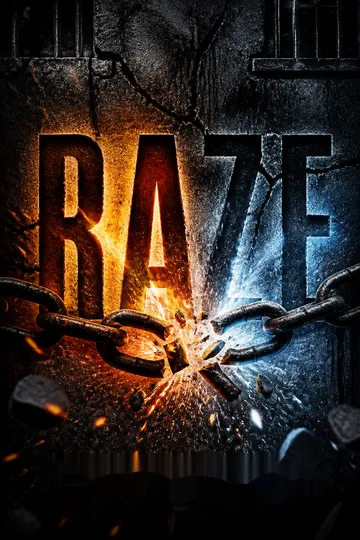

Characters
Alexa Ballentine
Streetwise foster advocateAlexa is an American-born caseworker in Sydney who gives vulnerable teenagers the practical help and steady affection she once needed herself. She is observant, funny, and compassionate, but her habit of rescuing others can blur the line between empathy and self-neglect. Her work requires her to read what people conceal, while her own feelings make her vulnerable to believing that understanding someone means she can keep them safe. Alexa values independence and choice, yet she is drawn to experiences that ask her to surrender control. Her central tension is not whether she can care, but whether she can care without making herself responsible for another person’s survival.
Twitch
Possessive self-made kingpinTwitch is a tattooed, wealthy businessman who is guarded, watchful, and accustomed to controlling every room he enters. He uses candy, exercise, and work to manage an addictive temperament, while violence remains his quickest response to fear or frustration. His history has taught him to treat attachment as both a need and a threat, so he tries to secure closeness through possession rather than trust. Alexa’s1 compassion draws out a tenderness he rarely shows, but tenderness does not automatically make him safe. His struggle is to distinguish protection from ownership and to accept that love cannot erase the consequences of his choices.
Michael
Determined foster teenMichael is an intelligent teenager in Alexa’s1 care who wants to support himself and reconnect with his mother. His pride makes him reluctant to date until he believes he can provide for someone, while his desperation pushes him toward dangerous ways of earning money. He responds to people who treat him as capable rather than disposable. His growing respect for Twitch2 gives him a model of confidence and opportunity, but also places him near risks he does not fully control.
Nikki Palmer
Loyal irreverent confidanteNikki is Alexa’s1 Australian best friend, quick to joke and just as quick to notice when Alexa1 is hiding pain. She offers affection without making it feel like a professional intervention, though her protectiveness can sharpen into blunt confrontation. Her friendship gives Alexa1 a place to be messy, funny, and loved outside the demands of casework. Nikki is also socially adventurous and comfortable questioning conventional relationship rules.
David Allen
Tender theatrical confidantDavid is Alexa’s1 close friend, expressive, affectionate, and fond of dramatic costumes, show tunes, and comic observations. His sensitivity is not a weakness; he trusts Alexa1 enough to show grief openly and returns that trust with loyalty. His romantic life gives the friends a recurring source of humor and heartache, while his acceptance of unconventional relationships reflects the intimacy he shares with Nikki4 and Alexa1.
Happy, Farid Ahmadi
Protective business partnerHappy, whose given name is Farid Ahmadi, is Twitch’s2 business partner and trusted friend. Large and imposing, he is more patient and emotionally perceptive than his appearance suggests. He handles security, manages crises, and often acts as a buffer between Twitch’s2 impulses and the people affected by them. His loyalty is deep, but he is willing to challenge Twitch2 when the latter’s choices threaten their business or someone’s safety.
Ling
Guarded survivor enforcerLing is a sharp, stylish woman who lives and works within Twitch’s2 circle and shares his taste for sexual power games. She protects herself with sarcasm, pride, and an ability to read the room before others do. Her history has left her with complicated boundaries and a fierce need to control how she is seen. Ling can be cruel, but she is not reducible to the role of rival; her choices reveal how people shape intimacy around experiences they have survived.
Julius
Oldest friend and conscienceJulius is Twitch’s2 longtime friend from juvenile detention, a polished and perceptive man who understands the history beneath Twitch’s2 bravado. He knows how much damage trauma can leave behind, but does not confuse explanation with permission. His loyalty makes him protective of Twitch2, while his concern for Alexa1 leads him to challenge the relationship. Julius is one of the few people able to confront Twitch2 without treating him as either a monster or a lost cause.
Hamid
Rival one-eyed dealerHamid is a calculating dealer who competes with Twitch2 for power and territory. He favors intimidation and opportunism, treating vulnerable young workers as useful pieces in a larger contest. His conflict with Twitch2 gives the criminal plot an external pressure that exposes the danger beneath Twitch’s2 promises of protection. Hamid’s presence makes clear that Twitch2 is not the only person capable of turning violence into leverage.
Tahlia
Self-reliant young clientTahlia is a seventeen-year-old who has already left her parents’ home, found work, and made a life for herself. Alexa1 supports her bid for emancipation because Tahlia has demonstrated maturity through action, not merely claimed it. She is connected to Michael3 through their shared youth and desire for independence. Tahlia’s hopes make Alexa’s1 professional work feel personal, while her directness keeps her from being treated as only a case file.
Charlie
Gentle workplace mentorCharlie is Alexa’s1 considerate supervisor at the social services agency. He notices when her usual humor disappears, trusts her judgment, and gives her meaningful responsibility because he sees how seriously she takes the people she serves. His calm encouragement contrasts with the volatility of Alexa’s1 private life. Charlie represents a workplace built around collaboration and care rather than control.
Nox
Trusted private investigatorNox is an investigator from Twitch’s2 wider circle who was hired to locate Alexa1. He is competent, candid, and sufficiently loyal to warn Twitch2 when he believes Alexa1 may be in danger. His work helps connect Twitch’s2 long pursuit of her with the criminal world that surrounds him.
Phil
David's former partnerPhil is David’s5 boyfriend at the beginning of the story, a personal trainer whom Alexa1 first meets while helping David5 pursue him. His relationship with David5 gives Alexa1 a chance to act as both friend and matchmaker. Their conflict reveals how pride and insecurity can damage a relationship even when affection is genuine.
Joe
Warm Italian chefJoe runs the Italian restaurant where Twitch2 takes Alexa1. He is animated, welcoming, and determined to choose a generous meal for his guests. His easy familiarity with Twitch2 shows that Twitch2 can maintain relationships outside the world of intimidation, even if Alexa1 is still learning what those relationships mean.
Plot Devices
The childhood promise
Memory becomes a claimAlexa’s1 childhood promise to remember Antonio2 gives the adult story its hidden emotional root. For her, the encounter is one of many acts of care that shape her work and values. For him, it becomes an unusually vivid memory that he revisits until a brief kindness grows into fixation. The device connects the prologue to the later identity revelation, but it also exposes a moral imbalance: Alexa1 never agreed that helping a frightened child would bind her to him for life.
The watcher
Protection hides surveillanceTwitch’s2 repeated appearances at Alexa’s1 workplace, park, and home create the story’s central uncertainty. His surveillance helps him intervene during the parking-lot attack, which makes his attention feel protective to Alexa1. The same behavior also denies her privacy and allows him to know her routines without her consent. As attraction grows, the watcher becomes a source of comfort as well as alarm. The device keeps the reader balancing two truths: Twitch2 does protect Alexa1 from immediate danger, and he is also the person who has been monitoring her.
Falcon Plastics
Respectability masks criminal powerFalcon Plastics functions as a legitimate corporation and a source of substantial charitable donations, while also concealing Twitch’s2 drug operation. The double identity lets him move between boardroom respectability and underworld authority. It also brings him into Alexa’s1 professional life through a donation to services she cares about, tying her work to his wealth before she knows how that wealth is made. Once she learns the truth, every offer of help becomes harder to interpret: charity can fund real good while leaving the machinery that produced the money intact.
Sexual power play
Control tests trustThe belt, commands, and role-play give Twitch2 and Alexa1 a language for desire that sits uneasily beside the control he exerts outside the bedroom. Alexa1 is drawn to surrender partly because it offers a chosen structure after a frightening assault, while Twitch2 reads compliance as proof of belonging. Their encounters range from explicit warnings and consent to moments where his manipulation and possessiveness compromise genuine choice. The device is therefore not a simple symbol of liberation or abuse. It makes the reader attend to the difference between negotiated surrender and control imposed by someone who has already shaped the circumstances.
The false grave
Absence pretends to protectThe apparent death allows Tony2 to remove himself from Alexa1 and their son’s daily life while still watching them from a distance. The grave gives Alexa1 a public explanation for her loss and provides the story with a delayed revelation that he is alive. His choice is framed as an effort to protect them from his dangerous world, but it repeats his habit of making consequential decisions for Alexa1 without her knowledge. The device leaves the romance unresolved: physical absence may reduce immediate danger, but it does not repair the deception or give the family a chance to choose what comes next.



Download PDF
Download EPUB
.epub digital book format is ideal for reading ebooks on phones, tablets, and e-readers.








