


Plot Summary
Prologue
As a child, Boy is dragged into an Alaskan prison where guards force children to fight to the death for gamblers. He watches one young fighter kill his opponent, then collapse in horror, and understands the future waiting for him.
The guards strip the boy of his name and call him 818. Years of drugs, beatings, and brutal matches erase nearly everything he remembers. He becomes a champion known for killing without hesitation, a weapon built inside a cage.
The opening makes violence an institution before it becomes an individual trait. 818 is not born a monster; adults profit from turning a child into one, then treat his survival as proof that the system works. The scene also plants the story’s central conflict between imposed identity and remembered self. The boy’s horror at the first death suggests that something human survives beneath the conditioning, even when he can no longer access it. His number is both a label and a substitute for a history the prison has deliberately destroyed.
The Alleyway's Hooded Savior
Kisa Volkova is the Bratva boss’s daughter, engaged to Alik Durov, a champion fighter who treats her body and movements as his property. She endures his violence because she believes she has no safe way out, and the church food truck offers one of her few hours beyond his surveillance. While delivering food alone, she is knocked down and threatened with a knife.
A huge hooded stranger attacks her assailant, breaks his neck, then flees before she can learn his name. Talia, Kisa’s friend, helps conceal the killing from Kisa’s father and Alik. On the ride back, Kisa spots her rescuer sitting among the homeless with a jar for donations. Gratitude turns into an urgent need to find him.
Kisa’s rescue gives her first contact with a man whose violence is not aimed at controlling her. That difference matters more than the killing itself: Alik uses force to claim, while the stranger intervenes and leaves. Kisa’s choice to keep the incident secret is not simple recklessness. She knows Alik would interpret any unexplained man as a rival and punish both of them. The alley therefore establishes the risks that will govern her choices, while her attraction to the rescuer begins as a challenge to the small, carefully policed freedom she has managed to preserve.
818 Escapes the Gulag
A month before Kisa meets him, 818 is trapped in a cell during a riot at the Alaskan Gulag. He has only a name, an address, and a command carved into his wall: Alik Durov, Brooklyn, revenge. His fellow fighter 362 unlocks his cell, and 818 kills the guards who once tortured him before escaping into the forest.
He learns he is in Alaska, then spends weeks stowing away on boats, stealing food, and riding freight trains toward New York. When he reaches Brooklyn, he recognizes the city without understanding why. He finds Alik but cannot attack him in public, so he seeks entry to the Dungeon, the Bratva’s death-match ring. He has no money, and begins begging on the street to raise the buy-in.
The flashback converts the hooded stranger from a mysterious rescuer into a person moving according to a single surviving instruction. Revenge is the only piece of his past that remains intact, so it functions as both compass and prison. His escape is physically real but psychologically incomplete: freedom brings him into a city that feels familiar, yet he cannot name what he has lost there. The contrast between his years of forced fighting and his deliberate attempt to enter another ring shows how thoroughly survival has narrowed his idea of choice. The Dungeon becomes his route to Alik and the only world he knows how to navigate.
A Face from the Past
Kisa’s grief has a history: as children, she loved Luka Tolstoi, the kind boy who protected her from Alik. Luka and Kisa believed a blue mark in his brown eye matched her blue eyes, and their families treated the resemblance as a sign they belonged together. Twelve years earlier, Luka was accused of killing Kisa’s twin brother, Rodion, then was presumed dead in a transport accident.
On Luka’s birthday, Kisa returns to the streets to find the man who saved her. He asks for ten thousand dollars to fund his revenge, and she takes cash from the gym’s safe to give it to him. When he finally lifts his hood, she sees Luka’s distinctive eye. He runs before she can speak, leaving her certain she has seen a ghost.
The eye is a concrete clue with an emotional charge because Kisa has spent years using it to keep Luka present in her mind. Her recognition is not proof, and the possibility feels dangerous precisely because she has already built a life around his supposed death. Giving the stranger money before she knows his purpose also reveals Kisa’s moral complication: she helps a violent man pursue revenge, but does so from gratitude and an instinctive sense of connection. The scene binds memory to the body, suggesting that identity may persist in recognizable details even when conscious recollection has been stripped away.
The Dungeon's New Fighter
The money Kisa gives the beggar buys him a place in the Dungeon. He calls himself Raze, trains under the drunken Georgian Viktor, and refuses to offer any other name. Kisa manages the fight operation for her father, Kirill, and notices that the scarred newcomer is strong enough to threaten Alik’s dominance.
When she meets Raze, his brown eye carries the blue mark she recognizes, but he insists he is there only to kill Alik. Kirill watches Raze defeat two challengers with startling speed and moves him onto the championship roster.
Alik resents the newcomer and turns his anger on Kisa, using sex and threats to reassert control. Raze sees Alik hurt her, but Viktor warns him that attacking the Bratva heir before the final could ruin his revenge.
The Dungeon makes private brutality into public spectacle, and its business logic rewards exactly the traits that have damaged Raze and Alik. Kisa’s administrative role gives her proximity to power without giving her power over her own life. Raze’s skill makes him valuable to Kirill, but also places him under the same criminal structure that once traded in captive fighters. His recognition of Kisa is immediate in bodily terms, yet his conscious purpose remains fixed on Alik. The section’s tension comes from incompatible forms of possession: Alik claims Kisa through coercion, while Raze’s instinct to protect her is not yet separated from his need to destroy Alik.
Blood in the Championship
At the championship, Raze fights the Chechen Viper, a murderer armed with a spiked chain. Following Viktor’s advice, Raze waits for the chain to swing, then strikes the man’s kidney and lung before finishing him with the Viper’s own weapon. The crowd is stunned by how quickly he wins. Alik, meanwhile, prolongs his own opponent’s death, confirming the cruelty that Kisa has learned to fear.
Raze finds Kisa watching from a private box and feels an unfamiliar pull toward her. After Alik taunts him about having just forced Kisa to submit, Raze nearly attacks him, but Viktor steers him away. The memory of a boy defending a girl from Alik flickers through Raze’s mind, giving his rage a shape he cannot yet understand.
The contrast between the two fighters is not that one kills and the other does not. Both have been shaped by violence, but Raze’s swift finish rejects the crowd’s appetite for prolonged suffering, while Alik performs cruelty as proof of mastery. Kisa’s position above the ring lets her witness both forms of power without being able to stop either. Raze’s memory arrives as a fragment rather than an explanation, illustrating how trauma can return first as affect: jealousy, protectiveness, and recognition before coherent history. His restraint is therefore an early act of agency, even though Viktor must help him maintain it.
A Name Beneath the Scars
After Alik leaves the gym, Kisa finds Raze sleeping in a training room and chooses to stay with him. Their attraction becomes intimacy, but when Raze nearly takes her in a way learned through abuse, Kisa stops him and guides him toward a consensual encounter. The difference unsettles him. He admits that guards in the Gulag repeatedly raped him when he was a child, and that he has no memory of life before captivity.
Kisa comforts him rather than recoiling. He notices their matching eyes and recalls fragments of a beach, sunlight, and the sea. He also recognizes the name Kisa-Anna as if it belongs to her. Kisa becomes increasingly convinced that Raze is Luka, but avoids forcing the conclusion before his memories can return.
This encounter makes intimacy a site of learning rather than simple escape. Raze’s first instinct reproduces the only sexual script captivity has taught him; Kisa’s refusal and guidance establish a boundary he can understand without being shamed for what was done to him. His disclosure also changes the meaning of his physical power. The body that terrifies others is a record of injuries and survival, not evidence of invulnerability. For Kisa, care becomes a way to test recognition without demanding it. Their connection gains substance through what each does: she protects his agency, and he begins to experience closeness without violence as its price.
The Friend in the Cage
Alik’s father arranges a formidable opponent for Raze: Goliath, who is actually 362, Raze’s closest companion from the Gulag. The two men recognize each other in the cage and learn that the Georgian mob has forced 362 to fight, promising freedom if he wins.
Neither can simply walk away; armed guards and the crowd demand a death. They renew their commitment to seek revenge, then fight. 362 gains the upper hand and nearly kills Raze, but Raze sees Alik forcing Kisa to watch and finds strength to reverse the struggle.
He kills 362 with his bladed knuckles. Afterward, Raze is devastated, marks the death more deeply into his skin than his other kills, and tells Kisa he has killed his only friend. The loss makes him question the revenge that has defined his life.
The forced match exposes the Gulag’s logic at its most intimate: the system turns friendship into an instrument of spectacle and leaves survival as the only available excuse. Raze wins, but the victory cannot be absorbed as another tally because 362 was not an anonymous opponent. His grief marks the return of moral feeling, not a weakness that the ring has failed to eliminate. Kisa’s presence gives him a reason to fight, yet the scene also shows the cost of making love the sole alternative to violence. His new remorse creates a question revenge alone cannot answer: what could he become after the target is gone?
The Beach Gives Him Back
Kisa brings Raze to their childhood cove at Brighton Beach. The familiar sand and sea unlock memories of their first kiss, their private rituals, and the promise they made as children. Raze begins to remember that he is Luka Tolstoi, Kisa’s first love.
The same night, he recalls what happened at the falls: Alik stabbed Rodion, then injured himself and framed Luka for the murder. Alik wanted Kisa and the Bratva succession, while his father Abram arranged to have Luka removed.
On the transport toward Russia, Georgians ambushed the bus, killed the driver, and abducted the boys for the Gulag. A staged crash and burned bodies concealed Luka’s disappearance. With his history returning, Luka knows he must face Alik not only for revenge, but to reclaim the truth.
The cove operates as a sensory archive: the setting restores memory through smell, touch, and repeated childhood gestures rather than through deliberate interrogation. Luka’s past returns alongside a revised moral map. He was not the killer he had been made to believe himself to be, and the people who condemned him were not merely mistaken but actively protecting power. The revelation links private desire to political succession: Alik’s obsession with Kisa and his ambition to inherit the Bratva become parts of the same crime. Memory restores Luka’s name, but it cannot restore the twelve years stolen from him, so justice and recovery remain distinct tasks.
Alik Turns on Kisa
Alik discovers that Kisa has been meeting Raze and follows her and Luka to Brighton Beach. He takes her to a hidden shack where he has used women and carried out violence. Kisa confronts him with what she knows about Rodion and Luka, but Alik admits his role without shame: he killed Rodion, framed Luka, and wanted Kisa for himself.
When she tells him she loves Luka, Alik beats and sexually assaults her, then leaves her locked inside, badly injured. He intends to kill Luka in the championship final and marry Kisa afterward. Serge refuses to abandon her and Alik shoots him in the car. After Alik leaves, Kisa manages to escape the shack and borrow a phone from a dockworker, calling Talia to take her to the fight.
Alik’s confession strips away the story Kisa used to survive him: that he needed her, and that her obedience could keep his violence manageable. His assault is retaliation for her choosing someone else, but it also exposes how little he understood her beyond possession. Serge’s death makes the cost of that system immediate and personal; loyalty cannot protect those who stand between Alik and control. Kisa’s escape is physically frail but psychologically decisive. She no longer hides the truth to prevent Alik from unraveling. She acts despite injury because silence would leave Luka and the rest of the family inside the lie.
The Family Learns the Truth
While Luka and Alik are already fighting, Talia drives the injured Kisa to the Dungeon. Kisa refuses medical care until she has reached Kirill’s private box, where Talia, Kirill, and Ivan watch the match.
She tells them that Alik killed Rodion, Luka was framed, and Abram arranged the transport ambush that sent Luka into the Gulag. She explains that the fighter in the cage is Luka, returned under the name Raze, and that Alik has just attacked her for loving him.
Ivan and Talia face the return of a son and brother they believed dead; Kirill orders his men to seize Abram after the fight. Kisa’s revelation changes the stakes of the final. The fight is no longer only Luka’s private revenge; the family must confront the crime that shaped their rule.
Kisa’s testimony turns hidden history into a public fact before the fight can determine who survives. Her role is crucial because Luka’s memories are partial and his family has no way to recognize him through the scars and years of conditioning. She is not simply a witness to his return; she provides the interpretive bridge between the person in the cage and the child they lost. The scene also exposes the Bratva’s dependence on silence. Kirill’s order to seize Abram signals that truth will carry political consequences, not just emotional relief. Yet the family can learn what happened only while Luka remains in mortal danger.
The Butcher Falls
In the cage, Luka tells Alik who he is and recounts the murder of Rodion, the false accusation, and his years in the Gulag. Alik reacts with rage at learning that Luka has survived and that Kisa chose him. He boasts that he punished her after seeing them together, then attacks again.
The fight leaves both men wounded, but Luka gains the advantage when Alik threatens Kisa once more. He drives his bladed fists into Alik’s chest and kills him. Kirill and Ivan enter the ring and execute Abram, holding him responsible for arranging Luka’s abduction and helping conceal Rodion’s murder.
Luka recognizes Kisa’s father as the man who once sent him away, but Kirill acknowledges his error and does not deny his complicity in the false judgment. The Bratva’s succession is remade by the truth.
The final fight resolves the external threat through the same bodily violence that created it, an intentionally uneasy form of justice. Luka’s victory ends Alik’s immediate power over Kisa and answers the command that has driven him since captivity, but it does not erase what the command cost. His revenge is sharpened by a new motive: protecting Kisa and honoring Rodion. Kirill and Ivan’s killing of Abram brings the family’s public authority into alignment with its private grief, though retribution cannot return the lost years. The scene refuses a clean moral separation between the Bratva’s justice and the brutality it condemns. Its real change is Luka’s recovered identity, not a purified world.
Home After the Cage
After the fight, Luka struggles to accept Ivan, Talia, and the rest of the family because they belong to a past he only partly remembers. He recognizes his father and sister in fragments, then goes with Kisa to meet his mother, who has never stopped believing he was alive. Seeing her gives him another piece of himself, but the reunion does not make him feel whole at once.
He worries that he is still only a killer and has no purpose beyond revenge. Kisa promises to stay with him while he learns how to live outside the ring. In his childhood bedroom, he lets her comfort him and accepts that freedom will require more than escaping the Gulag. He must build a life whose shape is not dictated by the cage.
The resolution shifts the story’s central problem from survival to adaptation. Family recognition cannot instantly repair the gap between the boy they remember and the adult shaped by captivity; Luka’s hesitation is psychologically credible because affection does not undo conditioning. Kisa’s promise offers companionship, not a cure, and the distinction preserves his agency. He must learn ordinary safety, intimacy, and choice over time. Returning to his childhood home also makes place newly complicated: it is both a source of belonging and a reminder of the life stolen from him. The ending’s hope rests not on recovering an untouched past, but on being accepted in the damaged present.
Epilogue
Six months later, Kisa and Luka are married and living near his family. The Gulag still follows Luka into sleep: he wakes from nightmares about the people he was forced to kill, and Kisa sleeps beside him because her presence helps him rest. He remains changed, but he no longer has to face that damage alone.
As they lie together in their new home, Kisa reads the childhood story they once shared. Luka understands that she recognized him even when he could not recognize himself. Their future is not presented as a cure for the past, but as a life they can choose together.
The epilogue resists the romance convention that reunion erases trauma. Luka’s nightmares continue, and Kisa’s closeness helps without pretending to undo the Gulag. Marriage provides a durable commitment, but their ordinary gestures carry the emotional weight: sharing a bed, touching his hair, reading a familiar story. The childhood tale that once framed separation as a test of destined love now has a more grounded meaning. Kisa’s recognition matters because she sees both the remembered boy and the altered survivor. Their permanence is not proof that suffering was necessary; it is a decision to accompany each other after it.
Analysis
Raze builds its romance around recognition, but it gives recognition a material basis: an eye, a remembered name, a beach, a familiar gesture. Kisa does not simply intuit a destined partner; she gathers clues while confronting a history designed to make Luka unrecognizable. The distinction matters because the story’s central violence is an attack on identity as much as on the body. The Gulag removes names, drugs memory, and turns children into profitable performers. The Bratva maintains a parallel system in which women’s obedience and men’s brutality are treated as family order.
Kisa’s arc is a movement from accommodation to action. At first, she explains Alik’s behavior through his dependence on her and her own obligation to the family. Her attraction to Raze exposes how little freedom that arrangement allows, but the decisive change comes when she stops hiding the truth to preserve Alik’s stability. She risks disobedience, gives Raze the money he needs, and finally tells the family what happened even while injured. Her compassion remains a strength, yet the novel also shows its danger when she confuses being needed with being safe.
Luka’s recovery is deliberately incomplete. Revenge gives the amnesiac fighter a route back to Brooklyn, but it cannot tell him how to live after Alik is dead. The death of 362 forces him to feel the moral cost of survival, and reunion with his family leaves him anxious rather than instantly restored. The epilogue sustains that realism through continuing nightmares and Kisa’s practical care. Love does not reverse the Gulag; it creates conditions in which Luka can face what remains.
The novel’s justice is also compromised. Alik and Abram are punished through the same violence that structures their world, and the Bratva’s leaders remain participants in a criminal order rather than agents of a clean moral system. The ending therefore offers emotional resolution more than social reform. Its strongest claim is narrower: truth can return a stolen history, and sustained care can help a survivor inhabit a future that was never guaranteed.
Review Summary
Raze is a dark, gritty romance that polarized readers. Many praised its intense, emotional story of a tortured hero seeking revenge and reconnecting with his soulmate. They found the writing gripping and the characters compelling. However, some felt it was too violent, predictable, or over-the-top. The explicit content and mafia setting were divisive. While most reviewers were captivated by the passionate love story and character development, others struggled with the graphic scenes and found certain plot elements unrealistic.
People Also Read





Characters
Kisa Volkova
The Bratva's watchful daughterKisa is the only daughter of Kirill Volkov, the powerful head of New York’s Russian Bratva, and she runs the business side of the family’s underground fight operation. She is observant, capable, and compassionate, but years of being monitored and controlled have taught her to disguise fear as obedience. Church charity gives her rare contact with people outside the Bratva, while her loyalty to her childhood memories keeps her from accepting the family’s version of the past without question. Kisa’s central strength is not fearlessness; it is her ability to act while afraid. She wants to protect the people she loves, yet must learn that another person’s dependence does not make her responsible for surrendering her own freedom.
Raze
The nameless cage fighterRaze is a towering, scarred fighter who arrives in Brooklyn with no usable memory of his past and a single purpose: to reach Alik Durov. Years of captivity have taught him to read danger quickly, suppress feeling, and solve problems through violence. His refusal to meet people’s eyes and his dependence on the routines of training show how deeply the prison has shaped his sense of safety. Beneath that discipline, sensory fragments and instinctive attachments keep surfacing. Raze is not simply trying to become gentler; he is trying to discover whether a self exists beyond the identity imposed on him. His growing capacity for trust makes intimacy both a comfort and a frightening new risk.
Alik Durov
The possessive championAlik is the son of Abram Durov and the favored heir to the Bratva’s violent machinery. A celebrated death-match fighter, he is disciplined in public and volatile in private, especially when he fears losing control of Kisa. He interprets her attention as something owed to him and uses intimidation to make that belief seem like a rule of their world. His father’s cruelty shaped him, but Alik’s history does not excuse the harm he inflicts. The voices and violent urges he describes help explain his dependence on Kisa as a source of calm, while also revealing how he turns emotional need into ownership. He is most dangerous when he mistakes possession for love.
Kirill Volkov
The ruling Bratva fatherKirill, known in the Bratva as the Pakhan, is Kisa’s father and the head of the family’s New York organization. He values loyalty, order, and the preservation of the Bratva, and his approval helps make Alik seem like a suitable future husband for Kisa. Kirill can show genuine affection for his daughter, but his authority rests on a criminal system that repeatedly subordinates personal truth to political convenience.
Abram Durov
The Bratva's hard enforcerAbram is Alik’s father, a senior Bratva figure who enforces the organization’s violent demands and expects his son to embody its power. He is severe, controlling, and invested in succession. His treatment of Alik helps explain the son’s learned aggression, but Abram remains responsible for the choices he makes as an adult and for the harm his ambition places in motion.
Ivan Tolstoi
The quiet family financierIvan is a senior Bratva boss who oversees the organization’s finances and is Talia’s father. Unlike the more openly forceful men around him, he tends toward restraint and carries private grief beneath his measured manner. His preference for business and silence can look like passivity, but his loyalty to family remains strong when old wounds demand action.
Talia Tolstoi
Kisa's fiercely loyal friendTalia is Kisa’s best friend and the daughter of Bratva boss Ivan Tolstoi. Stylish, sharp-tongued, and capable in the family’s financial work, she tries to claim a more ordinary life than the men around her expect. She dislikes violence and avoids the fight nights, but she stays close to Kisa and recognizes the danger in Alik’s possessiveness. Her humor often covers grief and worry, especially when family history resurfaces.
Serge
Kisa's lifelong protectorSerge is Kirill’s longtime bodyguard and driver, and he has watched over Kisa since she was a child. His loyalty is personal as well as professional: he offers her concern without demanding obedience in return. Serge sees the difference between the respectable image the Bratva presents and the danger Kisa lives with inside it. His steady presence gives her a rare source of practical help and emotional safety.
Viktor
The remorseful fight trainerViktor is a Georgian trainer with a history in the Gulag system and the man assigned to prepare Raze for the Dungeon. He is often drunk, guarded, and haunted by the fighters he has helped train. Viktor understands the mechanics of the ring and the damage it does to its prisoners. His guilt does not make him innocent, but it gives him a reason to help Raze survive and to imagine a life beyond fighting.
362
Raze's fellow Gulag fighterKnown by his number, 362 is an experienced fighter who becomes Raze’s closest companion in the Gulag. He teaches Raze how to train and endure the prison’s conditions, while holding onto his own aim of revenge. His dry confidence masks the cost of years spent in a place designed to erase names, histories, and ordinary bonds.
Yiv
The Dungeon's head trainerYiv oversees the fighters at the Dungeon and helps assess Raze when he first seeks entry. He is blunt, practical, and focused on keeping the operation supplied with credible contenders.
Father Kruschev
The church's charitable priestFather Kruschev organizes church food deliveries and gives Kisa a socially accepted reason to spend time away from the Bratva’s watchful household. His work represents a small, imperfect counterweight to the criminal world surrounding her.
Pavel
The church volunteerPavel is a longtime church volunteer who helps distribute care packages with Kisa. His gentle encouragement reflects the ordinary community she can briefly encounter through the charity work.
Plot Devices
The number 818
A stolen identityThe Gulag replaces its captives’ names with numbers, reducing people to inventory for the fighting ring. For Raze, 818 becomes a shield against memories that might make survival harder, as well as proof of the identity the prison imposed. The number also gives the plot a visible trace to follow: it appears on his body and connects the nameless fighter to the life he cannot remember. As his past returns, the number does not simply disappear; it remains part of the history he must acknowledge while reclaiming a name and a self.
The blue-flecked eye
A bodily recognition clueA small blue mark in a brown iris links the scarred stranger to Kisa’s childhood memories. The detail is distinctive enough to provoke recognition but not sufficient to settle what happened to him. It lets the story build suspense through Kisa’s perception while keeping her hope vulnerable to doubt. The eye also makes identity physical: a body can preserve a detail that imprisonment, drugs, and trauma have hidden from conscious memory. Its meaning grows from the relationship rather than from supernatural proof.
The Gulag's memory damage
Trauma-driven revelationDrugs, torture, and captivity leave Raze unable to recall his childhood or explain his connection to Alik. Familiar places, touch, scent, and Kisa’s presence trigger memories in fragments, so revelations arrive through sensory experience rather than a single explanatory account. The device makes his recovery uneven and costly: recalling the truth also forces him to confront abuse, guilt, and the deaths he witnessed. It prevents restored identity from functioning as an instant cure and keeps the question of what he can become open even after the past is clarified.
The Dungeon championship
A criminal arena for revengeThe Dungeon is the Bratva’s profitable underground death-match ring, and its annual championship concentrates rivalries into a sequence of fights that culminates in Raze facing Alik. Its rules make violence both entertainment and business, forcing the characters to pursue private aims inside a public spectacle. The ring also links Raze’s past to his present: he escapes one death-match prison only to enter another by choice, because it is the only route he sees to Alik. The championship provides a clear physical deadline while exposing the criminal economy that rewards brutality.
Kisa's childhood story
A recurring bond and promiseA story about separated soulmates is shared by Kisa and Luka during childhood and returns in the epilogue. Early on, it gives them a language for their belief that they belong together. Later, its familiar words and rituals help make the past accessible to Luka when his memories are still broken. The story risks presenting trauma as a romantic test, but the ending grounds its meaning in the couple’s actual choices: they survived separation, yet recovery requires ongoing care rather than destiny alone. Its return links the childhood home, the present marriage, and the life they are trying to build.
Scarred Souls Series
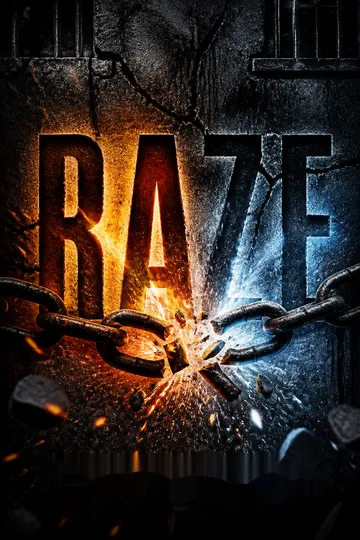


About the Author









Download PDF
Download EPUB
.epub digital book format is ideal for reading ebooks on phones, tablets, and e-readers.








