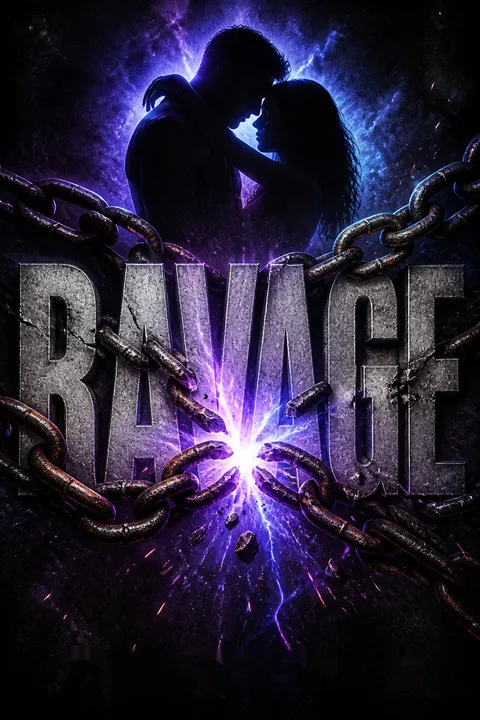


Plot Summary
Prologue
As a boy in a Russian orphanage, Valentin Belrov slips past the locked door between the boys’ and girls’ dormitories to save his little sister, Inessa, from the Night Wraiths. The Georgian kidnappers catch them anyway.
Their leader sees Valentin’s fierce resistance and chooses him for a life as an assassin, using Inessa’s safety to keep him obedient. Valentin grows into the weapon they demand, but his memory remains intact and his purpose fixed: survive long enough to free his sister.
The opening gives Valentin’s violence a history without making it harmless. His first defining act is protective, but the Wraiths turn that impulse into the very mechanism of his captivity: love becomes leverage. The promise he makes to Inessa is therefore both his moral anchor and the trap that governs his life. The distinction between the child who fights to save someone and the adult trained to inflict pain frames the novel’s central question: whether a person can remain recognizable to himself when every available choice has been engineered by an abuser.
A Sister Returns From Hiding
For more than twenty years, Zoya Kostava has lived under guard, hidden from the enemies who massacred her family. Her protector, Avto, brings news that her brother Zaal is alive, though the Jakhua clan drugged and exploited him and his twin, Anri. Zaal has escaped and joined the Volkov Bratva, the family once taught to be the Kostavas’ enemy.
He is engaged to Talia Tolstaia, daughter of a Russian crime family. Avto also says Zaal believes Zoya died. Overwhelmed by the photograph of her smiling brother, Zoya learns he visits Talia’s family in Brooklyn and leaves her apartment alone. She reaches the Tolstoi house, sees Zaal with Talia through a window, and steps into the street, determined to reveal herself.
Zoya’s first movement toward freedom is also a movement toward risk. For years, protection has meant isolation, leaving her safe but unable to test what remains of her family or her own agency. The photograph compresses two incompatible truths: Zaal is alive and apparently happy, yet he has built that happiness inside a world Zoya was taught to hate. Her decision to approach him alone is not simple recklessness. It is a refusal to let guardianship decide whether she may encounter her own past. The family reunion begins, fittingly, as a private act of choice that immediately exposes her to danger.
The Assassin Takes a Witness
In Brooklyn, Valentin is sent to kill Zaal Kostava, a target protected by the Volkovs and Tolstois. His handler, Mistress Arziani, has loaded his collar with a powerful obedience serum and threatens Inessa, whom the Wraiths keep drugged and sexually enslaved. Valentin’s assignment is personal to the Mistress, whose lover Zaal killed.
While watching the Tolstoi house, Valentin spots Zoya outside with a photograph of Zaal. The serum takes hold before he can assess her, and he abducts her, believing she can provide a path through Zaal’s security. He carries her to a hidden torture chamber, unaware that she is the sister Zaal thinks he has lost and that her presence will soon disrupt the mission that has governed his life.
The capture joins the novel’s two engines of coercion. Valentin’s body is made to obey through a drug and collar, while Zoya’s protected life has trained her to conceal her identity and expect pursuit. His decision to use her as leverage is not erased by his conditioning, but the serum makes the border between intention and compulsion unstable. This ambiguity matters because the story asks readers to hold two facts together: Valentin is dangerous to Zoya, and he is himself controlled by a system built to weaponize attachment. The plot turns on whether their recognition of each other’s captivity can interrupt that system.
A Collar Changes the Captor
Valentin keeps Zoya naked and confined in a freezing chamber filled with restraints and instruments of torture. He demands her name and her connection to Zaal, using electric shocks, extreme temperatures, and threats when she refuses to answer.
Zoya notices his eyes change from clear blue to drug-dilated black, and sees him collapse as the collar’s serum overwhelms him. When Valentin returns to himself, he resumes the interrogation, but flashes of hesitation interrupt his cruelty.
He is still choosing to frighten and hurt her during lucid periods, and Zoya is terrified. Yet the collar, his scars, and the memory of what happened to her brothers make her suspect that someone has made him into a weapon. She keeps her false identity and studies the man controlling her.
The altered eyes give Zoya a concrete way to distinguish Valentin’s drugged state, but the distinction does not make her situation safe. Her observations reveal a more complicated form of captivity: the collar intensifies obedience and erodes memory, while his training still shapes what he does when he is lucid. Zoya’s empathy begins as a survival strategy, a way to understand the danger in front of her, then becomes a moral wager that the person beneath the weapon can be reached. The scene’s tension depends on refusing an easy division between innocent victim and monstrous captor.
Names Beneath the Numbers
After a serum episode leaves Valentin close to violating Zoya, he fights the collar, tears it from his neck, and collapses with blood pouring from the needle wounds. Zoya cleans and treats him. Once he can speak, she tells him her real name and admits she is Zaal’s sister. Valentin gives her his own name, Valentin Belrov, instead of the number tattooed on his chest.
He realizes that his assigned target is the brother of the woman he has abducted. Zoya sees that he is torn between his orders and the sister whose captivity has kept him obedient. Their new honesty does not undo the torture or make their situation equal, but it changes the information they can share and makes a different choice possible.
The exchange of names reverses the logic of the Wraiths’ numbering system. A number makes a person legible only as property; a name restores history and relation. Zoya’s disclosure is also a calculated risk, since it places Zaal directly within Valentin’s reach. Her trust is not naïve proof that the violence has vanished. It is an attempt to create a relationship in which both people can speak as more than captor and captive. Valentin’s self-naming marks the first crack in his assigned role, though his obligation to Inessa means that recognition alone cannot free either of them.
The Kostava Heir Returns
At the Volkov gym, an old Georgian named Avto identifies Zaal as the surviving Kostava heir and recounts how he and his wife rescued five-year-old Zoya after the massacre. Avto says she vanished after learning Zaal was alive, and evidence near the Tolstoi house suggests someone took her.
Zaal’s grief hardens into action. Though he had rejected the title of Lideri, he gathers nearly two hundred surviving clan members and accepts leadership so he can find his sister. He also tells them he will work with the Volkovs and marry Talia.
Most pledge loyalty, while two men reject the alliance and Zaal kills them when they insult Talia. A dockworker then links a black-clad woman at a private plane to Levan Jakhua, suggesting the old enemy’s network has returned.
Zaal’s acceptance of leadership is not a return to an untouched inheritance. He has been shaped by captivity, memory loss, and a new family among people his clan regards as enemies. His decision follows a personal revelation, but it also changes the political stakes: he makes his people’s survival depend on cooperation across an inherited feud. The killing of the dissenters shows that his rule still draws on violence, even as he rejects the old boundary between Georgian and Russian allies. Avto’s news transforms leadership from abstract duty into a concrete promise to recover a sister who has already been lost once.
Two Captives Choose Trust
As Zoya and Valentin recover, he explains that the Wraiths took him and Inessa from their orphanage. The Mistress trained him as an assassin and used Inessa’s drugged captivity to enforce obedience. Zoya tells him about the massacre, her years in hiding, and the brothers she believed dead. Valentin admits that his assignment is to torture and kill Zaal, but he cannot bring himself to do it.
Zoya recognizes that his fear for Inessa resembles her own longing for Zaal, and proposes that her brother’s Volkov allies might help free them both. The two decide to leave the chamber and seek Zaal. Before they can escape, Mistress Arziani and her guards arrive, proving she has monitored Valentin and knows Zoya’s identity.
Their bond develops through disclosure, but the circumstances remain ethically compromised: Zoya is still captive, and Valentin’s earlier coercion has shaped what she can safely do. The story presents her care as a response to his suffering, yet her central motive is also practical. She needs to prevent the murder of her brother and sees a possible route to rescue Valentin’s sister. Their shared history of loss creates intimacy, but it does not erase the unequal power between them. The attempted escape tests whether compassion can become coordinated action, and the Mistress’s arrival demonstrates that their private room has never been outside her control.
Mistress Reclaims Her Weapon
Mistress Arziani recaptures Valentin and Zoya, taunts him with the fact that she has watched his chamber, and orders the guards to separate them. In a room of restraints and monitors, she shows Valentin footage of his torture of Zoya and uses Inessa’s suffering to punish his disobedience. She fastens a fresh obedience collar around his neck and injects Zoya repeatedly with drugs intended to kill her.
Valentin resists long enough to remember his own name, Inessa’s, and Zoya’s, but the serum takes control. The Mistress orders him to capture Zaal, dead or alive. Zoya is left strapped down as Valentin departs, apparently reduced once more to the numbered assassin whose actions the Wraiths command.
The recapture exposes the limits of the lovers’ private resistance. The Mistress does not merely threaten them; she uses surveillance, bodily control, and separate forms of drugging to make each person an instrument against the other. Valentin’s brief recitation of names is an act of resistance, but it cannot yet overcome the collar’s force. The scene also makes the novel’s power structure literal: an abuser controls memory and movement, then calls the resulting compliance loyalty. By making Zoya’s life a bargaining chip and Valentin’s sister another, the Mistress turns kinship into a circuit through which violence can be transmitted.
The Hit Remembers Love
Under the collar’s command, Valentin reaches the Volkov home and attacks Zaal. During the struggle, memories of Zoya break through the serum’s fog, and he names her as the person he loves. Luka and Zaal subdue him and remove the collar, then use a counter-serum to clear his mind. Valentin explains that the Wraiths are part of the Arziani organization, which runs the Blood Pit, hidden gulags, and drug experiments.
He recognizes Zaal as the former captive numbered 221 and Luka as another numbered fighter from a different gulag. He also reveals that Mistress has Zoya and Inessa. His account turns a personal rescue into a larger conflict and gives Zaal and Luka a reason to trust his information, though not yet his past actions.
Valentin’s attack is the external proof that the collar can still override his intentions, while his recovery shows that memory and attachment can persist beneath chemical control. The numbers connect him to Zaal and Luka as fellow products of a system that crosses national and criminal boundaries. This revelation changes the meaning of their alliance: it is not simply a convenient arrangement between rival families, but a coalition among survivors who understand the same machinery of dehumanization. Trust remains incomplete, especially because Valentin did harm Zoya, yet his detailed knowledge gives the others a way to act against an enemy they had barely been able to name.
The Mansion Turns Against Mistress
Luka, Zaal, and Valentin plan an assault on the Wraith mansion. Valentin pretends to remain under the collar’s control and brings Zaal in as a captured target, while Volkov guards prepare to enter. Once inside, Valentin and Zaal attack the guards and free the room where Zoya lies drugged and near death.
Valentin finds her breathing and turns to Mistress, who is restrained. He learns that she sent Inessa to the Blood Pit after he chose Zoya over his assignment.
With Zoya’s rescue urgent and Inessa already beyond reach, Valentin breaks Mistress’s neck. Zaal sees footage of Valentin’s earlier torture of Zoya and, overcome by rage, beats him severely. Valentin accepts the blows without resisting, relieved that Zoya is alive even as he loses consciousness.
The rescue succeeds in one essential sense and fails in another. Zoya survives, but Inessa’s removal means Valentin’s defining promise remains unfulfilled. Killing the Mistress ends her immediate control, yet it is an act of vengeance rather than a completed liberation of the wider Wraith system. Zaal’s assault on Valentin reveals how difficult it is to separate the man who saved Zoya from the man who previously tortured her. The scene refuses a clean redemption: love motivates Valentin’s defiance, but the harm he caused remains visible, and the person most able to judge it is unconscious.
A Family Reunited, Uneasily
After days unconscious from the drugs, Zoya wakes in the Tolstoi home with her memories clouded. Zaal’s face restores her childhood, and she embraces the brother she had spent decades believing dead. She asks for Anri and learns that her twin brother died in underground fighting after the Jakhua drugs separated him from Zaal.
Zoya then discovers that Zaal’s fiancée is Talia Tolstaia, and that Luka and Kisa belong to the families she was taught to blame for the massacre. Unable to accept the contradiction immediately, she withdraws. When she learns Valentin is being held in the Volkov cells, she insists on seeing him. Kisa takes her there, where Zoya finds him beaten and chained, and tends to him despite her brother’s anger.
The reunion does not restore the family Zoya remembers. Zaal is alive, but Anri is gone; the brother she embraces belongs to a present shaped by loyalties she was taught to distrust. Her anger is not a misunderstanding that can be corrected by facts alone. It is an inheritance formed around a childhood catastrophe and years of isolation. Kisa’s role is important because she listens without demanding instant forgiveness. Zoya’s turn toward Valentin likewise complicates reunion: she chooses to care for him while still negotiating the pain of what he did and the disapproval of the brother she has just regained.
Forgiveness Opens a Door
As Valentin heals, Zoya tells Zaal that she understands why he attacked the man who tortured her, but will not abandon Valentin. She asks her brother to know the man beyond the footage and to accept that he too was made captive and violent. Zaal admits that he cannot forget what he saw, yet agrees to try. Zoya also apologizes to Talia and accepts her as the woman who loves Zaal.
With the family no longer demanding that she choose one side, Zaal arranges for Zoya and Valentin to leave the dungeon and stay with them. Valentin remains troubled by the harm he caused and doubts that Zoya can truly want him. She answers those doubts by affirming her choice and insists that their future must be built with honesty rather than denial.
Forgiveness here is not absolution or a claim that captivity cancels injury. Zoya acknowledges the reasons behind Zaal’s violence and Valentin’s, while asking both men to be more than the worst act they committed under pressure. Her reconciliation with Talia is similarly grounded in a distinction between inherited grievance and present character. The emotional work belongs to Zoya, but the change is relational: Zaal must accept that protecting his sister cannot mean choosing her partner for her. Valentin’s self-loathing persists, making love a practice of accountability and care rather than a single cure for trauma.
The Bratva Makes Room
Two weeks later, Kirill Volkov confirms that the Arziani organization is a secretive international force planning to establish a gulag in New York. Valentin knows its methods, symbols, personnel, and operations, and agrees to share everything if the Bratva will help recover Inessa and let him fight the Wraiths.
Kirill accepts him into the Volkov inner circle. The new alliance gives Valentin a purpose beyond survival, though his sister remains in the Blood Pit and the larger enemy is still active.
Zoya and Valentin live among the Volkovs and Tolstois while they recover, often holding hands through tense family gatherings. The book closes its main conflict without resolving Inessa’s rescue, instead gathering the former captives and their allies for a coming fight.
The alliance offers Valentin a role without pretending that violence can be removed from his identity overnight. The Bratva gives him resources and a place among people who recognize what the Wraiths did, while his demand to rescue Inessa keeps the agreement anchored in a personal obligation. Kirill’s interest is partly strategic: Valentin’s memory and training are assets against a hidden empire. That instrumental motive sits beside genuine kinship, preserving the novel’s tension between being valued for usefulness and being accepted as a person. The ending is therefore a threshold, not closure. Freedom has begun, but the system that created these characters remains at large.
Epilogue
A month later, Valentin and Zoya live in a modest house near Avto and the surviving Kostava community. Zoya coaxes Valentin outside without the hat and hood he uses to hide his scars. On their walk toward the pier, their neighbors welcome Zoya and then recoil at Valentin’s face.
A little girl asks whether he is a monster. Zoya describes him as a brave protector, and the child leaves seeing him differently. At the water, Valentin holds Zoya’s hand in the open air and thinks of Inessa, still captive in Georgia. He has a home and a future with Zoya, but the promise to free his sister remains ahead.
The final walk translates private recovery into public visibility. Valentin’s scars once served the Mistress’s purpose, marking him as a frightening object; Zoya refuses to let the neighborhood’s recoil define him. The child’s question echoes the folktale that shaped Zoya’s compassion, but her answer does not deny that Valentin has done harm. It gives him another possible identity, one grounded in protection and choice. The scene’s warmth remains deliberately incomplete: Valentin is free to walk beside Zoya, yet his thoughts return to Inessa. A shared home is a beginning, not proof that every captive has been rescued.
Analysis
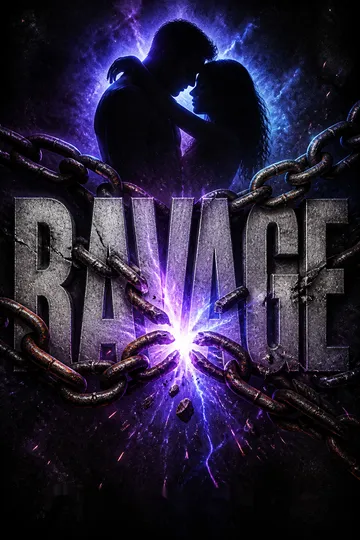
Ravage builds its romance and crime plot around a shared history of captivity, but it does not make that history morally simple. Zoya and Valentin recognize one another as survivors of people who were turned into instruments: she was hidden as the last hope of a clan, while he was numbered and trained to kill. Their recognition creates intimacy, yet the conditions of their first relationship are coercive. Valentin abducts and tortures Zoya, and the obedience serum complicates, but does not erase, his responsibility. Zoya’s empathy gives him a route toward personhood, while her refusal to abandon her own family keeps that empathy from becoming mere submission.
The novel’s most important contrast is between kinship as care and kinship as leverage. The Wraiths exploit Valentin’s love for Inessa; Zoya’s longing for Zaal drives her into danger; the Kostava and Volkov families inherit political hatred as though it were a duty. The story resists those uses of attachment by making alliances depend on choices in the present. Zaal’s leadership becomes meaningful when he accepts help from people his clan mistrusts, and Zoya’s return to him requires her to confront the difference between family memory and present reality.
The recurring motifs of scars, names, and monsters give that conflict a bodily form. Scars record violence but do not dictate a person’s worth. Numbers announce ownership, while names restore relation and memory. The Tbilisi monster story offers Zoya a way to imagine that cruelty may have a history, but the plot also shows the cost of extending compassion to someone who has caused harm. The ending offers recovery as a practice rather than a cure: a home, a public walk, and a chosen family are real gains, while Inessa remains captive and the Arziani network survives. Freedom begins when characters can choose whom to protect, but it remains unfinished until the wider system of captivity is challenged.
Review Summary
Ravage is the third book in Tillie Cole's Scarred Souls series, featuring dark and intense romance between tortured characters. Readers praise the emotional depth and gritty storyline, though some found the insta-love aspect less believable. The book follows Valentin (194), a drugged assassin, and Zoya, his captive. Their relationship develops from captor-prisoner to lovers as they discover each other's humanity. While darker than previous installments, fans appreciate the continued exploration of broken characters finding redemption and love amidst violence and trauma.
People Also Read
Characters
Zoya Kostava
The hidden family heirZoya is the youngest surviving child of the Kostava family, raised in secrecy after a massacre left her badly wounded. Years of confinement make her observant and self-reliant, but not emotionally numb. She has been taught to anticipate danger and protect her identity, yet she also searches for the hurt beneath other people’s cruelty. Her brothers remain central to her sense of belonging, while the old feud between Georgian and Russian families complicates every new relationship. Zoya’s strength is not simply endurance: she makes deliberate choices about whom to trust, when to resist, and how much of her family’s inherited hatred she is willing to carry.
Valentin Belrov
The numbered assassinTaken from an orphanage as a child, Valentin is trained by the Night Wraiths to torture and kill, with his younger sister’s safety used as leverage. A collar injects him with an obedience serum, and the number on his chest replaces the identity his captors want erased. Beneath his imposing body and scars, he retains a vivid memory and a fierce attachment to Inessa. He is conditioned to understand intimacy through domination and punishment, which makes tenderness both unfamiliar and frightening. His central struggle is not whether he has been harmed, but how to take responsibility for harm he has done while reclaiming choices his captors denied him.
Zaal Kostava
The reluctant Georgian leaderZaal is Zoya’s older brother and one of the twins taken after the Kostava massacre. Drug experiments erase much of his memory and sever his recognition of his family, leaving him to build a life among the Volkovs who rescue him. Quiet and watchful, he often carries grief inward until it erupts as decisive violence. His bond with Talia gives him a family beyond blood, while his lost clan presses him toward a leadership role he doubts he deserves. Zaal’s protectiveness can become forceful, especially when those he loves are threatened. He must reconcile loyalty to his dead family with the living relationships that now sustain him.
Luka Tolstoi
The Bratva's next kingLuka is the Volkov Bratva’s knyaz, husband to Kisa, and brother to Talia. He survived captivity in a gulag and learned to channel the violence that once kept him alive into leadership and strategy. His loyalty to Zaal is both personal and political: he sees a brother in the Georgian heir and believes their families can become stronger together. Luka is decisive, sometimes quick to answer threat with force, but his devotion to his wife and unborn child gives his ambition a domestic center. He understands that leadership means balancing fear, trust, and the practical demands of protecting a criminal family.
Talia Tolstaia
Zaal's forbidden belovedTalia is the daughter of a Russian Bratva family and Zaal’s fiancée. Her love for him crosses a feud that shaped both families, forcing her to confront grief and inherited loyalties rather than simply dismiss them. She is affectionate and emotionally direct, particularly with Zaal, whose silence and trauma can leave him isolated. Talia does not ask him to become the boy he was before captivity; she offers care to the man he is now. Her desire for a small, intimate life exists beside the dangers of the criminal world into which she was born.
Kisa Tolstaia
The family's steady bridgeKisa is Luka’s wife, Kirill Volkov’s daughter, and a close friend to Talia. Pregnant and deeply attached to her husband, she understands both the fear of losing someone to violence and the demands of life inside a Bratva family. She helps Zoya without insisting that old wounds be forgiven on a schedule, offering practical support and patient perspective instead. Kisa’s calm presence makes her a bridge between people whose family histories encourage suspicion. She also manages the Volkov gym, combining care for her circle with competence in a world where women are often expected to remain at its edges.
Inessa Belrova
Valentin's lost sisterInessa is Valentin’s younger sister and the person he has tried to protect since childhood. The Night Wraiths separate the siblings and subject her to drugs designed to suppress her personality and make her sexually dependent. She appears mostly through Valentin’s memories and the images his captors use to control him, so the reader sees how little agency she is permitted. Her importance lies not in being a motive alone, but in the bond she and Valentin formed before the Wraiths took their names, choices, and ordinary childhood from them.
Avto Oniani
The faithful family retainerAvto served the Kostava family and helped protect Zoya after the massacre. He and his wife rescued her from beneath the dead and spent years keeping her hidden from the Jakhuas. His loyalty is shaped by gratitude, duty, and the burden of having survived when the family he served was destroyed. Avto brings Zaal news of Zoya and helps reconnect the scattered Georgian clan, though his inherited distrust of the Tolstois puts him at odds with the alliances Zaal has made.
Kirill Volkov
The calculating PakhanKirill is the Pakhan, or head, of the Volkov Bratva and Kisa’s father. He reads new arrivals and political disturbances as potential threats, then moves quickly to gather information and secure loyalty. His suspicion of Zaal reflects the cost of governing a criminal organization, but he is capable of revising his judgment when evidence supports a wider danger. Kirill sees strategic value in people’s skills, including Valentin’s memory and training, while also recognizing that alliances can strengthen the family.
Mistress Arziani
The collar's keeperMistress Arziani is a senior Night Wraith who trains Valentin and uses the safety of his sister to control him. She combines physical violence, surveillance, drugs, and calculated rewards to make obedience feel unavoidable. Her cruelty is deliberate rather than impulsive: she studies what a captive loves and turns that attachment into a pressure point. The black uniform and collar make her authority visible, but her most effective weapon is psychological, because she convinces her captives that resistance will injure someone else.
Master Arziani
The Blood Pit's masterThe brother of Mistress Arziani, Master Arziani oversees the Blood Pit and the wider network of gulags, fighters, and enslaved captives. He profits from systems that turn children into weapons and people into commodities. The novel presents him chiefly through the fear he inspires in Valentin and the threat he poses to Inessa. His power depends on an organized institution, not merely personal brutality, which makes the Arziani operation more dangerous than a single captor.
Anri Kostava
Zaal's absent twinAnri is Zaal’s twin brother and Zoya’s other beloved older brother. Before the massacre, he was the more outgoing twin, often drawing Zaal into the world around them. The Jakhua experiments affect the brothers differently, leaving their shared identity broken by captivity and separation. Anri remains a powerful presence in Zaal’s grief and in the family history Zoya is trying to recover, even when the surviving characters cannot restore what they remember of him.
Plot Devices
The obedience collar
A weapon against choiceThe black metal collar injects Valentin with a serum that heightens obedience, aggression, and memory loss. Mistress Arziani uses it to turn his body into a tool for assignments and to threaten him through Inessa. Its physical presence makes control visible, while its changing effects complicate the question of which actions Valentin can resist. When he is free of it, he must still reckon with habits and harms formed under years of training. The device therefore drives both the suspense and the ethical conflict around agency.
The numbered identities
People reduced to propertyCaptives receive numbers in place of names, a practice that marks ownership and helps the Wraiths erase personal history. Valentin is 194, Inessa is 152, and the numbers connect him to other children altered by the same machinery. The tattoos also become clues that allow survivors to recognize one another and piece together the Blood Pit’s reach. Remembering and speaking a name becomes an act of resistance, but the numbers remain on the body as evidence of what the system tried to make permanent.
Inessa as leverage
Love turned into coercionThe Wraiths keep Inessa captive and use her safety, pain, and isolation to compel Valentin to obey. This tactic explains why he accepts assignments that conflict with his memories and instincts, including the order to target Zaal. The same device gives the plot emotional stakes beyond Valentin’s survival: any attempt to resist risks consequences for someone he has loved since childhood. Inessa’s absence also exposes the limits of the rescue, since defeating one captor does not automatically retrieve everyone held by the larger organization.
The Tbilisi monster
A story that reframes scarsZoya’s grandmother tells her of a forest monster who becomes cruel after people torment him for being different. As a child, Zoya questions whether the monster was hurt before he began hurting others. She later uses this story to interpret Valentin, whose face and body bear the marks of deliberate abuse. The folktale gives Zoya language for compassion, but it also creates a risk: seeing the pain behind cruelty can obscure the damage cruelty causes. Its deepest function is to make recognition possible without making accountability unnecessary.
The Kostava and Volkov alliance
An old feud becomes strategyZaal’s engagement to Talia and his pledge to the Volkov Bratva unite families taught to regard one another as enemies. The alliance gives the Kostava survivors shelter, personnel, and access to a powerful criminal network, while it gives the Volkovs a partner against the Arzianis. For Zoya, the union challenges the story of history she inherited from her family and guardian. It is therefore both a practical plot mechanism and a test of whether loyalty can be rebuilt around present actions rather than inherited hatred.
Scarred Souls Series
About the Author





Download PDF
Download EPUB
.epub digital book format is ideal for reading ebooks on phones, tablets, and e-readers.








