


Plot Summary
Prologue
In Georgia, fighter 901 rules the Blood Pit, an underground arena where enslaved men kill for wealthy spectators. After he dispatches his opponents too quickly, Master Arziani demands a slower, more profitable performance. 901 refuses to pretend weakness.
He has survived twenty-one years by keeping his pride and his fighting skill beyond Arziani’s reach, and he believes death in the arena is the only end available to him. Arziani warns that everyone has a vulnerability waiting to be found. For now, 901 is certain he has none.
The opening makes 901’s apparent invincibility both a survival strategy and a cage. He has preserved one private choice, the refusal to stage weakness, by treating every other part of himself as already lost. Arziani understands that brute force is not enough to rule a captive who no longer fears death, so he searches for an attachment that could make survival matter. The prologue’s contest is therefore not simply whether 901 can be beaten in combat. It asks whether a person can reclaim desire and connection when both have been deliberately turned into instruments of control.
The High Mona Returns
After six weeks away, 152 wakes in a luxurious room with a body she can barely move and a past she cannot reach. Her attendant, a scarred young chiri, explains that Arziani has called her back and elevated her to High Mona, his private consort. The drug change has blurred her memory, but flashes of cages and a scarred man who promised to free her break through.
152 learns that the previous High Mona was killed for disobedience. Arziani dresses her and takes her through the Blood Pit, where she watches a fighter die without surprise. In the champion’s ring, she meets 901. His cold blue stare unsettles her, though she cannot yet understand why it feels familiar.
The luxurious bed does not signal rescue. It marks a change in the terms of captivity: 152 has been moved from a general system of exploitation into Arziani’s possessive private orbit. Her amnesia complicates consent because the body remembers danger while the conscious mind cannot assemble its cause. Even her calm response to a fighter’s death suggests how thoroughly the pit has trained perception. The scarred man’s promise and 901’s familiar eyes establish memory as a form of resistance, one that survives even when drugs and imposed identities make the past difficult to name.
The Fortress Problem
In Brooklyn, Luka Volkov studies maps of the Blood Pit with Zaal Kostava and Valentin, the recently freed killer whose sister is held there. Valentin wants to storm the compound immediately, but Luka argues that its guards, underground defenses, and conditioned fighters would overwhelm them. Zaal warns that Valentin’s instability is worsening and that the rescue cannot wait indefinitely.
Luka’s pregnant wife, Kisa, makes the stakes intimate: he fears Arziani’s network could threaten their child as well as their families. Yet Luka still cannot see a way inside. The group has a motive and a deadline, but not an entrance, leaving them caught between the urgency of rescue and the discipline needed to survive it.
Luka’s planning conflict is not a contest between courage and cowardice. He is trying to prevent a rescue attempt from becoming another mass death inside a system built to absorb violence. Valentin’s urgency is understandable because his sister is not an abstract hostage, but his rage is precisely the response Arziani’s machinery can exploit. Kisa’s pregnancy turns strategy into a question about what kind of world the next generation will inherit. Luka’s leadership begins with admitting that resolve alone cannot breach a fortress, a humility that later makes collaboration possible.
A Gift with Teeth
During a match, 901 ignores an order to prolong the fight and kills his opponent quickly. An investor challenges Arziani’s fairness, so Arziani announces a championship bringing rival gulag fighters to Georgia. Later, the guards deliver 152 to 901’s cell as a reward and leave despite 901’s demand that she be taken away. A drug bracelet injects her with a formula that drives her into painful, dangerous need.
901 resists until she begins convulsing and another champion warns that she could die without relief. He chooses to help her, then keeps caring for her as the drug takes hold again. When her mind clears, she thanks him. His first experience of tenderness unsettles the warrior who believed attachment only created weakness.
Arziani’s maneuver joins two forms of coercion: the tournament makes 901’s defiance commercially useful, while the drugged consort turns his capacity for compassion into leverage. 901’s choice is constrained, but it is still morally significant. He refuses to let the guards’ cruelty determine whether 152 lives, even while fearing that care will hand Arziani control over him. The scene complicates the language of weakness: attachment exposes 901 to manipulation, yet his refusal to treat another captive as disposable is also the first act that exceeds the role assigned to him.
Russian in the Cell
As Arziani sends 152 to 901 repeatedly, the two begin communicating between the drug episodes. 152 unexpectedly answers him in Russian, recognizing it as her own language even though she cannot explain how she knows it. She remembers being taken from a room where a boy tried to keep her safe, then recalls waving as the Wraiths carried her away.
901 tells her that Russia is their home and that the Blood Pit is a place Arziani built, not the whole world. Meanwhile, 152 learns that her attendant has a name, Maya, and that Maya was scarred for resisting a guard. Treating Maya as a person rather than a numbered servant gives both women a small, dangerous form of recognition.
Language arrives before biography. Russian gives 152 and 901 a shared inheritance they can feel before either can narrate it, making speech itself evidence that the pit has not wholly rewritten them. Their recovered fragments are painful rather than consoling: memory returns first as separation, fear, and a child’s helpless wave. Maya’s name creates a parallel act of restoration. The relationships begin to resist Arziani’s classification system not through grand rebellion, but through the ordinary acts of speaking, remembering, and addressing another person as more than a function.
The Knife in the Stands
Two weeks later, Arziani orders 901 to stretch a demonstration match for investors. A guard holds 152 at knifepoint in the stands, forcing 901 to take repeated blows instead of ending the fight. He finally kills his opponent, but the visible wounds satisfy Arziani’s spectacle and reveal how effectively 152 can control him.
Afterward, 140, a fellow champion, explains that Arziani uses monas to break fighters and recounts how the master killed his own consort. Shaken by the possibility of losing 152, 901 stops treating her as a temporary distraction. She tends his injuries, and he admits he could not bear to watch her die. Their first closeness grows from mutual care, not the bracelet’s manufactured desire.
The staged match externalizes the private coercion of the cell: Arziani turns 901’s body into a public instrument and 152’s life into the price of performance. The important change is not that 901 can be controlled, but that he recognizes the mechanism and feels its cost. 140’s warning supplies a history of how attachment is punished, yet it also makes the champions’ isolation seem less inevitable. When 152 tends 901’s wounds, care reverses their assigned roles. Each sees the other as a vulnerable person rather than a weapon or a sexual function.
A Kiss Chosen Freely
Maya warns 152 that Arziani killed the previous High Mona after she loved a fighter, then sent that fighter into a match with 901. When Arziani learns that 152 has cared for 901, he beats her and displays the injury before 901’s next fight. He orders 901 to prolong the contest and threatens to keep 152 away.
As 901 charges the bars, 152 signals that she is trying to save him, not choose Arziani. 901 obeys and defeats his opponent only when Arziani permits it. Back in the cell, 152 washes the blood from 901 and offers him his first freely chosen kiss. They then choose intimacy without the drugs, discovering that desire can belong to them rather than to their captor.
Arziani makes violence legible as ownership: he injures 152, then exhibits the injury as proof that he controls both bodies. Her intervention at the bars is an act of protection, but it requires her to appear compliant to prevent 901 from being killed. The subsequent kiss matters because it occurs outside the drug’s compulsion and after both have recognized the manipulation. Their freely chosen intimacy does not erase the surrounding violence; it creates a boundary within it. For 901, strength begins to mean restraint and survival, not simply the ability to kill.
Champions Enter Disguised
Viktor, Luka’s former trainer, finds an opening: a contact inside Arziani’s organization can register three fighters under a false gulag identity. Luka, Zaal, and Valentin train for the tournament, with Valentin adapting his killing skill to unpowered metal spears. They arrive in Georgia posing as prisoners owned by Viktor’s fight operation.
Arziani recognizes Zaal as one of the Kostava twins used in his experiments, but accepts the cover story; he even welcomes Valentin, believing him responsible for killing Arziani’s sister. In the training pits, 901 sees the newcomers and notices 152 staring at the scarred Valentin. Jealousy sparks a fight with Luka, who matches him blow for blow before the guards separate them.
The infiltration depends on exploiting the same economy that built the pit: fighters are treated as transferable property, so a fabricated ownership history can pass as ordinary business. The men must perform captivity convincingly while carrying an intention to destroy the institution. Their arrival also unsettles 901’s newly formed attachment. He reads 152’s attention as a threat before he can understand that the scarred Russian resembles a figure from her damaged memory. The physical clash with Luka exposes how quickly possessiveness can reproduce the logic of ownership even among people seeking freedom.
The Champions Revolt
During the tournament, Arziani uses 667’s mona as leverage, but 667 kills an opponent by instinct when the man attacks. Arziani answers by ordering the woman’s throat cut in front of him. 667 charges the stands, and 140 joins the attack; guards shoot both champions before they can reach Arziani. The spectators are forced back into place, while 901 is drugged and sent into the next fight.
His body falters under the chemical assault, but he survives a chain-wielding opponent by finding a Kindjal and striking back. From the arena, 152 sees 901 stagger out alive. The revolt fails, yet the deaths make plain that the tournament’s promise of freedom is a lure and that Arziani will kill captives to preserve control.
The failed revolt demonstrates the design of Arziani’s rule: the threat against a loved one transforms trained defensive reflexes into a death sentence, then the resulting grief is used to discipline everyone watching. 667 and 140 do not die because they lack courage; they act within a world where every available response has been engineered against them. By drugging 901 after the attack, Arziani tries to ensure the same system decides the champion’s fate. His survival is therefore more than a victory in combat. It preserves the possibility of organized resistance after spectacle has exposed its true cost.
Names Beneath the Numbers
After the arena violence, Maya searches the pit’s records and discovers that 152 is Inessa Belrova and 901 is Ilya Konev. She also finds that Inessa’s brother, Valentin, was taken with her as a child. Inessa remembers the boy she waved goodbye to and learns that he may still be alive, but Arziani plans to keep her confined after the tournament.
That night, she and Maya slip into Ilya’s cell, where he is battered and recovering from the drugged fight. Inessa tells him their names and her brother’s identity. Ilya, overwhelmed by the possibility that Arziani will separate them, admits what she means to him. Their reunion with names becomes a brief recovery of self before Arziani catches them and takes Inessa away.
Names do not simply replace numbers; they reconnect present bodies to histories that the pit tried to erase. Inessa’s identity returns alongside the knowledge that her separation from Valentin was not an isolated loss but part of a deliberate system of kidnapping. Her decision to visit Ilya accepts the risk of being seen because secrecy would leave Arziani’s version of her identity intact. The revelation changes the emotional stakes for all three men: Ilya has a beloved to protect, Valentin has a sister to find, and Inessa can begin to understand that her past includes kinship as well as captivity.
A Riot Takes Shape
Ilya wakes in his cell and learns that the scarred champion, 194, is Valentin, Inessa’s brother. Luka and Zaal reveal their real identities and explain the plan to destroy the pit from within. Maya brings worse news: Arziani has tied Inessa in a torture room and intends to drug Ilya before the final.
The rebels have prepared antidotes for the fighters, recruited Wraiths who were forced into service, and positioned allies to open the arena during the championship. Ilya wins his qualifying match despite his injuries, refusing to let Arziani’s drug decide the outcome. Valentin accepts that Ilya must be the one to kill Arziani, while Maya carries a message of hope back to Inessa. The captives’ isolated anger is becoming a coordinated revolt.
The alliance turns survival from an individual discipline into a collective project. Ilya’s discovery that 194 is Valentin links the romance plot to the rescue mission, while the antidote directly counters the chemical means by which Arziani has manufactured obedience. The rebel Wraiths complicate the simple division between guards and captives: some serve because they are trapped in the same coercive economy. Inessa’s torture is meant to make Ilya fight on Arziani’s terms, but the message she sends instead strengthens his choice to survive. The plan succeeds only because many people act together, not because one champion is invulnerable.
The Blood Pit Burns
Before the final, Arziani forces a drug injection on Ilya, unaware that a rebel chiri has given him the antidote and a strength-restoring dose. Ilya, Luka, Zaal, and Valentin stage a fierce four-man fight until Luka gives the signal. Rebel guards open the exits for the enslaved fighters, who flood the arena and attack the Wraiths and investors.
Ilya cuts down Arziani’s guards, drags Arziani into the pit, and kills him with a Kindjal. Valentin urges the fighters onward as they turn on the remaining spectators and staff. Ilya then reaches the torture room, cuts Inessa free, and carries her out with Maya. The rebels evacuate the captives and children, then set the underground compound ablaze.
The climax reverses the arena’s choreography. For years, captives have been arranged as entertainment; now they coordinate their movement and choose their targets. The antidote is crucial because it restores agency without pretending that trauma or physical exhaustion has vanished. Ilya’s killing of Arziani is personal, but the destruction of the pit depends on collective action by fighters, chiri, and disloyal guards. The final image of the institution burning is not merely vengeance. It removes the physical infrastructure that made people into numbered property and makes escape possible for those who cannot win a match.
Names Under the Stars
Luka’s group carries Inessa, Ilya, and Maya to New York, where doctors remove Inessa’s drug bracelet and treat her injuries. After four days of sleep, Inessa wakes in Valentin’s home with Ilya beside her. Her memories return, including the promise Valentin made as a boy to come back for her.
She reunites with her brother, embraces Maya as family, and learns that Ilya feared she might stop wanting him once the drugs were gone. She chooses him again freely. When he helps her outside, the two see stars for the first time and breathe open air together. Meanwhile, Luka returns to Kisa and their unborn child, then recognizes at their childhood cove that the danger binding him to the past has ended.
Freedom arrives first as bodily fact: the bracelet is gone, the air is open, and Inessa can wake without being summoned for another dose. Recovery remains relational. Ilya’s fear that drug-free Inessa might reject him shows how coercion has damaged even the meaning of mutual desire; her deliberate choice answers that fear without making love a cure for injury. Valentin’s fulfilled promise repairs a childhood separation, while Maya’s inclusion creates family beyond blood. Luka’s cove scene extends the resolution to the wider cast: returning home matters because the past no longer dictates every future decision.
Epilogue
Three years later, Ilya and Inessa celebrate with their family when she tells him they are expecting a child. Maya, healed through reconstructive surgery and loved by Maxim, shares their happiness. The gathering also becomes a turning point for Luka: Kirill steps down as Pakhan and appoints him to lead the Volkov Bratva.
Luka chooses Zaal, Valentin, and Ilya as his Red Kings, binding former captives and rival families into a common leadership. Ilya sees the life he and Inessa once imagined taking shape around them: family, safety, and a future chosen rather than imposed.
The epilogue tests whether survival can become more than a pause between threats. Domestic life is not presented as effortless: the characters have had to learn how to live outside the systems that trained them for violence. Yet the gathering gives that difficult adjustment a concrete form, with children playing, Maya welcomed, and a pregnancy anticipated by choice. Luka’s appointment as Pakhan carries an additional reversal. Authority once belonged to Arziani because he could command fear; Luka’s leadership is grounded in trust among people who know what power can do when no one restrains it.
Analysis
Riot makes domination a system of routines as much as a series of spectacular cruelties. Numbers replace names, drugs interfere with memory and desire, and the arena turns killing into entertainment for people who can leave afterward. Arziani’s power depends on making these arrangements feel inevitable. Even the promise of freedom is structured as a contest in which captives must kill one another to earn release from the person who created their captivity.
The romance between Inessa and Ilya develops inside this coercive machinery, so the question of choice is central. The drug bracelet makes physical response unreliable evidence of desire; their bond gains meaning as they learn to distinguish what the system compels from what they choose. Inessa’s care for Maya, Ilya’s decision to save her, and their later freely chosen intimacy are not simple escapes from trauma. They are acts of recognition that restore some agency without erasing what has been done to them.
The plot widens that recovery beyond the couple. Luka’s strategic patience, Zaal’s caution, Valentin’s desperate loyalty, and Maya’s access to hidden spaces all matter because no single person can defeat an institution designed to isolate its victims. The rebellion succeeds through coordination among fighters, chiri, and guards who have also been trapped by Arziani’s economy. The novel’s answer to the arena is therefore not a better champion, but a community capable of refusing the rules together.
Its ending distinguishes freedom from mere survival. The survivors must learn names, relationships, and ordinary forms of choice in a world they scarcely remember. Home, family, and leadership are not offered as instant cures; they are new responsibilities made possible by the destruction of the pit. The book’s most concrete measure of victory is not that the captives become powerful, but that they can imagine children growing up without being turned into weapons.
Review Summary
Riot receives mostly positive reviews, praised for its dark, intense storyline and emotional depth. Readers appreciate the character development and the satisfying conclusion to the Scarred Souls series. Some found the content disturbing due to violence and abuse themes. The romance between 901 and 152 is highlighted as both tender and passionate. While a few readers felt the plot was repetitive, most enjoyed the action, suspense, and how it tied together previous characters' stories. Overall, fans of dark romance found it a fitting end to the series.
People Also Read


Characters
Ilya Konev
The pit’s undefeated championKnown in the Blood Pit as 901, Ilya has survived by turning skill, isolation, and pride into armor. He expects to die in the arena and regards emotional attachment as a weakness that Arziani can exploit. His refusal to stage fights is one of the few choices he believes still belongs to him. Beneath the frightening reputation is a man whose capacity for care has been suppressed, not erased. His connection with Inessa confronts him with a different definition of strength: protecting someone without claiming ownership, accepting help, and imagining a life beyond the arena.
Inessa Belrova
A captive reclaiming her nameKnown as 152, Inessa wakes with little conscious access to her past after years of drugging and captivity. Her instincts remain sharper than her memories: she recognizes danger in Arziani and safety in the scarred fighter who haunts her dreams. She is not only the object of other people’s rescue plans. Inessa notices the suffering of Maya, offers care, and makes meaningful choices whenever the system leaves her room to act. Her search for her name and history is also a search for the right to understand her own body, attachments, and future.
Luka Volkov
The strategist seeking entryLuka is a former gulag champion who has returned to civilian life as a Bratva leader, husband, and soon-to-be father. He approaches danger through planning because he knows that courage without preparation can deliver friends into another cage. Kisa’s pregnancy sharpens his desire to end the network that shaped his life, while his responsibility to his brothers keeps him from treating sacrifice casually. Luka’s leadership rests on the ability to listen, acknowledge uncertainty, and unite people whose histories and loyalties do not naturally align.
Valentin Belrov
The scarred brother-in-armsValentin is a Russian assassin shaped by captivity, lethal training, and years of separation from his younger sister, Inessa. His scarred face and collar mark a history he cannot simply shed when he reaches freedom. Rage comes quickly to him, and controlling it takes sustained effort, especially when his family is threatened. Zoya is a rare source of calm, but his need to find Inessa drives him into danger. His fierce loyalty can be protective and loving, though it also makes him vulnerable to manipulation.
Maya
The overlooked witnessMaya is a young chiri, a servant at the bottom of the Blood Pit’s hierarchy, whose scarred face records the punishment she suffered for resisting sexual exploitation. Being ignored gives her access to corridors, rooms, and information others cannot reach. She uses that overlooked position to care for Inessa and piece together the truth of the pit. Maya’s guardedness is not passivity; it is a survival skill developed under constant threat. Her friendship with Inessa lets her experience recognition without having to pretend the damage done to her does not matter.
Master Arziani
The ruler of the Blood PitArziani operates an underground empire built on kidnapped children, drugged fighters, enslaved women, and wealthy spectators. He thinks of himself as a sovereign whose authority is proved by the ability to make others obey. His most effective weapon is psychological uncertainty: he alternates luxury with punishment and affection with threat, keeping captives unsure what will happen next. His fixation on Inessa and frustration with Ilya expose the instability beneath his polished control. He cannot distinguish loyalty from submission, which shapes the way he governs.
Zaal Kostava
The Georgian resistance leaderZaal leads the Georgian Kostava clan and is a survivor of experimentation in Arziani’s system. He is measured where Valentin is volatile, but his composure does not mean he has made peace with the past. Talia and his sister Zoya are central to the life he has rebuilt. He supports Luka’s plan while questioning whether Valentin can safely join the tournament, balancing personal loyalty against the practical demands of rescue.
Kisa
Luka’s steadying partnerKisa is Luka’s wife and the mother of the child they are expecting. She understands that his decision to confront Arziani comes from a need to protect the family’s future, even as she fears what the mission may cost. Her presence helps Luka return to the present when memories of captivity threaten to overtake his judgment. She offers support without pretending his fear is unreasonable, making their relationship a source of steadiness rather than a demand that he hide his trauma.
Zoya Kostava
Valentin’s calming anchorZoya is Valentin’s partner and Zaal’s sister. She can approach Valentin when his rage has made other people wary, and her presence helps him regain control without denying his pain. Her own experiences with captivity give her empathy for those newly released from the Blood Pit. She treats Maya with particular gentleness, understanding that freedom can be frightening when kindness has rarely been safe.
Viktor
The insider who opens doorsViktor is Luka’s former trainer and a practical source of knowledge about the underground fighting world. His connection to Abel provides the route by which the rescue team can enter the Blood Pit under false identities. He understands that some people inside Arziani’s organization serve because they have been trapped by debts, not because they believe in the cause. Viktor’s willingness to use that knowledge makes him essential to a plan built on access rather than force alone.
140
The grieving championA fellow Blood Pit champion, 140 has learned that affection can become a target under Arziani’s rule. His grief makes him reckless, but it also lets him recognize the strategy being used against Ilya before Ilya can fully admit his feelings. He understands the cost of the pit’s games because he has watched its punishments reach beyond the fighters themselves.
667
The warning voice667 is another champion who believes that a life containing love is worth more than years of isolated survival. His attachment to his mona challenges Ilya’s conviction that closeness only creates weakness. Through 667, Ilya sees how the pit’s rules turn ordinary care into a possible vulnerability, and how refusing all connection can be another form of defeat.
Talia
Zaal’s devoted partnerTalia is Zaal’s fiancée and Zoya’s sister. Her relationship with Zaal represents a life of loyalty and affection beyond the fighting world, while her family ties help connect the Georgian and Volkov circles. She is one of the people whose safety gives Zaal a reason to confront the past rather than simply endure it.
Anri Kostava
The absent twinAnri is Zaal’s twin brother, whose childhood and fate remain bound to the Blood Pit’s experiments. Memories of him shape Zaal’s understanding of what was taken from their family and give the rescue mission a personal history beyond the current captives.
Plot Devices
Identity numbers and names
Restore erased identitiesThe Blood Pit labels its captives with numbers, reducing fighters and enslaved women to inventory. Those labels become a daily reminder that Arziani controls not only bodies but also the language through which the captives understand themselves. Inessa’s name and Ilya’s name return through records and recovered memory, while Valentin’s identity links their private histories to the wider rescue. The device makes naming an action with emotional and political weight: it reconnects people to origins, kinship, and a self that existed before the pit assigned them a function.
The drug bracelet
Enforce bodily dependenceThe bracelet fixed to Inessa’s wrist delivers repeated doses that produce an overwhelming physical need and blur memory. Arziani uses it to make her body appear to desire what she has not freely chosen, and to force Ilya into a role he would otherwise refuse. The system turns intimacy into both medical danger and a weapon of control. Its removal marks the beginning of Inessa’s recovery, while the rebels’ antidote offers fighters a way to resist the chemical dependence that has helped keep the pit obedient.
The Blood Pit tournament
Draw fighters into the arenaArziani presents the championship as a test of fairness and promises the winner freedom, drawing champions and investors from across his network. In practice, the tournament lets him display violence, attract money, identify threats, and manipulate fighters through their loved ones. Its matches provide the cover under which Luka, Zaal, and Valentin enter the compound. The final contest also gives the rebels a moment when fighters, guards, and spectators are gathered in one place, turning Arziani’s spectacle into an opportunity for collective revolt.
The Russian language
Carry memory through captivityInessa and Ilya recognize Russian in each other before they can recover the events that made it their language. It gives them a way to communicate outside the identities Arziani has imposed and becomes a bridge to the childhood memories Inessa begins to recover. The language is more than a clue about origin: it allows the pair to address one another with tenderness that is distinct from the commands and labels of the pit. Their shared speech helps them imagine a self and a home beyond the walls.
The hidden antidote
Turn captivity into coordinated resistanceThe rescue team’s allies prepare an antidote to the drugs that keep fighters compliant and weakened. Chiri deliver it gradually, while sympathetic Wraiths communicate with captives and help position the revolt. This arrangement allows the fighters to regain control without exposing the plan too early. The device links medical knowledge, the servants’ hidden information network, and the guards’ divided loyalties. It also makes the uprising credible as a collective effort rather than a sudden victory achieved by the champions alone.
Scarred Souls Series
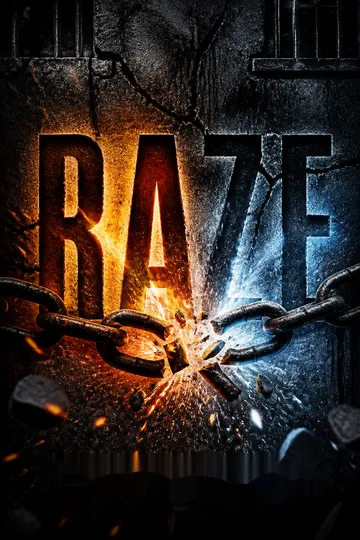
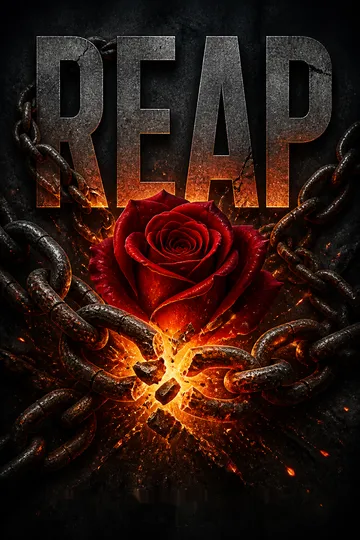
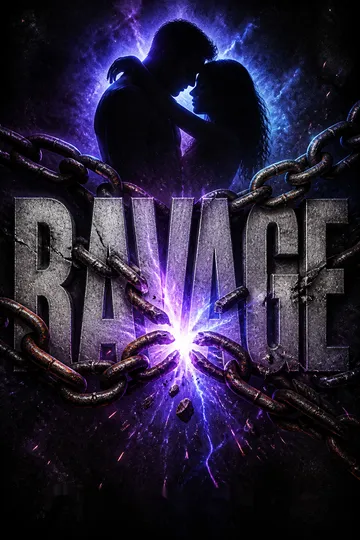

About the Author









Download PDF
Download EPUB
.epub digital book format is ideal for reading ebooks on phones, tablets, and e-readers.








