

Key Takeaways
Treat creative work as a record of selfhood, not just an object.
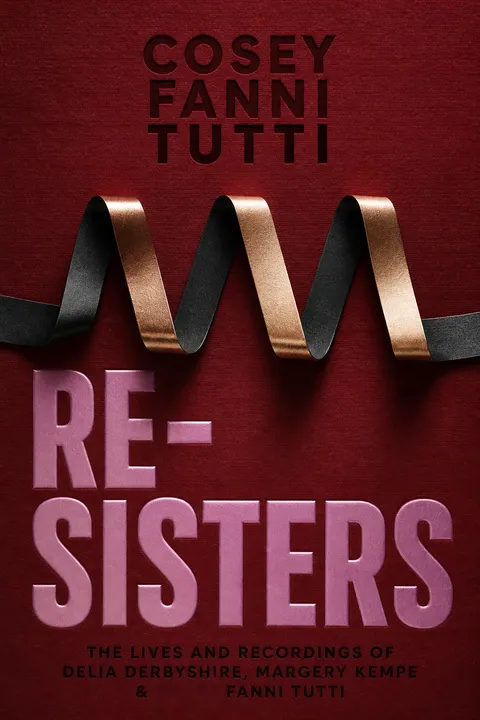
More than a finished product. Cosey Fanni Tutti uses “recordings” to mean more than sound captured on tape. Her work, Delia Derbyshire’s electronic music, and Margery Kempe’s medieval autobiography each preserve evidence of a person’s presence and choices. Their methods differ, but all three create something that can outlast the pressures that tried to define them. The book begins when Cosey, composing music for a film about Delia, discovers Margery’s account and starts to see connections between their lives.
Making a mark matters. Cosey’s point is not that every work reveals its creator perfectly. A record can be incomplete, misunderstood, or shaped by someone else. Its importance is that it exists at all, giving others material to encounter, question, and carry forward.
The idea turns creative output into a form of evidence: not a transparent window into a person, but proof that a person acted, chose, and made something. That distinction matters because private intention rarely survives intact in public memory. Artifacts invite interpretation, and interpretation can distort as well as preserve. The book’s three kinds of record make that tension visible: a sound archive, a dictated life story, and an artist’s own memoir each keep a voice present while also leaving gaps.
Learn the rules closely enough to bend them toward your own life.
Knowledge can be leverage. Margery lived in a society where women’s choices were controlled by husbands, clergy, and civic authorities. She learned religious teachings well enough to defend herself when accused of heresy, arguing from scripture rather than accepting the authorities’ claims about her. In Leicester, her ability to answer questions about doctrine helped her avoid prison and possible execution.
Delia also studied the system. She pursued work at the BBC despite its refusal to hire women as composers, learned its equipment, and found a route into the Radiophonic Workshop. Her mathematical training helped her create music within an institution that officially treated much of its output as sound effects. Neither woman simply escaped the rules. Each used detailed knowledge to find openings inside them.
This is agency as practical literacy, not as a fantasy of standing wholly outside power. Knowing a system’s language can expose contradictions between its stated principles and its actual treatment of people. The strategy has limits: fluency can also make someone more useful to an institution without giving them authority. Margery’s peril and Delia’s constrained status show why tactical competence is not the same as freedom, even when it creates room to act.
Make new work by changing what counts as a source.
Ordinary things can become instruments. Delia made electronic music from tape, oscillators, a metal lampshade, her own voice, and sounds suggested by the world around her. For the Doctor Who theme, she translated a sparse score into carefully measured tape fragments, shaping pitches and rhythms through cutting, splicing, and playback. The result sounded unlike conventional orchestral music, despite beginning with a composer’s written notes.
Limits can provoke invention. The BBC’s equipment was often old, and the Workshop had little money. Rather than treating those constraints as reasons to imitate familiar music, Delia and her colleagues repurposed machines and objects. Daphne Oram, who helped establish the Workshop, later developed Oramics, a system that turned drawings on film into sound. Cosey’s own soundtrack experiments follow the same broad principle: investigate the material, then make it do something unexpected.
The deeper lesson is not simply to be resourceful. It is to challenge the boundary between instrument, noise, and musical material. That move changes who can participate in composition and what kinds of experience can be represented. Constraints sometimes stimulate invention, as this history shows, but scarcity should not be romanticized: poor resources and institutional neglect also cost artists time, credit, and health. Creativity can transform a limitation without making the limitation fair.
Demand authorship when institutions turn creators into anonymous assistants.
Credit shapes the record. The BBC often grouped Radiophonic Workshop work under the institution’s name, even when an individual had composed it. Delia created the iconic electronic realization of Ron Grainer’s Doctor Who theme, but the BBC refused her royalties and individual composer credit. Grainer offered to share authorship, yet the credit was not secured. Delia was finally named in the programme credits in 2013, as arranger, roughly fifty years after the theme first appeared.
The pattern extends beyond one institution. The book describes work by women being credited to men, reused under new titles, or treated as raw material for someone else’s contribution. Cosey connects this history to her own experiences of appropriation. Recognition is not merely a financial matter: it affects who is remembered as having made the work and whose expertise is treated as disposable.
Authorship is both an economic right and a claim about historical causation. When a creator’s labor disappears from the record, later audiences inherit a false account of how an innovation occurred. At the same time, collaborative work rarely has a perfectly simple ownership story. The useful standard is not automatic individual credit for every participant, but transparent attribution that distinguishes contribution, decision-making, and collective creation instead of hiding them behind hierarchy.
Do not confuse counterculture with freedom from old power.
New scenes can repeat old demands. Cosey recounts being pressured within COUM to have sex as proof of commitment to its supposedly liberating ethos. She describes the experience as coercion, not freedom. Delia’s involvement in the 1960s free-love milieu also brought emotional strain: casual sex was celebrated, but women were still expected to accommodate men, support their work, and avoid appearing possessive or difficult.
The settings were not equivalent. Margery faced a far more restrictive religious and legal order, including marital expectations that gave her little control over sex. Cosey uses the comparison to illuminate recurring claims of entitlement, not to suggest that the women faced identical risks. A scene can reject conventional rules while leaving its deeper power relations untouched.
The section usefully separates a movement’s language from its actual distribution of power. A group may proclaim liberation while making dissent costly, especially for members whose bodies or labor are treated as communal resources. The key test is whether people can refuse without punishment or loss of belonging. The historical comparison remains strongest when it preserves differences in law, danger, and available choices rather than turning centuries of unequal experience into one universal story.
Interpret unusual behavior in context before treating it as diagnosis.
Behavior has a setting. Margery’s public crying, visions, and intense religious performances made sense within a culture that valued emotionally vivid devotion, while also provoking accusations that she was mad or heretical. The book calls the devotional practice of imaginatively entering Christ’s suffering affective piety. Margery shaped that practice in an unusually public and forceful way, and her own account presents it as both faith and a route to self-definition.
Delia’s moods remain uncertain. Cosey considers whether Delia may have experienced bipolar disorder, but does not claim a diagnosis. She also describes the pressures surrounding Delia: misogyny at work, relentless deadlines, grief, depression, and alcohol use. The point is not that context explains every symptom. It is that behavior should not be judged apart from the conditions in which a person is trying to survive.
Context can correct the habit of treating behavior as an isolated personal defect. It can reveal how institutions label people whose responses trouble established norms. But contextual interpretation must not become armchair diagnosis in the opposite direction. Historical distance, incomplete records, and secondhand accounts make certainty especially difficult. The book’s most responsible move is to keep its speculation visible, allowing social explanation to complicate judgment without pretending to replace clinical evidence.
Choose self-preservation when institutions turn creative work into attrition.
Leaving can be a creative decision. Delia spent thirteen years at the BBC and produced more than two hundred works, but growing workloads, deadlines, bureaucratic interference, and changing technology made the Workshop increasingly hard to sustain. In 1973, after a period of ill health, she left. Cosey presents the departure as a refusal to keep sacrificing herself to a system that no longer supported the kind of work she valued.
The choice is not cost-free. Delia left a regular job and did not immediately find a stable creative home. Cosey also describes leaving destructive relationships and artistic situations when their costs became too high. The book does not offer a universal instruction to quit difficult environments. It asks readers to notice when the energy spent protecting their basic autonomy has overtaken what the work or relationship gives back.
Self-preservation is often mistaken for retreat because institutions reward endurance and make departure look like personal failure. This account offers another measure: whether staying still permits meaningful work and a recognizable self. The decision is complicated by money, care, and unequal access to alternatives. Not everyone can leave. The idea is most useful as a diagnostic question, not a moral test: what is the ongoing cost of remaining, and who benefits from calling that cost commitment?
Claim the right to narrate, even when you need someone else's hand.
A voice can travel through mediation. Margery’s Book was dictated and copied by scribes, probably because writing was not an ordinary tool available to her. She checked that her words were represented accurately, and the account was written in the language of her region rather than Latin. Cosey argues that the use of a male scribe does not cancel Margery’s authorship or the force of her chosen story.
Survival depended on other hands. The only known manuscript was rediscovered in 1934 after a search for a replacement ping-pong ball led guests to a cupboard of old books. It was nearly discarded. The episode captures the fragility of historical memory: a life can be carefully recorded and still vanish from view. Cosey’s own autobiography and her collaboration with its translator further show that telling a life is both personal and shared labor.
Authorship need not mean solitary production. Dictation, editing, translation, and preservation can carry a person’s intentions when the available means are unequal. The harder question is how much control the narrator retains over selection and wording. Margery’s account is not a neutral transcript of everything that happened, and Cosey acknowledges its shaped, purposeful form. Mediation is neither proof of falsity nor a guarantee of fidelity; it is part of the story’s conditions.
Protect attention, but leave room for accidents to speak.
Creative concentration needs shelter. Cosey describes the studio as a place where interruptions can break the concentration required to build a piece of music. Delia often worked through the night at the BBC, when she had more freedom to use equipment without being watched or questioned. Both artists understood the labor behind what can sound effortless: repeated listening, adjustment, and the discipline to stay with a problem.
Chance can still contribute. Delia and her colleague Brian Hodgson used the terms “arbits and omens” for unpredictable events that helped a piece fall into place, such as an arbitrary tape length or an accidental sound. The point is not to abandon craft. Delia’s precise tape editing and mathematical planning created conditions in which unexpected results could be noticed and used.
Attention and openness are complementary, not opposing, creative capacities. Focus makes subtle changes perceptible; flexibility lets the artist respond when the material refuses the plan. The section also distinguishes productive unpredictability from preventable disruption. A chance sound may become valuable, but interruptions imposed by bureaucracy or disrespect usually do not. A useful studio culture protects sustained attention while leaving enough slack for experiments to alter the intended result.
Read three women's resistance without pretending their risks were equal.
The connection is chosen, not identical. Cosey links herself with Delia and Margery through their refusal to accept the roles assigned to them. Delia entered electronic music through a male-dominated BBC; Margery used Catholic devotion to claim room for travel, public speech, and a life beyond conventional marriage; Cosey used art, music, and autobiography to challenge expectations about women, sex, and artistic respectability.
Their circumstances differed sharply. Margery faced the threat of execution for heresy in fifteenth-century England. Delia faced professional exclusion and exploitation in a modern institution. Cosey faced public vilification and coercion in contemporary art and counterculture. The book’s title evokes women who resist, but its deeper claim is individual: each found a distinct method of maintaining a self within constraints she could not simply erase.
The comparison is most persuasive as a study of strategies rather than a claim that history repeats identically. Religious authority, workplace hierarchy, and countercultural coercion operate through different mechanisms, and those differences matter. Yet placing the lives together reveals a recurring question: who gets to define a woman’s proper place, and what forms of expression let her contest that definition? The book’s layered structure invites readers to hold both continuity and historical specificity in view.
Analysis
Re-Sisters is part memoir, part biography, and part archival inquiry. Its structure deliberately makes comparison a method: Cosey moves among her own life, Delia Derbyshire’s music and Margery Kempe’s autobiography, asking how people leave evidence of an inner life when institutions control the available means of expression. Sound, written testimony, bodily performance, and archival objects become related forms of record, but not interchangeable ones.
The book’s strongest insight is that selfhood is made and preserved through practice. Delia’s tape experiments, Margery’s carefully defended religious performances, and Cosey’s art and autobiography are not simply expressions of identities already settled. They are ways of creating room to inhabit identities that their societies did not readily permit. This makes the title’s idea of resistance more specific than a general celebration of rebelliousness: each woman works with the materials, languages, and permissions available to her, and each pays a different price.
The comparison also has a productive tension. Margery’s faith is not Cosey’s, and neither woman’s struggle can be reduced to a single modern account of gender. Cosey recognizes this, though her identification sometimes draws speculative psychological or emotional parallels that cannot be verified from the surviving evidence. That uncertainty is part of the subject. Delia’s archive is extensive but incomplete; Margery survives through one manuscript shaped by scribes; Cosey can narrate her own experience but cannot control every later use of it.
The result is not a seamless history of three kindred spirits. It is an argument for preserving the distinctness of their voices while noticing how their acts echo across time. Recognition, in this account, is not a final reward bestowed by institutions. It is also the work of making, documenting, and transmitting something that might otherwise be erased or misattributed.
Review Summary
Readers had mixed reactions to Re-Sisters. Some appreciated the unique perspectives and research on Delia Derbyshire, while others found the inclusion of Margery Kempe disjointed. Many praised the insights into electronic music history and feminist themes. However, some criticized the author's writing style as dry or self-centered. The book's structure and Cosey Fanni Tutti's personal anecdotes divided opinions. Overall, readers interested in the author's work or electronic music history found value in the book, despite its flaws.
People Also Read





Glossary
recordings
traces of lived selfhoodCosey uses this term broadly for artifacts and acts that preserve a person’s presence in the world. It includes Delia’s sound recordings, Margery’s autobiographical book, and Cosey’s art and memoir. A recording is not necessarily a complete or neutral account; it is evidence created through a person’s choices and later interpreted by others.
pockets of resistance
small disruptions of normsCosey’s phrase for individuals or groups whose unconventional ideas and actions create openings in established cultural expectations. Their influence may travel indirectly, like an echo, inspiring new work or ways of living. The term describes dispersed challenges to norms rather than a single organized movement.
affective piety
emotionally vivid devotionA medieval devotional practice that encouraged worshippers to imagine themselves present in scenes of Christ’s life and suffering. The goal was an intense emotional response, including compassion and grief. Margery’s visions and public weeping can be understood in relation to this tradition, though her highly visible manner made her controversial.
arbits and omens
useful chance eventsTerms used by Delia Derbyshire and Brian Hodgson for unpredictable elements that could help a musical composition work. An arbit was an arbitrary piece or length of tape inserted into a process; an omen was an accidental event, such as a sound made by dropped equipment, that revealed an unexpected possibility.
third mind
free-association creative stateCosey’s name for a mode of creative thinking in which ideas are allowed to collide and combine without being forced into a predetermined order. She describes suspending settled knowledge and letting materials interact until unexpected connections emerge. The term refers to her own description of creative practice, not a clinical state.
negative capability
staying with uncertaintyA concept Cosey borrows from the poet John Keats: the capacity to remain open amid uncertainty, mystery, and doubt without rushing toward a definitive explanation. She applies it to artistic work, where unresolved possibilities can protect imagination from premature judgment or overly rigid reasoning.
conjugal debt
marital sexual obligationA historical doctrine that treated sex within marriage as an obligation spouses owed one another. In Margery’s circumstances, it reinforced her husband’s claim to sexual access and limited her control over her body. Cosey uses the term to describe the religious and social framework surrounding Margery’s unwanted marital sex.
Project Fulfilment Fatigue Syndrome
resistance near completionCosey’s informal name for the exhausted, stalled feeling that can arise after working on a project for a long time, especially when it must be brought to a final form. She uses it to describe difficulty completing work, not as a medically recognized diagnosis or established clinical syndrome.
Oramics
drawn images converted to soundDaphne Oram’s electronic sound-generation system, which used hand-drawn marks on film strips to control tones. The drawings were optically scanned, and the resulting signals shaped sound. Oramics grew from Oram’s interest in creating sounds through visual forms rather than relying only on conventional instruments or musical notation.
Download PDF
Download EPUB
.epub digital book format is ideal for reading ebooks on phones, tablets, and e-readers.








