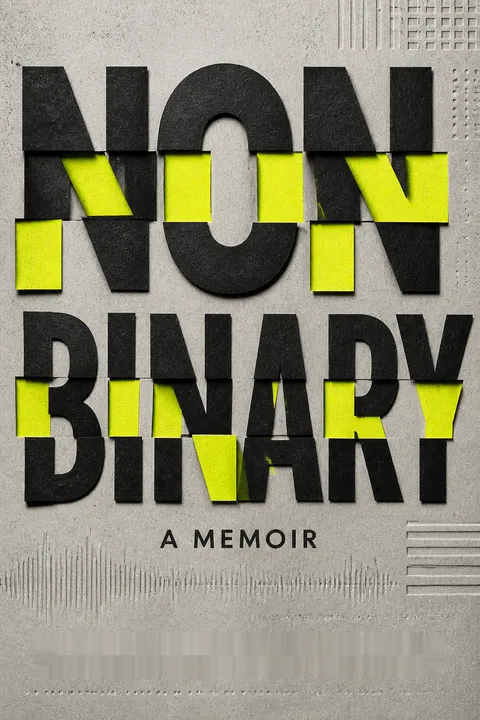


Key Takeaways
Write your identity instead of accepting the role assigned at birth.
A name becomes a beginning. Born Neil Andrew Megson, P-Orridge later adopted the name Genesis, first offered by school friends as a teasing biblical reference. Rather than reject it, they made it part of a self-created persona, then added P-Orridge and legally changed their name in 1971. Clothing, art, relationships, and public performance became further ways to shape that identity. The point was not simply to choose a more appealing label, but to refuse the idea that family, class, or social expectations had the final say.
Beyond a new label. P-Orridge’s experience was not a feeling of being a woman trapped in a man’s body. It was a sense of being constrained by the social demands of masculinity, and a conviction that identity could be continually remade.
The distinction between self-invention and a fixed inner identity is important. Names and clothes can act as practical tools, making an emerging sense of self visible and real to others. This resembles performative theories of identity, where repeated acts help create the roles they appear merely to express. Yet agency is not unlimited: family, money, safety, and legal systems restrict what people can change. The memoir’s strongest invitation is therefore not that anyone can remake themselves without cost, but that inherited definitions deserve scrutiny rather than automatic obedience.
Cut familiar forms apart to reveal the controls they make invisible.
Fragments disrupt the script. P-Orridge encountered William S. Burroughs through correspondence art, then met him in London. Burroughs showed how images could be cut from different sources and combined into new collages. The related cut-up technique breaks and rearranges existing language, images, or sound rather than accepting a smooth, predictable sequence. P-Orridge used it in lyrics and recordings, seeking meanings that ordinary narrative might conceal.
A method of attention. The technique became more than an artistic trick. P-Orridge treated habits, social roles, and cultural stories as material that could be taken apart and inspected. Their recurring question was who benefits when a way of thinking feels natural, inevitable, or beyond challenge.
Cut-ups work as a form of defamiliarization: a familiar message becomes strange enough to be noticed again. That makes the method useful not only for art, but for examining slogans, routines, and inherited assumptions. Still, disruption is not the same as revelation. Random juxtapositions can produce insight, but they can also invite people to find patterns that are not there. The technique is most persuasive as a way to loosen certainty and generate questions, not as a machine that guarantees access to hidden truth.
Let mortality decide what deserves your time before others decide for you.
A near-death turning point. At seventeen, after taking cortisone for years to control asthma, P-Orridge stopped the medication on medical advice and collapsed into a coma. The drug had impaired the body’s ability to produce essential hormones, making withdrawal dangerous. A doctor recognized the problem and revived them. The experience made the possibility of dying feel immediate, not theoretical.
Priority over permission. P-Orridge concluded that creative work should not be indefinitely postponed for conventional milestones or other people’s approval. The guiding question became whether a choice moved life toward the person they hoped to become. That decision helped make leaving school, rejecting a conventional career, and pursuing art feel less like reckless detours than necessary commitments.
The episode gives the memoir’s urgency a concrete source: time becomes a scarce resource when the body has nearly failed. In decision-making, this resembles a limited-horizon perspective, which can clarify what matters by making deferred plans feel less secure. But urgency has two edges. It can free someone from social pressure, or encourage dangerous experiments and irreversible choices. The useful lesson is not to manufacture a crisis, but to notice how often people treat a conventional future as guaranteed while postponing the work that gives the present meaning.
Make new art with available tools, even before you know the rules.
Improvisation over credentials. P-Orridge did not wait for formal permission to become an artist. With COUM Transmissions, they made performances from whatever the group could find, turning streets, discarded objects, homemade props, and communal spaces into artistic material. Later, Throbbing Gristle developed music through improvised sound, inexpensive equipment, and repeated listening to rough recordings. The members were not trained musicians in the conventional sense, and they treated that limitation as an opening rather than a disqualification.
Build the channel yourself. Industrial Records released the group’s work independently, while newsletters and cassette exchanges connected other experimental musicians. The process was laborious, from recording and packaging to mailing orders, but it let the artists decide what counted as music and how listeners could encounter it.
This is a strong argument for lowering the threshold of participation. Many creative forms are protected by conventions that make beginners feel they need credentials, equipment, or institutional approval first. P-Orridge shows how constraints can become formal choices: a rough recording is not merely an inferior version of a polished one if its roughness serves the idea. The counterpoint is that limited resources can also exclude people and exhaust them. Improvisation works best when it opens access, not when hardship is romanticized as proof of artistic seriousness.
When institutions call cruelty discipline, ask whom the rules protect.
Power in the classroom. At Solihull School, students and teachers subjected P-Orridge to sustained humiliation and physical attacks. Senior boys were permitted to punish younger pupils, creating a system in which violence was treated as part of order. The school’s prestige did not make it safe or just. P-Orridge eventually stabbed a persistent bully after years of abuse; the headmaster heard the context, required an apology, and made P-Orridge a student representative.
Power beyond school. Later, postal authorities prosecuted P-Orridge over postcards, and police seized art and family materials during a raid in Britain. The memoir presents these episodes as part of a wider struggle over who may publish, perform, and define acceptable behavior.
The school story illustrates how hierarchy can convert private aggression into an officially tolerated practice. Institutional legitimacy is not evidence of moral legitimacy; the people protected by a rule may be the people empowered to enforce it. The memoir’s account of later state action sharpens that point, though its personal perspective cannot by itself establish every wider allegation about coordination or motive. Readers can hold both ideas together: take the reported experience seriously, while distinguishing firsthand events from interpretations of why authorities acted.
Build chosen communities that share resources without turning belonging into obedience.
Make an alternative practical. COUM grew from a small circle into communal houses, performance networks, and an independent exchange of art. Later, Thee Temple ov Psychick Youth, or TOPY, connected people through shared projects, living spaces, publications, and events. In Brighton, P-Orridge helped establish communal homes and organized repeated protests that contributed to the closure of a dolphinarium. In Nepal, the family used savings to help run a soup kitchen serving as many as three hundred people twice daily.
Community needs limits. The memoir does not present every collective as a refuge. In the Exploding Galaxy, constant interrogation was meant to challenge habit, but one member became unable to function and had to be taken home. A shared ideal can create solidarity, but it can also become coercive.
The practical work matters as much as the rhetoric. Shared housing, food, publications, and mutual support turn a subculture from an aesthetic into an environment people can inhabit. This resembles mutual-aid traditions, where people meet needs directly instead of waiting for distant institutions. The warning is equally useful: radical groups can reproduce the very control they oppose, especially when pressure to prove commitment becomes a test of belonging. A healthy community needs not only shared purpose, but also consent, room to dissent, and ways to leave.
Treat gender rules as social choices, not biological instructions.
Question the assigned script. P-Orridge describes growing up around women at home and attending all-boys schools, where narrow performances of masculinity felt oppressive. They liked some conventionally masculine activities, yet resisted the expectation that those activities defined who they were. In performance and everyday dress, they tested how quickly other people assigned meaning to bodies, clothes, and sexuality.
Make the body a medium. With Lady Jaye, P-Orridge developed pandrogyny, an artistic and personal project aimed at creating a shared identity beyond the male and female binary. They altered their appearances to resemble one another, including through breast implants and facial surgery. Their larger claim was that the body need not dictate a person’s social identity or limit how a life can be made.
The memoir distinguishes gender expression from a simple switch between two fixed categories. That move can widen the space available to people who do not recognize themselves in standard definitions. It also provokes a worthwhile question: does treating gender as irrelevant risk minimizing how profoundly gender shapes people’s safety, community, and self-understanding? For many, gender is not a distraction but a meaningful part of life. The most expansive reading is not to abolish everyone’s attachments, but to challenge the power to impose one definition as universal.
Use ritual to rehearse change, but distinguish conviction from evidence.
Practice as self-direction. P-Orridge’s occult interests grew from experiments in performance and from reading Austin Osman Spare, whose work inspired the use of sigils. A sigil is a symbol or design used to focus a desire or intention. TOPY developed a practice called the Sigil ov Three Liquids, based on the idea that intense sexual experience could help embed an intention in the unconscious. P-Orridge understood the practice as a way to direct future choices, not merely as a request for supernatural intervention.
A serious but uncertain claim. P-Orridge also described uncanny experiences and believed repeated ritual could affect reality. The memoir treats those experiences as meaningful, but they do not establish that magical forces caused the outcomes.
Ritual can focus attention, create commitment, and make an abstract goal emotionally vivid. In that sense, it overlaps with practices such as visualization and symbolic rehearsal, without requiring a supernatural explanation. The distinction matters because a ritual may change the practitioner’s attention and behavior while leaving external events untouched. P-Orridge’s account is most useful when read as an experiment in self-programming and meaning-making. Treating personal conviction as proof of cosmic causation would go further than the evidence supplied in the memoir.
Let love expand the self without pretending fusion has no cost.
Two people, one artwork. P-Orridge and Lady Jaye described their relationship as a search for a shared being, which they called the Pandrogyne. The idea drew on the third mind, Burroughs and Gysin’s term for creative work produced through the fusion of two imaginations. P-Orridge and Jaye extended that collaboration to their bodies and public identities, eventually undergoing twenty-three surgeries intended to make them look more alike.
Love and loss remain real. The project expressed their desire to move beyond fixed categories, but it also involved pain, money, and the surrender of familiar appearances. Jaye died in 2007. P-Orridge continued to insist that Jaye’s contribution remained central, making the shared identity both an artistic concept and a lasting act of remembrance.
The Pandrogyne is compelling because it makes collaboration visible, not merely sentimental. It asks whether intimacy can produce a third perspective that neither person could create alone. At the same time, the language of fusion can obscure the needs of separate people, especially when one partner feels overwhelmed or diminished. The memoir’s account supports both readings: shared creation can deepen love, but it does not erase vulnerability or conflict. A durable partnership may depend on preserving difference even while building something together.
Leave successful forms before they harden into another system of control.
Refuse the formula. P-Orridge left Throbbing Gristle as it gained recognition, arguing that repetition would turn an experiment into a habit. They moved from COUM’s performance art to industrial music, then toward Psychic TV and TOPY, each project changing the relation between artist, audience, and community. The shifts were not a rejection of earlier work so much as a refusal to let its success dictate the next step.
Measure the work by its effects. P-Orridge valued art that changed how people perceived or acted, rather than art made chiefly for a career or collection. Their ideal legacy was not a following that copied them, but people who felt able to make their own work and lives.
Success often rewards repetition: audiences, markets, and institutions prefer a recognizable product. P-Orridge’s insistence on changing direction resists that feedback loop and keeps experimentation alive. Yet constant novelty can become its own formula, and leaving a project can transfer costs to collaborators who depend on it. The more demanding version of the principle is not simply to abandon what works, but to ask whether it still serves its purpose, who benefits from preserving it, and how an ending can honor the people who built it.
Analysis
Nonbinary is a memoir organized less as a steady ascent than as a sequence of ruptures, alliances, and reinventions. Its central idea is that personal identity and artistic form can be treated as materials: inherited names, gender roles, musical conventions, and institutional rules are not necessarily natural facts, but structures that can be examined and remade. The book’s fragmented movement through childhood, underground art, music, occult practice, exile, and love reinforces that argument. Its form performs its subject: a self shown through relationships, borrowed influences, and changing projects rather than a single stable persona.
The memoir is strongest when it makes rebellion tangible. A teenager can read fluently while adults mistake silence for inability. A band can make consequential music with improvised tools and little conventional training. A community can feed hundreds of people, or become so demanding that a participant breaks down. These scenes complicate the easy romance of outsider life. Defiance can expose hypocrisy, but it can also create danger, exhaustion, and new internal hierarchies. The book is not a practical manual for living without constraints; it is a record of what one person believed the costs of conformity and experimentation to be.
Its account of gender is similarly ambitious and debatable. P-Orridge treats binary categories as political instruments and imagines bodily transformation as a way to challenge them. That vision enlarges the possibilities of self-expression, though it can understate how important gender is to people who experience it as a source of meaning, not merely a rule imposed from outside. The distinction between intention and evidence matters in the memoir’s occult claims as well. Ritual may focus attention and alter behavior without proving supernatural causation.
Ultimately, the book offers a demanding model of authorship: make choices that reflect the person one wants to become, question who benefits from established forms, and create structures that let others participate. Its most useful contribution is not a single answer to control, but the insistence that every answer, including one’s own, must remain open to revision.
Review Summary
Nonbinary receives mixed reviews, with ratings ranging from 1 to 5 stars. Some praise Genesis P-Orridge's boundary-pushing life and artistic contributions, while others criticize the memoir for glossing over accusations of abuse and manipulative behavior. Many readers find the book's title misleading, as it focuses more on P-Orridge's music career than gender identity. The writing is generally considered engaging, offering insights into counterculture and challenging societal norms. However, some question the reliability of P-Orridge's narrative and feel the memoir ends abruptly due to the author's death during its creation.
People Also Read
Glossary
cut-ups
Recombined fragmentsA creative technique associated in the memoir with William S. Burroughs and Brion Gysin. Existing language, images, or recorded sounds are cut apart and rearranged to create unexpected combinations. P-Orridge used the approach in writing, collage, and sound work, and treated it more broadly as a way to interrupt familiar narratives and question assumptions.
COUM Transmissions
Experimental art collectiveThe performance art collective founded by Genesis P-Orridge in Hull in the late 1960s. COUM combined street theater, music, poetry, costumes, found materials, and communal living rather than limiting itself to a single medium. Its work challenged conventional expectations about art and audiences, and it developed into a public performance practice before P-Orridge helped form Throbbing Gristle.
industrial music
Experimental electronic musicA genre name P-Orridge and Monte Cazazza used for the music associated with Throbbing Gristle and their independent label, Industrial Records. The early sound rejected familiar song structures and treated noise, recorded material, voices, and electronic equipment as musical elements. P-Orridge intended the term to describe a new approach, not a fixed recipe for imitation.
Thee Temple ov Psychick Youth
Occult creative networkA network founded by P-Orridge and collaborators that joined occult practice, art, music, publications, events, and communal support. TOPY encouraged members to explore ritual and personal transformation outside conventional religious institutions. The memoir describes it as both a creative movement and a chosen community, while acknowledging the risk that participants might look to its founder for authority.
Sigil ov Three Liquids
Intention-focused ritualA TOPY ritual derived from P-Orridge’s interpretation of Austin Osman Spare’s sigil practice. It used a symbol and sexual experience to focus an intention, with the proposed aim of embedding that desire in the unconscious and influencing later choices. P-Orridge described it as a practical method of self-direction, while also attributing broader magical possibilities to repeated ritual.
pandrogyny
Shared identity beyond binariesA term P-Orridge and Lady Jaye developed for their artistic and personal project of creating a shared identity that exceeded the male and female binary. They used appearance, bodily modification, and collaborative practice to make the idea visible. For them, pandrogyny emphasized integration and similarity rather than choosing one gender category over another.
third mind
Joint creative consciousnessA term Burroughs and Gysin used for the creative result of combining two people’s work through collaboration and cut-up methods. The resulting work could not be attributed solely to either individual, because it arose from their interaction. P-Orridge and Lady Jaye drew on this idea when imagining a shared identity created through artistic and bodily collaboration.
FAQ
1. What is Nonbinary: A Memoir by Genesis P-Orridge about?
- Life and Art Intertwined: The memoir chronicles Genesis P-Orridge’s journey through gender, art, music, and personal transformation, emphasizing the inseparability of life and art.
- Cultural and Musical Influence: It details Genesis’s pivotal role in creating industrial music, their involvement in avant-garde art, and their influence on underground movements from the 1960s onward.
- Exploration of Identity: The book deeply explores themes of gender fluidity, nonbinary identity, and the concept of pandrogyny, presenting Genesis’s life as a continuous process of self-reinvention.
- Personal and Philosophical Narrative: The memoir blends personal stories, cultural history, and philosophical inquiry, particularly around the question of how to “short-circuit control” in society and the self.
2. Why should I read Nonbinary: A Memoir by Genesis P-Orridge?
- Unique Gender Perspective: The memoir offers a rare, firsthand account of living beyond traditional gender definitions, challenging readers to reconsider the importance of gender in identity.
- Insider View of Counterculture: Readers gain an in-depth look at the evolution of avant-garde art, industrial music, and countercultural movements, with insights into the intersections of art, music, politics, and rebellion.
- Inspiration for Authentic Living: Genesis’s story is a testament to living authentically despite adversity, encouraging readers to pursue personal freedom and creative ambition.
- Blueprint for Self-Invention: The book provides a model for embracing change, self-authorship, and the ongoing process of personal transformation.
3. Who is Genesis P-Orridge, the author of Nonbinary: A Memoir, and why are they significant?
- Pioneering Artist and Musician: Genesis P-Orridge (1950–2020) was a groundbreaking figure in experimental music and performance art, founding COUM Transmissions, Throbbing Gristle, and Psychic TV.
- Cultural Engineer: They described themselves as a “cultural engineer,” dedicated to challenging societal norms and creating new forms of expression and identity.
- Nonbinary and Pandrogynous Identity: Genesis was a trailblazer in exploring nonbinary and pandrogynous identities, using their own body and life as a canvas for transformation.
- Enduring Legacy: Their influence extends across music, art, and alternative culture, with archives held at Tate Britain and a global community of admirers.
4. What are the key takeaways from Nonbinary: A Memoir by Genesis P-Orridge?
- Identity is Fluid: The memoir emphasizes that identity is a mutable, self-created construct, challenging traditional gender, family, and social roles.
- Art as Life Practice: Genesis demonstrates that art and life are inseparable, with creativity serving as both self-discovery and resistance to control.
- Subversion of Control: A central theme is the lifelong quest to “short-circuit control,” undermining societal and internal forces that restrict freedom.
- Personal and Cultural Transformation: The book advocates for discarding inherited value systems and embracing self-determined identity, inspiring readers to pursue their own transformation.
5. How does Nonbinary: A Memoir by Genesis P-Orridge explore the concept of “short-circuiting control”?
- Central Philosophical Question: The memoir is framed by William S. Burroughs’s challenge, “How do we short-circuit control?”—a question that drives Genesis’s life and art.
- Art as Resistance: Genesis uses art, music, and performance to disrupt and dismantle control mechanisms, employing techniques like the cut-up method to break linear narratives.
- Personal Liberation: The book illustrates reclaiming autonomy over identity and creative expression as a form of resistance to societal conditioning.
- Cultural Subversion: Genesis’s life and work serve as ongoing experiments in subverting norms and exposing hidden power structures.
6. What is the significance of the term “pandrogyny” in Nonbinary: A Memoir by Genesis P-Orridge?
- Definition and Origin: Pandrogyny, coined by Genesis and Lady Jaye, describes the fusion of male and female into a “third being,” transcending binary gender categories.
- Evolutionary and Philosophical Concept: The memoir presents pandrogyny as an evolutionary step for humanity, breaking down binary systems that control identity and behavior.
- Artistic and Ritual Practice: Genesis and Lady Jaye underwent body modifications and rituals to physically and spiritually embody pandrogyny, making their transformation a living art project.
- Challenge to Societal Norms: Pandrogyny promotes unity and the dissolution of separation, challenging conventional ideas about gender, identity, and the body.
7. How does Nonbinary: A Memoir describe the origins and impact of industrial music and Throbbing Gristle?
- Formation and Philosophy: Genesis co-founded Throbbing Gristle to create music that broke from traditional structures, using unconventional instruments and noise to challenge norms.
- DIY and Innovation: The band’s first album was recorded on a low-fi cassette recorder, emphasizing concept over technical polish, and they founded Industrial Records for independent releases.
- Music as Information: Industrial music was conceived as “stored information” meant to subvert control systems and provoke new ways of thinking, not just entertain.
- Global Legacy: The genre became a worldwide phenomenon, influencing countless artists, though Genesis later criticized its commercialization.
8. What role do occultism and ritual play in Genesis P-Orridge’s life as depicted in Nonbinary: A Memoir?
- Early and Ongoing Exploration: Genesis’s interest in magic and altered states began in the 1970s and evolved through studying figures like Aleister Crowley and Austin Osman Spare.
- Thee Temple ov Psychick Youth (TOPY): Genesis founded TOPY as a paramilitary occult association, combining ritual, magick, and community-building with a focus on sexual magick.
- Sigil Magic and Reprogramming: Inspired by Spare, Genesis developed rituals like the “Sigil ov Three Liquids” to reprogram the unconscious mind and break societal conditioning.
- Integration with Art: Occult practice was inseparable from Genesis’s art and daily life, serving as a method to short-circuit control and foster transformation.
9. How does Nonbinary: A Memoir portray Genesis P-Orridge’s relationships and their influence on their work?
- Creative Collaborations: Early partners like Cosey Fanni Tutti were integral to COUM Transmissions and early Psychic TV, pushing boundaries in performance and sexuality.
- Fluid Intimacy: Genesis had multiple relationships, including with punk icon Soo Catwoman, reflecting an open approach to intimacy and identity.
- Profound Partnership: Lady Jaye Breyer was Genesis’s “other half” and collaborator in the pandrogyny project, deeply shaping their later life and art.
- Influential Friendships: Close ties with figures like William S. Burroughs and Ian Curtis provided intellectual and emotional support, influencing Genesis’s philosophy and creativity.
10. What challenges and controversies does Genesis P-Orridge face in Nonbinary: A Memoir?
- Legal and Censorship Issues: Genesis was arrested and tried for sending “indecent” mail art, facing potential prison time but ultimately avoiding it with support from allies.
- Media and Police Harassment: Their home was raided by Scotland Yard’s Obscene Publications Squad, leading to confiscation of materials and public vilification.
- Health Struggles: Genesis survived near-death experiences, including a pulmonary embolism and later battled leukemia.
- Personal and Band Conflicts: Tensions within Throbbing Gristle and personal relationships led to splits, emotional turmoil, and even a suicide attempt.
11. How does Nonbinary: A Memoir by Genesis P-Orridge explain their philosophy on art and creativity?
- Art as Communication: Genesis views art as a dialogue to expand perception and challenge societal norms, not as a commodity or career.
- Breaking Conventions: They emphasize stripping away routines and traditional structures to find the essence of expression and provoke change.
- Inclusivity of Experience: Art should reflect all aspects of life, including taboo subjects, politics, and personal pain, to capture the full human condition.
- Inspiring Others: Genesis believes in inspiring others to realize their creative potential and use art as a tool for personal and cultural evolution.
12. What are the best quotes from Nonbinary: A Memoir by Genesis P-Orridge and what do they mean?
- On Binary Systems: “It’s my belief that one of the problems of the world so far... is the binary system. The either/or system... That’s not the way the universe is built.” This encapsulates Genesis’s rejection of dualistic thinking in favor of fluidity and unity.
- On Art and Life: “The excitement was the fact that LIFE and ART were inseparable.” This highlights Genesis’s view that creativity is a continuous, integrated process, not separate from living.
- On Pandrogyny: “Every man and woman is a man and woman.” This expresses the idea that gender distinctions are artificial and that embracing unity is essential for evolution.
- On Death and Legacy: “We make decisions based on where you want to be and what you want to be on that last day.” This reflects the memoir’s theme of living consciously with awareness of mortality and ethical responsibility.
About the Author
Other books by Genesis P-Orridge
Download PDF
Download EPUB
.epub digital book format is ideal for reading ebooks on phones, tablets, and e-readers.








