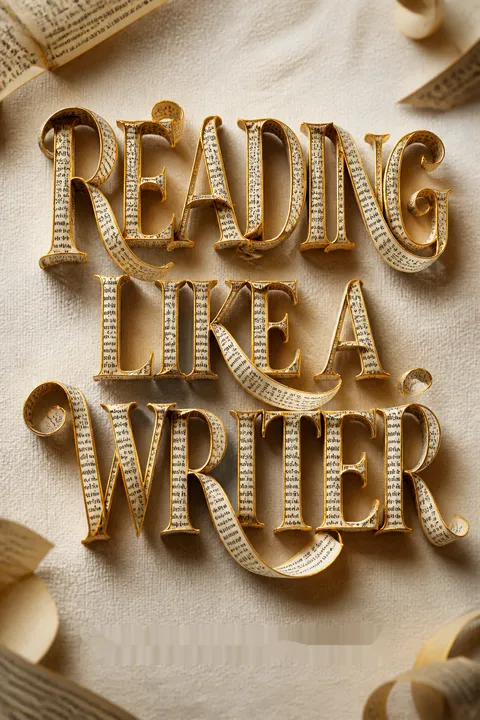


Key Takeaways
Learn to write by reading slowly enough to notice a writer’s choices
Books teach craft. Francine Prose begins with a question: can creative writing be taught? Workshops can help writers edit and find a community, but her own deepest instruction came from writing and reading books closely. Sophocles and Shakespeare taught her this in school, when she traced images of sight and blindness through their tragedies. A tedious assignment became a hunt for patterns that connected individual words to a play’s larger design.
Read with a second purpose. Pleasure remains essential, but readers can also notice how a writer handles pacing, character, detail, and point of view. Studying a masterwork is not about copying its style. It is a way to see what a writer can make language do, then bring that expanded sense of possibility to one’s own work.
What's striking is that close attention does not replace pleasure. It can intensify it: a reader discovers that a familiar story contains patterns that were invisible at normal speed. This resembles deliberate practice in music, where listening shifts from simply enjoying a performance to noticing timing, phrasing, and structure. The analogy has limits, since literature permits multiple interpretations and does not always contain a single correct solution. The useful discipline is not to decode every word as a hidden signal, but to become alert to how a text produces its effects.
Put each word on trial for what it reveals and what it leaves unsaid
Words carry character. In the opening of Flannery O’Connor’s story about a grandmother and an escaped criminal, the family members are identified by their roles rather than personal names. That choice creates distance and makes them feel almost archetypal. The grandmother’s forceful verb for trying to change her son’s mind suggests her persistence, while her choice of a genteel word for relatives hints at her inflated sense of status. Even dialect can be conveyed through one carefully chosen word, without heavy phonetic imitation.
Absence speaks, too. Katherine Mansfield begins a story about two sisters after their father’s death with a sentence that leaves its time reference unfinished. The sisters’ inability to name the event reflects their difficulty accepting it. Such omissions can express a character’s consciousness without explaining it directly.
A close reader treats diction as evidence, but not as a code with guaranteed answers. A word can suggest class, mood, or distance because readers bring shared linguistic expectations to it. That is a powerful resource for writers, and a reason to revise for implication as well as literal meaning. It also calls for restraint: not every unusual word is deliberate symbolism, and readers can disagree about what a choice implies. The method works best when interpretation stays tied to the surrounding context rather than turning one adjective into a complete diagnosis.
Revise sentences until their rhythm carries clear, exact thought
Sentence shape matters. A sentence can be long without being confusing. Prose examines Samuel Johnson’s 134-word opening sentence about whether wealth or status brings happiness, and Virginia Woolf’s 181-word opening meditation on illness. Both remain understandable because their clauses are carefully arranged. Philip Roth, by contrast, shifts rapidly between fragments, questions, and short declarations to make a troubled mind feel active on the page.
Read aloud during revision. Ask whether each word is needed, whether the meaning is clear, and whether the grammar supports the thought. Then listen for rhythm. A sentence that repeatedly catches the writer’s breath may need reshaping. Hemingway’s advice to begin with a plain, reliable sentence offers one possible way through a block, but Prose stresses that clarity matters more than one prescribed style.
The sentence is both a unit of meaning and a unit of bodily experience. Reading aloud reveals awkwardness that silent visual scanning can miss, much as speaking a draft exposes where an argument lacks a natural transition. Yet smoothness is not the only goal. A jagged rhythm can be exactly right for panic, grief, or comic timing. The practical test is not whether a sentence sounds polished in isolation, but whether its form helps the reader experience the thought the passage intends.
Use paragraph breaks to change pace, emphasis, or perspective
A break has force. Isaac Babel described paragraphing as a way to alter rhythm and show a familiar scene from another angle. Prose illustrates this with a story that opens like a military report, then ends its first paragraph by recalling that a road was built over the bones of peasants. The shift changes how the reader understands the report and the landscape that follows.
Shape the reader’s breath. Paula Fox describes a woman being bitten by a cat in a single paragraph that moves through action, pain, and the woman’s attempt to hide her distress. Elsewhere, Raymond Carver gives an ending two brief paragraphs, separating a plain statement of the month from a claim about a life changing. Paragraphs can guide attention, but there is no universal formula for where they belong.
Paragraphing acts like visual timing. A blank line gives the reader a pause, while a dense block can create pressure or continuity. This links page design to cognition: readers use visual groupings to infer which ideas belong together and which moments deserve emphasis. But the same break can feel emphatic in one work and mannered in another. A useful revision question is not whether a paragraph is too long by rule, but what changes in the reader’s attention when the break moves.
Before choosing a narrator, decide who needs to hear the story
Stories have an audience. Prose found that writing a story as one character telling it to another solved practical problems for her: who speaks, why the story is being told, and what might make the listener lose interest. A listener can hurry a slow section or ask for clarification, giving the writer a reason to control pace and explanation.
Frames can create trust. Emily Brontë’s Wuthering Heights surrounds its turbulent family history with the accounts of a visitor and a housekeeper. The housekeeper’s relatively ordinary perspective helps ground dramatic events in everyday life. The structure is elaborate, yet it feels compelling because each layer gives the telling a context. Other works shift between perspectives or leave a frame behind. Point of view is not simply a choice between first person and third person; it is a way to shape what the reader can know.
Thinking about the listener brings narrative design closer to ordinary conversation, where people tailor stories to an audience, a setting, and a purpose. It can also expose a weakness: if a character has no credible reason to tell a story, the narration may feel like information arranged for the reader’s convenience. A clearly imagined listener is not mandatory, though. Some novels gain power from withholding the occasion of telling or from making the audience uncertain. The question is not whether every story needs a frame, but whether its mode of telling feels earned.
Let characters emerge through choices, perceptions, and self-deception
A biography is not required. Heinrich von Kleist’s novella about a pregnant widow gives almost no physical description of its central character. Instead, it reveals her through actions and through the moral puzzles surrounding her. The story’s reversals force readers to reconsider what they think they know about her and about the people around her.
Self-image exposes character. Jane Austen presents Mr. Dashwood as a man who believes himself generous while repeatedly reducing the help he plans to give his half-sisters. The gap between his good opinion of himself and his conduct tells the reader more than a résumé of his childhood could. George Eliot’s Dorothea similarly reveals herself through what she hopes marriage will provide and how she misreads her reserved husband. A character becomes legible through what they do, notice, desire, and misunderstand.
This approach resists the idea that every fictional action needs to be explained by a complete psychological history. Readers often infer character from the mismatch between intention and behavior, a process also central to social judgment in real life. The method gives fiction room for opacity: people do not always understand why they act as they do. Still, withholding background is not automatically sophisticated. Context can matter, especially when a story concerns histories of power or harm. The craft challenge is to provide enough evidence for complexity without turning characters into case files.
Make dialogue pursue hidden goals, not merely deliver information
Speech does several jobs. People talk to communicate, persuade, impress, conceal, and test a relationship, often at once. In Henry Green’s novel Loving, a young servant tells a woman he admires about his family, his worry over wartime events, and whether he should return home. She listens only partly, since she is also watching children and thinking about other concerns. His repetitions and her distracted replies make the conversation feel socially complicated rather than neatly staged.
Listen for the subtext. A line can reveal more through hesitation, evasion, or a change of subject than through its literal claim. Fictional dialogue need not reproduce every stumble of real speech, but it can preserve the competing motives that make real conversations interesting. Dialogue that only advances plot or supplies background usually misses this richer work.
This is close to the linguistic idea of conversational implicature: people routinely communicate more than their sentences state, and listeners infer meaning from timing, context, and what goes unmentioned. Fiction can make those inferences visible without explaining them outright. The danger is overloading every exchange with secret motives until ordinary talk seems impossible. Some conversations are genuinely direct, and stylized dialogue can be more revealing than a realistic transcript. The test is whether a line sounds like something this character would say to this person in this moment.
Choose details that make an invented world feel verifiably real
Specificity earns belief. In a workshop story recounted by Prose, a woman first describes overcoming severe illness, then admits that the account was invented. The class had believed the tale because it included a family dinner divided by a father’s love of meat and a mother’s commitment to tofu. That small, ordinary contrast made an outrageous account feel grounded.
Details also characterize. In Kafka’s story about a traveling salesman who wakes as an insect, a framed magazine image of a woman in furs makes the room feel convincingly ordinary. The mundane object strengthens belief in the impossible event. Chekhov likewise favored precise particulars over familiar landscape description: a small glint from a broken bottle can suggest a whole moonlit scene. A useful detail anchors setting while revealing how a character lives.
Details function like evidence in a reader’s informal reality check. An ordinary object can make an impossible premise easier to accept because it gives the imagined world texture and limits. In that sense, detail resembles Bayesian updating: readers revise their sense of plausibility as concrete cues accumulate. But specificity can also be used to deceive, as the invented workshop confession demonstrates. A convincing detail proves that a scene feels coherent, not that its claims are true. Writers should aim for truthful texture rather than a pile of decorative facts.
Keep gestures only when they reveal a relationship or inner conflict
Small movements can tell the story. Prose distinguishes gesture from major action: a gesture is a small, often partly unconscious physical behavior, and even a word choice can serve the same purpose. In Henry James’s The Portrait of a Lady, Isabel enters a room and sees her husband seated while Madame Merle stands facing him. Their posture, followed by his sudden movement, makes Isabel recognize an intimacy she had not understood.
Avoid stock signals. A clenched fist or a bitten lip can announce generic anxiety without showing anything particular about the character. By contrast, Gabriel Conroy in Joyce’s “The Dead” fusses with his appearance after an awkward exchange with a servant, revealing how quickly he retreats into concern for his own dignity. Observation helps writers find gestures that belong to a specific person and moment.
Gesture links narrative to embodied cognition: readers often understand status, discomfort, and attraction through posture before anyone names them. It also carries cultural meaning, so the same movement may signal respect in one setting and submission in another. That makes gesture powerful but not self-interpreting. A writer should provide enough context for the reader to infer its significance, while resisting the urge to explain every motion. The strongest gesture changes how a relationship is seen, rather than merely filling a pause between lines of dialogue.
Read Chekhov to observe people without forcing life into neat lessons
Stories can resist workshop rules. During a difficult commute, Prose read Chekhov’s stories and found that their breadth of human experience made her own troubles feel more bearable. They also unsettled her advice as a teacher. Chekhov lets a story’s point of view shift after a character dies, portrays a sudden suicide without extensive preparation, and depicts lives that end without meaningful change.
Describe before judging. Chekhov urged writers to show people and circumstances clearly rather than insert an automatic verdict. A rich woman’s loneliness can matter, even though poverty exposes people to deeper and more frequent suffering. This kind of attention is not a claim that injustice does not matter. It is a way to resist deciding in advance what a person’s experience must mean.
Chekhov’s discipline resembles an ethic of inquiry: observe closely, distinguish what is seen from what is inferred, and leave room for evidence that complicates a preferred explanation. That stance has value beyond fiction, especially in a culture quick to classify people. It is not the same as moral neutrality. Choosing whose experience receives attention is already an ethical act, and unequal conditions shape what people can endure. The strongest version of this lesson combines openness about individual lives with clarity about the structures that make some lives more vulnerable.
Read rule-breaking masterpieces when fear makes your own work feel unsafe
Literature widens permission. Prose urges writers to read works that ignore familiar demands, such as explaining every character’s past, making protagonists likable, or tying every ending into a bow. Samuel Beckett’s “First Love” gives readers a narrator who is bodily, bleak, and difficult to admire, yet whose precise, comic voice holds attention. Interest in a character need not depend on approval.
Courage is not certainty. Zbigniew Herbert’s poem about five men facing execution asks whether writing about beauty is trivial beside violence. The question remains unresolved. Prose’s answer is not that a poem can repair the world, but that reading great work can help writers continue despite doubt. Studying what has been made, including work that risked failure or disapproval, makes the blank page less absolute.
The distinction between liking a character and caring about a work is crucial. Ethical engagement can arise through curiosity, discomfort, or recognition rather than identification with someone admirable. That expands fiction’s human range and prevents likability from becoming a substitute for complexity. Yet rule-breaking is not valuable merely because it breaks a rule; opacity and difficulty can also shut readers out without rewarding their effort. Reading for courage means learning to judge risk by what the work achieves, not treating unconventionality itself as proof of artistic merit.
Analysis
Reading Like a Writer is part craft guide, part literary criticism, and part memoir of an education conducted through books. Its central claim is modest but demanding: writing can be taught indirectly by training attention. Instead of offering a universal formula, Francine Prose studies how individual writers make choices about words, syntax, paragraphs, narration, character, dialogue, detail, and gesture. The method asks readers to move between a passage’s smallest decisions and its larger emotional effect.
The book’s structure mirrors its argument. Each craft element receives its own discussion, but the examples repeatedly cross boundaries. A word choice can characterize a person, foreshadow a plot, and establish social distance. A paragraph break can alter perspective. A gesture can replace exposition. These overlaps make the book hard to reduce to a checklist, and they explain why its best advice is comparative: read widely, notice what different writers accomplish, and resist turning one example into a rule.
Prose also makes a case for literary attention as a human practice. Close reading is not only a technique for aspiring novelists. It can deepen pleasure, make difficult work approachable, and preserve ambiguity where life offers no clean resolution. Chekhov’s stories become a model for observing people without rushing to pronounce what they mean. At the same time, the book does not require writers to abandon judgment or craft principles. It asks them to distinguish useful guidance from rigid prescription.
Its strongest contribution is the shift from asking what a story says to asking how it makes that meaning felt. The limitation is equally instructive: close reading can tempt the reader to overinterpret, assigning intention to every detail. Prose’s method works best when attention remains curious, specific, and revisable. Read slowly, learn from the choices on the page, then return to the world with sharper eyes.
Review Summary
Reading Like a Writer receives mixed reviews. Many readers appreciate Prose's passion for literature and close reading approach, finding her insights on writing techniques valuable. The book is praised for its rich examples from classic and contemporary works. However, some criticize it as pretentious and overly focused on literary fiction. Critics argue it lacks practical advice for genre writers and may be more suited for experienced readers and writers. Despite disagreements, most reviewers acknowledge the book's potential to enhance one's appreciation of literature and writing craft.
People Also Read

Glossary
Close reading
Attentive textual analysisA way of reading that examines words, sentences, images, punctuation, and structure in detail, then asks how those choices contribute to a work’s larger effects. In Prose’s account, close reading is both a source of pleasure and a practical education in craft. It encourages attention to what a text says, how it says it, and what it leaves unstated.
interpolated stories
Stories within a storyAnecdotes or narratives told by one character to another within a larger work. They can alter pacing, reveal the teller’s personality, and give a reader context for why the story is being told. Prose also uses the idea of a listener to show how a framed narrative can help a writer manage explanation, emphasis, and the reader’s attention.
gesture
Small revealing actionA small physical behavior, often partly unconscious or reflexive, that can reveal a person’s feelings, habits, or relationships. Prose also treats word choice as capable of functioning like a gesture. A gesture earns its place when it conveys something specific about a character or situation, rather than serving as a stock signal for a familiar emotion.
unbiased observer
Writer who withholds verdictsChekhov’s ideal of a writer who depicts people and their circumstances without automatically judging them or forcing a moral conclusion into the story. The writer’s task is to present the problem accurately and let readers draw conclusions. This does not mean that a writer has no values, or that social conditions and moral consequences are irrelevant.
FAQ
What's Reading Like a Writer about?
- Focus on Reading and Writing: Reading Like a Writer by Francine Prose explores the symbiotic relationship between reading and writing, emphasizing that writers can enhance their craft by studying the works of others.
- Close Reading Techniques: The book advocates for "close reading," a method that involves analyzing texts meticulously to understand the nuances of language and storytelling.
- Practical Writing Advice: Prose offers practical guidance on various writing elements, such as character development and dialogue, making the book a valuable resource for both readers and aspiring writers.
Why should I read Reading Like a Writer?
- Enhances Writing Skills: The book provides insights that can significantly improve writing abilities by teaching readers how to analyze and learn from great literature.
- Inspires a Love for Literature: Prose’s enthusiasm for literature is contagious, making the book an enjoyable read for anyone passionate about books.
- Guidance for Aspiring Writers: Aspiring writers will find valuable advice grounded in Prose’s experiences as a writer and teacher, offering a practical perspective on the craft.
What are the key takeaways of Reading Like a Writer?
- Importance of Close Reading: Prose emphasizes that writers learn by reading and rereading the authors they admire, internalizing techniques and styles that resonate with them.
- Writing as a Craft: The book reinforces that writing requires practice, patience, and attention to detail, highlighting the importance of trial and error.
- Learning from Masters: Prose encourages studying the works of literary masters, suggesting that this approach fosters growth and development in writing.
What specific methods does Francine Prose recommend in Reading Like a Writer?
- Close Reading Exercises: Prose suggests detailed analysis of sentences and paragraphs to understand authorial choices and their effects on readers.
- Word Choice and Sentence Structure: She advises writers to scrutinize every word, ensuring each serves a purpose in crafting effective prose.
- Character and Dialogue Analysis: Prose encourages examining character development and dialogue to enhance storytelling abilities.
How does Reading Like a Writer address the teaching of creative writing?
- Skepticism about Teaching Creativity: Prose questions whether creativity can be taught, emphasizing that while language love can't be transmitted, writing skills can be learned.
- Value of Workshops: Despite her skepticism, she acknowledges workshops' value in providing feedback and fostering a supportive community for writers.
- Learning from Experience: Prose stresses that much of what writers learn comes from their own experiences and the act of writing itself.
How does Francine Prose suggest writers develop their unique voice in Reading Like a Writer?
- Embrace Individuality: Prose encourages writers to embrace their individuality, developing a voice that reflects their perspective.
- Experimentation and Practice: She emphasizes the importance of experimentation and practice, noting that a writer's voice evolves with more writing.
- Learning from Influences: Prose suggests studying admired authors to identify resonant elements, which can inform and shape a writer's voice.
What role does character play in Reading Like a Writer?
- Character Development Insights: Prose discusses the importance of creating complex and believable characters, encouraging writers to learn from literary examples.
- Dialogue and Character Voice: She highlights dialogue's role in revealing character traits and motivations, stressing the need for authenticity.
- Learning from Literary Examples: Prose advises analyzing characters in literature to understand how to create resonant characters.
How does Reading Like a Writer approach the concept of dialogue?
- Authenticity in Dialogue: Prose emphasizes the need for authentic dialogue, encouraging writers to listen to real-life speech patterns.
- Character Voice and Tone: She discusses how dialogue can reveal a character's voice and tone, helping establish their personality.
- Learning from Examples: Prose suggests studying dialogue in literature to inform one's writing, creating more engaging conversations.
What is the significance of details in Reading Like a Writer?
- Details Enhance Imagery: Prose highlights details' importance in creating vivid imagery and engaging readers' senses.
- Characterization through Details: She emphasizes that details can reveal character traits and motivations, making characters feel real.
- Learning from Literary Examples: Prose encourages analyzing how authors use details, inspiring descriptive writing.
How does Reading Like a Writer address the relationship between reading and writing?
- Interconnectedness of Reading and Writing: Prose emphasizes that reading and writing are deeply interconnected, with reading being essential for writing improvement.
- Learning from Literature: The book encourages learning from literature, noting that great writers teach valuable lessons about craft and technique.
- Reading as a Tool for Growth: Prose believes reading can enhance creativity and skill, understanding language and storytelling possibilities.
What are some best quotes from Reading Like a Writer and what do they mean?
- "A workshop can be useful.": Highlights the value of writing workshops in providing feedback and fostering a supportive community.
- "We learn to write by reading and rereading the authors we most loved.": Emphasizes reading's essential role in developing writing skills.
- "Writing, like reading, was done one word at a time.": Reminds that writing is a meticulous process requiring careful consideration and revision.
What specific writing techniques does Francine Prose discuss in Reading Like a Writer?
- Close Reading: Prose advocates for close reading to understand narrative construction, dissecting style, structure, and character development.
- Dialogue Crafting: She provides insights into writing effective dialogue, encouraging drawing from real-life conversations.
- Use of Gesture: Prose emphasizes gestures' importance, noting their role in revealing character emotions and thoughts.
Download PDF
Download EPUB
.epub digital book format is ideal for reading ebooks on phones, tablets, and e-readers.








