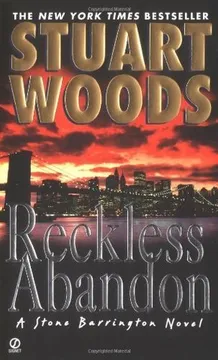


Plot Summary
Holly Brings Florida North
Stone Barrington, a New York lawyer and former detective, invites Holly Barker, a Florida police chief, to stay at his home when she arrives with her Doberman, Daisy. Holly has come to find Trini Rodriguez, a Mafia killer she believed she had stabbed to death while protecting an undercover FBI agent. Trini survived, and FBI agent Harry Crisp placed him in witness protection without telling Holly.
Her claim against him is grave: Trini killed her witness's relatives, then hid bombs in their coffins, killing more than a dozen people at their funeral. Holly wants him returned to Florida for trial. Stone agrees to help, while his old partner, Detective Dino Bacchetti, recognizes that the federal program may put the fugitive beyond their reach.
Holly's arrival turns a private memory of violence into a jurisdictional conflict. She is not pursuing Trini simply because he escaped; she is resisting the FBI's power to decide which crimes deserve prosecution and which victims can be made to wait. Stone's hospitality is initially personal, but it quickly becomes a form of complicity. His professional reflex is to notice legal obstacles, while Holly's is to treat institutional obstruction as another obstacle to overcome. Their difference gives the story its engine: she insists on consequence, he calculates risk, and each gradually pulls the other beyond familiar limits.
A Face in Little Italy
Stone takes Holly to Little Italy, where she hopes to find people who might know where Trini is hiding. At lunch, Holly suddenly bolts from the restaurant with Stone's Walther pistol and chases a man she recognizes from Florida. She loses him in the crowd, but tells Stone he was tall, heavyset, and wore a black ponytail.
Later, Dino reports that Trini has been seen at the La Boheme coffeehouse, a Mafia hangout where a lone police chief would risk starting a gun battle. Holly refuses to be discouraged. Their search has now produced a real sighting, but Stone warns her that New York is not her jurisdiction and a stray shot could hurt a bystander. Their mutual attraction grows alongside the danger.
The sighting gives Holly what she came for, but not control. Her instinct is to move immediately, while Stone understands that a recognizable target is not the same as a safe arrest. The crowded street turns her competence into a liability: the chase is bold, yet it leaves her with no custody, no identification beyond her certainty, and no authority to act freely. Stone's warnings are not simply caution; they expose his own ambivalence. He admires Holly's resolve even as he fears its consequences, a tension that makes their growing intimacy inseparable from their professional disagreement.
The CIA's Unwanted Client
Lance Cabot, a CIA officer who previously used Stone in a covert London operation, arrives with a legal job. The client is Herbie Fisher, a reckless photographer Stone once had to retrieve from the Virgin Islands. Herbie faces a second drunk-driving charge, a suspended license, and a charge for kicking a policeman.
Stone negotiates a lenient plea, but Herbie rejects it and pleads guilty in court. Lance quietly persuades the judge to suspend a one-year sentence; Herbie must still pay a large fine and lose his license. Lance sends him to the Virgin Islands, but Herbie drives away instead. Stone accepts a paid consultant contract with Lance, and Holly signs one too, leaving both open to future Agency work.
Herbie's case makes the book's comic register serve a serious purpose: it shows how easily official outcomes can be bent by invisible authority. Stone's ordinary lawyering cannot contain Herbie's recklessness, while Lance can alter the stakes without explaining how. Stone accepts the job despite knowing the risks because money and professional pride make refusal difficult. Holly's contract signals a different temptation. She is not seeking a salary so much as an exit from routine, and the Agency offers novelty without requiring her to relinquish her identity as a police officer. Both are being recruited through their vulnerabilities.
Money Buried in a Tree
At dinner, Holly asks Stone for legal advice about $5.76 million she took during an earlier Florida investigation. She hid the cash in a tree after discovering it among criminals' belongings, then failed to turn it over once those criminals were arrested. Her former FBI lover, Grant Harrison, knew about the money but urged her to leave it where it was.
Stone tells her that taking it now would create fresh evidence against her, while giving it away could expose her. He refuses her suggestion that they retrieve and split it. The money remains in its hiding place as Stone prepares for London on Lance's assignment, carrying an unresolved liability that will later become both a temptation and a practical bargaining resource.
The hidden cash is more than a thriller's convenient fortune. It materializes Holly's habit of acting first and reckoning later, but it also reveals how her professional role has blurred into private ownership. She took the case to investigate crime, yet its contents now implicate her in the same economy she polices. Stone's advice is legally sound but emotionally incomplete: leaving the money untouched preserves her safety while leaving her bound to a secret. Their refusal to retrieve it is a temporary choice, not a solution, and the tree becomes a physical marker of the costs of delayed accountability.
London's Quiet Testimony
Lance sends Stone to London without explaining the assignment. There, British officials question him under oath about a New York confrontation in which Felicity Devonshire, known to him as Carpenter, shot an armed woman.
Stone gives a restrained account and falsely supports Carpenter's claim that the shooting was justified. Afterward, Carpenter tells him the inquiry may decide whether she keeps acting as head of her service. Lance later explains that her testimony was the final evidence under review and asks Stone to maintain contact with her.
The trip gives Stone a clearer view of Lance's methods: he is used as a trusted civilian while being kept ignorant of the operation's real purpose. Stone returns to New York and resumes Holly's case.
Stone's London testimony extends the novel's concern with loyalty beyond domestic law enforcement. He chooses a person over a complete account, believing that the institution questioning him cannot be trusted with the whole truth. The lie is not framed as innocence; it is a deliberate moral compromise made in service of a larger judgment about Carpenter's competence. Lance's secrecy makes Stone useful precisely because he is not fully informed, yet Stone's willingness to cooperate shows how easily usefulness can become complicity. His return to Holly's pursuit places these habits under sharper pressure.
Two Agencies, One Killer
A New York patrolman is shot dead near Little Italy, and Holly identifies the killer's description as Trini's. Grant objects because the FBI still needs Trini, while Lance reveals that the Bureau is using him to investigate Mafia money-laundering links to a Middle Eastern terrorist network.
The FBI then recasts the officer's death as a random shooting, weakening the NYPD response long enough to protect its operation. Stone and Holly learn that the Mafia's laundering channels could help terrorists move funds around tightened financial controls.
Holly agrees to wait briefly rather than sabotage the investigation, but the arrangement makes her furious: federal agencies are treating a suspected cop killer as an asset. Stone and Holly begin to understand that Trini is serving himself as much as either agency.
The dead patrolman changes the meaning of every earlier delay. Trini is no longer merely a protected witness whose past crimes are being postponed; he may be committing new violence while federal officials manipulate the account of it. The FBI's operation has a defensible national-security aim, but its methods transfer the cost to local officers and their families. Holly's temporary consent is therefore a test of restraint, not trust. Lance's explanation exposes a political structure in which truth is rationed according to institutional priorities, while Stone recognizes that Trini's usefulness gives him leverage over the people supposedly controlling him.
The House Is Breached
Stone notices suspicious watchers outside his New York home and drives Holly and Daisy to his Connecticut cottage, hoping to keep Holly from pursuing Trini. Someone has entered the cottage, leaving a bloodied scrap of blue coverall cloth; Holly's Florida house has also been ransacked. Ham Barker, Holly's father and a skilled former soldier, arrives in New York after discovering the damage at her home.
He brings firearms and stays to protect her. When Stone and Holly return to Manhattan, Ham explains that the intruders tried Holly's safe but failed to open it. The watchers may be federal agents, Trini's associates, or both. With no reliable way to tell, Stone and Holly can no longer treat their pursuit as a case happening somewhere else.
The break-ins collapse the distance between investigation and home. Stone's cottage is supposed to offer privacy, yet someone has followed them there; Holly's own house has become a target before she can return to it. The uncertainty about who is watching matters as much as the damage. Federal surveillance and criminal pursuit now occupy the same visual field, making every institutional presence suspect. Ham's arrival introduces a protective family bond, but his weapons also show how quickly ordinary care becomes tactical preparation. The protagonists' safe spaces have turned into evidence that the conflict is already inside their lives.
Bullets Across Brooklyn
In Central Park, two men use a dart to incapacitate Daisy, then attack Holly with a knife. Holly draws the pistol Ham gave her and kills one assailant; the other escapes. The next day, Stone visits Mafia elder Eduardo Bianchi, asking for help locating Trini.
Eduardo agrees to make discreet inquiries and confides that his daughter Dolce's illness has worsened. On the Brooklyn Bridge, two men disguised as motorcycle police shoot at Stone. His lightly armored Mercedes stops their bullets, and he rams their motorcycle into oncoming traffic, killing both.
With reporters gathering outside his home and the attackers still unidentified, Stone takes Holly and Ham to Florida in his plane. The pursuit has become a direct campaign against their lives.
The attacks strip away the reassuring distinction between pursuing violence and suffering it. Holly's training saves her in the park, but Daisy's vulnerability makes the assault intimate rather than abstract. Stone's collision on the bridge is both self-defense and an irreversible use of force; survival leaves him with the deaths of his attackers and no clear account of who sent them. Eduardo's confidence that he can help is complicated by his private grief, which humanizes a man whose authority comes from criminal relationships. Flight to Florida is not surrender, but a necessary admission that the city has become untenable.
Immunity in the Sunshine
In Florida, Lance reports that DNA links the attackers to a family of Arab or Syrian assassins, likely connected to the terrorist network Trini has been helping the FBI investigate. The next morning, news reports announce that the Bureau has arrested members of the network in a staged money-laundering operation.
Holly expects the operation's end to free Trini for prosecution, but Grant tells her that the FBI has granted him immunity from federal charges and returned him to witness protection.
His cooperation has been judged more valuable than Holly's Florida murder warrant. Grant also tries to revive their personal relationship, but Holly ends it and refuses to accept his explanation. She and Stone return to New York, where Lance promises to help locate Trini without provoking the FBI publicly.
The successful sting is a genuine achievement, but the institution's victory sharpens the injustice rather than resolving it. The FBI has dismantled a terrorist financial network while converting Trini's cooperation into protection from consequences. Grant's personal appeal cannot repair the breach because Holly understands that his private affection has not altered his public choices. Her anger now has two objects: Trini's crimes and the bureaucratic judgment that makes those crimes negotiable. Stone remains more strategic, but he cannot turn the operation's success into justice without finding a way around the same federal machinery.
The Apartment Behind The Name
Holly already knows the witness-program alias Robert Marshall, and Lance turns the name into a New York address by calling ordinary directory assistance. At the apartment, FBI agents refuse to honor Holly's Florida warrant, citing a federal warrant and national-security needs. Stone, Holly, and Lance watch the agents move Trini in a van and follow it to Teterboro, where he boards a private jet.
Stone obtains its flight plan and learns it is bound for Santa Fe. He calls lawyer Ed Eagle, who arranges local surveillance. The trail reveals that Trini is staying at a secluded house owned by Byron Miller, the U.S. Attorney for the district. The simple address proves useful, but federal custody still dictates where the pursuit can go.
The alias seems designed to make Trini unreachable, yet the solution is almost comically mundane: a public directory. That contrast punctures the mystique of intelligence work without making the federal obstacle disappear. Finding an address is easy; gaining lawful access is not. Each transfer lets the Bureau preserve its control while forcing Holly to follow on its terms. Ed Eagle's local knowledge extends the protagonists' reach, but the discovery that the property belongs to the U.S. Attorney raises the cost of acting. The chase now depends on building a lawful opening rather than simply locating the fugitive.
A Judge Opens The Door
In Santa Fe, Holly and Stone follow Trini to the federal courthouse, where he testifies in a corruption case involving Mafia loans to New Mexico racetrack developers. Holly asks the judge to authorize her Florida warrant, and the judge agrees after the U.S. Attorney cannot promise that Trini will ever face the murder charges.
By the time Holly and Stone reach Miller's property, Trini has been taken to the airport. They reach the control tower as his jet taxis for departure, but the pilot follows FBI orders and refuses to return.
Dino agrees to watch for the aircraft when it lands back in New Jersey. Ed Eagle keeps the pair overnight because they are exhausted at Santa Fe's altitude; they fly home the next day, having gained a legal victory but lost physical custody.
For a brief moment, law functions as Holly believes it should: a judge weighs the murder warrant against the government's claim that its witness is indispensable and chooses accountability. But the ruling is geographically limited, and the FBI exploits the gap between a signed order and actual custody. The scene makes jurisdiction tangible: a valid piece of paper cannot stop a jet already moving down a runway. Holly has won recognition of her claim without winning Trini himself. Stone's exhaustion and Ed's insistence on rest underline that persistence has bodily limits, even when the case remains unresolved.
The Witness Goes Rogue
Back in New York, Trini's FBI guards are holding him again in the East Eighty-eighth Street apartment. He enters Stone's bedroom in the night, points a weapon at Stone and Holly, and threatens to kill them before leaving.
By morning, news reports say Trini has killed one FBI agent and wounded another while escaping custody. The FBI's protected witness is now a fugitive accused of murdering its own personnel. Grant confirms little beyond the public report, while Dino mobilizes the NYPD.
Stone and Holly search Little Italy, but two armed men seize them and lock them in a basement. Stone persuades their captor to call Eduardo Bianchi, who orders them released. Their captor says Trini is sheltering with Arab associates, confirming that the danger extends beyond the agencies.
Trini's escape makes explicit what the institutions had tried to contain: he was never a stable asset. His threat in Stone's bedroom is a private rehearsal for the violence that follows, and the killing of an FBI agent destroys the fiction that witness protection can manage him. Yet the protagonists' rescue comes through Eduardo, not through formal policing. That dependence is morally uncomfortable but narratively precise: when lawful institutions fail to act, informal power fills the vacuum. Stone and Holly gain a lead, but the basement confinement shows that information itself is being extracted under threat.
Ham's House Comes Under Fire
Stone calls Ham in Florida and warns him that Trini's people may target the family. Before Ham and Ginny can leave for safety, two armed men enter their home. Ham kills the gunman carrying an Uzi and captures his partner, who admits Trini sent them to torture and kill Ham, Ginny, and Daisy. The captive's phone contains several recent numbers, including one used by Trini.
Stone gives the numbers to Dino, who traces them to a New York apartment and organizes a SWAT raid. Holly insists on joining because Trini has threatened her family. The attempt on Ham confirms that Trini is striking at personal loyalties, not merely evading arrest. Dino agrees to let Holly and Stone participate under strict rules.
Ham's defense of his home mirrors the earlier park and bridge attacks, but the threatened victims make the conflict unmistakably familial. His skill saves Ginny and Daisy, while the surviving attacker turns attempted murder into actionable intelligence. Holly's pursuit has always been driven by professional duty, yet Trini's threat against her father makes restraint feel like abandonment. Dino's compromise allows her into the raid while imposing limits, a small but meaningful recognition of her authority. The episode also shows the difference between courage and exposure: Ham acts when danger enters his house, while Stone seeks a coordinated response rather than another improvised gunfight.
A Raid Through Walls
Dino's team raids the apartment identified through Trini's phone calls. They arrest several men, but the occupants have cut a passage through the wall into the neighboring building, and Trini escapes before the officers can reach him. Holly tells television reporters that she intends to prosecute him in Florida, contradicting Grant's claim that the FBI will take precedence.
At Elaine's, Herbie Fisher arrives with a photograph developed from a roll left at his shop. It shows Trini in the basement of Vito Galeano's grocery store, beside the grave Vito's men dug for Stone and Holly. Herbie supplies the customer's name and address in hope of earning the FBI reward. Vito then calls Stone and arranges a meeting for the next morning.
The failed raid is not simply another escape. Its physical breach through a neighboring wall turns the building itself into a map of institutional blind spots: the team controls the target apartment but not the connected space beyond it. Holly's television statement counters the FBI's attempt to define the case publicly, yet publicity cannot locate Trini. Herbie's photograph does. The irritating client becomes useful through a mundane chain of commerce, converting a neighborhood photo counter into surveillance. The image also joins two strands of danger: Trini's hideout and the basement where Vito nearly killed Stone and Holly.
The Fugitive's Final Ride
Vito lures Trini to his grocery store with the promise of a concealed truck compartment that can carry him to Florida. Dino, Stone, and Holly disarm and handcuff him, but Vito demands the FBI's reward and refuses to surrender Trini without a better bargain.
Holly negotiates privately with Vito, then leaves New York without explaining the deal. In Florida, she retrieves part of her hidden fortune, stores the remainder as seized evidence, and sends Stone a cash payment for his help. Vito's men bring Trini south inside the truck.
Holly blinds him with a tactical light, arrests him under her murder warrant, and places him in custody for arraignment. She has secured the prosecution she came for, while the money secret and Lance's job offer remain unresolved choices.
Holly's final solution is a compromise between law and the unofficial economies that have obstructed it. She uses concealed criminal logistics and money she should have reported to bring Trini within reach of a valid Florida warrant. The arrest is real, but its route is morally untidy: she does not defeat corruption from outside; she bargains inside its networks and tries to account for what remains. Her decision to retain most of the cash as evidence marks a partial correction, while the payment to Stone acknowledges their shared risk. The ending grants Holly justice without pretending that the means leave her untouched.
Analysis
Reckless Abandon builds its thriller around competing definitions of responsibility. Holly treats justice as the obligation to bring a known killer before the victims' own courts; the FBI treats Trini as a resource whose usefulness can outweigh his crimes. Neither position is abstract. Federal agents suppress the significance of a murdered patrolman, grant Trini immunity, and move him across the country, while Holly's warrant repeatedly fails to cross jurisdictional lines. The novel's tension comes from the gap between knowing what is right and having authority to enforce it.
Stone occupies the uneasy middle. His legal training makes him alert to procedural limits, but his loyalties repeatedly draw him into actions that law alone cannot accomplish. He lies for Felicity, negotiates with Eduardo and Vito, and helps Holly manage a fortune she has hidden. His caution is genuine, yet it never becomes neutrality. Holly, by contrast, begins with certainty and must learn that determination without a plan can expose bystanders and allies. The two temper each other's methods without erasing their differences.
The book's comic episodes, especially Herbie's legal disasters, do not cancel the violence. They show how absurdity and danger occupy the same social world: a foolish photographer can complicate a CIA operation, while a photograph he processes can reveal a fugitive's hiding place. Likewise, the $5.76 million cache binds public duty to private temptation. Holly's final use of part of it is neither clean absolution nor simple corruption. She acts to secure a prosecution, but the means leave a residue she must account for.
The ending therefore offers a concrete victory rather than moral purification. Trini reaches Florida in custody, yet the agencies, criminal networks, and personal compromises that enabled his escape remain part of the landscape. Holly wins the immediate contest and faces a larger decision about what kind of work she wants. Stone's closing response keeps their relationship open without pretending that attraction has resolved either one's restlessness.
Review Summary
Characters
Stone Barrington
Canny New York lawyerA former NYPD detective turned lawyer, Stone moves comfortably between courtrooms, restaurants, and dangerous private arrangements. He is observant and resourceful, but his polished self-sufficiency can disguise how often he is drawn into other people's crises. Holly's arrival tests his habit of keeping risk at arm's length: he helps her because he respects her resolve, then discovers that legal caution cannot fully protect either of them. Stone is also an intermediary by temperament. He reads institutions, knows whom to call, and prefers a planned operation to a heroic solo effort. His attraction to Holly unsettles his orderly bachelor life, while his skepticism toward federal agencies makes him alert to the difference between official explanations and actual motives.
Holly Barker
Relentless Florida chiefHolly is the police chief of Orchid Beach, Florida, a former Army officer and military police commander whose discipline coexists with a powerful appetite for action. She is direct, physically capable, and skilled at working around bureaucratic resistance, but her confidence can make risk feel like proof of commitment. Trini's escape from her jurisdiction is personal because she believes his crimes demand public accountability, not a negotiated immunity. Holly is also restless: a competent job and financial security have not given her a sense of purpose after earlier losses. Stone offers both companionship and counterweight. Their chemistry is real, but so is their difference: Holly pursues; Stone asks what the pursuit will cost.
Trini Rodriguez
Protected Mafia killerTrini is the fugitive at the center of Holly's pursuit, a Mafia-trained killer whose survival after her attack allows the FBI to turn him into a protected witness. He understands that his usefulness can buy him time and treats both criminal and government alliances as instruments. His violence is not limited to business: the funeral bombing and later threats show a willingness to attack people who obstruct him. Trini's intelligence makes him harder to contain than a conventional enforcer. He can exploit federal secrecy, criminal networks, and the assumptions of those around him, while his contempt for Holly's authority makes their conflict unusually personal.
Lance Cabot
Smooth CIA operatorLance is a CIA officer who recruits Stone and Holly as outside consultants and keeps both informed only when it serves his purposes. He is elegant, persuasive, and comfortable treating secrecy as a professional language rather than a moral emergency. Stone's past dealings with him create a wary familiarity; Holly sees an opening into work more demanding than local policing. Lance can provide access, intelligence, and money, but he is never simply a helpful ally. His confidence in his own patriotism makes him effective and potentially dangerous, a quality Ham recognizes even when Stone is still weighing him.
Dino Bacchetti
Stone's police allyDino is Stone's former NYPD partner and now a senior detective who understands the city's criminal networks and police culture from the inside. His blunt humor keeps Stone grounded, but it does not diminish his loyalty or operational judgment. Dino is willing to help Holly, though he must weigh her warrant against local procedure, public safety, and the demands of his department. He resents federal agencies that conceal information from local police, yet he knows how to use their rivalries when necessary. His friendship with Stone is durable enough to include arguments, favors, and the occasional rescue.
Ham Barker
Holly's watchful fatherHam is Holly's father, a former soldier and police consultant whose quiet manner conceals exceptional skill with firearms. He arrives when Holly's home is attacked and treats her safety as a responsibility he can still fulfill, even though she is an experienced officer in her own right. Ham's protective instincts can become overbearing, but they are grounded in practical care rather than sentimentality. He distrusts intelligence operatives who confuse patriotism with permission, and his judgments often cut through Stone's or Lance's polished explanations.
Daisy
Trained Doberman protectorDaisy is Holly's Doberman, trained as a working dog and closely bonded to her. Her alertness makes her both companion and practical safeguard, while her presence softens the charged household Holly shares with Stone. Daisy is vulnerable to the same violence as the humans around her, which gives an otherwise tactical pursuit an immediate emotional edge. Holly's care for the dog reveals a tenderness that her professional decisiveness rarely displays.
Grant Early Harrison
FBI gatekeeperGrant is the FBI agent who succeeds Harry Crisp in Miami and once had a romantic relationship with Holly. He is ambitious and capable, but his new authority makes him more protective of the Bureau's operation than of Holly's goals. He gives her information when it is useful and withholds it when the FBI's priorities require secrecy. Their personal history makes his institutional choices sting more sharply, though Holly is unwilling to confuse affection with trust.
Herbie Fisher
Disaster-prone photographerHerbie is a photographer whose impulsiveness repeatedly creates legal trouble for Stone. He is self-involved, poor at following instructions, and remarkably resistant to consequences until they become immediate. His comic density should not be mistaken for harmlessness: he drives drunk, injures a police officer, and repeatedly makes his own situation worse. Yet his work and contacts occasionally place him near information more competent people have missed, making him an unpredictable asset.
Eduardo Bianchi
Mafia elder statesmanEduardo is an elderly Italian-American figure with a past in organized crime and a present shaped by civic institutions and family concerns. Stone approaches him because his old connections may reach people the police cannot. Eduardo is careful about lending influence, but he understands the danger Trini represents and is willing to ask questions. His relationship with Stone carries mutual respect, while his authority among men such as Vito makes him a rare bridge between criminal power and personal restraint.
Vito Galeano
Little Italy power brokerVito runs a grocery store that also anchors a wider criminal network. He is capable of terrifying violence, but he observes the obligations and hierarchies that govern his community. His history with Dino and deference to Eduardo matter as much as formal law when Stone and Holly need help. Vito is neither a simple ally nor a straightforward enemy; he measures every favor against loyalty, reputation, and profit.
Ed Eagle
Santa Fe legal allyEd is a lawyer in Santa Fe whom Stone once worked with. He provides local knowledge, surveillance help, and a place to recover when Stone and Holly follow Trini west. Ed is generous without being reckless; he warns them that the U.S. Attorney's property and federal custody create serious legal risks. His practical hospitality helps turn a distant lead into a workable investigation.
Felicity Devonshire
British intelligence officerFelicity, whom Stone knows as Carpenter, is a British intelligence officer whose skill and judgment are under formal review. She is decisive in dangerous situations and accustomed to protecting sensitive operations. Her relationship with Stone is shaped by his incomplete knowledge of her work and by the difficult choices she makes under pressure. Lance regards her as a significant professional figure, while Stone's testimony reflects a loyalty that goes beyond simple approval.
Jackson Oxenhandler
Holly's former fiancéJackson was Holly's fiancé and a lawyer whose steadiness remains an important measure of trust for her. His memory represents a kind of calm judgment that Holly values but does not easily reproduce in herself. He helps explain why attraction to Stone does not automatically make her willing to reshape her life around a new relationship.
Ginny
Ham's partnerGinny is Ham's companion in Florida. She is perceptive enough to recognize when his calm manner hides danger, and she responds to his plans with both affection and practical skepticism. Her presence gives Ham a life beyond his role as Holly's protector.
Joan Robertson
Stone's sharp secretaryJoan manages Stone's office and knows his habits well enough to tease him about his personal life. She is efficient, observant, and unflappable when unusual guests, dangerous dogs, or mysterious packages arrive. Her dry humor gives Stone's orderly professional world a human counterpoint.
Dierdre Monahan
Determined prosecutorDierdre is the assistant district attorney assigned to Herbie's case and the sister of the injured police officer. She is sharp, forceful, and unwilling to let Stone's charm erase the harm her family has suffered. Her prosecutorial stance makes clear that consequences do not become less serious because a defendant is amusing or well connected.
Harry Crisp
Disgraced FBI officialHarry Crisp was the Miami agent who placed Trini in witness protection and withheld that decision from Holly. His commitment to preserving the Bureau's operation over Holly's prosecution gives the original conflict its institutional shape. He is experienced enough to understand the stakes, but his judgment is clouded by the desire to defend a decision already made.
Dolce Bianchi
Eduardo's troubled daughterDolce is Eduardo's daughter, and her declining health is a private source of sorrow for him. Stone once knew her as intelligent and beautiful, but Eduardo's account makes clear how illness has altered the family relationship. Her situation reveals the loneliness beneath Eduardo's public authority.
Plot Devices
Witness Protection Alias
A fugitive's borrowed identityThe FBI hides Trini under the name Robert Marshall while continuing to use his knowledge in criminal and counterterrorism investigations. The alias obstructs Holly's effort to arrest him, but it is not a perfect disguise: Holly gets the name from Harry Crisp, and Lance finds an address through directory assistance. Witness protection therefore operates as both shield and plot engine. It gives Trini time and mobility, while making the conflict about whether a federal promise can override a state prosecution for mass murder.
The Hidden Fortune
A secret made into leverageHolly hides $5.76 million taken from criminals in a tree after an earlier investigation. She cannot safely return it, spend it, or disclose it without exposing herself and Grant, who knew about the money. The cache turns a private ethical failure into a practical resource when Holly needs to bargain for Trini's return to Florida. Its use does not erase the wrongdoing: she moves part of the cash, preserves the remainder as evidence, and sends Stone a payment. The money's presence tests whether a law officer can correct a compromised choice without pretending it never happened.
Consultant Contracts
Official access without allegianceLance offers Stone and Holly paid, limited consultant agreements rather than formal CIA employment. The contracts let the Agency call on their local knowledge and law-enforcement contacts while preserving their separate careers. They also create an ambiguous relationship: the protagonists can accept money and assistance without knowing what Lance is planning or how their information will be used. For Holly, the offer suggests a more challenging future than Orchid Beach. For Stone, it is another example of how Lance turns personal familiarity into operational access.
Jurisdictional Warrants
Law as contested territoryHolly's Florida warrant competes with Trini's federal witness status, and each jurisdiction claims authority over a different part of his conduct. A New Mexico judge gives Holly an opening after hearing the murder charges, but federal agents move Trini before she can take him. The warrant's limited reach shapes the chase more powerfully than physical distance: Holly can identify and locate Trini yet still be denied custody. The device makes procedure tangible, showing both the value of a lawful arrest and the ways powerful agencies can exploit gaps between jurisdictions.
The Concealed Truck
A fugitive's false escape routeVito offers Trini a concealed compartment in a delivery truck as a way to travel unseen to Florida. The promise is believable because Trini wants to disappear among his home-state contacts, and the compartment can be disguised by ordinary cargo. In practice, the truck becomes a controlled transfer: Vito's men deliver Trini to Holly, who uses the concealed arrival to make a safer arrest. The device also echoes the book's broader pattern, in which apparently routine systems such as witness relocation, deliveries, and phone directories become tools of concealment or capture.
About the Author
Other books by Stuart Woods






Download PDF
Download EPUB
.epub digital book format is ideal for reading ebooks on phones, tablets, and e-readers.








