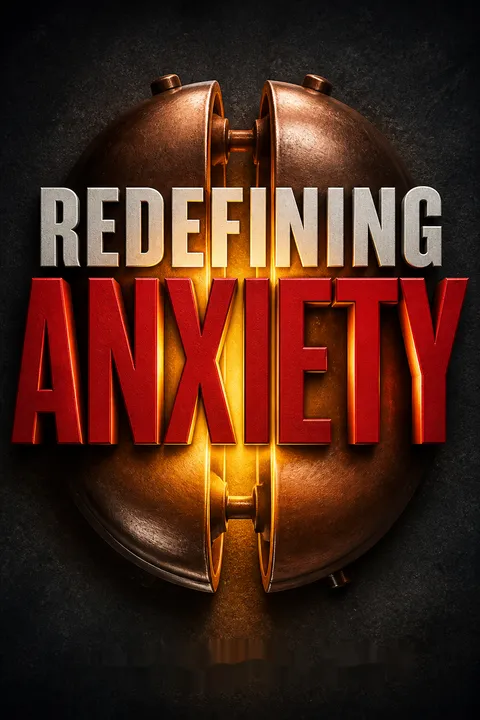


Key Takeaways
Treat anxiety as an alarm to investigate, not a verdict about yourself
The signal is real. Delony begins with his own repeated 2:35 a.m. wake-ups: his heart raced and his thoughts predicted disaster, despite a stable job and family. He reframes anxiety as an alarm, the body's warning that it senses danger, exhaustion, disconnection, or loneliness. The alarm is a message to examine, not proof that a person is broken or doomed to feel this way forever.
Look for context. At a university move-in, a mother named Sarah began panicking as her daughter left home. Listening instead of offering a pep talk helped reveal the pressures underneath: an empty nest, a strained marriage, and uncertainty about her next chapter. Her symptoms were frightening, but they also pointed toward real circumstances that needed attention.
The alarm metaphor gives distress a purpose without dismissing how frightening it feels. It also resembles the way threat systems can react to remembered danger, not just immediate peril. That makes the signal worth listening to, while cautioning against treating it as a precise diagnosis of what is wrong. Anxiety can arise from many interacting causes, and some people experience persistent disorders even when their surroundings seem safe. A useful question is therefore not simply, What is the alarm about? It is also, What kind of support would help, whether or not a clear cause can be found?
Map your whole ecosystem before blaming one broken part
See the whole picture. Delony uses ecosystem to mean the combined influence of a person's body, relationships, family history, work, finances, past experiences, culture, and habits. He argues that anxiety rarely makes sense when those influences are considered one at a time. Genetics may affect vulnerability, but his account does not treat them as destiny.
Notice the accumulation. Mike, a law student, was sleeping about four hours, relying on energy drinks and convenience food, facing the bar exam, and watching his marriage fray. His anxiety made more sense when those pressures were seen together. He began counseling with his wife, improved his sleep and eating, walked, and reduced his exposure to alarming online content. The point is not to fix every part at once, but to find where a change is possible.
This systems view counters the tempting idea that a complicated human problem must have one defective component. It also fits the broader principle of interacting causes: sleep, stress, social support, and physical health can shape one another. The ecosystem map can turn vague distress into specific questions about work, safety, money, or connection. Still, a map is not a diagnosis, and some sources of distress are structural, such as poverty or discrimination, rather than choices an individual can readily change. A fair assessment distinguishes personal agency from burdens that require outside help or collective change.
Use a diagnosis as a map, not a life sentence
Separate name from identity. Delony questions the precision of mental health diagnoses, which are often based on reported symptoms and professional assessment rather than a single laboratory test. Yet he recognizes that a diagnosis can help someone name suffering, find resources, and choose a direction for care. The danger is treating a useful label as a permanent description of the self.
Keep the season in view. Emma, a young woman facing overwork, loneliness, headaches, and back pain, began to see her anxiety as a difficult period rather than her defining trait. She searched for a different job and invested in new friendships. Her circumstances changed, and her symptoms eased. Delony's point is that a label can describe what someone is experiencing without predicting every chapter of their life.
Labels can shape self-understanding, so the distinction between having a difficulty and being that difficulty has real psychological value. It echoes self-distancing: describing a problem as an experience can make room for reflection and action. At the same time, diagnostic categories can unlock treatment, accommodations, and insurance coverage, even when they do not capture a whole person. The useful standard is not to reject labels or surrender to them, but to ask whether a label clarifies needs and opens options. Persistent symptoms deserve care, not a demand to prove that they are temporary.
Use medication as support, never as a substitute for care
Lower the volume. Delony describes taking a reduced amount of anxiety medication during a period when his symptoms had become overwhelming. He says it helped him function well enough to reconnect with a counselor and mentors, address his marriage, and reconsider sleep, diet, and relationships. In his framing, medication can quiet the alarm without automatically resolving the circumstances or experiences contributing to distress.
Make treatment collaborative. He recounts asking his doctors questions and wanting them to partner with him. The practical lesson is not to start, stop, or change medication alone. Decisions about medication belong with a qualified medical professional who can consider a person's symptoms, history, options, and risks. Delony's own experience is one account, not a universal treatment plan.
The strongest part of this view is its refusal to make medication a moral failure or a complete life solution. Symptom relief can give someone room to engage in therapy and daily life. But the book's argument that rising medication use alongside rising diagnoses shows that medication is not working is not established by those trends alone. Population rates cannot reveal what would have happened without treatment, and medications help some people substantially. The metaphor of turning down an alarm is useful, but it should not imply that every person can or should eventually stop treatment.
Choose which costs you will accept instead of chasing everything
Every choice costs something. Delony describes building an overloaded life around work, degrees, debt, a new child, and the next promotion. He kept adding commitments while looking for a better arrangement, and his anxiety intensified. His wider target is the cultural promise that anyone can excel at work, parenting, relationships, health, and every social obligation at once.
Make priorities visible. The book asks readers to decide what matters and what trade-offs they can live with. A demanding career may mean less time at family events or paying for childcare; staying home for more of a child's daily life may mean less income. Neither choice is automatically right or wrong. The strain comes from refusing to choose while trying to meet incompatible expectations.
Naming opportunity costs can relieve the pressure to treat every compromise as personal failure. The insight connects to decision theory: choosing one path means giving up the benefits of another, even when no option is perfect. It also helps expose how social media turns other people's carefully selected moments into a false standard for ordinary life. Yet trade-offs are not always freely chosen. Caregiving, low wages, discrimination, and limited access to childcare can narrow the available options. The framework is most humane when it helps people clarify priorities without blaming them for constraints they did not create.
Put spiraling thoughts on paper and ask them for evidence
Slow the spiral. Delony recommends writing down troubling thoughts and checking whether they are accurate. He illustrates the process with a person who is disappointed after a conversation at a party, then leaps to conclusions about being unlikeable and destined to be alone. On paper, the chain from one event to a sweeping judgment is easier to inspect.
Feelings are information. Anxiety, anger, and sadness can point to a need, a boundary, or a situation that deserves attention, but they do not have to dictate the next action. The book also suggests mindfulness, noticing thoughts and bodily sensations without automatically following them. The aim is not to force thoughts to disappear, but to choose which ones deserve a response and what action fits the evidence.
This approach closely resembles cognitive behavioral techniques, which help people identify patterns in thinking and test interpretations against evidence. Its especially helpful distinction is between experiencing a thought and granting it authority. That can create space for a less impulsive response. However, the language of controlling thoughts can sound as though unwanted thoughts are voluntary. They often are not. A more workable goal is to notice them, assess them, and decide how much attention or action they merit. Written reflection can support that process, but a trusted clinician may be needed when spirals are severe or persistent.
Protect sleep and movement before asking your mind for calm
Start with the body. Delony links anxiety management to breathing, eating, movement, and sleep. His box breathing exercise uses four-second intervals: inhale, hold, then exhale, repeating for a few minutes. He also recommends walking or other enjoyable exercise rather than staying still while the body is keyed up. The practical point is to give the body basic support, not to treat a breathing exercise as a cure for every cause of anxiety.
Sleep changes the equation. The book reports that people in the United States sleep more than 25 percent less than they did six decades earlier. It cites research in which a night without sleep was associated with weaker activity in a decision-making brain region and stronger activity in emotional centers. Poor sleep was also linked to greater anxiety the next day.
Sleep and movement matter because emotional regulation depends partly on physical state. When someone is exhausted, ordinary demands can feel more threatening, and coping strategies become harder to use. Slow breathing and exercise may also provide a manageable first action during a stressful moment. These practices are supports, not tests of discipline: people with illness, disability, unsafe housing, or shift work may have limited control over them. The book's advice is most useful when it encourages small, realistic changes and does not imply that poor habits are the root cause of every anxiety disorder.
Name painful losses instead of numbing them into anxiety
Make room for grief. Delony treats grief as the work of acknowledging and processing loss, regret, unmet hopes, and life changes. That includes major bereavements, but also smaller disruptions such as a canceled celebration, a lost job, or an unexpected change in family responsibilities. Comparing one person's loss with another's can lead people to minimize their own pain without helping anyone else.
Process hurt with support. For trauma, the book offers three broad moves: recognize what happened, resist making it an identity, and seek help while building new patterns. Drew, for example, felt anxious at dinners with his in-laws after earlier experiences of being mocked and humiliated. Counseling and honest conversations helped him understand why the situation felt threatening and respond to the present rather than only to the past.
The emphasis on acknowledging loss counters a culture that often treats discomfort as something to hide or quickly solve. Grief can concern an unrealized future as much as a past event, which helps explain why ordinary transitions can carry real emotional weight. Still, grief has no fixed timetable, and processing it does not require finding a positive meaning or declaring the experience finished. Trauma can also need specialized, sustained treatment. The invitation to name pain is strongest when it permits an individual pace and does not turn recovery into another performance standard.
Put real people in your recovery plan, not just coping tools
Connection counters isolation. Delony argues that loneliness can intensify fearful stories about rejection and worthlessness. He compares relationships to an emergency reserve: trusted people can offer perspective, practical help, and a place to land when life becomes difficult. The book cites a comparison between loneliness and smoking as health risks, underscoring that isolation is not merely an unpleasant mood.
Ask for specific help. Connection can begin with a trusted friend, family member, community group, therapist, or counselor. Delony emphasizes face-to-face conversation and vulnerability, rather than relying on online interaction alone. Professional support can help a person recognize distorted thinking, process trauma, and practice different ways of relating. Therapy does not remove every problem; it can help someone face problems with more skill and support.
Relationships can regulate stress in ways private coping techniques cannot: another person may notice danger, offer material assistance, or help challenge an isolating interpretation. This makes connection both emotional and practical. The book's comparison between loneliness and smoking is memorable, though such comparisons can oversimplify differences in risk and context. Nor is every relationship safe or supportive. The useful distinction is between contact and trustworthy connection. For someone in an abusive situation, seeking safe professional or community support matters more than preserving a relationship at any cost.
Separate what you can change from what you must release
Draw a boundary around control. The book recommends listing what a person can influence, such as habits, screen time, boundaries, and responses, alongside what cannot be controlled, such as other people's attitudes or future events. This distinction is meant to reduce the exhausting effort of trying to manage everything.
Return attention to now. Delony suggests a daily gratitude practice, such as writing five things to appreciate, and describes prayer as a way of releasing the demand to control what lies beyond one's reach. He presents these practices as ways to interrupt fixation on the past or future. They do not erase real problems; instead, they can help clarify whether the next step is action, acceptance, or asking someone for help.
The divide between influence and control is a durable tool for allocating attention: effort is more effective when directed toward actions that can actually change an outcome. Gratitude can also widen attention beyond threat, especially during a period when worry monopolizes awareness. But acceptance should not be confused with resignation. A person may be unable to control an unjust system while still having reason to seek protection, advocacy, or collective change. Gratitude is most helpful when it coexists with honest recognition of pain, rather than being used to silence complaints or demand cheerfulness.
Analysis
Redefining Anxiety is a compact self-help book built around one reversal: instead of treating anxiety itself as the enemy, treat it as a warning that deserves investigation. Delony gives that proposition a personal opening, recalling the night waking and professional competence that concealed an increasingly unmanageable inner life. The movement from personal disclosure to student and client stories gives the book a relational quality. Its examples make abstract distress legible as a response occurring amid work, grief, sleep loss, isolation, and strained relationships.
The book's most useful contribution is its shift from symptom suppression toward context. The ecosystem idea encourages readers to ask what is happening across body, work, history, and connection, while the practical advice offers manageable ways to observe thoughts, seek support, and make changes. Its reminders that a diagnosis need not define a person and that medication can be one tool rather than a total solution are valuable when presented without stigma.
The central metaphor also has limits. An alarm can signal danger, but it can misfire, persist after danger, or arise from interacting biological and psychological conditions that are not solved by changing a job or improving a marriage. The book's skepticism about diagnosis and its suggestion that increasing medication use alongside rising diagnoses indicates inadequate results go further than its evidence supports. Those claims should not dissuade readers from clinical assessment or prescribed care. The book itself recounts the value of professional help, which sits more comfortably beside its core message than its broadest anti-medical claims. Read most constructively, the book is not an argument that anxiety is never a disorder or that people can think their way out of it. It is an invitation to treat distress as meaningful while remaining open to several forms of care. Its practical balance is strongest when personal responsibility means taking the next feasible step, not accepting blame for trauma, illness, or social conditions beyond individual control.
Review Summary
Redefining Anxiety receives mostly positive reviews, with readers praising its concise, practical approach to understanding and managing anxiety. Many appreciate the author's straightforward advice, relatable examples, and emphasis on holistic solutions. Some readers found the book particularly helpful for situational anxiety, while others felt it oversimplified complex issues. Critics noted a lack of consideration for diverse experiences and identities. Despite mixed opinions on certain aspects, many readers found the book's short length and actionable tips valuable for addressing anxiety.
People Also Read








Glossary
Anxiety alarms
Body's warning signalsDelony's term for anxiety symptoms understood as the body's attempt to draw attention to perceived danger, exhaustion, disconnection, or loneliness. The alarm metaphor shifts focus from eliminating symptoms alone to asking what may be contributing to them. It describes his framing of anxiety, not a clinical diagnosis or a guarantee that every symptom has an identifiable external cause.
ecosystem
Interacting life conditionsThe combined inner and outer conditions shaping a person's well-being. In the book, these include physical and mental health, relationships, family history, trauma, culture, work, finances, living conditions, boundaries, and habits. The term encourages readers to consider how pressures interact rather than searching for one isolated cause of anxiety.
fight-or-flight-or-freeze response
Automatic threat responseThe body's rapid response to perceived threat, described in the book through reactions such as a racing heart, tense muscles, heightened alertness, and an urge to confront, escape, or withdraw. Delony uses this response to explain why the body may react before a person has consciously understood what feels unsafe.
box breathing
Four-count breathing exerciseA breathing practice Delony describes for calming the body when anxiety begins to rise. The practitioner inhales for four seconds, holds the breath for four seconds, and exhales for four seconds, repeating the cycle for two to five minutes. The book presents it as one practical calming tool, not as a complete treatment for anxiety.
FAQ
What's "Redefining Anxiety" about?
- Author's Experience: "Redefining Anxiety" by John Delony explores the author's personal journey with anxiety, detailing his struggles and the steps he took to regain control over his life.
- Anxiety as a Signal: The book redefines anxiety not as a problem but as a signal indicating underlying issues such as danger, disconnection, or lack of control.
- Practical Solutions: Delony offers practical advice and strategies for managing anxiety, emphasizing the importance of addressing the root causes rather than just the symptoms.
- Holistic Approach: The book advocates for a holistic approach to mental health, integrating physical, emotional, and relational well-being.
Why should I read "Redefining Anxiety"?
- Personal Insight: The book provides a deeply personal account of the author's experiences, making it relatable for anyone struggling with anxiety.
- Actionable Advice: Delony offers practical steps and strategies that readers can implement immediately to manage their anxiety.
- Myth-Busting: It challenges common myths about anxiety, such as the belief that it is solely a medical or genetic condition.
- Empowerment: The book empowers readers to take control of their mental health by understanding anxiety as a signal rather than a permanent condition.
What are the key takeaways of "Redefining Anxiety"?
- Anxiety is a Signal: Anxiety should be viewed as an alarm system indicating deeper issues rather than a standalone problem.
- Holistic Healing: Addressing anxiety requires a comprehensive approach that includes physical health, relationships, and personal boundaries.
- Challenging Myths: The book debunks myths about anxiety being a disease or solely treatable with medication.
- Personal Responsibility: Readers are encouraged to take responsibility for their mental health by making lifestyle changes and seeking support.
How does John Delony define anxiety in "Redefining Anxiety"?
- Alarm System: Delony defines anxiety as an alarm system that signals danger, disconnection, or a lack of control.
- Not a Permanent Condition: He emphasizes that anxiety is not a permanent medical condition or an identity.
- Symptom, Not the Problem: Anxiety is a symptom of deeper issues that need to be addressed for true healing.
- Opportunity for Change: Understanding anxiety as a signal provides an opportunity to make necessary changes in one's life.
What myths about anxiety does "Redefining Anxiety" address?
- Anxiety as a Disease: The book challenges the notion that anxiety is a disease or genetic condition that cannot be changed.
- Medication as the Only Cure: Delony argues against the belief that medication is the only solution for anxiety.
- Anxiety as an Identity: The book refutes the idea that anxiety is an identity or destiny that defines a person.
- Having It All: It addresses the myth that one can have and do everything without consequences, which often leads to anxiety.
What practical steps does "Redefining Anxiety" suggest for managing anxiety?
- Slow Down and Listen: Delony advises slowing down to listen to what anxiety is signaling about your life.
- Control Thoughts and Actions: He emphasizes the importance of controlling thoughts and actions to manage anxiety effectively.
- Self-Care Practices: The book highlights the need for proper breathing, nutrition, exercise, and sleep to support mental health.
- Seek Support: Delony encourages finding a supportive community or professional help to navigate anxiety.
How does "Redefining Anxiety" suggest changing one's ecosystem to reduce anxiety?
- Examine Your Life: Delony suggests evaluating all aspects of your life, including relationships, work, and health, to identify stressors.
- Make Intentional Choices: He emphasizes the importance of making intentional choices about what to prioritize and what to let go.
- Acknowledge Trade-offs: The book highlights the need to acknowledge the trade-offs and consequences of trying to do it all.
- Create a Supportive Environment: Building a supportive ecosystem involves surrounding yourself with positive influences and setting boundaries.
What role does vulnerability play in "Redefining Anxiety"?
- Connection Heals Anxiety: Delony stresses that vulnerability and connection with others are crucial for healing anxiety.
- Courage to Be Vulnerable: Being vulnerable requires courage but is essential for building meaningful relationships and reducing loneliness.
- Shared Struggles: Sharing struggles with trusted individuals helps normalize anxiety and reduces feelings of isolation.
- Building Trust: Vulnerability fosters trust and understanding, which are key components of a supportive community.
What are some of the best quotes from "Redefining Anxiety" and what do they mean?
- "Anxiety is not the problem." This quote emphasizes that anxiety is a symptom, not the root issue, and should be addressed as such.
- "You are not a machine to be fixed." Delony highlights the complexity of human beings, advocating for a holistic approach to mental health.
- "You are more than your past trauma and your deepest hurt." This quote encourages readers to move beyond their past experiences and not let them define their identity.
- "Connection heals anxiety." Delony underscores the importance of relationships and community in overcoming anxiety.
How does "Redefining Anxiety" address the use of medication for anxiety?
- Short-Term Solution: Delony acknowledges that medication can be helpful in the short term to manage symptoms.
- Not a Cure: He emphasizes that medication is not a long-term solution and should not replace addressing the root causes of anxiety.
- Informed Decisions: The book encourages readers to make informed decisions about medication in partnership with healthcare professionals.
- Focus on Lifestyle Changes: Delony advocates for lifestyle changes and personal responsibility as the primary means of managing anxiety.
What long-term changes does "Redefining Anxiety" recommend for healing?
- Examine Your Ecosystem: Delony advises a thorough examination of one's life to identify and address stressors.
- Learn to Grieve: The book highlights the importance of grieving losses and transitions to move forward.
- Seek Professional Help: Delony recommends therapy as a valuable tool for processing trauma and learning new skills.
- Invest in Relationships: Building and maintaining strong relationships is crucial for long-term mental health and well-being.
How does "Redefining Anxiety" redefine the concept of success and fulfillment?
- Realistic Expectations: Delony challenges the notion of having it all and encourages setting realistic expectations for life.
- Intentional Living: The book advocates for making intentional choices about priorities and trade-offs.
- Focus on Well-Being: Success is redefined as living a balanced life that prioritizes mental, physical, and relational health.
- Embrace Imperfection: Delony encourages embracing imperfection and letting go of the pressure to meet unrealistic standards.

Download PDF
Download EPUB
.epub digital book format is ideal for reading ebooks on phones, tablets, and e-readers.








