

Key Takeaways
Treat wealth as a trust to manage, not a prize to defend
The comeback changed the question. Dave Ramsey says he became a millionaire at 26, then lost his wealth through debt and went bankrupt at 28. Rebuilding without borrowing taught him the mechanics of money. A second lesson came with a car: after buying a two-year-old Jaguar outright, he wondered whether enjoying something nice made him selfish. His answer was no. The deeper question was whether he was managing resources responsibly, not whether he was allowed to own a good car.
Ownership sets the frame. The book’s Christian premise is that God owns wealth and people act as its stewards. That turns money from a scorecard into a responsibility: provide for family, plan for the future, and help others. The goal is not wealth for its own sake, but faithful management.
What's compelling is the shift from accumulation to responsibility. In organizational ethics, stewardship similarly asks whether power is being used well, not merely whether it was acquired legally. That lens can reduce both status anxiety and careless consumption. It also depends on a theological belief that readers may not share. A secular equivalent is to treat wealth as a resource carrying obligations to dependents, communities, and future selves. Either way, the framework becomes more useful when responsibility is assessed through concrete choices, rather than assumed from a person's religious identity or net worth.
Stabilize today, secure tomorrow, then extend your circle of care
A sequence lowers the strain. Ramsey’s Baby Steps move from a small emergency fund, to paying off non-mortgage debt, to saving three to six months of expenses. The next steps are investing 15 percent of household income for retirement, saving for children’s college, paying off the home, and then building wealth and giving. The companion framework, NOW-THEN-US-THEM, describes the shift in attention: meet immediate needs, prepare for the future, support the family across generations, then address needs beyond it.
Match the stage to the task. A household in crisis should focus on stability rather than extra giving or investing, while a debt-free household can plan further ahead. This staged approach aims to stop short-term emergencies from swallowing every long-term goal.
The framework is memorable because it makes competing obligations visible. Behavioral economics calls this temporal organization: people often neglect distant goals when immediate costs feel urgent. Naming the stages can help a family agree on what deserves attention now. The caution is that a tidy sequence can imply that every household faces the same path. Unstable work, medical costs, caregiving, and housing pressures can disrupt it. The framework works best as a prioritization tool, not as a verdict on people whose finances do not progress in a straight line.
Reject both self-congratulation and shame; practice grateful stewardship
Three attitudes shape wealth. Ramsey distinguishes pride, poverty thinking, and gratitude. Pride treats wealth as entirely self-made. Poverty thinking treats possessions themselves as corrupt and can become a habit of condemning other people’s spending. Gratitude recognizes effort while also acknowledging help, opportunity, and a responsibility to manage resources well. The book illustrates the tension with a Christian billionaire who gave hundreds of millions to ministry and was still criticized for buying a $130,000 car.
The price tag is not the whole story. The book argues that judging a purchase without knowing a household’s resources or giving can produce shallow moral verdicts. Its alternative is neither to celebrate every luxury nor to condemn wealth automatically, but to ask whether the person is providing, giving, and managing responsibly.
This distinction usefully separates an asset from the motives and consequences attached to it. Moral psychology often finds that people infer character from visible consumption while lacking the private context that would make the judgment fair. Still, the reverse error matters too: large donations do not automatically make every private choice wise, and wealth can carry social costs beyond an individual's intentions. The strongest version of the book's point is modest: evaluate conduct with context, and do not treat either poverty or affluence as proof of virtue.
Let contentment steady ambition instead of turning it off
Contentment is an inner condition. In the book, it does not mean rejecting goals or settling for the bare minimum. It means pursuing work and plans without making peace depend on a bigger house, a newer car, or someone else’s approval. Ramsey contrasts a couple earning $40,000 who have savings and retirement plans with a couple earning $80,000 who carry heavy debts and have little saved. The point is that income alone cannot explain whether a household is doing well.
Watch the appetite for more. The warning signs include chasing fast returns, buying things to look successful, fixating on what is missing, and resenting what others have. The book treats contentment as a practice during the journey, not a finish line reached after a certain balance appears.
This is a useful distinction between ambition and attachment. Self-determination research separates goals that express chosen values from goals pursued mainly for status or approval; the latter often provide less durable satisfaction. The book's examples make that difference concrete. Yet financial strain is not always an attitude problem. A household can be disciplined and still lack enough income to meet basic costs. Contentment can help clarify priorities, but it should not be used to dismiss material hardship or replace practical remedies.
Choose a family baseline, then direct each overflow dollar deliberately
The cup sets a boundary. Ramsey uses a Havdalah cup that overflows into a saucer as a metaphor: first decide what income provides adequately for the household, then assign surplus to giving, investing, and lifestyle. He calls for percentages rather than fixed dollar amounts, so a plan can scale as income changes. In one example, an NFL player earning about $10 million set a $400,000 household baseline. The couple assigned the remaining income to taxes, tithing, extra giving, investing, and additional spending.
The example is not a formula. The book emphasizes that the family and God decide the baseline and percentages. A household with no overflow may have set its baseline too high; one that cannot care for itself may have set it too low. The practical lesson is to make the choices before surplus disappears into unplanned spending.
Percentage-based rules can counter lifestyle inflation because each raise does not automatically become a new fixed expense. In personal finance, this resembles a spending policy: a declared rule reduces the number of decisions made under temptation. The cup metaphor also captures a genuine ethical tension between security and generosity. But leaving the cup's size entirely to private judgment offers little protection against self-serving estimates. A useful check is to make the baseline explicit, revisit it with a spouse or trusted adviser, and compare it with actual spending and obligations.
Start with useful work, then turn practice into a calling
Purpose often follows action. Ramsey argues that people can spend too long waiting to discover a perfect career before beginning. He estimates that a 40-year working life includes about 78,400 hours on the job, making work too substantial to treat as spiritually irrelevant. His own path began with a local radio show, a small book, and a class that drew only four people on its first night. Those early efforts grew through repeated work, even when ambitious targets were missed on schedule.
Build a path, not a fantasy. The appendix’s Road to Awesome moves through learning, editing distractions, mastering a skill, harvesting results, and guiding others. The book also recommends written goals that are specific, measurable, time-limited, personally chosen, and reviewed across areas such as family, health, finances, and faith.
The emphasis on starting before certainty has strong practical value: low-cost experiments reveal whether an imagined career fits daily reality. This resembles career construction, where identity develops through repeated action and feedback, not introspection alone. The book's warning against endless planning is apt, though its language can romanticize work. A calling does not excuse overwork, and not every job offers autonomy or meaning. The most sustainable reading is to pursue contribution and skill while protecting relationships, health, and the ability to change direction.
Protect relationships before money magnifies their weak points
Wealth can enlarge existing patterns. Ramsey’s safeguard paradigm examines four areas: the individual, marriage, children, and extended relationships. Each is considered through ownership, magnification, and community: who controls the resources, what greater wealth amplifies, and how other people are affected. A supportive marriage may use new resources to build shared experiences; an already fractured one may find that money intensifies conflict rather than repairing it.
Boundaries can be generous. The book warns that relatives or friends may treat success as an obligation to fund them. Giving money to an addicted parent, an adult child who refuses responsibility, or someone repeatedly spending beyond their means may sustain the problem rather than help. Its proposed test is whether the assistance addresses a real need without enabling harmful behavior, alongside advice to keep trustworthy friends who can speak candidly.
This section connects financial planning to family systems: money is not merely a resource but a symbol of care, power, and obligation. Clear boundaries can preserve relationships by making assistance predictable instead of reactive. The magnification claim is a helpful heuristic, not a law; new resources can also change habits and incentives, for better or worse. The key is to assess behavior and context rather than label people as fixed types. Outside support, including counseling, can be more effective than treating every conflict as a budgeting problem.
Prepare heirs to carry responsibility, not just receive money
An inheritance needs instruction. Ramsey argues that wealth can burden heirs who have not learned to work, save, give, and make decisions. His example is his son Daniel, who saved $12,000 toward a car, received a parental match, bought a less expensive vehicle, and later chose to give $10,000 to earthquake relief in Peru. The parents had modeled stewardship and discussed it, but Daniel's choice also reflected his own character and generosity.
Make the plan usable. The book recommends a state-specific will, guardianship instructions for minor children, healthcare directives, and honest conversations about intended distributions. It also suggests a family constitution that records shared values and a Legacy Box containing essential documents and account information. The aim is to reduce confusion in a crisis and make the family's expectations visible before an inheritance is transferred.
The distinction between transferring assets and transferring competence is central to intergenerational finance. Developmental research supports giving young people supervised opportunities to make consequential decisions, including mistakes, rather than protecting them from every risk. The Daniel story is inspiring, but one generous teenager is not a guarantee that a family system will reproduce the same values. Legal tools also vary by jurisdiction and circumstance. A will or family charter should be reviewed with qualified local professionals, especially when dependents, blended families, or complex assets are involved.
Give with joy, privacy, and careful attention to where money goes
Generosity is a practice. The book sees giving as part of a full life of stewardship, alongside work and family care. It includes money, time, and skills, and it cautions against turning a gift into a public performance. Ramsey describes moving from hurried year-end donations to researching organizations and aligning giving with the family's interests, such as local church work and evangelism. He argues that thoughtful donors should understand how an organization uses funds, just as they would investigate another investment.
Choose a focus. Rather than spreading contributions across every worthy request, the book recommends concentrating on causes that fit the giver's values and accepting that no one can meet every need. Its candle metaphor frames wealth as something that can help others without automatically diminishing the giver's capacity to contribute again.
Treating philanthropy as a disciplined allocation decision can improve accountability and reduce impulsive giving driven by guilt or publicity. Research on effective altruism similarly asks donors to examine outcomes, though the book places more weight on personal conviction and faith. Both perspectives benefit from asking what changed because of a gift. The candle image counters a simplistic fixed-pie view, but it should not obscure real scarcity or unequal access to opportunity. Generous intent is strongest when paired with evidence, humility, and willingness to learn from results.
Build wealth steadily, diversify, and treat every return estimate cautiously
Boring can be a strategy. The book's investment chapter argues for first budgeting, paying off non-mortgage debt, and building an emergency fund. It then favors consistent long-term investing over speculative bets, and uses diversification to reduce dependence on any single company or asset. Ramsey's preferred vehicles include mutual funds and, for experienced investors, rental real estate bought with cash. He calls the point where investments earn more than one's work income the Pinnacle Point.
Do not confuse a model with a promise. The chapter gives historical market returns and recommends particular fund categories and allocations. It also warns against day trading and get-rich-quick schemes. Those recommendations reflect the author's views and the period in which the book was written; future returns, fees, taxes, and an individual's time horizon can differ substantially.
The most durable lesson is behavioral: regular contributions and broad diversification can reduce the urge to gamble on dramatic predictions. Portfolio theory supports spreading exposure, but it does not guarantee profit or make all mutual funds alike. The book's specific return expectations and product preferences should not be treated as current universal advice. Investment choices depend on costs, risk tolerance, tax rules, and time horizon. A qualified fiduciary adviser can help readers test whether a plan fits their circumstances, while insisting that its workings remain understandable.
Analysis
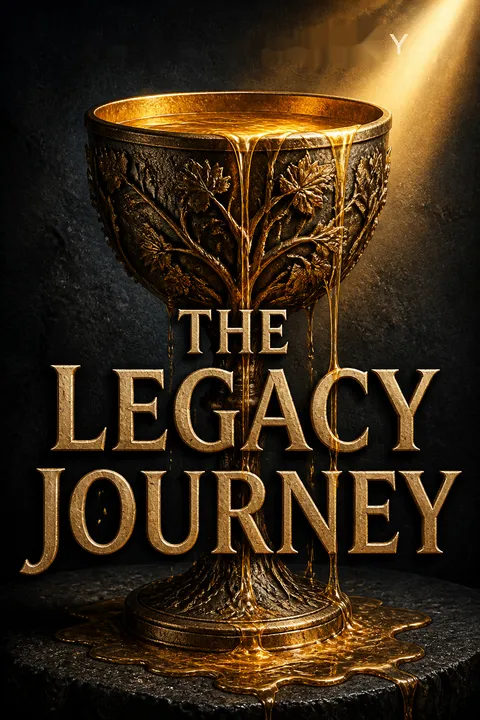
The Legacy Journey is a Christian personal-finance argument about what wealth is for, told through memoir, biblical interpretation, family stories, and practical planning. Its organizing move is to widen the question from how to escape debt to how to steward success. Ramsey's bankruptcy and later purchase of a car paid for in cash give the book a compact narrative arc: financial recovery solves one problem, but prosperity creates new questions about guilt, responsibility, family, and generosity.
The strongest contribution is the insistence that money management is not only arithmetic. Budgets, debt reduction, and investment habits matter, but so do contentment, family communication, and the character of heirs. The NOW-THEN-US-THEM framework gives readers a sequence for competing obligations, while the cup metaphor translates a difficult question, what counts as enough, into a household planning exercise. These are useful prompts even for readers who do not share the book's theology.
The argument also has tensions. The author strongly rejects cultural suspicion of wealth and emphasizes private stewardship, sometimes treating criticism of affluent consumption as envy. That can correct unfair moralizing, but it risks underplaying legitimate questions about labor, opportunity, social inequality, and how wealth is accumulated. Similarly, advice on investments and estate planning is highly specific, yet its numbers and recommendations depend on market conditions, law, and personal circumstances. The book is most persuasive as a values framework and a prompt to plan deliberately, not as a universal financial prescription.
Its central challenge is practical: build resources without making them the source of identity or security, prepare family members to manage them, and turn surplus into intentional service. The legacy at stake is therefore both financial and behavioral. Wealth can be passed on, but so can the habits and relationships that determine whether it becomes a tool or a burden.
Review Summary
The Legacy Journey receives mostly positive reviews for its biblical perspective on wealth and stewardship. Readers appreciate Ramsey's guidance on building and managing wealth responsibly, leaving a legacy, and teaching financial principles to children. Some critics find the book's interpretation of scripture controversial or self-justifying. Many readers value the insights on contentment, generosity, and viewing money as a tool for good. The book is seen as particularly helpful for those already familiar with Ramsey's financial teachings and looking to align their wealth with Christian values.
People Also Read







Glossary
NOW-THEN-US-THEM
Stages of financial focusA framework for expanding financial priorities over time. NOW means stabilizing immediate household finances. THEN means planning for future needs, including retirement and education. US means preparing a family and later generations to manage resources. THEM means using available resources to serve people and needs beyond the household.
Baby Steps
Seven money milestonesRamsey's sequence for taking control of finances and building wealth: save a starter emergency fund, pay off non-mortgage debt, build a full emergency fund, invest for retirement, save for children's college, pay off the home, and build wealth while giving. The sequence is presented as a practical plan, not simply a set of financial concepts.
Three Spirits of Wealth
Three attitudes toward moneyRamsey's categories for interpreting wealth. Pride treats success as entirely self-produced. Poverty thinking regards possessions or wealth as inherently suspect and may condemn others' spending. Gratitude recognizes one's effort while treating resources as entrusted for responsible management. The categories describe attitudes, not income levels.
Safeguard paradigm
A relationship protection frameworkA way to examine how wealth affects four areas: personal life, marriage, children, and other relationships. Each area is considered through three lenses: ownership, or who is responsible for resources; magnification, or what wealth intensifies; and community, or how relationships and surrounding influences shape decisions.
Havdalah
Overflowing cup metaphorA Jewish ceremony marking the transition from Sabbath to the work week. Ramsey draws on a cup of wine overflowing into a saucer as an image for planning household finances: first provide for the family, then direct surplus toward giving, investment, and lifestyle. The book uses the ceremony as an illustration of enough and overflow.
Pinnacle Point
Investments out-earn workThe stage when savings and investments produce more income in a year than a person earns through work. Ramsey presents it as the result of sustained saving and investing, rather than a quick windfall. The term describes an aspiration in the book, not a guaranteed outcome or a specific retirement age.
Legacy Box
Central family records fileA physical or digital collection of important information for family members to use during illness, incapacity, or after death. The book recommends including items such as wills, insurance details, account records, passwords, funeral instructions, and letters. A backup copy and clear instructions help relatives find and use the material.
Family constitution
Written family values and rulesA family document that records shared values, purpose, expectations, and boundaries. Ramsey describes creating one with a family mission statement, tailoring it to the specific family, living by its commitments, and meeting periodically to review it. It can also explain how family resources will be handled when a member acts against agreed values.
The displacement method
Replace harmful influence with goodRamsey's term for the idea that constructive participation in a community or institution can push harmful practices out of that space. He applies the image to Christians working with integrity in business, education, politics, and culture. The method emphasizes contributing through competent, ethical presence rather than withdrawing from institutions deemed imperfect.
About the Author
Other books by Dave Ramsey






Download PDF
Download EPUB
.epub digital book format is ideal for reading ebooks on phones, tablets, and e-readers.








