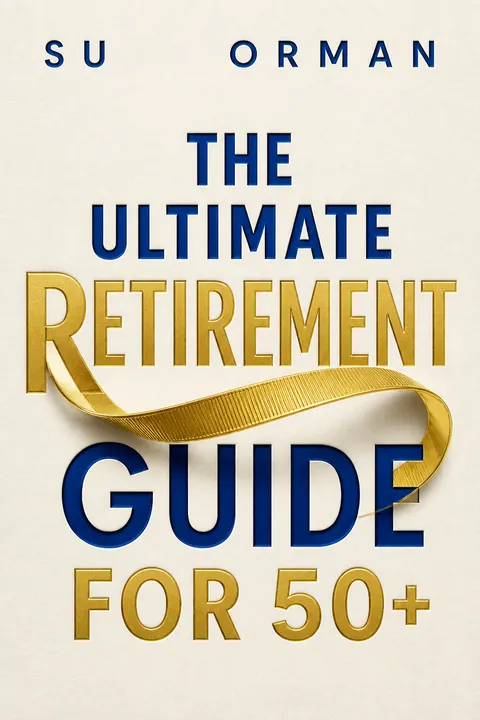


Key Takeaways
Turn retirement fear into concrete moves, because nobody guards your money like you do.
Action beats regret. Orman’s urgency comes from experience: early in her career, she entrusted $40,000 meant for a restaurant to a broker who put it into a risky investment without explaining the downside. She lost the money, and the failure helped shape her insistence that people understand decisions affecting their savings.
Mindset changes the response. At retirement seminars for Pacific Gas and Electric employees unexpectedly offered early retirement, she saw people with modest pensions make plans and adjust, while some wealthier workers remained trapped in anger about the past. Her point is not that optimism creates money. It is that shame and fear can prevent people from using the choices they still have: spending less, working longer, or revising a plan.
The book treats emotional readiness as part of financial planning, not a soft extra. That fits behavioral economics: people often avoid reviewing finances when they expect to feel regret, even though avoidance narrows their options. Yet attitude cannot replace income, good health, or affordable housing. A constructive reading is more practical: reduce self-blame enough to face the numbers, then distinguish controllable choices from bad luck. The PG&E story illustrates agency under pressure, but it should not be read as proof that everyone can overcome a forced retirement through willpower alone.
Count every family subsidy before it quietly becomes your retirement plan.
Small help adds up. Orman calls attention to the many modest payments parents make for adult children and grandchildren: rent, phone bills, car expenses, student loans, camps, and gifts. Her example is $300 a month. Redirected to savings for ten years at an assumed 5% return, it could grow to nearly $47,000. The key is to total the support rather than judge each payment in isolation.
Support needs boundaries. Adult children living at home can contribute to household costs, while parents should be cautious about co-signing debt or funding wants. For aging parents, caregiving can mean lost wages, benefits, and retirement savings. If relatives share that work, a written Personal Care Agreement can clarify compensation, time off, and responsibilities.
This is a family-systems problem disguised as a budgeting problem. Money can express love, but repeated rescue may also postpone an adult child’s independence or transfer risk to a parent with fewer working years left. A useful distinction is whether support addresses a temporary need or sustains a pattern neither generation has discussed. The book’s firm boundaries are clearest when help threatens the giver’s basic security. Still, family obligations vary sharply, and some care cannot be reduced to a return calculation. A candid household conversation can make generosity more durable than either automatic giving or abrupt withdrawal.
Plan to age 95, and consider working longer to buy a larger Social Security floor.
Longevity changes the math. The book urges healthy readers to plan for a life into their 90s, even age 100 as a cautious scenario. It cites a 44% chance that a 65-year-old woman in average health would still be alive at 90, and a 62% chance that at least one member of a 65-year-old couple would be alive then. These are planning estimates, not predictions about any individual.
Waiting can raise income. In the book’s 2020 framing, claiming Social Security at 70 rather than 62 could produce a benefit about 76% larger. It cites an estimate that households claiming at the wrong age might forgo about $111,000 in lifetime benefits. Working longer, even in a less demanding role, can help cover expenses while delaying the claim. Health and individual circumstances can change the calculation.
Planning for a long life is a form of insurance against outliving assets: the cost of being wrong in one direction can be much greater than in the other. Delaying Social Security can also protect a surviving spouse when the higher earner’s benefit becomes the household’s remaining benefit. The strategy is not universally optimal. A shorter life expectancy, unemployment, caregiving, or an urgent need for income may favor an earlier claim. The durable lesson is to compare scenarios using personal benefit estimates, rather than claim early simply because the future feels uncertain.
Choose housing for your older body and budget, not only today's memories.
Housing is a retirement lever. Orman argues that people who stay in their homes should aim to pay off the mortgage before retiring, and account for property taxes, insurance, maintenance, and accessibility work. A $1,000 monthly housing cost growing at 3% inflation would be about $2,430 in 30 years. The home itself may also become harder to navigate if it has stairs, narrow entrances, or an unsafe bathroom.
Moving can protect independence. Downsizing, renting, joining a continuing-care retirement community, or living with family or friends may reduce costs and isolation. A reverse mortgage, which converts home equity into funds while the owner remains in the home, can help in some circumstances, but the loan generally becomes due when the borrower moves or dies. The author cautions against relying on it for most living expenses.
The chapter usefully widens the meaning of housing security. A home can be emotionally valuable yet financially or physically mismatched to later life. Planning accessible features before a crisis also reflects universal design, the idea that safer, easier spaces benefit people across ages and abilities. The emotional cost of moving is real, however, and cheaper housing is not automatically better if it removes social ties or access to care. The strongest approach is to evaluate cost, mobility, and connection together, rather than treating either staying or moving as a moral test.
Make guaranteed income cover necessities, then draw cautiously from investments.
Build a dependable paycheck. Orman divides retirement income into Social Security, pension payments, and withdrawals from investments. She wants essential costs covered as much as possible by guaranteed income. An income annuity is an insurance contract that exchanges a lump sum for scheduled payments, often for life; it can fill a gap, though it gives up access to the money used to buy it.
Withdraw with a margin. For people retiring in the book’s market conditions, she suggests starting near 3% of the portfolio rather than automatically using the familiar 4% guideline. She also recommends keeping two years of expenses in cash, separate from an emergency fund, to avoid selling stocks after a market drop. Required Minimum Distributions, or RMDs, are mandatory withdrawals from certain retirement accounts; taking them does not mean every dollar must be spent.
This approach combines insurance logic with investment logic. Guaranteed income protects the household budget from market swings, while cash reserves create time to let investments recover. The crucial risk in early retirement is sequence of returns: poor markets combined with withdrawals can do lasting damage even if long-run average returns later improve. But a fixed 3% rule is not a personal guarantee, and annuity value depends on fees, inflation protection, insurer strength, and the buyer’s circumstances. The framework is best used as a starting point for stress-testing income and spending under difficult scenarios.
Keep stocks for inflation, but let diversified low-cost funds do the heavy lifting.
Cash alone loses ground. The book argues that a long retirement needs some stock exposure because cash and bonds may not keep pace with rising costs. At 3% inflation, $1,000 of today’s expenses would require about $2,430 in 30 years. Stocks can fall sharply, so the proposed balance includes bonds that can provide stability and a source for withdrawals during downturns.
Own broadly and cheaply. Orman favors diversified index mutual funds or exchange-traded funds, which hold baskets of securities and track a market index. She suggests a broad U.S. stock fund, some international stocks, and high-quality bonds, especially U.S. Treasuries. Fees matter: in her illustration, $100,000 growing for 20 years at 5.9% becomes about $315,000, compared with about $265,000 at 5%, illustrating how even small annual costs compound.
The core argument is about balancing two different hazards: market volatility and the slow erosion of purchasing power. Diversification reduces dependence on any one company, while low fees leave more of the market return with the investor. The book also correctly separates dividend-paying stocks from bonds: both may produce income, but stocks can fall sharply when income is most needed. Its sample allocations are broad heuristics, not universal prescriptions. A portfolio must account for other income, time horizon, risk tolerance, and the practical ability to stay invested through a severe decline.
Treat health costs and long-term care as separate retirement risks.
Medicare has gaps. The book emphasizes that Medicare does not pay all routine medical expenses and generally does not cover long-term custodial care, such as ongoing help with bathing or dressing. It cites 2019 estimates of roughly $4,000 a month for in-home help or assisted living, and more than $8,500 for a private nursing-home room. These historical figures illustrate the scale of the exposure, not current prices.
Prepare in more than one way. A Health Savings Account, or HSA, is a tax-advantaged account available to people enrolled in an eligible high-deductible health plan. It can accumulate funds for qualified medical expenses. Long-term care insurance is another possible tool, but premiums, eligibility, coverage limits, and insurer terms matter. The book also urges Medicare enrollees to review plans annually because drug coverage and costs can change.
Separating ordinary health spending from long-term support needs is essential because the public program most people rely on does not solve both problems. An HSA can be useful, but eligibility requires a particular insurance arrangement, and a high deductible can be burdensome without adequate savings. Long-term care insurance shifts some risk but carries its own uncertainty, including the possibility of premium increases and exclusions. These tools are complements, not substitutes for comparing likely care needs, family resources, and housing options. Since rules and premiums change, current plan documents matter more than older estimates.
Keep pension guarantees unless the lump sum solves a need you can name.
A pension is income insurance. A traditional pension can provide predictable monthly payments. For a married person whose spouse depends on that income, Orman favors the joint-and-survivor option, which continues a chosen share of the payment after the pensioner dies. A lump sum instead transfers investment and withdrawal decisions to the retiree. It may be reasonable when guaranteed income already covers necessities or when leaving assets to heirs is a priority.
Compare before choosing. The author warns against taking a pension lump sum merely so an advisor can manage it, or using it to buy an individual annuity without comparing the terms. A partial lump sum, where available, can preserve some monthly income while leaving some assets under personal control. The choice affects the retiree and potentially a surviving spouse, so it should be evaluated against household income, health, and risk tolerance.
The pension decision is a vivid example of the trade between liquidity and certainty. Monthly lifetime payments can reduce the chance that a retiree must manage a large portfolio during illness or cognitive decline. A lump sum offers flexibility and potential bequest value, but places market and longevity risk on the household. Neither option is automatically superior: plan solvency, survivor terms, inflation adjustments, tax treatment, and the person’s health all matter. The useful question is not which payout looks larger today, but which arrangement better protects the people who rely on it.
Hire an advisor only when fees, fiduciary duty, and custody are transparent.
Understand the business model. The book distinguishes fee-only advisors, who are paid directly by clients, from professionals who may earn commissions on products they sell. It recommends asking whether the advisor will always act as a fiduciary, meaning they are obligated to put the client’s interests first, and getting that commitment in writing. A percentage-based fee can still be costly, so clients should ask about both advisory charges and fund expenses.
Check the safeguards. Orman recommends verifying credentials and disciplinary history, interviewing candidates, and asking how they handled the 2007 to 2009 downturn. If an advisor manages investments, assets should be held by a separate, established custodian, not sent directly to the advisor. Clients should understand the strategy, retain oversight, and be wary of sales pitches promising market-beating results or pushing costly products.
The section highlights a principal-agent problem: the professional may know more than the client, while earning more when the client buys certain products. Clear compensation and fiduciary obligations help align incentives, and independent custody reduces the risk that one person controls both advice and assets. Still, a title or signed promise is not a complete quality check. Service, total costs, regulatory status, and the advisor’s actual recommendations deserve scrutiny. Professional help can be valuable, especially during stressful markets, but delegation works best when the client remains informed enough to notice when advice no longer fits.
Put your care, money, and inheritance instructions in writing while you can.
Make incapacity manageable. Orman recommends a living revocable trust, a will, an advance directive, and a financial power of attorney. A living revocable trust lets its creator manage assets during life and names a successor trustee who can step in if needed. A will directs the distribution of property and can name guardians for minor children. An advance directive records medical wishes, while a health care agent can speak for the person who cannot.
Check every handoff. A financial power of attorney can authorize someone to manage financial matters, but banks and investment firms may require specific forms. Retirement accounts generally pass according to their beneficiary designations, so those records must match the person’s intentions. Naming trusted helpers and discussing wishes in advance can reduce confusion, delay, and conflict during illness or after death.
These documents are a form of decision-making under uncertainty. They cannot prevent illness or family disagreement, but they reduce the number of high-stakes choices relatives must make without guidance. The emphasis on beneficiary designations is especially important because many assets transfer outside a will or trust. A trust is not a universal replacement for legal advice, and rules differ by jurisdiction, so documents should be prepared and reviewed under applicable law. The deeper principle is that planning protects both autonomy and relationships by making personal preferences legible before a crisis.
Build a life beyond work, not just a portfolio that lasts.
Identity needs room to change. In her parting story, Orman describes stepping away from television, public appearances, and other work, then moving with her partner to an island. She learned to captain a boat and fish, activities far removed from the career that had defined her public identity. The couple entered a local fishing competition for fun and unexpectedly won. The story’s point is not that retirement requires a dramatic move or a trophy. It is that interests can emerge when work no longer fills every day.
Financial security serves living. The book’s practical planning is meant to reduce money anxiety so retirement can include relationships, curiosity, and daily purpose. A satisfying next chapter may be gradual, modest, or entirely different from the author’s experience.
Retirement is often treated as a financial finish line, but it is also a transition in identity, routine, and social connection. Research on life satisfaction commonly points to relationships, autonomy, and meaningful activity as important ingredients, not simply income. The author’s story makes that transition vivid, while also reflecting unusual financial freedom and access to a distinctive setting. Most retirees will not reproduce it, nor need to. The transferable lesson is to experiment with interests and social roles before work ends, so that leaving a job does not mean losing the structure that gave each week shape.
Analysis
Orman’s central argument is that retirement security is assembled across a household’s whole life, not purchased through one clever investment. The transition from pensions to individual 401(k)s and IRAs moved responsibility onto workers, who must now manage savings, taxes, withdrawals, health costs, housing, family support, and legal authority. The book’s answer is a layered plan: reduce debt and recurring costs, protect retirement savings from open-ended family subsidies, plan for longevity, delay Social Security when circumstances support it, preserve reliable income, invest for inflation at low cost, and prepare other people to help if capacity changes.
Its strongest feature is the connection between financial mechanics and behavior. A technically sound allocation is useless if fear prompts a sale during a downturn. A generous family budget can become harmful if the giver’s own future security is ignored. A portfolio is not a complete plan if the retiree lacks a workable home, sustainable care arrangements, or valid documents. The advice repeatedly asks readers to make difficult decisions while they still have choices, rather than wait for a crisis to force them.
The framework is practical but intentionally conservative. A 3% starting withdrawal, working until 70, paying off a mortgage, and delaying Social Security may protect against particular risks, yet they are not universal answers. Health, employment, debt costs, local housing markets, pension terms, and tax situations can change the optimal choice. The book’s numerical examples and legal rules reflect its 2020 publication context; benefit thresholds, contribution limits, Medicare rules, and retirement-account requirements should be checked against current sources. Its most durable contribution is not any single percentage. It is the insistence that retirement be planned as a system of interlocking decisions, tested against long life, market stress, family obligations, and the needs of the person who may eventually have to rely on the plan.
Review Summary
The Ultimate Retirement Guide for 50+ receives mostly positive reviews, with an average rating of 4.22/5. Readers appreciate Orman's straightforward advice on retirement planning, covering topics like investments, housing, insurance, and estate planning. Many find the book informative and helpful, particularly for those approaching retirement age. Some criticize the book for assuming a middle-class audience and promoting working until 70. Overall, readers value the practical tips, checklists, and updated information on retirement finances, though some note that much of the advice is similar to Orman's previous works.
People Also Read







Glossary
Required Minimum Distribution (RMD)
Mandatory account withdrawalAn RMD is an amount the government requires an account holder to withdraw annually from certain tax-deferred retirement accounts after reaching the applicable starting age. The amount is generally based on the account balance and an age-related calculation. The withdrawal is usually taxable from a traditional account. Taking an RMD does not require spending the proceeds.
income annuity
Contracted retirement paymentsAn income annuity is an insurance contract in which a person gives an insurer a premium, usually a lump sum, in exchange for scheduled payments. Depending on the contract, payments may begin immediately or in the future, continue for life or a set term, and include survivor or inflation features. Added guarantees can reduce the payment amount.
Qualified Longevity Annuity Contract (QLAC)
Deferred retirement annuityA QLAC is a longevity annuity purchased with money from an eligible retirement account. It begins paying income at a future age, such as 80 or 85, rather than immediately. Under the rules described in the book, money used to buy a QLAC is excluded from the account balance used to calculate RMDs until payments begin, subject to legal limits.
Health Savings Account (HSA)
Tax-advantaged medical savingsAn HSA is a savings account for qualified medical expenses, available to people enrolled in an eligible high-deductible health plan. Contributions may receive a tax deduction, account growth is not taxed, and withdrawals for qualified medical expenses are tax-free. Unlike a use-it-or-lose-it account, unused HSA funds can remain invested or saved for future costs.
fiduciary
Client-interest obligationA fiduciary is a person or organization obligated to act in another party’s best interests within the scope of a particular relationship. In financial advice, the book uses the term for an advisor who prioritizes the client rather than personal compensation or product sales. Readers are urged to confirm the obligation and its scope in writing.
living revocable trust
Lifetime asset-management documentA living revocable trust is a legal arrangement created during a person’s lifetime that can generally be changed or ended by its creator. The creator can manage assets placed in the trust and name a successor trustee to take over if needed. Properly funded assets may pass to beneficiaries without the probate process, subject to local law.
Spend, Save, Share
Three-part money-gift practiceSpend, Save, Share is a simple approach the book recommends for teaching children how to handle money gifts. A child sets aside portions for personal spending, saving for the future, and giving to others. The method aims to let children practice choice while building saving habits and treating generosity as a regular part of money management.
Continuing Care Retirement Community (CCRC)
Campus with changing care levelsA CCRC combines independent living with access to more support as residents’ needs change, such as assisted living, memory care, or nursing care. Communities differ in whether residents rent or pay an entrance fee, and in how future care is priced. The book recommends investigating the community’s finances, services, and contract before making a commitment.
FAQ
What's The Ultimate Retirement Guide for 50+ about?
- Comprehensive Strategies: The book offers detailed strategies for individuals aged 50 and above to plan effectively for retirement, covering financial, emotional, and practical aspects.
- Empowerment Through Knowledge: Suze Orman aims to empower readers with the knowledge needed to make informed financial decisions, emphasizing that retirement planning is about quality of life, not just money.
- Actionable Advice: Each chapter provides actionable steps tailored to different retirement stages, encouraging readers to take control of their financial futures.
Why should I read The Ultimate Retirement Guide for 50+?
- Expert Guidance: Suze Orman is a renowned financial expert with decades of experience, offering insights based on real-life experiences and extensive research.
- Comprehensive Coverage: The book addresses a wide range of topics, including investment strategies, Social Security, and family financial dynamics, making it a one-stop resource.
- Empowerment and Confidence: It helps alleviate fears about retirement, providing readers with the confidence to make sound financial decisions.
What are the key takeaways of The Ultimate Retirement Guide for 50+?
- Plan for Longevity: Readers are encouraged to plan as if they will live into their 90s or 100s, ensuring sustainable financial decisions.
- Debt-Free Retirement: Orman stresses the importance of entering retirement without debt, particularly mortgage debt, for financial security.
- Social Security Strategy: Delaying Social Security benefits until age 70 can maximize income, significantly increasing total lifetime benefits.
What are the best quotes from The Ultimate Retirement Guide for 50+ and what do they mean?
- Financial Security: "Your ultimate retirement as far as I am concerned is one in which you are not stressed about money." This highlights the importance of financial security for a stress-free retirement.
- Overcoming Emotions: "Fear, shame, and anger are the main obstacles to wealth." Orman emphasizes overcoming negative emotions to achieve financial independence.
- Value of Spirit: "The most valuable asset you own at this stage of your life is your spirit." A positive mindset is crucial for proactive financial decisions.
How does The Ultimate Retirement Guide for 50+ address family financial dynamics?
- Support Without Sacrifice: Orman advises providing financial support to family without jeopardizing your own retirement, differentiating between needs and wants.
- Healthy Boundaries: Setting limits on financial support ensures it doesn't compromise your financial security, with Orman stating, "Say no out of love, rather than yes out of fear."
- Generational Planning: Discussing financial plans with family members prevents misunderstandings and fosters a supportive environment.
What investment strategies does The Ultimate Retirement Guide for 50+ recommend?
- Diversification is Key: A balanced investment strategy with stocks and bonds helps mitigate risks while allowing for growth.
- Tax-Free Accounts: Investing in Roth IRAs and HSAs allows for tax-free withdrawals in retirement, providing financial flexibility.
- Long-Term Focus: Maintaining a long-term perspective, especially during market downturns, is crucial; avoid selling stocks during a bear market.
How can I ensure my retirement savings last according to The Ultimate Retirement Guide for 50+?
- Withdrawal Strategy: Develop a clear plan for annual withdrawals from retirement accounts to ensure savings last throughout retirement.
- Guaranteed Income: Cover essential living expenses with guaranteed income sources like Social Security and pensions to reduce investment drawdowns.
- Monitor and Adjust: Regularly review your financial situation and adjust your strategy as needed, making changes before they're necessary.
What are the common pitfalls in retirement planning highlighted in The Ultimate Retirement Guide for 50+?
- Underestimating Longevity: Failing to plan for a longer life can lead to running out of money; plan as if you'll live into your 90s or beyond.
- Ignoring Debt: Entering retirement with debt, especially a mortgage, can create financial stress; pay off debts before retiring.
- Emotional Decision-Making: Allowing fear, shame, or anger to influence decisions can lead to poor outcomes; confront these emotions for informed choices.
How does The Ultimate Retirement Guide for 50+ suggest handling healthcare costs in retirement?
- Out-of-Pocket Expenses: Plan for healthcare costs not covered by Medicare, budgeting for these expenses to avoid financial strain.
- Long-Term Care Insurance: Consider long-term care insurance to protect savings from high medical costs.
- Health Savings Accounts: Use HSAs to save for medical expenses, with tax-deductible contributions and tax-free withdrawals for qualified expenses.
What steps should I take to prepare for retirement according to The Ultimate Retirement Guide for 50+?
- Assess Financial Situation: Evaluate savings, debts, and income sources to understand necessary adjustments.
- Create a Comprehensive Plan: Develop a detailed retirement plan including income sources, spending needs, and investment strategies.
- Engage with Family: Discuss retirement plans with family to ensure everyone is informed and supportive.
What specific strategies does Suze Orman recommend for retirement income?
- Track Expenses: Accurately track monthly expenses to create a realistic budget and avoid financial shortfalls.
- Identify Income Sources: Calculate all potential income sources, including Social Security and pensions, to plan effectively.
- Maintain Cash Reserves: Keep at least two years' worth of living expenses in cash to avoid selling investments during market downturns.
What are the must-have documents mentioned in The Ultimate Retirement Guide for 50+?
- Living Revocable Trust: Manages assets during your lifetime and ensures a smooth transition upon death, avoiding probate.
- Will: Outlines asset distribution after death and can designate guardians for minor children.
- Advance Directive and Durable Power of Attorney for Health Care: Specifies medical care preferences and appoints someone to make health decisions if you're unable.
About the Author


Download PDF
Download EPUB
.epub digital book format is ideal for reading ebooks on phones, tablets, and e-readers.








