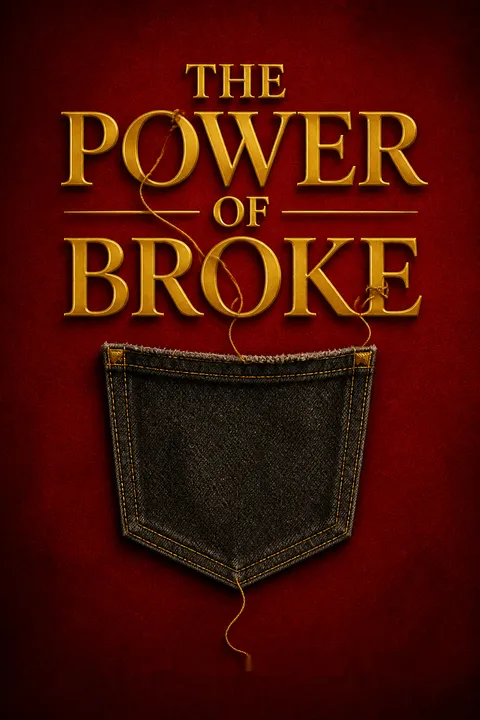


Key Takeaways
Treat limited resources as a design constraint, not a verdict
Scarcity can sharpen focus. Daymond John’s childhood in Hollis, Queens, was marked by tight finances and real risks. His mother borrowed $80,000 against their home so she could leave several jobs and stay more present while he navigated a difficult neighborhood. Money still ran short, but her example taught him to make deliberate use of what was available and keep moving toward a goal.
Broke is a mind-set here. The book uses “the power of broke” for the resourcefulness, urgency, and creative problem-solving that can emerge when options feel limited. It does not mean poverty automatically produces success. John argues that even people with capital can practice this discipline by acting with focus rather than assuming money will solve every obstacle.
What's valuable is the distinction between a balance-sheet condition and a way of working. Constraints can narrow attention, discourage waste, and force an early test of whether an idea matters. That is different from claiming hardship is inherently beneficial. Severe scarcity can also consume the time and energy needed to build anything. The strongest reading is therefore not “seek deprivation,” but “retain the useful habits that constraint can teach”: spend carefully, improvise, and stay close to the problem being solved.
Prove demand with strangers before building the expensive version
Test behavior, not compliments. John defines proof of concept as evidence that a product or service can deliver its promise in the real world. Friendly praise is weak evidence because loved ones want to be supportive. A stranger who spends money offers a more meaningful signal.
FUBU learned in the field. John and his partners sold clothing at Black Expos and watched which designs moved, which colors sold, and whether customers wore the shirts again. Kevin Plank, founder of Under Armour, made seven prototype shirts and passed them among football teammates. Their use and feedback showed that the idea could serve athletes beyond football. These small trials exposed what customers valued before either business had the resources to build at scale.
This is a practical application of experimental thinking: make the smallest test that can produce useful evidence, then update the offer. The important distinction is between stated preference and costly behavior. A customer saying “interesting” costs nothing; a purchase, repeat use, or referral carries more information. Early testing also has limits: a few enthusiastic buyers do not prove a large market. The goal is not certainty, but enough evidence to make the next decision less speculative.
Let actual sales authorize your next major expense
Earn the right to expand. Gigi Butler launched her Nashville cupcake shop after years of pursuing country music and building a housecleaning business. She researched the market, tested recipes with clients, and used credit to fund the store. On the day before opening, she had just $33 in her checking account and several bills still due. Customers arrived in a line on opening day, and within months she was paying obligations and saving toward another location.
The lesson is pacing, not recklessness. Butler’s story includes substantial borrowing, including high-interest credit-card advances. The book’s advice is to keep growth tied to evidence and cash realities, rather than spending heavily on an untested vision. A small launch can make mistakes survivable and reveal what needs fixing before the stakes rise.
The case makes a useful distinction between a bold commitment and an unbounded gamble. Butler took real financial risk, but she also brought relevant experience, tested recipes, and retained other work as a safety net. Those details matter more than the dramatic image of opening with almost no cash. Growth becomes more robust when each investment follows evidence of demand and a credible plan for costs. A compelling origin story should not obscure the debt burden or imply that luck will reliably rescue a business.
Borrow other people's capacity by making the exchange worthwhile
Resources include more than cash. John’s mentor Jay Abraham used what he called OPM, expanding the idea beyond other people’s money to include their labor, distribution, marketing, and expertise. When Abraham had little capital, he offered convenience stores a no-cost way to stock music tapes, then secured inventory from a distributor who wanted access to that market. The arrangement gave each party a reason to participate.
The same logic shaped marketing deals. To relaunch Icy Hot, Abraham offered media outlets generous terms tied to sales and reduced their risk by letting them sample the product. Repeat purchases made the economics work over time. The principle is to identify what a partner needs, then structure an exchange that gives them a concrete benefit instead of presenting only the founder’s need.
This is a broader and more useful view of leverage than simply borrowing funds. A startup can access capabilities through partnerships, preorders, shared distribution, or carefully designed incentives. Such arrangements can align interests while conserving cash. They can also create dependence or leave the founder with little margin if the terms are poorly understood. Before accepting help, the entrepreneur needs to calculate not only the immediate gain but also who controls the customer, the product, and the future upside.
Protect the customer's reason to care as your business grows
A brand begins with a real connection. FUBU’s name and clothing reflected the community John and his partners came from. Customers could recognize their own style and experience in the product. John argues that advertising and investment cannot manufacture that relationship if the underlying offer feels hollow.
Acacia Brinley’s online following shows the same tension. She began posting photos to connect with other young people, not to run a marketing operation. As her audience grew, companies offered products for promotion. She accepted only those that fit her personality, knowing that indiscriminate endorsements could weaken the trust that made her influential. The commercial opportunity depended on preserving the very quality that drew people in.
Authenticity works here as an operational constraint, not merely a warm brand adjective. It asks whether product choices, promotion, and customer experience remain consistent with the promise that attracted buyers. This can create durable trust, especially when audiences have direct ways to respond publicly. Yet sincerity alone is not a business model: customers also need quality, reliability, and fair value. A founder’s personal story can open the door, but the offering must keep earning the relationship.
Reach customers where they already gather, then keep the relationship direct
Targeted attention beats broad exposure. When FUBU lacked a large advertising budget, John focused on music videos, community events, and BET, where the intended audience was already paying attention. He contrasts repeated placements on a relevant channel with a few expensive commercials on a mainstream sitcom whose viewers were less likely to buy the clothing. The point was not simply to advertise cheaply, but to spend where a message could matter.
New tools change delivery, not the basic problem. The book’s examples range from artists selling limited-run shirts to followers online to crowdfunding campaigns that attract early buyers. In each case, a business can meet a defined audience, learn from its response, and avoid paying for reach that has little connection to demand.
The underlying skill is audience fit: understand who is likely to care, where they spend attention, and what makes a first interaction useful. Digital platforms reduce some distribution barriers, but they do not make attention free. A large follower count can be commercially weak if the audience does not trust the seller or want the offer. Channel choice should therefore follow customer knowledge, with results measured in meaningful actions rather than impressions alone.
Turn rejection into information, not a verdict on your ability
Persistence needs adjustment. Tim Ferriss faced rejection from twenty-seven publishers while trying to sell his first book. Instead of treating the refusals as final proof that the idea had no audience, he looked for another route to readers. He studied bloggers, attended technology and media events, and built relationships by being useful and considerate. A blogger’s response helped create early attention, and a speaking opportunity at South by Southwest gave him another way to present the work.
Keep the mission, change the method. The story supports persistence, but not blind repetition. A refusal may reveal a poor pitch, a mismatched audience, or a real weakness in the offer. The useful response is to ask what can be learned, revise the approach, and choose the next test deliberately.
Rejection is ambiguous data. It can reflect timing, fit, presentation, or genuine lack of demand, and an entrepreneur cannot know which without further inquiry. Ferriss’s experience is instructive because he changed his route to market rather than merely sending the same pitch again. Persistence is most productive when paired with feedback and a stopping rule. Without those, “never quit” can become sunk-cost thinking, where past effort is mistaken for evidence that success is near.
Set a measurable next target before spending effort against it
Make progress concrete. John’s SHARK Points include setting goals and doing homework, but the practical point is simple: define what the next useful milestone looks like before committing resources. He describes writing down goals with deadlines and steps, then reviewing them regularly. A clear target helps distinguish purposeful effort from activity that only feels busy.
Ryan Deiss learned this through costly mistakes. His early online ventures expanded into hundreds of websites, and he later discovered that advertising charges had accumulated into a $250,000 debt. After narrowing his focus, he faced a separate tax bill of roughly the same amount. Specific obligations forced him to concentrate on solvable targets. Once he cleared them, he could think about building a sustainable business rather than chasing every possible opportunity.
A measurable target reduces cognitive sprawl: it makes tradeoffs visible and gives a person a way to judge whether an action is helping. Deadlines can also prompt useful urgency. But goals are not substitutes for sound assumptions. Deiss’s experience shows how easily activity can outrun financial understanding. Targets should be paired with simple records of cash, costs, and progress, and revised when evidence changes. Otherwise, precise goals can merely make a bad plan more efficiently pursued.
Scale operations only as fast as you can keep promises
Growth can magnify a bottleneck. On Shark Tank, John declined to invest in Forus Athletics, a young shoe company seeking $200,000. He liked the founders and the product, but believed they were spreading themselves across performance footwear, fashion, many styles, and a NASCAR licensing deal while already struggling to fill orders. The company had recorded more than $500,000 in sales over six months, yet more money might have encouraged further expansion before inventory and fulfillment were under control.
Focus can be a growth strategy. Under Armour first built recognition around performance shirts, then expanded into related products. Linda Johansen-James also described testing retail concepts in a small number of locations before adding more. In both cases, disciplined sequencing helped the business learn and deliver before taking on a larger operating load.
This is a reminder that demand and capacity are different problems. A company can attract buyers while remaining unable to fulfill orders reliably, and more funding may intensify the mismatch. Operations deserve the same scrutiny as marketing: inventory, staffing, delivery, and cash flow determine whether growth strengthens trust or damages it. Still, caution should not become a permanent excuse to stay small. The decision hinges on whether the next expansion removes a proven constraint or adds complexity before the basics are stable.
Analysis
The Power of Broke is part memoir, part entrepreneurial casebook, and part practical guide. Its through-line is that limited resources can force sharper choices: test with customers, use overlooked channels, negotiate mutual benefit, and avoid scaling beyond operational capacity. John gives this idea human weight through his mother’s sacrifice and through varied profiles, from a teenager building an online audience to a founder developing athletic apparel from a handful of prototypes. The examples make abstract advice easier to picture and show that resourcefulness can take different forms across industries.
The book is strongest when it describes mechanisms rather than merely celebrating grit. Selling at expos reveals product preferences. A sample run tests use. A carefully structured partnership supplies resources without immediate capital. These are transferable actions, not personality traits that readers either possess or lack. The SHARK Points offer a memorable checklist, while the recurring stories show how goals, research, passion, reputation, and persistence interact.
Its central claim needs qualification. The narrative often treats adversity as fuel, but the same scarcity can restrict access to time, education, credit, healthcare, and room to recover from failure. The featured entrepreneurs are selected because their stories succeeded, so their outcomes cannot establish that being broke causes success. Nor does persistence guarantee that a weak idea will find a market. The more defensible conclusion is that constraints can encourage frugality and experimentation when paired with skills, support, sound judgment, and some capacity to absorb risk.
Read this book as a case for disciplined ingenuity, not as an argument that deprivation is desirable. Its best practical question is not how to become broke, but how to preserve urgency and customer closeness after resources arrive. Keep testing, protect what makes the offer valuable, and make each new expense answer to evidence rather than excitement.
Review Summary
The Power of Broke receives mixed reviews, with an average rating of 3.90 out of 5. Some readers find it inspiring and motivational, praising the author's storytelling and practical advice for entrepreneurs. They appreciate the diverse success stories and the emphasis on creativity and resourcefulness. However, critics argue the book is repetitive, lacks structure, and relies too heavily on the author's personal experiences. Some reviewers feel the content could have been condensed and find the constant references to Shark Tank and FUBU distracting.
People Also Read





Glossary
The Power of Broke
Resourcefulness under constraintJohn’s term for turning limited money, access, or other resources into a reason to act creatively and focus on what matters. It describes a working mind-set, not poverty itself. In practice, it means testing an idea cheaply, making careful use of available assets, and resisting the assumption that more funding automatically solves a business problem.
SHARK Points
Five entrepreneurial habitsJohn’s mnemonic for five habits he sees in effective entrepreneurs: establish a goal, research the field, care deeply about the work, treat personal reputation as part of the offer, and continue adapting through setbacks. The framework is intended as a practical reminder for people building businesses or careers with limited resources.
OPM
Other people's resourcesAn abbreviation commonly used for “other people’s money,” which Abraham broadens to include other people’s labor, marketing, distribution, knowledge, and time. The concept encourages entrepreneurs to build exchanges that give partners a reason to contribute resources, rather than assuming that a business must own or pay for every capability itself.
colossal bootstrapping
Growth through lean testingJohn’s phrase for starting and expanding a business in small, evidence-led steps instead of raising substantial money before proving demand. The approach keeps early mistakes less costly, lets customer behavior guide changes, and delays larger commitments until the business has demonstrated that its offer can work.
Item, Label, Brand, Lifestyle
Four stages of brand growthJohn’s model of how a product can deepen its place in customers’ lives. An item meets a basic need; a label gives it a name; a brand creates recognizable expectations and trust; and a lifestyle extends that trust across a wider set of products, services, or behaviors. The sequence emphasizes that broad brand meaning is built over time.
FAQ
What's The Power of Broke about?
- Mindset of Success: The Power of Broke by Daymond John explores how financial limitations can be a powerful motivator for success, driving creativity and innovation.
- Real-Life Examples: The book includes stories of entrepreneurs who started with little money, showing how they turned their circumstances into advantages.
- Practical Advice: John offers actionable strategies to help readers embrace their struggles and use them as stepping stones toward their goals.
Why should I read The Power of Broke?
- Inspiration for Entrepreneurs: It provides motivation for those feeling discouraged by financial limitations, offering a fresh perspective on turning adversity into opportunity.
- Valuable Lessons: Readers learn about the entrepreneurial mindset, focusing on resourcefulness and innovation in the face of challenges.
- Relatable Content: Daymond John’s personal journey from humble beginnings to success makes the book engaging and relatable.
What are the key takeaways of The Power of Broke?
- Embrace Your Circumstances: Being broke can be a competitive advantage, pushing individuals to be more creative and determined.
- Innovation from Adversity: The book highlights that necessity often drives innovation, encouraging readers to find solutions in challenging situations.
- Authenticity Matters: John stresses the importance of being genuine in business, as authenticity builds trust and connection with customers.
What are the best quotes from The Power of Broke and what do they mean?
- “The power of broke is all about taking that shot.”: Encourages seizing opportunities despite limited resources, emphasizing risk-taking.
- “When you’ve got nothing to lose, you’ve got everything to gain.”: Suggests that financial limitations can fuel motivation and creativity.
- “Innovation happens from the bottom up, not the top down.”: Highlights that the best ideas often come from those directly facing challenges.
What is the "power of broke" mindset in The Power of Broke?
- Mindset Definition: It refers to the belief that financial limitations can catalyze creativity and innovation.
- Focus on Resourcefulness: Encourages finding solutions and being resourceful in adversity, as necessity often drives innovation.
- Resilience and Determination: Promotes relentless pursuit of goals, even when faced with obstacles.
How does Daymond John define success in The Power of Broke?
- Success as a Journey: John views success as overcoming obstacles and pursuing passion, emphasizing personal growth and resilience.
- Value of Hard Work: Hard work and dedication are essential, with success often stemming from relentless effort and learning from failures.
- Authenticity in Business: True success involves being authentic and building genuine connections with customers.
What strategies does The Power of Broke suggest for entrepreneurs?
- Leverage Your Story: Sharing personal stories and struggles can resonate with customers and create a strong brand identity.
- Focus on Proof of Concept: Validating ideas through real-world testing and feedback is crucial for adapting strategies.
- Build a Support Network: Surrounding oneself with supportive individuals can provide guidance and encouragement.
How can I apply the lessons from The Power of Broke to my life?
- Adopt a Growth Mindset: Embrace challenges as opportunities for growth and learning, viewing setbacks as stepping stones.
- Be Resourceful: Look for creative solutions to problems, leveraging existing skills and resources to fuel determination.
- Stay Authentic: Being true to oneself and values helps build meaningful connections and trust with others.
What role does creativity play in The Power of Broke?
- Creativity as a Necessity: Financial limitations often force individuals to think creatively and find innovative solutions.
- Innovation from Adversity: Entrepreneurs in the book turned challenges into creative opportunities, showing necessity as the mother of invention.
- Encouraging a Creative Mindset: John believes everyone has the potential to be creative, regardless of background or financial situation.
How does The Power of Broke address the concept of failure?
- Failure as a Learning Tool: John views failure as integral to the entrepreneurial journey, offering valuable lessons for future decisions.
- Resilience in the Face of Failure: Successful entrepreneurs often experience multiple failures before achieving success, highlighting the importance of resilience.
- Embracing Failure: Taking risks and learning from mistakes are crucial for long-term success.
How does Daymond John suggest leveraging relationships in The Power of Broke?
- Networking Importance: Building and maintaining relationships can provide support, resources, and opportunities.
- Mutual Benefit: Focus on what you can offer in return when seeking help or partnerships, fostering stronger relationships.
- Mentorship: Finding mentors who can guide and support you is significant, as shared through John’s own experiences.
What strategies does The Power of Broke offer for overcoming obstacles?
- Adapt and Evolve: Flexibility and willingness to change approaches when faced with challenges can lead to new opportunities.
- Resourcefulness: Making the most of available resources, such as time, skills, or connections, helps overcome financial limitations.
- Persistence: Perseverance is key, as many successful entrepreneurs faced setbacks but continued to push forward.
Download PDF
Download EPUB
.epub digital book format is ideal for reading ebooks on phones, tablets, and e-readers.








