

Plot Summary
The Mark Beneath Her Gown
At Shirburn Castle, Maude Shaftsberry’s family prepares her to marry Lord Edward Beckett, a handsome match who promises status and a household of her own. Her mother tries to cover the dark mark that spreads across Maude’s lower belly and thigh, but wax and ointment cannot disguise its full reach.
Maude has been taught to imagine marriage as her passage into importance: she will become a wife, bear sons, and rise at court. Her six brothers treat her opinions as a nuisance, while her parents regard the mark as a threat to their political prospects. Maude longs for Edward to accept her, yet the wedding approaches with one secret at its centre.
Maude’s family treats her body as both a private defect and a public liability. Her mark matters less to them as a bodily difference than as a risk to a marriage alliance. Maude has internalized their bargain: she expects wifehood and motherhood to earn her the authority withheld from her as a daughter. Her confidence in a future of sons is not simple vanity. It is a survival plan built from the only form of power her family has taught her to value.
Wax, Blood, Accusation
The wedding feast ends with Edward’s relatives demanding proof that the marriage has been consummated. Maude’s mother has coated her mark with beeswax, hoping to conceal it until Edward cannot annul the union. Under the pressure of men pounding on the bridal-chamber door, Edward has sex with Maude while his kinsmen watch.
In the morning he finds wax in the sheets and his body hair, sees Maude’s mark, and calls her a witch. He burns the bedding and tells the household she refused him, but the witnesses can contradict his claim. Maude’s mother keeps her confined while Edward stays in town to seek an annulment. Maude has entered marriage, but not the safe future she expected.
The wedding chamber turns a private marriage into a performance controlled by men. Edward’s relatives demand spectacle, and their presence later becomes the one protection Maude has against his denial. The wax, meant to preserve her future, instead becomes visible evidence that he can interpret as sexual deceit. Maude is forced to manage not only her own fear but the stories others tell about her body. The scene exposes the gap between consummation as a legal threshold and intimacy as mutual recognition.
A Spell She Refuses
After Maude begins bleeding, she slips out of Shirburn and seeks help from Hildy and Zita, two local wisewomen. They warn that Edward is more likely to divorce her than risk a witchcraft case, then give her a lust-inducing mushroom mixture and direct her to Annie Cobbie, a sex worker who knows Edward. Annie hides Maude in a trunk and doses Edward’s drink.
When he becomes ardent, praises Maude’s mark, and begs her to stay, Maude recognizes that the tenderness is manufactured. She leaves him rather than use the spell to secure a pregnancy. Her family, meanwhile, decides to send her to marry a poor farmer who will supposedly overlook her mark. Maude is offered no future she chose.
The potion tests whether Maude will accept a counterfeit version of the affection she has wanted. Edward’s sudden delight in her body is precisely what she hoped to receive, but the spell makes his desire unusable as proof of love. Refusing him costs her the last chance to preserve the marriage through pregnancy, yet it marks an emerging ability to distinguish safety from possession. Annie’s sympathy also offers Maude a different model of female judgment: practical, compassionate, and unashamed of the work survival requires.
The Apothecary Door
On the journey to her unwanted second marriage, Maude pays the coachman to leave her in Watlington and brings her trunk to Hildy and Zita’s apothecary. Zita objects to taking in another dependent, but Hildy offers Maude a bed in a storage room in exchange for work. Maude resists the plain clothes and counter duties, insisting she will soon return to her family.
Instead, she learns to dispense simple remedies and meets Rufus, a tall Black man whom the women jokingly call a fairy after finding him at their food trap. He agrees to help around the shop and teach Maude signs for communicating with Hildy. Maude has escaped the farm, but she has not yet accepted the life waiting behind the apothecary counter.
The apothecary gives Maude shelter without granting her the old hierarchy she expects to bring with her. Zita’s refusal to treat her as a privileged guest confronts Maude with the limits of rank, while Hildy’s welcome creates a conditional form of belonging grounded in contribution. Rufus’s presence unsettles Maude’s assumptions about status and race, which she initially applies as reflexively as her family applied them to her. The shop becomes a place where identity is negotiated through work, not merely inherited through a name.
Beatrice’s Last Letter
The wisewomen take Maude and Rufus to Lord Sotherby’s house, where the terrified lord believes demons fill his rooms. Maude follows his cat and the ghost-hunting dog into the kitchens, where she discovers a living servant rather than a spirit. The maid explains that Sotherby’s young daughter, Beatrice, died after striking her head near the hearth, and that her grieving father has mistaken his guilt for a haunting.
Using a charm from the wisewomen’s book, Maude writes a message in Beatrice’s name telling Sotherby she is safe and does not blame him. He accepts the letter and leaves the house calmer. Maude has used a practice she feared, and her words have brought comfort where the supposed haunting brought terror.
Maude’s first consequential act of magic is neither a display of power nor a simple trick. It begins with observation: she follows the animals, listens to the servant, and finds the human loss beneath the supernatural explanation. The message may be mediated by a charm, but its emotional truth comes from Maude’s capacity to understand what the father needs to hear. Her gift is therefore inseparable from interpretation. She does not merely identify a spirit; she gives grief a form that permits someone to live with it.
Declared Dead at Shirburn
After Maude’s family finally summons her home, she expects a solution to her disgrace. Instead, her father explains that Edward cannot easily annul the marriage, so the family will declare Maude dead of sweating sickness rather than risk a public witchcraft accusation. Her mother tells her to surrender her jewels and dresses and accept the lie.
Maude refuses, curses her mother in anger, then leaves the castle and tears off her finery in the woods. Rufus finds her among the trees, half-dressed and overwhelmed. He helps loosen her corset and tells her she can choose who to be now. Back at the apothecary, Maude withdraws into bed for days until Hildy’s challenge pushes her to stop treating despair as a tomb.
The false death makes literal the social death Maude has feared since her family first called her mark a shame. Her parents choose reputation over reconciliation, and her mother’s own secret history remains hidden from Maude at this point. In the forest, stripping off court clothes is not a neat liberation: Maude is grieving, furious, and frightened. Rufus does not solve the crisis for her. By helping her breathe and allowing her to name a desire, he makes room for a self that is not defined by the family’s plans.
Maude Curses Reggie
A distraught pregnant woman arrives at the apothecary after losing her baby. Maude realizes the local wizard, Reggie Baldwyn, gave her mugwort to end the pregnancy at her father’s request, while pretending to treat her sickness. Maude confronts Reggie in her nightclothes, bites him when he tries to kiss her, and curses him to suffer from anything he eats and to fail at his work.
The frightened man stops seeing clients. When his illness becomes severe, Maude returns and withdraws the curse, learning that maggoty meat has also been making him sick. Reggie predicts that she will kill another witch. Maude doubts him, but the prophecy lodges in her mind as she tries to earn a place among the wisewomen.
Maude’s anger is directed at a man who turns women’s vulnerability into business and obeys a father’s authority over a pregnant daughter’s wishes. Her curse is both an attempt to stop harm and an impulsive assertion of power, with real consequences she must later take responsibility for. Reggie’s prophecy complicates her growing confidence by making her wonder whether her actions are shaping a future she cannot control. The contrast between his fraud and Maude’s uncertain craft suggests that authority comes less from claiming supernatural certainty than from answering for what one does.
Kinship Beneath the Stars
Maude gradually learns to read people rather than merely perform the role of a noblewoman. She gives a widowed farmer, Betty, a poem and practical encouragement to ask a neighboring man for help, while the wisewomen guide the same man toward helping Betty and her child. Reggie’s sickness leads Maude to lift her curse, and he reveals that Zita is Maude’s aunt.
Zita then explains how Maude’s mother once came to the apothecary seeking help with an unwanted pregnancy, and how Zita herself was cast out after loving Hildy. Maude begins to understand that her family’s respectability rests on concealed histories. At harvest, she joins the village rituals. A royal messenger summons the wisewomen, Rufus, and Maude to serve at Hampton Court.
This section redraws Maude’s idea of family and authority. Her help to Betty is modest, practical, and relational, unlike the grand rank she once imagined would give her influence. Zita’s history reveals that Maude’s mother has also depended on the very women Maude was taught to fear, exposing respectability as a selective memory. The harvest festival places Maude among people her former self dismissed as beneath her. When the royal summons arrives, she approaches court carrying not just ambition but the beginnings of a different community.
The Trumpeter Returns
At Hampton Court, Maude discovers that Rufus is no fairy but a former royal trumpeter, known to King Henry as Reasonable Blackman. Henry greets him like a beloved childhood companion and welcomes the three wisewomen into the palace. Maude reads the King’s weariness and appetite for change, then earns his interest by telling a ghost story before the court.
The welcome is exhilarating, but the palace’s hierarchy quickly reminds her that the witches are entertainers, not courtiers. During the Christmas revels, Maude is pressed to prove her witch’s mark and is nearly stripped by drunken nobles. Edward sees her and collapses in fear. Henry intervenes, protects Maude, and later asks her to examine Queen Anne for signs of witchcraft.
Court gives Maude the spectacle and attention she once equated with fulfillment, but its approval is unstable and conditional. Her performance wins notice, while the same audience treats her body as public evidence to be inspected. Rufus’s reunion with Henry exposes a tenderness within royal power, yet Rufus remains vulnerable to being treated as property. Maude’s ability to read emotion becomes politically valuable, shifting her from performer to instrument. The scene makes advancement feel intoxicating and dangerous at once.
Anne’s Dangerous Confidence
Henry places Maude among Anne’s ladies and expects her to report whether the Queen is a witch. Anne quickly recognizes Maude’s connection to Lady Mary, Maude’s estranged mother, and offers to keep that secret. Maude sees that Anne is bleeding and fears for her unborn child; Hildy examines the Queen and orders rest.
When Henry falls from his horse and the news shocks Anne into labor, the pregnancy ends in a miscarriage. Henry sees the malformed fetus and calls it demonic. He blames Hildy for the loss and has her seized, while Zita is expelled from court. Maude insists Anne is not evil and stays beside the unconscious Queen, but her defense cannot prevent Hildy’s arrest.
Anne and Maude recognize one another through intuition, but their connection is formed inside a surveillance bargain imposed by Henry. Anne’s kindness does not erase the danger of Maude’s assignment; it makes betrayal harder to contain within the language of service. The miscarriage exposes how quickly a woman’s reproductive loss can be recast as evidence against her, while Hildy’s healing work becomes grounds for suspicion. Maude’s intervention protects Anne in the moment, yet it also leaves her confronting the consequences of the King’s power over the people she loves.
A Witch for a Witch
Locked in her rooms, Maude learns that Catherine of Aragon has died and escapes with Rufus to search for Zita. They find her grieving beneath a statue in the woods. At the river, Catherine’s Spanish household arrives with Rufus’s mother, Catalina, and Maude joins the delegation back into Hampton Court.
She tells Henry that Anne is a witch, that the miscarriage proves her power is harmful, and that Jane Seymour is the woman destined to replace her. The claim is a desperate bargain, not a truth Maude can verify. Henry agrees to release Hildy and later let Rufus leave after Catherine’s funeral. Maude has secured her family’s return, but she has placed Anne in grave danger to do it.
Maude’s most consequential act is also her most compromised. She uses the King’s appetite for certainty to bargain for Hildy, turning a private intuition into political accusation. The choice preserves her chosen family while sacrificing the Queen’s trust and potentially her safety. Catherine’s death and Catalina’s arrival bring Rufus’s past into the same crisis, making the court’s personal bargains inseparable from its imperial power. Maude is no longer simply a pawn, but agency here means choosing which vulnerable person the system will punish.
The Coven Comes Home
Henry releases Hildy, and Maude finds Zita waiting on a boat with Rufus and Catalina. Rufus stays at court for Catherine’s funeral, then returns to the apothecary with his mother several weeks later. The small household begins to imagine a future together, including selling Maude’s hidden jewels to find a larger home.
That fragile calm ends when Zita tells Maude that Anne has been condemned to death on charges mixing adultery, incest, conspiracy, and witchcraft. Maude believes Reggie’s prediction has come true and blames herself for naming Anne a witch. Zita reminds her that powerful men manufacture conflict between women, but Maude still travels to London with her to witness the execution.
The return to Watlington looks briefly like a resolution: Hildy is safe, Rufus has chosen to come back, and Maude can imagine a home built by consent rather than inheritance. Anne’s sentence reveals the limits of that refuge. Maude’s accusation helped the King frame his decision, but it did not create the political machinery that makes women disposable. Zita offers a structural explanation without absolving Maude of her role. The tension lies in holding both truths together: Maude made a choice, and the system was ready to use it.
A Spell at Tower Green
At Tower Green, Maude and Zita push through a crowd gathered to watch Anne die. Anne addresses the spectators with composure and asks them to pray for her, then sees Maude among them. As Anne kneels, Maude whispers a spell meant to spare her pain. The executioner strikes, and Anne’s head rolls across the scaffold in the stunned silence.
Maude repeats the charm, unable to know whether it reached Anne or changed anything. Someone touches her shoulder, but when she turns no one is there. Her attempt to comfort the Queen cannot undo the accusation she helped strengthen; it is the final act of care she can offer.
The ending refuses to turn Maude’s magic into rescue. Her spell can express compassion and resistance to suffering, but it cannot reverse a public sentence authorized by the crown. The unseen touch leaves open whether Maude receives supernatural recognition or simply experiences grief as a bodily presence. What is not ambiguous is the cost of her earlier bargain: she helped make Anne legible as a witch, and now stands powerless beside the consequences. The novel closes on care without absolution, asking whether mercy can matter even when it cannot repair harm.
Analysis
The novel places Maude’s search for selfhood inside a system that defines women through marriage, reproduction, reputation, and royal usefulness. Her family tries to conceal her mark because it threatens an alliance, then erases her from public life when concealment fails. The apothecary offers a counterworld, not because it is free of hierarchy or danger, but because its women make belonging depend on work, care, and mutual knowledge rather than legitimate lineage.
Magic functions less as a stable superpower than as a contested language for interpreting vulnerability. Maude’s most meaningful acts begin with observation: she understands Lord Sotherby’s grief, sees the harm in Reggie’s treatment of a pregnant woman, and detects Anne’s fear. Yet perception does not guarantee ethical action. At court, Maude turns an uncertain reading into the accusation Henry needs. Her bargain saves Hildy, but it also helps expose Anne to a political process that can convert rumor into sentence. The story therefore refuses a comforting split between wise women and wicked men. Maude can be compassionate and self-serving; a healer can be endangered by her own work; a monarch can show affection while exercising possession.
The book’s emotional movement is from imagined status to chosen relation. Maude first believes that becoming a lord’s wife will let her speak and act. Instead, the relationships she builds with Hildy, Zita, and Rufus teach her that being seen is more sustaining than being elevated. Still, her return to court reveals that personal growth cannot dissolve structural power. She can help, refuse, bargain, and offer mercy, but she cannot control the institutions that decide whose body is suspect and whose death is lawful. The final spell matters not as a rescue but as an attempt to preserve compassion where power has made it futile.
Review Summary
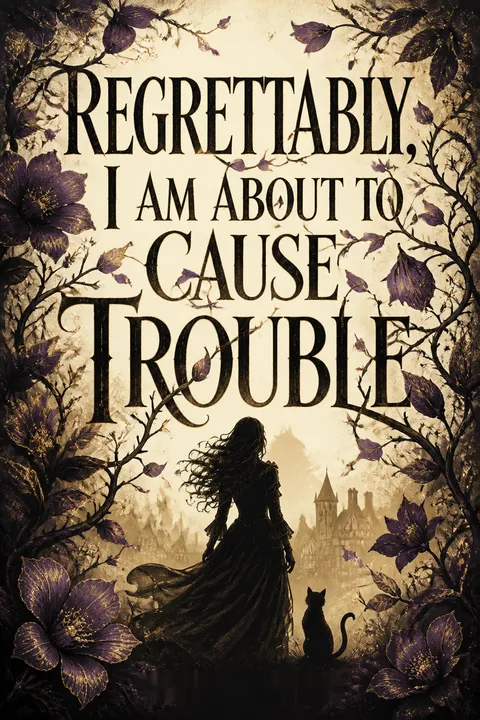
Regrettably, I am About to Cause Trouble received mixed reviews, with an average rating of 3.93/5. Many readers praised its feminist themes, witty dialogue, and engaging plot set in Tudor England. The protagonist Maude's character development and the found family aspect were highlights. Some appreciated the modern language in a historical setting, while others found it jarring. Criticisms included a slow-paced middle section and an abrupt ending. The book's exploration of witchcraft, romance, and social commentary resonated with many readers, though some found the main character initially unlikable.
Characters
Maude Shaftsberry
Marked runaway turned wisewomanMaude is a young noblewoman with a large birthmark across her lower torso, raised to believe marriage, male heirs, and courtly status will secure her worth. Her sharp wit and appetite for attention can make her selfish, but those traits also help her survive a family that routinely silences her. She is acutely sensitive to other people’s emotions and gradually learns to use that sensitivity as a form of counsel. Maude’s central struggle is not simply whether she has magic, but whether she can define herself outside the roles her family and society assign her. Her impulsiveness brings real consequences, and her growth depends on learning to accept responsibility without surrendering her own judgment.
Rufus
Court trumpeter and steadfast allyRufus is a tall Black man who arrives at the apothecary after fleeing a marriage arranged by people more powerful than himself. The wisewomen call him a fairy, but he lets others misunderstand him until he feels safe enough to disclose more. His humor and patience soften Maude’s defensive pride, while his history exposes the violence hidden beneath the court’s polished ceremonies. Rufus wants room to choose his own life, though loyalty and old attachments pull him toward the royal world he left. He offers Maude companionship without demanding that she become smaller, and he expects her to recognize him as a person rather than a servant or curiosity.
Zita
Severe astrologer and protectorZita is a precise, sharp-tongued astrologer who shares an apothecary with Hildy. She values boundaries, competence, and truthfulness, and she refuses to let Maude use noble status as an excuse to avoid work. Her severity masks a history of estrangement and grief, which helps explain why she is wary of family claims and social respectability. Zita’s love for Hildy is practical as well as intimate: she translates, protects, and plans. She challenges Maude’s assumptions while giving her a place to develop skills. Their relationship becomes a test of whether Maude can accept care without expecting obedience or special treatment.
Hildy
Deaf healer with fierce compassionHildy is a healer who communicates through lip-reading and sign, and whose gentle manner should not be mistaken for passivity. She cares for patients with patience and takes particular responsibility for women’s bodily needs, including pregnancy and loss. Her partnership with Zita gives her a secure bond beyond conventional religious or legal approval. Hildy welcomes Maude when others would cast her out, but she also confronts Maude when self-pity becomes a way to avoid living. Her work depends on close attention to bodies and behavior, while her deafness shapes a way of perceiving the world that unsettles Maude’s assumptions about disability and power.
King Henry
Volatile ruler and patronHenry is a charismatic, mercurial monarch who enjoys performance, personal loyalty, and the exercise of power. His affection for Rufus is genuine, but it does not erase his habit of treating people as possessions or instruments of state. He turns Maude’s sensitivity into a tool for investigating Anne, and he expects certainty from those around him even when events are ambiguous. Henry’s moods can make the same boldness seem entertaining one moment and threatening the next. His appetite for control is bound up with anxiety about succession, making women’s bodies and pregnancies matters of political consequence.
Queen Anne
Perceptive queen under scrutinyAnne is an intelligent, socially perceptive queen whose humor and warmth emerge even within the restrictive rituals of court. She recognizes Maude’s family secret quickly and offers her discretion rather than using it as leverage. Her pregnancy places her under intense scrutiny, while her own intuition allows her to read other people with an acuity that resembles Maude’s gift. Anne is neither simply a victim nor a symbol of power: she understands the risks around her and makes tactical choices to protect herself. Her relationship with Maude is built on reciprocal confidence in a court where almost every private exchange can become political.
Lady Mary
Maude’s guarded motherLady Mary is Maude’s mother, a noblewoman whose pregnancies and family duties shape the household around her. She understands Maude unusually well, yet often participates in the very customs that diminish her daughter. Her affection is difficult for Maude to read because it competes with fear of scandal and loyalty to the family’s social position. Mary’s past contains choices she has concealed, complicating Maude’s belief that her mother has always followed the rules she enforces.
Edward Beckett
Maude’s status-conscious husbandEdward is the handsome lord Maude expects to love her, but he is more attentive to masculine approval and social appearances than to understanding his bride. The public pressure surrounding their wedding brings out his insecurity and cruelty. He interprets Maude’s birthmark through superstition rather than curiosity, and his reaction helps drive her away from the future she had imagined. Edward represents the danger of mistaking a prestigious match for emotional safety.
Reggie Baldwyn
Fraudulent village wizardReggie is a former priest who presents himself as a wizard despite lacking the knowledge he claims. He profits from villagers’ fear and vulnerability, and he is willing to follow a powerful man’s order even when it harms a pregnant woman. His charm and handsome appearance complicate Maude’s first impression, but his conduct reveals a practiced opportunist. Reggie’s predictions unsettle Maude, though his certainty is no more trustworthy than his remedies.
Annie Cobbie
Practical sex worker and allyAnnie, known as the Tawny Moor, is a sex worker who understands how men behave when money, desire, and power intersect. She helps Maude reach Edward, but she also recognizes the danger of a desire produced by a potion. Her kindness is frank rather than sentimental, and her life gives her insight into the stigma imposed on women whose work is visible.
William Sommers
King’s fool and court guideWilliam Sommers is the King’s fool, a quick-changing performer whose jokes can puncture royal ceremony and redirect a dangerous room. He knows how court power works and helps the wisewomen navigate its rituals. His attention to Maude is often playful, but he also understands when she needs protection or a path through the palace.
Catalina
Rufus’s mother and survivorCatalina is Rufus’s mother, a woman taken from her homeland and bound to the service of Catherine of Aragon. Her history links Rufus’s private grief to the larger violence of royal households and enslavement. She is guarded with strangers, but her concern for her son remains unmistakable. Catalina’s presence offers Rufus a chance to reconnect with a life and family history he has long been separated from.
Betty
Widowed farmer seeking supportBetty is a poor young widow raising an underfed baby while trying to keep a failing farm. She needs practical help more than a grand promise, and her encounter with Maude shows how advice can help someone take a difficult first step.
Lord Sotherby
Grieving father haunted by lossLord Sotherby is a frightened nobleman who believes his house is crowded with spirits after his daughter dies. His terror is bound to grief and guilt, making him receptive to Maude’s attempt to bring him comfort.
Beatrice
Lost child at the heart of a hauntingBeatrice is Lord Sotherby’s young daughter, remembered by the household for her fondness for sugared almonds. Her death leaves her father unable to separate the memory of his child from the house where she died.
Jane Seymour
Quiet courtier under pressureJane Seymour is a courtier whose family connections and proximity to Henry make her an important presence in the royal household. She is often quiet in public, but others interpret that quietness in ways that serve their own interests. Maude encounters her amid the shifting loyalties and expectations surrounding the Queen.
Jane the Fool
Queen’s candid companionJane is the Queen’s fool and a perceptive companion who combines humor with unusual candor. She can move through the court’s rules more freely than many courtiers, and she offers Maude practical help without pretending the palace is safe.
Plot Devices
Maude’s birthmark
Stigma turned into powerThe dark mark across Maude’s lower body is first treated by her family as a danger to her marriage prospects. Edward reads it as evidence of witchcraft, while Maude initially experiences it as the defect that bars her from womanhood and security. Over time, she learns to understand the mark as part of the identity others have forced her to hide. At court, it becomes a visible sign of her supposed power, but visibility also exposes her to harassment. The mark therefore moves between shame, evidence, and self-recognition without ever becoming a simple magical credential.
The false death
Escape through erasureMaude’s family declares her dead of sweating sickness to avoid public disgrace and the danger of a witchcraft accusation. The lie cuts her off from her title and former future, but it also gives her distance from the family that planned to marry her away. At court, her supposed death becomes a dangerous secret that can be recognized by people who knew her. The device dramatizes how social identity can be withdrawn by a powerful family, while also giving Maude a chance to live under a name and role of her own choosing.
Charms and remedies
Care tested by consequenceThe wisewomen use herbs, charms, astrology, and practical observation to serve people who have few other sources of help. Maude is initially unsure whether their practices are holy, fraudulent, or dangerous, and her early attempts at magic are improvised. The Sotherby case shows her using a charm to comfort grief, while her curse against Reggie forces her to reckon with the possibility that words can cause harm. The practices work in the story as both supernatural tools and social acts: they require attention, interpretation, and responsibility toward the people seeking help.
Royal surveillance
Intuition made politicalHenry uses Maude’s ability to read emotions as a means of investigating Anne. The arrangement turns a personal gift into a political instrument, placing Maude between a king who expects loyalty and a queen who offers trust. Court itself reinforces the device: public audiences, private chambers, rumors, and sudden summons make every conversation potentially consequential. Maude’s readings cannot provide neutral facts, because her sympathy and fear shape what she reports. The mechanism drives the royal conflict toward betrayal by making private perception valuable to those who hold institutional power.
About the Author
Other books by Amie McNee

Download PDF
Download EPUB
.epub digital book format is ideal for reading ebooks on phones, tablets, and e-readers.








