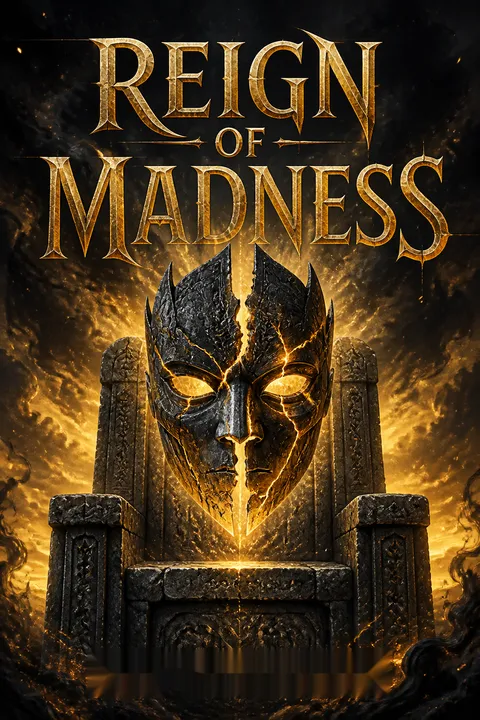


Plot Summary
Prologue
A verse of foreboding warns that a hidden figure called the Rez is approaching, carrying the king’s deathly summons. It imagines no one, from merchant to noble, escaping his reach, and suggests that his arrival will expose a kingdom’s failures as surely as it threatens its enemies.
The poem gives the story a legendary shadow before Rezkin appears in person: the reader is primed to wonder whether the feared figure is a man, a rumor, or a warning that has become flesh.
The poem frames authority as both protection and terror. Its imagined king’s agent does not distinguish between social rank, which makes the threat feel less like ordinary justice than a force that can cross every boundary. That uncertainty becomes essential to Rezkin’s story: people project myth onto him before they understand his motives, and he learns to use that fear while struggling to discover whether his training has made him a person or merely an instrument. The prologue also plants the book’s central tension early: a summons may be justified, but the power to carry it out can become frightening in its own right.
Rezkin Boards the Tournament Ship
Rezkin leaves General Marcum’s estate for the King’s Tournament with Frisha, the general’s niece and heir, her friend Tam, and a party that includes her Jebai cousins, their friend Brandt, and Duke Nirius’s son, Tieran. On the dock, he appears in extravagant finery and treats the young nobles as though they are already his peers.
His practiced manners draw Malcius and the others into friendship while his quiet arrangements place him at the center of the party. He also presents Frisha as his beloved and praises her standing, hoping the nobles will accept her as an equal. The voyage is more than travel: Rezkin is shaping the company that will decide whether Frisha can enter high society safely.
Rezkin’s performance begins as an act of social engineering, but it also exposes his uncertainty about intimacy. He knows how to produce deference and affection by observation, yet he treats relationships as problems with procedures and outcomes. His effort to protect Frisha is genuine, even when the method is calculated. The ship becomes a small political world in which rank, gender, and reputation can be renegotiated through daily conduct. By making the nobles follow his example, Rezkin tests whether status can be redirected toward responsibility rather than merely inherited.
A Noble Mask Takes Hold
When Shiela belittles Frisha and Tam, Rezkin rebukes her publicly and later tells the nobles that Ashai’s common people sustain the kingdom. He recites the history of King Coroleus, whose rise began among ordinary people, then stages a graceful dual-sword display to remind Tieran that his polished manner conceals formidable skill.
Frisha, meanwhile, tells the group how Rezkin protected their party from bandits, giving his martial reputation a human cost. Malcius begins to admire him, while Tieran’s fear and curiosity deepen. Rezkin’s courtly persona earns influence, but his friends can see the strain beneath it. Their different responses turn the voyage into a test of who can trust the man behind his manners.
The section makes performance morally ambiguous. Rezkin uses the nobility’s own codes of courtesy to make them behave better, but his authority still rests on manipulation and fear. His history lesson is not a call to abolish hierarchy; he argues that privilege carries obligations, trying to make reform legible to people who would reject equality outright. Frisha’s defense of him matters because she translates his reputation into lived protection. The gap between what the nobles admire and what his friends know foreshadows the danger of being understood only through a useful role.
A Healer Wakes
A falling ship’s beam nearly crushes Reaylin and several young nobles, but Rezkin hurls himself into its path and diverts it, cracking ribs and tearing his hands. When Reaylin grabs his wrist, her dormant magic repairs his injuries. She rejects the discovery because she wants to be a warrior, not a healer. During shore leave near Teurning, the group finds Journeyman Wesson unable to help his injured donkey, Shiela.
Rezkin guides Reaylin through her first deliberate healing, with Wesson shaping the repair. The donkey stands again, and Wesson accepts Rezkin’s offer of paid work, though he dislikes his destructive magical talent. Reaylin leaves still resistant, but she can no longer pretend her healing power is imaginary.
Reaylin’s conflict is not simply a choice between two professions. She has tied worth to proving herself as a warrior, so healing initially feels like a verdict that she is weak or miscast. Rezkin refuses that false opposition, but his methods are forceful: he arranges circumstances that make her confront her ability. The donkey’s recovery gives her a low-stakes encounter with the power before she must use it on a person. Wesson mirrors her in reverse, possessing destructive magic while longing to heal. Their paired dissatisfaction shows how identity can narrow when people judge a talent only by the role society assigns it.
A Trial Becomes a Rescue
In Teurning, a furious crowd gathers around a beaten man named Kai Colguerun, accused of killing Mayor Quey’s son. Magistrate Jiruthis accepts Kai’s exhausted admission that he killed the young man as a full confession to murder, then sentences him to hang without hearing witnesses or his explanation.
Rezkin interrupts, exposes the sham proceedings, and forces the baron to delay the execution and promise a proper review. He takes Kai into custody rather than leave him to the mob. Back at the inn, Reaylin reluctantly heals Kai’s broken bones and internal injuries, allowing him to survive the night. Rezkin’s insistence on due process saves the prisoner’s life before anyone knows whether Kai is innocent.
Rezkin’s intervention separates justice from the crowd’s appetite for punishment. He does not assume Kai is innocent; he insists that authority must establish guilt rather than treat a wounded man’s words as a convenient shortcut. That distinction gives his conduct weight because it costs him time and brings him into conflict with the magistrate. Reaylin’s healing also becomes an ethical act, not just a demonstration of talent: she helps a stranger whose guilt is uncertain. The scene tests whether power can restrain itself when the public demands a simple answer, and it establishes that Rezkin’s principles apply even when he has nothing personal to gain.
Kai Chooses a King
Kai tells Rezkin that he served King Bordran as a striker, one of Ashai’s elite operatives, and left King Caydean’s service after being ordered to abuse the missing Prince Thresson. When Rezkin produces a certificate bearing Bordran’s authority, Wesson discovers that it grants Rezkin power independent of Caydean.
Kai swears fealty to Rezkin as king, arguing that Bordran chose him to protect Ashai. Rezkin accepts the oath but rejects the crown’s burden. That night, he infiltrates the town court and discovers that Magistrate Jiruthis and Mayor Quey conspired in crimes, including protecting the mayor’s son after the rape of a young girl. Rezkin kills both men and arranges the scene to resemble a fatal quarrel. The baron clears Kai the next morning.
Two forms of authority collide here: the corrupt local office that can sentence without evidence, and the buried royal authority that Rezkin does not want to exercise. Kai’s oath converts a document into a political claim, but it also gives him a way to preserve his own honor after leaving Caydean. Rezkin’s murder of the officials complicates his earlier defense of lawful procedure. He has seen the court fail, yet instead of rebuilding its process, he imposes a private sentence and hides his role. The contradiction is productive: his instinct for justice is strong, but his training still makes lethal efficiency feel like a usable remedy.
Tam Sees the Killer
During the voyage, Rezkin reveals that his masters ordered him to kill the strikers who trained him; he directly or indirectly killed fourteen, while one escaped. Tam is horrified that his dependable friend has also been an executioner and questions whether their friendship can survive the truth.
Frisha challenges Tam to distinguish killing on command from pleasure in violence, and she reminds him that someone must carry out sentences against dangerous offenders. Tam recognizes that Rezkin had no freedom to refuse his masters, apologizes, and swears loyalty after learning more about the man’s life and the authority Bordran gave him. Rezkin accepts the oath, relieved, but does not demand that Tam forget what he has heard.
Tam’s reaction is a necessary moral interruption to the admiration gathering around Rezkin. He refuses to let skill, royal favor, or friendship make mass killing emotionally invisible. Frisha’s response does not absolve Rezkin; it places his conduct within the institutions that require executions while asking Tam to judge the coercion as well as the act. The reconciliation depends on choice rather than blind loyalty. Tam returns because he can accept uncertainty and still remain accountable as a friend. Rezkin, in turn, learns that trust is not secured by providing protection alone. A friend must be allowed to question the person he loves.
Reaylin Swears to the Cause
As the group discusses Caydean’s growing taxes, military demands, and pressure on the nobility, Reaylin reveals that her father joined a resistance years earlier and that she has served the rebellion herself. She swears fealty to the True King through Rezkin, who accepts the oath while concealing that he is its object.
Reaylin still resists becoming a healer, but Rezkin orders her to train because her new power is a responsibility as well as a gift. Around her, Tieran begins to see a purpose beyond privilege, while Malcius and Brandt weigh the danger of taking sides. Their conversations expose a kingdom in which loyalty is becoming a choice with consequences for entire families.
Reaylin’s oath changes her from an outsider who wants recognition into a participant who has already risked herself for a political cause. Yet she remains divided: she accepts a king’s authority more readily than she accepts a healer’s identity. Rezkin uses command to push her toward training, revealing that his protection can become paternalistic when he believes he knows what a subject needs. The nobles’ discussion adds a different tension. They understand the injustice but fear the costs of action, especially to their Houses. The book treats political courage as uneven and embodied, not as a single declaration shared by everyone.
A Legend Gets a Face
At Port Manai, shortages and failing trade show the damage of Caydean’s policies. Rezkin learns that people still tell stories of the Rez, the king’s feared assassin, while Wesson uncovers a subtle spell that lets Rezkin’s will shape how others perceive him. Rezkin expands his control over local thieves’ guilds, then commissions a striking black blade and a fitted mask with Wesson’s help.
He registers for the Fifth Tier and the new Melee as Dark Tidings. When he sponsors commoners who qualify for the highest tier, he turns a private disguise into a public statement that skill matters more than birth or wealth. The name attracts attention, and the mask gives the people a figure onto whom they can project fear and hope.
The legend becomes a political technology. Rezkin is not merely hiding his identity; he is designing an image that can travel farther than his real name and survive ordinary scrutiny. Wesson’s discovery that Rezkin can influence perception gives this performance a magical foundation, but the spell still depends on convincing conduct. Sponsoring commoners complicates the spectacle: Dark Tidings is frightening, yet he uses his visibility to challenge the tournament’s economic gatekeeping. His persona therefore contains both threat and invitation. The crowd can admire the myth without knowing whether its maker is a liberator, a killer, or both.
Tieran Escapes the Duke
Duke Ytrevius’s son, Tieran, summons Rezkin to his estate after overhearing Ytrevius and Duke Atressian’s son Hespion discuss killing an unnamed man. Rezkin finds poison hidden on Tieran’s practice sword and in the tunic meant for the tournament, then gets him away before a third attempt can be made. Tests show both substances would cause debilitating illness, making Tieran appear drunk or unfit at a politically useful moment.
During the investigation, Tieran realizes Rezkin has no master and identifies him as the True King. A mage’s blood test confirms that the two men are closely related. Tieran swears fealty and is relieved to give up the possibility of a crown he never wanted, while Rezkin accepts another dangerous ally.
Tieran’s development turns from social maturation into a direct encounter with mortality. Poison threatens him not through battlefield courage but through the vulnerability of ordinary habits: clothing, weapons, and trust in a host. Rezkin’s careful tests make the danger legible, but they also reveal how little safety noble rank provides. Tieran’s discovery of Rezkin’s identity is earned through accumulating contradictions rather than a single confession. His oath is partly political and partly psychological relief. He is not choosing a throne for himself; he is choosing a more capable relative because the burden he feared may otherwise fall on him.
Commoners Enter the Arena
The tournament draws Rezkin’s companions into its contests: Reaylin reaches the next round in the First Tier, Malcius and Brandt advance in the Second, and Tieran and Jimson compete in higher divisions.
Rezkin’s sponsorship brings saddler Darius, farmer Holton, blacksmith Aspion, and swordswoman Yserria into the Fifth Tier, where wealthy competitors expect to dominate. Yserria’s skill catches Palis’s attention, and he asks to court her despite the class difference.
Meanwhile, Tieran’s poisoning and the kingdom’s worsening trade convince the young nobles that the tournament is taking place amid a genuine political crisis. Rezkin’s performance as Dark Tidings turns each match into more than sport: his choices shape who can be seen as worthy of power.
The tournament concentrates the book’s questions about merit into a public arena. Entry fees and inherited tutoring determine who gets a chance to display skill, so sponsorship is not simply generosity; it contests the mechanisms that make privilege appear deserved. The companions’ varied results keep the event grounded in personal stakes, while Yserria’s courtship with Palis reveals that admiration does not erase structural imbalance. Rezkin’s refusal to compete under his own name lets him intervene without immediately exposing his claim. The arena becomes both a stage for individual mastery and a rehearsal for the larger struggle over who has the right to rule.
The Duke’s Hidden Prison
Suspecting Ytrevius and Hespion of wider crimes, Rezkin returns to the estate with Wesson and Tieran. They bypass the duke’s wards and descend through hidden passages into a cavern where enslaved people have been left chained, starving, and close to death.
Ledgers and the concealed beach entrance prove that Ytrevius has operated a slave trade beneath his polished household. The trio brings water to the surviving captives and begins planning their removal without alerting the duke.
Yserria later identifies Ytrevius as the man responsible for her father’s death, and she swears fealty to Rezkin before accepting him as her guardian. Her private grief now has a target, while Rezkin’s discoveries give the coming confrontation a clear moral and practical cause.
The hidden cavern turns the duke’s respectable estate into a physical map of political hypocrisy. Its secret entrance and meticulous wards protect not a strategic treasury but people reduced to inventory. Rezkin’s discovery makes abstraction impossible: the kingdom’s appetite for order rests beside bodies it has chosen not to see. Yet rescue is not immediate, because the captives cannot simply walk out and the guards still control the surface. The delay forces strategy to include care, transport, food, and timing. Yserria’s oath joins personal vengeance to public justice, though Rezkin tries to distinguish a lawful reckoning from revenge.
Dark Tidings Faces Farson
In the Melee, Dark Tidings defeats varied opponents, including the mountain chieftain Gurell, whom he revives after a near-fatal wound. He later kills Bracken Freedon, the Sandman who had murdered a young competitor, declaring the man guilty after the tournament failed to act.
Between bouts, Rezkin finds the escaped striker Farson. Farson insists Rezkin remains a trained instrument who cannot escape his masters, then reveals that the final orders Rezkin remembers were not the complete rules or instructions.
Rezkin shows him Bordran’s certificate, but Farson refuses to explain who directed the fortress’s events. He disappears without answering. The encounter deepens Rezkin’s uncertainty just as the tournament has made his masked identity impossible to ignore.
The Melee exposes the unstable boundary between restraint and punishment. Rezkin’s rescue of Gurell demonstrates that he can use lethal force without seeking a death, while his execution of Freedon makes him judge and executioner in front of the crowd. Farson’s challenge attacks the premise of Rezkin’s self-understanding: perhaps independence is another role his conditioning taught him to perform. Yet Farson offers suspicion, not proof, and leaves Rezkin with the burden of interpretation. The tournament’s audience watches a hero-shaped figure emerge, while the man beneath the mask discovers that even his memories of freedom may have been authored by others.
The Arrest Turns to Battle
After winning both the Melee and Fifth Tier, Dark Tidings is surrounded by seven strikers who claim he has committed treason. Rezkin kills five in the ensuing fight, while Shezar and Roark refuse to oppose him and swear fealty after seeing Bordran’s proof.
Their choice comes too late to prevent the army from sealing the arena and rounding up foreigners. Kai reports that the operation is part of a kingdom-wide purge, not merely an attempt to capture Rezkin.
The group breaks through a side portico, with tournament fighters and mountain warriors helping defend the refugees. Rezkin directs them toward Ytrevius’s estate, where a ship waits. His private claim has become an open war, and every person following him is now exposed to Caydean’s reprisals.
The tournament’s public triumph becomes the point of no return. Rezkin’s victory has gathered admiration, but the state converts that attention into a trap, using soldiers and strikers to control the audience. The two strikers who step aside show that institutional loyalty is not identical to personal allegiance, yet the five who attack prove how costly dissent remains. Rezkin’s killing of them makes his claim visible through action, not just paperwork. The mixed escape force, nobles, commoners, soldiers, and foreign competitors, begins to resemble the broad coalition his cause needs. It is also a fragile one, held together by immediate danger rather than settled political agreement.
Ytrevius’s Prison Is Broken
The fugitives storm Ytrevius’s estate, where Wesson breaks the wards and the strikers clear the duke’s guards. Ytrevius tries to bargain with his daughters, offering them to Dark Tidings in exchange for his life, but Rezkin rejects the bargain and lets Yserria execute the duke for her father’s murder.
The group reaches the underground prison and finds that many captives have died, though survivors are being moved toward the ship. Soldiers flood the cavern before everyone can escape. Rezkin holds them at the entrance while Palis and Yserria fight on the beach. Palis takes a sword thrust meant for Yserria and dies. Rezkin carries Palis’s body through the surf to the waiting boat as the others retreat toward the ship.
The estate assault pays off the discovery of the slave cavern while refusing an easy fantasy of rescue without loss. Ytrevius’s attempt to barter his daughters repeats the logic of his trade: he sees people as assets and assumes power can purchase another reprieve. Yserria’s act gives her the justice she sought, but it does not restore her father or make the violence clean. Palis’s death is the cost of choosing loyalty in a crisis, and it redirects the story’s emotional center from victory to grief. Rezkin can defeat attackers and organize escape, but he cannot make protection absolute. His failure to save Palis will remain more consequential than the tournament’s trophies.
The Mask Comes Off
Aboard the fleeing ship, Malcius blames Dark Tidings for Palis’s death and demands to know where Rezkin is. Rezkin removes the mask, revealing that the tournament champion, the feared assassin in the stories, and the quiet friend are one person.
He explains that Bordran prepared him from infancy to overthrow a dangerous ruler, not simply to inherit a peaceful crown. The others learn that Caydean has replaced the Council, branded dissenting Houses traitors, imprisoned or seized families, and begun a wider military campaign.
General Marcum has fled after refusing his orders, while Brandt’s House has chosen submission to protect its members. Rezkin’s allies leave Skutton with grief, divided loyalties, and no certainty about where they can safely land.
The unmasking resolves the book’s central question of identity without resolving the political conflict. Rezkin’s public legend, royal claim, and private friendship converge, but those truths arrive amid the death of Palis and the destruction of the companions’ former security. His explanation reframes his training as preparation for a specific political task, yet it does not answer Farson’s challenge about hidden instructions or make Rezkin comfortable with kingship. The new coalition is real but not unified: Brandt’s family has submitted, Marcum is missing, and others have lost relatives. Recognition brings intimacy, but it also removes the protection of plausible deniability.
Analysis
Reign of Madness places the making of a ruler beside the unmaking of the institutions that should restrain one. Rezkin has been trained so comprehensively that he can perform almost any expected role, yet he has little experience choosing what he wants. His conflict is not simply whether he will accept a crown. It is whether agency can be recovered after a lifetime in which obedience was treated as virtue and skill as identity. The spell that lets him shape perception sharpens that problem: he can influence what others believe, but he cannot force genuine understanding.
The novel also insists that political legitimacy is both legal and practical. Bordran’s certificate gives Rezkin a claim, but people follow him because they see him defend a prisoner, protect Frisha, teach the heirs, sponsor common competitors, and confront Ytrevius’s hidden slavery. His actions make authority credible before most people know his name. At the same time, the book refuses to make his justice uncomplicated. He intervenes against a sham trial, then secretly kills its corrupt officials; he spares and heals opponents, then executes a murderer before the tournament crowd. The moral distinction depends on evidence and purpose, but the means remain dangerous.
Relationships provide the counterweight to spectacle. Tam questions Rezkin instead of worshipping him, Frisha demands a place in his life, Reaylin resists being assigned a role, and Tieran grows into responsibility through fear and choice. Palis’s death makes the cost of loyalty impossible to romanticize. By the end, Rezkin has become publicly legible as king while privately remaining uncertain about his training, his bloodline, and the orders he never received. The book closes not with a restored kingdom but with a coalition aboard a ship, carrying grief and conflicting loyalties toward a war they can no longer avoid.
Review Summary
Reign of Madness receives polarized reviews averaging 4.45/5 stars. Positive reviews praise the fast-paced action, character development, and engaging narrator Nick Podehl, with readers finding Rezkin's growth compelling despite reduced humor from the first book. Critical reviews highlight major flaws: an overpoweringly perfect protagonist, poorly written female characters who only fawn over Rezkin, meandering plot without clear direction, and excessive journey sequences. Many criticize the lack of suspense, contrived character obliviousness, and amateurish writing including head-hopping POV. Several note the series shifts from light adventure to darker, more complex fantasy.
People Also Read


Characters
Rezkin
The trained hidden warriorA young fighter whose education has been designed with extraordinary breadth and severity, Rezkin knows weapons, healing, languages, history, and the customs of people he has never truly lived among. He observes others closely and reproduces their manners with uncanny accuracy, but social feeling remains unfamiliar to him. His loyalty to friends is sincere, even when his methods are manipulative or overprotective. He is drawn toward justice but has been trained to solve danger through decisive force. His central psychological tension is the difference between being useful and being a person: he understands duty as a rule before he understands what it means to belong.
Frisha
The loyal common-born heirFrisha is General Marcum’s niece and heir, raised in a prosperous merchant family rather than among the old landed Houses. She wants respect without surrendering the practical judgment her upbringing gave her. Her feelings for Rezkin sharpen her emotional life, bringing out jealousy and impatience she does not always control, but she also challenges him when his secrecy leaves her uninformed. Frisha values loyalty, courage, and fairness, and she sees dignity in people whom the nobles dismiss. Her friendship with Tam and her connection to the general place her between common and noble worlds, where she must decide how much of herself to change in order to be accepted.
Tamarin Blackwater
The questioning young friendTam is Frisha’s longtime friend, a carpenter’s apprentice who once imagined soldiering as a life of heroic adventures. His practical innocence makes the violence around Rezkin difficult to accept, especially when he learns that his friend has killed under orders. Tam reacts with fear before he can sort his moral judgment from his shock. He is not a coward, but he is inexperienced in the machinery of war and authority. His bond with Rezkin matters because he can offer something the nobles cannot: a friendship not founded on rank or political advantage. Tam’s growth depends on retaining the right to question while choosing whether to remain loyal.
Reaylin de Voss
The reluctant healer-warriorReaylin is a small, energetic fighter who wants to prove that she belongs among warriors. Her pride makes her resist healing magic, which she initially equates with weakness and a life of service to other people. Beneath her impulsiveness is a desire to protect and to matter, though she has not fully distinguished those motives from the wish to earn approval. Her existing commitment to political resistance shows that she is braver and more purposeful than her bluster suggests. Reaylin’s relationship with Rezkin is charged by admiration and attraction, but she also resists being defined by him. Her struggle is to make room for several kinds of strength without surrendering her agency.
Tieran Nirius
The hesitant future dukeTieran is the heir to Duke Wellinven, accustomed to protecting his insecurity with arrogance and displays of status. At first he sees power as a birthright and public life as a contest for prestige. Rezkin’s example forces him to consider what responsibility asks of a noble, while threats to his safety make political theory personal. Tieran is not naturally confident; he fears becoming a ruler and doubts his ability to bear the burden. That self-doubt can make him more thoughtful than his earlier swagger suggests. He values loyalty but must learn that inherited claims do not excuse passivity when the kingdom’s people are in danger.
Zankai Colguerun Tresdian
The veteran strikerKnown as Kai, he is an experienced striker whose years of service have left him cynical about rulers but not indifferent to honor. He respects competence, acts quickly, and tests people through pressure rather than reassurance. His loyalty is complicated by the difference between serving a king and serving a particular man. Kai sees in Rezkin both a political alternative and a person worthy of respect, though his eagerness to build a following often conflicts with Rezkin’s caution. He is a hard-edged mentor to the younger swordsmen and a source of knowledge about the strikers. His bluntness conceals a deep concern with preserving the meaning of an oath.
Journeyman Wesson
The destructive mage seeking purposeWesson is a young mage with unusually powerful destructive talent and a sincere wish to heal rather than destroy. He has spent years trying to force himself into a life-mage identity, despite the mismatch between his hopes and his abilities. His compassion is visible in his attachment to his donkey and his concern for people caught in dangerous schemes. Wesson is curious and inventive, able to turn his magic toward protective or practical uses even when he doubts himself. Working beside Rezkin challenges the assumptions on which he built his self-image. He must decide whether a capacity for destruction determines a person’s moral purpose.
Malcius Jebai
The earnest House heirMalcius is Frisha’s older cousin and the heir to House Jebai. He wants his father’s approval and has long treated inherited position as proof of worth, yet he is capable of reconsidering his beliefs when someone offers a compelling example. Rezkin’s conduct gives him a model of authority tied to service, while his own tournament training forces him to confront his limits. Malcius’s affection for his siblings is real, even when he is frustrated by them. He is learning to act beyond his immediate family interests, but the conventions that shaped him still exert a strong pull. His development centers on becoming a responsible heir rather than merely appearing like one.
Palis Jebai
The devoted young swordsmanPalis, Frisha’s younger cousin, is deeply devoted to swordsmanship and the discipline of its forms. Unlike his older brother, he does not carry the burden of being House heir, which gives him room to pursue skill for its own sake. He admires elegant technique but is also willing to learn from harsher, more practical teachers. Palis is open-hearted and impulsive, especially when someone captures his attention. His courtship interest in Yserria reveals a wish to choose a relationship for admiration and affection rather than political convenience. He is a loyal brother and friend whose eagerness can put him in situations he has not fully considered.
Yserria Rey
The self-made swordswomanYserria is a tall, freckled commoner with red hair, green eyes, and a formidable education in the sword from her father. She is proud of her independence and wary of systems that place a woman under male authority. Her skill gives her a public identity she earned herself, though she is less confident when attention turns from combat to courtship. Yserria’s history connects her to another kingdom’s political customs, making her alert to the ways power can be disguised as protection. She responds strongly to loyalty and justice, but she does not accept those ideals without question. Her presence forces the nobles to confront the gap between praising merit and sharing power.
Brandt Gerrand
The irreverent noble strategistBrandt is the heir to House Gerrand and cultivates the image of a careless, rebellious young lord. Beneath his jokes and resistance to his father’s control, he is observant, widely read, and capable of serious political judgment. He sees quickly how a succession crisis could divide the great Houses and is willing to entertain risks that others avoid. Brandt values personal freedom, but his loyalty to friends can draw him into obligations he did not seek. His habit of hiding his intelligence protects him from expectations while also making it harder for others to know what he truly intends.
Captain Jimson
The soldier who watches closelyJimson is an army officer, Rezkin’s friend, and a steady presence among the travelers. His military pragmatism makes him attentive to danger, command, and the limits of what a soldier can safely say. He understands that Rezkin’s different personas serve practical purposes, even when they unsettle him. Jimson also watches Reaylin with affection, though she is preoccupied with other concerns. His loyalty is not automatic; it grows from observing Rezkin’s conduct over time. Jimson represents the professional soldier caught between orders from the crown and a personal sense of what justice requires.
King Caydean
The reigning tyrantCaydean is the eldest son of King Bordran and the ruler whose policies are driving Ashai toward crisis. He is described by those around him as cruel, suspicious, and increasingly willing to bend institutions to his advantage. His growing military demands and pressure on nobles place the kingdom’s economic life under strain. Caydean’s power rests not only on the crown but on supporters who profit from disorder or fear challenging him. He provides the political threat against which the other characters must measure loyalty, survival, and duty. His psychology joins paranoia to appetite for control, making every disagreement appear to him as a threat that must be crushed.
General Marcum
Frisha’s protective guardianMarcum Jebai is General of the Army and Frisha’s uncle and guardian. He is a disciplined military leader who judges people by the risks they bring near his family and the kingdom. His suspicion of Rezkin grows from both the young warrior’s obvious capabilities and his pursuit of Frisha. Marcum values order and responsibility, but his protectiveness can limit Frisha’s choices. His position gives him influence beyond his own House, while his family ties keep that influence personal. He is a capable man caught between loyalty to the crown and obligations to those he loves.
Shiela Jebai
The pampered social climberShiela is Frisha’s cousin and Malcius’s sister, accustomed to attention and protected from the consequences of her flirtation and sharp remarks. She initially treats commoners as beneath her and sees Rezkin as a prize to win, not a person with commitments. Her behavior embarrasses her brother, who is increasingly conscious of the family’s reputation. Shiela’s self-importance is partly a product of indulgence, but she is also quick to use charm when direct power is unavailable. Her role exposes the way class privilege can train someone to expect access without reciprocity.
Farson
The escaped strikerFarson is one of the strikers who trained at the northern fortress and escaped the battle there. He knows Rezkin’s past more intimately than almost anyone outside the dead trainers, but his account is colored by suspicion and unresolved anger. Farson believes Rezkin remains bound to an unseen master, while Rezkin sees him as a possible source of truth. Their encounter is tense because each assumes the other may be manipulating him. Farson represents the missing piece in Rezkin’s history, but he is not an uncomplicated guide; his knowledge comes with fear, bitterness, and a refusal to trust.
Duke Ytrevius
The polished island rulerYtrevius rules the western peninsula and the isles from a carefully fortified estate. He presents himself as a powerful, orderly duke, relying heavily on wards and guards to secure his position. His authority reaches into local governance and the political life of his territory. The contrast between his polished public image and the secrecy surrounding his household makes him a figure of institutional danger. He is accustomed to bargaining from power and assumes that wealth, family, and status can be used to preserve him when threatened.
Hespion Atressian
The ambitious duke’s sonHespion is the youngest son of Duke Atressian and a competitor at the tournament. He is aggressive, politically ambitious, and willing to use methods his peers consider dishonorable. His connection to Ytrevius brings him into the succession struggle, while his conduct around Tieran and the Jebais raises suspicion. Hespion’s confidence depends on advantage and intimidation more than on the respect of others. He represents the kind of aristocratic ambition that treats a tournament, a marriage, or a rival’s reputation as tools in a larger contest for power.
Drom Nasque
The candid provincial baronDrom Nasque is the Baron of Fendendril and father to Waylen. He is less invested in courtly display than many of the nobles, and he speaks frankly about taxes, trade, recruitment, and the hardships facing ordinary people. His experience managing a province makes the kingdom’s economic decline concrete rather than theoretical. Nasque respects lawful process and is willing to listen when Rezkin challenges local authority. He is cautious about political risk, but his concern for his subjects prevents caution from becoming indifference.
Prince Thresson
The missing royal brotherThresson is the younger son of King Bordran and the prince who has disappeared. Those who knew him describe a kind, timid man, more comfortable away from court than in the pressure of rule. His absence shapes the succession question and gives different factions a possible figurehead, though his own suitability is disputed. Tieran remembers him with affection and believes Thresson never wanted the crown. The prince’s fate remains uncertain, and his disappearance shows how private vulnerability can become a kingdom-wide political crisis.
Striker Shezar
The cautious royal operativeShezar is a striker who questions an order when its legitimacy is unclear. He does not rush to accept Dark Tidings’s claim, but he is unwilling to attack before seeing evidence. His caution distinguishes him from those who treat obedience as proof of honor. Shezar’s conduct suggests a man trying to preserve both institutional duty and personal conscience under a ruler whose authority is contested.
Healer Jespia
The blunt tournament healerJespia is a practical, experienced healer who treats competitors and investigates possible poisoning. She questions Rezkin’s methods because she is responsible for patients, not because she seeks political conflict. Her direct manner can sound accusatory, but it reflects a professional insistence on knowing what treatment has been given. She provides a grounded contrast to the secrecy and spectacle surrounding the tournament.
Bracken Freedon
The brutal island fighterFreedon is a Sandman and a Melee competitor whose brutality distinguishes him from fighters who treat the tournament as sport. He uses lethal force against a younger competitor after gaining the advantage. His behavior embodies the danger of a competition that permits weapons without ordinary dueling limits, and it forces the organizers and spectators to confront what their appetite for spectacle permits.
Plot Devices
Sheyalin Blades and Certificate
Proof of hidden authorityRezkin carries two Sheyalin swords, Kingslayer and Bladesunder, which were bequeathed by King Bordran. Their certificate grants him unusually broad authority, while the blades are bonded to him and cannot safely be used by others. Wesson discovers that Bordran removed the usual bond to the reigning king, leaving Rezkin autonomous. The certificate turns a private mystery into a legal claim against Caydean, while the blades make that claim physically visible. Their danger and symbolism matter because Rezkin does not seek the power they represent, yet his possession of them obliges him to confront what Bordran intended.
Perception-Bending Spell
A living disguiseAn obscure spell allows Rezkin’s focused will to influence how others interpret what they see and hear. It does not make an impossible appearance convincing, but it helps people accept a plausible role when his clothing and behavior support it. Wesson identifies the spell after repeatedly noticing and then forgetting his suspicions. The effect helps Rezkin move through society without being remembered, but it is not infallible: people with relevant knowledge, suspicion, or magical sensitivity can resist it over time. The device externalizes Rezkin’s lifelong reliance on performance while complicating the question of whether others recognize him or merely the identity he presents.
The Rules and Training
A moral code under strainRezkin was raised to master an extensive system of Rules and combat Skills, with obedience and precision drilled into him from infancy. The Rules guide his conduct, but they also reveal how thoroughly his judgment was shaped by his trainers. When he learns that his final instructions may have been incomplete, the code that once made his world intelligible becomes a source of doubt. His memories of killing the strikers are especially difficult because he acted under orders without deciding whether the men deserved death. The Rules are both a survival tool and a psychological inheritance he must learn to interpret for himself.
The King’s Tournament
A public stage for legitimacyThe tournament gathers nobles, foreign dignitaries, common competitors, soldiers, and spectators in one place. Rezkin uses its tiers and the new Melee to test his opponents, introduce the Dark Tidings persona, and attract public attention to his claim. By paying entry fees for commoners who qualify, he challenges the assumption that wealth and birth measure skill. The event also supplies a cover for political meetings and becomes the setting for Caydean’s attempt to seize foreign guests and eliminate a rival. Its rules matter: the formal duels reward restraint, while the Melee exposes the lethal violence beneath the spectacle.
Oaths of Fealty
Loyalty made bindingFormal oaths define the relationship between a ruler and those who serve him. Kai, Tam, Reaylin, Tieran, and later Yserria each approach allegiance from a different position: political escape, friendship, rebellion, dynastic duty, or personal justice. An oath protects the speaker by placing them under a liege’s responsibility, but it also narrows their freedom and may endanger their families. Rezkin often resists collecting oaths because he understands the cost, even as his growing coalition requires people to choose. The device converts private trust into a political structure and asks whether loyalty can remain honorable when rulers themselves are corrupt.
King's Dark Tidings Series
Download PDF
Download EPUB
.epub digital book format is ideal for reading ebooks on phones, tablets, and e-readers.








