

Plot Summary
Prologue
Ten thousand years before the war in Illian, Sarkas6 wakes to hunger and his parents’ bitter quarrels. On the winter solstice, his father sells him to the priests of the Echoes for coin. The Citadel’s bright exterior gives way to dark corridors, where Sarkas6 and six other children are strapped down and brutalised to prepare them for service.
His father does not look back. Sarkas6 survives the ordeal by learning when to hide his pain, and the lesson will shape the way he understands power: those who control the story can make cruelty look like duty.
Sarkas’s first wound is not simply physical. His father turns a child into payment, and the priests recast violence as sacred service. That combination teaches Sarkas to distrust the language institutions use to excuse harm. His survival begins in silence and concealment, but the opening also plants a dangerous question: if power depends on a lie, can taking power back ever remain innocent? The Citadel’s beautiful exterior and brutal interior establish the book’s recurring contrast between public promises and private costs.
The Crow Finds a King
Six years before the present crisis, the Crow6 reaches Paldora’s Fall, where a fallen star has shaken open ancient passages beneath the Undying Mountains. He digs into the rock and draws three orcs into the night. When they attack, his magic subdues them, and he uses a captive as his guide to the hidden Under Realm.
There, he offers the old chieftain knowledge and bones, but the ambitious Karakulak11 recognizes an opening: he kills his father and claims the throne. The Crow6 promises to make him king of all orcs and help him conquer Neverdark. In exchange, he asks Karakulak11 to capture a dragon, setting a secret alliance in motion.
The Crow’s first victory is political before it is military. He does not simply overpower the orcs; he identifies Karakulak’s ambition and gives it a story grand enough to unify competing tribes. Karakulak, in turn, accepts supernatural assistance without surrendering his own judgment. Their pact is therefore unstable from the start: each man imagines he is using the other. The bones offered as currency hint at the orcs’ culture, while the requested dragon reveals that the Crow’s real design reaches beyond conquest.
Hadavad Meets the Crow
In the present, Hadavad4 has spent a month disguised as a beggar, enduring forced labour at a Black Hand excavation on Vengora. When a fleeing slave is killed, he keeps his cover rather than expose his magic too soon. Once the wizards uncover bones, Hadavad4 attacks, kills a whip master and a necromancer, and takes a wand and his own supplies.
He enters the Crow’s6 pavilion disguised in stolen robes, only to be recognized immediately. The Crow6 reveals that he has recovered ancient remains and defeats Hadavad4 in their duel. He leaves the mage4 alive in the snow, while his followers slaughter the other slaves. A vision of a woman made of light draws Hadavad4 back to consciousness.
Hadavad’s disguise makes survival depend on restraint, a difficult discipline for a man accustomed to intervening. His attack is both a rescue attempt and an effort to uncover the Crow’s plan, but he learns how little his long experience guarantees against a new enemy. The Crow’s decision to spare him is more disturbing than a straightforward victory: it suggests that Hadavad has a role in events he does not understand. His vision offers hope without certainty, beginning the book’s tension between evidence, prophecy, and faith.
The Scroll in the Moors
Alijah Galfrey,1 a half-elf who has spent four years investigating the lost First Kingdom, enters an ancient cave in the Wild Moores with his friend Vighon Draqaro.3 He finds a skin scroll marked with a black hand, but its damaged glyphs yield only fragments about a fallen star, a dragon, and something being restored.
Vighon’s3 cooking fire has already betrayed their location. Outlanders surround the clearing, forcing the pair to flee through the snow. Alijah1 protects the scroll while Vighon3 fights beside him, and the two escape only after a brutal running battle. They head for Lirian, hoping to meet Hadavad4 and learn what the relic means.
The scroll converts Alijah’s private scholarship into a threat with immediate physical consequences. His hunger to recover forgotten history is not abstract: he carries the evidence out of a cave while armed hunters close in. Vighon’s presence keeps the search grounded in friendship and practical survival, even as their different priorities create friction. The damaged text offers just enough information to move the plot while withholding the certainty that would make the characters passive. They must interpret the fragment and choose where to go.
An Orc at the Council
At Dragons’ Reach, Inara Galfrey2 arrives with Athis,15 her red dragon companion,15 as the rulers of Illian gather. High Councillor Tauren Salimson12 presents the body of a creature that killed his guards near Syla’s Gate. Gideon Thorn5 identifies it as an orc, a race thought sealed beneath the mountains for five thousand years.
Before the council can absorb the discovery, Queen Yelifer19 announces that Namdhor is close to war with the dwarves over a mine in Vengora. Inara2 urges the rulers to seek negotiation rather than send dragons, whose arrival could look like a threat. Gideon5 sends her to investigate the southern ruins while her parents, Reyna9 and Nathaniel,10 travel north to prevent the dispute from becoming a war.
The council scene makes two buried conflicts visible at once. The orc’s body challenges the realm’s accepted history, while Yelifer’s claim shows how quickly territorial anxiety can turn into mobilisation. Inara’s intervention matters because she treats diplomacy as a form of protection, not a lesser alternative to force. Gideon’s assignments also divide the family across the map, establishing that the coming crisis will not be solved by one heroic gathering. The rulers possess authority, but none yet has enough information to understand the scale of the danger.
Karath’s Hidden Horde
In the ruins of Karath, Inara2 and Gideon5 track a creature through a darkened palace and discover a hole leading underground. A pack of orcs springs from the shadows, driving the two Dragorn into a desperate fight. They escape into sunlight, where the orcs hesitate, then Athis15 and Ilargo16 burn the palace entrance.
The survivors retreat rather than die, and the dragons’ inspection reveals crafted obsidian armour, not the gear of a handful of lost wanderers. Inara2 continues her search through the mountains and meets Hadavad,4 who explains the Black Hand’s history and their devotion to necromancy. He joins her briefly, but she refuses to abandon the orc investigation for his private war.
Karath turns a historical mystery into an organised military threat. The orcs use darkness, numbers, and prepared equipment; their retreat shows judgment rather than animal panic. Inara and Gideon survive through complementary skills, but their escape does not amount to victory. Hadavad’s account complicates Inara’s task by revealing that the enemy may have a long institutional history. Her refusal to follow him is an early assertion of duty: she accepts new knowledge without allowing it to erase the mission already entrusted to her.
Doran Returns North
Reyna9 and Nathaniel10 find Doran Heavybelly,7 a dwarf and veteran ranger, at the Pick-Axe in Lirian. He resists their request to help mediate the dispute between Namdhor and Dhenaheim, reluctant to return to a homeland he abandoned decades earlier. Still, he agrees to travel north with them.
In Grey Stone, the group receives a royal welcome from King Jormund,23 but Doran7 notices a tattooed servant whose markings belong to the Ironsworn, a northern criminal gang. On the road, Ironsworn attackers ambush the ambassadors. The three defeat them and recognize the tattooed man among the dead, proving that someone in Namdhor has targeted their journey before they even reach Queen Yelifer.19
Doran’s reluctance carries the cost of a past he has not resolved. The invitation asks him to return not merely to a place, but to the political and familial violence he escaped. The ambush shifts the mission from a clean diplomatic problem to a compromised journey: the threat is already inside the institutions that should provide safety. Doran’s ranger instincts and the Galfreys’ shared history make them a capable party, yet their victories expose how little they know about who controls the north.
The Mine Is a Door
At Namdhor, the ambassadors discover that Queen Yelifer19 has allowed Arlon Draqaro,20 Vighon’s3 estranged father20 and Ironsworn leader, to wield influence over the court. The disputed site proves not to be a mine but an ancient dwarven workshop, sealed by a spell neither side can open. Doran7 recognizes his kin’s claim and meets his younger brother Dakmund, now a prince and commander.
When Gobbers and a much larger Dweller attack the underground halls, the two brothers fight together, but several dwarves die. They escape through a hidden passage into Dhenaheim. Dakmund then has Doran,7 the Galfreys,9 and a scholar taken as prisoners, explaining that they have entered dwarven territory without permission.
The workshop dispute is built from mistaken names and hidden authority. Yelifer calls it a mine, while its architecture points to a far older purpose; Arlon’s presence further suggests that public policy serves private power. For Doran, the encounter with Dakmund makes the political crisis personal. The brothers can still cooperate against a monster, but survival does not undo the consequences of Doran’s departure. His return home begins as captivity, showing that belonging can be both a source of protection and a claim that limits freedom.
The Crow’s Prophecy
At Lirian’s ranger locker, Galanör Reveeri8 explains that Hadavad4 was investigating the Black Hand’s movements on Vengora and may be missing. He compares Alijah’s1 scroll with surviving translations and identifies a reference to resurrection in the heart of a fallen star. The group connects that image to Paldora’s Fall, where the fallen star concentrates dangerous magic.
They suspect the Black Hand wants bones from the ruins of Kaliban, where both the tyrant Valanis and the hero Asher13 were buried. Galanör8 argues they should reach the crater before the cult completes its work. He opens a portal with a stored crystal, exhausting himself, and the companions emerge near Syla’s Gate, forced to cross the desert on foot and horseback.
The prophecy operates less as a map than as a pressure on judgment. Its fragmentary words support several interpretations, yet the characters choose the one that demands immediate action. Vighon’s skepticism is valuable because it exposes how quickly a partial text can become a certainty. Galanör’s decision to use a portal demonstrates that the group is willing to spend scarce resources before knowing whether their reading is correct. The expedition is propelled by a mix of evidence, fear, and the possibility that delay will be irreversible.
Asher Rises Again
At Paldora’s Fall, Alijah,1 Vighon,3 and Galanör8 spy on the Black Hand as its leader assembles a skeleton and conducts a resurrection ritual. The returned figure is not Valanis but Asher,13 the ranger who died ending the last war. The Crow6 brands Asher13 and Malliath,14 the chained black dragon,14 with binding magic, then forces them into a new master-and-rider bond.
Alijah1 feels the spell’s pain in his own body, though he does not yet understand why. The three intruders are exposed; Vighon3 is knocked unconscious, and Alijah1 is trapped as the orcs close in. Hadavad4 arrives with a burst of light and helps the survivors escape, but Malliath14 follows them into the night.
The resurrection overturns the apparent logic of the prophecy: the danger is not a returning tyrant but a beloved hero remade as an instrument. Asher’s return is therefore emotionally disorienting as well as tactically dangerous. The Crow’s magic does not restore a person’s freedom; it restores a body while attaching it to new chains. Alijah’s unexplained pain marks him as part of the ritual’s cost, even before he can name the connection. The scene makes rescue temporary: Malliath’s escape carries the threat forward.
A Dragorn Falls
Malliath14 catches the fleeing group in Syla’s Pass, but Inara2 and Edrik21 arrive with Athis15 and Aldreon.22 The dragons clash in the valley while their riders share each injury through their bonds. Asher13 fights with frightening skill, and Malliath’s14 size gives him the advantage. Inara2 falls from Athis,15 and Aldreon22 tries to protect her while Edrik21 is badly wounded.
Malliath14 kills the young Dragorn,21 then escapes with Asher13 after the red15 and golden22 dragons force him away. Inara2 and Athis15 mourn their fallen companions before joining Alijah,1 Vighon,3 Hadavad,4 and Galanör.8 The reunion is strained: Alijah1 and Inara2 have not spoken for four years, and he refuses to explain why he left.
The first Dragorn deaths shatter the assumption that the order’s power guarantees safety. Inara survives not through superiority but because Aldreon intervenes, and that rescue costs him and Edrik their lives. The shared pain between riders and dragons turns combat into collective vulnerability. Inara’s grief also collides with a family reunion that cannot offer comfort on demand. Alijah’s distance is not simple indifference; it is a defence, and the crisis forces the siblings into the same space before either is ready to repair what broke between them.
The Mortal Brother
On the journey north, Inara2 confronts Alijah1 about leaving home and taking Asher’s13 weapons. He tells her the reason he hid: unlike his parents and sister,2 he is mortal, and he could not bear to watch an immortal family grieve his eventual death. He also felt overshadowed by Inara’s2 bond with Athis15 and the family’s fame.
Inara2 is hurt that he chose exile instead of trust, but she embraces him when she understands the fear beneath his anger. Vighon3 later assures Alijah1 that his mortality does not change their friendship. At Ilythyra, Elloria17 confirms Alijah’s1 short lifespan through magic and gives him an enchanted quiver before Hadavad4 leaves to seek answers in the east.
Alijah’s departure is revealed as both protest and protection. He resented living in Inara’s shadow, but he also tried to spare those he loved from a future loss by making them grieve him early. That strategy gives him control at the price of intimacy. Inara’s response does not erase the hurt; it refuses to let the hurt define the entire relationship. Vighon’s acceptance offers a simpler, durable counterweight. Mortality changes how Alijah measures time, making his self-imposed isolation understandable but no less costly.
Tregaran Is Taken
While the companions reach Tregaran, the ground bursts open beneath the southern capital. Orcs pour through tunnels and attack before the city can organise its defence. Tauren Salimson12 tries to get his wife Isabella and young son Salim to safety, while Alijah,1 Vighon,3 Hadavad,4 and Galanör8 fight through the streets to help them.
Trapped on rooftops, Tauren12 stays behind to hold off Karakulak,11 whose broad blade overpowers him. Alijah1 sees his uncle12 die and is dragged away by Vighon3 before grief turns into a suicidal charge. The survivors escape north with Isabella and Salim, but Tregaran is lost. The invasion has begun openly, and the group carries both refugees and Tauren’s12 loss with them.
Tregaran’s fall transforms distant warnings into intimate catastrophe. The tunnels make the city’s own foundations a weapon, so conventional walls and guards cannot provide security. Tauren’s decision to hold the roof gives his family time, but it also leaves Alijah to witness the cost of that protection. Vighon’s intervention matters because grief is beginning to dictate Alijah’s actions. The survivors escape physically, yet the capital’s destruction and Tauren’s death make safety feel provisional. The narrative’s scale contracts to a family on a roof, then widens again to a conquered region.
Ilythyra Offers Refuge
Galanör8 leads the refugees to Ilythyra, the sheltered woodland home of Elloria Sevari,17 where elven magic keeps winter outside. Elloria17 welcomes the displaced Tregarans and listens as the companions explain the orcs and Asher’s13 return. In private, she uses magic to reveal that Alijah1 lacks the immortal life of an elf.
Vighon3 learns the truth and chooses to stand by him rather than treat him as fragile. Elloria17 gives Alijah1 an enchanted quiver and spends a crystal to open a portal toward Vangarth. Hadavad4 refuses to join the journey north; after his vision of a hidden stronghold, he rides east alone, leaving Alijah1 with the prophecy and the burden of continuing the investigation.
Ilythyra creates a brief pocket of care within a story increasingly governed by flight. Elloria’s magic turns Alijah’s private fear into a fact witnessed by someone else, but she does not reduce him to that fact. The quiver is a practical gift that also recognizes his identity as an archer and investigator. Hadavad’s departure reverses the mentor-student arrangement: Alijah must carry the evidence forward without the person who taught him how to read it. Refuge, here, is not resolution; it is enough shelter to make the next choice possible.
Doran Faces Grimwhal
After the Gobber pack and Dweller force the party out of Vengora, Doran7 and the Galfreys9 reach the northern side of the mountains. Dakmund has them arrested for entering Dhenaheim without permission and takes them to Grimwhal. Doran7 has spent decades avoiding his family’s wars, yet now he stands before his father, King Dorain, as a prisoner.
His brother has shouldered the duties Doran7 abandoned, including a political marriage and years of fighting between clans. Doran’s7 return therefore carries more than nostalgia: his absence reshaped Dakmund’s life and the clan’s leadership. The story leaves their reckoning unresolved as the orc invasion spreads, while the Galfreys9 remain dependent on Doran’s7 standing among the dwarves.
Doran’s homecoming refuses the easy shape of a triumphant return. He comes back under guard, and the authority he once left behind has been redistributed onto his younger brother. His old choice to reject endless clan warfare was morally serious, but it did not spare others the consequences. Dakmund’s position shows how private acts of refusal become public burdens inside a hereditary system. The unresolved audience with their father suspends the question of whether Doran can reconcile his chosen life with the obligations his family still places on him.
Sarkas Writes the Future
The book’s ancient history reveals Sarkas6 growing up as a mutilated servant in the Citadel. He secretly studies magic, discovers that the Echoes invented Kaliban to control their followers, and rejects his brother Edun’s warning to stop.
As the dragon war destroys Atilan’s empire, Sarkas6 tortures his master for blood and uses forbidden rites to glimpse the future. He and his brothers kill the Echoes’ high priests, then escape through a portal to the Wild Moores.
There Sarkas6 writes the two prophecies, deliberately damaging one and protecting both. In the present, Gideon5 uses magical powder to witness the scribe; the figure notices the observers and breaks the spell, confirming that the old prophecies were made with knowledge of their future readers.
Sarkas’s history reframes the founding of the Black Hand as a rebellion that curdled into another system of control. His discovery that Kaliban is invented could have freed people from priestly power, yet his own use of torture and prophecy begins reproducing the coercion he despises. The prophecies are both records and interventions: they do not merely describe events but steer later readers toward them. When the scribe notices Gideon and Alijah, the past ceases to be safely finished. Knowledge itself becomes an encounter across time.
The South Goes Dark
The invasion spreads faster than the kingdoms can respond. The orcs seize Tregaran, Ameeraska, and Calmardra, while Lirian is later burned by Malliath14 and Asher.13 Dragorn councils order refugees north and try to establish lines of defence, but the attackers tunnel beneath cities and collect the dead for their bones. At Korkanath, Malliath14 destroys the magical school before turning toward Velia.
Gideon5 and a small group of dragons pursue him, while Inara2 and Vighon3 defend the refugees converging on Grey Stone. The alliance between the Black Hand and the orcs becomes impossible to ignore. A volcanic eruption in the Undying Mountains sends ash across the sky, threatening to extinguish the daylight that has kept the orcs back.
The fall of the southern cities demonstrates that the enemy’s advantage is logistical as much as martial. Tunnels bypass borders, while the recovery of bones suggests that the dead have value beyond the battlefield. The defenders respond through evacuation and coordination, but each choice forces them to abandon territory. Meanwhile, dragons cannot simply solve the crisis: Malliath’s speed and the shared pain of their bonds make intervention dangerous. The volcanic ash escalates the threat beyond siege warfare, attacking the environmental condition that has limited the orcs’ movement.
Velia Burns, Grey Stone Holds
Malliath14 reaches Velia, where he burns the harbour and tears through the streets while dragons struggle to stop him. Gideon5 fights Asher13 on the northern wall but cannot bring himself to kill his old friend; he falls from the rampart and survives with a broken leg. Alijah1 battles Karakulak,11 the orc king who killed Tauren12 and King Rayden, but is beaten until Hadavad4 intervenes and carries him from the city.
At Grey Stone, Inara,2 Vighon,3 Galanör,8 and Russell18 lead the defenders through three days of fighting. Vighon3 kills the giant Algamesh, while Inara2 collapses streets to block the orcs. The survivors escape by lift, only to see ash swallow the sun and Inara2 recognise that the world’s protection is failing.
The battle threads meet at the point where courage cannot guarantee rescue. Gideon’s refusal to kill Asher preserves compassion but leaves the Dragon Knight active, while Alijah’s duel with Karakulak turns Tauren’s death into a personal reckoning he cannot yet win. At Grey Stone, Vighon’s leadership grows from a habitual protector into a public act of courage, and Inara’s ingenuity buys time rather than victory. The ash cloud changes the meaning of every earlier defence: daylight was not a permanent safeguard, only a borrowed advantage.
Sarkas Names His Price
At the Bastion, the Crow6 tells Alijah1 that he is Sarkas,6 alive again after ten thousand years, and that Kaliban was always a fabrication. He claims he created the prophecies to guide Alijah1 toward a future in which the half-elf and Malliath14 rule a unified world. Hadavad’s4 old body is restored, forcing his soul back into it; the Crow6 then burns him alive, removing Alijah’s1 mentor and last familiar anchor.
Alijah1 rejects the promised destiny and swears revenge. In the final chamber, Malliath14 approaches him, and the two recognise a real bond beneath the Crow’s6 imposed spell. Alijah1 escapes his shackles and chooses to end the plan before more people suffer, even if that choice costs his own life.
The Crow’s revelation does not make him a simple deceiver; it makes his benevolent language more dangerous. He opposes the old order’s manufactured religion but uses prophecy, violence, and forced resurrection to impose his own vision. Hadavad’s death is designed to sever Alijah from inherited guidance and leave him with grief as leverage. Yet the bond with Malliath offers a different kind of relation, one based on shared experience rather than command. Alijah’s choice emerges from love and desperation, not confidence that he can defeat the Crow.
Epilogue
In the Bastion’s roofless upper chamber, Alijah1 breaks free with Malliath’s14 help and reaches the edge of a sheer drop. The Crow6 follows, insisting that Alijah’s1 death would not save anyone and threatening to destroy everyone he loves if he refuses the future planned for him.
Alijah1 will not accept a world purchased through the suffering of others, nor let the Crow6 keep using Malliath.14 He steps into the darkness before the old man6 can stop him. The book ends without revealing whether he survives, leaving Malliath14 and the fate of the war unresolved.
Alijah’s leap is both an act of agency and a desperate attempt to escape a choice designed by someone else. The Crow frames self-sacrifice as useless because he believes the future belongs to his plan; Alijah instead treats refusal as the last decision still his to make. Yet the ending denies the comfort of knowing whether that refusal succeeds. The bond with Malliath remains emotionally real, while its future is unknown. By ending at the instant of the fall, the book makes freedom inseparable from risk and leaves the reader inside Alijah’s uncertainty.
Analysis
The novel’s central conflict is not simply between living kingdoms and an invading army. It is between competing claims to decide what other people’s lives are for. The Crow6 argues that a unified world could end the cycle of war, but he pursues that outcome by directing Karakulak,11 resurrecting Asher,13 binding Malliath,14 and attempting to remake Alijah1 through trauma. His political ideal is therefore inseparable from coercion. The novel makes the promise of peace morally unstable when its architect treats individual consent as an obstacle.
Family gives that conflict its human measure. Alijah1 leaves because he fears his mortal death will wound an immortal family, then discovers that withdrawal has caused a different kind of grief. Inara’s2 duty to the realm repeatedly pulls her away from the brother1 she wants to recover. Doran’s7 return shows a parallel cost: refusing inherited violence may be necessary, but the family left behind must still live with the consequences. Vighon’s3 loyalty offers a chosen form of kinship, one built through repeated acts of protection rather than blood or title.
The book also treats history as an active force. The damaged prophecy, buried workshops, old tunnels, and Sarkas’s6 survival make the past more than background. Institutions inherit old lies, and characters can become instruments of plans they cannot see. Yet the characters’ interpretations are never identical, so knowledge does not automatically produce wisdom. The ending sharpens that tension. Alijah1 chooses a potentially fatal escape rather than let the Crow6 define his future, but the book withholds the result. His refusal is meaningful even if it cannot yet be called victory. In a story where both prophecy and power attempt to make the future feel settled, the final leap restores uncertainty as the last form of freedom.
Review Summary
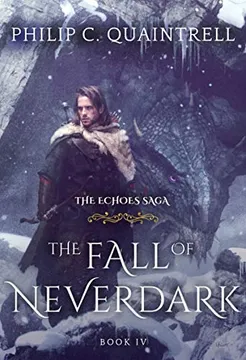
The Fall of Neverdark is widely praised as a strong start to the second trilogy in The Echoes Saga, set 30 years after the original series. Readers appreciate the improved prose, compelling new characters like Inara, Alijah, and Vighon, alongside beloved returning ones. Many highlight exciting battles, rich world-building, and a spectacular ending. Common criticisms include limited character depth and slow pacing early on. Overall, most readers rate it highly and eagerly anticipate the next installment.
Characters
Alijah Galfrey
The restless relic hunterAlijah is a half-elf rogue, a gifted archer, and an investigator of the lost First Kingdom. His curiosity is not scholarly detachment; he wants evidence that his life can matter on its own terms, beyond the fame of his parents and sister2. He uses wit, gambling, and risk to keep control of situations that make him feel overlooked. His closest loyalty is to Vighon3, whose practical courage balances Alijah’s appetite for discovery. He is also deeply attached to his family, though he has difficulty admitting how much he needs them. His resourcefulness makes him effective, but his pride and fear of dependence can turn necessary distance into isolation.
Inara Galfrey
The young DragornInara is a half-elf Dragorn bonded with Athis15, trained by Gideon Thorn5 and raised within a family of celebrated heroes. She is brave, perceptive, and inclined to act when others are still debating. Her confidence is real, but it sits beside the pressure of believing she must live up to her family’s history. Inara’s bond with Athis15 gives her strength and perspective, while her love for Alijah1 keeps her emotionally tied to mortal lives and ordinary family needs. She can be impatient with evasion, especially from people she loves, yet her sense of duty is not cold. She continually tries to protect people without surrendering her capacity for compassion.
Vighon Draqaro
Alijah’s steadfast friendVighon is a northern fighter who follows Alijah1 into danger with the loyalty of someone who has chosen his own family. He prefers physical action to scholarship and often punctures solemn plans with blunt humour. Beneath that roughness is a man shaped by grief, poverty, and years in a criminal world he once accepted as a route to security. His protective instincts are powerful, sometimes to the point of risking himself before anyone asks. Vighon’s friendship with Alijah1 rests on shared history and hard-earned trust; his feelings for Inara2 add an awkward tenderness he does not know how to handle. His courage grows most clearly when frightened people need someone to stand between them and danger.
Hadavad
The enduring mageHadavad is a five-hundred-year-old mage who has survived by transferring his essence into new bodies. He has spent centuries opposing the Black Hand, gathering knowledge and keeping much of it compartmentalised for safety. His long experience gives him formidable magic and a wary understanding of institutions, but it also encourages secrecy and a tendency to decide what others are ready to know. He treats Alijah1 as someone capable of learning rather than as a tool, even when his methods make that trust difficult to see. Hadavad is driven by the belief that preventing dark magic from spreading is worth personal sacrifice, though the cost of living so long has left him carrying more losses than he reveals.
Gideon Thorn
The measured Dragon MasterGideon is the Master Dragorn, a veteran of the War for the Realm and Ilargo’s16 human companion. He leads through preparation, restraint, and a strong commitment to protecting civilians before territory. His calm manner can make his decisions seem opaque, especially when he keeps information from people he cares about. Gideon sees the Dragorn as guardians rather than rulers, a principle that shapes his reluctance to impose peace by force. He is capable of formidable combat, but his greatest struggle is often ethical: how to stop a threat without becoming the kind of power he opposes. His affection for Inara2 and his respect for Alijah1 complicate the distance his office requires.
The Crow
The hidden architectThe Crow leads the Black Hand through a mixture of ancient magic, strategic patience, and carefully rationed truth. He presents himself as a visionary opposing the failures of kingdoms and inherited power, but he is willing to manipulate, enslave, and sacrifice people to realise his design. His ability to anticipate events gives him an air of inevitability that unsettles even experienced opponents. He understands ambition and fear well enough to turn them into political tools. The Crow’s deeper motives are difficult to separate from his certainty that he alone can build a better world. That certainty is both his strength and the source of his moral danger.
Doran Heavybelly
The reluctant dwarven princeDoran is a dwarf, monster hunter, and former prince who left Dhenaheim after growing sick of clan warfare. He is loud, fond of ale, quick to anger, and more perceptive than his tavern habits suggest. His years as a ranger gave him a different idea of honour from the one he inherited: protection matters more than winning for a clan. Returning to the dwarven kingdoms forces him to confront the people and obligations he hoped to leave behind. Doran’s humour often shields discomfort, but he is not indifferent to the consequences of his choices. His bond with his brother Dakmund reveals a tenderness and guilt he rarely shows in public.
Galanör Reveeri
The watchful elven rangerGalanör is an elven ranger, an accomplished swordsman, and a longtime ally of Hadavad4. He reads threats patiently and rarely reveals more than he believes necessary, which can make him seem aloof. His experience gives him a broad view of history, but he is also attentive to the people beside him and willing to risk himself for them. Galanör’s relationship with Alijah1 moves between mentorship and friction as the younger half-elf resists being managed. His discipline contrasts with Vighon’s3 improvisation, though he respects the northerner’s instincts. He serves as a bridge between present investigations and the long memory of the elves.
Reyna Galfrey
The elven ambassadorReyna is an elven princess, a skilled archer, and an experienced ambassador married to Nathaniel10. She can be warm and affectionate with her children, yet formidable in negotiations when rulers mistake courtesy for weakness. Reyna believes diplomacy is active work: listening closely, recognising displays of power, and refusing to let a disagreement become a war by default. Her family’s history gives her influence, but she does not rely on status alone. She trusts Doran7 as a friend and sees the human costs behind political choices. Her concern for Alijah1 remains strong even when he has shut her out.
Nathaniel Galfrey
The immortal GraycoatNathaniel is a former Graycoat knight, an ambassador, and Reyna’s9 husband. Asher’s13 magic has left him ageless, but he remains practical and deeply committed to his family. He can move easily between diplomacy and combat, drawing on a soldier’s training when peaceful options fail. Nathaniel often uses humour to soften tension, though he is keenly aware of the dangers around his children. He respects Reyna’s9 judgment and tends to support her decisions without needing to dominate the conversation. His relationship with Alijah1 is marked by worry and patience, especially when his son chooses distance instead of explaining himself.
Karakulak
The ambitious orc kingKarakulak rises from the Born Horde with a clear appetite for unity and dominion. Unlike many of his people, he values strategy as much as strength and recognises that the tribes will not conquer the surface through brute force alone. His alliance with the Crow6 gives him tools he distrusts but believes he needs. Karakulak’s ambitions are not merely personal: he wants the orcs to reclaim a world from which they were driven and to be remembered by their enemies. Yet his growing reliance on magic threatens the culture and authority he claims to defend. He is intelligent enough to understand that allies may also be future rivals.
Tauren Salimson
The southern councillorTauren is High Councillor of Tregaran and a former freedom fighter known as the White Owl. He grew up on the streets and understands how political decisions reach ordinary households. His experience makes him a persuasive leader, but his loyalty is intensely personal: he treats the Galfreys9 as family and takes responsibility for the people under his care. Tauren is capable of swift action and skilled combat, yet his instincts are also protective and practical. At home, he is a devoted husband and father to Isabella and Salim. His warmth does not soften his resolve when people are threatened.
Asher
The legendary rangerAsher is a celebrated ranger whose actions helped end the War for the Realm. He is remembered by Gideon5, Reyna9, Nathaniel10, and others as both a skilled fighter and a good man who placed other lives ahead of his own. His weapons remain in the Galfrey9 household long after his death, shaping Alijah’s1 sense of inheritance and identity. Asher’s legend carries emotional weight because it is not simply heroic history; his sacrifice altered the lives of people who loved him. The contrast between the remembered man and the stories now told about him drives the characters’ uncertainty about what a hero owes the world.
Malliath
The exiled black dragonMalliath is the oldest living dragon, a powerful and isolated creature who spent a long period in exile and captivity. His size and fury make him terrifying to those who encounter him, but his history includes repeated attempts by others to control his life. Dragons and riders interpret him differently: as a threat, a lost elder, or a being who has been denied the chance to heal. His connection to Alijah1 becomes central to the story’s questions about agency and shared pain. Malliath is not easily reduced to a weapon or a monster, even when his actions make him dangerous.
Athis
Inara’s red dragonAthis is Inara’s2 red dragon companion, linked to her through a bond that shares thought, feeling, and strength. He is protective, wise, and fond of teasing her, though his humour never weakens his attention to danger. Athis values patience and tends to see problems across a longer span than Inara2 can manage in the heat of the moment. He respects the responsibility of the Dragorn while insisting that compassion and independence still matter. His bond with Inara2 makes him both her closest confidant and a powerful partner in battle.
Ilargo
Gideon’s green dragonIlargo is Gideon’s5 green dragon partner and a respected figure among dragon-kind. He shares Gideon’s5 thoughts and physical vulnerability, often offering a steadier perspective when the Master Dragorn becomes overwhelmed by responsibility. Ilargo is confident, protective, and deeply committed to the people whose lives depend on the Dragorn. His strength in battle is matched by an understanding that restraint can be as important as force. The bond between Ilargo and Gideon5 is intimate without being simple: each challenges the other and carries the other’s pain.
Elloria Sevari
The keeper of IlythyraElloria governs the hidden elven refuge of Ilythyra and is Reyna’s9 sister. She is gracious toward refugees but observant about the people who enter her home, noticing what they conceal from one another. Her command of magic allows her to offer practical help, not just shelter. Elloria respects the complexity of family ties and does not demand that Alijah1 perform an identity he does not accept. She moves carefully between protection and intervention, offering what is needed without claiming to solve every conflict.
Russell Maybury
The retired werewolf rangerRussell owns the Pick-Axe tavern and once served as a ranger. He is a werewolf who has built a peaceful life around food, hospitality, and his dog Nelly, while remaining ready to defend others when trouble arrives. His physical strength is formidable, but his instinct is to protect rather than dominate. Russell’s old friendship with the Galfreys9 gives him a place in their family’s extended circle, and his care for Vighon3 and Alijah1 is practical and affectionate. He does not need the glory of his former life to remain useful.
Queen Yelifer
The northern war-witchYelifer rules Namdhor and the northern kingdom of Orith after a violent struggle for power. She is hard-edged, suspicious of outside interference, and convinced that territorial control is essential to security. Her history has made her adept at surviving political challenges, but it has also narrowed her willingness to trust diplomacy. Yelifer’s relationship with the Ironsworn complicates her authority, leaving open questions about whether she controls the gang or depends on it. She is a formidable ruler whose choices affect both the dwarves and the larger alliance.
Arlon Draqaro
The Ironsworn patriarchArlon is Vighon’s3 father and the leader of the Ironsworn, a criminal network that has spread through the northern towns. He presents himself as a respectable lord and businessman, using public legitimacy to conceal coercive power. His history with Vighon3 shows how he treats family as an extension of ownership rather than a bond requiring care. Arlon is patient enough to turn political disorder into opportunity and ruthless enough to punish disobedience. His influence means the northern diplomatic mission faces a threat that cannot be separated neatly from the lawful court.
Edrik Everard
Inara’s fellow DragornEdrik is a young Dragorn who travels with the golden dragon Aldreon22. Confident and competitive, he sometimes mistakes rank and certainty for wisdom. His rivalry with Inara2 gives their missions an edge, but his skill and commitment are real. Edrik is still learning how to judge danger beyond the lessons of training.
Aldreon
The golden dragonAldreon is Edrik’s21 golden dragon companion. Proud and daring, he shares Edrik’s21 taste for confident displays and aerial challenges. His bond with the young Dragorn21 gives them power and companionship, while their mutual boldness can make restraint difficult.
King Jormund
The ruler of Grey StoneJormund rules Grey Stone and the Ice Vales. He is a physically imposing king who takes pride in his people’s endurance and expects them to defend their home. His hospitality toward the Galfreys9 shows that he can be generous, but the threat to his city tests his instinct to stand and fight rather than retreat.
King Weymund
The displaced Lirian kingWeymund rules Lirian and the central kingdom of Felgarn. He is young by royal standards and still learning how to lead through crises that outstrip his resources. His willingness to receive refugees shows concern for people beyond his own court, while the destruction of his capital forces him to rely on allies.
Plot Devices
The damaged prophecy
A fragment that directs eventsAlijah1 discovers a skin scroll in a cave once associated with the Echoes. Its surviving lines mention a warrior resurrected in a fallen star, a dragon, broken chains, and a world shaped by war. The text is protected from further damage, yet much of it is already illegible. That incompleteness makes the prophecy a source of action and uncertainty: Alijah1 and his companions interpret it, travel to Paldora’s Fall, and put themselves in the path of the resurrection ritual. Gideon5 later finds that the scroll and the complete Echoes of Fate prophecy share a scribe, and the scribe appears able to perceive their observers.
Paldora’s fallen star
A well of concentrated magicThe star’s impact created a crater in the Undying Mountains, where rocks float and collide above powerful currents of magic. The Crow6 uses the site to conduct a resurrection ritual, taking advantage of energy strong enough to amplify ancient spells. Paldora’s Fall also draws the Dragorn’s attention, since its unusual effects resemble magic produced by many dragons gathered together. The crater is therefore both an environment and an engine: it allows the Crow’s6 plan to become possible, but its unstable magic makes any confrontation dangerous.
The forced bond
A weapon made from connectionThe Crow6 brands Asher13 and Malliath14 with ancient magic and binds the resurrected ranger to the dragon. He also links Alijah1 to them, causing the half-elf to feel their injuries and pain. Gideon5 later discovers that Alijah1 is naturally bonded to Malliath14 as well, which complicates the imposed spell and may provide a way to break it. The device turns connection into a battlefield: an attack on Malliath14 harms Alijah1, while Alijah’s1 feelings and choices may affect the dragon. Its magic raises the story’s central question of whether a bond can be separated from the coercion imposed upon it.
The underground passages
A route beneath every defenceThe orcs use ancient tunnels to move below the surface and emerge directly inside cities. Their routes bypass walls, patrols, and the ordinary warning systems of the six kingdoms. The tremors that precede attacks are initially mistaken for earthquakes, allowing the orcs to strike before defenders understand what is happening. The same underground geography appears in Vengora’s dwarven halls, where old workshops, hidden passages, Gobbers, and Dwellers complicate the diplomatic mission. Tunnels make the past physically present and give the invading army an advantage that conventional fortifications cannot easily answer.
The returning body
A life preserved for a planThe Crow’s6 Astari magic restores a dead person as a complete living being, rather than reanimating a corpse as a mindless servant. He uses that power on Asher13 and later reveals that he himself endured death and returned after ten thousand years. Hadavad’s4 original body is also restored, pulling his soul back from the host he has inhabited for centuries. The magic makes resurrection a tool for changing loyalty and identity, not a simple reversal of death. It asks whether a person returned to life remains free when another has chosen the circumstances and purpose of that return.
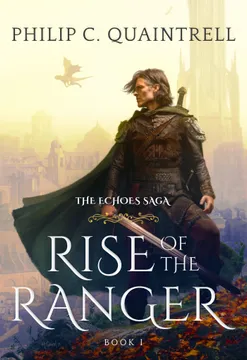
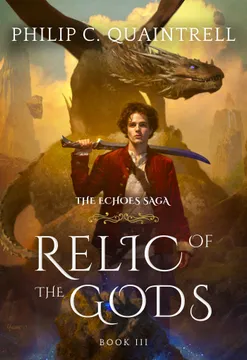
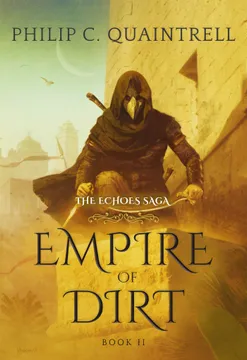
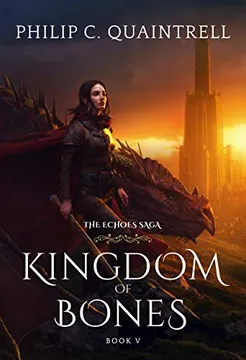
The Echoes Saga Series
About the Author
Other books by Philip C. Quaintrell
Download PDF
Download EPUB
.epub digital book format is ideal for reading ebooks on phones, tablets, and e-readers.








