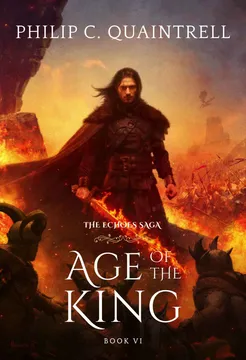


Plot Summary
Prologue
Ten thousand years before the present war, King Atilan rules from Ak-Tor and searches obsessively for a way to escape death. He sends his mage Naius to experiment on elves with the Orcyr elixir, hoping to restore their human memories and create an immortal race. Instead, the gas and elixir produce horned, violent creatures: the first orcs.
When a Dragon Rider breaks into the laboratory, Atilan uses portals to throw him into the monsters, where they tear him apart. The king’s discovery is both a new weapon and a mistake he cannot control. His pursuit of immortality has given the world an enemy that will outlive his empire.
Atilan’s experiment establishes the novel’s deepest irony: a ruler seeking endless life creates a people whose survival will depend on violence and whose existence he later wants undone. His contempt for elves and his willingness to treat living subjects as materials make his scientific ambition inseparable from political domination. The prologue also gives the present war a buried origin. The orcs are not an inexplicable evil, but the consequences of an ancient king’s attempt to master death. The Dragon Rider’s murder shows how quickly discovery becomes atrocity when power has no ethical limit, while the surviving record of that crime becomes the key to the war’s possible resolution.
Asher Returns to Namdhor
Thirty years after his death, Asher1 wakes in a Namdhor dungeon carrying shards of his own memories alongside those of Alijah2 and the ancient dragon Malliath.8 Confused and unable to control his reflexes, he attacks Vighon,3 escapes his cell, and disables guards before Gideon5 and the Galfreys6 find him. King Arlon Draqaro15 then announces that Queen Yelifer has died and claims her throne.
When soldiers move to chain Asher,1 he blacks out and reappears on a turret beside Gideon’s5 dragon, Ilargo.22 Gideon5 persuades him to return to custody without restraints. Asher’s1 return has revived an old ally, but his missing memories and violent lapses make him a danger even to the people trying to help.
Asher’s resurrection does not restore a stable self. It gives him a body with old training, memories belonging to others, and instincts that can seize control before he understands what he is doing. His first reunion with Vighon becomes an assault, making survival feel less like a gift than a new form of responsibility. Arlon’s accession compounds that instability: while Asher struggles to distinguish his own past from Malliath’s, the political order changes around him. The episode makes identity an urgent practical problem. Friends cannot rely on affection alone; they must decide whether Asher can be trusted, and he must learn whether his actions still belong to him.
Arlon Marches on Vengora
At the war council, Gideon5 warns that the orcs still outnumber Namdhor and that the mountains favor them. Arlon15 listens only long enough to announce an attack, ordering captured catapults to bombard the forest with burning orc corpses. Vighon3 tries to persuade his father15 that Asher1 may know how to end the war, but Arlon15 refuses to release him.
Meanwhile, Nathaniel’s7 desperation over missing son2 Alijah2 puts him at odds with Gideon,5 who is bound by the Dragorn order. Gideon5 turns instead to Doran,11 the exiled dwarf prince, asking him to seek help from Dhenaheim. Arlon’s15 public authority grows, but his private choices leave the defenders divided and the army moving toward a trap.
Arlon treats a battlefield victory as permission to spend more lives. The council is less a forum for deliberation than a stage on which he performs decisiveness, even when Gideon and Inara explain why the proposed assault favors the orcs. His refusal to hear Vighon also shows how power distorts family ties: his son’s knowledge becomes a threat to be contained rather than a resource. Gideon’s appeal to Doran recognizes that no single institution can solve the crisis. The chapter’s political conflict therefore mirrors its military one. Namdhor’s danger comes not only from the orcs, but from leaders who mistake command for judgment.
Reyna Pays to Wake
During Queen Yelifer’s funeral, Arlon15 sends the torturer Godfrey Cross to question Asher.1 Before Godfrey can begin, Asher1 overpowers him and finds Reyna6 waiting in the queen’s abandoned chamber. Reyna6 has ended her enforced sleep by releasing the magic that sustained her, leaving her awake but no longer able to wield it.
Gideon5 and the others join them, and Asher1 explains that Alijah2 is alive inside the Bastion, where The Crow9 is breaking him through pain and forced lessons. He also reveals that Malliath’s8 memories point to Haren Bain, the orcs’ birthplace, and a weapon that may undo them. When guards close in, Asher1 escapes over the keep’s cliff with Athis’s21 help.
Reyna’s awakening is an act of agency with a permanent cost. She does not simply recover; she gives up a source of power so she can act when her family needs her. Asher’s return similarly becomes useful only when he accepts the burden of carrying knowledge that hurts him to recall. Yet that knowledge offers no uncomplicated comfort: Alijah is alive, but The Crow has been shaping him for months within a distorted sense of time. The scene converts reunion into a decision about competing obligations. The Galfreys want to save their son, while Asher insists that the wider war may not wait for them to do so.
Three Roads from Namdhor
Gideon5 assigns separate tasks because the defenders cannot afford to wait for one solution. Asher1 and Vighon3 will travel east toward Haren Bain, carrying Malliath’s8 memory of the hidden weapon; the Galfreys6 will search the Vrost Mountains for the Bastion; and Doran,11 Galanör,12 and Russell13 will take proof of the orcs to Dhenaheim.
Vighon3 gives command of his Skids to Garrett, leaves Ruban16 behind, and takes the stolen sword of the north. He then slips out of Namdhor with Asher1 and supplies. Reyna6 and Nathaniel7 set off with Inara4 on Athis,21 while Doran’s11 party turns north with his Warhog, Pig. Their departures leave Gideon5 in Namdhor to confront the king15 and search for the captured Dragorn Arathor.23
The division of the party turns a crisis into parallel risks, but it also exposes what each character believes cannot be abandoned. Inara chooses duty to the threatened city even as her parents seek Alijah. Vighon leaves command and status behind because Asher’s knowledge may change the war. Doran must return to the family and hierarchy he once rejected. Gideon stays with the political and military burdens he cannot delegate. These choices make the group’s unity less sentimental and more demanding: loyalty now means accepting separation, trusting others to carry a different piece of the same problem.
Vighon Learns the Price
Vighon3 and Asher1 ride east, but Vighon’s3 squire,16 Ruban,16 catches up after learning that Godfrey Cross is pursuing them with Ironsworn. At an abandoned Watcher fort, the pursuers surround the three travelers. Asher1 and Vighon3 fight through the thugs while Ruban16 proves he can defend himself.
During the duel, Godfrey tells Vighon3 that Arlon15 arranged his mother’s infection with the Red Pox, using a planted contact to make her death look natural. Vighon3 kills Godfrey and cuts down the remaining attackers, then has to face what his fury has become. Ruban16 urges him not to kill his father,15 but Vighon3 cannot dismiss the revelation. He continues east with Asher,1 now carrying a private grievance alongside the mission.
The revelation changes Vighon’s anger from a response to cruelty into grief with a specific cause. Godfrey uses the truth as a weapon, but his confession also strips away Vighon’s last defense of Arlon. Vighon’s killing of Godfrey is not a clean release: it answers one act of violence with another and leaves him wondering what justice will require of him next. Ruban’s intervention matters because he speaks from experience rather than moral abstraction. He too has killed someone to protect a parent. Their conversation makes responsibility more difficult than either absolution or revenge, setting up Vighon’s later refusal to execute his father himself.
Doran Returns to Grimwhal
Doran,11 Galanör,12 and Russell13 capture an orc for proof, though Pig kills their first intended prisoner and they must pursue another. After surviving giant spiders in Vengora, the trio reach Grimwhal with a live captive and face Doran’s11 father, King Dorain. The king’s court doubts the evidence until the orc breaks free and attacks a lord.
Dorain summons the other dwarven kings, but Uthrad of Silvyr Hall refuses to march south, preferring to profit from the coming conflict. Dorain defies him, and Gandalir of the Stormshields agrees to guard Grimwhal while the Heavybellys go to war. Dakmund18 will lead the army. Doran11 reconciles with his brother,18 knowing that his return has helped commit Dakmund18 to a dangerous campaign.
Doran’s return tests whether he can serve his people without reclaiming the role he once fled. The orc’s escape turns a political argument into visible proof, yet proof alone cannot overcome the dwarven kings’ rivalries and self-interest. Dorain’s choice to defy Uthrad is both a strategic decision and an attempt to restore the family’s standing. That choice transfers its cost to Dakmund, who must lead the army Doran once commanded. The brothers’ affection survives, but it does not erase the burden Doran feels for having left. Their alliance is therefore not a return to the old family order; it is an uneasy chance for the younger brother to shape it differently.
Gideon Finds the Powder
Gideon5 enters Vengora alone to find Arathor,23 whose torture is causing the wounded dragon Thraden to suffer as well. He fights through orcs, discovers they are digging tunnels toward Namdhor, and finds a vast sealed store of wrath powder near the catapults. Following the orc king’s trail, Gideon5 reaches Karakulak’s10 cavern and finds Arathor23 held there.
Karakulak10 kills the captive in front of him rather than surrender him. Gideon5 throws a vial of wrath powder into the air as leverage, but Ayana20 opens a portal and pulls him out before the blast can destroy them. He returns with the warning about the powder, but Arlon15 refuses to withdraw his army and burns the catapults himself to force it back.
Gideon’s failure to save Arathor exposes the cost of his leadership more sharply than any public defeat. He risks himself because he cannot accept that a young Dragorn should die before being properly trained, but he still arrives too late. The discovery of the powder gives him information, not control: Arlon hears the warning and chooses to make it worse by destroying the catapults. Gideon’s emotional burden thus has two sources, personal grief and political impotence. His attempt to rescue one person also reveals the orcs’ larger strategy, showing that compassion can produce insight even when it cannot produce the outcome its practitioner wants.
The Bastion Opens
Inara,4 Reyna,6 and Nathaniel7 find the Bastion by following the Vrost Mountains east. Darklings pour through its ruined passages, forcing the family to fight upward before they can search the fortress.
Reyna’s6 enchanted bow and Inara’s4 magic clear their way, though the mother6 can no longer create magical shields. In the lower cells, they kill the Black Hand mages guarding a chamber written over with ancient glyphs. Alijah2 finally emerges, scarred and physically transformed by months of training and torture.
He leads them to The Crow’s9 rooms, then to the burned remains of Hadavad, his former mentor. Outside, Alijah2 finds the prisoners he had saved dead beneath the snow. He asks for his belongings, but gives his family little sign of what he feels.
The rescue is physically successful and emotionally incomplete. Inara can reach her brother, but she cannot read him as she once could; his stillness and guarded responses reveal that the familiar relationship no longer gives her access to his inner life. The dead prisoners sharpen this difference. Alijah had risked himself for them because The Crow promised they would be released, only to discover that their deaths were built into the lesson. His silence suggests not indifference but a self-protective discipline so extreme that even grief is kept private. The scene makes family love necessary, yet insufficient on its own to reverse damage imposed through prolonged coercion.
Malliath Meets Alijah
At The Lifeless Isles, Alijah2 slips away from his family and rows through a storm to Korkanath, where Malliath8 has returned to his old prison. He enters the ruined school alone and reaches the dragon, who first refuses to speak, then admits that he feels Alijah’s2 pain. They accept their bond, but its intimacy carries Malliath’s8 rage and long history of suffering.
Inara4 and their parents find them, and Reyna6 recognizes a jade Vi’tari scimitar as the cursed weapon once wielded by Valanis’s general. Alijah2 keeps it despite her warning, then insists that he and Malliath8 must return to fight the orcs. Inara4 joins them, unable to leave her brother2 or the realm to face the war alone.
Alijah’s bond with Malliath answers the loneliness created by the Bastion, but it does not promise safety. Their connection is mutual recognition between two beings shaped by captivity, yet Malliath’s accumulated rage can also become Alijah’s. The cursed scimitar intensifies that danger: it grants power and agency while carrying the history of an evil wielder. Alijah’s choice to keep it reflects his new conviction that tools take their moral meaning from use, a belief his family does not share. Inara’s decision to follow him is an act of love, but also a refusal to mistake his declaration of strength for proof that he is healed.
Faylen Finds Asher
Asher,1 Vighon,3 and Ruban16 reach the Adanae River and meet Faylen,14 the elven High Guardian who once loved Asher1 and is now married to Nemir.19 Their reunion is tender but restrained; Asher1 accepts that she has built a life without him. Faylen’s14 party takes them upriver and then into The Spear, where Malliath’s8 memory guides them through unmarked caverns.
A four-armed, magic-resistant sentinel guards Haren Bain’s doors. Asher1 uses his night vision to fight it after the group extinguishes their light. They force open the doors and enter the ancient laboratory, where the first orcs were made. The sentinel climbs back after them, so the group has to leave before they can fully understand the hidden weapon.
Asher’s reunion with Faylen asks him to accept a life that continued without him. His first impulse is longing, but he does not turn that longing into a claim on her; he recognizes her marriage and makes room for friendship. That restraint contrasts with his physical instincts, which remain difficult to control. The journey into Haren Bain places this personal boundary beside a larger one: the group must rely on Asher’s memories without treating him as infallible. The sentinel’s resistance to magic forces them to confront the ancient world with ordinary blades and their own bodies, a fitting threshold before they encounter the source of the orcs.
The Weapon Escapes Haren Bain
Beyond Haren Bain’s doors, the group finds the laboratory where Atilan transformed elves into orcs. Asher1 recalls that a Dragon Rider saw a weapon hidden inside a warded stone table. Elder Celeqor24 tries to decipher the glyphs, but feral descendants of the first orcs emerge from the cavern darkness and attack.
With the group nearly surrounded, Celeqor24 breaks the table and frees a stone-encased object. He then spends his only portal crystal to carry everyone to the Iron Valley, where they escape the orcs but lose their horses. The object is still sealed, and Celeqor24 collapses from the strain of magic. Asher1 returns to Namdhor with a weapon nobody yet knows how to use.
The expedition succeeds by abandoning the idea of perfect understanding. Celeqor cannot safely open the ward, and the feral orcs eliminate the time needed for careful research. Breaking the table is a dangerous compromise that preserves the artifact but prevents the party from knowing what they have taken. The escape also costs their horses and exhausts the elf whose magic saves them. Knowledge here is not gathered in a clean laboratory; it is wrested from a place where the original crime remains alive in its descendants. The sealed object becomes a promise and a burden, carrying the possibility of victory without any guarantee that its power can be controlled.
Vighon Claims the Crown
As Arlon15 prepares to crown himself, Vighon3 invokes the northern law that permits a challenge, though the king15 chooses Sir Borin the Dread25 as his champion. Asher1 identifies Borin25 as a golem assembled from dead bodies and warns that ordinary wounds will not kill him. Vighon3 fights anyway, drawing Borin25 onto the ice of the King’s Lake.
He breaks the ice beneath the golem,25 sending it into the water, then survives long enough for the people to accept him as their king. Arlon15 tries to attack his son3 afterward, but Alijah2 stops him with magic. Vighon3 refuses to execute his father15 and sends him through Namdhor in chains, leaving the people to judge the man who ruled them through fear.
Vighon’s challenge begins as a demand for justice over his mother’s murder, not a bid for power. The law converts that personal grievance into a public contest, and Borin’s monstrous construction makes the challenge a test of ingenuity rather than strength alone. Vighon wins by using the lake, not by overpowering the golem. His refusal to kill Arlon marks a crucial distinction between justice and revenge, though it does not protect his father from the people’s judgment. The crown therefore arrives as a consequence Vighon did not seek. His first exercise of authority is to resist the temptation to make his own grief the law of the realm.
The Vale Splits Open
As Vighon’s3 crowning gathers refugees near the King’s Hollow, the ground erupts and opens a vast hole in the White Vale. Orcs pour from tunnels beneath the Namdhorian army, while giant spiders and a stonemaw follow. The attack catches the defenders between the new force and the enemy already in front of them.
Gideon5 learns that the orcs planned to use the stonemaw and had dug beneath the army. Doran’s11 Heavybelly force arrives from Vengora and crashes into the orcs’ flank, while their chariots widen the attack. The surprise brings the dwarves into the war, but the stonemaw tears through both sides, and the battlefield becomes a struggle to keep the orcs from the fleeing civilians.
The eruption makes visible what the earlier tunneling and wrath-powder stores had concealed: the orcs have not merely retreated into the mountains, they have changed the battlefield itself. The defenders’ lines fail because their mental map of the war is wrong. Doran’s arrival answers the need for an alliance, but it cannot instantly restore control; the dwarves enter a battlefield already being reshaped by the stonemaw. This moment complicates the idea that courage or reinforcements alone can reverse a crisis. The protagonists need coordination across species, and they must protect ordinary people even while the military contest threatens to swallow them.
Atilan’s Weapon Unmakes Orcs
The sealed artifact releases its black orb when Karakulak’s10 kick cracks the outer shell. Gideon5 and the other fighters surround the orc king,10 who has become unstable from The Crow’s9 elixir. Gideon5 finally kills him with Mournblade, but the battle continues. The orb rises and floods the White Vale with colored light.
Instead of killing the orcs, it transforms them: their monstrous bodies become scaled, horned people with dragonlike eyes and the ability to speak an ancient form of elvish. The new Drakes flee toward the Evermoore as the returning sun burns away the ash clouds. The weapon ends the orc invasion, but leaves the victors facing a people they have never encountered and must now decide how to treat.
The weapon does not simply destroy an enemy; it reveals that the enemy’s identity was imposed upon them. The Drakes inherit traces of elf and dragon, making the battle’s victory inseparable from the history of Atilan’s experiment. The transformation refuses a tidy moral ending: the orcs’ violence has been stopped, but their descendants are frightened survivors rather than a defeated army. Vighon’s new rule and Gideon’s intervention matter most in what follows, because military victory creates an obligation toward the transformed. The scene challenges the victors to distinguish the perpetrators of violence from people who have been made into instruments of it.
The Crow Raises a Leviathan
After the orc war, Alijah2 discovers that The Crow9 has gone to Dragorn, where the Black Hand excavated a Leviathan’s bones and carved resurrection glyphs into them. He argues that the island’s people are expendable, while The Crow9 describes the destruction as necessary for a new order. Inara,4 Gideon,5 Asher,1 Reyna,6 and Nathaniel7 arrive as The Crow’s9 Reavers attack.
Inara4 pushes through his spells and kills him with her Vi’tari blade. The Crow’s9 final act uses the Viridian Ruby to send his essence into the Leviathan’s bones. As the creature begins to grow flesh and rise beneath the city, the group flees to the shore and takes to the air, forced to face the danger he has left behind.
The Crow’s death does not settle the question of whether his vision can outlive him. Inara physically defeats him, but the resurrection spell transfers the threat into a body too large for ordinary political or military responses. Alijah’s argument that Dragorn’s population can be sacrificed also shows how The Crow’s training has altered his reasoning: he can repeat the language of peace while accepting mass death as a tool. Inara’s choice to kill The Crow is an act of protection, but it cannot erase the structures he has set in motion. The episode turns the apparent end of the war into a test of whether the protagonists can resist becoming instruments of the same logic.
Malliath Kills the Cerbadon
The Leviathan, a three-headed Cerbadon, tears through Dragorn as its people flee by boat. Malliath8 attacks first, while Ilargo22 and Athis21 distract the other heads. Alijah2 uses Reyna’s6 enchanted bow to blast open a hole in the Cerbadon’s damaged eye socket, then jumps from Malliath’s8 back so the dragon can dive inside its skull.
Malliath8 burns the creature’s brain from within and escapes before its central head collapses into the city. The survivors reach the mainland, but the island is devastated. Alijah2 leaves with Malliath8 rather than join the Dragorn order, while Vighon3 remains in Namdhor to rule. The Leviathan is dead, The Crow9 is gone, and the war has reshaped every relationship that survives it.
The Cerbadon’s defeat depends on collaboration without equality: the dragons can attack the creature’s body, but Alijah’s judgment and the enchanted bow create the opening Malliath needs. Their success confirms the power of their bond while making its danger harder to ignore. Alijah’s departure after the battle is not a simple rejection of family; he believes he and Malliath need distance from the violence and history of Illian. Yet the cost is another separation for the Galfreys and Vighon. The resolution therefore grants military survival without restoring the relationships to their earlier forms. Peace begins with people choosing different duties, not returning to a lost past.
Vighon Rules a Changed Realm
After three days of burying the dead and rebuilding, Vighon3 delays his coronation until the people are cared for. He sends Arlon15 through Namdhor in chains, offering him a chance to reach the lower town before the crowd can decide his fate. The people kill Arlon15 before he arrives, delivering the judgment Vighon3 refused to carry out himself.
At the coronation, Vighon3 accepts the sword of the north and the name of a new house. He commissions the rangers to clear orcs from the ruined kingdoms and asks Doran’s11 family to build an alliance. Gideon5 takes the Dragorn east for training, but Inara4 stays to guard Illian. Alijah2 leaves Vighon3 at dawn, promising no return date, and the new king turns to the work of ruling.
The resolution distributes responsibility rather than assigning one hero the power to repair everything. Vighon’s restraint toward Arlon contrasts with the people’s own judgment, though their violence leaves the king with an unresolved moral consequence. His decision to rebuild fallen cities and employ the rangers turns victory into administration, a less spectacular but essential form of care. The Dragorn’s departure also limits the protection the realm can expect, placing Inara in a new role beside the king. Alijah’s departure makes the ending emotionally unsettled: the world has survived, but the family at its center remains divided. The book closes on succession and repair, not restoration.
Epilogue
Malliath8 carries Alijah2 across the Hox to Erador, a land the half-elf2 believed empty. They find Valgala alive, its roads busy and its soldiers gathered beneath blue banners. Alijah2 lands in the city with Malliath8 and announces that he has come to free Erador from its ruler. When the king’s guards attack, Alijah2 and Malliath8 cut through them.
Alijah2 reaches the throne room and kills the king, then takes the crown. The journey he has just begun is no longer simply a search for healing or distance from The Crow.9 Alijah2 has started remaking a kingdom by force, and the prophecy that shaped his life has acquired a new country in which to unfold.
The epilogue turns the apparent closure of the war into a new political danger. Alijah’s intention to begin again is contradicted by the means he chooses: he arrives with Malliath, kills the king, and claims the crown before the people can judge him. The Crow’s training has not simply left scars; it has given Alijah a coherent language for conquest that he can mistake for liberation. His bond with Malliath offers power and companionship, but it also makes violence feel natural and effective. Erador’s survival expands the story’s world while sharpening its central question: can Alijah build peace without becoming the ruler he set out to replace?
Analysis
Age of the King asks whether a peaceful future can be built through methods that reproduce the violence of the past. Atilan creates the orcs while trying to conquer death. The Crow9 later seeks to remove kings and build a better order, yet he tortures Alijah,2 manipulates generations, and treats present lives as acceptable costs. Alijah2 absorbs this logic because it arrives with discipline, belonging, and an answer to his old fear of being insignificant. His transformation is therefore psychological as well as magical: the person who once felt left behind begins to believe that history has selected him to rule.
The book counters that grand design with smaller, embodied forms of responsibility. Reyna6 sacrifices her magic to act. Vighon3 refuses to make his father’s15 execution a private act of vengeance. Doran11 returns to a family he once fled, while accepting that his brother18 must lead. Gideon5 risks himself for Arathor,23 then learns that his order cannot protect the realm by preserving itself alone. These choices do not erase the damage, but they keep moral judgment attached to particular people rather than abstract futures.
The transformation of the orcs into Drakes is the clearest challenge to simple victory. Atilan’s device does not merely defeat an enemy; it reveals people beneath an imposed form. The battlefield ends with the survivors fleeing into the forest, leaving the victors with a responsibility they did not plan for. Vighon’s3 rule similarly begins not with triumphal conquest but with rebuilding, diplomacy, and the unresolved burden of Arlon’s15 crimes.
The epilogue refuses to let those lessons settle into reassurance. Alijah2 crosses into Erador believing himself a liberator, but his first act is to kill the king and take the crown. The novel closes by making its central question newly urgent: can power be used to end domination without becoming domination again?
Review Summary
Age of the King receives overwhelmingly positive reviews, averaging 4.55/5 stars. Readers praise its satisfying conclusion to the second trilogy of The Echoes Saga, highlighting exceptional character development—particularly Vighon Draqaro, Doran, and Alijah. The multi-POV structure, world-building, and action sequences are frequently celebrated. Many consider it the best entry in the series so far. Some critics note pacing issues in earlier sections and disappointment with certain character moments, but most agree the climactic finale and intriguing epilogue leave them eagerly anticipating the final trilogy.
Characters
Asher
Returned rangerAn old ranger and former Arakesh assassin, Asher returns to a world that has changed around him while his own mind is crowded with memories from Malliath8 and Alijah2. His trained instincts make him formidable, but they can also overpower his conscious intentions. He values action over speculation and tends to speak bluntly, especially when others are making decisions under pressure. His history with Reyna6, Nathaniel7, and Faylen14 reveals a quieter capacity for loyalty and affection than his guarded manner suggests. Asher is driven by the need to protect people and to make amends for violence he cannot undo, though he must learn that self-punishment is not the same as accountability.
Alijah Galfrey
Half-elf with a destinyAlijah is the son of Reyna6 and Nathaniel7, Inara’s4 twin, and Vighon’s3 closest friend. Before his captivity, he was restless and curious, often feeling overshadowed by his family’s achievements and his sister’s4 place among the Dragorn. The Crow’s9 training gives him discipline and a capacity for pain, but it also tries to replace personal love with abstract devotion to a future kingdom. His bond with Malliath8 gives him a sense of belonging and enormous power, while complicating his identity and judgment. Alijah wants to protect people and find a place where he can define himself, yet he is vulnerable to believing that a promised destiny makes extreme choices necessary.
Vighon Draqaro
Rogue turned leaderVighon is Arlon’s15 son, a northern captain, and a longtime companion to Alijah2. He grew up under his father’s15 harsh rule and learned to survive through wit, improvisation, and a refusal to trust titles. Beneath the dry humor is a strong sense of responsibility toward people who have been abandoned by the powerful. Vighon often acts before he has fully accepted what the action will cost him, but he is capable of restraint when revenge threatens to become the same kind of cruelty he opposes. His bond with Inara4 is affectionate and complicated, while his friendship with Alijah2 remains one of the deepest attachments in his life.
Inara Galfrey
Dragorn and twin sisterInara is Alijah’s2 twin, Reyna6 and Nathaniel’s7 daughter, and a Dragorn bonded with the red dragon Athis21. She is disciplined, brave, and accustomed to defining herself through service to the order. Her confidence is earned through combat and difficult choices, though she sometimes mistakes responsibility for the need to carry every burden herself. Inara understands her family deeply, especially the ways Alijah2 has felt overlooked, but his captivity makes that old closeness difficult to recover. Her loyalty to Athis21 and her affection for Vighon3 reveal a person trying to balance intimacy with duty. She is driven by the conviction that protecting people matters more than status.
Gideon Thorn
Master DragornGideon leads the Dragorn and is bonded with Ilargo22, the green dragon. A veteran of the earlier war, he is respected as a swordsman, teacher, and strategist, yet he privately doubts whether he has prepared his order for the dangers it faces. His reduced magical strength makes him rely on skill, potions, and Ilargo’s22 counsel. Gideon’s care for the younger Dragorn can make him protective to a fault, but he accepts that leadership sometimes requires trusting others with difficult choices. His deepest conflict is between preserving the order and protecting the wider realm, a conflict made harder by grief for those he cannot save.
Reyna Galfrey
Elven mother and ambassadorReyna is an elven ambassador, Nathaniel’s7 wife, and the mother of Alijah2 and Inara4. Her warmth is matched by formidable resolve, and she has spent much of her life protecting family and building ties across cultures. She is willing to surrender power when an action matters more than preserving it, though she does not confuse sacrifice with weakness. Reyna’s love for her children is steady, but she must learn to meet Alijah2 as he is now rather than only as the boy she remembers. Her relationship with Nathaniel7 combines affection with honest disagreement, and her old bond with Faylen14 remains a source of trust.
Nathaniel Galfrey
Father and former knightNathaniel is Reyna’s6 husband, father to Alijah2 and Inara4, and a former Graycoat knight. He is brave, loyal, and fiercely protective, but fear for his missing son can make him impatient with broader obligations. Nathaniel carries the discipline of a soldier and the vulnerability of a parent who believes he failed to be present when Alijah2 needed him. His anger at Gideon5 reflects both genuine grievance and helplessness. He is most persuasive when he moves beyond blame and acknowledges his own part in the family’s distance. His devotion to Reyna6 and both children gives his courage a personal center.
Malliath
Ancient black dragonMalliath is an ancient dragon whose long life has been marked by captivity, violence, and loneliness. His bond with Alijah2 offers the possibility of companionship, but it also joins the half-elf2 to a mind full of pain and old memories. Malliath distrusts humans and resents the magic that has repeatedly enslaved him. He can be protective of Alijah2 while remaining dangerous to anyone he perceives as a threat. His history makes his rage understandable, not harmless. Malliath’s central struggle is whether a bond formed through fate and shared need can become trust rather than another form of control.
The Crow, Sarkas
Prophetic necromancerSarkas, known as The Crow, is an ancient necromancer who has shaped events across millennia through prophecy, resurrection, and political manipulation. He sees himself as preparing a peaceful future, but his methods include torture, mass death, and the deliberate molding of Alijah2. His certainty about the future gives him a calm, unsettling manner and a willingness to treat present suffering as a price already justified. The Crow is not merely power-hungry; he believes history can be engineered toward a better order. That conviction makes him dangerous, because he can interpret almost any cruelty as necessary.
Karakulak
God-King of the orcsKarakulak is the ruler of the orc tribes, a powerful fighter who tries to hold a divided people together through fear, spectacle, and military success. He claims divine authority but depends on The Crow’s9 elixir, leaving his strength and judgment tied to another man’s design. His ambition is shaped by the desire to reclaim the mountains and the status his ancestors lost. Karakulak can inspire collective action, yet his rule relies on violence and constant demonstrations of dominance. The tension between his public image as a god-king and his private dependence makes him both formidable and vulnerable.
Doran Heavybelly
Exiled dwarf rangerDoran is a dwarf prince who left Grimwhal rather than continue fighting his own kin. He is loud, humorous, fond of drink, and happiest with a weapon in hand, but his warmth is matched by a genuine willingness to risk himself for others. Doran’s friendship with Russell13 and his uneasy trust in Galanör12 show that he can cross old divisions without pretending they do not exist. He is burdened by the family he left behind and by the consequences his choices impose on his younger brother18. Doran wants to do right without returning to the kind of power that once demanded blood from him.
Galanör Reveeri
Elven rangerGalanör is an elven ranger whose patience, precision, and long experience make him an effective partner on dangerous journeys. He often approaches conflict analytically, while Doran11 brings blunt instinct and humor. His friendship with Vighon3 develops through trust rather than shared background, and his willingness to accompany Doran11 into hostile dwarven territory shows that he takes loyalty seriously. Galanör values the present actions that can change events, even when others remain caught in inherited grievances.
Russell Maybury
Cursed werewolf rangerRussell is a longtime friend of Doran11 and Asher1, a tavern keeper whose werewolf curse forces him to manage the danger of his own body. His keen sense of smell and strength make him invaluable as a tracker and fighter. He is dryly humorous but understands the cost of losing control, which gives him empathy for Asher’s1 fractured instincts. Russell measures himself less by the curse he carries than by what he chooses to do with it.
Faylen Haldör
Elven High GuardianFaylen is the High Guardian of Elandril and a former love of Asher1. She is disciplined, perceptive, and capable of balancing personal feeling with leadership of the elven forces. Her reunion with Asher1 is marked by tenderness, but she does not deny the life she has built since his death. Faylen’s affection for him remains sincere without undoing her marriage to Nemir19. She is driven by responsibility to her people and by the belief that love need not become possession.
Arlon Draqaro
Ambitious northern rulerArlon is Vighon’s3 father and leader of the Ironsworn, a political operator who treats fear and loyalty as tools of rule. He is intelligent enough to plan patiently, but his ambition narrows his sense of whose lives matter. Arlon views family through inheritance and usefulness, expecting his son3 to serve the dynasty he imagines. His cruelty is not impulsive alone; it is often calculated, which makes him difficult to challenge and dangerous to trust.
Ruban Dardaris
Squire seeking purposeRuban is Vighon’s3 young squire, earnest and brave despite limited experience. He wants to prove useful and often volunteers before he has measured the danger. His past has taught him that protecting someone can require terrible action, leaving him more emotionally complicated than his youth suggests. Ruban looks to Vighon3 for guidance but gradually develops judgment of his own. His loyalty is practical: he carries supplies, follows through, and keeps moving when frightened.
Lady Ellöria
Elven leader and kinEllöria is an elven leader of Ilythyra and Reyna’s6 aunt. She is composed, politically perceptive, and able to command respect without wasting words. Her long view of family history informs her counsel, but she does not confuse age with infallibility. Ellöria supports cooperation among peoples while remaining alert to the risks of inviting armies and power into Illian.
Dakmund Heavybelly
Doran’s younger brotherDakmund is Doran’s11 younger brother, a thoughtful dwarf who has been pushed into military command despite earlier inclinations toward art and reflection. He is more adaptable than his family’s assumptions allow. His affection for Doran11 survives years of separation, even when Doran’s11 choices have left him with unwanted burdens. Dakmund hopes to lead Grimwhal differently, though he understands that reform will require patience and political skill as well as courage.
Nemir Helevyn
Elven captain and husbandNemir is Faylen’s14 husband and a captain among the elves. He is a skilled fighter, proud of his people, and initially wary of relying on human companions. His doubts arise from the stakes of the mission rather than simple prejudice, though they can sharpen into unnecessary suspicion. Nemir’s loyalty to Faylen14 and his willingness to fight beside strangers reveal a more generous character beneath his reserve.
Ayana Glanduil
Dragorn council memberAyana is an experienced Dragorn and a member of Gideon’s5 council, bonded with the violet dragon Deartanyon. She is measured and forthright, willing to challenge Gideon5 when emotion clouds his judgment. Her loyalty to the order is balanced by a deep concern for the individuals entrusted to it. Ayana’s experience makes her a stabilizing presence when the younger Dragorn face choices their training has not prepared them for.
Athis
Inara’s red dragonAthis is Inara’s4 dragon, a powerful red wyrm whose bond with her is intimate, protective, and often candid. He offers strength and perspective without treating Inara4 as incapable of making her own choices. Athis can be wary of Malliath8 and of the effects of dark magic, but he remains committed to standing beside his rider even when their judgments differ.
Ilargo
Gideon’s green dragonIlargo is Gideon’s5 green dragon and closest confidant. His ancient memory, tactical awareness, and dry wit help Gideon5 stay grounded, while his own concerns sometimes reveal the costs of their shared duties. Ilargo is protective without being merely obedient, willing to challenge Gideon5 when a decision risks both their lives.
Arathor
Captured young DragornArathor is a young Dragorn bonded with the blue dragon Thraden. He represents the vulnerable generation Gideon5 is trying to protect, and his capture forces the Master Dragorn to confront what his order’s training has failed to prepare its members to endure.
Celeqor
Elven elder and mageCeleqor is a young-looking but ancient elven elder whose magical knowledge helps the expedition interpret the ward at Haren Bain. He is scholarly and curious, yet willing to spend his strength when the group’s survival depends on it.
Sir Borin the Dread
Golem bodyguardBorin is Arlon’s15 enormous bodyguard, a physically terrifying presence who follows orders with little visible hesitation. His unnatural construction makes him a threat beyond the ordinary limits of a human opponent.
Plot Devices
The Crow’s prophecies
Future shaped by prophecyThe Crow9 uses foreknowledge and carefully placed prophecies to guide events toward Alijah’s2 birth and a future in which one ruler might govern the realm. The prophecies do not merely predict; they influence choices by making certain paths seem inevitable. Their power creates a tension between destiny and agency: characters may be acting freely, yet the conditions of their lives have been arranged by someone who claims to know what comes next. The device also makes The Crow9 difficult to oppose, because victories and setbacks may both serve his design.
The shared dragon bond
Memory shared across mindsAsher’s1 forced connection to Malliath8 and Alijah2 leaves him carrying fragments of both their memories, while Alijah2 later forms a natural bond with Malliath8. The bonds allow communication, heightened power, and access to histories no individual could otherwise know. They also blur the boundary between self and other, exposing characters to thoughts and instincts they did not choose. For Asher1, this causes memory gaps and violent lapses. For Alijah2 and Malliath8, the bond offers companionship but risks allowing old pain and rage to shape both minds.
The Moonblade
Breaks magical enchantmentsThe Moonblade is a magical dagger forged by Reyna6 and used by Inara4 to break the spell binding Asher1 and Malliath8. Its power later becomes crucial in breaking the ward around the weapon hidden at Haren Bain. The blade is small compared with the swords and dragons surrounding it, but it changes what magic can hold in place. Its recurring role ties family craft to practical resistance: the Galfreys’ work creates an instrument that can interrupt the plans of stronger, older powers.
Atilan’s orb
Transforms the orc populationHidden inside a warded stone table and then encased in bronze, the orb is an ancient device made to undo Atilan’s creation. When exposed on the battlefield, it emits colored light that transforms the orcs into scaled, horned people with elven speech and dragonlike eyes. The device does not simply kill its targets; it changes the moral terms of victory by revealing a people beneath the monsters. Its effect gives the war a resolution while creating new responsibilities for the survivors.
The Viridian Ruby
Transfers essence into bonesThe Viridian Ruby allows The Crow9 to transfer his essence into another body. He used it in his history with Hadavad, and it becomes central again when he activates the resurrection glyphs carved into the Leviathan’s bones. Killing The Crow’s9 physical body therefore does not immediately end his threat; the ruby carries his presence into the creature beneath Dragorn. The device links necromancy, possession, and the danger of assuming that a defeated body means a defeated enemy.
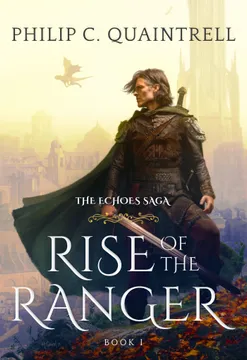
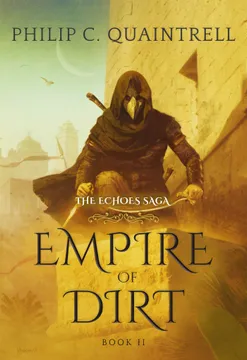
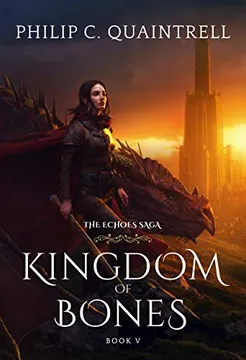
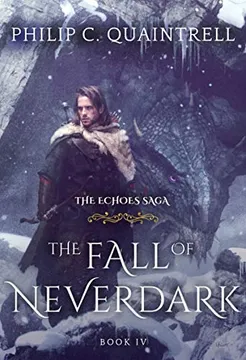
The Echoes Saga Series
About the Author
Other books by Philip C. Quaintrell
Download PDF
Download EPUB
.epub digital book format is ideal for reading ebooks on phones, tablets, and e-readers.








