

Plot Summary
Prologue
At the Bastion, a battered Alijah Galfrey1 tries to escape the Crow’s9 plans by stepping from a high balcony. The Crow9 reverses his fall with magic, then orders the enslaved ranger8 Asher8 to drag Alijah1 back to his cell. Alijah1 has lost his mentor, his uncle, and his companions, and believes death is the only choice left to him.
Instead, the Crow9 insists that Alijah1 is destined to rule and that suffering will prepare him for the task. Asher8 obeys, though Alijah1 begs him to resist. The half-elf1 is carried into darkness, alive and captive, while the Crow’s9 promise of a future king1 begins its cruel work.
The opening makes captivity more than a physical condition: Alijah is denied even the final choice of refusing the Crow. His attempted suicide is an act of agency, but the wizard turns it into another lesson in helplessness by reversing the fall. Asher’s obedience sharpens the wound because the man Alijah appeals to as a hero has been reduced to an instrument. The Crow’s language of destiny converts coercion into apparent purpose, a manipulation that will recur throughout the story. The scene establishes the central conflict between a future imposed from above and the difficult freedom to choose what kind of person to become.
A Prince in Chains
Doran Heavybelly5 returns to Grimwhal with elven ambassador Reyna Galfrey,6 her husband7 Nathaniel,7 and scholar Petur Devron,19 hoping to prevent war between Namdhor and the dwarves. His father, King Dorain, treats the exile as a traitor and sends the party to Karak-Nor, a prison mine, after accusing them of trespassing and spying.
Doran’s5 mother, Queen Drelda,20 and brother Dakmund21 secretly arrange their chance to escape, but insist the fugitives must first break out without obvious help.
Meanwhile, Inara Galfrey2 searches for refugees emerging from Vengora’s tunnels. She and Athis12 protect them from orcs, then lead the survivors north because the southern kingdoms have fallen and Namdhor is the nearest refuge. The war has begun to drive every storyline toward the same city.
Doran’s return puts private family injury inside a public crisis. His father reads his long absence as disloyalty, while Doran still hopes to avert violence rather than inherit the family’s habits of force. Drelda’s covert aid gives that hope a practical opening, though her warning makes clear that escape will endanger the family she remains behind to protect. Inara’s rescue of refugees offers a contrasting kind of authority: she earns trust by placing herself between civilians and danger. These two strands establish the novel’s governing pressure. Every character must decide whether inherited loyalties, political borders, or immediate human need deserves priority.
The Last Northern Refuge
Inara’s2 refugee caravan reaches Namdhor, where Vighon Draqaro4 confronts the city he fled and the father11 he fears. Lord Arlon Draqaro,11 head of the Ironsworn, has risen close to Queen Yelifer15 and privately admits that he has been poisoning her.
He also claims that a weapon lies inside the disputed Vengoran mine, information supplied by the Crow.9 Before Inara2 can secure a response to the invasion, orc assassins enter the Dragon Keep and kill King Jormund, King Weymund, their families, and their children.
Inara,2 Vighon,4 and Galanör14 find the bodies and kill the intruders, but Arlon11 turns the deaths into an argument for his own rule. The surviving refugees have nowhere else to go, while Namdhor’s leaders remain divided over whether the orcs are a real threat.
Namdhor’s apparent safety is compromised from within before its walls face a siege. The murders destroy the remaining political alternatives to Yelifer and leave Arlon positioned to turn emergency into succession. His poisoning of the queen makes his ambition more than a public pose, but Vighon’s private knowledge is difficult to convert into political proof. Inara, meanwhile, is expected to protect people inside a court that treats their deaths as leverage. The episode shows how violence can serve two purposes at once: the orcs remove leaders, while Arlon uses the resulting fear to consolidate power. The refugees’ survival depends on a city whose rulers may be as dangerous as its enemies.
The Isles in Ash
After escaping Velia’s destruction, Gideon Thorn3 reunites with his green dragon Ilargo13 on the Shining Coast and heads for the Lifeless Isles, expecting to rally the Dragorn. Instead, he finds Malliath has attacked their home and killed many riders and dragons, including several members of the council.
Rolan Baird18 blames Gideon3 for failing to prepare the order, then leads a breakaway attack against the orc army despite Gideon’s3 warning that the Crow9 is baiting them. The attack kills six more Dragorn and leaves Rolan18 and his dragon badly wounded.
Gideon3 finds them, learns that the orcs’ explosive wrath powder can kill dragons, and strips Rolan18 of his council position. The losses leave Gideon3 with fewer than thirty Dragorn and force him to seek help from elves while he tries to hold the order together.
Gideon’s authority is tested not by a single defeat but by his inability to protect the community that gives that authority meaning. Rolan’s rebellion grows from real losses and a demand for action, not simple malice, which makes their conflict a crisis of leadership rather than a personal feud. Gideon’s caution may preserve lives, yet delay also appears intolerable to those who have watched their kin die. The attack on the Isles makes the Dragorn vulnerable in a way their reputation has concealed. Their power cannot substitute for preparation, communication, or shared judgment. Gideon must lead not as an invulnerable hero, but as a grieving commander responsible for survivors who no longer trust him equally.
Lessons in the Bastion
Inside the Bastion, the Crow9 repeatedly tortures Alijah1 and demands that he absorb lessons about symbols, sacrifice, fear, love, and disciplined action. He argues that a ruler must outlast ordinary heroes and make choices for the many, even when those choices hurt the people he loves.
Alijah1 sees fragments of Malliath’s memories, including the dragon’s ancient wars and the isolation that shaped his rage. The unnatural bond among Alijah,1 Malliath, and Asher8 overwhelms his sense of self, while Asher8 remains a silent guard between him and the dragon.
When the Crow9 leaves the Bastion, Alijah1 knocks out a mage and tries to escape, but the Crow9 catches him and returns him to his cell. Even Malliath’s voice reaches him only briefly, offering a thin thread of connection amid the punishment.
The Crow’s lessons are designed to make obedience feel like moral growth. He takes recognizable virtues, such as courage and care for others, then defines them as willingness to accept his chosen sacrifices. Alijah’s resistance is weakened not only by pain but by the way each lesson forces him to watch strangers suffer. His bond with Malliath offers another form of pressure: the dragon’s memories bring power and belonging, but also expose Alijah to a history saturated with violence. The result is not straightforward indoctrination. Alijah remains skeptical, yet his hunger for connection makes the Crow’s imposed framework harder to dismiss. Education and abuse become indistinguishable inside the Bastion.
Escape Through the Mine
When the prisoners are marched out for questioning, Doran5 attacks their guards, and Reyna6 and Nathaniel7 help him overcome the rest. Drelda’s20 loyalists guide the party through Karak-Nor and provide a covered cart, supplies, and a trader’s medallion.
Her note points Doran5 toward Silvyr Hall’s archives, where records may explain the sealed Vengoran workshop and perhaps stop Namdhor’s army from marching into dwarven territory. Doran5 agrees to investigate rather than return to Illian, even though Grimwhal’s hunters will pursue him.
He disguises the party among merchants, gets them through Silvyr Hall’s checkpoint, and later sneaks Doran5 and Petur19 over the city wall. Their goal is precise but dangerous: find the archive record that reveals how to open the ancient workshop doors.
Doran’s escape changes his role from estranged heir to active mediator. He does not return to Grimwhal to reclaim status; he accepts a dangerous errand because the war between dwarves and humans could leave his brother, Dakmund, leading another front. The trader’s medallion makes commerce an unlikely tool of survival, granting passage where royal identity would attract suspicion. Petur’s scholarly knowledge also becomes useful beyond its usual setting, though Doran’s blunt judgment of him remains a source of friction. Their infiltration takes the political dispute out of the throne rooms and into the archives, where the past may reveal whether the present conflict is founded on a real prize or on deliberate deception.
The Ironsworn’s Circle
Vighon4 enters Namdhor’s underground fighting pit to question Godrick Cross, Arlon’s11 right-hand man, about the Vengoran mine. Cross refuses to betray Arlon11 and sends Vighon4 into the fighting circle, where Vighon4 defeats the larger Rek by breaking his hand and arm.
When Cross’s men move to overwhelm him, Russell Maybury22 intervenes, allowing Vighon4 to escape. Vighon4 gives his winnings to refugees gathered in the alleys, then accepts Arlon’s11 offer to explain the mine if Vighon4 becomes a Namdhorian captain.
Arlon11 equips him with a captain’s uniform and a poorly trained company, claiming that the city needs every defender. Vighon4 suspects his father11 has placed him where he may die, but accepts the rank because he can use it to organize the city’s defenses.
The fighting pit embodies the world Arlon made for his son: violence as entertainment, hierarchy as a tool, and mercy as a sign of weakness. Vighon wins through timing rather than size, then turns the winnings into food for refugees, redirecting the pit’s economy toward those it usually exploits. His acceptance of a captaincy is not reconciliation with Arlon. It is a tactical decision that lets him defend people with the authority available to him. This distinction matters because Vighon’s growth is measured not by becoming less angry, but by learning to use anger without letting his father dictate its purpose. He returns to the machinery of Namdhor on his own terms, though the danger remains real.
A God-King Is Forged
Karakulak,10 king of the orcs, wants more than conquest. He hopes to reshape his people, who are accustomed to rule by strength and worship of Gordomo. The Crow9 supplies green elixirs that temporarily increase Karakulak’s10 strength, speed, and intelligence, then helps stage a ritual that makes the transformation appear divine.
Karakulak10 drinks a vial, grows larger than any orc, and persuades the tribes that Gordomo has chosen him as God-King. When Dragorn attack the orc camp, Karakulak10 catches a wrath-powdered ballista bolt and throws it through a dragon, killing the beast. He later takes part in the assault on the Lifeless Isles’ survivors. The Crow’s9 potion gives Karakulak10 power, but its fading effects leave him dependent on further doses.
Karakulak is not merely a conqueror seeking land. He sees tribal rivalry and religious obedience as limits on what orcs might become, but chooses to solve that problem by making himself the object of worship. The Crow’s elixir turns a political performance into bodily evidence, allowing Karakulak to exploit his people’s belief in visible strength. Yet the miracle is temporary, and the need for repeated doses undercuts the freedom he claims to offer his race. His reforming ambition and his dependence on the Crow coexist uneasily. The ritual also exposes the novel’s recurring danger: a leader may genuinely want to change an unjust order while building a new order that gives him unchecked power.
The Song Opens Stone
At Silvyr Hall, Doran5 and Petur19 search the vast archives through the night, matching the workshop’s ancient glyphs to records from the Great War. Doran5 finds an account that explains the sealed doors: an elf and a dwarf must sing the song The Red Knight’s Lament together. Reyna6 and Doran5 perform it, and the doors open onto a long-abandoned smithy.
The workshop’s inscription names Moonblades, magical weapons forged jointly by dwarven craft and elven power. Reyna6 warns that the legends say an elf may die in the making. Before the group can decide what the inscription means, Petur19 reveals himself as Killian Torvaris, a Black Hand mage. He suspends Nathaniel7 with a spell and demands that Doran5 and Reyna6 forge a Moonblade for the Crow.9
The door’s solution is deliberately intimate: cooperation must be enacted, not merely declared. Doran’s memory of a childhood song and Reyna’s willingness to join him unlock a room that neither clan could enter alone. The discovery of Moonblades turns their diplomatic mission into a moral emergency, because the weapon’s creation may cost Reyna her life. Killian’s betrayal also reinterprets their journey: the party has been guided toward the workshop by someone who knows exactly what it contains. Scholarship, song, and craft all become instruments of power, but the decisive question is who controls their results. The archive preserves knowledge; it cannot determine whether that knowledge will serve peace or coercion.
A Blade of Moonlight
Killian holds Nathaniel7 in a painful suspended spell while Doran5 and Reyna6 follow the translated instructions for forging a Moonblade. Doran5 suspects that a smaller blade might spare Reyna6 some of the cost, so they make a dagger rather than a sword.
He melts down his own axe and sword for the steel foundation, while Reyna6 supplies the magic through song. The blade emerges as glowing opal fused to a human-bone hilt, and Reyna6 collapses, gravely weakened but alive.
Killian attacks the Namdhorian smiths and mages arriving at the workshop, so Doran5 throws the Moonblade through his shield and wounds him. Doran5 uses the blade to sever the spell holding Nathaniel,7 then seals Killian inside the workshop. Nathaniel7 leaves to turn Namdhor’s army back toward home.
The forging scene makes sacrifice tangible: Doran gives up the weapons that once defined his warrior identity, while Reyna spends the magic that sustains her. Doran’s choice to make a dagger is an act of care inside a process designed to demand the greatest possible cost. The Moonblade’s power does not erase the danger around it; it frees Nathaniel only after Killian’s control has been broken through direct resistance. Doran’s decision to imprison rather than kill Killian distinguishes justice from revenge, even when the mage has endangered his friends. Nathaniel’s departure then converts the weapon’s creation into a political consequence: the army that might defend Namdhor is still beyond the mountains.
The Crow’s First World
During another lesson, the Crow9 takes Alijah1 into a reconstruction of Ak-tor, the ancient capital of the world, and shows him the boy he once was. Alijah1 watches the Crow’s9 former self, Sarkas,9 grow up outside the walls of a magical city, then sees him write the Echoes of Fate.
The Crow9 explains that he created the prophecy to provoke the events that would eventually bring Alijah1 into existence. Alijah1 rejects the claim that a child’s birth can justify generations of deaths, but the revelation shakes his belief in his own ordinary life.
The Crow9 then places him before a room of undead assassins and forces him to fight for strangers being tortured. Alijah1 survives, but he cannot save everyone, and the Crow9 calls his partial success another step toward kingship.
The revelation turns the prophecy from a mysterious text into a deliberate intervention in history. The Crow’s claim that Alijah’s existence was engineered gives the captive a grand identity, but it also burdens him with a scale of responsibility no person could freely consent to. Alijah’s refusal to accept the logic of necessary deaths preserves his moral judgment even as the Crow tries to make that judgment seem childish. The lesson in combat extends the manipulation: the Crow defines care as a duty to strangers, then makes Alijah experience the limits of what one person can save. The scene asks whether a meaningful life can be built from a purpose assigned by someone else.
Namdhor Arms Itself
As refugees crowd Namdhor, Vighon4 organizes the inexperienced Skids and recruits surviving fighters from Grey Stone and Lirian. He gives them trenches, sharpened-log barricades, catapults, oil, and instructions to open the city’s temples to families driven from their homes.
General Thedomir16 initially threatens to leave rather than swear fealty to Arlon,11 but Vighon4 argues that the refugees have no safe country left. Arlon11 grants Thedomir16 command for the coming battle and promises him the title of lord, while insisting that only one crown will remain.
Thedomir’s16 soldiers kneel to Namdhor. Gideon3 arrives, confirms that the Dragorn have suffered catastrophic losses, and refuses to send the young survivors into battle. He instead dispatches Arathor24 to retrieve the army across Dhenaheim.
Vighon’s military work and political compromise are inseparable. Opening the temples asserts that safety belongs to the displaced, while accepting one crown may give those same people access to arms and a coordinated defense. The choice is ethically compromised because the new unity strengthens Arlon, a man Vighon knows to be ambitious and dangerous. Thedomir’s fealty is not affection for the Draqaros; it is a bargain made to protect his people. Gideon faces a parallel compromise when he sends Arathor away despite the danger at Namdhor. Leadership here means choosing among inadequate options, then accepting responsibility for the people who bear the consequences.
The First Line Breaks
Three thousand orcs approach from the west, and Vighon4 leads Namdhor’s small defense through the tiers of the city. He and the Skids fight beside Thedomir’s16 soldiers, while Gideon3 and Galanör14 hold the front and the dragons draw fire from the mobile ballistas. Vighon’s4 plan to funnel the attackers between sharpened logs slows the charge, but the defenders retreat tier by tier as the orcs climb over the dead.
Oil-filled barrels ignite at the next choke point, buying time, and Doran5 arrives astride his Warhog to help hold the line. Gideon3 and Inara2 destroy the ballistas that threaten the dragons. The western vanguard is eventually burned and scattered, but Namdhor loses hundreds of fighters. Vighon’s4 men survive the day, not the war.
The battle gives Vighon a public form of authority that Arlon’s appointment could not grant by itself. His men follow him because they see him share danger, not because of his family name. The tiered defenses make the city’s architecture a sequence of costly delays, buying time rather than promising safety. Each retreat forces the defenders to decide whether they still trust the plan. The victory is real, but its human price prevents easy celebration. This is the first time the refugees see that organized resistance can hurt the orcs; it is also the first clear measure of how few people remain to resist them.
The Moonblade Breaks Chains
As the larger orc army reaches Namdhor, the Crow9 releases Asher8 and Malliath and sends them to attack the city. Gideon3 confronts Asher,8 while the dragons battle overhead. Inara2 rides Athis12 into the fray and leaps onto Malliath’s back with the Moonblade. She drives the dagger into the dragon, breaking the magic that binds him to Asher.8
Malliath’s agony echoes through Asher,8 who collapses as the runes on his body flare and fade. Freed from the Crow’s9 control, Malliath turns on the orcs, tearing through their ranks and buying the defenders a chance to survive. Arathor’s24 returning army strikes the orc flank, while the elves of Ilythyra arrive with burning arrows. The orcs retreat toward Vengora, but seize Arathor24 as they flee.
The Moonblade’s decisive power is not simply its ability to pierce a dragon’s hide. Its force comes from the joint labor of dwarf and elf, and its use breaks a relationship imposed through coercive magic. Inara’s leap is therefore both a tactical act and an act of trust in a bond that cannot be proven safe in advance. Malliath’s reversal changes the battle, but not into a clean victory: his rage remains dangerous, and Arathor is captured in the retreat. The alliance of humans, elves, and dragons supplies the collective force the defenders lacked. Their survival depends on unity, but unity cannot undo the losses already suffered.
A King Takes the Crown
After the battle, Vighon4 returns to the dungeons to watch over Asher,8 who has been taken into custody by Arlon’s11 men. The queen’s death leaves Arlon11 poised to rule, and he claims that Sir Borin’s loyalty belongs to the crown rather than to Yelifer15 personally. He demands the Moonblade, threatening to keep Asher8 imprisoned if Vighon4 refuses to retrieve it.
Vighon4 resists his father’s11 order, but Arlon’s11 new authority casts a shadow over the victory. In the night, Asher8 wakes and attacks Vighon4 before recovering enough awareness to recognize him. Then he reveals that he knows how to win the war. The book ends with the orcs driven back but not defeated, Arathor24 missing, Reyna6 gravely weakened, and Asher’s8 knowledge still unexplained.
The military crisis gives way to a succession crisis without allowing the characters time to rest. Arlon’s claim turns the crown into a mechanism that can command even Sir Borin, while his demand for the Moonblade threatens to make a hard-won communal weapon his private property. Vighon’s refusal marks a sharper break from his father, yet he remains trapped in the institution Arlon now controls. Asher’s awakening offers the possibility of new knowledge, not reassurance: he is injured, politically confined, and only beginning to recover from enchantment. The ending gives hope a concrete source, but refuses to confuse a promising clue with a solved war.
Epilogue
Vighon4 wakes from a nightmare of Namdhor overwhelmed by bodies and Malliath’s fire. Two mages report that Asher’s8 wounds have been treated, though one resists their healing spells. Vighon4 keeps watch, believing the returned ranger8 may know what happened to Alijah.1
Arlon11 arrives and announces that Yelifer15 is dead and he intends to take the crown. He orders Vighon4 to retrieve the Moonblade, claiming it belongs to Namdhor. Vighon4 refuses to give him a clear promise. Then Asher8 wakes, briefly attacks Vighon,4 and regains enough awareness to say he knows how the war can be won.
The epilogue refuses the comfort of a settled victory. The orcs have been driven away from Namdhor, but Arlon turns the queen’s death into a new contest for power, and his demand for the Moonblade threatens to divide the allies who just defended the city. Vighon’s position as captain is now a moral trap: obedience would strengthen his father, while refusal may endanger Asher. The final revelation gives Asher agency after a long period of being used by others, yet leaves the content and reliability of his knowledge unresolved. The story closes by transferring suspense from battlefield survival to the question of who will control the next move.
Analysis
Kingdom of Bones tests what happens when every form of authority claims to serve survival. The Crow9 promises peace through a ruler strong enough to make brutal choices. Karakulak10 wants to elevate the orcs beyond their inherited limits, yet makes himself a god to achieve it. Arlon11 invokes unity while treating the refugees and soldiers as instruments of his own ascent. Their projects differ, but each turns other people’s lives into the price of a future that only the leader can define.
Against them, the novel builds a more difficult model of power through relationships that require mutual risk. Inara2 and Athis,12 Gideon3 and Ilargo,13 and the elf-dwarf partnership that forges the Moonblade all gain strength by sharing judgment and consequence. The weapon does not simply destroy magic; it breaks a bond created without consent. Its symbolic force is therefore ethical as well as martial. Unity matters because it is chosen and reciprocal, not because a single ruler declares everyone one people.
The book also refuses to make leadership look effortless. Gideon’s3 caution saves some lives but alienates Rolan.18 Vighon’s4 acceptance of command helps defend Namdhor but strengthens Arlon’s11 political position. Doran’s5 refusal to kill Killian preserves his moral distinction, yet leaves the mage’s fate uncertain. None of these choices is clean. The characters must act without knowing whether the future can be changed, especially when the Crow’s9 apparent foresight makes resistance feel prewritten.
Alijah’s1 captivity concentrates the novel’s central psychological question: can care survive when someone else defines its meaning? The Crow’s lessons exploit virtues Alijah1 already possesses, then recast them as obedience to his design. Alijah’s1 anger, curiosity, and desire for connection remain sources of resistance, though they also make him vulnerable. By ending with Asher’s8 recovered knowledge and Arlon’s11 new claim to the crown, the book leaves victory provisional. The defenders have shown that unity can break an imposed spell and turn an army back, but they have not yet escaped the political and emotional structures that made the war possible.
Review Summary
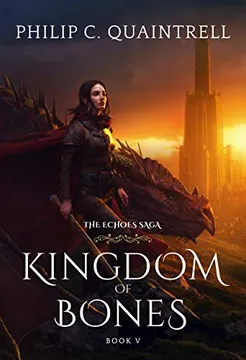
Kingdom of Bones receives overwhelmingly positive reviews, averaging 4.53/5 stars. Readers consistently praise Quaintrell's improved prose, compelling character development, and thrilling battle sequences — particularly the final 30%. Standout characters include Vighon, Inara, Asher, and Alijah, whose chapters draw strong emotional responses. Some critics note middle-book pacing issues and an overpowered villain, but most agree the series only improves with each installment. The Echoes Saga is frequently described as underrated, with many readers expressing eagerness to continue immediately.
Characters
Alijah Galfrey
The unwilling future kingA half-elf rogue and Inara’s2 twin brother, Alijah is quick-minded, resourceful, and more comfortable with improvisation than with authority. His instincts favor loyalty to particular people, especially Vighon4, rather than grand political causes. That personal scale makes him vulnerable to the Crow’s9 attempt to turn his compassion into a mandate to rule. Alijah resists being defined by prophecy, even as his connection to Malliath exposes him to memories and emotions far beyond his own life. He values curiosity and independence, but captivity tests whether he can preserve those qualities when every choice is framed as proof that he is unfit for the future others have selected for him.
Inara Galfrey
The fierce young DragornInara is a half-elf Dragorn bonded to the red dragon Athis12, and the twin sister of Alijah1. Her training gives her exceptional skill and responsibility, while her passionate nature makes her feel every threatened life as a personal obligation. She is drawn to protect refugees, her family, and the realm, sometimes at the cost of her own limits. Her bond with Athis12 provides counsel and steadiness, but it does not erase her grief or uncertainty. Inara also cares deeply for Vighon4, her former love, while understanding that her life with Athis12 occupies a different emotional place. She is learning to lead without mistaking self-sacrifice for the only proof of courage.
Gideon Thorn
The grieving Dragorn masterGideon leads the Dragorn order and is bonded to Ilargo13, a green dragon. Experienced in earlier conflicts, he nevertheless faces this war with the painful discovery that past heroism does not guarantee present readiness. He values restraint, preparation, and the protection of life, yet his caution is challenged by losses that demand immediate action. Gideon carries responsibility intensely and can mistake personal guilt for a useful form of leadership. His bond with Ilargo13 gives him a source of wisdom and strength, but the dragon also challenges his assumptions. Gideon’s central struggle is to remain a guardian rather than become either a despairing bystander or a commander who treats lives as expendable.
Vighon Draqaro
The reluctant northern captainVighon is a skilled rogue and fighter, shaped by years under his father11 Arlon’s11 criminal organization and by the friendships that helped him escape it. He is guarded, sardonic, and wary of authority, yet his instinct is often to protect those with less power. His feelings for Inara2 remain tender, even as he accepts that her bond with Athis12 defines her life differently. Vighon fears becoming his father11, but he also recognizes that rejecting every responsibility would abandon the people caught in Arlon’s11 world. His growth comes through choosing service without surrendering judgment, and through learning that leadership can mean sharing danger rather than demanding loyalty.
Doran Heavybelly
The exiled dwarf rangerDoran is a dwarf prince and ranger who left Grimwhal decades ago rather than accept the violence and expectations of his family. Blunt, humorous, and more tender than his rough manner suggests, he remains deeply attached to his mother20, brother21, and the people of Dhenaheim. He distrusts grand claims and prefers practical work, yet he is willing to risk himself to prevent a war between dwarves and humans. Doran’s knowledge of dwarven customs becomes essential to the journey into Silvyr Hall. His independence is not indifference: he has chosen a life outside the throne precisely because he wants to act according to conscience rather than inherited power.
Reyna Galfrey
The elven ambassadorReyna is an elven princess and ambassador, Nathaniel’s7 wife, and the mother of Inara2 and Alijah1. Diplomatic, patient, and politically perceptive, she tries to prevent conflict by understanding what each side believes it stands to lose. Her love for her family is immense, but it does not make her passive; she accepts risk when a loved one or a wider peace depends on her action. Reyna’s experience gives her insight into elven history and magic, while her position requires her to navigate people who mistake restraint for weakness. She embodies the difficult balance between private devotion and public responsibility.
Nathaniel Galfrey
The immortal GraycoatNathaniel is Reyna’s6 husband, a former Graycoat knight, and the father of Inara2 and Alijah1. He is an experienced warrior whose immortality has not diminished his loyalty or his capacity for fear. Nathaniel often acts with a practical calm that steadies others, but his devotion to Reyna6 can push him into dangerous choices. He believes promises matter, especially when people have entrusted their lives to him. His experience makes him a link between the old wars and the present crisis, while his family ties keep that history from becoming merely abstract.
Asher
The resurrected rangerAsher is a human ranger and former hero whose resurrection leaves him under the Crow’s9 magical control. He is a highly capable fighter with a history that includes both violence and an effort to live differently. His restraint and loyalty make him difficult for his friends to confront when he is being used against them. Asher’s presence tests their willingness to distinguish a person from the harm his body is being made to do. He carries the tension between past identity and present coercion, and those around him must decide whether hope for his return can coexist with the need to defend others.
The Crow
The ancient manipulatorThe Crow, also known as Sarkas, leads the Black Hand and claims to have seen the shape of future events. He combines patience with an unnerving willingness to inflict suffering, treating people as pieces in a design he believes will improve the world. His own childhood involved exclusion and exploitation, but he turns that history into a justification for controlling others. He values order and lasting peace, yet his methods destroy the freedom and trust that make peace meaningful. The Crow is persuasive because he understands real weaknesses in human institutions, then uses those insights to excuse his own domination.
Karakulak
The ambitious orc kingKarakulak rules the orc tribes and thinks more strategically than most of his followers expect. He wants to unite his people and raise them beyond the narrow values of strength and religious obedience. His intelligence gives him unusual political insight, but his ambition drives him toward self-deification and conquest. He is both a reformer and a tyrant in the making, capable of seeing that his people are manipulated while failing to recognize how the same pattern applies to him. His relationship with power is intensely physical: strength becomes proof of legitimacy, and dependence on magic threatens the independence he claims to offer.
Arlon Draqaro
The Ironsworn power brokerArlon is Vighon’s4 father, leader of the Ironsworn, and a powerful figure at Queen Yelifer’s15 court. He is disciplined, perceptive, and skilled at reading what people want, but he treats relationships as transactions and loyalty as something to manage. Arlon believes authority belongs to whoever can seize and hold it, not to inherited custom or public affection. His care for Vighon4 is difficult to separate from the desire to shape or use him. He can be charming when persuasion serves him and brutal when it does not. His ambition is matched by a talent for adapting quickly to political upheaval.
Athis
Inara’s red dragonAthis is Inara’s2 bonded dragon, a powerful red with sharp senses and a protective temperament. He shares perceptions and emotions with Inara2, offering steadiness when her fears threaten to overwhelm her. Athis is proud of his strength and can be possessive of his bond, particularly when Vighon4 draws Inara’s2 attention. His perspective is shaped by a dragon’s confidence and longevity, which sometimes makes human anxieties seem small to him. Their bond is affectionate and candid, built on teasing as well as trust. Athis supports Inara2 without making her decisions for her, even when her choices put both of them at risk.
Ilargo
Gideon’s green dragonIlargo is Gideon’s3 dragon companion, a green whose confidence and long relationship with the Master Dragorn3 provide a steady counterweight to Gideon’s3 self-doubt. He is a powerful fighter, but he also understands the importance of retreat and survival. Ilargo’s bond with Gideon3 makes their pain and judgment inseparable, so every risk carries consequences for both. He can tease Gideon3, challenge him, and still remain his closest counselor. His perspective helps Gideon3 distinguish pride from necessity, particularly when the desire to avenge the Dragorn threatens to overwhelm careful leadership.
Galanör Reveeri
The veteran elven rangerGalanör is an ancient elven ranger and a trusted ally of the Galfreys and Dragorn. Calm, observant, and formidable with twin scimitars, he often recognizes emotional truths that others are avoiding. His long experience makes him cautious about judging people solely by their worst actions, but he is not detached from the suffering around him. He offers Vighon4 friendship without trying to soften him into someone else, and he supports Gideon3 while still questioning the decisions that put the order at risk.
Queen Yelifer
The war-witch of NamdhorYelifer rules Namdhor and has held power through a long, turbulent northern civil conflict. Frail in body but sharp in judgment, she understands Arlon’s11 nature and sees the danger in his ambition. She values political strength, yet she is not fooled by titles or displays of loyalty. Her guarded relationship with Vighon4 reflects her ability to recognize qualities in people that their families or institutions overlook.
Thedomir Longshadow
The Ice Vales commanderThedomir is a hard-bitten soldier from Grey Stone who takes responsibility for the people and fighters who survive its fall. He is skeptical of Namdhor and unwilling to trust a new ruler without a practical reason. His loyalty is first to his people, especially his children, rather than to titles or distant crowns. He respects courage when it is joined to accountability and expects leaders to share the risks they impose on others.
Ayana Glanduil
The elven Dragorn councillorAyana is an elven Dragorn and Gideon’s3 trusted council member. Thoughtful and empathetic, she challenges Gideon3 when grief threatens to become self-blame and supports him when other leaders question his judgment. She also understands the limits of her people’s readiness for war, since Elandril has spent years turning away from violence. Ayana’s compassion is paired with political realism: she knows that good intentions alone cannot move armies or protect refugees.
Rolan Baird
The defiant Dragorn councillorRolan is a Dragorn councillor who believes the order must answer violence with immediate force. His impatience grows from genuine fear for the Dragorn and anger at their losses, but he distrusts Gideon’s3 caution and is willing to act without permission. Rolan’s conflict with Gideon3 exposes a real divide within the order over whether restraint protects life or simply gives an enemy time.
Petur Devron
The dwarven scholarPetur is a scholar from the All-Tower who specializes in dwarven history and writing. Nervous in dangerous situations but intensely curious, he uses his research skills to help Doran5 search the archives of Silvyr Hall. His bookishness can frustrate Doran5, yet Petur’s knowledge proves valuable outside the safety of a library. He represents the importance of patient study in a world where warriors often dismiss anything that cannot be solved with a weapon.
Queen Drelda
Doran’s protective motherDrelda is Doran’s5 mother and the queen of Grimwhal. Loving but pragmatic, she quietly resists the violence and rigid expectations that govern her family. She helps Doran5 escape while understanding that her actions may place her and Dakmund21 in danger. Her care does not depend on her son returning to the throne; she wants him to live freely, even if that means never seeing him again.
Dakmund Heavybelly
The dutiful younger princeDakmund is Doran’s5 younger brother and the heir expected to inherit Grimwhal. He has adapted to the demands of a violent court, though he retains affection for Doran5 and regrets the path their family has taken.
Russell Maybury
The loyal werewolf allyRussell is a tavern owner and werewolf who has fought beside Inara2, Vighon4, and their companions. He is practical, generous, and capable of meeting danger with humor. Russell helps Vighon4 escape the fighting pit and reminds him that friendship is a form of belonging, not a weakness.
Lady Ellöria Sevari
The elven allyEllöria leads the small elven community of Ilythyra. Her people value peace, but she recognizes that refuge and neutrality cannot always protect the vulnerable. She brings elven fighters to Namdhor when the crisis makes continued distance impossible.
Arathor
The returning Dragorn riderArathor is a Dragorn bonded to the dragon Thraden. He is brave, direct, and eager to meet danger alongside his fellow riders. Gideon3 relies on him to reach the Namdhorian army, while Arathor’s judgment sometimes challenges the Master Dragorn’s3 reluctance to risk the remaining order.
Ruban
Vighon’s eager young squireRuban is a young Namdhorian assigned to serve Vighon4. Earnest and eager to prove himself, he learns that being useful sometimes means accepting danger rather than remaining a messenger. His admiration for Vighon4 gradually becomes a practical loyalty.
Plot Devices
The Crow’s lessons
Captivity as instructionThe Crow9 uses repeated torture, combat trials, and philosophical lessons to reshape Alijah1 into the ruler he believes the future requires. Each lesson is attached to a concrete ordeal: strangers are placed in danger, Alijah1 is forced to fight assassins, or pain is used to test whether he can control his emotions. The device lets the novel examine how coercion can disguise itself as education. The Crow’s9 teachings contain recognizable moral insights, but he twists them toward obedience and sacrifice on his terms. Alijah’s1 skepticism and his growing bond with Malliath keep the lessons from becoming simple indoctrination.
The prophecy
History bent toward AlijahThe Echoes of Fate and a second, fragmentary prophecy shape decisions across generations. Characters read them as guidance, warning, or proof of destiny, while the Crow9 claims to have written the ancient text to set history moving toward Alijah’s1 birth. The prophecy turns personal identity into a political question: is Alijah1 important because of what he chooses, or because someone has arranged events to make him necessary? Its incomplete lines also keep the characters interpreting rather than simply obeying a clear instruction. The surviving clue about unity and broken chains becomes central to understanding the Moonblade and the bonds imposed on Asher8 and Malliath.
The dragon bonds
Shared power, shared painDragorn and dragons share senses, emotions, and injuries through lifelong bonds. Inara2 and Athis12 use their connection for perception, counsel, and battle, while Gideon3 and Ilargo13 rely on it for coordination and survival. The bonds make cooperation an embodied reality: a wound to one can injure the other, and a dragon’s confidence can steady a rider. Alijah’s1 natural connection to Malliath is complicated by the Crow’s9 spell binding the dragon to Asher8. That artificial arrangement creates confusion and suffering until the Moonblade breaks the imposed chains. The bonds make power inseparable from intimacy and risk.
The Moonblade
Unity made into a weaponA Moonblade is forged through the combined work of an elf and a dwarf, using elven magic and dwarven craft. The workshop at the end of the Vengoran mine preserves the instructions, and an elf and dwarf must sing together to open its doors. Killian forces Reyna6 and Doran5 to make one, but they shape a dagger rather than the sword he demands. The blade’s magic cuts through a spell that ordinary weapons cannot break, releasing Nathaniel7 from Killian’s control and later severing the Crow’s9 bond between Asher8 and Malliath. Its power depends on cooperation, but its creation exacts a serious cost from Reyna6.
Wrath powder
Explosive dragon-killing boltsThe orcs coat ballista bolts with a volatile powder that explodes on impact. It can crack stone and inflict wounds that even a dragon’s natural armor cannot withstand, making the sky dangerous for the Dragorn for the first time in generations. Gideon3 identifies the threat after seeing the weapons used against dragons, and the defenders must adapt by using fire to trigger or redirect the powder. The weapon changes the balance of the war: dragons remain powerful, but cannot simply fly over an army without risking instant death. Its danger forces the human defenders to coordinate their ground defenses with the dragons’ aerial attacks.
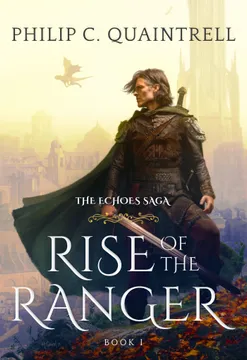
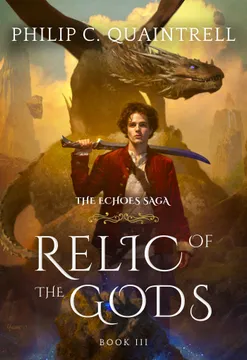
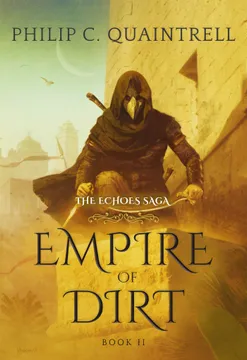
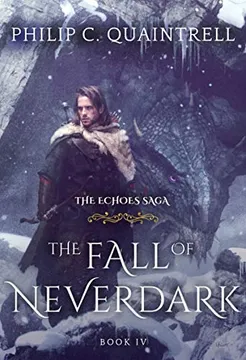
The Echoes Saga Series
About the Author
Other books by Philip C. Quaintrell
Download PDF
Download EPUB
.epub digital book format is ideal for reading ebooks on phones, tablets, and e-readers.








