

Key Takeaways
Use Reiki and the chakra map to explore the whole person, not symptoms alone.
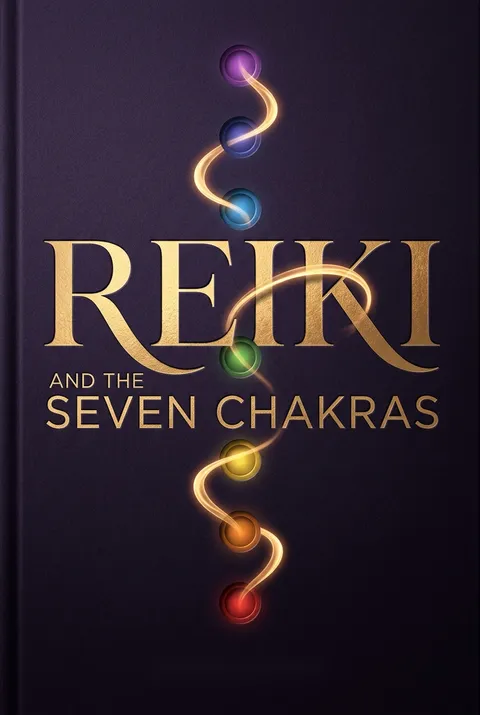
A whole-person lens. Reiki is the Japanese healing practice Richard Ellis presents as channeling universal life energy through touch. Its treatments commonly move through seven main chakras, energy centers that the book links to physical, emotional, and mental life. The author sees Reiki as a way to support self-awareness and change, as well as a source of comfort and healing. He describes it as a complementary practice that can be done through clothing and alongside other care.
A spiritual framework. The book treats energy and chakras as real features of human anatomy, but these are spiritual beliefs, not established medical findings. Its most useful practical invitation is to notice the person beyond a symptom. Reiki should not replace medical assessment or treatment.
The whole-person emphasis has an important parallel in person-centered care: listening, respectful touch, and a calm setting can help people feel attended to rather than reduced to a diagnosis. Those benefits do not establish the book's proposed energy mechanism, however. A careful reader can value Reiki as a reflective or comforting practice while keeping separate the questions of personal meaning, clinical effect, and medical explanation.
Treat powerful spiritual experiences as meaningful, not as proof of their cause.
One event, many readings. Ellis recalls drawing a Reiki symbol during an aircraft's takeoff roll, just before the pilot braked and explained that the plane needed more runway. Ellis felt his action and the stop were connected, while acknowledging that the connection could not be proved. The experience mattered to him without settling what caused the delay.
Interpretations diverge. On a mountain, Ellis experienced intense shaking as the release of held energy. Another witness wondered if he had epilepsy. He uses the difference to show how beliefs shape accounts of unusual events, and advises against letting other people's interpretations turn an experience into drama.
This is a useful distinction between the meaning of an experience and the evidence for a causal claim. Cognitive science shows that people naturally notice events that fit an expectation and overlook alternatives, especially during emotionally charged moments. That does not make the experience worthless. It does mean that a sincere conviction, a vivid bodily sensation, and an independently verified cause are different kinds of knowledge.
Build grounding before pursuing higher states or dramatic energy experiences.
Start at the base. In the book's chakra model, the root center, Muladhara, represents survival, security, trust, and connection to the body and earth. Ellis argues that unstable foundations can make spiritual exploration feel unmoored, so he places grounding before the pursuit of psychic perception or intense energy.
Return to ordinary life. After a powerful episode of shaking and emotional release at a Scottish gathering, Ellis felt unusually energized and worried about becoming detached from his body. He found that chopping and stacking wood, resting, and spending quiet time helped him settle. The book also suggests noticing physical sensations and walking slowly in a safe natural setting as ways to return attention to the present.
Grounding translates well beyond the spiritual vocabulary of the book. In psychology, attention to bodily sensation and the immediate environment can help people orient themselves during distress. The practical point is strongest when treated as self-regulation rather than proof of a chakra imbalance. Intense experiences deserve care, and persistent confusion, physical symptoms, or distress warrant qualified medical or mental health support.
Notice recurring emotional knots, but do not mistake metaphor for diagnosis.
Patterns consume attention. Ellis calls a persistent belief, feeling, memory, or fear a knot in the energy system: a metaphor for something held so tightly that it interferes with present life. Replaying a conflict, for example, can occupy attention long after the other person has left, leaving less energy for current choices. Reiki, in the author's account, offers a gentle setting in which such patterns may become visible.
A story of self-trust. Ellis describes Melvyn, who had been abused by a teacher as a child and later found himself repeatedly deferring to other people's judgments. Ellis connects the old experience with Melvyn's difficulty trusting himself. Recognizing a pattern helped Melvyn work toward forgiveness and reclaiming personal authority; it did not make the abuse his fault.
The metaphor of a knot can help people describe how unresolved experiences shape present reactions. Trauma-informed practice adds a crucial distinction: making sense of a pattern is not the same as recovering a definitive memory or establishing a cause. Nor does forgiveness have to be a condition of healing. Support from a trained clinician can be important when memories, abuse, or persistent distress arise.
Give exploration a secure base, then learn to trust your own senses.
Safety enables discovery. The second chakra, Svadhistana, is associated in the book with emotion, pleasure, creativity, sexuality, and personal boundaries. Ellis describes watching his young daughter explore her surroundings: she held his hand when unsure, then let go as she gained confidence. Finding and eating raspberries became a small lesson in independent discovery, with a trusted adult nearby.
Balance pleasure with discernment. The author sees this center as a place to learn how to experience desire without being ruled by it. He warns that chasing only pleasurable feelings can become a cycle of wanting the next relationship, possession, or experience to provide lasting happiness. The alternative is not suppressing desire, but developing a sense of self and clear boundaries while exploring.
The child's movement between a secure caregiver and independent exploration resembles attachment theory's idea of a secure base: confidence grows when support is available without taking over. That framework makes the example accessible without requiring belief in chakra anatomy. The book's emphasis on boundaries is especially valuable around sexuality and intimacy, where spiritual language should never obscure consent, safety, or the right to stop.
Claim personal power without turning agency into domination.
Power means self-direction. The third chakra, Manipura, represents will, identity, and the ability to act. Ellis distinguishes healthy authority, which lets a person make choices without controlling others, from distorted power expressed as aggression, submission, or a constant struggle to win. He links this center to the process of forming an identity distinct from the expectations of family or other authorities.
Notice where approval rules. The book describes how inconsistent or coercive authority can leave someone unsure of their own judgment. As an adult, that uncertainty may show up as dependence on praise or fear of criticism. Ellis's practical challenge is to examine whether a decision comes from one's considered values or from the need to please, dominate, or avoid disapproval.
This account closely resembles the psychological distinction between autonomy and control. People tend to function better when they experience choice and competence, not merely compliance or dominance. The book is most persuasive when it treats power as the capacity to act responsibly. Its chakra-based explanations of specific illnesses are much less secure and should not be used to diagnose digestive or other medical problems.
Keep compassion reciprocal: care should leave room for consent and receiving.
Love is not a transaction. The heart chakra, Anahata, sits at the center of the book's system, where the author imagines lower, bodily needs meeting higher, spiritual awareness. He describes an open heart as compassion and acceptance, not affection offered only when another person behaves as desired. Reiki, in his experience, can make painful feelings easier to approach with kindness.
Giving needs limits. Ellis also warns that constant helping can serve the helper's need to feel valuable, or leave the other person little room to act for themselves. Receiving care can be difficult for people who feel undeserving, yet healthy exchange requires both sides. His account of heart-centered healing is therefore not simply to give more, but to notice motives and allow care to move both ways.
The link between compassion and reciprocity is a valuable corrective to the idea that good people should endlessly give. In caregiving, boundaries protect both the recipient's agency and the caregiver's sustainability. Openness should not be confused with tolerating coercion or harm. A compassionate response can include distance, refusal, or professional help when those are the safest choices.
Let intuition inform decisions, then check it against observable reality.
Expression carries more than words. The throat chakra is associated with communication and creative expression; the third eye with reflection, imagination, and intuition. Ellis argues that tone and intention shape how speech is received, while intuitive impressions may arrive as feelings, images, dreams, or sudden understanding. He recommends learning to notice these signals rather than dismissing them automatically.
Keep discernment in the loop. The author also cautions against confusing fantasy with reliable insight. In his model, clear perception requires both receptive intuition and rational thought. A strong feeling can prompt a question or suggest a possibility, but it should not be treated as proof about another person, a future event, or a medical condition.
Intuition can be understood as rapid, often unconscious pattern recognition. It is useful when built from relevant experience, but it can also reflect fear, bias, or wishful thinking. Treating an impression as a hypothesis preserves its value while inviting a reality check. This approach respects inner experience without granting every vivid image the status of fact.
Use Reiki's structure as a scaffold, not an authority over the recipient.
Practice before interpretation. First-degree Reiki teaches self-treatment and hands-on sequences that generally move from the head down the body. Ellis presents these positions as a starting structure, not a rule that should override attention or intuition. He says a Reiki initiation connects a student to the practice; people may experience warmth, emotion, or vivid imagery, but dramatic sensations are not required to learn.
Keep the ethics visible. The book's five principles encourage daily steadiness, restraint, respect for teachers and elders, honest work, and gratitude. Its lineage story traces Reiki from Mikao Usui through Chujiro Hayashi and Hawayo Takata, while noting that teachings changed as they moved west. Practitioners should not diagnose, promise cures, or discourage medical care.
A simple sequence can reduce uncertainty for a beginner, much like a checklist in other forms of care. The safeguard is to keep the recipient's comfort, consent, and own account central rather than treating a hand position or initiation as a diagnosis. The book's shifting historical accounts also make humility appropriate: lineage can provide community and tradition, but it does not by itself verify a treatment claim.
Seek spiritual integration without abandoning the body that makes life tangible.
Wholeness stays embodied. The crown chakra, Sahasrara, represents spiritual connection and the possibility of loosening a rigid sense of identity. Ellis rejects the idea that spiritual growth requires rejecting the body or ordinary life. In his account, the full chakra system works together: grounding, emotion, agency, connection, expression, perception, and spiritual awareness all matter.
Bring practice into the world. The author extends this view to nature and shared crises. He suggests tending plants, noticing the natural world, and directing compassionate attention toward people affected by disasters rather than becoming consumed by panic. Such practices can shape how someone responds, even if the book's claim that thoughts alter a collective energy field remains a spiritual interpretation, not a demonstrated physical effect.
The insistence on embodiment is a useful guard against spiritual bypass, where abstract ideals are used to avoid grief, conflict, or physical needs. Attention to nature and compassion during a crisis can support humane action, but contemplation should not replace practical assistance or public policy. The strongest version of this teaching joins inward steadiness to concrete responsibility.
Analysis
This is a hybrid of memoir, spiritual instruction, and an introductory practice guide. Its narrative spine is Ellis's movement from skeptical curiosity through intense personal experiences toward teaching Reiki. The chakra sequence then gives those experiences an organizing map, while practical sections extend the map into treatment, self-reflection, and daily conduct. That combination makes the book memorable, but also difficult to summarize: its personal stories are offered as both testimony and evidence, and its framework ranges from metaphorical psychology to claims about physical disease and invisible energy.
The strongest material is not the claim that energy centers explain illness. It is the invitation to observe patterns of fear, self-doubt, desire, control, and care, then ask how they affect relationships and choices. The root-to-crown structure gives readers a sequence for reflection, while Ellis's repeated cautions about interpretation, over-identification with the healer role, and rigid technique create moments of epistemic humility. His distinction between an experience and other people's interpretations of it is especially valuable.
The book does not establish that Reiki energy, chakra imbalances, distant healing, or spiritual guides operate as described. Nor do its proposed links between chakras and specific illnesses warrant clinical use. A responsible adaptation therefore preserves the system as the author's spiritual model, not as verified anatomy or treatment evidence. Reiki can be approached as a complementary ritual for attention, relaxation, or meaning, provided that it does not delay evidence-based care. The most transferable synthesis is practical: use the map to ask better questions, remain curious about inner experience, stay grounded in the body, respect other people's agency, and distinguish comfort from cure.
Review Summary
Reiki And The Seven Chakras receives mixed reviews, with an overall rating of 3.87 out of 5. Some readers praise its accessibility and depth, recommending it for both beginners and experienced practitioners. The book is lauded for its insights into the chakra system and helpful meditations. However, some critics find it dull or lacking in unique information. Despite these criticisms, many readers appreciate the book's straightforward approach and its value in understanding the connection between Reiki and chakras.
People Also Read




Glossary
Reiki
Japanese hands-on healing practiceA healing practice associated with Mikao Usui that Ellis describes as channeling universal life energy through the hands. It is taught through instruction and initiation, and can be used for self-treatment or offered to others. The book presents Reiki as spiritual and complementary care, not as a religion, while its claims about energy and healing are not established medical findings.
Ki
Vital life energyIn Ellis's account, Ki is the life-force energy that animates living beings and flows through subtle channels and energy centers. The word is paired with Rei in the name Reiki. The book treats Ki as a real energetic presence; this is a spiritual concept rather than a quantity established by conventional physiology.
chakra
Subtle energy centerA chakra is an energy center in the spiritual anatomy described in the book. Ellis focuses on seven major centers running from the base of the spine to the crown of the head. Each is associated with particular emotional, psychological, and bodily themes, making the system a map for reflection rather than a medically validated diagnostic tool.
Initiation
Reiki attunement ritualAn initiation is the process through which a Reiki teacher attunes a student to the practice. Ellis describes the teacher as facilitating a connection to Reiki energy and placing symbols in the student's main energy centers and hands. Experiences during initiation vary widely; visions or strong sensations are not required for someone to learn Reiki.
lineage
Reiki teaching ancestryLineage is the chain of teachers through whom Reiki is passed. Ellis traces the Western tradition through Mikao Usui, Chujiro Hayashi, and Hawayo Takata, and describes lineage as a spiritual connection to Reiki practitioners and helpers. The book also notes that Reiki changed as teachers adapted and transmitted it.
knots in our system
Held patterns of distressEllis uses this phrase for beliefs, emotions, memories, fears, or expectations that a person continues to hold and that seem to restrict the free flow of energy. The term offers a metaphor for recurring patterns that consume attention or shape reactions. It is not a clinical diagnosis, and it should not be used to assign blame for trauma or illness.
Melding
Adapting to surroundingsMelding is Ellis's term for the subtle adjustment a person makes when entering a new environment. He describes people as taking in local rhythms, behavior, and sensory cues, then gradually becoming more at ease. The concept highlights how surroundings can affect perception and conduct, though the book interprets this adaptation through its spiritual energy model.
Kundalini
Potential rising energyKundalini is described as a concentrated potential located at the base of the spine, symbolized as a coiled serpent. In the book's account, it can rise through the chakra system and accompany changes in consciousness or strong bodily sensations. Ellis advises grounding after intense experiences. These descriptions belong to spiritual traditions, not established physiology.
surface vehicles
Layers of human experienceThe book uses surface vehicles for the physical, etheric, emotional, mental, will, and intuitional aspects through which a person experiences and interacts with the world. These layers are said to communicate through chakras and energy channels. The model helps organize the author's spiritual account of mind and body, but is not a standard scientific anatomy.
Ida, Pingala, and Sushumna
Three subtle energy channelsThese are the three principal channels in Ellis's chakra model. Sushumna runs vertically from the root to the crown, while Ida and Pingala spiral upward and intersect it at energy centers. The author associates these channels with the movement and integration of life energy. They are concepts from subtle anatomy, not structures identified in conventional physical anatomy.
The Famous Five
Reiki daily principlesThe Famous Five is Ellis's name for the five principles attributed to Mikao Usui. They guide practitioners toward steadiness, restraint, respect for elders and teachers, honest livelihood, and gratitude. In the book, the principles are ethical reminders to bring Reiki values into daily conduct, rather than techniques for performing a treatment.
Download PDF
Download EPUB
.epub digital book format is ideal for reading ebooks on phones, tablets, and e-readers.








