


Plot Summary
Charlene Brings the Manuscript
After six years without contact, Charlene meets the unnamed narrator at a restaurant and tells him about an ancient Peruvian manuscript predicting a gradual spiritual transformation. Its First Insight describes how people are beginning to notice meaningful coincidences, while widespread restlessness signals that ordinary life no longer satisfies them.
Charlene’s briefcase is stolen during their conversation, and she later spots a man matching the thief’s description watching them. The incident makes the manuscript’s suppression seem real, not merely rumor.
The narrator, who has been questioning his work with troubled children and his direction in life, recognizes that Charlene’s unexpected return resembles the very pattern she describes. After dreaming of strangers guiding him through a forest, he abandons his retreat at the lake and books a last-minute flight to Peru.
The opening makes the narrator’s uncertainty the engine of the adventure. He is not recruited by a settled belief but by a coincidence that unsettles his skepticism: Charlene returns precisely when he is questioning his life’s direction. The theft gives an otherwise abstract spiritual claim material danger, while the relationship argument heard in the restaurant links private dissatisfaction to the manuscript’s larger account of social change. The text treats coincidence as both evidence and invitation, asking the narrator to risk acting before he can prove what he suspects. That tension between doubt and participation will shape every later encounter.
The Historian's Dangerous Lesson
On the flight to Lima, the narrator meets Wayne Dobson, a historian who has read the first two insights. Dobson explains the Second Insight as a long view of Western history: after religious authority weakened, people turned to science and material progress for security, gradually forgetting the spiritual questions they meant to answer.
In Lima, the narrator sees a taxi following him and reaches Dobson’s hotel just as armed men chase Dobson through the streets. The narrator escapes into an alley, while Dobson falls behind under gunfire.
Wil James, a local guide connected to the manuscript’s first discoverer, Jose, hides the narrator and explains that Jose was murdered after sharing copies. Wil is seeking the missing Ninth Insight, and the narrator chooses to travel with him rather than flee Peru.
Dobson’s history lesson converts the narrator’s private restlessness into a cultural diagnosis: material security has become a substitute for meaning, not its answer. The ambush then gives that diagnosis a cost. The narrator’s choice to continue with Wil is not a calm endorsement of the manuscript; it is a decision made while fear and curiosity pull in opposite directions. Wil’s account of Jose’s death also establishes that knowledge is contested by institutions with power to punish its circulation. The book’s adventure plot therefore grows out of a conflict over who may interpret spiritual experience, not simply over who can find an artifact.
Viciente's Living Forest
Wil takes the narrator to Viciente, a remote estate where scientists study the Third Insight. Physicist Sarah Lorner explains that the insight describes the physical world as energy and treats heightened attention to beauty as a first step toward perceiving it.
In the research gardens, biologist Marjorie and nutritionist William Hains describe experiments in which attentive care appears to improve plants’ nutritional quality. At dawn, ecologist Phil Stone teaches the narrator to soften his focus; he sees pale fields around plants and people, and watches Sarah’s energy swell toward a philodendron.
He also notices energy shifting between Sarah and a hostile Peruvian scientist as they argue. Before Wil leaves, officials’ complaints threaten the estate’s research and tourism business, so the pair depart. Wil identifies the interpersonal contest as the Fourth Insight’s subject.
Viciente translates the manuscript’s claims into a staged experience: the narrator first hears a theory, then experiments with his perception, then observes conflict through the same energetic vocabulary. Beauty functions as a method of attention, training him to notice what his previous habits excluded. The scene also exposes the fragility of the research community. Its work depends on openness to unconventional observation, yet that openness leaves it vulnerable to officials who control access and legitimacy. The narrator’s new perception is therefore personal and political at once: learning to see differently also means encountering resistance from people invested in the old rules of evidence.
Cula's Energy Trap
On the road to Cula, the narrator and Wil stop for stranded Brazilian psychology professor Chris Reneau, whose work examines how people dominate one another to feel powerful. At a roadside household, they witness parents’ harsh control of their daughter provoke her violent outburst, making Reneau’s account of inherited manipulation painfully concrete.
In Cula, the narrator unexpectedly meets Marjorie, who has left Viciente to join archaeologist Robert Jensen’s search for the Ninth Insight. Jensen warns the narrator that he is in danger and offers him a place on the expedition, gradually making him doubt Wil and his own judgment.
Wil arrives before the narrator commits, explaining that Jensen’s persuasive control has drained his confidence. The narrator leaves with Wil, but Marjorie stays with Jensen’s group, setting up their separation as the government closes in.
The Fourth Insight turns the idea of energy theft into a recognizable social pattern: domination can be mistaken for guidance, especially when the controlling person speaks in the language of protection. Jensen’s strategy works because the narrator is already uncertain and inclined to withhold his own position. The family at the roadside shows how such tactics reproduce themselves across generations, while the narrator’s experience demonstrates their immediate effect on perception and agency. Marjorie’s choice to remain with Jensen complicates the narrator’s trust in coincidence. A meeting may offer a real connection, but it does not guarantee that either person understands the other’s motives.
The Ridge Above Cula
Before dawn, soldiers attack Jensen’s group in Cula. The narrator reaches Marjorie and escapes with her, but military vehicles pursue them; Wil draws the chase away in his jeep. On the ridge, the narrator sends Marjorie ahead, then sees her captured by soldiers.
He runs on, encounters Jensen’s armed bearded companion, and watches the man shot dead by a pursuing soldier. Cornered above a sheer drop, the narrator stops resisting and discovers that the soldier has passed him by.
The relief becomes a mystical experience: he feels joined to the landscape and sees the universe’s development from simple matter through stars, life, and humanity. After the vision fades, Father Sanchez, a priest who supports the manuscript, finds him and brings him to safety.
The pursuit strips away the narrator’s cultivated skepticism through physical exhaustion and helplessness. His vision begins only after he abandons the effort to control an outcome he cannot command, turning surrender into a perceptual threshold rather than a moral victory. The evolutionary panorama gives the manuscript’s energy theory a temporal scale: human consciousness becomes one stage in a process that began long before human life. Yet the vision is unstable. Fear returns as soon as the narrator encounters danger again, suggesting that revelation is not possession of a permanent state but a capacity he must learn to regain.
Machu Picchu's Family Mirror
At Sanchez’s mission, the narrator learns from the Fifth Insight that appreciation and love can open a person to energy without taking it from someone else. A priest named John guides him in extending that feeling toward a tree.
When officials threaten the mission, Sanchez takes him to Machu Picchu, where Father Carl helps him examine the Sixth Insight. The narrator recognizes his aloof control style as a defense learned from parents who both interrogated him, each demanding allegiance to different values.
His father pursued enjoyment and self-development; his mother devoted herself to Christian service. Carl helps him see his life’s question as a search for spirituality that also feels alive and self-enhancing. As military pressure reaches the mission, the narrator uses the insight to steady himself and prepare to continue alone.
The Sixth Insight shifts the journey from observing other people’s strategies to interpreting the narrator’s own. His aloofness once protected him from criticism, but it also made him difficult to know and slowed his relationships. Reading his parents as competing partial truths allows him to stop treating childhood as a verdict and instead see it as a question he can carry forward. The narrative’s psychological model is deliberately teleological: early wounds become clues to vocation. That framing can be empowering, though it also risks making every painful experience seem destined. The narrator’s task is to use the interpretation as a guide, not as proof that suffering was necessary.
The Cell Teaches Flow
Sanchez and Carl help the narrator raise his energy and follow an intuition toward the jungle, but a military roadblock captures him while he is traveling with Phil and other researchers. In a detention cell near Pucallpa, he meets Pablo, a young Indian held for teaching children about the manuscript.
Pablo helps him interpret a dream of fighting a current that would have carried him toward a key, suggesting that resistance may be blocking the answers he seeks. At breakfast, the narrator is reunited with Marjorie, who has also been detained. Later, Father Costous questions him about his copies and insists the manuscript undermines religious authority.
By listening rather than trying to overpower the priest, the narrator recognizes that fear of human-directed evolution lies beneath the church’s opposition. Pablo identifies the Seventh Insight as attention to dreams, intuitions, and events as possible guidance.
The cell reverses the expected meaning of progress. The narrator believes capture has halted his search, but Pablo teaches him to treat the setback as an event that may answer a question. This does not erase danger; it changes how he attends to it. The dream interpretation gives him a practical tool for reading fear without automatically obeying it, while the conversation with Costous shows that genuine listening can disclose the insecurity beneath an opponent’s certainty. The lesson also introduces an ethical limit: interpreting events as meaningful is useful only when it makes the narrator more observant, not when it licenses him to impose a predetermined explanation.
A Doorway Through Smoke
An explosion near the military checkpoint gives the narrator and Marjorie a chance to escape. Karla Deez, who recognizes their connection to the manuscript, hides them in her home and drives them toward safety with her daughter, Mareta.
Karla explains the Eighth Insight’s approach to children: adults should provide sustained attention, answer honestly, and avoid making children compete for care. At wildlife officer Juan Hinton’s house, the narrator meets Julia, a businesswoman searching for the Ninth Insight.
He and Marjorie embrace and become intensely attached, but Karla warns that their early euphoria could make them depend on one another for energy and abandon their separate growth. Marjorie wants to leave Peru with Julia’s contact Rolando. The narrator lets her go, though her departure leaves him distressed, and continues toward Iquitos with Julia.
The rescue turns the manuscript’s interpersonal ethic into action: Karla responds to danger by giving shelter, while her treatment of Mareta models attention without condescension. The narrator’s reunion with Marjorie then tests whether he can distinguish intimacy from dependence. Their attraction is real, but the text questions the fantasy that another person can permanently supply what one lacks internally. Letting Marjorie travel home is painful precisely because he cannot make the decision feel clean or certain. His continued journey marks a shift from being carried by other people’s guidance toward accepting responsibility for his own direction.
Iquitos Joins the Threads
On the road, Julia explains how people can help one another by offering attention and energy instead of competing for control. When an angry local tries to intimidate the narrator at a riverside fuel stop, Julia names the tactic without escalating the confrontation, and the man backs down.
At an inn, the narrator speaks with Professor Connor, who is waiting for Dobson and learns that Dobson planned to visit San Luis. Father Sanchez then arrives, exhausted, with news that Cardinal Sebastian is moving to suppress the manuscript and that a clue places the Ninth Insight at the Celestine ruins.
Sanchez, Julia, and the narrator practice the Eighth Insight’s group ethic by listening for who has the next useful idea. They decide to reach the ruins and confront Sebastian before he can destroy the document.
This section makes the Eighth Insight a social procedure rather than a private feeling. Naming the local man’s intimidation interrupts its covert power, while Julia’s attention helps the narrator recognize what is happening without answering aggression with aggression. The later group conversation extends that practice: the participants try to distribute attention so each person can contribute instead of letting one voice dominate. Their cooperation remains fragile, but it offers a practical countermodel to the manuscript’s account of energy competition. The coincidence of Connor’s information and Sanchez’s arrival also advances the plot, showing how the characters’ interpretive framework turns chance encounters into coordinated action.
Celestine's Vanishing Threshold
At Cardinal Sebastian’s mission, Sanchez argues that the manuscript clarifies rather than replaces religious teaching. Sebastian refuses to change his position, but orders his soldiers to capture Wil and Julia alive when they steal a copy of the Ninth Insight and flee.
Sanchez and the narrator escape the mission and find them at the Celestine ruins, where Julia explains the insight’s vision of a future shaped by protected forests, shared abundance, and conscious evolution. Its final claim is more startling: as people’s energy rises, groups may become invisible to those at a lower level, following a path associated with Christ.
Soldiers enter the ruins, and the group briefly seems beyond their notice. Fear over Phil and Dobson’s capture breaks the narrator’s concentration; Wil fades from sight, and the others are soon seized. The insight offers a destination, not immunity from danger.
The climax deliberately places visionary possibility beside political force. The Ninth Insight imagines an ecological and spiritual future, but its first glimpse of transcendence cannot protect the group once fear returns. Wil’s disappearance is therefore not a simple escape or proof of mastery; it dramatizes the gap between glimpsing a state and sustaining it under pressure. Sebastian’s refusal also prevents the antagonist from becoming a one-dimensional villain. He believes authority safeguards religious order, while Sanchez argues that the manuscript could deepen faith. Their conflict concerns the conditions of spiritual knowledge: obedience to a custodian or direct participation in an evolving experience.
A Passport and a Warning
The narrator spends weeks detained and questioned, first by military officers and then by civilian officials trying to persuade him that the manuscript is a hoax. His confidence weakens until he is transferred to a compound near Lima, where he unexpectedly finds Father Carl.
Carl tells him that Sanchez was also detained and that government agents have seized Dobson’s copies; few physical traces of the insights may remain. He argues that the knowledge must now survive through people who remember and share it. Carl also mentions that the Ninth Insight refers to a Tenth, still undiscovered.
Soon afterward, officials escort the narrator to the airport, return his passport, and put him on a flight to the United States with a warning not to return. As he leaves, his thoughts turn to Charlene and the unresolved possibility of the next insight.
The ending resolves the immediate question of whether the narrator can leave Peru, but not the larger struggle over the manuscript’s survival. The authorities erase documents and try to replace lived experience with an official account, making memory and interpersonal transmission the remaining means of preservation. The narrator returns home neither triumphant nor fully defeated: he has learned a new way to interpret events, yet the institutions that opposed the manuscript still hold material power. The Tenth Insight functions as an open horizon rather than a completed sequel hook. His thought of Charlene brings the story back to its beginning, where an unexpected connection first made him willing to follow a question.
Analysis
The novel gives spiritual development the shape of an adventure: a missing manuscript, a dangerous journey, successive teachers, and a final revelation. Each encounter both advances the plot and supplies a conceptual lens through which the narrator reinterprets the previous event. This structure makes abstract ideas memorable because they arrive attached to concrete consequences: Jensen’s manipulation drains the narrator’s confidence, a child’s outburst exposes a family’s control pattern, and detention becomes an occasion to study dreams and intuition.
The book’s central psychological claim is that people often seek security by controlling one another, especially when they feel depleted or unseen. Its answer is relational rather than solitary: attention, appreciation, and honest communication are presented as ways to interrupt competition. The narrator’s growth depends not on winning arguments but on becoming less defended, recognizing his own habits, and learning when another person’s need for authority masks fear.
The environmental argument is woven into the spiritual one. Forests are not merely scenery or resources; they are described as living sources of energy and as conditions for a future culture. The imagined society of automated abundance and protected natural places responds to the historical account of material progress becoming an end in itself. This is an ethical reversal: technology matters when it frees people to attend to one another and to the planet.
The novel’s framework is intentionally speculative. It treats extraordinary perceptions as meaningful within the story, while its institutions of science and religion resist claims that threaten established authority. That tension creates the book’s most productive ambiguity. The insights may liberate people from inherited explanations, yet their certainty can also become a new doctrine. The narrator’s unfinished return home preserves that question: whether spiritual truth can spread through personal experience without becoming another system that demands obedience.
Review Summary
The Celestine Prophecy received mixed reviews, with some readers finding it life-changing and spiritually enlightening, while others criticized its poorly written storyline and New Age concepts. Supporters appreciated the book's insights on personal growth, energy, and spirituality. Critics found the plot weak, characters underdeveloped, and spiritual ideas unconvincing or manipulative. Many readers acknowledged the book's influence on the New Age movement but questioned its literary merit. Overall, opinions were polarized, with some viewing it as transformative and others dismissing it as pseudoscientific nonsense.
People Also Read








Characters
The narrator
Skeptical seeker in motionAn unnamed American social worker, the narrator begins uncertain about his work with troubled children and skeptical of spiritual explanations. He is observant, cautious, and often reluctant to reveal what he thinks, habits that protect him from criticism but can leave him passive. His journey gives him a succession of teachers, yet he must gradually learn to test their ideas through his own choices and perceptions. His central question is how to join spiritual purpose with vitality and personal fulfillment. The first-person perspective keeps the reader close to his doubts, bodily fear, and occasional moments of wonder, while leaving the manuscript’s claims open to interpretation.
Wil James
Peruvian guide to the insightsWil is a seasoned guide who knows the Peruvian terrain and has studied the manuscript’s insights closely. He helps the narrator survive the pursuit and repeatedly asks him to notice the meaning of encounters rather than wait for explanations. Wil’s reserve is purposeful: he believes the insights must be experienced, not merely recited. His own search is shaped by the tension between his parents’ contrasting Western and Eastern philosophies, and he is drawn to a synthesis that allows both inner development and progress. Calm under pressure, he encourages without taking over the narrator’s decisions.
Charlene
Friend who opens the mysteryCharlene is the narrator’s former friend, an inquisitive researcher whose account of the manuscript reignites his interest in coincidence and spiritual questions. She brings both journalistic curiosity and personal warmth to their reunion, remembering the narrator’s earlier fascination with human growth. Her sudden reappearance becomes the first example of the pattern she describes. She is interested in evidence but willing to consider that experience itself may matter, a balance that helps draw the narrator into the search.
Wayne Dobson
Historian of Western thoughtDobson is a university historian whose research has led him to the manuscript and its account of Western history. He challenges the narrator to understand history as changes in people’s assumptions, not only a record of inventions and rulers. His teaching gives the Second Insight its historical frame. Though cautious about political danger, he is committed to examining the document and organizing an effort to authenticate it.
Sarah Lorner
Physicist at VicienteSarah is a physics professor drawn to questions that conventional scientific skepticism may exclude too quickly. At Viciente, she introduces the narrator to the Third Insight and shows him how appreciation of beauty can change his attention. She is intellectually curious and committed to research, but also personally invested in the possibility that consciousness affects the physical world. Her arguments with skeptical scientists reveal both her conviction and the difficulty of defending a new framework.
Marjorie
Scientist caught between journeysMarjorie is a biologist at Viciente whose research concerns the energy relationships within plant ecosystems. Curious and capable, she is attracted to work that promises a larger understanding of life, and later joins Jensen’s expedition. Her connection with the narrator develops amid pursuit and danger, intensifying their mutual need for closeness. She is not simply a romantic prize: her decisions reflect her search for purpose and her wish to escape a relationship that no longer suits her. Through her, the story tests the difference between genuine affection and dependence.
Chris Reneau
Psychologist of power strugglesReneau is a Brazilian psychology professor who studies how the urge to control another person can become a source of psychological strength. His observations help the narrator understand the Fourth Insight in familiar terms. He is analytical and eager to connect personal conflict with broader patterns of violence, though his enthusiasm can make him lecture before he has fully established trust.
Robert Jensen
Archaeologist seeking the NinthJensen is an archaeologist who organizes a team to search for the missing Ninth Insight. He is persuasive, ambitious, and skilled at presenting control as protection. His methods unsettle the narrator because they exploit real danger to undermine someone else’s confidence. Jensen represents the risk that a search for spiritual knowledge can become another contest for authority and possession.
Father Sanchez
Priest who teaches connectionSanchez is a Peruvian priest who supports the manuscript while remaining active in his church. He shelters the narrator, teaches him how to cultivate energy through attention and love, and helps him understand the insights as a connected sequence. His faith is not opposed to inquiry; he sees spiritual experience as a way to clarify religious teachings. His deference to authority is complicated by a growing willingness to challenge a mentor when he believes the truth is at stake.
Father Carl
Guide to personal purposeCarl is a priest whose particular strength is helping people recognize their control dramas and interpret their childhoods. He guides the narrator through the Sixth Insight, turning family history into a question about purpose rather than a source of blame. Carl’s own life reflects his effort to reconcile disciplined work with intuitive spiritual direction. His patient manner encourages others to speak honestly without making their choices for them.
Julia
Businesswoman and skilled interpreterJulia is a businesswoman searching for the Ninth Insight and an experienced practitioner of the manuscript’s interpersonal ethic. She notices when the narrator is withholding, helps him identify controlling behavior, and teaches him to give attention without seeking to dominate. Her background combines a father’s loose spiritual ideas with a mother’s demand for clear reasoning, making her especially interested in explanations that are both meaningful and precise. Julia provides a model of confidence grounded in observation rather than force.
Pablo
Young teacher in detentionPablo is a young Indian detained for teaching children about the manuscript. Shy at first, he becomes a perceptive guide to the Seventh Insight, helping the narrator interpret dreams and notice how encounters answer questions. He is thoughtful rather than forceful, and his growing confidence shows how teaching can clarify a person’s own understanding.
Karla Deez
Mother who offers shelterKarla is a mother and manuscript student who helps the narrator and Marjorie escape military custody. She applies the Eighth Insight to parenting by giving Mareta sustained attention and treating her questions seriously. Practical under pressure, Karla is also reflective about the difference between supporting a child and controlling one. Her home becomes a brief refuge where the fugitives can reconsider their next steps.
Mareta
Karla's attentive young daughterMareta is Karla’s five-year-old daughter. Confident and engaged, she is treated as a participant in adult conversations rather than an inconvenience or an audience for deception. Her ease with adults demonstrates the kind of attention Karla believes helps children grow without competing for emotional security.
Cardinal Sebastian
Church authority opposing circulationSebastian is an influential church leader who opposes the manuscript because he believes it threatens religious authority and social order. He is a mentor to Sanchez and devoted to the mission he has built, which makes their disagreement personal as well as institutional. Sebastian’s fear is not presented as simple malice: he worries that people will mistake personal evolution for freedom from God’s will. His certainty nonetheless leads him to support suppression.
Phil Stone
Ecologist protecting forestsPhil is an ecologist studying rainforest depletion and the value of intact forests. At Viciente, he teaches the narrator how to perceive energy fields, and his conservation work later gives the manuscript’s ecological predictions practical weight. He is direct, physically capable, and committed to preserving natural systems from being reduced to commercial resources.
Father Costous
Questioning priest and investigatorCostous is a priest who questions the narrator in detention about the source of his manuscript copies. He initially defends religious tradition and authority, but his conversation exposes the specific fear that human beings might claim responsibility for their spiritual development. He provides a chance for the narrator to practice listening rather than turning disagreement into a contest.
Jose
Priest who first shared copiesJose was the priest who found and helped translate the manuscript, then shared its insights despite the risks. Wil remembers him as generous and determined to make the document known. His actions set the search in motion and explain why the manuscript’s defenders face danger.
Plot Devices
The Peruvian Manuscript
A map of nine insightsThe manuscript supplies the story’s structure: each insight reframes what the narrator has just experienced and prepares him for the next encounter. It begins with meaningful coincidences, moves through history, energy, interpersonal conflict, personal purpose, and conscious interaction, then imagines a transformed human culture. Because characters encounter only fragments at a time, the document works both as an object pursued by governments and as a sequence of lessons the narrator must test in his own life. Its political suppression turns interpretation into a matter of risk.
Meaningful Coincidences
Chance encounters as guidanceUnexpected meetings repeatedly place the narrator beside someone who can answer a question he has only begun to recognize. Charlene brings the manuscript into his life; Wil, Sanchez, Carl, Pablo, and Julia each help him understand another part of it. The story asks him to notice these encounters rather than dismiss them, while still requiring him to act on what he learns. Coincidence becomes both a narrative engine and a practice of attention.
Energy Perception
Attention makes energy visibleThe characters describe energy fields around plants and people, first perceived through close attention to beauty and presence. The narrator’s experiences at Viciente and in the forest make the idea experiential within the story’s spiritual framework. Energy also gives the characters a language for domination, generosity, attraction, and group cooperation. It links the manuscript’s abstract claims to physical settings, especially forests and gardens, where attention seems to alter what people can perceive.
Control Dramas
Childhood strategies for attentionThe manuscript classifies recurring strategies for extracting attention as intimidation, interrogation, aloofness, and helplessness. The narrator recognizes his own aloofness as a response to parents who questioned and criticized him. Jensen’s apparent protection and the tense family at the roadside show how these strategies operate in adult and family relationships. Naming a drama can interrupt its covert influence, but the story also stresses that people must look beyond the tactic to the insecurity driving it.
The Ninth Insight
A vision of humanity's futureThe missing insight becomes the focus of Wil’s search and the government’s campaign to control the manuscript. Its known fragments imagine a society with protected forests, material abundance, and more time for people to pursue meaningful work and exchange insight. At the Celestine ruins, Julia reveals its more radical claim: humanity may increase its vibration until people can cross into a spiritual reality while still alive. The vision gives the preceding insights a destination, but the narrator’s group cannot sustain the state needed to escape capture.
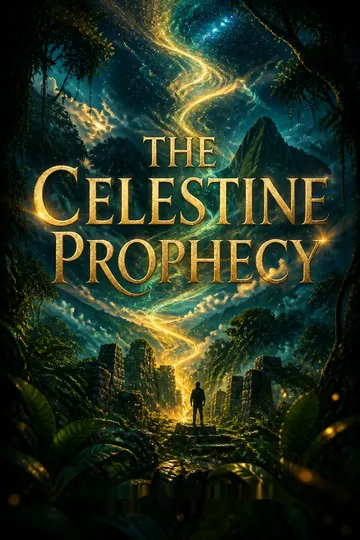
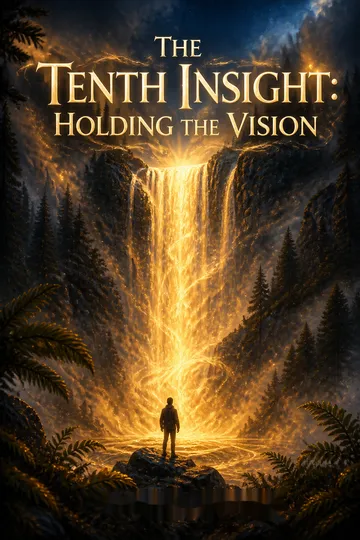
Celestine Prophecy Series
About the Author


Download PDF
Download EPUB
.epub digital book format is ideal for reading ebooks on phones, tablets, and e-readers.








