

Plot Summary
Prologue
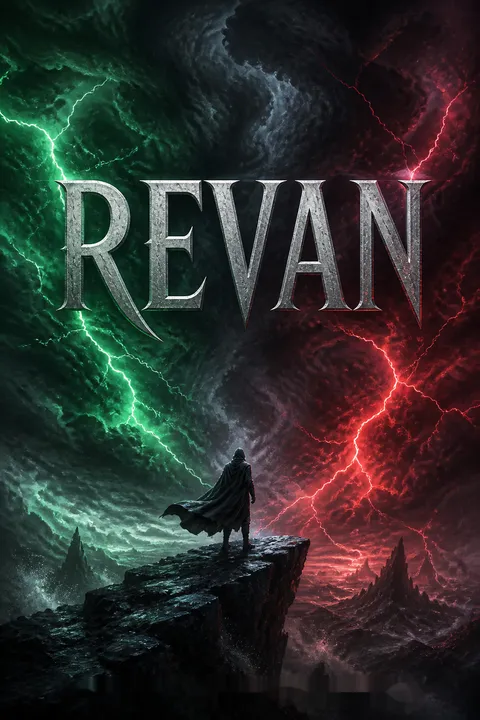
For three nights, Revan wakes from the same vision: a world drowned in storms and darkness. His wife, Bastila, finds him on their balcony, where his unease has sharpened into a question he cannot ignore.
Two years after recovering his identity, Revan still carries the weight of having been Jedi hero, Sith conqueror, and the man who stopped Darth Malak. He suspects his and Malak’s corruption began beyond the known galaxy, and that the storm in his dreams points to a danger still waiting there.
The opening makes memory both wound and warning. Revan has been restored to the light, but restoration has not made his past morally tidy: he cannot treat his redeemed self as compensation for the people he once helped destroy. His dream gives this private guilt an external shape, suggesting the past contains not only culpability but unfinished knowledge. Bastila offers intimacy and reassurance, yet cannot answer the question that drives him. The prologue therefore begins with a tension between the life Revan has earned and the duty he fears he has not finished.
Scourge Meets the Ambush
Lord Scourge returns to Dromund Kaas expecting a prestigious post under Darth Nyriss, a senior member of the Sith Empire’s Dark Council. Instead, her adviser Sechel ushers him through the rain to a guarded stronghold where security chief Murtog questions his identity. Before Scourge can enter, two mercenaries attack him in the courtyard.
He kills the male and disarms the woman, but Nyriss’s guards shoot her before she can reveal who hired them. In private, Nyriss admits that she ordered the attack as a test: Scourge had to prove he could survive before she trusted him with her investigation. She sends him to Hallion to trace a custom-built droid used in an earlier attempt on her life.
Scourge’s first lesson in power is that rank does not guarantee welcome. He understands violence as a direct test of strength, yet the courtyard attack is also a political instrument, arranged to measure him while keeping its sponsor concealed. His readiness to suspect Murtog and Sechel shows how quickly the Sith world turns uncertainty into rivalry. Nyriss, meanwhile, treats danger as a hiring procedure. The scene establishes the book’s central contrast between Scourge’s confidence in force and the more difficult skill of reading the intentions behind it.
Revan Reopens the War
On Coruscant, Revan asks the Mandalorian mercenary Canderous Ordo why the clans once attacked the Republic. Their conversation strengthens his suspicion that the Mandalorian Wars and his own later turn to the dark side were linked to something encountered in the Unknown Regions.
Revan searches the Jedi Archives for Meetra Surik, his former general, and learns from Master Atris that the Jedi Council banished her after the devastation of Malachor V. Canderous then reports that Mandalorian clans are gathering on Rekkiad to search for the Mask Revan hid from them.
Revan decides to go with him. Bastila reveals she is pregnant, but accepts his choice after he explains that he fears for their child’s future. He leaves with Canderous and T3-M4 aboard the Ebon Hawk.
Revan’s investigation begins as an attempt to repair his own broken memory, but each answer turns private recovery into a public obligation. Atris’s account complicates his self-image by showing that his victories left other Jedi with lasting injuries and disgrace. Canderous offers a different kind of history, rooted in the fate of a people rather than the verdicts of the Order. Bastila’s pregnancy makes the decision costly in immediate human terms. Revan does not leave because he prefers adventure; he leaves because he cannot separate the future of his family from the threat he senses beyond the Republic.
The Factory Burns
On Hallion, Scourge and Sechel break into the Uxiol Droid Manufacturing plant to find who paid for Nyriss’s assassination droid. Sechel reaches the records office while Scourge holds off security drones, including a heavily armed prototype assault droid that nearly kills him.
When the plant’s power fails, the machinery and molten-metal vats become unstable; Scourge escapes the blast with Sechel, but suffers broken ribs and cuts. During his recovery, he reconsiders Sechel’s timing: the adviser might have delayed the shutdown, failed to warn him of the explosion, and concealed the assault droid’s existence.
Nyriss explains that Scourge’s talent for feeding on living enemies’ fear made him less effective against machines. She sends the pair to Bosthirda to strike the separatists linked to the attack.
The factory exposes the cost of Scourge’s greatest advantage. His power grows by reading and exploiting other beings’ fear, a talent that turns battle into a feedback loop: his enemies’ panic strengthens him, and his strength intensifies their panic. Machines interrupt that loop, forcing him to find power within himself. His suspicion of Sechel is not proven, but the mission teaches him that survival depends on treating apparent assistance as carefully as apparent danger. The disaster also reveals a limit in Scourge’s self-conception: raw dominance is formidable, but it is not the same as understanding a situation.
Xedrix Falls in Bosthirda
Scourge leads Murtog’s soldiers in an assault on the Bosthirda separatists’ hidden base, cutting through their poorly trained defenders while Sechel and Murtog search the control room. They recover a damaged recording of Darth Xedrix, the Dark Council’s longest-serving member, communicating with the separatists.
Nyriss concludes that Xedrix conspired against her and urges Scourge to kill him before he can hide his involvement. Scourge lures Xedrix to a cave and defeats his two acolytes, but Xedrix nearly kills him with Sith lightning. The older Sith then tries to recruit Scourge, claiming Nyriss sent him to die. Scourge recognizes that Xedrix has exhausted his power, kills him, and takes his head as proof.
Scourge’s victory depends less on superior force than on correcting his first interpretation of the fight. Xedrix’s offer is persuasive because it rests on a genuine fact: Nyriss has used Scourge as a disposable instrument before. The younger Sith survives by distinguishing a true grievance from a manipulative conclusion. Yet the episode also rewards the very habits that make him vulnerable to political games: ambition, suspicion, and a desire to prove himself. He kills Xedrix for the Empire, for Nyriss, and for his own rising reputation, motives that are not yet separable even to him.
Canderous Comes Home
The Ebon Hawk crashes into a snowbank on Rekkiad after its landing gear is damaged in a blizzard. Revan, Canderous, and T3 trek to Clan Ordo’s camp, where Canderous is embraced by old companions but challenged by Veela, the clan’s leader and his estranged wife. She resents that he left after the Mandalorian defeat, while he admits he had been lost when the clan broke apart.
Revan conceals his identity by calling himself Avner, though his grasp of Mando’a and his pointed remarks make Veela wary. Revan’s recovered memories identify the Twin Spears as the likely hiding place of Mandalore’s Mask. Veela agrees to move the camp into Clan Jendri’s territory, accepting that the search may bring a fight.
Canderous’s return is not a simple homecoming. His clan receives him as a celebrated warrior, but Veela remembers the private cost of his departure and refuses to let public admiration settle their history. Revan enters this tightly bound community under a false name, relying on Canderous’s loyalty while challenging Mandalorian ideas of destiny. The camp’s move turns the abstract search for a cultural symbol into a collective risk. Veela’s decision is both strategic and personal: she allows an outsider to redirect her clan because the Mask matters, but also because Canderous’s return has reopened questions she cannot ignore.
The Mask Beneath Ice
Clan Jendri attacks Clan Ordo before dawn, hoping to drive the intruders from its territory. Revan draws enemy Basilisk war droids away from the Ordo pilots, giving them time to launch their own mounts and turn the battle. After the victory, Veela leads a small climbing party up the Twin Spears.
At the summit, Revan and Canderous descend into an ancient tomb, where Revan finds Mandalore’s Mask beside a datacron. His memories return: the Sith manipulated Mandalore the Ultimate into attacking the Republic, and Revan hid the Mask to keep the clans divided.
Veela then reveals she knows his identity and orders him killed. Canderous refuses to abandon him. Revan and Canderous defeat Veela and her five supporters, then Canderous claims the Mask and accepts responsibility for his people.
The Mask carries two histories at once. For the Mandalorians it is the missing emblem that can reunite a scattered culture; for Revan it is evidence of how he deliberately prolonged their defeat by denying them a leader. Finding it therefore restores neither innocence nor uncomplicated pride. Veela’s attempt to kill Revan grows from a real wound: she believes Canderous abandoned his people and that Revan embodies the humiliation that followed. Canderous’s refusal to choose clan loyalty over his friend costs him personally, but his acceptance of the Mask redirects that loyalty toward rebuilding rather than revenge.
Nathema Swallows the Force
After learning that Nyriss arranged the assassination attempts herself, Scourge discovers her larger secret: she and other Dark Councilors are plotting against the Emperor, who intends to invade the Republic.
To make Scourge believe the Emperor must be stopped, Nyriss takes him to Nathema, the Emperor’s erased homeworld. There, buildings remain standing, but every living thing and even the Force have vanished. On that same dead planet, Revan’s Ebon Hawk arrives seeking answers.
Nyriss fires on the ship, and Scourge finds Revan alive in the wreckage. He brings the Jedi back to Nyriss’s stronghold, where drugs and isolation keep him prisoner. Scourge expects interrogation to reveal how Revan escaped the Emperor’s control, but Revan remembers little of his past.
Nathema gives Scourge a form of evidence no political argument could supply. He has been taught to admire the strong taking from the weak, but this world is not merely conquered: its life, color, and connection to the Force have been erased. The scale of that act unsettles his moral vocabulary before it changes his loyalties. Revan’s arrival binds the two storylines, though neither man understands the other’s purpose yet. Scourge sees a possible source of knowledge; Revan sees a captor who might become useful. Their relationship begins as an imbalance of power, sustained by the possibility that each can learn from the other.
Three Years in the Cell
Nyriss’s scientists fail to explain how Revan resisted the Emperor, and after months she loses interest in him. Scourge keeps visiting, drawn by Revan’s unusual knowledge of both sides of the Force. Revan, still drugged and isolated, carefully feeds his captor fragments about the Force while learning that the Emperor plans an invasion and Nyriss fears confronting him.
Three years pass. Meanwhile, T3 repairs the damaged Ebon Hawk and returns to Republic space, where he eventually joins Meetra Surik after she helps defeat the rogue Jedi led by Darth Traya. When T3 reaches Bastila, he recounts Revan’s capture. Meetra sets out to find him, and Bastila gives her Revan’s old mask, hoping it may restore memories the Jedi lost.
The cell turns captivity into an uneasy exchange. Revan has almost no physical agency, yet he patiently shapes what Scourge wants to learn and uses the Sith’s ambition as his remaining leverage. Scourge believes he is extracting wisdom, but the routine also makes him Revan’s only human connection. The years apart deepen the cost of Revan’s choice: Bastila raises their son without him, while Meetra must follow a trail that leads into the enemy’s territory. T3 links these separated lives, carrying information and loyalty between people who cannot reach one another directly.
Meetra Finds the Trail
Meetra and T3 land on Nathema and find the planet’s absence of the Force nearly unbearable. They break into a government archive, where T3 restores and decrypts the damaged data. The records reveal that the Sith ruler, Lord Vitiate, summoned other Sith Lords for a ritual shortly before the population vanished.
They also contain the secret route to Dromund Kaas, a world omitted from the old records. Meetra concludes that the Sith who captured Revan may have taken him there. She follows the route and lands in Kaas City, disguising herself as an off-world trader. A contact directs her to Sechel, whom she hires to locate the Sith Lord shown in T3’s recording: Revan’s captor, Scourge.
Meetra’s experience of Nathema differs from Scourge’s, but it confirms the same essential horror. Having survived Malachor by severing herself from the Force, she recognizes that this world is not simply scarred by death; it has been emptied of the medium through which life connects. The archive gives her a way forward without offering a full explanation, making technical work and endurance more useful than heroic certainty. Her arrival on Dromund Kaas also forces her to navigate a society whose slavery and hierarchy offend her, while requiring her to hide the very identity that might give her authority.
Scourge Chooses a Side
Sechel recognizes the Sith in Meetra’s holorecording and arranges a meeting with Scourge, then sends security chief Murtog along. Meetra anticipates an ambush; with T3’s blinding headlamp, she overwhelms the soldiers and faces Scourge without killing him.
Scourge realizes Revan predicted her arrival and explains that he wants to stop the Emperor’s invasion. Meetra demands proof, so Scourge returns with Sechel’s hidden files documenting the Dark Council conspiracy. The records confirm the plot, but also show years of rivalries and inaction.
Convinced Scourge has lost faith in Nyriss, Meetra agrees to cooperate. Scourge kills Sechel, takes the evidence, and presents it to the Emperor, concealing his own role in the conspiracy. The Emperor orders an assault on Nyriss’s stronghold.
Meetra and Scourge begin their alliance from opposite forms of caution. She distrusts his motives because his life has been organized around self-preservation; he distrusts her because she is a powerful stranger with a weapon and a purpose he cannot verify. The files do not make the conspirators admirable. Instead, they reveal that resistance has become another arena for status competition. Scourge’s decision to approach the Emperor is a calculated gamble: he uses the institution that threatens the Republic to destroy the faction too indecisive to oppose it. He is not yet a convert to altruism, but he has begun to act beyond Nyriss’s control.
Revan Breaks Free
While the Emperor’s Guard attacks Nyriss’s stronghold, Scourge brings Meetra and T3 inside disguised as his slave and droid. The invasion throws the household into chaos, allowing them to reach the prison wing. Revan has been drugged for years, and two frightened guards have orders to kill him. He persuades them to surrender rather than die for Nyriss.
Meetra reaches him as Scourge prepares to leave the guards behind, but Revan insists on keeping his promise to protect them. Meetra gives him the mask Bastila saved. Its return unlocks the memories of his first visit to Dromund Kaas and his confrontation with the Emperor. When Nyriss attacks, Revan uses her lightning against her and kills her, then leaves with Meetra, Scourge, and T3.
The rescue measures each character against a different conception of obligation. Revan’s first act after years of captivity is to protect guards who were prepared to execute him; his promise matters even when keeping it complicates escape. Meetra’s courage is practical as well as martial, while Scourge has to trust an operation whose success depends on people he once would have treated as expendable. The mask restores Revan’s memory, but it also restores the public persona associated with his violent past. His power returns alongside the question of whether the person behind the symbol can remain present.
The Emperor’s Real Design
In a cave outside the stronghold, Revan watches Bastila’s recording of their young son, Vaner, and finally removes his mask. He remembers that he and Malak once came to Dromund Kaas, where the Emperor dominated their minds and sent them back to conquer the Republic. Their resistance twisted the command but did not prevent their fall to the dark side.
Revan explains that the Emperor’s planned invasion is only the first stage of a larger hunger: he seeks to consume life across the galaxy to escape death. Scourge reports that the Emperor has killed all twelve Dark Council members and imposed martial law on Dromund Kaas. With the Council gone and the city sealed, the three decide to attack the citadel before the Emperor can regain control.
The family recording makes the danger intimate without making it smaller. Revan’s recovered memory reframes his earlier conquest: he was neither wholly autonomous nor merely a puppet, but a person whose resistance was real and insufficient. That ambiguity resists the comfort of assigning all blame to the Emperor or all responsibility to Revan. Scourge’s report shows that the Emperor has answered dissent with mass execution, turning the political crisis into an immediate threat. The allies now share a goal, but not a moral framework: they approach the citadel with different beliefs about power, sacrifice, and what victory can cost.
The Citadel Doors Open
At dawn, Revan, Meetra, Scourge, and T3 cross a city scarred by the Emperor’s purge. Scourge claims his status as a Sith Lord to pass the curfew patrols and demand another audience with the Emperor. Captain Yarri recognizes Revan’s mask at the throne room and orders the guards to kill them. Meetra and Scourge hold off the Imperial Guard while Revan forces open the doors.
T3 seals them with starship adhesive, trapping the guards outside. The companions enter the chamber together, but Revan immediately charges the Emperor, who tries to dominate his mind as he did years earlier. This time Revan resists and strikes first, forcing the Emperor off balance before the fight turns against him.
The approach to the throne room is a passage through the consequences of Scourge’s own political maneuver. His claim to authority opens the citadel, but the guards’ recognition of Revan converts that access into combat. T3’s improvised seal buys the group privacy at the cost of cutting off retreat, a small mechanical decision that makes the confrontation irreversible. Revan’s choice to lead the attack reflects both experience and urgency: he knows what the Emperor can do to a mind. Yet knowing the trap does not neutralize it, and the victory of preparation remains precarious against overwhelming power.
Scourge Betrays the Jedi
The Emperor answers Revan’s attack with lightning that burns him and leaves him helpless. T3 tries to intervene with its flamethrower, but the Emperor destroys the droid. Meetra knocks Revan’s lightsaber away from the Emperor and shields her injured friend. Scourge joins them, but a sudden vision shows him a future in which another Jedi defeats the Emperor.
Rather than fight beside Revan and Meetra, he stabs Meetra from behind. The Emperor then incapacitates Revan. Scourge claims he lured the Jedi there to prove his loyalty and raises his weapon to kill Revan, but the Emperor stops him, wanting the prisoner alive. Scourge has secured his own survival by betraying the allies he brought to the citadel.
Scourge’s betrayal is not a sudden return to simple villainy; it is a choice made under the pressure of competing versions of the future. His vision does not show how to save Revan and Meetra, only that another champion may eventually defeat the Emperor. He converts that uncertainty into permission to preserve himself and wait. The decision exposes the deepest divide between him and the Jedi: they treat risk as a possible duty, while he treats survival as the precondition for any later action. His reasoning may buy time, but it makes time depend on the people he has just abandoned.
A Prisoner Buys Time
The Emperor names Scourge his personal enforcer, the Emperor’s Wrath, and grants him immortality through a ritual whose cost is unending pain. Scourge accepts, believing his survival will let him study the Emperor and aid the future Jedi he saw in his vision. Revan, meanwhile, is sealed in a hidden stasis prison where the Emperor feeds on his power and searches his mind for secrets.
Meetra’s spirit remains near the cell, strengthening Revan even though she cannot speak to him. Revan resists and subtly plants caution in the Emperor’s thoughts, hoping to delay an invasion. The final image shifts fifty years ahead: Bastila, now elderly, believes Revan’s absence helped spare the galaxy from war, while she continues to dream of him.
The ending refuses a clean rescue. Revan has regained his identity and family connection, but remains physically imprisoned, while Scourge survives by accepting a role that binds him to the Emperor. Their choices produce different forms of resistance: Revan fights from within a mental prison, and Scourge intends to work through proximity and patience. Meetra’s continued presence makes loyalty more than a living relationship, though it cannot undo her loss. Bastila’s later belief that Revan saved the galaxy rests on consequence rather than proof. Peace becomes the uncertain inheritance of people who may never reunite.
Epilogue
Fifty years later, Bastila lives with her son, Vaner, and his family. On the anniversary that brings Revan most sharply to mind, Vaner wonders whether his father would have been disappointed that he never joined the Jedi.
Bastila tells him that the Republic needed leaders who could rebuild and unite it, and that Revan would have been proud. She still cannot know whether her husband is alive, though at times she senses him reaching across the distance. Vaner leaves to join his family, and Bastila falls asleep dreaming of Revan once more.
The epilogue measures Revan’s sacrifice through the ordinary life it helped preserve. Vaner’s career outside the Jedi Order is not framed as a rejection of his father’s values; Bastila sees civic leadership as another form of protection. Her confidence that Revan succeeded is emotionally necessary but not evidentially certain, keeping hope distinct from knowledge. The grandchildren embody a future Revan chose without being present to witness it. Bastila’s recurring dream is therefore neither a reunion nor a resolution. It is the intimate remainder of a marriage that has shaped a peaceful life from afar.
Analysis
Revan is a story about the instability of moral identity when memory, authority, and history are contested. Revan cannot treat his former self as a stranger: the war he led, the Republic he attacked, and the Mandalorian culture he fragmented remain part of his present, even when crucial memories are missing. The book refuses to make redemption an eraser. His later choices matter, but they do not cancel the costs of earlier ones.
The parallel arcs sharpen this problem. Revan and Meetra repeatedly act from responsibility toward others, while Scourge is trained to understand responsibility as weakness unless it serves survival. His betrayal is therefore more than a plot reversal. It is the fullest expression of a worldview in which future usefulness can justify present abandonment. Yet he does not betray from ignorance: he knows what he is sacrificing and chooses to live with the cost. That makes his choice morally legible without making it morally harmless.
The book also questions institutions that claim to embody moral certainty. The Jedi Council punishes Meetra while concealing its own compromises; the Sith Empire presents disciplined order while organizing slavery and political murder; Nyriss’s conspiracy opposes the Emperor but reproduces the rivalries that make meaningful resistance impossible. Against these systems, personal loyalties become both refuge and risk. Bastila’s love sustains Revan across distance, Canderous’s return forces him to face his people, and Meetra’s loyalty carries her into a hostile empire.
Nathema gives these conflicts their most frightening scale. It represents power detached from any relationship to living beings, a force that does not conquer so much as erase. The ending offers no conventional victory: Revan is imprisoned, Meetra is lost, and Scourge serves the Emperor. But Revan’s resistance and Bastila’s peaceful future suggest that action can matter even when it cannot end the threat immediately. The story’s hardest lesson is not that sacrifice guarantees success, but that survival, loyalty, and responsibility remain different choices, each with consequences.
Review Summary
Revan received mixed reviews from readers. Many praised the action scenes, worldbuilding, and lore expansion of the Old Republic era. However, critics found the characterization lacking, especially for established characters like Revan and the Exile. Some felt the book failed to live up to expectations set by the Knights of the Old Republic games. The ending was particularly divisive, with some finding it unsatisfying or contradictory to the games' storylines. Despite these issues, fans of Star Wars and the Old Republic setting found aspects to enjoy in the novel's exploration of Sith culture and Force philosophy.
People Also Read
Characters
Revan
The divided Jedi heroA Jedi whose history includes service to the Republic, a turn to the dark side, and a return to the light, Revan begins the story unsettled by memories he cannot recover. His marriage to Bastila gives him a private life he wants to protect, while his concern about a danger beyond known space draws him away from it. He is intellectually restless and skeptical of rigid moral explanations, having experienced how people and institutions can contain both good intentions and destructive consequences. His relationship with Meetra is rooted in their shared wartime history, while Canderous offers him a frank connection to the conflict he once helped end.
Bastila Shan
Revan’s steadfast partnerA Jedi with a strong sense of duty and a deep emotional bond with Revan, Bastila is also a woman who has had to confront the harm caused by her own choices. She supports his return to the light, even while carrying anger toward the Council that erased his memories and the role she played in that decision. Her love is neither passive nor uncomplicated: she challenges Revan when his mission threatens their family, then recognizes why he believes he must go. Her care for their son becomes the center of her life while Revan is absent, and her hope rests on keeping his connection to the family alive.
Meetra Surik
The exiled war generalA former Jedi general who served beside Revan in the Mandalorian Wars, Meetra is known to the Order as the Exile after the devastation of Malachor V. She carries the psychological burden of having survived a catastrophe by cutting herself off from the Force, and she must live with how others interpret that choice. Her military judgment is paired with compassion, though compassion does not make her naïve about danger. Revan remains a formative friend and mentor, but Meetra’s history has also forced her to make decisions without his guidance. She approaches new alliances cautiously and acts decisively when she believes someone needs help.
Lord Scourge
The ambitious Sith warriorA powerful Sith Lord raised to value strength, discipline, and personal advancement, Scourge enters Nyriss’s service expecting to rise through the Empire’s hierarchy. His unusual ability to draw power from an opponent’s fear makes him dangerous in battle, but it can also distort how he understands strength. He respects intelligence when he encounters it, even in people he considers beneath him, and his conversations with Revan unsettle the assumptions on which he was trained. Scourge is observant, ambitious, and wary of dependence. His decisions are shaped by a persistent conflict between self-preservation and the possibility that survival alone may not be enough.
Canderous Ordo
The Mandalorian survivorA veteran Mandalorian warrior and Revan’s former adversary turned ally, Canderous is blunt, loyal, and deeply attached to the martial traditions of his people. The defeat of the clans left him displaced, and his years as a mercenary partly reflect his difficulty facing what became of his culture. His history with Veela makes his return to Clan Ordo emotionally charged, not merely a reunion with old comrades. Canderous is more reflective than his gruff manner suggests: he can recognize the damage caused by old loyalties, and he values friendship even when it places him between Revan and his own people.
T3-M4
The loyal astromechRevan’s astromech droid is a capable mechanic, slicer, and scout whose beeps often carry more personality than his modest frame suggests. T3 supports Revan through danger, repairs the Ebon Hawk under difficult conditions, and preserves information when its owner cannot act. The droid’s loyalty is practical rather than mindless: he assesses risks, follows instructions when appropriate, and sometimes chooses the mission he believes matters most. His attachments connect people separated by distance and time, especially Revan, Bastila, and Meetra. T3 cannot sense the Force, but his technical skills repeatedly allow Force-sensitive companions to reach places they could not manage alone.
The Emperor
The hidden Sith sovereignThe ancient ruler of the Sith Empire commands unquestioned authority and has shaped an entire society around military discipline and service to the state. Most subjects know little about his private history or motives; his distance helps sustain the sense that he stands beyond ordinary political limits. He is patient, calculating, and difficult to challenge because access to him is tightly controlled. His power is not only military or political: he can reach into the minds of those who serve him. The possibility that he may direct the Empire toward a new war makes him a threat not only to his rivals but to everyone living beyond its borders.
Darth Nyriss
The calculating CouncilorA senior member of the Dark Council, Nyriss combines knowledge of Sith sorcery with decades of political experience. She prizes control and treats people as pieces in carefully managed calculations, including the new agent she recruits to investigate threats against her. Her aged appearance contrasts with her alert mind and forceful presence. Nyriss understands that the Empire’s internal rivalries can be as dangerous as its enemies, and she has survived by making alliances while preserving her own advantage. She can recognize talent in others, but her trust is conditional and her plans leave little room for sentiment.
Sechel
Nyriss’s adaptable adviserA Sith adviser with little strength in the Force, Sechel has built his place in Nyriss’s household through intelligence, information gathering, and political instinct. His deferential manner can conceal a sharper, more self-assured operator, and he understands how to make himself useful to people stronger than he is. Sechel is alert to shifting power and careful about preserving leverage. His work places him at the intersection of the Empire’s security, private business, and political intrigues, where information can protect him as effectively as a weapon.
Murtog
Nyriss’s security chiefA human officer responsible for the security of Nyriss’s stronghold, Murtog is disciplined, suspicious, and protective of his authority. His position gives him practical influence in a household dominated by Sith, though his role also makes him vulnerable to comparison with newcomers such as Scourge. He values procedure and immediate action, sometimes at the expense of preserving evidence or hearing an enemy out. Murtog is a soldier first, accustomed to judging situations through threats, access, and force.
Veela
Clan Ordo’s fierce leaderThe leader of Clan Ordo, Veela is a disciplined Mandalorian warrior whose authority rests on competence as well as cultural tradition. She is Canderous’s wife, and his return forces her to confront both her anger at his departure and her continuing attachment to him. Veela believes the Mandalorian people need a shared purpose and treats the search for their lost symbol as a path toward renewal. Her pride makes her wary of outsiders, particularly those connected to the defeat that fractured her clan, but she is capable of strategic decisions when the clan’s survival requires them.
Atris
The rigid Jedi archivistA Jedi Master associated with the Temple Archives, Atris is a strict traditionalist who views Revan’s influence as a danger to the Order. She remained apart from the Jedi who followed him into the Mandalorian Wars and is especially protective of the Council’s judgments about those who did. Her certainty gives her a sense of moral order, but her investment in that order can make her dismissive of ambiguity and individual motives. Her past friendship with Meetra complicates the severity of her views, even as she insists that the Council’s condemnation was necessary.
Darth Xedrix
The veteran Council rivalOne of the Empire’s longest-serving Dark Councilors, Xedrix is a human Sith Lord who has survived through political skill and an imposing reputation. Age has reduced his physical strength, but he remains controlled and capable of planning several moves ahead. His long rivalry with Nyriss reflects the Council’s culture of competition, where an ally can become a threat as soon as the balance of influence shifts. Xedrix understands how fear can preserve authority, and he is practiced at using another person’s ambition to shape their choices.
Malak
Revan’s former apprenticeOnce Revan’s closest military partner, Malak fought beside him in the Mandalorian Wars and later shared his turn against the Republic. Their relationship is central to Revan’s lost history, even though Revan cannot initially remember its defining events. Malak’s absence leaves Revan with no direct way to ask what happened during their journey into the Unknown Regions. He represents both the intimacy of Revan’s former loyalties and the danger of how far those loyalties could be bent.
Vaner
Bastila and Revan’s sonVaner grows up with his father absent and his mother protecting him through a period of political and military upheaval. As a child, he resembles Revan and becomes a living reminder of the family Revan left behind to confront a distant threat. The later family recording Bastila preserves gives Revan a glimpse of the son he has not raised. Vaner’s life also represents a future shaped by choices he did not make, including the chance to serve the Republic in ways outside the Jedi Order.
Edric
Clan Ordo’s loyal sentryA member of Clan Ordo, Edric recognizes Canderous and welcomes him back into the clan. He helps interpret the group’s traditions for Revan and offers a steadier voice when Veela’s personal history threatens to dominate the discussion.
Captain Yarri
The Emperor’s Guard captainAn officer of the Imperial Guard, Captain Yarri serves as a disciplined gatekeeper to the Emperor’s citadel. She follows the chain of command closely and expects even Sith Lords to respect the citadel’s rules. Her authority rests on the Guard’s training and its direct loyalty to the Emperor.
HK-47
The missing hunter-killerA dangerous assassin droid once associated with Revan, HK-47 is known to his companions for his lethal instincts and enthusiasm for violence. Bastila worries that his programming may drive him to search for Revan, while Meetra has encountered him during her own journey. His whereabouts remain uncertain as the others pursue more urgent goals.
Darth Dramath
The exiled Sith heirAn ancient Sith figure remembered through the datacron hidden in the Rekkiad tomb, Dramath is connected to the history of Nathema and the rise of the Emperor. His family’s fall and exile give Revan an early clue that the Sith threat reaches much further back than the Republic’s records suggest.
Darth Traya
The rogue Jedi leaderA former Jedi who leads a breakaway movement against the surviving Order, Traya becomes a major threat during the years Revan is missing. Her campaign leaves the Republic and the Jedi severely weakened, shaping the dangerous world in which Meetra and T3 continue their search.
Plot Devices
The storm vision
A warning from lost memoryRevan’s recurring dream of an eternally storm-covered world gives his private uncertainty a direction. Because he cannot initially tell whether the images are memories, prophecy, or both, the vision drives him to ask Canderous about the Mandalorian Wars and to search the Jedi Archives for Meetra. It also keeps the story’s two plotlines oriented toward the same hidden threat. The vision is less a map than a pressure: Revan cannot safely dismiss what he does not understand, so he must act before he can prove what the dream means.
Mandalore’s Mask
A symbol that reunites a peopleThe Mandalorian Mask represents legitimate leadership within a culture built around clan loyalty and warrior tradition. Revan hid it after defeating Mandalore the Ultimate, preventing the clans from choosing a universally recognized successor and prolonging their fragmentation. Its recovery on Rekkiad links the Mandalorian Wars to the Sith’s earlier manipulation of Mandalore. For Canderous, the Mask offers a chance to give his people shared direction; for Revan, finding it restores a memory of his own responsibility for the clans’ divided fate.
Revan’s old mask
A key to buried identityBastila keeps Revan’s scarred helmet after the Jedi capture him, partly because it carries the history of his campaigns and his Sith identity. She fears it could awaken the darkness he left behind, but gives it to Meetra when she learns Revan is alive and imprisoned. When Revan sees it, the memories of his first encounter with the Emperor return. The helmet is both a practical trigger and a symbolic burden: it restores knowledge, but also makes the man wearing it resemble the legend others fear or depend upon.
Nathema
Evidence of absolute annihilationNathema is the Emperor’s erased homeworld, where the living population and the Force have been stripped away while the city remains eerily intact. Scourge visits it to understand why Nyriss opposes the Emperor, and Revan and Meetra each encounter its emptiness while following the trail to Dromund Kaas. The dead world turns a political dispute about invasion into a tangible fear of what the Emperor can do. Its archived records reveal how Vitiate used fear to gather the Sith and conceal the route to their refuge.
T3’s recordings and files
A bridge across separationT3 preserves and recovers information that living characters cannot carry safely between their separate journeys. The droid repairs the Ebon Hawk, returns to Bastila with evidence of Revan’s capture, and helps Meetra translate Nathema’s archives. Later, T3 decrypts Sechel’s records and seals the throne room doors during the assault. Bastila’s recording of Vaner gives Revan a personal connection to the family he left behind. These recordings and files turn the droid into a continuity device: memory, evidence, and affection survive even when their owners are imprisoned or far apart.
FAQ
Synopsis & Basic Details
What is Revan about?
- Revan's quest for truth: The story follows Revan, a Jedi Master, as he grapples with fragmented memories and disturbing nightmares, leading him on a quest to uncover the truth about his past and a looming threat to the galaxy.
- Sith political intrigue: The narrative also explores the complex political landscape of the Sith Empire, focusing on Lord Scourge's involvement in a conspiracy against the Emperor and his interactions with various Sith Lords.
- Clash of destinies: The story intertwines the fates of Revan, Scourge, and other characters as they navigate a web of deception, betrayal, and sacrifice, ultimately leading to a confrontation with the Emperor.
Why should I read Revan?
- Unraveling a legend: The novel provides a deeper understanding of Revan's character, exploring his motivations, inner conflicts, and the events that shaped his destiny, offering a satisfying conclusion to his story.
- Intricate Sith politics: The book delves into the complex power dynamics of the Sith Empire, showcasing the ambition, treachery, and ruthlessness of its leaders, providing a compelling look at the dark side.
- Epic scope and action: The story combines personal journeys with large-scale conflicts, featuring intense lightsaber battles, political intrigue, and a high-stakes struggle against a powerful and malevolent force.
What is the background of Revan?
- Post-Mandalorian War era: The story is set after the Mandalorian Wars, a conflict that deeply impacted the Republic and the Jedi Order, and before the events of the Old Republic MMO, exploring the lingering consequences of that war.
- Sith Empire's hidden power: The novel reveals the existence of a hidden Sith Empire, a powerful and dangerous force that has been secretly rebuilding its strength for centuries, posing a significant threat to the Republic.
- Jedi Order's internal conflicts: The story highlights the internal conflicts within the Jedi Order, showcasing their rigid adherence to tradition and their inability to fully understand the complexities of the Force, setting the stage for Revan's unique perspective.
What are the most memorable quotes in Revan?
- "The storm is coming, and there is no escape.": This recurring line from Revan's nightmares foreshadows the impending danger and the inevitability of the conflict, highlighting the sense of doom that permeates the story.
- "All the good I've done can't balance out the evil that came before.": This quote reveals Revan's internal struggle with his past actions, showcasing his humility and his belief that he is not worthy of redemption.
- "You know the words, but you do not truly understand them.": This line, spoken by Darth Nyriss to Scourge, highlights the difference between rote learning and true understanding of the Sith Code, emphasizing the importance of experience and personal interpretation.
What writing style, narrative choices, and literary techniques does Drew Karpyshyn use?
- Multiple perspectives: Karpyshyn employs a multi-perspective narrative, shifting between Revan, Scourge, and other characters, providing a comprehensive view of the events and allowing readers to understand the motivations of different factions.
- Internal monologues: The author uses internal monologues to reveal the characters' thoughts, feelings, and inner conflicts, adding depth and complexity to their personalities and motivations.
- Foreshadowing and symbolism: Karpyshyn uses foreshadowing and symbolism to create suspense and hint at future events, enhancing the narrative's thematic depth and creating a sense of unease and anticipation.
Hidden Details & Subtle Connections
What are some minor details that add significant meaning?
- The Twi'lek slave's shock collar: The shock collar worn by Nyriss's Twi'lek slave is a constant reminder of the Sith's brutal treatment of non-Sith species, highlighting the Empire's oppressive nature and the lack of freedom for its subjects.
- The description of the Emperor's eyes: The Emperor's eyes, described as "black as the void of empty space," foreshadow his connection to the dark side and his ability to consume all life, hinting at the true nature of his power.
- The recurring mention of the Jedi mantra: The Jedi mantra, "There is no emotion, there is peace," is used by both Revan and Bastila, highlighting their shared beliefs and their struggle to reconcile their emotions with the Jedi Code.
What are some subtle foreshadowing and callbacks?
- Revan's recurring nightmares: The recurring nightmares of a storm-covered world foreshadow Revan's journey to Nathema and the horrors he will encounter there, creating a sense of unease and anticipation.
- The mention of the mass-shadow generator: The mention of the mass-shadow generator from the Mandalorian Wars foreshadows Meetra's connection to Malachor V and her subsequent severing from the Force, highlighting the lasting consequences of war.
- The description of the Emperor's voice: The description of the Emperor's voice as if "a great multitude were speaking his words in perfect symphony" foreshadows his ability to absorb the life force of others, hinting at the source of his power.
What are some unexpected character connections?
- Revan and Meetra's shared past: The novel reveals that Revan and Meetra Surik were close allies during the Mandalorian Wars, highlighting their shared history and the impact of their actions on each other's lives.
- Scourge and the Emperor's shared vision: Scourge's vision of the Emperor's power and his own death mirrors Revan's visions, suggesting a connection between them and a shared destiny in the fight against the Emperor.
- Canderous and Veela's complex relationship: The novel explores the complex relationship between Canderous and Veela, highlighting the challenges of love and loyalty within the Mandalorian culture and the impact of their past choices on their present lives.
Who are the most significant supporting characters?
- T3-M4: The astromech droid serves as a loyal companion to both Revan and Meetra, providing crucial support and information throughout their journeys, highlighting the importance of droids in the Star Wars universe.
- Atris: The Jedi Archivist provides crucial information about Meetra's past, highlighting the Jedi Order's rigid adherence to tradition and their inability to understand the complexities of the Force.
- Murtog: Nyriss's security chief, though seemingly a minor character, represents the internal conflicts and power struggles within the Sith Empire, highlighting the dangers of ambition and loyalty.
Psychological, Emotional, & Relational Analysis
What are some unspoken motivations of the characters?
- Revan's guilt and responsibility: Revan's quest is driven by his unspoken guilt over his past actions and his sense of responsibility for the fate of the galaxy, highlighting his internal struggle with his identity.
- Scourge's ambition and fear: Scourge's actions are motivated by his ambition to rise in the Sith hierarchy and his fear of death, showcasing the corrupting influence of power and the dark side.
- Meetra's desire for redemption: Meetra's journey is driven by her desire for redemption and her loyalty to Revan, highlighting her selflessness and her willingness to sacrifice herself for the greater good.
What psychological complexities do the characters exhibit?
- Revan's fragmented memories: Revan's struggle with fragmented memories and his inability to reconcile his past actions with his present self highlights the psychological toll of his experiences and the complexities of his identity.
- Scourge's internal conflict: Scourge's internal conflict between his loyalty to the Sith and his growing doubts about the Emperor's sanity showcases the psychological impact of the dark side and the challenges of navigating a morally ambiguous world.
- Meetra's emotional detachment: Meetra's emotional detachment from the Force, a result of her trauma at Malachor V, highlights the psychological toll of war and the challenges of maintaining one's humanity in the face of overwhelming darkness.
What are the major emotional turning points?
- Revan's reunion with Bastila: Revan's reunion with Bastila and the revelation of their unborn child is a major emotional turning point, highlighting the importance of love and family in his life and his desire to protect them.
- Scourge's vision of the Emperor: Scourge's vision of the Emperor's power and his own death is a major emotional turning point, leading him to question his loyalty to the Sith and consider an alliance with Revan.
- Meetra's encounter with Nathema: Meetra's encounter with Nathema and its void of the Force is a major emotional turning point, highlighting the horrors of the dark side and her determination to stop the Emperor.
How do relationship dynamics evolve?
- Revan and Canderous's bond: The relationship between Revan and Canderous evolves from a former rivalry to a deep friendship, highlighting the power of shared experiences and mutual respect.
- Scourge and Nyriss's power dynamic: The power dynamic between Scourge and Nyriss shifts throughout the story, showcasing the treachery and manipulation within the Sith Empire and the challenges of navigating a relationship based on ambition and self-interest.
- Revan and Meetra's mentor-student relationship: The relationship between Revan and Meetra evolves from a mentor-student dynamic to a partnership based on mutual respect and shared goals, highlighting the importance of loyalty and friendship in the face of adversity.
Interpretation & Debate
Which parts of the story remain ambiguous or open-ended?
- The true nature of the Emperor's power: The novel leaves the true nature of the Emperor's power ambiguous, hinting at a connection to ancient Sith rituals and a dark side force that transcends conventional understanding.
- The fate of the Mandalorians: The novel leaves the future of the Mandalorians open-ended, suggesting that their destiny is still uncertain and that their culture may be forever changed by the events of the story.
- The ultimate outcome of the struggle against the Emperor: The novel does not provide a definitive conclusion to the struggle against the Emperor, leaving the reader to wonder if his defeat is truly possible and what the future holds for the galaxy.
What are some debatable, controversial scenes or moments in Revan?
- Scourge's betrayal of Revan and Meetra: Scourge's betrayal of Revan and Meetra is a controversial moment, raising questions about the nature of loyalty and the morality of sacrificing others for the greater good.
- Revan's decision to leave Bastila: Revan's decision to leave Bastila and his unborn child to pursue his quest is a controversial moment, highlighting the conflict between personal responsibility and the needs of the galaxy.
- The Jedi Council's treatment of Meetra: The Jedi Council's decision to banish Meetra Surik for her actions at Malachor V is a controversial moment, raising questions about the Order's rigid adherence to tradition and their inability to understand the complexities of the Force.
Revan Ending Explained: How It Ends & What It Means
- Revan's imprisonment and mental battle: The ending sees Revan imprisoned by the Emperor, but his mind remains free, allowing him to wage a mental war against his captor and plant seeds of doubt and fear in the Emperor's mind.
- Scourge's transformation into the Emperor's Wrath: Scourge's transformation into the Emperor's Wrath highlights the corrupting influence of power and the dark side, showcasing the tragic consequences of ambition and self-preservation.
- Meetra's sacrifice and enduring spirit: Meetra's death is a pivotal moment, highlighting her selflessness and her unwavering loyalty to Revan, and her spirit remains with him, offering support and strength in his eternal struggle.
About the Author
Other books by Drew Karpyshyn
Download PDF
Download EPUB
.epub digital book format is ideal for reading ebooks on phones, tablets, and e-readers.








