

Plot Summary
Palpatine Pairs His Rivals
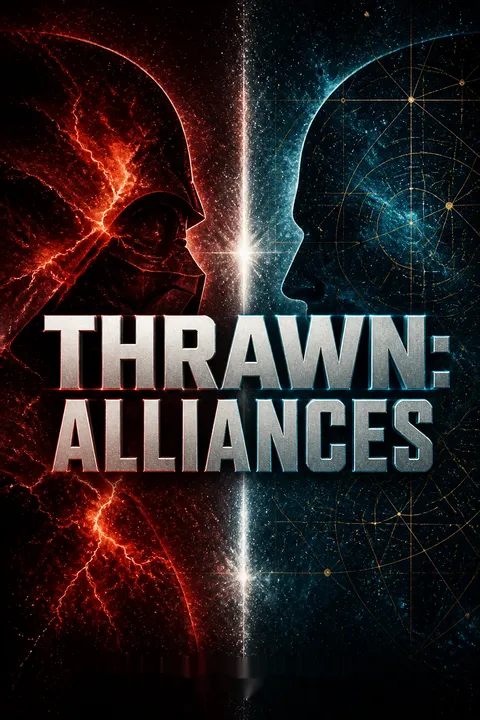
Emperor Palpatine sends Grand Admiral Thrawn and Darth Vader to investigate a disturbance in the Force near Batuu, a remote planet bordering the Unknown Regions. The order puts two competing Imperial servants on one ship: Vader despises Thrawn’s recent failure at Atollon, while Thrawn opposes the Death Star project Vader supports.
Palpatine gives Thrawn command and assigns Vader to handle the disturbance, turning the mission into a test of both men’s loyalties. Batuu also carries an older meaning for them, though neither explains it. Their destination is not simply an unexplored border world. It is the place where, years earlier, their former selves first crossed paths.
Palpatine’s assignment is designed to make cooperation inseparable from scrutiny. Vader and Thrawn must share authority without sharing trust, while each is watched for evidence of divided allegiance. The Emperor turns their personal and political rivalry into an instrument of rule: Thrawn’s military competence is useful, but his foreignness makes him suspect; Vader’s devotion is powerful, but his Jedi past remains a potential vulnerability. The mission’s first conflict is therefore not the unknown disturbance itself. It is the problem of serving an empire that treats loyalty as something to be tested rather than assumed.
Padmé Disappears on Batuu
Years earlier, Senator Padmé Amidala leaves Coruscant to meet her former handmaiden Duja, who has reported a mystery near Batuu. Anakin Skywalker, her husband and a Jedi general, cannot accompany her because he is assigned to a battle. He expects Padmé to return quickly, but she sends no messages.
After searching through every available transmission service and record, Anakin discovers that her ship has been found abandoned on Batuu. Padmé is missing, and the informant who drew her there is unaccounted for. With the Jedi Council refusing to release him from his military duties, Anakin finally takes his starfighter to Batuu himself, determined to find out what happened.
Padmé’s disappearance converts Anakin’s fear of losing her into action, but the war makes even that action conditional. The Council’s refusal means that duty does not merely compete with his private life; it physically prevents him from protecting it. Padmé’s choice to investigate is also consistent with her political ethic: she trusts her own judgment when institutions dismiss uncertain evidence. The abandoned ship sharpens the distinction between presence and knowledge. Anakin can search records and trace routes, yet neither can tell him whether Padmé is alive or what danger she has chosen to face.
A Chiss Meets Anakin
Above Batuu, Anakin finds an unfamiliar ship hovering beside the hyperdrive ring his fighter needs to leave the system. Its pilot is Mitth’raw’nuruodo, a Chiss commander who calls himself Thrawn. He knows Padmé’s Nubian ship landed on the planet and offers to help locate it, while admitting that he wants to understand the Clone Wars before the conflict reaches Chiss space.
Anakin accepts the alliance but keeps his distance, bringing his astromech R2-D2 rather than boarding Thrawn’s ship. At Padmé’s abandoned craft, they find no sign of injury or forced departure. Thrawn spots the marks of another ship in the grass, suggesting Duja left the clearing about a week earlier.
The first partnership between Anakin and Thrawn is built on useful asymmetry. Anakin brings intuitive force, urgency, and knowledge of the Republic’s war; Thrawn contributes observation without claiming certainty. Each recognizes the other’s competence before either understands the other’s motives. Their different forms of attention are already visible: Anakin searches for Padmé, while Thrawn reads landing marks, grass, and missing information as evidence. This alliance is not founded on intimacy. It works because both men accept that a partial answer from a capable stranger is more valuable than isolation.
Duja Leaves a Dead Drop
Padmé arrives on Batuu after Anakin has already begun searching. At Black Spire Outpost she finds Duja’s battered body displayed outside a cantina, presented as the victim of a speeder accident. Padmé recognizes the story as a likely cover for murder. She stages a farewell song so she can secretly take Duja’s homemade brooch, which contains a concealed signal.
The signal summons Duja’s hidden ship and reveals her final recording: she found a Separatist factory on Mokivj. Padmé heads there rather than wait for Anakin, but enemy fire destroys her ship. She survives by sinking her escape pod beneath a river, then reaches the factory and accepts help from local workers.
Duja’s brooch carries two kinds of memory at once: the intimate history of friendship and the practical means of continuing a mission. Padmé’s grief does not make her passive; it makes delay feel like a betrayal of what Duja risked her life to uncover. Yet the decision to proceed alone repeats a familiar danger: she treats her own courage as a substitute for support. Her survival depends not on political rank or military command, but on patience, improvisation, and the unlikely decency of people living under the factory’s control.
Batuu's Two Criminal Trails
At the clearing, Anakin drives off armed smugglers trying to break into Padmé’s ship. He and Thrawn later face a coordinated attack in Black Spire’s cantina, where a drugged gas cloud nearly incapacitates Anakin. Thrawn kills the attackers and deduces that a surviving accomplice will return to report.
Their pursuit exposes two groups: local thieves who have been replacing valuable Separatist cargo with worthless scrap, and Separatists using Batuu as a quiet supply point. A cargo inspector’s computer points toward Mokivj, though Thrawn warns that the listed destination may be a decoy. The details of the route and the planet’s ten moons make Mokivj their best lead, so the pair take a captured freighter there.
Thrawn’s method turns an ambush into a system of choices. He does not merely defeat attackers; he predicts what a survivor will fear, then uses that fear to lead the investigation toward its next source. Anakin’s impatience is tempered by the practical need to distinguish the smugglers from the Separatists, even when both groups threaten him. The episode also gives the story a political texture beyond battlefield opposition: Batuu’s ordinary economy has been distorted by secret shipments, theft, and intimidation. Local disorder is not incidental to the war. It is one of the ways the war hides itself.
Coffins Beneath Black Spire
On the Imperial mission, Vader and Thrawn reach Batuu aboard the Chimaera, after a hidden gravity field repeatedly pulls the Star Destroyer from hyperspace. They approach Black Spire in an unmarked freighter to avoid frightening away whoever is behind the disturbance.
At the cantina, Thrawn learns that the Darshi newcomers have filled the settlement’s landing field and brought ten coffin-like cylinders. The Darshi attack with sticks and swarms of insects that harden into stone around their targets, briefly immobilizing both Imperials.
Vader breaks free and kills the attackers. The houses used by the newcomers have been demolished, but Thrawn and Vader find ten unfamiliar cylinders in the surviving building and recognize that their occupants have been taken elsewhere.
The Batuu plot echoes the earlier investigation while changing its scale. In the past, the planet concealed a supply network; now it conceals the movement of living captives. The Darshi’s weapons make coercion literal, turning bodies into stone-bound objects, while the cylinders conceal the human cost inside tidy machinery. Vader and Thrawn respond differently to uncertainty: Vader seeks a direct target, while Thrawn treats the attackers’ tactics and the settlement’s altered patterns as clues. Their survival depends on both approaches, though it does not yet give them control over the people who have vanished.
The Factory Takes Prisoners
On Mokivj, Padmé uses a worker’s access band to enter the abandoned west wing of the factory and watch the occupied sections. Anakin and Thrawn arrive in a stolen Separatist freighter, bluff their way into the compound, and are captured by Duke Solha, a Serennian noble working with the Separatists.
Padmé reaches the cells as Anakin escapes with Thrawn’s improvised cloth cord and the oil R2-D2 left along the floor. She gives them weapons and leads Thrawn toward a service-level route to recover Anakin’s lightsaber, while Anakin draws the droids away. Their reunion turns Padmé’s solitary surveillance into a coordinated attempt to expose what Solha is manufacturing.
The prison sequence makes trust concrete rather than sentimental. Anakin’s escape depends on Thrawn’s patience and ingenuity, while Padmé’s entry depends on the workers who have risked helping her. Each person contributes a different kind of access: local knowledge, physical courage, or strategic design. The reunion also reveals how easily the couple’s attachment can become a tactical liability. Anakin wants to move toward Padmé immediately, but the larger threat requires him to draw danger elsewhere. Their intimacy survives not by eliminating risk, but by negotiating who must carry it at each moment.
Cortosis Turns the War
Padmé and Thrawn reach the roof, where Thrawn retrieves Anakin’s lightsaber and cuts the factory’s shield generator free. He initially leaves with it, explaining that his own mission is to secure the technology, but returns when Padmé and Anakin face Solha’s force. The factory is producing battle droids and clone armor woven with cortosis, a rare material that disperses blaster fire and can shut down lightsabers.
Thrawn and R2-D2 corrupt the droid designs so they will fail in combat; Anakin and Padmé defeat the remaining machines and collapse the armor facility. Anakin also destroys the mine, triggering a lava eruption that burns Mokivj’s farmland and leaves its workers facing the cost of a war they did not start.
Cortosis turns technological advantage into a moral problem. The material can protect soldiers, but here it is being shaped into a weapon against both Jedi and Republic troops. Thrawn’s sabotage is more strategic than destruction, yet Anakin’s choice to collapse the mine produces immediate civilian harm. Padmé sees that her own mission has also drawn local people into danger, and LebJau’s damaged home makes the language of collateral damage painfully specific. The episode refuses a clean victory: the factory is stopped, but Mokivj pays for the intervention in ruined land and uncertain livelihoods.
The Hyperlane's Hidden Teeth
Back on the Imperial mission, Thrawn studies the captured cylinders and the remnants of a Grysk cargo hold. He concludes that the Grysks have blocked Batuu’s route with gravity projectors that cloak themselves immediately after pulling ships out of hyperspace.
Repeated micro-jumps let him map the projector’s uneven field, and the Chimaera retrieves one hidden device. A later Grysk attack reveals more of their methods, but a prisoner breakout aboard the Darkhawk kills several Imperial personnel and destroys Thrawn’s chance to interrogate the captives.
Kimmund and Rukh retake the ship. From the Grysks’ use of a Clone Wars-era freighter, Thrawn infers that Mokivj is tied to their activity, giving the Imperials a new route toward the missing captives.
Thrawn’s discovery is an example of reasoning under deliberate concealment: the projector is not found by seeing it, but by measuring the shape of its absence. His success depends on repeated failure, since each failed jump supplies another boundary for the hidden field. The boarding disaster complicates his preference for information over force. His plan loses personnel and prisoners, yet the enemy’s chosen tools still reveal their history. The narrative therefore treats intelligence as costly knowledge, not effortless genius. Every inference may open a path, but it can also expose the people asked to follow it.
Children Who Read the Stars
At Mokivj, Vader leads stormtroopers through the same factory from the earlier mission and attacks the Grysk guards. Kimmund finds five young Chiss girls held near hibernation chambers; the children’s warnings let the troopers anticipate hidden gunports.
Thrawn explains that these girls possess Third Sight, a fading precognitive ability the Chiss use to guide ships through the dangerous Unknown Regions. The Grysks have been stealing them to navigate territory Imperial computers cannot safely chart.
When Thrawn argues that the Grysks threaten both peoples, Vader still demands proof before committing Imperial forces to a Chiss crisis. He ultimately takes the Chimaera’s helm himself, using the Force to guide the Star Destroyer toward the hidden Grysk base.
The revelation about Third Sight reframes the Force as a capacity exploited by institutions, not simply a source of individual power. The Chiss girls are valuable because their childhood perception can guide ships, but that value makes them vulnerable to systems that treat people as strategic equipment. Vader recognizes the danger partly through memories of Jedi training, yet his response is not uncomplicated compassion. He requires proof that the rescue serves the Empire. His decision to navigate the Chimaera himself marks a shift: trust becomes an action with material risk, rather than a concession made in conversation.
The Grysk Fleet Breaks
At the Grysk stronghold, Kimmund’s stormtroopers and Rukh board an enemy vessel and find two more Chiss girls, using their warnings to survive attacks from concealed gunports. Meanwhile, Thrawn directs the Chimaera’s battle against the Grysk fleet. He exploits their tendency to focus on the nearest threat, using ordinary TIE fighters to draw fire before committing the shielded, hyperspace-capable TIE Defenders.
Vader leads the Defenders, destroys the enemy gun emplacements, then pursues a fleeing courier ship. It escapes into hyperspace, but the main Grysk force is defeated and the rescued children are safe. The surviving enemy leaves behind evidence that Thrawn can use to interpret its ambitions and its links to the Chiss.
The battle’s victory comes from reading the enemy’s habits rather than matching its force head-on. Thrawn turns the Grysks’ attention to the nearest attacker, while Vader’s skill makes the Defenders’ technological advantages decisive. Kimmund’s rescue mission supplies the other half of success: the fleet can win only if the captives are carried out alive. The escaping courier prevents victory from becoming closure. Its flight preserves a political uncertainty at the center of the story, reminding the Imperials that defeating an armed force is not the same as understanding who helped it or why.
An Empire's Uneasy Debt
After the battle, Thrawn reveals that the Grysks use cortosis in their machinery, suggesting they learned its value from earlier contact with the Republic and may have supplied the Separatists with the knowledge. Vader realizes that Palpatine secretly oversaw the Mokivj project as preparation for Order 66.
He also recognizes that the escaping courier was Chiss and that Thrawn’s public warning to the Grysks may have been meant for a Chiss faction cooperating with them. Thrawn admits that his people may be near civil conflict, but insists his service to the Empire remains binding. Vader agrees not to discuss Anakin Skywalker and promises to support the TIE Defender project, while demanding faster, simpler, more heavily armed fighters.
The ending does not resolve divided loyalty; it makes the division legible. Thrawn serves the Empire while trying to protect the Ascendancy, and his coded warning addresses both obligations at once. Vader’s deduction shows that he now understands Thrawn’s secrecy without mistaking it for simple treason, though he retains the authority to question it. The revelation about Palpatine’s role in the cortosis project also complicates the Empire’s moral self-image: its pursuit of order depends on a covert weapon aimed at its own Jedi. Their agreement is practical, guarded, and fragile, but it rests on a new recognition of what each man is trying to preserve.
Analysis
The novel organizes its meaning around a repeated question: what does loyalty require when a person belongs to more than one world? Thrawn serves the Empire while protecting the Chiss, and his secrecy is both a strategic tool and a genuine moral burden. Vader initially treats divided allegiance as evidence of treason because his own identity has been narrowed to obedience. His gradual willingness to act on trust does not make him gentle or uncritical; it shows him accepting that another person’s obligations may be real without being identical to his own.
The paired timelines make that question intimate. Anakin and Thrawn’s first alliance forms during a war in which each man is still becoming the person the Empire will later use. Their methods differ, but both are capable of seeing beyond immediate appearances. The later Vader and Thrawn partnership repeats that structure under harsher conditions. Anakin’s memory is not simply explanatory background. It becomes the pressure point through which Vader confronts attachments he insists are dead, while Thrawn’s recollection connects his current choice to an older debt of service.
Padmé’s storyline tests the same political abstractions against ordinary lives. Her investigation depends on workers who have little power and much to lose. Anakin’s destruction of the Mokivj mine stops a military threat but damages farmland and water, leaving civilians to absorb the consequences. The scene refuses to equate a successful operation with a just outcome. Victory can prevent future harm and still create present harm, especially when commanders act on incomplete knowledge.
Finally, the Grysks make exploitation the story’s most concrete political pattern. They take the Darshi’s weapons, the Chiss children’s future, and the Empire’s travel routes, turning cultural vulnerability into leverage. Thrawn and Vader defeat immediate plans, but the escaping courier and the divided Chiss Ascendancy leave the threat unresolved. The ending offers cooperation, not certainty: two rivals can recognize one another’s loyalties without pretending their interests are identical.
Review Summary
Thrawn: Alliances received mixed reviews. Many praised the character interactions, especially between Thrawn and Vader/Anakin. Some enjoyed the dual timeline structure, while others found it confusing. Critics noted the book's slower pacing and less compelling plot compared to its predecessor. Thrawn's portrayal as an omniscient narrator was criticized by some. Despite these issues, fans appreciated the deeper exploration of Vader's character and the Star Wars universe. Overall, opinions varied widely, with ratings ranging from 1 to 5 stars.
People Also Read
Characters
Thrawn
The Emperor's outsiderA Chiss commander whose strategic intelligence has earned him authority in the Empire without making him part of its human political elite. Thrawn studies behavior, art, technology, and small physical traces as sources of military knowledge. He is controlled and exacting, but not merely detached: he values the lives and competence of the people serving under him. His defining tension is the difficulty of honoring an oath to the Empire while remaining responsible to the Chiss Ascendancy. Thrawn rarely explains his reasoning before he has evidence, which can look like secrecy or arrogance to allies. His relationships reveal a preference for earned trust, careful observation, and plans that make an opponent’s assumptions work against them.
Darth Vader
The Emperor's bladePalpatine’s feared enforcer, a Sith Lord whose mechanical armor conceals a formidable fighter and a mind shaped by an earlier Jedi life. Vader values obedience, speed, and decisive victory, and he distrusts Thrawn’s silences because he sees loyalty as a duty that should be explicit. His instincts are powerful, but suspicion often narrows his view of another person’s motives. The mission tests whether he can accept uncertainty without surrendering judgment. Beneath his rigid devotion to the Emperor remain memories and attachments he works to suppress. His interactions with Thrawn expose a difficult capacity for self-control: Vader can choose to trust, but never without measuring the cost.
Anakin Skywalker
The Jedi's restless generalA Jedi general in the Republic’s Clone Wars, Anakin is bold, gifted in combat, and quick to act when someone he loves is threatened. He has a powerful bond with Padmé, his wife, but must conceal their marriage in public. His loyalty to friends and soldiers is intense, sometimes making personal rescue feel more urgent than the wider military objective. Anakin is an improviser who turns whatever is at hand into a weapon or an escape route. He can be impatient with Thrawn’s careful reasoning, yet recognizes its value when the evidence is clear. His strengths and vulnerabilities are closely linked: courage helps him protect others, while fear of loss can make restraint feel unbearable.
Padmé Amidala
Diplomat under fireA senator, former queen of Naboo, and Anakin’s wife, Padmé combines political intelligence with the practical training of a former handmaiden. She investigates threats personally when institutions dismiss uncertain reports, and she is skilled at disguises, negotiation, and reading people’s motives. Her courage is rooted in responsibility rather than a belief that she is invulnerable. Padmé’s loyalty to friends can lead her to accept risks that others would avoid, but she also knows how to adapt when plans collapse. She sees the human consequences of political decisions with unusual clarity, especially when civilians are pulled into conflicts they did not choose. Her secrecy protects her marriage, but can make it harder for allies to understand her choices.
Emperor Palpatine
Master of divided loyaltiesThe ruler of the Empire and master of Darth Vader, Palpatine deploys people as carefully as fleets. He sees Vader’s Jedi past and Thrawn’s foreign allegiance as unresolved questions, and uses the Batuu mission to test both at once. His political method is indirect: he creates situations in which subordinates reveal their priorities while believing they are simply carrying out orders. Palpatine values useful talent, but his trust is conditional and strategic. His presence is felt even when he is absent from the field, because both Vader and Thrawn understand that their choices will ultimately be judged by him.
Padmé Amidala
Diplomat under fireA senator, former queen of Naboo, and Anakin’s wife, Padmé combines political intelligence with the practical training of a former handmaiden. She investigates threats personally when institutions dismiss uncertain reports, and she is skilled at disguises, negotiation, and reading people’s motives. Her courage is rooted in responsibility rather than a belief that she is invulnerable. Padmé’s loyalty to friends can lead her to accept risks that others would avoid, but she also knows how to adapt when plans collapse. She sees the human consequences of political decisions with unusual clarity, especially when civilians are pulled into conflicts they did not choose. Her secrecy protects her marriage, but can make it harder for allies to understand her choices.
Duja
Padmé's loyal informantA former handmaiden, trusted friend, and capable investigator, Duja uses the skills developed in Padmé’s service to pursue information far from Coruscant. She is disciplined, resourceful, and personally loyal without being merely an extension of Padmé. Her homemade brooch reflects a playful private side and becomes a practical link between the women. Duja’s investigation of Batuu and Mokivj arises from a willingness to follow evidence others have overlooked, even when she must work alone.
R2-D2
Anakin's fearless astromechAnakin’s astromech droid accompanies him into dangerous situations, repairs and analyzes machinery, and often acts faster than the people around him expect. R2-D2 is loyal but not passive; he objects when Anakin underestimates the danger and repeatedly finds useful ways to help. Because Anakin has not erased his accumulated records, the droid retains practical knowledge that proves valuable during the investigation. His small size makes him easy to overlook, a mistake both allies and enemies sometimes make.
Commodore Karyn Faro
Thrawn's steady commanderA capable Imperial naval officer serving aboard the Chimaera, Faro balances operational judgment with the political calculations required to survive the Imperial hierarchy. She supports Thrawn’s command while keeping the ship functioning through delays, uncertain contacts, and conflicts between naval officers and Vader’s stormtroopers. Her reports are precise, and she is willing to make decisions when Thrawn is away. Faro’s ambition does not erase her professional discipline; she wants authority, but she also wants to be worthy of it.
Rukh
Thrawn's unseen guardianThrawn’s Noghri bodyguard is a compact, dangerous fighter with tracking skills and a personal cloaking device. Rukh treats protection as a responsibility that overrides etiquette, which repeatedly puts him at odds with Vader’s stormtroopers. His confidence can read as insolence, but it comes from a clear sense of duty to Thrawn. He is most effective when his enemies assume he is absent or underestimate his ability to move through a ship unseen.
Commander Kimmund
Vader's stormtrooper commanderThe commander of Vader’s elite First Legion, Kimmund is a practical soldier who measures plans by the risks they impose on his troops. He is disciplined under pressure and attentive to the people he leads, even while serving an unforgiving master. His friction with Rukh reflects a real command problem: protecting his unit requires knowing who is aboard and who is responsible for them. Kimmund’s tactical competence makes him a vital field leader in unfamiliar situations.
LebJau
Mokivj's reluctant helperA local factory worker who dreams of finishing a makeshift riverboat, LebJau begins as a cautious man concerned with food, work, and avoiding punishment. He helps Padmé because her vulnerability and directness appeal to his better nature, though he remains wary of the danger she brings. His practical knowledge of the factory gives her access that military force cannot provide. LebJau represents the people whose ordinary lives are shaped by decisions made far beyond their world.
Duke Solha
The ambitious factory masterA Serennian noble placed in charge of the Mokivj operation, Solha is driven by resentment at being dismissed as politically insignificant. He believes the Separatist project will give him the recognition and authority he has long wanted. His confidence depends on technological advantages and promises of future victory. Solha’s ambition makes him useful to more powerful figures, but also leaves him vulnerable to their agendas.
Nodlia
Black Spire's wary bartenderThe bartender at Black Spire’s cantina, Nodlia serves travelers and hears more than he openly admits. He is wary of outsiders and reluctant to be drawn into conflict, having seen the settlement’s power balance change before.
Count Dooku
The Separatist patronA former Jedi and leading figure in the Separatist movement, Dooku supplies the political ambition behind Solha’s operation. He is absent from the main action, but his authority shapes the factory’s purpose and the risks its workers face.
General Grievous
The Separatist war leaderA prominent commander of the Separatist military, Grievous is named as one of the forces driving the war. He does not appear directly in this story’s events, but represents the scale of the conflict Anakin is fighting.
Ahsoka Tano
Anakin's absent former PadawanAnakin’s former Padawan, Ahsoka has left the Jedi Order before these events. Her absence is felt in his memories of a trusted partner, and her invention of a battle maneuver supplies a tactical idea that still influences him.
Admiral Ar'alani
Chiss fleet commanderA Chiss admiral who arrives with a warship and helps receive the rescued children. Her presence connects Thrawn’s Imperial mission to the military world he left behind.
Plot Devices
The Force
Sense and forewarningThe Force lets Anakin and Vader sense danger, read emotional disturbances, and glimpse attacks before they happen. Anakin uses it in combat and to recognize when Padmé is nearby, while Vader uses it to detect the fear of the Chiss children and ultimately to guide the Chimaera through unfamiliar space. Its function changes with the character: for Anakin it intensifies personal attachment and immediate action, while for Vader it becomes a discipline he must apply in service of a larger plan.
Cortosis
Armor against energyCortosis is a rare, fibrous material that can disperse energy from blasters and interfere with lightsabers. Solha’s factory weaves it through a protective matrix, creating battle droids and clone armor that resist ordinary attacks. Anakin, Padmé, and Thrawn discover that sustained electrical force can overwhelm the material. The discovery gives them a way to defeat the new machines, and Thrawn uses the connection between the Mokivj factory and Grysk equipment to argue that the enemy is preparing to infiltrate the Empire.
Chiss Third Sight
Living hyperspace navigationSome Chiss children possess a precognitive ability called Third Sight. Their visions let them sense dangerous changes in hyperspace and guide ships through regions where stable routes are scarce. The gift fades as they grow older, making the children valuable to their society and vulnerable to anyone who wants to exploit it. The Grysks abduct the girls to navigate the Unknown Regions. Their captivity reveals why the Batuu disturbance mattered to Palpatine and forces Vader to decide whether Thrawn’s people are also the Empire’s concern.
Cloaked Gravity Projectors
Trap ships between routesThe Grysks use gravity projectors to pull ships out of hyperspace and block travel along the Batuu corridor. Each device briefly switches to a cloaking field after triggering its gravity well, hiding itself before Imperial sensors can find it. Thrawn maps the projector’s uneven field by making repeated approaches from different angles, then uses the captured equipment to understand how the trap works. The devices reveal that the Grysks are not merely hiding from Imperial expansion. They are actively shaping which forces can move through the region.
Thrawn's Cultural Analysis
Turn behavior into evidenceThrawn studies art, weapons, uniforms, cargo, and combat habits as records of a culture’s priorities. He reads the Darshi attackers’ mismatched knives, the Grysks’ damaged trophies, and their tendency to target the nearest opponent. These details help him distinguish ceremonial symbols from practical equipment, infer historical relationships, and design tactics that exploit enemy assumptions. The method also explains why he often delays judgment: an image or object becomes useful only when compared with other evidence. His skill gives the investigation its shape, but it cannot eliminate uncertainty or prevent the cost of a mistaken plan.
Star Wars: Thrawn Series

About the Author

Download PDF
Download EPUB
.epub digital book format is ideal for reading ebooks on phones, tablets, and e-readers.








