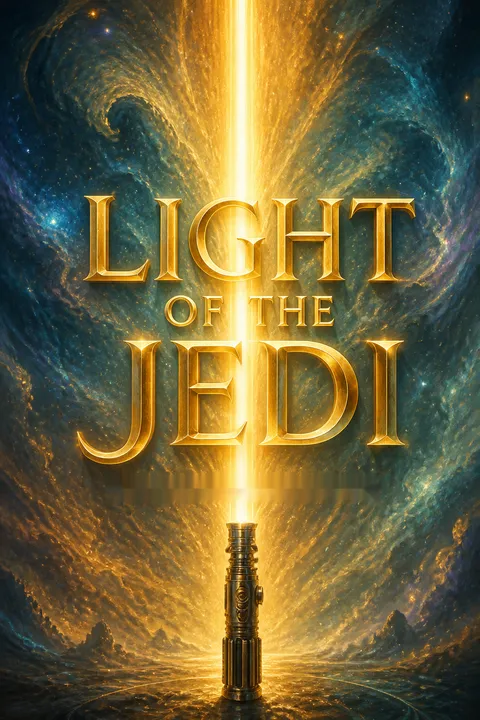


Plot Summary
The Legacy Run Breaks
Captain Hedda Casset carries thousands of settlers toward the Outer Rim aboard the well-kept freighter Legacy Run. When the navigation computer detects an impossible obstacle in the established hyperspace lane, Casset uses her fighter-pilot instincts to steer the enormous ship past it.
The maneuver saves the vessel from an immediate collision but tears its aging structure apart. Before the bridge is destroyed, Casset seals cargo sections in the hope that their occupants might survive.
Aboard one passenger module, red-haired boy Serj Ukkarian is caught trying to tamper with the ship’s systems as a prank. The freighter disintegrates, scattering wreckage and living passenger compartments across hyperspace. Casset dies without learning whether her emergency measures protected anyone.
The catastrophe begins not with a battle but with a rescue maneuver. Casset’s skill saves the ship for a few seconds, then proves insufficient against a danger no ordinary pilot could anticipate. Her careful maintenance and disciplined command establish the fragile competence on which the Republic depends, while the ship’s destruction exposes how little that competence matters when the underlying rules of travel fail. The sealed compartments turn a single disaster into a continuing moral problem: some passengers may still be alive, but the debris itself has become a weapon aimed at other worlds.
Hetzal Sees the Debris
On a monitoring station above Hetzal, junior technician Merven Getter and his colleague Vel Carann detect unscheduled objects racing into the system at near-lightspeed. They send an evacuation warning, but a fragment destroys their station before they can escape.
Minister Zeffren Ecka receives the alert without an explanation. When technology official Keven Tarr assembles the remaining sensor data, the projections reveal dozens of projectiles converging on Hetzal’s inhabited worlds and stations.
Ecka orders a system-wide evacuation and stays behind to coordinate it, despite the lack of ships for billions of residents. Panic crowds the spaceports, while some people dismiss the warning and others cannot find passage. Avar Kriss, a Jedi Master aboard a nearby Republic cruiser, sends word that help is coming.
Hetzal’s emergency turns civic optimism into a test of actual capacity. Ecka’s commitment to stay with his constituents gives leadership a human face, but his depleted security force and limited fleet reveal the cost of treating peace as proof that preparation is unnecessary. The evacuation also distributes danger unequally: people with ships or money can flee, while farmers and workers remain trapped. Merven’s alert is both a modest act of duty and a final one. The signal that brings the Jedi offers hope, but it cannot erase the inequality built into the crisis.
The Rescue Fleet Arrives
The Republic cruiser Third Horizon enters the Hetzal system with Jedi Vectors, rescue Longbeams, and a crew ready to work under Avar Kriss’s direction. Avar uses her unusual sensitivity to the Force to connect the scattered Jedi, helping them locate one another while they tackle separate emergencies.
On Hetzal Prime, Jedi Master Loden Greatstorm and his apprentice Bell Zettifar descend to help wherever they can. Bell senses a crowd in danger outside a wealthy family’s walled estate, where guards refuse to share a private starship despite the evacuation order.
Loden persuades the guards to open the gates, giving the refugees access to the ship. Before they can settle the crowd, armed marauders fire into it, forcing Loden and Bell to draw their lightsabers and defend the civilians.
Avar’s network turns the Force into a practical coordination system, but the response still depends on many local decisions and imperfect resources. The estate’s locked ship makes the political structure of the disaster visible: private property remains protected even when public survival is at stake. Loden’s intervention relies first on persuasion rather than force, yet violence arrives as soon as frightened people compete for escape. Bell’s presence matters psychologically as well as tactically. He is learning that Jedi work does not begin with a clean mission; it begins inside other people’s panic, where restraint and decisive action must coexist.
Bright Enters the Burning Array
Captain Bright of the Republic Longbeam Aurora IX tries to destroy a fast-moving fragment before it hits a solar collection station. His crew fires every missile aboard, but none can track the target accurately enough. The fragment tears through the array, setting it spinning and burning.
Bright risks docking with the damaged station and leads his crew through smoke to search for its seven-person staff. His engineer, Petty Officer Innamin, discovers that the reactor will explode unless someone continually resets its controls.
A rescue droid takes over the sequence, allowing the others to evacuate the crew. Bright then finds an eighth survivor, a badly injured Twi’lek hidden near the reactor. He stays behind to keep the machine stable while the droid carries the survivor away; the array explodes before Bright can escape.
Bright’s failed attack demonstrates that technical sophistication cannot guarantee control over a crisis moving faster than available instruments can measure. His choice to dock anyway shifts the mission from prevention to care for people already injured. The sequence also distinguishes responsibility from command: Innamin risks himself to buy time, while Bright ultimately accepts the risk no one else can take for the hidden survivor. His death does not solve the larger disaster, but it makes the Republic’s declared solidarity concrete. The promise to protect strangers acquires weight precisely because acting on it can cost the rescuer everything.
Burryaga Hears the Living
Above the Fruited Moon, Jedi Te’Ami and her companions prepare to blast apart a large fragment headed for the inhabited world. Burryaga Agaburry, the young Wookiee Padawan, struggles to master the fear flooding through him, then realizes he is sensing the terror of people inside the wreckage.
His warning stops the Jedi from firing on the passenger compartment. Captain Joss Adren and his wife Pikka propose using their Longbeam’s powerful clamps to latch onto it, while the Jedi use the Force to slow and hold together the failing structure.
The cables stretch nearly to their limit, but the combined effort works. The survivors are pulled from their uncontrolled path toward the moon. Avar adds their rescue to the crisis already unfolding across the system.
Burryaga’s sensitivity is initially mistaken for emotional instability, but his fear is also information. The scene refuses the idea that calmness is the only form of Jedi competence: he succeeds because he listens through his distress instead of suppressing it. The rescue itself depends on collaboration between Force-users and ordinary technicians, whose equipment supplies a solution the Jedi did not invent. This joint effort makes heroism less like individual mastery and more like shared attention. The difference between a harmless-looking fragment and a living shelter becomes the moral hinge of the whole disaster.
Avar Moves the Sunfall
While tracking the crisis, Avar senses a dangerous absence in the Force and directs attention to an overlooked container moving toward Hetzal’s largest sun. Keven Tarr’s surviving sensors identify it as supercooled liquid Tibanna.
If the fuel strikes the R-class star, a chain reaction will destroy the entire system. Avar stays on the life-rich surface of Hetzal Prime and asks every Jedi she can reach to act together. She uses her lightsaber’s changing tone to synchronize their different ways of sensing the Force.
The first effort shifts the container but not far enough. Exhausted Jedi fall, and several die from the strain. Avar gathers the survivors for another attempt. Their combined effort nudges the container through the star’s outer layers and sends it safely away, preserving Hetzal.
Avar’s decisive strength is not simply sensing more than others; it is making unlike perceptions cooperate. The Jedi experience the Force through images, sound, motion, and other personal frames, and her role is to align those differences without erasing them. The initial failure prevents the climax from becoming effortless proof of limitless power. The second attempt succeeds only after exhaustion and loss have reduced the available force. Avar’s choice to remain on the planet grounds this vast feat in living matter: the Force is not an abstraction when billions of individual lives depend on it.
Ab Dalis Pays Next
The first fragments to emerge beyond Hetzal strike Ab Dalis, where one impact devastates a city and kills about twenty million people. As survivors flee the damaged world, industrialist Larence Garello evacuates his workers and their families aboard a convoy.
A strange storm cloud disables one freighter, and masked raiders pour out of it. They identify themselves as the Nihil: the raiders use harpoons and engine thrust to tear open ships, killing passengers while stripping them for valuables.
Garello’s convoy fights back, but the Nihil board his ship and poison the bridge. Elsewhere, Nihil leader Marchion Ro presides over a violent, divided organization run by three Tempest Runners. Ro controls its secret hyperspace Paths, which let Nihil ships travel in ways Republic navigation cannot reproduce.
Ab Dalis proves that Hetzal was not an isolated planetary misfortune. The Emergence damage and the Nihil raid are different threats, but they converge on the same vulnerable population, whose attempts to escape expose them to further violence. Garello’s decision to protect employees and their families contrasts with the raiders’ treatment of people as cargo or bargaining power. Marchion Ro’s authority is more complicated than a conventional gang leader’s: he controls the means of movement but not the daily loyalty of the factions beneath him. The Paths provide power while also planting the conditions for internal conflict.
Prediction Becomes Leverage
As the Republic investigates, Keven Tarr proposes linking tens of thousands of navidroids to reconstruct the Legacy Run disaster and predict future Emergences. The San Tekka family offers specialist algorithms and navigators, though its members insist that hyperspace itself is safe.
Marchion Ro has separately obtained forecasts from Mari San Tekka, an elderly hyperspace pathfinder whose knowledge powers the Nihil’s secret routes. Tempest Runner Kassav uses one predicted Emergence to extort the strained world of Eriadu.
His crew destroys the first fragment to prove its claim, then fails to reach a later impact in time. The resulting strike kills over a billion people on Eriadu’s moon. The governor records Kassav’s identity and broadcasts evidence of his extortion, giving the Republic both a target and a reason to mobilize.
Prediction is morally neutral in itself, but this section shows how foresight changes the distribution of responsibility. Keven treats data as a means to prevent deaths; Kassav treats the same kind of knowledge as a commodity whose value rises with fear. The San Tekkas’ guarded help further complicates the distinction between expertise and secrecy: they contribute materially while withholding confidence about what they know. Kassav’s failure exposes the weakness beneath his swagger. He can manipulate a desperate government, but he cannot reliably control the consequences of the catastrophe he uses as leverage.
The Droid Array Holds
Keven’s immense navidroid array begins to model the disasters, but its processors overheat and burn out before reaching the predictive calculation. Rather than abandon the attempt, Avar steadies Keven while Elzar Mann proposes lifting the hot air above the plateau.
Avar joins him, and the two Jedi draw moisture into a cloud that releases rain over the array. The cooling keeps enough processors functioning for the system to identify the next Emergence site.
That prediction allows Republic crews to prepare future rescues and search for the Legacy Run’s hardened flight recorder. The project gives the investigation a way to get ahead of the debris, though the growing shortage of navidroids and the blockade continue to trouble Outer Rim worlds.
Keven’s array stands between human ingenuity and the fantasy of perfect prediction. It nearly fails because its creators lack sufficient resources, and success requires a solution outside the machine’s own design. Elzar and Avar do not replace Keven’s work; they preserve the conditions that let it function. The scene’s rain is both practical and symbolic without being merely decorative: weather becomes a form of cooperation between natural processes, technology, and trained attention. Yet prediction is not resolution. The Republic can locate danger more effectively, but it still must decide how to distribute scarce resources and accept the costs of intervention.
The Recorder Names the Nihil
On a Republic medical ship, Burryaga comforts Serj Ukkarian, the boy whose family remains missing after the Legacy Run broke apart. Serj blames himself for tampering with the ship’s systems, but his memory gives the investigation a crucial clue: he saw a vessel marked with three lightning-like stripes just before the disaster.
The navidroid array predicts where the Legacy Run’s flight recorder will emerge, and a Republic team reaches it. Lourna Dee sends missiles from her concealed warship to destroy the evidence.
Jedi Te’Ami and Republic crews defend the fragment, but Te’Ami is killed and a Longbeam is lost. The survivors secure the recorder. Its images show a Nihil ship crossing the Legacy Run’s hyperspace route, forcing Casset to maneuver and tear the freighter apart.
The investigation advances through two kinds of testimony: a child’s traumatic recollection and an instrument designed to survive disaster. Serj’s guilt threatens to turn an accidental prank into a false moral explanation, but Burryaga helps him separate responsibility from grief. The recorder then supplies material evidence that memory alone could not establish. Its recovery exacts a cost, especially Te’Ami’s life, making truth-seeking inseparable from danger. The images confirm that the Nihil caused the encounter, but they do not show a deliberate attack. That distinction matters: the disaster began through reckless interference, then became a deliberate opportunity for the Nihil to profit.
Elphrona’s Family Is Taken
On Elphrona, Nihil raiders attack the Blythe family’s isolated homestead and take Erika, Ottoh, and their children for ransom. The family’s mining droids destroy one raider speeder, but the attackers retaliate and carry the captives toward their ship.
Jedi from the nearby outpost pursue them. Bell Zettifar, who has repeatedly struggled to control his descent, leaps from a Vector to catch young Bee after the Nihil throw her from the ship. He finally slows their fall by trusting the Force rather than trying to overpower it.
Meanwhile, Indeera Stokes helps retrieve another child, and Loden Greatstorm boards the raider ship to reach Ottoh. Marchion Ro’s forces seize Loden and Ottoh; Ro kills Ottoh and imprisons the Jedi, leaving the Blythe survivors alive but the family shattered.
Bell’s rescue gives his recurring training failure a consequence beyond personal embarrassment. He succeeds when he stops treating the fall as a private test of skill and attends instead to the child in his arms. Loden’s capture marks a different kind of loss: a capable master can make the right choice and still be overwhelmed by a larger force. The Blythes’ ordeal also reveals the Nihil’s internal economy, where kidnapping is treated as an ordinary business plan. Family bonds become the stakes of competing systems, one grounded in care and the other in extraction.
Kur Becomes a Trap
Chancellor Lina Soh authorizes a Republic Defense Coalition fleet, joined by Jedi, to confront the Nihil near the Kur Nebula. Kassav’s Tempest is caught between the Republic forces and ships from Eriadu, whose people seek vengeance for the destroyed moon.
Marchion gives Kassav’s crews experimental Battle Paths that make their vessels jump unpredictably through hyperspace. The tactic turns the battle into a slaughter: Nihil ships ram Republic vessels, and Jedi Master Jora Malli is among those lost.
The Eriaduans cripple Kassav’s flagship and Governor Mural Veen kills him. The Republic believes it has broken the Nihil. In fact, Marchion has knowingly spent Kassav and his crews to misdirect the Republic, then uses their deaths to turn the remaining raiders into a more unified, galaxy-wide force.
The battle’s apparent victory conceals the antagonist’s strategic success. Marchion exploits the Republic’s understandable assumption that defeating a major fleet will end the organization, while converting Kassav’s losses into a founding myth for the surviving Nihil. The Battle Paths make mobility into a weapon, but also remove agency from the crews using them, who are driven toward lethal collisions. Jora’s death and the enormous Republic losses expose the cost of fighting an enemy whose rules of movement remain unknown. The decisive failure is therefore interpretive: the Republic wins the engagement but misreads what Marchion intended it to accomplish.
Marchion Claims the Storm
After the battle, Marchion presents Kassav’s defeat to the Nihil as a sacrifice for their freedom and urges them to abandon their old factional identities. He has hidden routes charted by Mari San Tekka, whom his family has kept captive for generations, and now directs the Nihil toward expansion beyond the Outer Rim.
Lourna Dee realizes Marchion manipulated her mission to obtain a Jedi prisoner: Loden Greatstorm, whom he keeps amid other captives to weaken the Jedi through surrounding pain and fear.
Marchion also admits that he sent a Nihil ship across the Legacy Run’s route to create the incident that would bring the Republic into conflict with the Nihil. The crew’s mistake was not the whole cause; Marchion wanted a disaster that could serve his larger purpose.
Marchion’s power comes less from direct command than from arranging what others will believe about their own choices. He recasts a failed battle as sacrifice, converts factional resentment into shared identity, and turns his father’s legacy into justification for his own designs. The captive Jedi embodies a threat he cannot simply kill or ignore, so Marchion uses the suffering of other prisoners as an instrument against Loden’s access to the Force. His explanation of the Legacy Run reframes the opening: catastrophe was engineered as provocation, though its scale and aftermath exceeded the initial encounter. The Nihil’s apparent freedom is another structure built to serve its leader.
The Beacon Opens
With the Nihil fleet defeated and Keven Tarr’s predictions helping the Republic manage the remaining Emergences, Lina Soh reopens hyperspace routes through the Outer Rim and eases trade taxes to help communities recover. She insists that the Republic still cannot assume the Nihil are gone.
The Starlight Beacon opens as a hospital, communications hub, Jedi outpost, and public symbol of the Republic’s commitment to the frontier. At its dedication, Lina honors those killed in the disaster and the later battles.
Bell attends with Indeera and Porter, still grieving Loden and unwilling to accept that his master is dead. Avar takes charge of the Beacon’s Jedi, while Elzar receives recognition as a Jedi Master. The station’s signal reaches into the Outer Rim as a promise of aid.
The public resolution is deliberately provisional. Reopening the lanes addresses the economic injury caused by the blockade, but Lina refuses to confuse military success with certainty that the threat has ended. The Beacon gives the Republic a durable presence rather than a temporary rescue fleet, translating political ideals into infrastructure people can use. At the same time, its celebration carries absences: the honored dead, Bell’s unresolved grief, and the missing Loden. The station’s hope is therefore not a claim that suffering has been repaired. It is an institutional choice to remain reachable after the emergency has passed.
Epilogue
During the Beacon’s celebration, Avar and Elzar share a private moment that brings their long friendship close to an intimacy neither can easily pursue within the Jedi Order. Avar leaves to return to her duties, and Elzar turns his attention to the Force.
It overwhelms him with a vision of Jedi dying amid an approaching horror, including friends whose faces he knows. He sees himself among the doomed and wakes injured, convinced that the battle against the Nihil was only the beginning of a more terrible danger.
The closing vision punctures the ceremony’s confidence without invalidating what the Jedi and Republic have achieved. The Beacon can promise help, but it cannot guarantee that help will be enough. Elzar’s private longing for Avar is interrupted by a future he cannot master, linking personal vulnerability to institutional peril. His vision offers no practical explanation, only fear, which is precisely what the Jedi have been trained to resist. The ending therefore leaves the reader with an unresolved tension: cooperation has saved worlds, yet the Force has shown Elzar a threat that may test not only the Jedi’s power but their capacity to act without surrendering to fear.
Analysis
Light of the Jedi builds its conflict around a contradiction: the Republic’s prosperity depends on a system of movement it barely understands. Hyperspace feels ordinary because ships use it constantly, yet the Legacy Run catastrophe reveals how quickly routine can turn into catastrophe when hidden routes and human decisions intersect. The Emergences make that failure visible as a sequence of impacts, but the deeper danger is political. The Republic must protect people without pretending that aid, infrastructure, or military force can eliminate uncertainty.
The novel’s model of heroism is deliberately distributed. Avar organizes Jedi across a system, but she cannot replace the judgment of each team. Burryaga’s emotional sensitivity prevents a rescue force from killing the people it means to save. Joss and Pikka contribute engineering knowledge that the Jedi lack. Keven makes prediction possible, while Avar and Elzar keep his machine from collapsing. These scenes argue that competence is relational: individuals become effective when they recognize what others can see and do.
Marchion Ro is the dark reflection of that same principle. He also coordinates a network, but he turns dependence into control. The Republic asks diverse worlds to cooperate through institutions; Marchion gives the Nihil a shared identity by manipulating fear, grievance, and scarcity. His followers celebrate freedom while remaining subject to hierarchy and violence. The contrast is not simply order against chaos. It is a dispute over whether solidarity protects individual lives or consumes them for a leader’s plan.
The ending grants the Republic a real victory without resolving the larger danger. The Outer Rim’s routes reopen, Starlight Beacon begins transmitting, and its public promise of assistance is meaningful. Yet Loden remains a prisoner, the Nihil survive in a more unified form, and Elzar’s vision interrupts the celebration. Hope here is not certainty. It is the decision to build systems of care while knowing that they may soon be tested again.
Review Summary
Light of the Jedi received mixed reviews, with many praising its action-packed plot, new characters, and expansion of the Star Wars universe. Fans appreciated the focus on Jedi and the introduction of the High Republic era. However, some critics found the large cast of characters underdeveloped and the pacing inconsistent. The villains, the Nihil, garnered both praise and criticism. Overall, readers found it an exciting start to the High Republic series, though opinions varied on its effectiveness as a standalone novel.
People Also Read
Characters
Avar Kriss
The Jedi conductorAvar Kriss is a Jedi Master whose rare sensitivity to the Force lets her perceive connections between living beings and strengthen links among other Jedi. She is compassionate but not passive: in a crisis, she turns perception into coordination and accepts responsibility for decisions that may cost lives. Her confidence comes from trust in shared effort rather than a belief that she can solve every problem alone. Avar is also a longtime friend of Elzar Mann, and their closeness carries feelings neither of them can neatly reconcile with Jedi discipline. She represents leadership as a practice of listening, connecting, and making room for other people’s strengths.
Bell Zettifar
The learning PadawanBell Zettifar is an eighteen-year-old Jedi apprentice trained by the demanding Loden Greatstorm. He is talented with a lightsaber but less sure of himself in other Jedi skills, especially controlling a fall. Bell’s humor and enthusiasm soften his self-doubt, while his instinct to protect others often pushes him beyond what he believes he can do. His close bond with Loden gives his training emotional stakes, and his friendship with the charhound Ember offers companionship that feels uncomplicated. Bell’s development is shaped by a recurring distinction: he does not need to be fearless or flawless to act courageously.
Loden Greatstorm
The demanding mentorLoden Greatstorm is a Twi’lek Jedi Master and Bell Zettifar’s teacher. He pairs formidable skill with warmth and humor, pushing Bell into difficult exercises because he believes practice must prepare an apprentice for real danger. Loden often gives Bell responsibility before Bell feels ready, a method that can look reckless but is rooted in confidence in his student. In the field, he prefers to understand a conflict before drawing his weapon, yet acts decisively when civilians are threatened. His relationship with Bell is affectionate without being indulgent, built on challenge, trust, and a shared commitment to protect life.
Elzar Mann
The restless problem-solverElzar Mann is a gifted Jedi Knight who experiments with new ways of using the Force. Curious, inventive, and sometimes impulsive, he is more comfortable trying a solution than explaining why it should work. His friendship with Avar Kriss reaches back to their childhood training, and their emotional closeness complicates the boundaries each has chosen to observe. Elzar wants to be useful to the Order, but he also wants room to follow his own intellectual and spiritual questions. His ingenuity helps others, while his habit of carrying private burdens alone leaves him vulnerable when the Force reveals something he cannot solve by himself.
Marchion Ro
The calculating EyeMarchion Ro is the Nihil’s Eye, the custodian of the secret Paths that let its ships evade conventional hyperspace routes. He speaks softly and watches carefully, preferring leverage and long plans to open displays of force. Beneath his reserved manner is a deep distrust of the Republic and the Jedi, shaped by a family history he keeps close. Marchion sees people as instruments in a design that matters more to him than their individual wishes, including those who believe they are his allies. His intelligence makes him dangerous, but his reliance on control and inherited secrets also exposes the vulnerabilities beneath his authority.
Lina Soh
The Republic’s architectChancellor Lina Soh leads the Republic through consensus and promotes ambitious public projects known as Great Works. She believes distant worlds should experience the Republic as practical assistance, not merely as a government that appears to collect taxes. The Legacy Run crisis forces her to balance safety against the economic harm of closing hyperspace lanes. Lina listens to dissent, weighs consequences, and makes decisions that may disappoint powerful constituencies. The Starlight Beacon embodies her political vision, but she is realistic enough to know that a symbol cannot substitute for continued vigilance.
Keven Tarr
The systems-minded engineerKeven Tarr is a young technology official from Hetzal whose gift for understanding complex systems helps the Republic respond to the Emergences. He prefers to earn access through expertise rather than break into restricted networks, and he treats technical work as a way to serve his homeworld. His confidence is strongest when he can study rules, models, and their interactions; the crisis forces him to work under public scrutiny and severe time pressure. Keven’s ideas become most effective when he accepts help from engineers, politicians, Jedi, and the San Tekkas.
Burryaga Agaburry
The empathetic PadawanBurryaga is a young Wookiee Jedi Padawan whose particular strength is sensing the emotions of others. He speaks Shyriiwook, which often makes ordinary conversation difficult, but he is attentive to people who are overlooked or misunderstood. Under pressure, he can be overwhelmed by the fear around him; learning to distinguish his own emotions from those he senses becomes part of his growth. His compassion is practical. He recognizes the living passengers inside a deadly fragment and later helps a traumatized child understand that he is not to blame.
Joss Adren
The improvising pilotJoss Adren is a Republic Longbeam pilot who works closely with his wife, Pikka. He is a capable, blunt, sometimes irreverent problem-solver who can admit when a plan sounds unlikely and still commit to trying it. His knowledge of ship equipment leads him to propose using magclamps and flexible cables to slow a passenger module. Joss does not treat the Jedi as infallible; instead, he identifies what his crew can contribute and builds a plan around everyone’s abilities.
Pikka Adren
The practical copilotPikka Adren is Joss’s wife and copilot, a technically sharp operator who can turn his rough ideas into workable procedures. She understands the capabilities and limits of their Longbeam and keeps the mission focused when fear or frustration threatens to take over. Pikka’s affection for Joss is lively but does not blunt her judgment; she challenges him when he gets carried away. Together they model a partnership in which shared work, trust, and teasing coexist under genuine pressure.
Porter Engle
The veteran Jedi cookPorter Engle is a centuries-old Jedi at the Elphrona outpost, known to his companions as a generous cook and keeper of practical wisdom. His age has not erased his experience as a teacher, explorer, diplomat, and warrior. Porter chooses to remain useful on the frontier, where daily problems bring him into direct contact with people who need help. His humor and hospitality are genuine, but they do not make him hesitant when injustice demands action. He values care as much as combat skill.
Indeera Stokes
The steady Jedi pilotIndeera Stokes is a Tholothian Jedi at the Elphrona outpost, respected for her technical skill and calm piloting. She helps Bell without shaming him when he struggles, and she understands that a student’s emotional readiness matters alongside technique. Indeera can be direct, affectionate, and quietly persistent, especially when Bell tries to hide grief or uncertainty. Her loyalty to her fellow Jedi makes her a dependable partner in danger, while her care for the younger generation makes her a natural teacher.
Te’Ami
The focused Jedi KnightTe’Ami is a Duros Jedi Knight and skilled Vector pilot. She approaches a crisis with precision, values coordinated action, and is willing to use unconventional equipment when the lives of others depend on it. Her battered lightsaber reflects her preference for function over appearance. Te’Ami is demanding without being dismissive, and she treats a younger Jedi’s limitations as part of learning rather than a reason for shame.
Captain Bright
The rescue commanderCaptain Bright commands the Longbeam Aurora IX during the Hetzal emergency. He is a thoughtful officer who listens to his younger crew and measures risk against the people at stake. Bright’s sense of duty is neither blind obedience nor military bravado; he tries to understand what a rescue requires and asks his team to act with him. His care for the Republic is expressed through attention to the lives entrusted to his command.
Kassav Milliko
The reckless Tempest RunnerKassav Milliko commands one of the Nihil Tempests and prizes speed, spectacle, and personal advantage. He presents himself as a free spirit, but his crew remains bound by the Nihil’s hierarchy and its expectation that everyone pay a price. Kassav is opportunistic and often clever, yet his appetite for immediate profit overwhelms his ability to account for consequences. His rivalry with Marchion Ro reflects the organization’s unstable mix of shared identity and private ambition.
Lourna Dee
The calculating Tempest RunnerLourna Dee is a Twi’lek Tempest Runner who prefers secrecy, careful planning, and keeping her motives unreadable. She leads a particularly ruthless faction of the Nihil and values competence in the people beneath her. Lourna understands that power depends on timing and information, but she also resents Marchion Ro’s authority over the Paths. Her caution makes her a dangerous opponent, though her loyalty to the Nihil is always measured against her own survival and influence.
Jora Malli
The decisive Jedi MasterJora Malli is a Jedi Council member who prefers direct action to extended debate. She accepts responsibility for difficult assignments and is willing to lead from the front, especially when a practical response can prevent further harm. Her friendship with Sskeer and her planned leadership role at Starlight Beacon place her between Jedi governance and frontier service. Jora believes the Jedi should act when their presence can bring more help and protection to the galaxy.
Hedda Casset
The disciplined captainHedda Casset is a veteran freighter captain with a military background and a deep attachment to the people and ship under her command. Her habits of inspection and maintenance express a belief that careful work can keep others safe.
Merven Getter
The alert station techMerven Getter is a junior monitoring-station technician who longs for a life beyond routine shifts and hopes to court Sella. When an extraordinary danger appears, he takes his duty seriously and helps send a warning across Hetzal.
Serj Ukkarian
The guilty young survivorSerj is a red-haired boy aboard the Legacy Run, restless with the limits of shipboard life and eager to prove himself. His prank leaves him entangled in the disaster’s aftermath, where grief makes him blame himself for events beyond his control.
Erika and Ottoh Blythe
The frontier homesteadersErika and Ottoh Blythe are parents who leave a wealthy world to build a home and mining claim on Elphrona with their children. Their practical skills and shared resourcefulness help them defend their family when raiders attack. They value the independence they have chosen, but their first priority remains the safety of their children.
Plot Devices
Hyperspace Emergences
Debris becomes a moving disasterThe destruction of the Legacy Run scatters fragments out of hyperspace into inhabited systems at near-lightspeed. Some are ordinary wreckage; others are intact passenger compartments with survivors trapped inside. Each Emergence forces the Republic to decide whether to destroy a fragment, divert it, or attempt a rescue before it strikes a world, station, or ship. The device transforms one accident into a chain of crises and makes prediction, detection, and quick cooperation central to the plot.
The Nihil Paths
Secret routes break the rulesThe Paths are hyperspace routes unavailable to standard navigation systems. They let Nihil ships make unusual jumps, move through dangerous regions, and appear where Republic forces do not expect them. Marchion Ro controls access to them, which gives him leverage over the Tempest Runners even when he does not command their crews directly. The Paths explain the Nihil’s ability to move with startling freedom and become central to both their raids and their warfare.
Avar’s Force Link
Scattered Jedi act as oneAvar Kriss can sense connections between Force-users and strengthen those bonds into a loose network. The link conveys impressions, locations, and emotion more readily than precise words, but it helps Jedi coordinate when they are dispersed across a system. During the Hetzal crisis, it enables many separate teams to contribute to the effort and later helps them synchronize their strength. The device makes the Jedi response collective without making their individual perspectives identical.
Keven’s Navidroid Array
Past trajectories forecast dangerKeven Tarr links tens of thousands of navidroids so their processors can compare the original Legacy Run disaster with later Emergences. The array reconstructs known events, then uses their patterns to estimate where new fragments will appear. Its scale creates a practical cost: the processors overheat and fail unless outside intervention keeps them running. Once operational, the array helps the Republic position rescue teams and locate evidence before another impact occurs.
The Flight Recorder
A surviving image proves the encounterThe Legacy Run’s hardened flight recorder survives the ship’s destruction inside a fragment of its bridge. Republic investigators seek it because its final sensor records can clarify why Captain Casset tried to maneuver in hyperspace. The evidence shows a Nihil vessel crossing the freighter’s path, confirming that the Nihil were present when the disaster began. Its recovery becomes dangerous when Lourna Dee tries to destroy it before the Republic can learn what happened.
Download PDF
Download EPUB
.epub digital book format is ideal for reading ebooks on phones, tablets, and e-readers.








