

Plot Summary
Prologue
Admiral Ar’alani’s Chiss warship, the Steadfast, tracks a hidden vessel across Imperial space. An unexpected Star Destroyer forces the Chiss crew into darkness, but its departure lets them recover the target’s course. Ar’alani summons Lieutenant Eli Vanto, a human officer who has been serving with the Chiss, to assess the unfamiliar threat.
The pursuit is dangerous not only because it leads deep into the Empire, but because the Chiss and their families are divided by old rivalries. Ar’alani decides that Vanto’s knowledge of Imperial technology is worth the risk of bringing him into the investigation.
The opening establishes the novel’s two interlocking arenas before explaining their connection: Imperial power struggles and a Chiss pursuit of a concealed enemy. Ar’alani’s decision to involve Vanto is practical, but it also signals that belonging here will be earned through usefulness rather than granted by rank or species. The accidental Imperial interference makes the galaxy’s political borders feel porous, while the family rivalries aboard the Steadfast suggest that internal divisions may be as dangerous as the unknown ship. The prologue’s central question is not simply what the Chiss are tracking, but whether competing institutions can recognize a shared threat before their suspicions make cooperation impossible.
The Defender Wager
Grand Moff Tarkin brings Grand Admiral Thrawn into a dispute between Director Orson Krennic and the TIE Defender program. Krennic wants the funding shifted to Project Stardust, while Tarkin argues that a shipment delay caused by grallocs is evidence that Stardust is wasting resources.
Before Emperor Palpatine, they wager the Defender budget on Thrawn eliminating the creatures within a week. Krennic sends Assistant Director Brierly Ronan aboard the Chimaera to observe, hoping Thrawn will miss the deadline and leave useful clues behind.
Thrawn accepts without protest, although he is not told the full political design behind the challenge. His commander, Commodore Karyn Faro, worries that Governor Pryce will mishandle the crisis on Lothal while Thrawn is away.
The wager turns military procurement into a spectacle staged for the Emperor, with two ambitious administrators treating a strategic choice as a contest of personal competence. Thrawn accepts the terms because the Defender program matters to him, but his willingness to enter the contest does not mean he understands its political choreography. Ronan’s presence makes that mismatch explicit: Thrawn sees an operational problem, while Krennic sees a chance to control the story of success or failure. Faro’s concern about Lothal adds a human cost to the maneuvering. A decision made far from the front may remove the one commander capable of preventing a local crisis.
The Gralloc Bait
At the transfer point, Thrawn first demands the shipping records Ronan considers irrelevant. He tests ion cannons and laser fire against the grallocs, but the creatures evade or survive each attack, while the freighters they cling to suffer the consequences.
Watching the repeated failures, Thrawn notices that grallocs follow the ion bursts as they flee. He then sends out a TIE Defender rigged with an exposed electrical loop. The grallocs abandon their feeding sites and swarm toward the tempting current, letting a second fighter kill one and bring back its carcass.
An examination reveals Clouzon-36 in the creature’s body. Since the freighters’ fuel conduits are shielded, Thrawn suspects the grallocs are being drawn to deliberately leaked fuel, not causing the losses by accident.
Thrawn’s method depends on refusing the distinction between an operational problem and the information surrounding it. Ronan wants a quick extermination; Thrawn treats each failed attack as an experiment that narrows the possibilities. The Defender serves twice, as a valued weapons platform and as bait, which makes the program’s funding dispute part of the investigation itself. The Clouzon-36 clue changes the moral and causal shape of the crisis: the creatures may be dangerous, but someone has learned to exploit them. Thrawn’s insistence on collecting his own evidence is not mere perfectionism. It protects him from accepting a convenient explanation supplied by interested parties.
Freighters Vanish Twice
The carcass clue leads Thrawn to compare gralloc movements with the lost freighters’ routes and cargoes. Several ships that supposedly drifted away after attacks had actually jumped toward nearby systems on suspiciously deliberate vectors.
Thrawn and Faro follow one route and find a ruined mobile transfer station, its occupants dead and a dozen people missing. The pattern suggests that someone has been stealing cargoes under cover of gralloc attacks, then moving the station between rendezvous points.
On the Steadfast, Vanto examines a different clue: an attack that pulled a ship from hyperspace into an asteroid field. He recognizes technology resembling a compact gravity-well generator, but he cannot warn Thrawn before the Chimaera arrives at the same location.
The investigation becomes a contest between visible disorder and hidden organization. Gralloc attacks provide a believable explanation for lost ships, while the repeated vectors reveal that the supposed accidents have a human structure. Thrawn’s strength is not simply pattern recognition; he resists treating each incident as isolated when the data implies coordination. Vanto performs the same kind of work from another institution, but his position is emotionally precarious. He is useful to the Chiss while still feeling like an outsider, and his knowledge of Imperial equipment becomes valuable precisely because he has left the Empire. Their independent deductions are about to collide.
Chimaera Meets the Grysks
The Chimaera’s arrival interrupts Ar’alani’s attempt to observe the attack from concealment. A cloaked gravity-well device traps the Imperial Star Destroyer, and a concealed Grysk warship emerges from its camouflage. Thrawn uses the debris field to locate the device and orders a coordinated assault.
The Chimaera’s Defenders draw fire and destroy the enemy ship’s electrostatic barrier nodes; the Steadfast then breaks through with Chiss weapons and Breacher missiles. The Grysk vessel explodes before the Chiss can capture it. Afterward, Ar’alani and Vanto join Thrawn aboard the wrecked observation post. There they discover that the Grysks murdered its human and alien occupants, but a Chiss girl appears to have been left dead without wounds.
The battle converts a suspicious pattern into a concrete invasion problem. The Grysks are not merely raiding supplies; they are building observation and communications networks inside Imperial space. The alliance that defeats the first warship is tactical rather than settled. Ar’alani’s operation has been disrupted, and Thrawn’s arrival has exposed the Chiss to Imperial eyes, so victory cannot erase the distrust between their commands. The apparent dead child alters the emotional register of the investigation. Amid calculations about weapons and routes, the characters must decide whether they can recognize a life worth saving before the enemy’s violence makes the decision irreversible.
The Navigator Wakes
The apparent corpse is Un’hee, a young Chiss navigator who has survived by using a sensory-deprivation technique that makes her seem dead. Ar’alani revives her, and the girl explains that the Grysks abducted her years earlier and forced her to guide their ships.
Her memories could reveal a hidden base, but Vah’nya must reach them through the dangerous Chiss ability called Second Sight. Before the base assault, Thrawn sets Ronan and Vanto a separate task: trace the missing Stardust cargoes back to their source.
They travel to Aloxor with two death troopers, while Thrawn, Ar’alani, Vah’nya, and Un’hee prepare to follow the route. Vah’nya emerges from the mind-link with the way forward, and Ar’alani agrees to accompany her rather than leave her among strangers.
Un’hee’s survival is a reversal built from the enemy’s assumptions: the Grysks believe the navigator is dead because they do not understand the Chiss practice that concealed her. The revelation also gives the investigation a new kind of evidence. A route to the base is carried in a person’s experience, not a map or intercepted message, and accessing it risks harm to both navigators. Vah’nya’s choice to guide the Empire’s ship is not an uncomplicated act of courage; she is frightened, yet refuses to let fear dictate her response to the people who enslaved Un’hee. Ar’alani’s decision to go with her makes care, not command protocol, the basis of leadership.
Aloxor’s False Faces
On Aloxor, Vanto and Ronan enter Tiquwe, a port where pirates suspect newcomers of working for Grand Admiral Savit, whose fleet has been squeezing local gangs. When Sisay’s crew corners them, Vanto invents a connection to the Hutts and claims Ronan is a Stardust official who can arrange access to a cargo ship.
Ronan helps sell the disguise by transforming his stiff administrator’s manner into that of a convincing nobody. The pirates later discover that their credentials are genuine rather than forged, and their suspicions rise again.
A nervous slicer named Mole identifies a hidden entrance into the Imperial port, but Sisay’s crew tries to hold the group at gunpoint. Mole abruptly reveals himself as Dayja, an undercover ISB agent, and disables the gang before they can kill the investigators.
The Aloxor sequence tests whether people accustomed to authority can function where authority has no automatic force. Ronan’s uniform and rank would invite suspicion rather than cooperation, so he must perform a less powerful identity. Vanto’s improvisation keeps the group moving, but his invented Hutt connection exposes how little he knows about the criminal world he is trying to imitate. Dayja’s reveal does not make the danger imaginary; it shows that survival depends on concealed allies and timely judgment. The scene also shifts Ronan’s position. He is no longer merely Krennic’s observer, but a participant whose ability to adapt may determine whether the evidence reaches anyone able to act on it.
The Brylan Ross Cargo
Dayja guides Vanto and Ronan to the Brylan Ross, where a crate of ordinary-looking equipment hides a component for a point-defense turbolaser. Vanto finds a second deception beneath the ship’s hull: a Clouzon-36 tank disguised as maneuvering gas, positioned so its leak could attract grallocs.
The apparent accidents were manufactured to conceal theft. Ronan takes the freighter toward Director Krennic, but a Star Destroyer captures it and delivers him to Savit.
Vanto returns to find the Chimaera gone, while Thrawn and Ar’alani have followed Vah’nya’s route to the Grysk forward base. Meanwhile, the Grysks’ linked ships and their drifting rotation lead Thrawn and Faro to infer that the ships conceal two poles of a communications triad, with a hidden warship holding the third.
The investigation’s two tracks now expose different layers of the same threat. Vanto and Ronan find the physical mechanism used to lure grallocs and the stolen hardware buried in routine cargo. Thrawn’s team reads the architecture of a Grysk base, where ships and communications equipment have been arranged to serve both defense and control. Ronan’s decision to take the freighter alone is an act of fear as much as duty: he wants to secure proof, but abandons the colleagues who helped uncover it. His capture hands Savit an unexpected advantage, while Thrawn’s discovery of the triad suggests that the enemy’s most important weapon may be an invisible network.
The Base Becomes Bait
At the forward base, Thrawn uses the conjoined ships as bait and positions hidden fighters to gather information without revealing the Chimaera. He identifies the third triad pole and calculates that the Grysk warship must be close enough to observe the base while remaining concealed.
When Thrawn brings the Chimaera out of stealth and threatens a boarding action, the hidden ship finally attacks. Its cloaking field fails under concentrated fire, and the Imperial ship destroys it before it can detonate the explosives planted on the base.
Faro leads a boarding party into the linked ships, where she finds human and alien captives. One captive attempts to trigger a hidden explosive, but Thrawn recognizes the danger and orders the guards to stop him before he can kill the prisoners or Faro.
Thrawn wins this engagement by shaping what the enemy believes it is seeing. The Grysks expect the Imperials to focus on the obvious ships, so he turns their own need to observe and report into a vulnerability. Yet the victory is not clean or morally simple: the base contains captives whose captors have made them complicit in violence. Thrawn waits until the captive’s action confirms the threat before ordering lethal force, showing how his discipline can look cold from a distance while still attending to the human consequences of a mistaken decision. Faro’s presence in the boarding party matters too. She is trusted with risk, not merely with command paperwork.
Eight Bombs, One Escape
The rescued captive Bleary describes Grysk interrogations designed to uncover fears and loyalties, and admits that eighteen stolen cargoes passed through the pirate station. Thrawn suspects the Grysks launched cloaked bombs before their base was lost.
The first bomb appears as a nitrogen gas disturbance and self-destructs under turbolaser fire, confirming that more are on the way. With hours before impact, Thrawn’s crew turns the base’s own explosives into tools.
They sever the conjoined ships, release compressed gases to push them apart, and reel in the triad tethers so the targets shift away from the bombs’ projected paths. The incoming weapons detonate against empty space. The station and its captives survive, leaving Thrawn free to pursue the Grysk command force.
This crisis makes the book’s central distinction between destruction and defense tangible. The Grysks have prepared to deny anyone the chance to study their operation, even after their forces have been defeated. Thrawn’s answer is not to meet force with greater force, but to alter the geometry on which that force depends. The Chimaera’s crew turns abandoned explosives, gas tanks, and tethers into a moving shield. The solution also depends on trust across ranks: Faro and the technical teams act on a plan whose logic is not fully visible to every participant. Survival here is a collective achievement, assembled from small observations and coordinated labor.
Savit’s Other War
At Aloxor, Ronan and Dayja find that Savit’s Star Destroyer has captured the Brylan Ross. Dayja’s flying keeps it from being immediately seized, but Savit’s forces take both men and the freighter.
Thrawn arranges a meeting with Savit at the Grysk station and exposes the evidence: Savit’s pirate network stole turbolaser components from Stardust shipments, using gralloc attacks as cover. Savit admits he diverted the parts to equip Imperial warships, believing the Death Star consumed too much of the fleet’s budget and would eventually be vulnerable.
Thrawn offers him a chance to fight the Grysks, but Savit refuses and treats the offer as another political trap. Thrawn then reveals his real purpose: he has brought Savit to a place where the coming battle can be seen.
Savit is not a simple profiteer. He has committed treason while telling himself he is protecting the Empire from its own priorities. That self-justification makes him more dangerous, not less, because he can mistake private judgment for public duty. His decision to steal weapons for the fleet mirrors the conflict between the TIE Defender program and Stardust: both projects claim to represent the Empire’s future. Thrawn’s invitation offers Savit a chance to repair some of the harm, but does not erase it. Savit rejects the distinction between accountability and usefulness, assuming that any offer to fight beside Thrawn must be a maneuver for political advantage.
Faro Faces Four Destroyers
While Thrawn confronts Savit, Faro commands the Chimaera against the Firedrake and three other Star Destroyers. She follows Thrawn’s predictions about Savit’s preference for ion attacks, counters the volleys, and uses TIEs and tractor beams to blunt later strikes.
When Savit sends fighters against the Chimaera, hidden TIEs and precisely timed torpedoes disable his attack without killing pilots. Savit orders the Firedrake to fire, but his commanders hesitate as evidence of his theft reaches them.
His own ship’s weapons and communications are sabotaged, and Captain Pellaeon’s Harbinger joins Faro. Savit draws a blaster on Thrawn; Ronan throws his cape across Savit’s face, spoiling the shot, and Dayja stuns him. The fleet turns to lawful custody rather than a deadly mutiny.
Faro’s command is a practical demonstration of how Thrawn’s predictive skill depends on another person’s judgment. She uses his assessment of Savit, but she also adapts it, moving the gravity-well generator to exploit a weakness she has observed. Savit’s defeat comes as much from the collapse of loyalty as from tactical losses: his officers will not confuse obedience with service to the Empire. Ronan’s intervention is especially significant because it reverses his earlier instinct to protect Krennic’s interests at any cost. He acts to prevent a killing even though the person he saves is his political opponent. The resolution is restraint, not revenge.
The Steadfast Breaks Through
At the same time, Ar’alani faces two larger Grysk warships with the damaged Steadfast. Vanto commands the TIE Defenders transferred to the Chiss operation, using a slingshotted gravity-well generator to pull the fighters into a surprise attack on the rear ship.
On the Steadfast, Ar’alani’s crew captures an enemy fighter and discovers that the Grysk fighters’ barriers can be disrupted by acid from Breacher missiles. She sends the Steadfast directly toward the lead warship, using a deliberately weakened missile to spread acid across a tight group of fighters and disable them.
Vanto’s Defenders then strike the second warship and its remaining fighters. The Grysks self-destruct both ships, but the Chiss fleet survives. Ar’alani promotes Vanto to lieutenant commander and explains that his supposed data task was research into future Chiss navigators.
This battle resolves Vanto’s conflict between wanting visible authority and doing work whose value is hidden from him. His analysis, the task he resented as busywork, supplies the data and timing needed to coordinate the Defenders. Ar’alani’s revelation reframes his assignment as an investment in the Chiss future, not a test designed to keep him small. The battle also refuses an easy triumph: the Grysks destroy their own ships rather than allow capture, and the Steadfast suffers serious damage. Victory means keeping people and knowledge alive, not possessing the enemy’s machinery. Vanto’s promotion recognizes both competence and the trust he has earned across cultural boundaries.
A Bargain Without Victory
After the battles, Ronan reports to Krennic and Tarkin that Thrawn failed the wager because he did not eliminate the grallocs, even though he uncovered the thefts and exposed Savit. Krennic keeps the Defender funding for Stardust. Thrawn recommends that Vader oversee the project’s security, then learns he must return to Lothal with Pellaeon.
Faro receives confirmation that she will command the Eleventh Fleet, a promotion Thrawn had quietly sought for her. Rather than return to Krennic, Ronan accepts Ar’alani’s offer to travel to the Chiss Ascendancy, partly because Thrawn warns that Vader will see through his concealed contempt for Palpatine. Ronan demands proof that the Grysks threaten the Empire; Ar’alani agrees to provide it.
The wager ends according to its narrow wording, not according to the larger truth of what happened. Ronan’s report protects Krennic’s project and denies Thrawn the promised funding, but it does not erase the evidence of Savit’s theft or the Grysk threat. The ending makes institutional language consequential: a person can win a contract while losing the broader argument about what the Empire needs. Faro’s promotion rewards competence that has been tested under pressure. Ronan’s choice is less settled. He leaves the Empire without ceasing to care about it, carrying both suspicion and the possibility that his talents may be useful elsewhere.
Epilogue
The Emperor privately questions Thrawn’s loyalty after learning that he cooperated with the Chiss. Thrawn argues that the Grysks are already probing the Empire, including a supply line feeding Stardust, and that ignoring them would be dangerous. Palpatine remains suspicious but sees the possibility of using an alliance with the Chiss to extend his own power.
He orders Thrawn to construct a chamber aboard the Chimaera and bring the captured rebel Ezra Bridger to it after suppressing the activity on Lothal. The Emperor postpones judgment on Thrawn’s divided loyalties, promising that their next conversation on Coruscant will be long.
The epilogue replaces the battlefield’s visible dangers with the quieter pressure of imperial scrutiny. Thrawn has helped defeat the Grysks, yet his cooperation with the Chiss gives Palpatine grounds to question whether his loyalty is divided. The Emperor’s response is not a clean accusation or exoneration. He considers how Thrawn might be manipulated into serving the Empire against the Ascendancy, revealing that he treats alliances as instruments of control. The final order returns the narrative to Lothal and its rebels, while the promised conversation leaves Thrawn’s political position unresolved. His success has bought time, not safety.
Analysis
The novel makes inference a form of action. Thrawn and Vanto do not overcome the plot by possessing superior force at every moment; they turn incomplete records, animal behavior, cargo lists, and the placement of ships into usable knowledge. The grallocs are the clearest example: an apparent natural disaster becomes evidence of a human scheme once someone asks why the creatures behave in ways that endanger their own food supply. The story repeatedly rewards attention to systems rather than isolated events.
Yet information does not automatically produce trust. Vanto’s analysis is valuable, but he struggles to belong among the Chiss. Ronan sees the same evidence through the narrower lens of duty to Krennic, while Savit convinces himself that theft is justified because he wants to protect the Imperial fleet. These men are not defined only by whether they serve or betray an institution. They are defined by how they interpret service, and whether they allow private conviction to replace public accountability.
The political contest between Stardust and the Defenders sharpens that question. The Empire’s leadership treats military priorities as both strategy and personal power, while the Grysk threat exposes the danger of neglecting vulnerabilities hidden in ordinary supply lines. Thrawn’s success is therefore double-edged: he protects the Empire while cooperating with the Chiss, an alliance that makes his loyalty suspect to Palpatine. The Emperor’s suspicion is not baseless, but neither is it proof that Thrawn’s judgment is disloyal.
Across the novel, leadership is measured by what a commander notices and whom that knowledge is used to protect. Ar’alani risks her authority for Vah’nya and Un’hee. Faro turns Thrawn’s predictions into decisions of her own. Vanto accepts a task whose significance he cannot initially see. Ronan learns, through action, that the Empire’s interests cannot be reduced to Krennic’s project. The result is not a simple celebration of genius or obedience. It is a story about the cost of serving institutions that demand singular loyalty while facing threats that can only be met through cooperation.
Review Summary
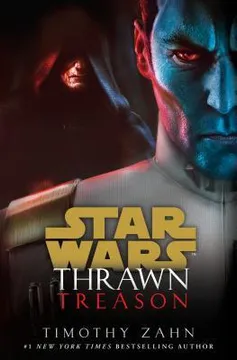
Thrawn: Treason received mixed reviews, with many praising Zahn's character development and intricate plotting. Fans appreciated the return of Eli Vanto and the exploration of Thrawn's loyalties. Some found the naval tactics and political intrigue engaging, while others felt the book lacked tension or resolution. Critics noted excessive exposition and pacing issues. Despite these concerns, many readers enjoyed the tie-ins to other Star Wars media and Thrawn's strategic brilliance. Overall, it was considered a satisfying conclusion to the trilogy, though some hoped for more.
Characters
Mitth’raw’nuruodo, Thrawn
The pattern-reading admiralA Chiss Grand Admiral serving the Galactic Empire, Thrawn studies behavior, military tactics, and visual art to understand opponents. He prefers evidence to assumptions and treats even failed experiments as useful information. His command style is controlled, but not detached from the people around him: he prepares for contingencies, trusts capable subordinates, and accepts responsibility when his actions create danger. His position is inherently difficult, since he believes the Empire can help protect the Chiss Ascendancy while remaining committed to the Emperor. Thrawn’s central tension is whether disciplined service can reconcile loyalties that political institutions insist must be exclusive.
Eli Vanto
The patient analystA human officer from a family of traders, Vanto first serves under Thrawn in the Imperial Navy and later joins the Chiss Defense Fleet. He is gifted at finding patterns in numbers, routes, and records, but his ability does not automatically give him confidence or standing. Among the Chiss, he struggles with language, rank, and the fear that he is useful only as an outsider with Imperial knowledge. His bond with Thrawn is a mixture of admiration and unanswered personal questions. Vanto wants responsibility, yet his deeper strength is learning to serve a community whose customs and future differ from his own.
Karyn Faro
The steady ship commanderFaro commands the Chimaera and is one of Thrawn’s most trusted senior officers. She is alert to people as well as procedure, notices when political decisions threaten operational readiness, and is willing to challenge an assumption when the evidence requires it. Her respect for Thrawn is grounded in experience, not blind faith, though she worries about how his choices affect her career and crew. Faro’s strength lies in translating strategic insight into command decisions under pressure. She also understands the Imperial political landscape better than Thrawn does, a difference that makes their partnership effective without making it frictionless.
Ar’alani
The Chiss fleet admiralAr’alani commands the Steadfast and leads the Chiss investigation into Grysk activity. She is disciplined, politically perceptive, and protective of her crew, especially the young navigators whose abilities are essential to Chiss space travel. Her history with Thrawn gives her a basis for respect, but not automatic agreement; she challenges his choices when they put Chiss people at risk or threaten the Ascendancy’s secrets. Ar’alani’s leadership balances hard military judgment with personal responsibility. She is willing to cooperate with Imperial forces when the threat demands it, while remaining alert to the dangers of allowing cooperation to become dependence.
Brierly Ronan
Krennic’s watchful aideAn assistant director on Krennic’s Stardust project, Ronan is proud of his access, his competence, and his loyalty to the project. He distrusts military leaders who treat civilian authority as secondary, and he tends to interpret secrecy as a political maneuver. His confidence can harden into contempt, especially toward people he considers disloyal or naïve. Yet Ronan is capable of performance and adaptation when circumstances strip away the protection of his title. His deepest conflict is between obedience to Krennic’s interests and a broader sense of what the Empire may need, a conflict he does not easily admit even to himself.
Grand Admiral Savit
The cultivated fleet rivalCommander of the Third Fleet and a composer from a prominent Coruscant family, Savit understands that Imperial power is built through both military force and social influence. He is polished, shrewd, and confident in his ability to read political motives. His musical work reflects the scale of his ambition and the way he sees command as an arrangement of people and forces. Savit is not simply a careerist: he is concerned about the resources consumed by Stardust and the vulnerability of the wider fleet. His flaw is his certainty that private disobedience can be justified whenever he believes his judgment serves the Empire.
Orson Krennic
The Stardust directorKrennic directs Project Stardust and fights to keep its resources under his control. He is ambitious, forceful, and deeply invested in the project’s success, which he treats as proof of his own judgment as well as a strategic necessity. He uses subordinates such as Ronan to monitor rivals and preserve his advantage. Krennic’s confidence makes him effective at pushing a project through Imperial bureaucracy, but it also narrows his attention to the institution he leads. The conflict with Thrawn exposes how easily a debate about military priorities becomes a personal contest.
Emperor Palpatine
The imperial arbiterPalpatine presides over the dispute between Thrawn, Tarkin, and Krennic, turning their competing claims into a test of usefulness and loyalty. He encourages rivalry when it serves him, then judges the consequences from a position above ordinary accountability. His interest in Thrawn is real but conditional: he values the Grand Admiral’s abilities while watching for divided allegiance. Palpatine’s governing instinct is to convert relationships into leverage, whether he is considering a political alliance or directing an operation on Lothal.
Grand Moff Tarkin
The calculating sponsorTarkin sets the contest that forces Thrawn to confront the gralloc crisis and places the Defender program at stake. He is composed, strategic, and adept at letting rivals believe they are acting freely while he shapes the terms. His support for Thrawn is useful but not sentimental; he sees the admiral as a means to expose Krennic’s weaknesses and defend what he considers the Empire’s interests. Tarkin’s political fluency contrasts with Thrawn’s operational focus.
Vah’nya
The enduring navigatorA twenty-two-year-old Chiss navigator whose Third Sight has lasted unusually long, Vah’nya is more socially open than the younger navigators aboard the Steadfast. She treats Vanto with warmth and curiosity, helping him feel less isolated among the Chiss. Her ability is vital, but she is not merely a tool of navigation: she has fears, attachments, and a strong sense of responsibility toward other navigators. Vah’nya’s connection to Un’hee’s experiences forces her to confront the danger of Grysk control and to decide what risks she is willing to take.
Un’hee
The rescued young navigatorA young Chiss navigator abducted by the Grysks, Un’hee has spent years being forced to guide their ships. She is frightened and deeply affected by captivity, yet her knowledge of Grysk routes makes her important to the Chiss response. Her survival depends on a Chiss sensory technique that the Grysks misunderstand. Un’hee’s story reveals both the Grysks’ exploitation of navigators and the quiet forms of resistance available to those held under their control.
Dayja
The undercover ISB agentAn Imperial Security Bureau agent working undercover in Tiquwe, Dayja first appears as Mole, a nervous slicer. Beneath the disguise is a capable operative who understands how criminal ports work and can move through them without relying on official rank. He intervenes when Sisay’s gang threatens Vanto and Ronan, then helps them reach the hidden cargo evidence. Dayja is pragmatic and resourceful, but he does not treat every criminal as disposable; his preference for arrest and interrogation over killing distinguishes him from the death troopers.
Admiral Pryce
Lothal’s imperial governorThe governor of Lothal, Pryce oversees the planet while Thrawn is away. Faro worries that Pryce’s emotional investment in the conflict there may impair her judgment. Her position makes the political consequences of Thrawn’s temporary absence immediate.
Captain Gilad Pellaeon
The principled fleet captainPellaeon commands the Harbinger, one of Savit’s Star Destroyers. He is loyal to the Empire rather than merely to his superior, and he is willing to assess evidence before choosing whom to support. His independence becomes important when the Third Fleet must decide whether Savit’s orders still deserve obedience.
Governor Haveland
The Esaga sector governorHaveland governs the Esaga sector, where Stardust’s shipments pass through systems plagued by grallocs. She is forceful about protecting her jurisdiction and resents outside scrutiny. Her insistence that the shipping problem be solved helps draw attention to the region, though she is not established as the central organizer of the thefts.
Plot Devices
Grallocs and Clouzon-36
The false trailThe grallocs are large vacuum-dwelling creatures attracted to energy and Clouzon-36 fuel. Their attacks appear to explain why Stardust cargo ships disappear, allowing the real thieves to disguise deliberate jumps as accidents. Thrawn’s tests, including the electrical loop on a TIE Defender and the examination of a gralloc carcass, reveal that someone is exploiting the animals’ instincts. The creatures are both a genuine hazard and a tool in a larger scheme, which makes the investigation depend on distinguishing natural behavior from human manipulation.
TIE Defender program
The disputed weaponThrawn’s advanced starfighters have shields, hyperdrives, and strong weapons, setting them apart from ordinary TIE models. Their funding is threatened by Krennic’s Stardust project, so the gralloc wager turns the Defender program into the material stake of the novel’s opening conflict. The fighters also serve practical roles: one attracts grallocs, others fight the Grysks, and later they give Vanto and the Chiss a tactical advantage. The program represents competing theories of Imperial security, one based on distributed military capability and the other on a single overwhelming battle station.
Chiss Sight
Memory becomes navigationChiss navigators use Third Sight to guide ships through hyperspace without relying on ordinary Imperial navigation methods. Vah’nya’s Third Sight has lasted beyond its expected span, while the younger Un’hee’s memories of forced Grysk service contain routes to the enemy base. Through Second Sight, Vah’nya enters Un’hee’s mind to recover those routes, a process that risks both navigators. The ability is not simply a convenient map: it makes navigation inseparable from trust, memory, and the emotional cost of captivity.
Cloaked gravity-well generator
A trap turned weaponThe compact generator creates an artificial mass shadow that can pull ships out of hyperspace, then hides itself again behind a cloaking field. The Grysks use it to trap incoming vessels and prevent pursuit. Thrawn’s crews learn to locate the device through the gravitational effects it leaves in surrounding debris. Later, tractor beams let the Chimaera and Steadfast slingshot captured generators toward enemy formations, turning a mechanism designed for ambush into a way to disrupt Grysk movement and deliver fighters into attack range.
The communications triad
A hidden command linkThe Grysks use a triad of massive poles to communicate over long distances without relying on the Empire’s monitored HoloNet. Thrawn and Faro infer that two poles are tethered to the slowly rotating linked ships, while the third is hidden aboard a nearby cloaked warship. This arrangement explains why the base ships cannot simply depart and why their apparent configuration serves the Grysks’ own control of captives. Finding the triad exposes the communications network, gives the Imperial and Chiss forces a way to locate the concealed ship, and makes the base vulnerable when its relay is destroyed.
Star Wars: Thrawn Series
About the Author
Download PDF
Download EPUB
.epub digital book format is ideal for reading ebooks on phones, tablets, and e-readers.








