

Plot Summary
A Door Beneath Birch Mountain
In 1933, Stella Wallace1 arrives in Tennessee with her quiet father,13 who leaves her with Motty Birch,3 her mother’s stern mother. While exploring the farm, Stella1 finds a chapel built over a cavern and glimpses a huge, pale creature4 in its darkness. Motty3 drags her out and forbids her to return.
Stella1 wants to tell her father,13 but he looks at her with such distance that she swallows the story. He drives away without promising when he will come back. The creature4 has filled her with wonder; her father’s13 departure teaches her a more ordinary lesson: the people she needs can leave without explaining themselves.
The opening binds two kinds of abandonment together without treating them as equivalent. Stella’s discovery offers an intimacy so overpowering that it feels like recognition, while her father’s silence leaves her with no language for ordinary rejection. That contrast helps explain why the cave can become more than a supernatural mystery: it offers a child who feels unwanted the possibility of being chosen. Motty’s prohibition protects Stella, but it also makes secrecy the first condition of belonging. The book’s central danger begins not with a monster’s attack, but with a child’s powerful wish to be needed.
Motty’s Unfinished Welcome
Fifteen years later, Stella1 is a successful moonshine maker, working with her Black business partner, Alfonse Bowlin,7 and using the fictional Uncle Dan as cover. A deputy brings news that Motty3 has died. Stella1 drives to the cove before dawn, where she finds Motty3 laid out beneath a Bible Stella1 left behind years earlier.
A small puncture near Motty’s3 chest makes Stella1 suspect the creature4 killed her. Someone runs from the house, and Stella1 chases the elusive Sunny,2 her ten-year-old cousin,2 into the woods. At the chapel, Stella1 finds the cave entrance sealed with concrete. Abby Whitt,6 the farm’s longtime caretaker, confirms Sunny2 is nearby, but not why Motty3 sealed the passage.
Stella’s return is both an act of responsibility and a retreat into the past she had tried to make irrelevant. Her trade has given her money, expertise, and a partnership built on mutual respect, yet the old family crisis can still summon her at once. The sealed cave and the unexplained mark on Motty’s body turn grief into investigation, while Sunny’s flight makes the child a person to protect rather than a piece of family property. Stella initially interprets evidence through the belief system she escaped. Her certainty that she knows what happened will soon prove as fragile as the family’s scriptures.
Hendrick’s Family Scriptures
Back in 1933, Stella1 learns farm work under Motty3 and finds an ally in Abby,6 who treats her curiosity seriously even when he will not confirm what she saw in the cave. Uncle Hendrick5 arrives with The Book of Clara, a family history of the first Birch woman to meet the mountain creature.4 His commentary calls Stella1 specially chosen and promises a role in a family revelation.
Stella1 devours the book, then catches Motty3 entering the chapel alone and hears her use a secret name for the being:4 Ghostdaddy.4 Years later, at school, Stella1 meets Lincoln Rayburn, called Lunk,9 the preacher’s12 son. Their arguments and his attention give her a first, uncertain foothold among people her family distrusts.
Hendrick’s book turns a private encounter into an inherited institution. Its paired columns appear to preserve testimony, but his commentary teaches Stella what she is expected to think before she can judge the experience herself. Motty resists his authority without giving Stella a usable alternative; Abby offers warmth but withholds certainty. The child therefore has several adults around her, yet none gives her an uncontested account. Lunk’s arrival matters because it introduces a form of attention not organized around the cave. Stella’s curiosity, however, is already being shaped by a family narrative that makes being exceptional feel like the closest thing to being loved.
Oil Before the Descent
On Stella’s1 twelfth birthday, Hendrick5 gathers the Birch elders to anoint her before her first formal communion. Motty3 resents the ceremony, even ruining Stella’s1 special dress during a fight over serving the men. At night, she nevertheless leads Stella1 down to the cavern and decides when the girl must leave.
The creature4 touches Stella’s1 palms, opening wounds and flooding her with thoughts she cannot hold. When she wakes, she says it is alone and dying, but Motty3 treats the experience as a measured duty, not a romance. Hendrick5 records Stella’s1 words and interprets them as a promise of divine transformation. Stella1 wants to return; Motty3 controls the key, the timing, and the terms.
The communion is at once an encounter, a bodily injury, and a ceremony managed by people competing to define it. Stella experiences overwhelming contact, but Hendrick translates that experience into doctrine while Motty limits its duration. Their competing authority leaves Stella with a paradox: the revelation feels personally undeniable, yet its public meaning belongs to others. The damaged dress anticipates the cost of becoming an emblem for the family. Stella’s longing to return is not simply religious conviction; it is attachment to an encounter that made her feel recognized. The elders’ promise of immortality offers a story of reward where the experience itself has supplied no clear assurance.
A Funeral Full of Claimants
Back in 1948, Stella1 discovers that Hendrick5 has turned the family faith into a church with outside followers. At Motty’s3 crowded funeral, Sunny2 appears in Stella’s1 old communion dress, studies Motty’s3 body, and leaves with Abby.6 Hendrick5 wants to take the girl to Georgia, where he can raise her within the church. Stella1 confronts him about opening the family’s secrets to strangers, but first must secure Motty’s3 burial.
Elder Rayburn12 refuses the family cemetery, partly because he blames Stella1 for his son Lunk’s9 death and suspects Sunny2 is Lunk’s9 child. Stella1 rejects the accusation and the attempted bargain. The park superintendent16 then explains that Motty’s farm may be preserved as a historic site, making the cave’s future uncertain.
The funeral assembles competing claims over the same ground: kinship, religious authority, historical preservation, and Stella’s unresolved guilt. Hendrick treats Sunny as both a child he loves and the next link in a public mission; the park sees the Birch farm as a curated remnant of a displaced community. Rayburn’s demand that family history answer for his grief turns an old romantic tragedy into leverage. Stella’s blunt refusal to trade Sunny’s identity for burial rights is a real act of resistance, but she remains uncertain what care requires. Each institution offers to protect something while claiming the right to decide what it means.
The God Comes Outside
In her teens, Stella1 finds other kinds of instruction: Abby6 teaches her to drive and make moonshine, while Merle Whitt8 introduces her to biology and scientific journals. Lunk9 becomes her tentative sweetheart, but Stella1 keeps the relationship apart from her secret life.
After learning that Motty3 controls access to the cave, Stella1 takes the chapel key and visits the creature4 alone. It comes to her repeatedly, touching her without the violent communion that leaves her injured.
One night it emerges from the mountain and embraces her beside the hogpen. Stella1 interprets its warmth as love and imagines she has escaped Motty’s3 rules. Meanwhile, she asks the elders to let her read the original records; they insist Hendrick’s5 interpretations are trustworthy.
Stella’s growing independence is real but uneven. Science, driving, and work give her methods for testing the material world, yet her most intimate encounter remains beyond any shared system of verification. She sees the creature’s voluntary tenderness and reads it through a human need for reciprocal love. That interpretation is psychologically understandable, especially after years of being treated as a child or a vessel, but it confuses contact with consent and affection with care. Her challenge to Hendrick’s commentary also marks a shift: Stella is no longer satisfied with being the subject of someone else’s account. She wants access to the evidence, not just the prestige attached to it.
The Georgia Bargain
After Motty’s3 burial is arranged at the farm, Stella1 visits Sunny2 at Abby’s6 cabin and asks what she wants. Sunny2 chooses Hendrick,5 who has promised tutors and a home beyond the cove. Stella1 checks the girl’s palms and finds no communion scars, then warns her that Hendrick’s5 teachings leave out the danger.
Still unable to raise Sunny2 herself, Stella1 agrees to let Hendrick5 take her, but demands unrestricted visits and forbids him from bringing the girl back to the cave without Stella.1 She also gets the family’s iron skillets. At the funeral gathering, Stella1 learns the park may preserve the farm, while her moonshine assistant Hump17 ruins a major batch with barbecue briquettes. She repairs the order, then asks Alfonse7 to obtain dynamite.
Stella’s bargain is a compromise made under pressure, not a settled judgment that Hendrick is safe. Her insistence on access acknowledges a responsibility she had evaded, while her decision to let Sunny go reflects her distrust of her own capacity to parent. The ban on returning to the cave is the crucial condition: Stella is trying to protect the child without exposing the secret or confronting the creature directly. Her simultaneous repair of a ruined whiskey order shows how practical competence helps her avoid emotional decisions. Asking for explosives changes that avoidance into a plan, though she has not yet admitted what she intends to destroy.
A Child in the Sow
In 1938, Motty3 finally explains that earlier Revelators suffered terrible consequences. Her aunt Esther drowned herself after a childhood visit to the river; Stella’s mother, Lena, lost herself after many long communions and died weeks later.
Stella1 has been communing alone, and Hendrick5 agrees to bring her Lena’s book, but Motty3 burns Stella’s own handwritten record when she reveals that the creature4 is dying and seeks a surviving child. Stella1 continues anyway. After a prolonged communion, Motty3 helps her deliver a red-skinned baby2 from a sow.
The child is alive, but Lunk,9 who has come to elope with Stella,1 sees the birth and flees. The creature4 appears outside, and Stella’s1 emerging filaments pierce Lunk9 as she tries to stop him. He dies; Stella1 leaves the cove with the baby.2
The family’s sacred succession is revealed as a bodily process concealed by the language of prophecy. The women’s records describe spiritual calling, while Motty’s account makes the cost legible as exhaustion, death, and repeated attempts to produce a viable child. Stella’s decision to continue is neither simple fanaticism nor free choice: she has been taught that this work gives her life purpose, and she believes the creature’s survival depends on her. Lunk’s death exposes the harm her devotion can do to someone outside that system. The newborn forces a new ethical question. Stella has helped create a child under conditions she barely understands, yet she chooses to carry her away.
The Chapel Breaks Open
In 1948, Stella’s1 agreement unravels when Hendrick’s5 followers break through the concrete sealing the chapel floor. Stella1 fires a warning shot, then descends to retrieve a follower who entered the cave and died. At her moonshine farm, she finds Sunny’s2 hands producing delicate, shining filaments that can pierce a mouse.
Sunny2 says she is the creature’s daughter2 and admits that she killed Motty3 when Motty3 tried to stop her. Before Stella1 can take her away, sheriff Whaley18 arrives with Hendrick5 and arrests Stella.1 Sunny2 runs to Hendrick,5 who still believes he can guide her. He brings the girl back to the chapel and prepares a filmed communion, convinced she can summon the being4 into public view.
The breach of the chapel converts theological ambition into immediate physical danger. Hendrick’s followers treat the sealed entrance as an obstacle to be removed; Stella understands too late that a stranger’s curiosity can become fatal. Sunny’s filaments complicate Stella’s protective role: the girl is not merely vulnerable but capable of frightening violence, and her admission of Motty’s death overturns Stella’s confident reading of the puncture. Hendrick remains dangerously underinformed because his authority depends on interpreting the child as a symbol of his faith. The camera and recording equipment sharpen the conflict between private experience and public spectacle. He wants proof; Stella knows that exposure may destroy everyone involved.
A Ring in the Jail
Held without formal charges, Stella1 receives food from Mary Lynn Rayburn,11 Lunk’s sister.11 Mary Lynn11 reveals that Lunk9 had given Stella1 a small engagement ring and believed they would run away together. Stella1 admits she had never loved him as he loved her and had encouraged his hope because she wanted an escape from the cove.
She cannot claim she caused the crash that killed him, but she accepts that her choices helped set him on the road. Mary Lynn11 refuses to help until Stella1 faces this truth, then leaves without securing her release. Pee Wee15 brings a lawyer, and Sheriff Whaley18 lets Stella1 go. She drives back to the cove, finds Abby6 beaten and the Winchester stolen, then reaches the chapel as Sunny2 enters the cave.
Mary Lynn’s visit strips away the protective story Stella has used to survive. The ring, now recognizable as the keepsake Motty passed to Sunny, gives the past a physical object that connects Stella’s selfish escape plan to the present family conflict. Stella’s guilt is not a neat confession of legal responsibility; it is the harder recognition that she treated Lunk’s devotion as an instrument. Mary Lynn refuses easy forgiveness, and her refusal prevents Stella from turning regret into a claim on someone else’s sympathy. The parallel crisis with Sunny makes the reckoning urgent. Stella cannot undo what she did, but she can decide whether guilt will become another excuse to abandon a child.
Threads Across the Cave
Stella1 breaks into the chapel and tries to stop the ceremony, but Sunny2 descends before she can reach her. Abby6 returns to help, and Brother Jerome points a shotgun at him. Stella’s1 filaments emerge and kill Jerome. She cuts the generator, enters the sanctuary in darkness, and kills Brother Paul, Hendrick,5 and another follower as they try to stop her.
Wounded, she enters the cave and finds Sunny2 joined to the creature4 by hundreds of threads. The girl is entranced, but asks Stella1 to wait. Stella1 pulls the filaments free from the creature4 and Sunny,2 ending their connection. The creature4 falls still. Stella1 touches its body and finds no breath or pulse: the being4 she worshipped is dead.
The climax makes protection inseparable from violence. Stella’s attempt to save Sunny repeats the coercive logic she once accepted: she decides that the child cannot consent to the danger, then uses force to interrupt it. Yet she acts against a system that has repeatedly made girls bear the cost of male interpretation and religious ambition. Her filaments, once experienced as divine contact, become tools of rescue and murder. The creature’s death does not settle whether Stella’s intervention was wholly right; Sunny had asked her to wait, and Stella could not trust the request. The silence afterward removes the authority that once organized Stella’s life, leaving her with responsibility rather than revelation.
Fire Takes the Scriptures
Stella1 carries the unconscious Sunny2 out, while Abby6 helps her get the stranded Buick moving. She sends them to Merle8 and Pee Wee,15 then returns to the cove with Alfonse7 and his dynamite. They collapse the cave and set the chapel ablaze, concealing the creature4 and the bodies.
Stella1 later enters Hendrick’s5 Georgia home and takes the original handwritten Revelations from his safe. She warns Veronica10 not to circulate the printed versions, then finds her own book among the manuscripts and burns it with whiskey.
Alfonse7 agrees to keep the moonshine business running without her. Stella1 returns to Sunny2 at Merle’s8 home, where the child wakes and speaks of forgiveness and a plural presence. Stella1 has ended the church’s record, but not the mystery of what survived.
Destroying the cave is an act of protection, but also an attempt to control what future generations can know. Stella takes the manuscripts because Hendrick’s interpretations have shaped the family, then burns even her own record rather than replacing his authority with hers. Her choice risks repeating Motty’s secrecy, yet it also refuses to make Sunny a public object of belief. The final uncertainty matters: the girl is safe in a human household, but her words suggest that the creature’s legacy may not have ended with its body. Stella’s future is therefore not a clean escape. She has exchanged religious certainty for the more difficult work of staying near someone whose needs she cannot fully predict.
Analysis
The novel makes belief inseparable from interpretation. The creature4 communicates through bodily contact and alien thought, but almost every human response turns that experience into a story: Hendrick5 builds doctrine and a church; Motty3 preserves private knowledge; Stella1 tries to distinguish the creature’s4 needs from the meanings imposed on it. None of these methods is neutral. Hendrick’s5 commentary grants him authority over the women whose experiences supply his scripture, while Motty’s3 secrecy protects the women at the cost of leaving them uninformed. Stella’s1 demand to read original records is therefore also a demand to be a subject rather than evidence.
The body is the book’s countertext. Red skin, wounded palms, filaments, pregnancies, and exhaustion contradict the church’s language of reward and spiritual elevation. The family calls repeated bodily sacrifice a calling, but the damage is concrete and unevenly distributed. Women bear it; men record and interpret it. Even the creature’s4 apparent affection cannot be trusted as human love, because its desires exceed the human scale and it does not explain itself. The horror comes partly from this mismatch, not from a simple division between benevolent faith and evil monster.
Historical displacement deepens the conflict. The park removes families from the cove, then preserves selected structures as a public account of their lives. Hendrick5 answers that loss by turning a hidden family practice into an institution, while Stella’s1 distillery offers a less grand but more tangible form of independence. Both preservation and religion can claim to protect the past while controlling its presentation.
Stella’s1 final choices resist easy redemption. She protects Sunny,2 but uses lethal force; destroys the creature’s4 home, but also destroys records; accepts responsibility for Lunk,9 without pretending regret can restore him. The ending leaves a question rather than a verdict: if Sunny2 carries something beyond herself, has Stella1 ended the cycle or merely changed its form? The answer remains uncertain because care cannot guarantee control, and freedom does not erase inheritance.
Review Summary
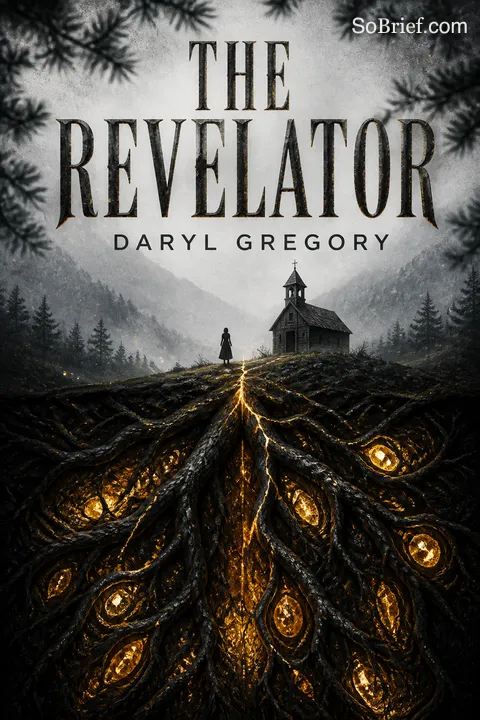
Revelator by Daryl Gregory is a southern gothic horror novel set in 1930s-40s Appalachia about Stella, who communes with a mysterious entity called Ghostdaddy living in mountain caves. The story alternates between Stella's childhood and adult years as a bootlegger returning home. Reviews praise the atmospheric writing, complex characters, and earned plot twists, though some found the pacing slow. Many compare it to Flannery O'Connor and Stephen King, highlighting its folk horror elements and religious commentary. Readers appreciated the historical setting and Stella's character, though opinions varied on scariness levels.
People Also Read





Characters
Stella Wallace
Cove-born distillerStella is a sharp-minded, guarded woman raised between a distant father13 and a demanding Birch family. Her vivid skin marks her as kin in a community that treats the family as suspect, while her curiosity makes her question both religious instruction and practical convention. She finds independence through science, moonshine, and an unusual business partnership with Alfonse7. Her wit can become a shield, and her talent for taking control can obscure how much she owes other people. She wants to choose her own life, but struggles to distinguish escape from freedom and responsibility from self-punishment.
Sunny Birch
The guarded young cousinSunny is a solitary ten-year-old raised by Motty3 and protected by Abby6. Her unusual scarlet skin connects her visibly to the Birch women, while her quick judgment and bluntness make it clear she is not a passive child. She is curious about the family’s hidden history and drawn to the spiritual role adults have prepared for her. The competing care offered by Stella1 and Hendrick5 means she must decide whom to trust before she fully understands what each adult wants. Sunny’s stubbornness is both a defense against being managed and a sign of how little choice she has been given.
Mathilda Motty Birch
The fierce family guardianKnown as Motty, Mathilda is Stella’s grandmother1 and the eldest Birch woman. She runs the farm with hard discipline and decides when the younger women may approach the chapel. Her care is practical, often expressed through food, chores, and watchfulness rather than reassurance. She distrusts Hendrick’s5 interpretations and resists outsiders, but keeps crucial family knowledge to herself, believing that withholding it can protect the young. Motty’s authority gives Stella1 shelter and structure while also repeating the very control Stella1 resents. She is neither a simple tyrant nor an uncomplicated protector, but a survivor who has learned to manage danger through secrecy.
The God in the Mountain
The hidden mountain presenceThe creature beneath the Birch chapel is a pale, many-limbed presence whose touch brings pain, altered perception, and thoughts that human language cannot easily hold. The family calls it the God in the Mountain and gives it the intimate nickname Ghostdaddy. It does not explain itself directly, leaving the Birch women and Hendrick5 to interpret its needs through bodily encounters and inherited records. Its warmth can feel like affection, but its strangeness resists human ideas of consent, worship, and love. The creature is the center of the family’s faith and the force around which its secrets, ambitions, and fears gather.
Hendrick Birch
The ambitious interpreterHendrick is Motty’s younger brother3, a polished furniture businessman who becomes pastor of a church devoted to the mountain presence4. He records the Revelators’ experiences and adds commentary, believing that their fragmentary messages require his interpretation. His devotion is sincere, but so is his desire to lead, expand the church, and shape its future. Hendrick’s charm makes followers feel welcomed, while his certainty can make him overlook what the women around him know. He sees himself as a servant of revelation, though he is also the person who determines what the revelation means to everyone else.
Absalom Abby Whitt
The loyal farm caretakerAbby is Motty’s3 longtime hired man, Stella’s1 childhood confidant, and a skilled moonshiner and taxidermist. His great size contrasts with his patient manner; he can make a child feel safe without pretending to have all the answers. He teaches Stella1 practical skills and quietly helps the Birch women, though his reluctance to interfere in family matters can frustrate her. Abby’s affection is steady but restrained, shaped by grief and by the knowledge that protection can come at a high cost. He offers Stella1 and Sunny2 something the family religion does not: care that asks for no revelation in return.
Alfonse Bowlin
Stella’s business partnerAlfonse is a Black veteran and Stella’s1 trusted partner in making and selling moonshine. He brings discipline, sales skill, and a clear-eyed understanding of the racial barriers surrounding their work and friendship. The two call their arrangement a marriage, but its foundation is mutual respect and shared profit rather than romance. Alfonse challenges Stella1 when she takes reckless risks, then stands by her when she asks for help. He values loyalty without confusing it with obedience, and his practical support gives Stella1 a model of partnership that does not depend on family hierarchy or spiritual authority.
Merle Whitt
The scientist and steady friendMerle is Abby’s sister6, an academic biologist, and a close friend to Stella1. Her crowded home and scientific books offer Stella1 a world of inquiry beyond the cove. Merle notices when Stella1 is hiding pain and asks questions that cannot be deflected with a joke. Her care is direct but not possessive; she helps without demanding that Stella1 become easy to understand. Merle’s trust in education and observation stands in productive contrast to the Birch family’s reliance on inherited revelation. She gives Stella1 both intellectual tools and a place to return when self-reliance begins to resemble isolation.
Lincoln Lunk Rayburn
The preacher’s hopeful sonLunk is the son of Elder Rayburn12 and Mary Lynn’s older brother11. He is earnest, religious, and awkwardly affectionate, with a mind more curious than his father12 expects. Stella’s1 sharp jokes unsettle him, but he keeps returning because he admires her intelligence and wants a life beyond his father’s12 shadow. His courtship gives Stella1 a glimpse of ordinary intimacy, though her ambitions and secrets make that possibility unstable. Lunk’s wish to become a preacher reflects both genuine belief and a hunger to be recognized as his own person.
Veronica Birch
Hendrick’s charming daughterVeronica, usually called Vee, is Hendrick5 and Ruth’s daughter14 and Stella’s cousin1. She is fashionable, sociable, and skilled at turning discomfort into banter. Her letters keep a line open to Stella1 during years of estrangement, and their reunion recalls a childhood closeness neither woman can entirely recover. Veronica is more perceptive than her breezy manner suggests, but she is also deeply shaped by her father’s5 church and expectations. She wants affection and security, yet her loyalty to family can place her on the side Stella1 fears.
Mary Lynn Rayburn
The grieving truth seekerMary Lynn is Elder Rayburn’s daughter12 and Lunk’s younger sister9. Gentler and more watchful than her father12 or brother9, she carries a private understanding of Lunk9 that the public story cannot contain. She approaches Stella1 with sympathy, but does not confuse sympathy with absolution. Her questions expose how silence and family loyalty can preserve a false account long after the people involved have moved on.
Elder John Rayburn
The rigid local preacherElder Rayburn leads the Primitive Baptist congregation and is Lunk9 and Mary Lynn’s father11. He believes scripture is complete, church order should remain fixed, and moral boundaries must be defended. His concern for his children is real, but grief and suspicion make him punitive toward Stella1 and the Birch family. He represents a faith built on established text and communal discipline, in contrast to the Birches’ claim of continuing revelation.
Ray Wallace
Stella’s absent fatherRay Wallace is Stella’s father1, a taciturn man whose difficulty speaking about emotion leaves his daughter1 unsure where she stands with him. He brings her to Motty’s3 farm and leaves her there while he looks for work. His silence is not dramatic cruelty, but it has lasting consequences for a child who already feels marked as different.
Ruth Birch
Hendrick’s watchful wifeRuth is Hendrick’s wife5 and Veronica’s mother10. Careful, proper, and protective of her household, she notices the social consequences of every unusual choice. She can be sharp with Stella1, whose independence unsettles her, but she also keeps close watch over her daughter10 and the family’s standing.
Pee Wee Simms
The moonshine distributorPee Wee is Abby’s brother-in-law6 and a polished distributor who helps Stella1 build a wider market for her liquor. His charm and attention to appearances make him an effective salesman and a useful friend. He supports Stella1 through practical help, without demanding that she explain every part of herself.
Tom Acherson
The park’s genial officialTom Acherson works for the national park and oversees changes to the cove. His cheerful manner contrasts with the painful displacement his job represents. He can be personally kind while serving an institution that decides which homes and histories will remain visible.
Hump Cornette
The careless still assistantHump is Stella’s1 inexperienced assistant at the Acorn Farm. He is loyal but not very quick to understand instructions, and his mistakes threaten the quality of Stella’s1 carefully controlled operation. His mishap reveals how much of her independence depends on trusting other people.
Sheriff Don Whaley
The law’s local pressureWhaley is the county sheriff and an old acquaintance of Hendrick5. He polices Stella’s1 illicit business while making decisions that favor personal loyalties over formal procedure. His authority turns a family dispute into a question of custody and confinement.
Plot Devices
The chapel cave
A hidden site of contactA small chapel on the Birch farm conceals a stairway into the mountain, where the family encounters the creature4 it worships. The cave makes belief physical: communion leaves wounds, changes perception, and has consequences the family’s religious language cannot fully contain. Its entrance is locked, sealed, reopened, and finally destroyed as control over the site shifts between Motty3, Stella1, and Hendrick5. It also gives the park’s plans for the cove immediate stakes. Whoever controls the entrance controls access to the family’s most dangerous secret.
The Birch Revelations
A family history under disputeThe Birch women’s experiences are recorded in books, then framed by Hendrick’s5 commentary. These manuscripts preserve important events while also revealing how much power belongs to the person who chooses their meaning. Motty3 resists the written record and trusts knowledge passed between women; Stella1 eventually keeps notes of her own. The family’s competing methods of memory drive conflicts over who may read, interpret, and publish the truth. The books turn a supernatural inheritance into a struggle over authorship and authority.
The still and Acorn Farm
Independence made by handStella’s1 moonshine operation gives her money, expertise, and an identity outside the cove’s religious hierarchy. The Acorn Farm is an engineered distillery built for privacy and consistency, and its success depends on the same close attention to process that the Birch faith claims for revelation. The still also creates practical obligations: customers, suppliers, workers, and business partners can all disrupt Stella’s1 plans. Her work is not merely a colorful sideline; it is the material foundation that lets her make choices and help others.
The Birch women’s bodies
Inheritance written in fleshThe women’s red skin, scarred palms, and changing relationship to the creature4 make family history visible in their bodies. Their physical experiences complicate the church’s promise that communion is purely spiritual. Stella1 and Sunny2 also develop filaments that can touch or pierce living bodies, transforming a sign of divine connection into a source of danger and agency. This device links generations while raising the question of whether inheritance is destiny or a burden that can be refused.
The park’s acquisition
A closing window on the coveThe national park’s acquisition and preservation plans threaten the Birch farm, chapel, and the privacy that has protected the cave. The government’s pressure is not an abstract backdrop: it forces the family to consider leaving, makes secrecy harder, and gives Hendrick5 an argument for acting quickly. The park also turns local life into a historical exhibit, preserving selected buildings while deciding which stories deserve to remain. Its presence places religious conflict inside the larger history of communities displaced in the name of conservation.
Download PDF
Download EPUB
.epub digital book format is ideal for reading ebooks on phones, tablets, and e-readers.








