

Key Takeaways
Treat your inherited Christian script as a draft, not divine dictation.
Faith shapes a script. Viola describes conversion as the beginning of a religious script, expanded by churches, traditions, and ministries. Much of it may reflect Jesus, but some lines come from culture or habit rather than from Christ. Spiritual formation means examining those inherited assumptions and changing what conflicts with Jesus’ character and teaching. The work begins with accepting that familiar beliefs are not automatically beyond revision.
Revision is ongoing. The book applies this idea to how Christians interpret Scripture, speak about God, experience the Spirit, and understand the gospel. Its opening joke about Christians responding differently to a stop sign shows how the same words can be filtered through sharply different religious habits. The point is not to mock every tradition, but to notice the lens before mistaking it for the whole truth.
The value of this image is its account of belief as learned, not merely chosen. Social psychology similarly finds that group norms can become invisible precisely because they feel like common sense. That makes self-examination more demanding than swapping one doctrine for another: the reader must ask which assumptions are actually shaping interpretation. Still, revision needs a standard. Without a clear account of what counts as Christlike, questioning inherited beliefs can become endless suspicion rather than discernment.
Hear God through Scripture, prophetic insight, wisdom, and the whole community.
Three modes of guidance. Viola reads Jeremiah’s three references to law, prophetic counsel, and wisdom as three ways God communicates. The priestly mode asks whether a course is faithful to what God has already said. The prophetic mode asks what God may be calling for now. The wise mode considers experience, likely consequences, and what may prove fruitful. Each mode can go wrong alone: Scripture can become rigid rule-keeping, prophecy can become unreliable certainty, and wisdom can shrink into mere human calculation.
Discern together. Viola argues that no individual possesses the whole mind of Christ. A local church can seek it through different members, whose contributions may carry different emphases. The community tests a claimed prophetic insight against Scripture and wisdom, while also allowing Scripture and experience to be challenged by timely insight. This is a model of shared discernment, not a license for any group to claim infallibility.
This account offers a useful corrective to single-method decision-making. In complex organizations, good judgment often combines precedent, fresh information, and practical forecasting rather than treating one source as decisive. Its strongest implication is that disagreement can supply missing information instead of merely obstructing unity. The risk is that a community can amplify its own biases, especially when leaders control who gets heard. Corporate discernment therefore depends not just on multiple voices, but on real openness to correction.
Say what you believe without making God your personal trump card.
Divine certainty can close discussion. Viola questions the habit of announcing that God directly instructed an ordinary personal decision. He recounts Sally, who repeatedly said God had directed her choices, then changed course weeks later. The problem is not that God cannot guide someone. It is that attributing a preference to God can make the speaker seem exempt from responsibility and make disagreement feel like opposition to God.
Own the interpretation. Viola observes that the New Testament letters generally express spiritual conviction in ordinary language rather than repeatedly presenting private impressions as direct quotations from God. His practical recommendation is to state the insight or decision plainly and remain accountable for it. A claim that God has spoken should not become a shield against questions, evidence, or the consequences of acting on it.
The central issue is not religious vocabulary by itself, but how authority functions in conversation. A claim attributed to an unquestionable source can shut down the ordinary checks that improve judgment. In that sense, the advice resembles intellectual humility in science: distinguish an observation from an interpretation, and make room for revision. Some traditions, however, treat testimony about divine guidance as a meaningful part of communal life. The safeguard is accountability, not a blanket ban on describing spiritual experience.
Use prayer to discern, not to disguise an unwillingness to help.
A polite refusal can vanish. Viola calls “Let me pray about it” a kind of Christian code when it repeatedly means no, but never returns with an answer. His examples include a teacher who needed someone to cover a class for her sick child, and a single mother whose church leaders delayed a decision until her electricity was shut off. In both cases, religious-sounding caution left someone else carrying the cost.
Be direct and dependable. Viola does not reject prayerful discernment, especially when a decision is complex or affects others. He argues that many everyday choices can be answered honestly using ordinary judgment. If the answer is no, say so; if more time is needed, name a time to respond. Prayer should deepen responsibility, not replace it.
This is a small linguistic habit with large relational consequences. In communication research, indirect refusals can protect the speaker from immediate discomfort while transferring uncertainty to the listener. That makes clarity a form of care, particularly when someone is asking for practical help. The book’s critique should not make every request an automatic yes: boundaries matter, and rushed choices can harm. Its sharper point is that a sincere no is often kinder than a pious maybe that leaves another person stranded.
Translate religious dialects before mistaking style for theological disagreement.
Different rules for spiritual talk. Viola calls the habitual ways Christians argue about faith spiritual conversational styles. He sketches three common patterns. Charismatic speakers often appeal to personal revelation. Quoters settle questions by citing biblical passages, sometimes without context. Pragmatic speakers focus on what a belief produces in lived experience. Each pattern treats its own kind of evidence as persuasive, so two Christians can talk past each other while both sincerely affirming biblical authority.
Find the hidden disagreement. A Charismatic may hear careful interpretation as spiritually cold; a Quoter may hear a personal revelation as unverifiable; a Pragmatic may want evidence of real-life consequences. Before judging a person’s faith or intelligence, ask what kind of evidence they trust and what they think the conversation is meant to establish. The styles are tendencies, not permanent labels, and not every disagreement is merely stylistic.
The framework resembles work on communication across professional cultures: people may agree on a goal yet disagree about what counts as proof. Naming those assumptions can lower the temperature and clarify the real dispute. The classification is most useful as a listening prompt, not a diagnostic label. Applied carelessly, it can flatten diverse Christians into three caricatures or excuse weak reasoning as merely a different style. The test is whether the framework makes a conversation more precise and generous.
Preach Christ’s indwelling life, not merely a moral imitation project.
More than copying Jesus. Viola argues that Christian life is not simply trying harder to reproduce Jesus’ outward behavior. The gospel includes Christ living within believers, so the question shifts from what Jesus might imitateably do to how his life can shape a person’s actions. He connects this to Jesus’ dependence on the Father and Paul’s language of Christ living in the believer.
Begin before the fall. The book also urges readers to see the gospel through God’s purpose for Christ and creation, not only through humanity’s need for rescue. Christ is presented as existing before time, present in believers, and central to creation’s future. The new humanity begins in Christ, rather than in self-improvement of the old one. This makes Christian conduct a response to shared life with Christ, not a bid to earn acceptance.
This shifts moral formation from imitation as performance toward participation and identity. That can help explain why rules alone rarely produce durable change: people need a reason to understand themselves differently, not just a list of behaviors to suppress. Yet inward language can be misused if it makes effort or accountability seem unnecessary. A grounded version holds both together: the believer’s identity is a source of change, while habits, relationships, and repair are where that claimed transformation becomes visible.
Do not use spiritual feelings as a meter for God’s nearness.
Presence and sensation differ. Viola distinguishes God’s actual presence from the feeling of that presence and from deliberately attending to God. He argues that, for believers, divine presence does not come and go with emotion. Someone may feel overwhelmed during worship, while another may be devoted without reporting such sensations. Neither experience alone proves more or less spiritual maturity.
Attention can be practiced. Drawing on the idea of practicing God’s presence, Viola recommends turning one’s attention toward God during ordinary life. The comparison is to a familiar part of the body: it remains present even when attention is elsewhere. The practice is intentional awareness, not an attempt to summon a sensation. Intense experiences may occur, but the book cautions against making them the measure of faith or the object of spiritual pursuit.
Separating conviction from emotional intensity can protect people whose temperament, health, or circumstances affect what they feel. It also makes spiritual practice more accessible outside dramatic services. The distinction resembles mindfulness, where attention can be directed without demanding a particular emotional result. Still, feelings are not meaningless: fear, comfort, and awe can reveal needs or shape religious life. They are better treated as information about experience than as a reliable verdict on divine favor.
Treat the dark night as uncertainty, not proof that God has left.
A lost sense is not abandonment. Viola uses the traditional phrase dark night of the soul for a period when a believer feels that God is absent, prayer feels empty, and spiritual affection seems to have vanished. He distinguishes this experience from a dry spell or punishment for wrongdoing. His counsel is that an absence of felt closeness does not establish that God has departed.
Faith without reassurance. The book presents such a period as a crisis that may require relying on faith without emotional confirmation. Its analogy is an ever-present feature of life that goes unnoticed until its familiar sense disappears. The experience can be frightening, and Viola urges readers not to confuse the loss of spiritual feeling with the loss of God’s presence.
This can reassure readers who assume that emotional numbness means spiritual failure. Yet intense or persistent despair can also have psychological or medical causes. A spiritual interpretation should not prevent someone from seeking appropriate support, especially when daily functioning or safety is affected. The most humane use of the chapter is not to label suffering as a divine lesson, but to loosen one damaging conclusion: the absence of a comforting feeling does not by itself prove abandonment.
Let loss unsettle your timetable without promising every ending improves.
The biblical pattern of reversal. Viola reads Hebrews’ account of the old covenant giving way to the new as a pattern: God may remove what came first to establish something new. He traces this through stories such as Joseph, whose imprisonment preceded authority in Egypt, and Aaron’s dead staff, which produced buds after a night in darkness. These stories encourage readers not to assume that a painful chapter is the final one.
Hope is not a forecast. The book’s claim that what replaces what is lost is better must be handled carefully. John the Baptist remained imprisoned, and Job’s restored family did not erase the loss of his first children. The stories can sustain hope that God may work through unseen circumstances, but they do not guarantee a matching replacement, a quick resolution, or an explanation for every loss.
The image of night before morning gives suffering a narrative horizon, which can help people endure uncertainty without treating it as meaningless. The necessary qualification is that hope becomes harmful when converted into a promise that every loss will be repaid in recognizable form. Job’s restoration cannot make his dead children interchangeable, and John’s imprisonment complicates any simple formula. The strongest version of the insight offers possibility without prediction: a painful ending may open new life, but no observer can guarantee how.
Measure spiritual gifts by Christlike character, not spectacle or claims.
Keep the gifts, question the packaging. Viola describes himself as post-Charismatic: he believes spiritual gifts remain active, while rejecting hype, inflated miracle stories, coercive practices, prosperity teaching, and claims that one dramatic experience proves spiritual maturity. He argues that the Spirit’s work should draw attention to Jesus rather than elevate the gifted person.
Look for the fruit. In a church he describes, members eventually stopped arguing over whether gifts were valid or invalid and laid those positions down. The gifts then appeared in a quieter, less performative way. For Viola, the test of spiritual life is not a striking encounter but a pattern of honesty, kindness, humility, and concern for others. He warns that Christ-centered language is not enough if someone’s conduct consistently contradicts it.
The emphasis on character supplies an ethical check for extraordinary claims: charisma should not grant immunity from scrutiny. This has a broad institutional parallel, since organizations need standards of conduct even when leaders are seen as unusually gifted. At the same time, skepticism can become a reflexive dismissal of experiences that do not fit familiar expectations. A balanced test asks both whether a claim is responsibly examined and whether its practical effects are compassionate, truthful, and non-coercive.
Stay teachable: Christ may arrive through people outside your circle.
No movement owns the whole Christ. Viola argues that believers know Christ through one another, not only through private devotion. A group may receive a valuable insight, then turn it into a boundary that excludes Christians who speak or worship differently. He calls fellowship more than friendly contact: it involves receiving and sharing what others contribute.
Expect to be surprised. The book recalls Jesus appearing in forms people found easy to overlook, and applies that pattern to Christians who lack familiar language, training, or customs. Diversity, in this view, can enlarge the community’s understanding rather than threaten its unity. That does not require accepting every claim; Viola explicitly distinguishes genuine Christian difference from teachings that abandon the biblical revelation of Christ. The discipline is to test ideas without assuming that one’s own circle has exhausted the truth.
This is a strong account of distributed knowledge: people with different experiences notice different features of a shared reality. It also explains why a group’s earliest insight can become a blind spot when it is treated as a complete map. Openness still needs boundaries, since not every disagreement is equally sound or harmless. The challenge is to distinguish core commitments from cultural preferences, and to make room for correction without pretending that all claims carry equal weight.
Ground moral change in new identity, not permissiveness or religious pressure.
Two distortions miss the point. In the afterword, Viola contrasts libertinism, which treats belief as compatible with an unchanged life, with legalism, which ties acceptance to compliance with added rules. He presents Paul’s gospel as a third way: believers are accepted in Christ and called to live in keeping with their new identity.
Identity leads to conduct. In Paul’s letters, as Viola reads them, reminders of what God has done come before instruction about behavior. For example, a Christian is urged to stop lying not to earn God’s favor, but because dishonesty belongs to the old life rather than the new one. Grace therefore neither excuses harm nor turns morality into a payment for acceptance. It grounds change in belonging and in Christ’s life within the believer.
This sequence offers a psychologically plausible alternative to both shame and moral indifference. People often change more sustainably when a desired behavior fits a valued identity, while fear-based compliance can encourage concealment. The account also preserves accountability by linking identity to observable conduct. Its caution is that identity language can become another slogan if communities ignore material pressures, entrenched habits, or the harm done to others. Grace can support change, but it does not remove the need for repair.
Analysis
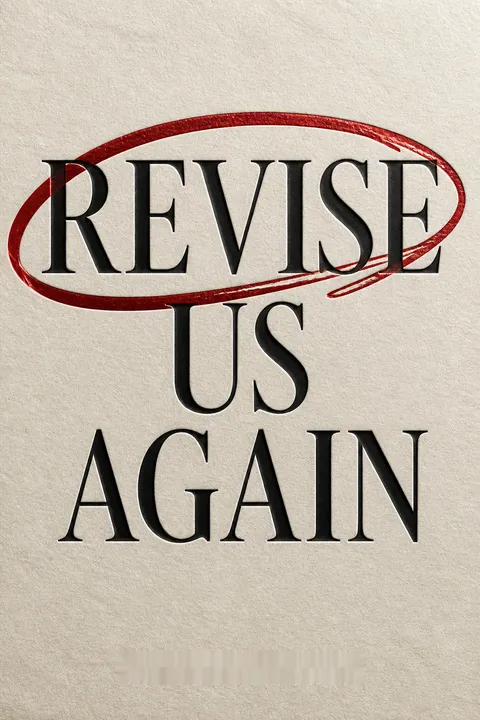
Revise Us Again is a Christian living book built around ten revisions of common religious assumptions, followed by an afterword on competing ways of understanding the gospel. Its main organizing idea is that people inherit a script through family, culture, and church, then mistake familiar lines for unquestionable truth. The book moves from discernment and religious language, through the gospel and spiritual experience, toward community, humility, and moral practice. Its recurring narrative pattern is disruption followed by a more Christ-centered understanding.
The book’s most useful contribution is not a new procedure but a change in posture. It asks readers to distinguish Scripture from their interpretation of Scripture, spiritual experience from claims made on its behalf, and Christ-centered speech from Christlike conduct. Its strongest chapters are concrete: a delayed refusal can leave someone without electricity, a claim of divine instruction can silence discussion, and a movement founded against sectarianism can reproduce the exclusion it condemns. These examples make abstract religious habits visible in ordinary relationships.
The central theological thread is participation: Christian life is described as Christ living in believers and believers learning Christ through one another. That framework binds together the argument for communal discernment, the critique of moral imitation as self-reliance, and the call to welcome unfamiliar Christian voices. The afterword gives the ethical consequence: grace is neither permission to remain unchanged nor a wage earned through rule-keeping.
The book also contains a tension worth holding. Its confidence that loss can prepare a better future may comfort readers, but it can overstate what suffering promises. Its own account of John the Baptist and Job points toward a more careful conclusion: hope can persist without a guarantee of visible restoration. At its best, the book invites continual correction while keeping Christ, rather than any single movement, experience, or method, at the center.
Review Summary
Revise Us Again by Frank Viola receives mostly positive reviews, with readers praising its fresh perspective on Christian life and spiritual transformation. Many found it thought-provoking and challenging, appreciating Viola's insights on communication styles, Christian language, and personal revival. Some readers noted its accessibility and brevity as strengths, while a few found it simplistic or unclear in its goals. Overall, reviewers commend the book for addressing rarely discussed issues in modern Christianity and offering biblical solutions for spiritual growth.
People Also Read



Glossary
rescripting
revising inherited religious assumptionsViola uses rescripting for the ongoing process of examining beliefs and habits acquired through upbringing, culture, churches, and Christian movements. The aim is to discard assumptions that conflict with Christ and reshape the person’s life around Christ’s character and teaching. It is a process of spiritual formation, not simply changing vocabulary or joining a different tradition.
God’s Three-Fold Speaking
three modes of divine guidanceViola’s interpretation of three biblical modes through which God communicates: Torah or established teaching, prophetic insight into present need, and wisdom shaped by experience and likely consequences. He argues that each mode corrects the weaknesses of the others. The framework is meant to encourage balanced discernment rather than reliance on one preferred source.
Spiritual Conversational Styles
habitual modes of faith discussionViola’s term for socially learned patterns that shape how Christians communicate about spiritual questions and what kinds of evidence they trust. He describes Charismatic, Quoter, and Pragmatic styles, associated respectively with personal revelation, biblical citation, and practical outcomes. Recognizing a style can clarify misunderstandings, but the categories are tendencies rather than fixed identities.
felt-presence of God
sensed experience of divine nearnessThe perceptible feeling that God is near, distinct in Viola’s account from the reality of God’s presence with a believer. He argues that feelings may be powerful or absent without proving that God has arrived, departed, or changed in favor toward someone. The term helps separate spiritual sensation from the theological claim of ongoing divine presence.
background consciousness of God’s presence
unnoticed awareness of divine presenceViola’s phrase for an abiding, often unnoticed awareness of God that forms the background of a believer’s life. It differs from deliberately focusing attention on God and from feeling an intense spiritual experience. He uses it to explain why the loss of a familiar sense of God may feel profound even when a person believes God remains present.
post-Charismatic
gifts without movement trappingsViola’s label for affirming that spiritual gifts remain active while rejecting practices he considers artificial, coercive, exaggerated, or centered on gifted personalities rather than Christ. It does not mean rejecting the Holy Spirit. It describes a critical stance toward aspects of Pentecostal and Charismatic culture while retaining belief in supernatural spiritual activity.
fellowship test
criterion for full Christian inclusionA belief or practice used, explicitly or implicitly, to decide whether another Christian is worthy of full fellowship. Viola’s examples include requiring baptism within a particular movement or treating membership in one group as the only valid spiritual experience. He warns that such tests can turn a distinctive practice into a gatekeeping device.
the dark night of the soul
loss of felt spiritual closenessA spiritual experience in which someone feels that God is absent and loses familiar feelings of prayer, joy, or affection toward God. Viola distinguishes it from punishment for sin and from an ordinary dry spell, and argues that lack of felt presence does not mean God has left. The phrase comes from Christian spiritual tradition, rather than being coined by Viola.
the gospel of the new creation
grace-shaped identity and conductViola’s description of Paul’s gospel as announcing what God has done in Christ and the new identity believers receive, then calling them to live in accordance with it. It rejects both permissiveness, which treats faith as having no moral consequence, and legalism, which makes acceptance depend on rule-keeping. Christian conduct is presented as the fruit of belonging to Christ.
About the Author
Download PDF
Download EPUB
.epub digital book format is ideal for reading ebooks on phones, tablets, and e-readers.








