Key Takeaways
1. Own Your Mindset: It's Your Choice to Change
Nothing is inherently good or bad, but your perception of it renders it so, and the negativity you encounter can be the fuel to keep you going when times get difficult.
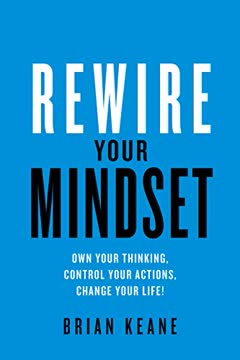
Embrace responsibility. The author's journey from self-sabotage and fear to confidence and belief began with a simple mantra: "own it, control it, change it." This means taking full responsibility for everything in your life—the good, the bad, and the ugly—as only then can you control and change it. Even negative experiences can be reframed as fuel for your drive.
Become your own hero. For years, the author allowed negative self-talk and external opinions to dictate his life, leading to unfulfilled dreams. The pivotal moment came during a grueling 230km Arctic ultramarathon, where a torn Achilles tendon tested his resolve. He realized that nobody was coming to save him; he had to become his own hero by confronting his inner enemy and pushing through fear.
Inward success first. True success isn't just about external achievements like a profitable business or completing extreme races. It's about achieving inward control over your thoughts, actions, and words. This internal mastery is the blueprint for any outward success, transforming you from a victim blaming the world into a stronger individual who owns and changes their life.
2. Define Your Happiness & Align Your Ladder
If you are not happy on the journey, I’m not going to be happy when I arrive at my destination.
Happiness is the ultimate metric. While many chase external goals like new jobs or a perfect body, the underlying pursuit is often happiness. The "I'll be happy when" fallacy is a trap, as true contentment comes from enjoying the process, not just the destination. If the journey itself doesn't bring joy, the arrival won't either.
Ladder against the right wall. Clarity about your end goal is crucial. This means ensuring your "ladder" is leaning against the "right wall"—pursuing what genuinely aligns with your values and brings fulfillment. Regularly ask yourself: "Am I enjoying this climb? Am I enjoying this process?" If the answer is consistently negative, it's time to re-evaluate your direction.
Opinions vs. facts. Many self-limiting beliefs ("I can't lose weight," "I'm not smart enough") are merely opinions, not unchangeable facts. Learning to distinguish between the two empowers you to challenge and alter these beliefs. As Marcus Aurelius noted, "Everything we see is a perspective, not a fact; everything we hear is an opinion, not a truth."
3. Balance Life with the Four Quadrants
You will be a success as soon as you define what success means to you.
Holistic accountability. The author developed a "four-quadrant system" to ensure a balanced life, focusing on:
- Health (physical and mental)
- Wealth (financial security)
- Love (relationships with family and friends)
- Fulfilment (purpose and passion)
He allocates 25% focus to each, recognizing that neglecting one area can undermine overall well-being.
Personalized success metrics. Avoid external definitions of success. Instead, define what success means to you within each quadrant. This involves listing what makes you happy and who you love spending time with, then actively doing more of those things. Conversely, identify negative influences and reduce their presence.
Confronting self-deception. The system requires brutal honesty in self-assessment. Don't create stories or excuses for low-scoring quadrants. For example, "I'm too busy to work out" is an opinion, not a fact. Owning your starting point, no matter how uncomfortable, is the first step toward change.
4. Build Confidence by Doing What You Fear
Behind every fear of yours is the person you want to be, and just because it’s unknown doesn’t mean that it’s bad.
Confidence is built. Confidence isn't innate; it's developed by consistently doing what you say you will. Self-doubt, on the other hand, erodes confidence. The author learned that even historical greats like Michelangelo battled self-doubt, proving it's a universal human experience, not a personal failing.
FEAR: False Evidence Appearing Real. Most fears are perceived threats, not actual life-threatening dangers. The author's terrifying nightmares before the Sahara ultramarathon were "False Evidence Appearing Real." Strategies to overcome fear include:
- Worst-case scenario: Playing out the absolute worst outcome often reveals it's not as bad as imagined.
- Anchoring triumphs: Recalling past instances where you overcame fear (e.g., jumping off a diving board) builds a mental reference point.
- Distraction techniques: Short-term distractions can help manage anxiety when fully committed to a goal.
Known hells vs. unknown heavens. Many people choose familiar misery over the uncertainty of change. The story of the young man at the firing line illustrates this: he chose death over the unknown "freedom" behind a door. Embrace discomfort, as "the comfort zone is a beautiful place, but nothing ever grows there."
5. Stop Seeking Approval & Say "No" Effectively
To avoid criticism, say nothing, do nothing, be nothing.
Disarm trigger words. Certain words can instantly shift you from a rational to an emotional state due to past traumas or insecurities. Identifying these "trigger words" (e.g., "boring" for the author) is crucial for maintaining composure. Once identified, you can choose to control your reaction.
Remove the sting of insults. Stoic philosophy offers strategies to deal with criticism:
- Truth assessment: If an insult is true, why be upset by self-evident fact?
- Source evaluation: Why take advice from someone you wouldn't trade places with?
- "Purple polar bear" analogy: If an insult doesn't touch an insecurity, it's dismissed as absurd. When it does, it's because it resonates with an internal doubt.
Mastering the art of "no." Saying "no" is a muscle that strengthens with practice. It prevents overcommitment and protects your priorities. Practical tips include:
- "What if it was next Tuesday?": Avoid the planning fallacy by imagining immediate commitment.
- Refuse gracefully: Use phrases like "I'm overcommitted at the minute, but thank you for thinking of me."
- Opportunity cost: Recognize what you sacrifice when you say "yes" to something misaligned with your values.
- Realize they don't care: Most people quickly forget your refusal and return to their own concerns.
6. Embrace the Compound Effect: Small Actions, Big Results
You don’t decide your future; you decide your habits, and your habits decide your future.
Consistency over intensity. Like the tortoise beating the hare, consistent small actions yield extraordinary results over time. The compound effect applies to everything: food choices, exercise, financial habits, and relationships. One bad meal won't make you unhealthy, but consistently poor choices will.
Break the autopilot. Many live on "autopilot," making unconscious decisions that lead to predictable, often undesirable, outcomes. The author's "Sunday blues" were a symptom of this. Stephen R. Covey's funeral exercise helped him visualize his desired legacy, prompting a shift from autopilot to intentional habit formation.
Time passes anyway. A common excuse for not starting positive habits is "it will take too much time." However, "the time is going to pass anyway." It's better to spend that time making supportive choices that align with your goals, even if the progress seems slow. The "magic penny" example dramatically illustrates how small, consistent growth eventually dwarfs large, one-time gains.
7. Rewire Failure as Feedback, Not a Finality
Every failure gets you one step closer to the end goal.
Failure is information. The meaning of any experience depends on the frame you place it in. Failure isn't an end product; it's crucial feedback, revealing what didn't work and providing information to adjust your approach. Every "failed" relationship, job, or diet offers lessons for future success.
Obstacles are opportunities. The author's Barcelona ultramarathon failure, where he quit due to poor preparation and navigation, became a powerful lesson for his Arctic Circle success. He reframed it as a "battle" lost in a larger "war," teaching him to commit fully and prepare meticulously. This "adversarial growth" transforms setbacks into stepping stones.
Face what isn't working. Denial is a major barrier to change. Ignoring problems, making excuses, or wrapping bad situations in justifying stories prevents growth. Confronting reality head-on, even if uncomfortable, is essential. As Aldous Huxley stated, "Facts do not cease to exist because they are ignored."
8. Cultivate Self-Discipline: It's Built, Not Born
Successful people do what they need to do whether they feel like it or not.
Discipline is a muscle. The biggest misconception is that self-discipline is an innate trait. It's a skill, like a muscle, that strengthens with consistent exercise. The author, a self-proclaimed "five alarmer" and procrastinator, transformed his life by treating discipline as something to be built, not something he was born with.
Three pillars of self-discipline:
- Getting up early: Winning the "battle with the sun" sets a productive tone for the day, reducing stress and anxiety. Start small, by waking just 10-20 minutes earlier.
- Read every day: Books are "gold mines" for knowledge, bridging gaps in understanding and learning from others' mistakes. The author's shift to daily reading was a catalyst for his business success.
- Work out regularly: Engaging in physical activity, especially disliked ones like running for the author, builds mental toughness. This discomfort translates to greater resilience in other life challenges.
"Knowing and not doing." Many know what they should do but fail to act due to a lack of self-discipline. This "knowing and not doing" is a breeding ground for mediocrity. By consistently flexing your willpower and making choices aligned with your goals, you take back control of your life.
9. Design Your Habits for Automatic Success
Tell me what you do every day, and I’ll tell you where you’ll be in a year.
Habits shape destiny. Up to 90% of our behaviors are habitual. These daily routines, whether supportive or unsupportive, compound over time to determine our future. Consciously designing habits, rather than letting them form by default, is key to achieving desired outcomes.
Cold turkey vs. moderation. When breaking bad habits, choose a strategy that suits your personality:
- Cold turkey: For "all or nothing" types, a complete cessation (e.g., no alcohol for six weeks) can be effective.
- Moderation: For those who struggle with strict abstinence, gradual reduction (e.g., a small chocolate bar daily within calorie limits) can be more sustainable.
Both approaches work if aligned with self-awareness and consistent.
The "cue-routine-reward" system. Habits are formed by a loop: a trigger (cue) leads to an action (routine), which provides a benefit (reward). To change a bad habit, identify the cue and reward, then replace the routine with a supportive one. For example, instead of chocolate after work, exercise for endorphins.
Hack dead time. Utilize otherwise unproductive time (commuting, chores) for personal growth. The author turns his car into a "library on wheels" by listening to audiobooks. Apply the 80:20 Pareto principle: 80% of "dead time" for learning, 20% for entertainment.
10. Protect Your Mental Health: Avoid Misery Traps
Comparison is the thief of joy.
Beware "unknown unknowns." Misery often stems from subtle, unconscious habits that provide temporary pleasure but long-term unhappiness. These "unknown unknowns" can be insidious because they offer a positive feedback loop, masking their destructive nature.
Misery traps to avoid:
- Gossiping: Talking about others, especially those perceived as "better," can create a "superiority bias" that temporarily boosts self-esteem but fosters negativity and distracts from personal growth.
- Useless information: Filling your mind with celebrity gossip or sports stats leaves no room for information that genuinely contributes to your happiness and fulfillment.
- Marrying opinion to self-worth: Strongly attaching your identity to beliefs makes you defensive and miserable when challenged. Learn to separate your opinions from your character.
Combat comparison. Comparing yourself to others, especially those perceived as rivals, is hardwired but detrimental. Instead:
- Compare against yourself: Focus on your own progress from where you once were.
- Use contrasting: Reflect on past struggles to foster gratitude for your current situation.
- Gratitude anchors: Regularly list three things you're grateful for to shift your mindset.
- Negative visualization: Imagine losing what you value most to appreciate what you have.
11. Anchor Your Lifestyle with Nutrition, Training, and Sleep
You can’t help anybody else if you don’t look after yourself first.
Prioritize your "health-set." Your physical health is the foundation for all other goals. As the author's grandmother said, "When you have your health, you have many goals. When you are sick, you only have one – to get better." Neglecting health is like "giving from an empty cup"—you can't be your best self for others if you're not your best self.
Nutrition for energy. "You are what you eat" directly impacts energy levels and physical well-being. Focus on:
- Whole foods: Minimize processed foods with multiple ingredients. Aim for an 80/20 split (80% whole, 20% flexible).
- Sustainable diets: The best diet is one you enjoy, fits your lifestyle, and aligns with your goals. Avoid extreme restrictions that lead to rebound.
- Dosage awareness: A single unhealthy meal won't derail progress, but consistent poor choices will compound negatively.
Training for resilience. Consistent exercise, even if you dislike it (like the author's running), builds physical and mental strength. It teaches you to lean into discomfort, which translates to greater resilience in life's challenges. Regular workouts boost energy and productivity.
Sleep for recovery. Adequate sleep is non-negotiable for mental clarity, energy, and overall health. Implement a "digital detox" before bed to calm your mind and improve sleep quality. Prioritizing these three anchors keeps your life grounded and allows you to thrive.
12. Confront the Ultimate Fear: You Are Going to Die
You’re never going to regret not working more. You’re never going to regret not sending emails. You will regret not looking up at the picture and hugging your child.
The "disease of someday." Many postpone living their best life, falling prey to the "disease of someday"—believing they'll pursue their dreams "someday" when conditions are perfect. This procrastination is often rooted in the ultimate fear: the fear of death and the regret of an unlived life.
The 97-year-old rule. To combat this, imagine yourself at 97, on your deathbed. What would you regret more? Missing a work meeting or a child's recital? Not sending an email or spending quality time with loved ones? This perspective clarifies what truly matters and helps prioritize actions aligned with a life free of regret.
Value the valuables. Money, work, and external achievements are important, but they are not the ultimate valuables. Your family, inner circle, and the impact you have on others are priceless. The author's dream of neglecting his daughter for work was a stark reminder to align his actions with his deepest values.
Take action now. You are one decision away from changing any area of your life. Don't let fear, denial, or the illusion of "someday" hold you back. Embrace change, make conscious choices, and live a life where your actions speak louder than your words, ensuring that when your time comes, you'll have lived fully and without regret.
Last updated:
Similar Books